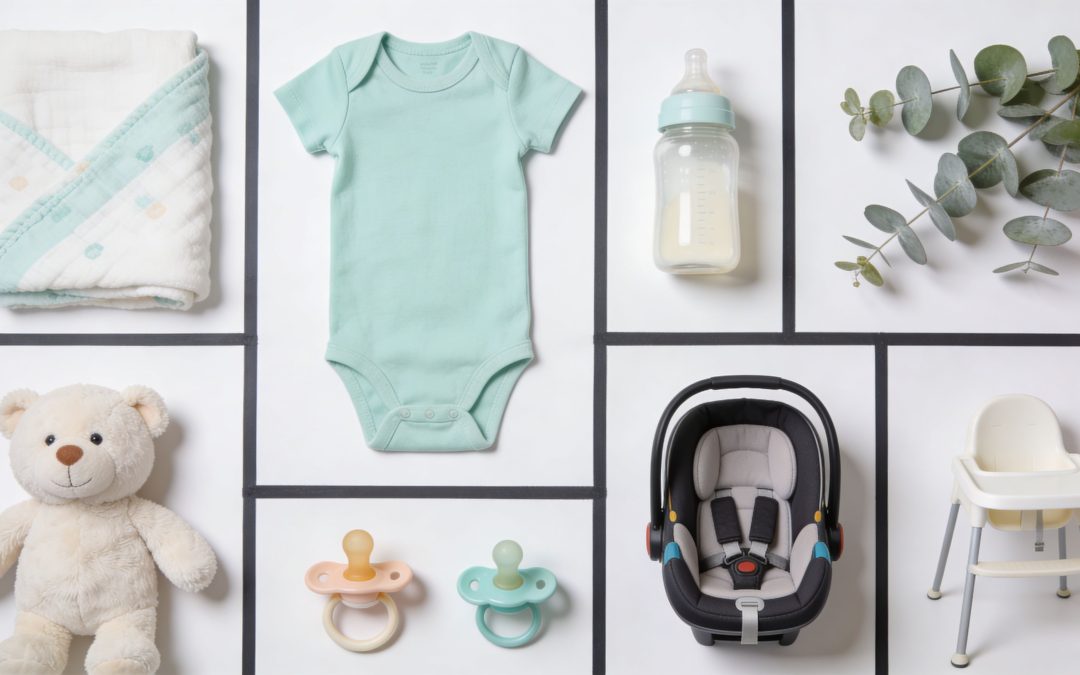
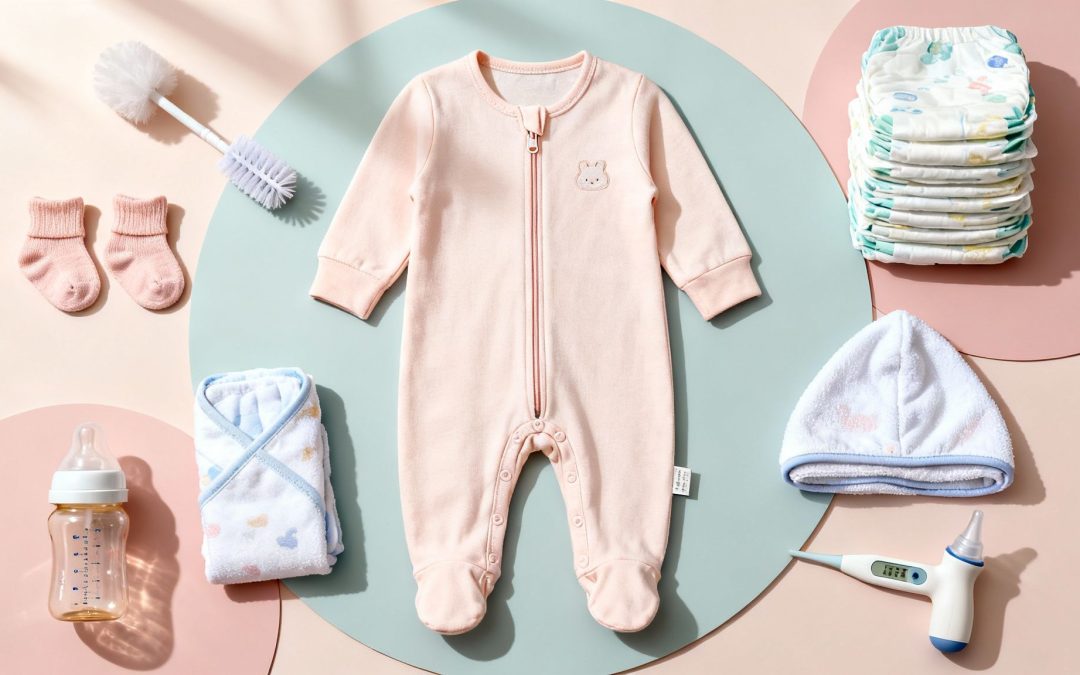
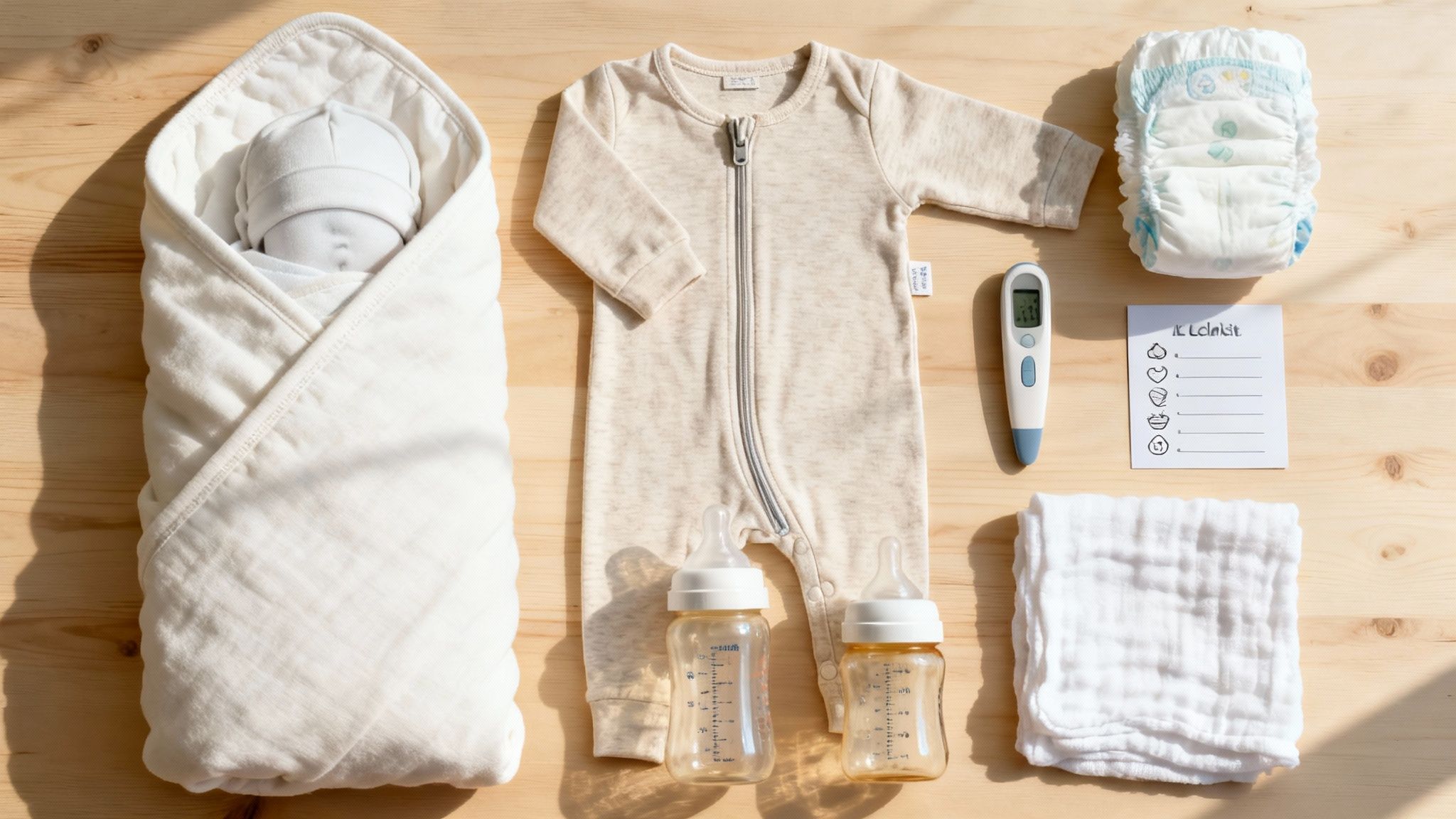
You’re probably staring at tabs full of prams, cots, bottles, carriers, nappies, swaddles, pumps, monitors, and twenty different versions of the same thing, wondering how any parent is meant to sort the useful from the nonsense.
That feeling is normal. Baby shopping in Australia can get out of hand fast because shops, social media, and well-meaning friends all push more gear than most families need. The trick isn’t buying everything. It’s choosing the few items that are safe, practical, and worth having in your home from day one.
My view is simple. Start with safety. Add the daily basics. Leave room for your baby’s preferences, because some things you won’t know until they arrive. And build your registry around real life, not a styled nursery photo.
Feeling Overwhelmed by Baby Gear? Start Here
Walk into a baby store when you’re pregnant and everything suddenly sounds urgent. The cot has to be perfect. The pram has to last for years. Every bottle claims to solve feeding issues. Every sleep product promises longer nights. Most of it just creates noise.
Start smaller. Ask one question: what does my baby need in the first week home? Not in six months. Not for a picture-perfect nursery. Just in those first tired, messy, beautiful days.
For most Australian parents, the answer boils down to a safe place to sleep, a compliant car seat, enough clothes for constant changes, feeding basics, and nappy supplies. Everything else sits lower on the list.
Baby showers have become a much bigger part of preparing for a baby here. In Australia, 78% of new mothers reported they held or attended one in recent years, up 45% from 2010, and 85% of registries include critical safety items according to baby product statistics covering Australian baby shower and registry trends. That matters because a good registry isn’t just a wish list. It’s a filter.
Use a decision rule
When you’re unsure about an item, sort it into one of these buckets:
Must have: You’ll need it immediately or very soon after birth.
Nice to have: Helpful, but you can wait and see.
Skip for now: Looks useful, but you don’t yet know if your baby or home setup will suit it.
That one habit stops panic buying.
Keep your list boring on purpose
The best registry is usually the least exciting one. It has breast pads, muslins, fitted sheets, wipes, singlets, and a proper thermometer. It doesn’t blow half the budget on trendy gear before you’ve covered basics.
Practical rule: If an item doesn’t help with sleep, feeding, transport, nappy changes, bathing, or safety, it probably isn’t a first-round purchase.
If you’re organising gifts, one list also makes life easier for everyone else. Friends and family want direction. They don’t want to guess whether you need another bunny rug or the bassinet sheets you forgot to buy. If you need help with setup details, the EasyRegistry FAQs answer the common practical questions quickly.
The Newborn Checklist What You Need (0-3 Months)
Newborns need less gear than marketing suggests. They need frequent feeds, clean nappies, a safe sleep space, weather-appropriate clothing, and parents who aren’t scrambling for basics at 10 pm.
I’d buy for the first three months only. Babies grow fast, and your preferences will change once real life starts.
Start with five categories
Think in daily routines, not shops:
Sleep: where baby sleeps, and what keeps that setup simple
Feeding: whether you’re breastfeeding, bottle feeding, or both
Nappy changes: enough supplies in the right spots
Clothing: easy layers, not complicated outfits
Bath and health: basic care items, nothing fancy
Newborn Must-Haves Checklist (0-3 Months)
Category
Item
Recommended Quantity
Reason
Sleep
Bassinet or cot
1
Safe place for sleep from the first night
Sleep
Firm mattress that fits properly
1
A proper fit matters for safe sleep
Sleep
Fitted sheets
3
One on the bed, one in the wash, one spare
Sleep
Lightweight swaddles or zip swaddles
3 to 5
Helpful for settling and frequent laundry
Sleep
Baby sleeping bags for later transition
2
Useful once swaddling no longer suits
Feeding
Newborn bottles
4 to 6
Enough for mixed feeding or bottle feeding without constant washing
Feeding
Bottle brush
1
Keep bottle cleaning separate and simple
Feeding
Burp cloths or muslins
8 to 12
You’ll use these all day
Feeding
Bibs
4 to 6
Handy once spit-up ramps up
Feeding
Breast pump if needed
1
Useful if you’re expressing, mixed feeding, or building flexibility
Feeding
Breast pads
1 pack
Often needed early, even if you’re not sure yet
Nappy changing
Newborn or size 1 nappies
1 small stockpile
Enough to get started without overcommitting to one brand
Nappy changing
Baby wipes or cotton pads
1 starting stockpile
Daily essential
Nappy changing
Barrier cream
1
Good to have before you need it
Nappy changing
Changing mat
1
Makes changes easier on any surface
Nappy changing
Nappy caddy or basket
1 to 2
Keeps essentials in reach, especially in a two-storey home
Clothing
Onesies or bodysuits
6 to 8
Frequent spills and nappy leaks
Clothing
Zip suits
6 to 8
Easier than snaps during night changes
Clothing
Singlets
4 to 6
Good layering in cooler weather
Clothing
Socks or booties
3 to 4 pairs
Useful if baby runs cool
Clothing
Beanies
2
Handy for outings and cooler days
Bath and health
Soft towels
2 to 3
Enough rotation for early baths
Bath and health
Washcloths
4 to 6
Gentle and practical
Bath and health
Baby wash
1
Keep it simple and mild
Bath and health
Baby bath or bath support
1
Optional for some families, but easier for many
Bath and health
Digital thermometer
1
Buy it before you need it
Bath and health
Nasal aspirator
1
Small item, big help when baby is congested
What to buy less of
Don’t load up on newborn-size clothes. Don’t buy heaps of one bottle brand before you know what your baby likes. Don’t fill drawers with blankets, shoes, or elaborate outfits.
The other thing I’d avoid is buying too many “problem-solving” gadgets before a problem exists. If your baby ends up needing reflux-specific bottles, a different swaddle, or extra feeding support, you can buy those later.
What’s worth having in two spots
If your home has more than one main living area, duplicate a few cheap basics:
Nappy supplies: wipes, nappies, cream
Muslins: keep them everywhere
A spare change of clothes: for baby and for you
A portable change mat: saves your back and your couch
Buy the expensive items carefully. Buy the cheap daily items in enough quantity to stay sane.
That’s the balance.
Understanding Australian Baby Safety Standards
I'm firm on this point. Some baby purchases are flexible. Safety items are not. In Australia, compliance matters more than aesthetics, influencer reviews, or whether a product is popular overseas.
If a product protects your baby in a car, during sleep, or in daily transport, check the standard first and the colour second.
Car seats are not the place to improvise
In Australia, infant car seats must comply with AS/NZS 1754:2013. Compliant seats reduce infant mortality risk by 78% in frontal crashes, and 28% of parents are unaware of recall histories according to the cited guidance in this newborn baby essentials checklist discussing Australian-compliant car seats.
That should change how you shop.
A seat can look clean, expensive, and barely used, and still be the wrong choice if you can’t verify its history. I’m cautious with secondhand car seats for exactly that reason. If you can’t confirm the model, recall status, instructions, and full crash history, walk away.
What to check before you buy
For high-risk gear, use a short checklist.
Look for the standard label: For car seats, check for AS/NZS 1754 compliance on the product itself, not just the box copy online.
Ask about recalls: Search the ACCC Product Safety Australia recall database before you buy, especially if it’s secondhand.
Check instructions are included: Missing manuals increase installation mistakes.
Inspect all parts: Harnesses, buckles, clips, mattress supports, brakes, and locking points should all be present and working.
Skip vague listings: If a seller can’t answer basic questions, don’t gamble.
Prioritise correct installation: A compliant product installed badly can still be dangerous.
The same rule applies to cots. You want a cot that meets the relevant Australian standard, with a firm mattress that fits properly and no extra padding, loungers, or loose bedding added in.
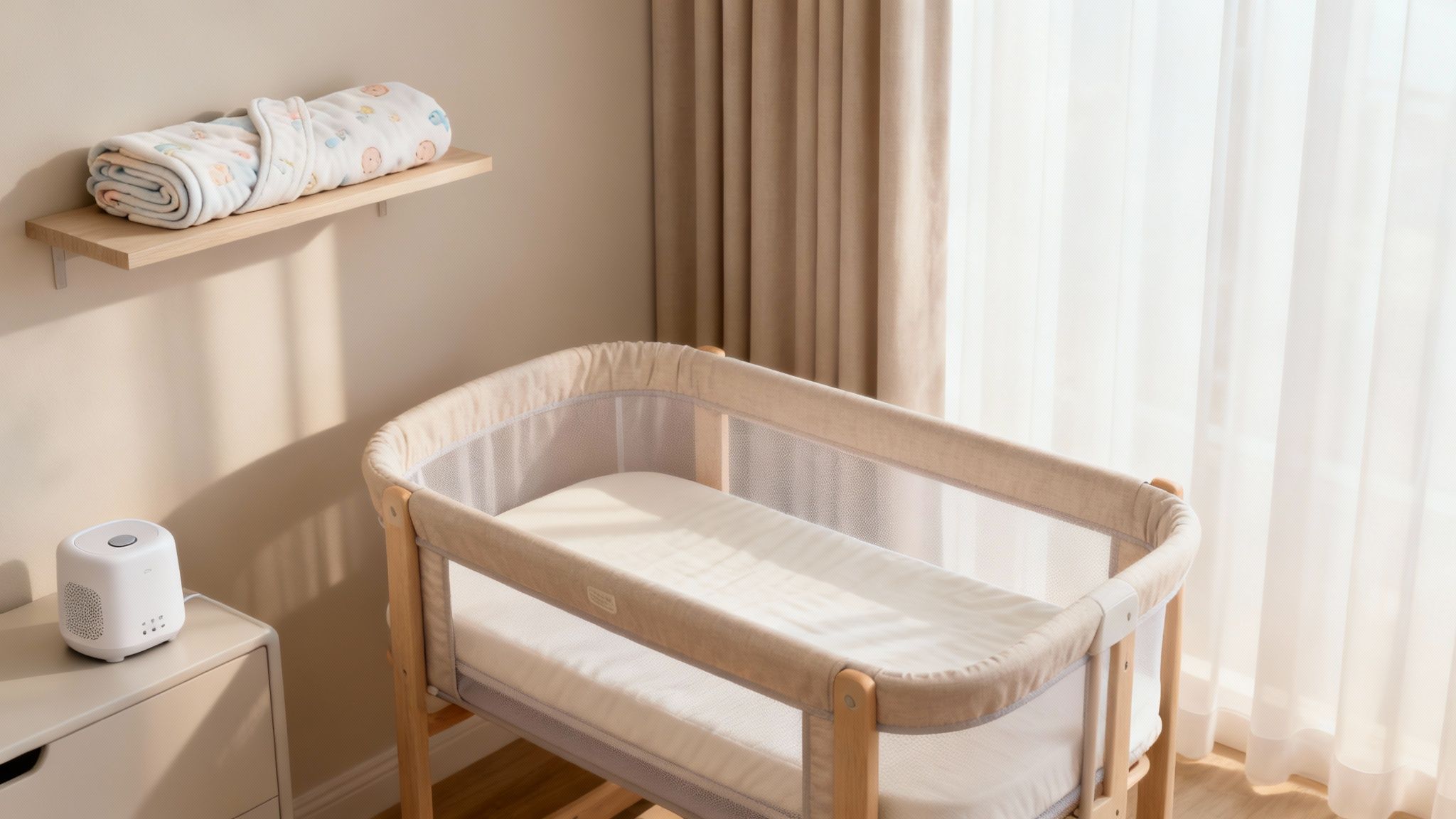
A safe sleep space should look plain. That’s a good sign, not a missing feature.
The gear I’d treat as essential
Some items deserve extra scrutiny every single time:
Car seat
Buy new if your budget allows. If you buy secondhand, verify everything. No exceptions.
Cot or bassinet
Check compliance labelling, mattress fit, and overall condition. Don’t use makeshift mattress toppers or padding to “improve” comfort.
Pram or stroller
Test the brakes, harness, folding mechanism, and stability. If it feels flimsy in store, it won’t feel better with a nappy bag hanging off the handle.
Toys for young babies
Avoid anything with small detachable parts, loose decorations, or unclear age suitability.
Questions to ask a retailer or seller
You don’t need to sound technical. Just ask directly.
What standard does this comply with?
Has this model had any recalls?
Can I see the compliance label?
Is the instruction manual included?
Has any part been replaced?
For a car seat, has it ever been in an accident?
If the answers are fuzzy, move on.
Safety beats convenience every time
Parents often get sold convenience first. Rotating features, fancy fabrics, compact folds, sleep add-ons, designer finishes. Some of that is useful. None of it matters if the product isn’t compliant and fit for purpose in Australia.
The safest baby must haves are often the least glamorous. A plain compliant cot. A correctly installed restraint. A sturdy pram with a proper harness. That’s the gear worth your money.
Essentials for Your Growing Baby (3-12 Months)
By three months, your baby starts changing fast. They’re more alert, more mobile, and a lot more interested in the world around them. This is the stage where your registry or shopping list should shift from pure survival to support for movement, play, and solids.
What changes after the newborn phase
You won’t need a completely new setup. You’ll just add a few items that match development.
A good play mat becomes more useful once baby starts rolling and spending more awake time on the floor. A sturdy high chair matters when solids begin. Bibs get messier. Storage gets more important because small toys somehow multiply overnight.
I’d also start thinking ahead about baby-proofing before you think you need it. Don’t wait until the first proper roll, crawl, or attempt to pull up on furniture. By then you’re reacting, not preparing.
The next round of practical baby must haves
Here’s what tends to earn its keep in this stage:
High chair: Choose one that’s easy to wipe down. If it has too many creases, crumbs will live there forever.
Silicone bibs and soft spoons: Easier for early solids and easier to clean.
Suction bowls or plates: Not essential on day one, but useful once grabbing starts.
Play mat: A large, easy-clean floor space gets used constantly.
Simple toys: Rattles, stacking cups, soft books, teething toys, and basic cause-and-effect toys are enough.
Baby gate: Worth buying before full crawling.
Power point covers and cupboard latches: Not exciting, but necessary.
A bigger sleep bag or next-size clothing: Babies outgrow gear before you expect.
Buy for the stage you’re entering, not the whole year
A common mistake is buying too far ahead. You don’t need a toy mountain for a five-month-old. You don’t need toddler feeding gear for a baby who hasn’t started solids. Buy what suits the next season of your life.
That’s also why I like adding later-stage items to a registry rather than rushing to purchase them all before birth. It gives friends and family useful options after the newborn essentials are covered.
Here’s a helpful visual if you want a quick reset on what babies use as they grow:
Keep play simple
Babies don’t need a lounge room full of flashing plastic to develop well. They need safe floor time, a few interesting objects, and your attention.
Some of the best baby gear is the gear that gives your child room to move and gives you less to tidy.
That applies to this whole stage. Useful beats impressive.
Budgeting for Baby A Guide to Needs Wants and Savings
Baby costs add up quickly, and pretending otherwise helps no one. The average baby setup in Australia is AU$5,200, up 12% year over year, and 55% of Australian baby shower guests prefer contributing to cash funds over buying physical items, according to this piece on newborn essentials and baby setup costs.
My opinion is blunt. If money matters, and for most families it does, stop treating every baby purchase as a one-time emotional decision. Treat it like household planning.
Split everything into needs and wants
This works better than setting a vague budget.
Needs
Wants
Car seat
Designer nappy bag
Safe sleep space
Matching nursery décor
Nappies and wipes
Multiple swaddles “just in case” beyond a sensible amount
Basic clothing
Special occasion outfits
Feeding supplies
Extra gadgets before a feeding issue exists
Thermometer and basic care items
Trend-driven accessories
A want isn’t bad. It just shouldn’t push a need off the list.
Where to save without making life harder
Some baby categories are good places to be frugal. Others aren’t.
Buy secondhand for low-risk items: Clothing, books, nursery drawers, and some toys are often great pre-loved buys if they’re clean and in good condition.
Be stricter on safety gear: As covered earlier, high-risk gear needs proper verification.
Accept hand-me-downs selectively: Say yes to the useful things that suit your home. Say no to clutter.
Buy small amounts first: Especially with nappies, bottles, and swaddles.
Use cash funds for big-ticket needs: This is far more practical than receiving five blankets and no car seat contribution.
If you’re trying to build better habits before the baby arrives, this guide on saving money as a family is worth reading because it focuses on everyday systems, not guilt.
Use your registry as a budget tool
In this context, a registry becomes more than a gift list. It becomes a plan.
Instead of listing only products, include a mix of:
Cash contributions: for larger essentials or flexible spending after birth
Notes: mention preferred colours, sizes, or why an item matters
That last part matters more than people realise. Guests are usually happy to help when the request is clear and specific.
If you want one place to combine physical items and funds, the EasyRegistry features page shows how that setup works in practice.
A budget-friendly mindset that helps
Don’t aim for the cheapest possible baby setup. Aim for the setup that avoids waste.
That means:
Spend properly on safety.
Keep daily basics stocked.
Delay uncertain purchases.
Use gifts to fill genuine gaps, not duplicate impulse buys.
That approach cuts stress because it keeps you from buying the same category twice. Once before the baby, then again after you realise the first version wasn’t right.
Building Your Perfect Baby Registry with EasyRegistry
A useful registry should answer one question for your guests: what do you need?
That’s it. Not what looks cute. Not what someone else bought for their cousin. What your household will use.
Build your list in layers
Don’t create one giant undifferentiated list. Break it up mentally.
Layer one
Your immediate essentials. Car seat, sleep setup, nappies, wipes, basic clothes, feeding supplies.
Layer two
Helpful items that make the first months smoother. Extra sheets, muslins, bath basics, carrier, thermometer.
Layer three
Later-stage gear. High chair, feeding bibs, gates, play mat, simple toys.
This stops your list from becoming random.
Add products from different shops
Australian parents rarely buy everything from one retailer. That’s normal. One shop has the cot you want, another has the bottles, another has the nappy caddy, and your local marketplace might have a secondhand dresser.
That’s why it helps to use a registry system that lets you pull everything into one link rather than sending guests all over the internet. If you want a broad starting point for ideas, this essential baby registry checklist is a useful reference to compare against your own real priorities.
Use cash funds properly
Cash funds work best when they’re specific. Don’t just write “baby fund”.
Write things like:
Infant car seat contribution
Post-birth essentials top-up
Nappies and wipes fund
Feeding support fund
Pram contribution
That gives guests context. It also makes the gift feel concrete, which people appreciate.
Write notes like a normal person
You don’t need polished registry copy. Just be clear.
Good examples:
We’d love help with our car seat, as this is one of our key safety purchases.
We’re keeping clothing simple, so practical zip suits and bodysuits are most useful.
We’d happy with pre-loved books in good condition.
We’d prefer fewer toys and more help with daily basics.
Those notes stop duplicate gifting and save awkward follow-up later.
Keep the list tidy and current
A registry only works if it reflects what you still need. Remove items you’ve bought yourself. Mark priorities clearly. If your plans change, update the notes.
For a simple walkthrough of how online registry setup works, from creating the list to sharing one link with guests, use how EasyRegistry works.
One practical point matters most. Don’t pad your registry to make it look full. A short, useful registry beats a long one stuffed with filler every time.
Guests want to give something that helps. Your job is to make that easy.
Welcome Your Baby with Confidence and Joy
The point of preparing for a baby isn’t to own every product marketed to new parents. It’s to create a home that’s safe, functional, and calm enough for you to settle into life with your child.
If you remember three things, remember these. Buy the essentials first. Take Australian safety standards seriously. Use your budget on what you’ll use every day. That alone will put you in a far better position than chasing every trend.
You also don’t need to do all of this in one weekend. Build your list gradually. Check the safety details properly. Leave room for hand-me-downs, thoughtful gifts, and remember that some purchases make more sense after the baby arrives.
Group gifting has shifted how many parents handle big purchases. For baby must haves, 70% of Australian baby showers now feature group-funded items via platforms like EasyRegistry, and user feedback suggests this can reduce duplicate gifts by up to 40%, as noted earlier in the Australian baby shower data. That’s a sensible move because it keeps the focus on what families need.
You’re not trying to win baby prep. You’re trying to make those first months easier.
That’s enough. More than enough.
If you want one place to organise physical gifts, larger contributions, and a single shareable list for family and friends, EasyRegistry is a practical way to keep your baby registry clear, useful, and easier to manage.
When you're expecting a baby, it's easy to feel like you need to buy one of everything. The good news is, you really don't. The absolute essentials boil down to a few key areas: a safe place for your baby to sleep, a way to feed them, and the gear for nappy changes and basic hygiene. Nailing these core things you need for a newborn first will help you feel ready without getting totally overwhelmed.
Your Practical Newborn Essentials Checklist
Staring at endless lists of baby gear and feeling swamped? You're not alone. This guide is designed to cut through the noise and give you a clear, organised list of true must-haves for your newborn’s first three months.
Think of this as your starting block—the non-negotiable items that will get you through those precious, hazy first weeks with a bit more confidence and a lot less stress. We're focused on what's practical and safe, helping you figure out what you really need to buy and what you can skip for now.
Building a baby registry can feel like a mammoth task, but breaking it down by category makes it so much more manageable. Sometimes, the best way to get your head around it is to see what others have done. If you're looking for inspiration, checking out well-organised sample registries at a site like https://www.easyregistry.com.au/sample-registries can be a great way to start structuring your own wish list.
The Core Categories of Newborn Needs
Before we get into specific products, let’s zoom out. It helps to think in terms of the main areas you’ll need to cover. Every single item you buy will likely fall into one of a handful of key groups, each serving a fundamental purpose in your baby's daily life. This approach simplifies your planning and makes sure all the important bases are covered.
For a really deep dive into all the items you might consider, you can explore this ultimate baby shopping list. It offers a much broader look that can nicely complement the essentials we’re focusing on here.
The goal isn't to have the most gear; it's to have the right gear. The best strategy is always to prioritise items that boost safety, comfort, and your own peace of mind.
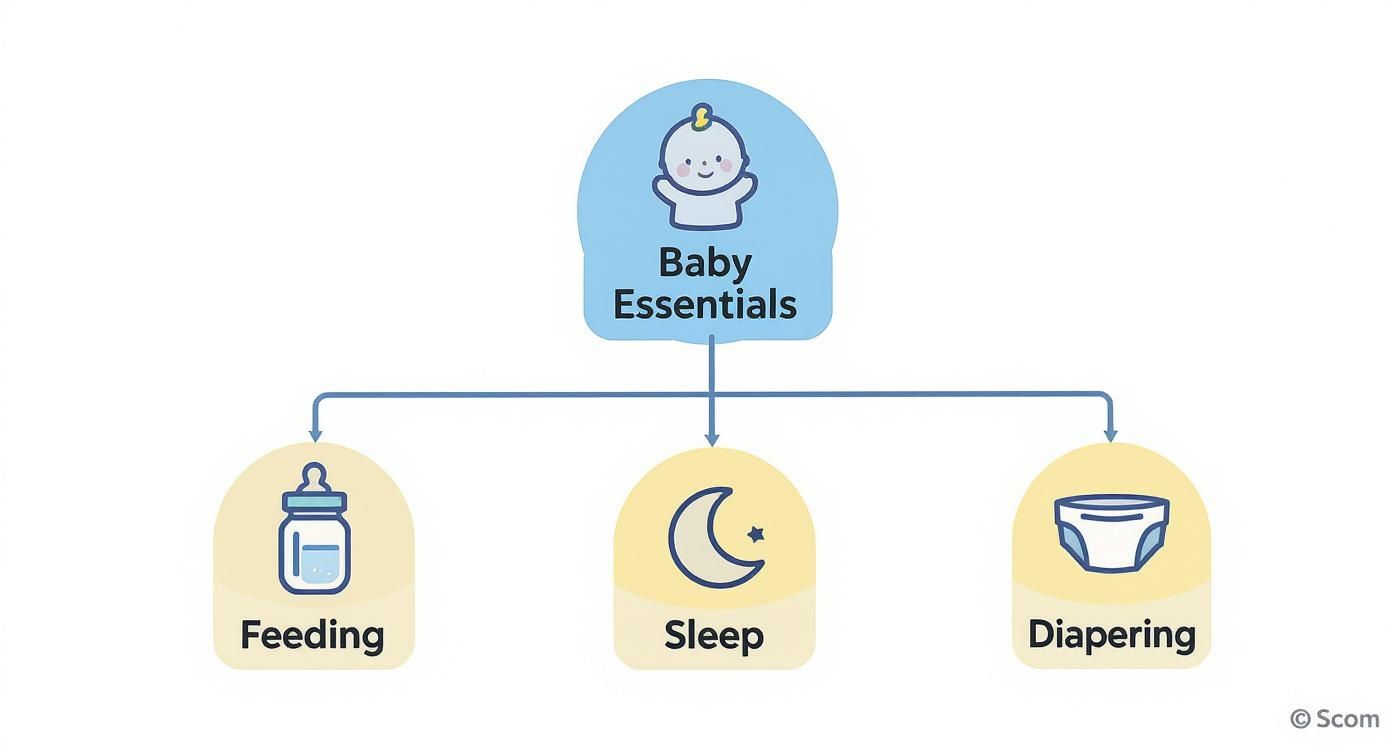
This simple flowchart breaks down the core things you need for a newborn into those three primary branches: feeding, sleeping, and diapering.
As you can see, while heaps of products are marketed as 'essential', your baby's foundational needs are actually pretty straightforward. Getting a handle on these three areas will form the backbone of your daily routine for the first few months.
To make it even clearer, here’s a quick-glance table to summarise these critical items.
Quick-Glance Newborn Essentials Checklist
Category
Essential Items
Recommended Quantity (0-3 Months)
Feeding
Bottles, teats, burp cloths, formula or breast pump
6-8 bottles, 8-10 burp cloths
Sleep
Bassinet or cot, fitted sheets, swaddles/sleep sacks
1 cot, 3-4 sheets, 3-5 swaddles
Nappies
Disposable or cloth nappies, wipes, change mat, barrier cream
8-12 nappies per day, as needed
This table covers the bare minimum you'll want to have ready before the baby arrives. You can always add more specialised items later once you figure out what works for you and your little one.
Setting Up Your Baby Feeding Station
Feeding your newborn is one of the first, and most profound, ways you'll connect. It's a quiet dance of nourishment and bonding that happens around the clock. Setting up a dedicated, organised feeding station can make these moments calmer and far more comfortable for both of you, whether you’re planning to breastfeed, formula-feed, or a bit of both.
Think of this setup as your command centre. When your baby is hungry and letting you know about it (loudly!), the last thing you want is to be scrambling for a clean bottle or a burp cloth. A well-stocked station means everything is within arm's reach, day or night, making the whole routine feel much smoother.
Core Feeding Equipment For Every Parent
No matter how you plan to feed your little one, some items are universally helpful. These are the non-negotiables that form the foundation of any feeding setup.
Bottles and Teats: It's a good idea to start with 6-8 bottles. This gives you enough of a buffer so you’re not constantly washing and sterilising. You'll also need a few different teats, as newborns typically start with a slow flow to mimic breastfeeding and stop them from gulping down too much milk too quickly.
Burp Cloths: Honestly, you can never have enough of these. Aim for at least 8-10 muslin or cotton cloths. They’ll be your best friend for catching spit-up and protecting your clothes (and the couch, and the carpet…).
Sterilising Equipment: A newborn’s immune system is still a work in progress, so proper sterilisation is crucial. You've got options: electric steam sterilisers, handy microwave steriliser bags, or even the traditional boiling-on-the-stove method.
Having these basics ready to go before your baby arrives will take a huge layer of stress out of those first few weeks.
Essentials For Breastfeeding Mums
If breastfeeding is part of your plan, a few specific items can make the journey so much more comfortable and manageable. These tools are all about supporting you and your supply.
A high-quality breast pump is a game-changer. It’s useful for relieving engorgement, building up a supply of milk for when you return to work, or just letting your partner take over a feed so you can get some rest. You can opt for a manual pump for occasional use or a double electric pump if you'll be expressing regularly. Don't forget milk storage bags for safely freezing your liquid gold.
A comfortable nursing pillow isn’t just a luxury—it's an ergonomic lifesaver. It helps you position your baby correctly at the breast, which dramatically reduces the strain on your back, neck, and arms during those long feeding sessions.
Other must-haves include a couple of good nursing bras for easy access, reusable or disposable breast pads to handle any leaks, and some soothing nipple cream for the early days.
Essentials For Formula Feeding
For parents going the formula route, precision and hygiene are the names of the game. Having the right gear on hand ensures every bottle is prepared safely and correctly.
You’ll obviously need a good supply of your chosen infant formula, but it’s wise not to stockpile one brand until you know it agrees with your baby’s tummy. A formula dispenser is brilliant for pre-measuring powder for night feeds or days out, saving you time and fumbling with a scoop.
Many parents also swear by a bottle warmer for bringing chilled formula or expressed breast milk to the perfect temperature. It's a much safer and more reliable option than a microwave, which can create dangerous hot spots in the milk.
Proper nutrition in these early stages is so important. In Australia, the market for baby nutrition is massive, reflecting just how focused parents are on high-quality products. In fact, the Australia baby care products market was valued at USD 1.70 billion in 2023 and is set to grow even more, highlighting the demand for safe, effective feeding solutions. You can find out more about the growth of the Australian baby care market to see the trends for yourself.
Creating a Safe and Soothing Sleep Space
When it comes to your newborn, safe sleep isn't just a recommendation; it's the absolute foundation of their care. Your number one job is to create a sleep environment that's not only calming but, most importantly, completely secure. The aim is to build a simple, sparse space that strictly follows proven safety guidelines.
Think of your baby’s sleep area as a minimalist retreat. Everything in it serves a purpose, and anything that doesn't actively contribute to safety is left out. This mindset drastically cuts down on risks and will give you invaluable peace of mind when you finally get to rest.
The Foundation of Safe Sleep
The absolute centrepiece of this whole setup is where your baby will actually sleep. This single choice sets the stage for months of safe nights and naps to come.
Your two main options are a cot or a bassinet. A bassinet is a fantastic choice for those first few months. Its smaller size means it can easily fit in your room, which is recommended to reduce the risk of SIDS. The catch is that babies grow out of them fast, usually by the 4-6 month mark.
A cot, on the other hand, is a long-term investment that your little one can use for two years or even longer. Whichever you land on, make sure it meets current Australian safety standards (AS/NZS 2172 for cots).
The frame is only half the story; the mattress is just as crucial.
A Firm Mattress: It needs to be firm, flat, and fit perfectly inside the frame with no gaps around the edges. Any softness or gaps can pose a serious suffocation risk.
Fitted Sheets Only: The only bedding you need is a tight-fitting sheet made specifically for the mattress. Trust me, you'll want 3-4 on hand to deal with the inevitable middle-of-the-night messes.
The golden rule for a safe sleep space is "bare is best." This means no pillows, no cot bumpers, no loose blankets, no quilts, and no soft toys. They might look adorable, but these items are significant suffocation and overheating hazards.
Creating a Soothing Atmosphere
Once you've nailed the safety essentials, you can start adding a few elements that help soothe your baby and signal that it's time to wind down. These are some of the most effective tools for building a healthy newborn sleep routine.
A white noise machine can be an absolute game-changer. It works by mimicking the constant, gentle sounds of the womb, which is incredibly comforting for a newborn. It also does a brilliant job of drowning out sudden household noises (like a dropped pan or a barking dog) that can jolt them awake.
Similarly, blackout curtains are a lifesaver for regulating your baby’s internal clock. By creating a dark, womb-like space even during the day, you encourage their body to produce melatonin, the hormone that tells us it's time to sleep.
Dressing Baby for Sleep
How you dress your baby for bed is the final piece of the safety puzzle. The goal is to keep them comfortably warm without the danger of overheating or the risk that comes with loose bedding.
This is where swaddles and sleep sacks come into play.
Swaddles (0-3 months): For the first few months, a snug swaddle helps contain the startle reflex (Moro reflex) that can often wake a sleeping baby. Stick to lightweight, breathable fabrics like cotton or muslin.
Sleep Sacks (3+ months): As soon as your baby starts showing signs of trying to roll, it’s time to ditch the swaddle and move to a sleep sack. Think of it as a wearable blanket—it keeps them warm and cosy without any risk of it covering their face.
A good rule of thumb is to dress your baby in one more light layer than you’re wearing yourself. To check if they're comfortable, feel the back of their neck or their tummy. It should feel warm, but not hot or sweaty.
Stocking Up on Clothing and Diapering Supplies
Let's talk about two of the biggest jobs you'll have in those first few weeks: dressing a tiny, wriggly newborn and managing what feels like a never-ending cycle of nappy changes. Getting your clothing and nappy stations sorted before baby arrives is a game-changer. It makes these daily routines so much smoother and less stressful.
Think of newborn clothing as practical work attire, not a fashion show. The real priorities are comfort, ease of use, and fabrics that are gentle on their delicate skin. In the same way, your nappy change setup should be a well-oiled machine, with everything you need within arm's reach to tackle messes quickly and cleanly.
Essential Newborn Clothing Items
Babies grow at a truly astonishing rate in the first three months, so a word of advice: don’t go overboard on the tiniest sizes. It's much smarter to focus on a practical rotation of core items that can stand up to frequent washing. Look for soft, breathable fabrics like cotton or bamboo—they’re perfect for a newborn's sensitive skin.
Here are the clothing essentials you’ll actually use:
Zip-up Onesies/Sleepsuits (6-8): Trust me, forget fiddly buttons in the middle of the night. Two-way zippers are a lifesaver, letting you change a nappy without completely undressing your baby and waking them up.
Singlets or Bodysuits (8-10): These are the ultimate base layer for any outfit and help regulate your baby’s temperature. Pro tip: get the ones with envelope necks. They make it so much easier to pull the suit down over the body after a major nappy leak, avoiding a mess near their face.
Socks or Booties (5-7 pairs): Newborns get cold feet surprisingly easily, even when you're indoors. A good stash of soft socks is an absolute must-have.
Cardigans or Jumpers (2-3): A couple of lightweight cardigans are perfect for layering, especially in cooler weather or if you're in an air-conditioned space.
Beanie or Soft Hat (1-2): A soft, breathable beanie is really important for keeping your newborn warm on outings, particularly in their first few weeks of life.
It's a great idea to have a mix of sizes ready to go. Start with a few items in size 0000 (newborn) but have more in size 000 (0-3 months). So many babies outgrow that first size in a flash!
Setting Up Your Nappy Change Station
You'll be changing 8-12 nappies a day at the start, so creating a functional change station is one of the most practical things you can do. It doesn't matter if you have a dedicated change table or just use a portable mat on top of a dresser—the key is having all your supplies organised and right where you need them.
Think of your nappy change station as a high-traffic zone. The goal is to create an assembly line where you can clean, dry, and dress your baby without ever needing to turn your back or step away. Safety and efficiency are everything.
The core parts of your setup are pretty straightforward. You’ll need a comfortable and secure change mat, ideally with a waterproof cover. Then, stock a caddy or basket right next to it with all the essentials.
This should include:
Nappies: Whether you go for disposable or cloth, have a big stack ready.
Wipes: Opt for fragrance-free, water-based wipes to minimise the risk of skin irritation.
Barrier Cream: A good nappy rash cream is vital for protecting your baby's delicate skin.
Nappy Sacks or a Lidded Bin: This is a simple trick to help contain odours and keep the nursery smelling fresh.
In Australia, nappies and wipes are consistently among the most used products for newborns. The Australian baby healthcare products market hit USD 2,666.67 million in 2024 and is set to grow even more, which just shows how central these items are to daily baby care. You can learn more about the baby healthcare market trends in Australia to see the full picture.
Disposable vs Cloth Nappies: A Quick Comparison
Choosing between disposable and cloth nappies is a really personal decision, and both have their pros and cons. Disposables win on convenience, while modern cloth nappies are a fantastic eco-friendly and budget-friendly option in the long run.
Feature
Disposable Nappies
Modern Cloth Nappies
Upfront Cost
Low
High
Long-Term Cost
High
Low
Convenience
High (throw away after use)
Lower (requires washing)
Environmental Impact
High (landfill waste)
Low (reusable)
Many families actually end up using a combination of both—disposables for outings and overnight, and cloth while at home. If you're not sure which way to go, consider adding funds to a gift card registry. That way, you can buy what works best for your family once the baby arrives. You could even set up a flexible gift card registry for baby supplies to give yourself that freedom of choice.
Keeping Your Little One Clean and Healthy
As a new parent, keeping your baby healthy, clean, and safe is top of mind. Beyond the constant cycle of feeds and nappy changes, you'll need a small but mighty collection of items for bathtime, grooming, and basic first aid. Think of this as your baby's own little wellness kit—it's not about creating a mini-pharmacy, but about having the right tools ready to go.
Having these things on hand helps you confidently tackle everything from a stuffy nose to those surprisingly sharp fingernails. A well-organised kit just makes those moments a lot less stressful.
Creating a Gentle and Calm Bathtime
Newborn skin is incredibly delicate, so bathtime is all about gentle care. You really don't need a shelf full of fancy products; simplicity is your best friend here. The real goal is to make bath time a calm, safe, and lovely bonding experience for both of you.
You won't need to bathe your baby every single day. In fact, 2-3 times per week is usually perfect to keep them clean without drying out their sensitive skin. Having the right setup makes it all go smoothly.
Here’s a quick list of what you'll actually use:
A Baby Bath: A small, dedicated baby bath is a game-changer. It offers better support for a slippery baby and uses way less water than a standard tub. Look for one with a non-slip surface for that extra bit of safety.
Soft Washcloths: Grab a few soft cotton washcloths. It’s handy to have one for their body and a separate one for gently wiping their face.
A Hooded Towel: There’s nothing cuter than a baby wrapped in a hooded towel. More importantly, it keeps their head warm and snuggles them up tight the second they're out of the water.
Tear-Free Baby Wash: Opt for a mild, soap-free, and fragrance-free wash made specifically for newborns. This will help protect their skin's natural barrier.
Assembling Your Baby's First-Aid and Grooming Kit
You'll be surprised how much grooming and minor health care a tiny human requires! Keeping all the essentials in one place means you can grab what you need in a pinch, without a frantic search.
Start with these absolute must-haves:
Digital Thermometer: A reliable digital thermometer is non-negotiable for checking your baby’s temperature if you think they’re unwell. An underarm reading is a safe and easy way to get an accurate number.
Baby Nail Clippers or File: Newborn nails are tiny but can be razor-sharp. Specialised baby clippers with a safety guard, or even just a soft emery board, are the safest way to keep them short.
Nasal Aspirator: Babies breathe through their noses, so a bit of congestion can make them really unhappy. A simple bulb syringe or a snot-sucker style aspirator can help clear their nose, especially before a feed.
Of course, having the gear is one thing, but knowing what to do is another. Taking the time to learn essential paediatric first aid skills can give you a huge confidence boost in handling whatever comes your way.
Your baby's health kit is for reassurance. Most days, you won't even touch it. But on the day you do, you'll be so glad you have everything ready and know how to use it.
Looking After That Delicate Skin
A newborn's skin is still developing its protective barrier, which makes it prone to dryness and irritation. This is why choosing the right skincare products is so important. In Australia, the baby skincare market is booming as parents seek out gentle and safe products, with revenue expected to hit AUD 11.02 million in 2025. You can discover more insights about the Australian baby skincare market on Statista.
When it comes to skincare, always follow a "less is more" approach. A gentle, fragrance-free baby lotion is usually all you need to tackle any dry patches.
Before slathering on a new product, always do a quick patch test on a small area of skin first. It’s a simple step that can save you from a potential reaction and ensures the product is a good fit for your baby's delicate skin.
Getting Out and About With Your Baby
Leaving the house with a newborn for the first time can feel like you're planning a royal tour. It seems like a monumental task, but I promise, with the right gear and a bit of prep, it gets so much easier. The trick is to have your transport sorted and a nappy bag packed and ready by the door.
Think of it this way: your travel gear is your baby's home-away-from-home. It needs to be safe, comfortable, and practical for you to handle, especially when you're also juggling keys, a coffee, and the baby itself. A little organisation goes a long way in making these first outings feel less daunting and more like the fun adventures they should be.
Your Baby's Ride: The Travel System
The two big-ticket items for getting around are your car seat and your pram. They’re the foundation of your travel setup, designed to get you from point A to B safely and with minimal fuss.
Infant Car Seat: This one is absolutely non-negotiable and safety is paramount. In Australia, any car seat you buy must meet the strict AS/NZS 1754 safety standard. I can't stress this enough: get it professionally fitted before your due date. A poorly installed seat just isn't safe. You'll be looking for a rear-facing capsule designed specifically for newborns.
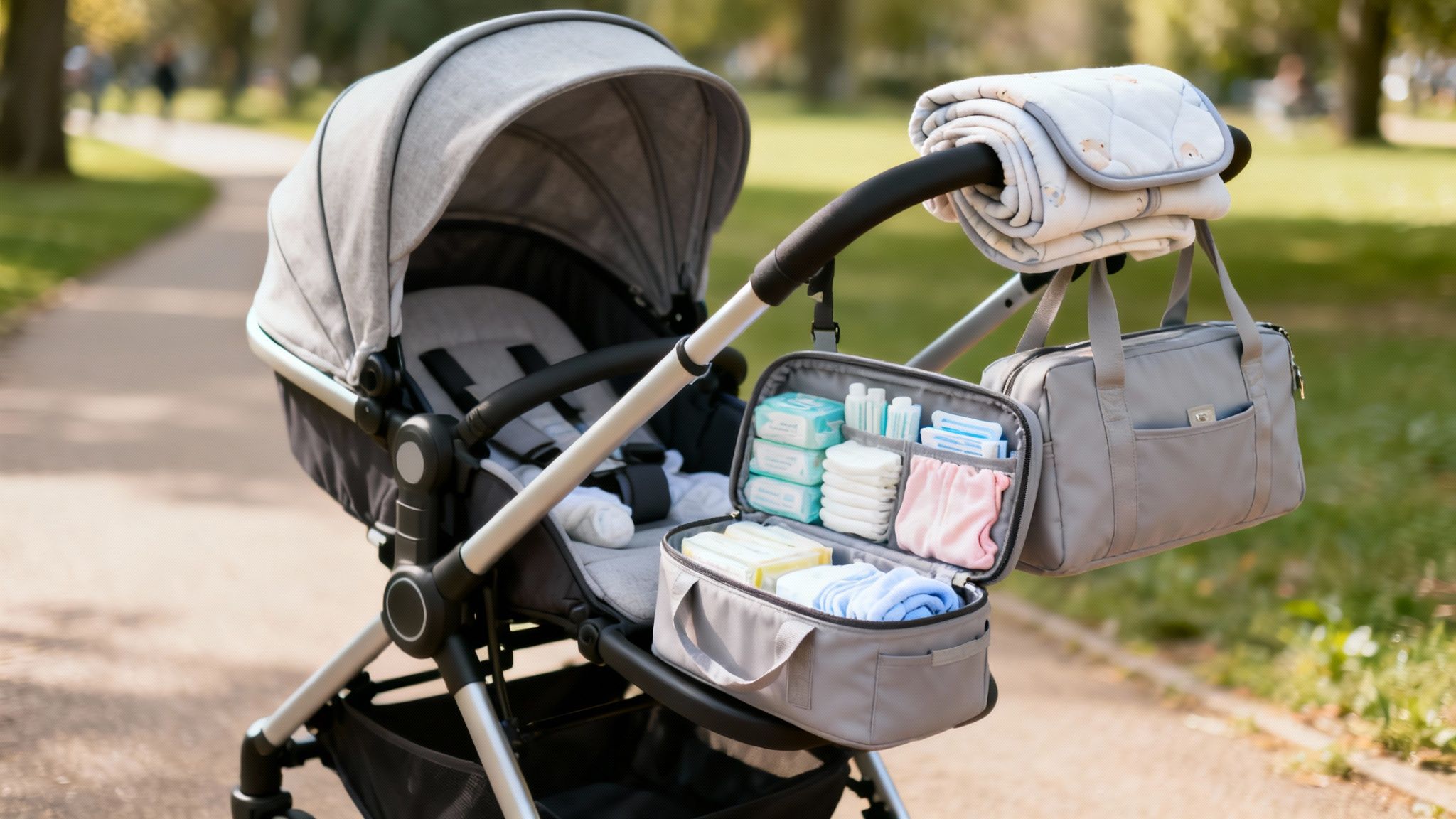
Pram or Stroller: The options for prams can feel endless. The best way to choose is to think about your daily life. Are you navigating tight city footpaths and cafés, or are you more likely to be pounding the pavement on long park walks? A popular choice is a "travel system," which lets you click the baby's car capsule directly onto the pram frame. It's a game-changer for not waking a sleeping baby during the car-to-pram transfer.
Don't forget about a baby carrier or sling, either. They are brilliant for keeping your baby snuggled up close to you, which newborns love. Plus, it gives you two free hands to grab groceries or just hold a much-needed cup of tea.
Think of your travel system as your passport to the outside world. A safe car seat and an easy-to-use pram mean you can get to appointments, see friends, or just get some fresh air without the stress.
Packing the Perfect Nappy Bag
Your nappy bag will become your best friend. The goal isn't to haul the entire nursery around with you, but to be ready for the most common baby situations. A well-organised bag means you can find what you need in a hurry, which is a lifesaver when you're dealing with a sudden nappy explosion.
Here’s a simple checklist of what you'll actually need:
Nappies and Wipes: Always pack more than you think you'll need. A good rule is one nappy for every hour you plan to be out, plus a couple of spares just in case. A travel pack of wipes is your best bet.
Change Mat: A portable, foldable mat makes nappy changes on the go much cleaner and more hygienic.
A Spare Outfit: Pack at least one complete change of clothes for the baby. Trust me, leaks and spit-up happen when you least expect them.
Feeding Gear: If you're bottle-feeding, bring pre-measured formula and a bottle with sterilised water. If you're breastfeeding, you might want a light muslin wrap for a bit of privacy if it makes you more comfortable.
Burp Cloths: Pop one or two in for mopping up any little spills.
Plastic Bags: A few nappy sacks or plastic bags are crucial for sealing away dirty nappies or soiled clothes until you can get home.
Feeling prepared for that first trip to the shops or a café is a huge confidence booster. It’s these little wins that help you feel like you’ve got this new parent thing down, letting you and your little one enjoy exploring the world together.
Common Questions About Newborn Essentials
Stepping into the world of baby gear can feel overwhelming, and it's completely normal to have a million questions. You're not alone! Let's clear up some of the most common things expecting parents wonder about as they put together their newborn checklist.
How Many Baby Clothes Do I Actually Need?
Between spit-up and nappy leaks, you'll be surprised how many outfits a tiny baby can go through in a day. For those first few months (sizes 0000 and 000), a good rule of thumb is to have enough clothing to last at least two days, so you're not constantly doing laundry.
Here's what that looks like in practice:
7-10 onesies or bodysuits for easy daily wear and layering.
5-7 sleepsuits, and trust me, the ones with two-way zips are a lifesaver for those middle-of-the-night nappy changes.
A couple of cardigans to pop on for an extra layer of warmth.
Remember, babies grow like weeds in the beginning, so don't go overboard buying too much in the tiny sizes. Stick to the basics that prioritise comfort and easy access.
Should I Buy a Bassinet or Go Straight to a Cot?
This really comes down to what works best for your family and your home. Bassinets are small and portable, which is perfect for keeping your baby close in your bedroom for the first few months—something that's recommended for safe sleep. The catch is that most babies outgrow them by 4-6 months.
A cot, on the other hand, is a long-term purchase your little one can use for two or three years. Many parents start with a bassinet for the convenience and closeness, then move their baby into a cot in their own room when they're ready.
Before your baby even arrives, the two non-negotiable safety items you need are a professionally fitted, Australian-standard infant car seat and a dedicated safe sleeping space—like a cot or bassinet with a firm mattress and absolutely no loose bedding.
Do I Really Need a Special Nappy Bin?
Honestly, this one is a ‘nice-to-have,’ not a ‘must-have’. Those special nappy bins that individually seal each nappy are brilliant at containing odours, but they're not essential. For many families, a simple lidded bin that's taken out regularly does the job just fine. It’s all about your personal preference and budget.
Pulling together your list of essentials is a huge task, but it doesn't have to be stressful. Creating a gift registry is a fantastic way to get organised and let your loved ones know what you actually need. You can learn how to create the perfect baby shower registry here to keep things simple for everyone.
At EasyRegistry, we make it simple to create a beautiful, easy-to-use registry for your baby shower. Add any gift from any store, or create cash funds for bigger items, all in one place. Get started today at https://www.easyregistry.com.au.