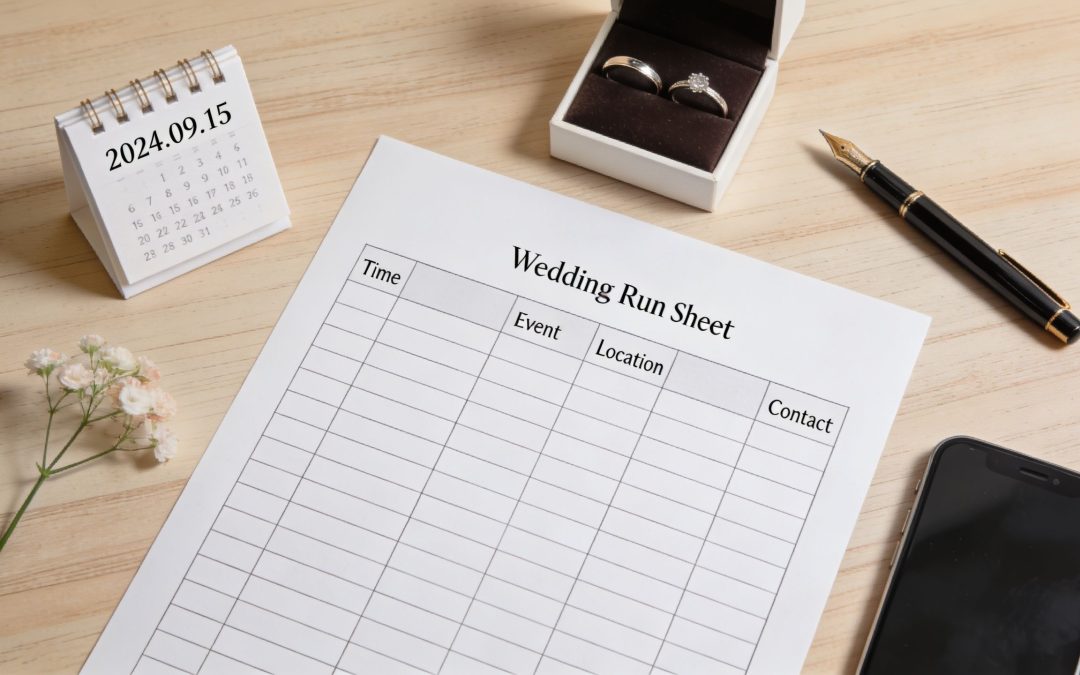
You’re probably looking at a growing stack of open tabs right now. One for the venue. One for the photographer. Another for transport. A note on your phone with ceremony ideas. A text thread with family questions. An email from your florist asking when they can access the venue. Another from your celebrant asking how long you’ve allowed for signing.
That jumble is exactly why a wedding run sheet matters.
Not because it’s glamorous. Not because it belongs in a planner’s binder. Because it turns a day with many moving parts into a day that feels calm, clear and well held.
Why Your Wedding Day Needs a Run Sheet
A lot of couples treat the run sheet as a final admin task. It isn’t. It’s the document that protects the whole day from avoidable confusion.
In Australia, the average wedding costs approximately $36,000 AUD, and a detailed run sheet helps manage that investment by keeping timing tight, avoiding unnecessary overtime, and coordinating 15-20 suppliers. It also matters emotionally. 70% of couples report stress during planning, which is exactly where a single, reliable timeline starts earning its keep, according to Hey Jack’s wedding run sheet guide.
If you haven’t mapped your day yet, a practical place to start is to create your wedding day timeline before you worry about styling details or tiny ceremonial extras. Timing decisions affect almost everything else.
It’s not just a timeline
A proper wedding run sheet does more than list times. It answers the questions people will ask on the day without needing to ask you.
Who opens the venue? When does the florist arrive? Where does the bus wait after drop-off? Who has the rings? When does the photographer leave for the reception venue? Who tells the DJ that speeches are about to start? If rain rolls in, who calls the move indoors?
That’s why the best run sheets become the single source of truth for the whole team.
Practical rule: If a supplier or family member could need the information on the day, it belongs somewhere on the run sheet.
What happens without one
When a wedding doesn’t have a clear run sheet, the problems are rarely dramatic at first. They’re small. A bouquet delivery lands while no one is ready to receive it. Hair and makeup drift late. The family photo list hasn’t been shared. Guests reach cocktail hour before the bar is set. The MC starts speeches while mains are being cleared.
Those little slips stack up.
A delayed start can push photography, transport, venue access and meal service out of sync very quickly. The couple then becomes the decision-maker for details they should never have to manage in formalwear.
Calm is built, not hoped for
A good run sheet creates breathing room. It tells everyone what’s happening, where it’s happening, who owns it, and what happens if something changes.
That’s the difference between a schedule and a resilient plan. One assumes the day will behave perfectly. The other assumes real life will show up and makes room for it.
Building Your Wedding Run Sheet Foundation
Before you fill in times, build the frame properly. Most run sheets fail because they’re too vague, not because they’re too detailed.
The strongest version is usually a spreadsheet or table in Excel or Google Sheets. Keep it simple enough that anyone can scan it quickly, but complete enough that your key people don’t need to chase missing details.
Start with anchor points
Professional planners build the day around anchors first. These are the fixed points that can’t move without affecting everything else.
The most common anchors are:
Ceremony start: This is the spine of the day. Hair, makeup, photography, transport and guest arrival all flow backwards from it.
Reception entry: Caterers, venue staff, musicians and your MC all need this fixed early.
Sunset or portrait light: Photographers should help shape this timing because they cover most major moments and know how long movements take.
Venue rules: Bump-in, bump-out, curfews, sound checks, parking access and gate times matter more than couples expect.
Travel windows: If your ceremony and reception are in different locations, travel time becomes a mandatory block, not a rough guess.
According to Kombi Keg’s wedding run sheet template guide, planners recommend locking anchor points first, consulting photographers early, and adding 10-15 minute buffers around movements because 80% of weddings exceed planned timings without them.
Use columns that solve problems
A run sheet works best when every line answers a practical question. These columns are the ones I’d consider essential:
Column
What to include
Why it matters
Time
Specific time blocks
Keeps everyone working from the same clock
Event or activity
What is happening
Removes guesswork and vague labels
Location
Exact venue area or address
Helps suppliers and family move correctly
Responsible person
One named person, not a generic team
Someone owns the task
Contact number
Day-of mobile
Fast fixes when plans shift
Notes
Access, props, weather plan, buffer reminders
Stops preventable mistakes
“Venue staff” is too broad. “Maddie, venue coordinator” is useful. “Groom’s family photos” is incomplete. “Groom’s family photos on lawn, list with photographer, grandparents first” is usable.
Include the overlooked details
Many couples write only the guest-facing moments. Professionals also include the hidden logistics.
Decision points: When a wet weather call must be made
Emergency contacts: Venue manager, planner, transport lead, family contact
Version control: One master copy, then only essential variations
A strong planning companion for this stage is a list of questions to ask your wedding venue, because venue rules shape the bones of your run sheet more than most couples realise.
The run sheet should tell people what to do without needing to interrupt the couple. That’s the standard.
Draft early, finalise late
Create the first proper draft a few weeks before the wedding. Final details will still move, and that’s normal. Finalise the live version closer to the day once your suppliers have confirmed arrival times, setup windows and service order.
The goal isn’t perfection on the first pass. The goal is a structure solid enough that refining it becomes easy.
Planning the Morning From Wake-Up to 'I Do'
The wedding morning sets the emotional tone for everything that follows. If the first half of the day feels frantic, that tension carries forward. If it feels paced and prepared, the rest of the day has a much better chance of staying steady.
Start with the immovable point. The ceremony time. Once that’s fixed, work backwards through transport, getting dressed, photography, hair and makeup, and breakfast or lunch. Don’t build the morning from when someone wants to wake up. Build it from when you need to arrive calm, dressed and ready.
Build backwards from the ceremony
This part catches couples out all the time. They allow enough time for makeup itself, but not for the moments around it.
There’s the delay when someone’s running late to the room. The extra touch-up after a happy cry. The time it takes to steam a dress that was hanging perfectly yesterday and somehow creased overnight. The search for a missing cufflink. The bouquet delivery that arrives during lipstick.
A practical morning sequence often includes:
Wake-up and food: You need time to eat and hydrate, not just sit for styling.
Hair and makeup start: Confirm the artist’s schedule for every person receiving services.
Photographer arrival: This should line up with detail shots, prep candids and dressing.
Florals delivered: Bouquets, buttonholes and any special family flowers need a receiving person.
Getting dressed: Build proper time for fastening, adjusting and portraits.
Travel to ceremony: Include loading time, not just driving time.
Arrival buffer: Aim to arrive ready, not in a sprint.
The reason planners consult photographers early is simple. They see and document nearly every key moment, so they often have the clearest sense of realistic timing. As noted in the earlier planning guidance, buffers around movement matter because transitions are where mornings usually slip.
Where buffers save the day
The most useful morning buffer isn’t hidden at the end. It’s woven through the entire lead-up.
If hair and makeup is scheduled tightly with no flex, one slow appointment affects everyone after it. If transport arrives exactly when you hope to walk out the door, any delay becomes a stress point. If you plan to finish dressing the minute the photographer arrives, you lose all breathing room for natural photos.
Leave white space around movement, dressing and travel. That’s where a wedding morning either settles down or unravels.
Here’s the practical standard. Add a small cushion around every transition. Dressing takes longer when jewellery, veils, suit buttons, shoes and family involvement are part of the moment. Group movement always takes longer than one person expects.
A short visual guide can help if you want to see how planners think through the flow of the day:
A realistic wedding morning mindset
The morning shouldn’t feel like a production line. It should feel managed.
That means deciding in advance who handles practical interruptions. One person can receive deliveries. One can answer supplier calls. One can keep an eye on time. If you don’t assign those jobs, they fall back to you.
A resilient run sheet for the morning also notes the little local realities that affect Australian weddings:
Warm weather: Build in time for touch-ups and cool-down breaks
Remote venues: Allow extra time for travel, patchy reception and supplier access
Shared accommodation: Know which room is for prep, photography and dress storage
Regional transport: Confirm exactly where drivers meet you and who has their number
What works and what doesn’t
What works is a morning with clear ownership. Your stylist knows who is first. Your photographer knows when details are ready. Transport knows where to wait. A trusted person keeps the room clear enough for everyone to work.
What doesn’t work is optimism disguised as planning. If six people are having styling and the sheet says “Hair and makeup done by late morning,” that isn’t a plan. It’s a hope.
The best wedding mornings feel unhurried because the work was done before the alarm went off.
Mapping the Main Events From Vows to Last Dance
Once the ceremony begins, your day shifts from private preparation to guest experience. At this point, flow matters most.
Guests don’t see the spreadsheet. They feel the rhythm. They notice whether drinks appear at the right time, whether speeches drag too long before dessert, whether the room feels ready when they enter, and whether there’s a natural build from formal moments into celebration.
Sequence the guest experience first
A strong reception run sheet doesn’t start with “what traditions do we want?” It starts with “what will guests need at each point?”
Immediately after the ceremony, guests need direction. If you’re leaving for portraits, they need drinks, canapés, shade or shelter, bathrooms and a clear sense of where to go next. If you’re staying on site, they still need hosting while family photos happen.
Then the reception needs a sensible shape. Entrance. Seating. Service. Speeches. Cake. Dance floor. Farewell. Not every wedding uses every tradition, but the order still matters because catering, entertainment and venue operations depend on it.
According to Blue Wren Farm’s reception run sheet advice, couples often underestimate timings by 20-30%, and group photos typically need an extra 10 minutes for guest herding. The same guidance notes that a detailed run sheet shared one week prior yields an 85% on-time execution rate.
A sample reception flow
For a reception beginning at 5:30pm, one practical sequence is:
6pm entrée
7pm main and speeches
8pm cake and dance
11pm last call
That doesn’t mean every wedding should copy those exact placements. It means the major parts of the evening need a deliberate order that supports service and energy.
Here’s a simple example of how that can look on paper.
Time
Event
Key Contact
Notes
5:30pm
Guests seated for reception
Venue coordinator
Confirm all guests called in from cocktail hour
5:45pm
Couple entrance
MC
DJ cued, photographer in position
6:00pm
Entrée served
Catering lead
Check dietary meals first
7:00pm
Main and speeches
MC
Confirm speech order before mains land
8:00pm
Cake cutting and first dance
DJ or band lead
Cake knife ready, photographer alerted
11:00pm
Last call and final farewell prep
Venue manager
Transport contact on standby
Don’t forget the hidden logistics
The guest-facing schedule is only half the story. The stronger run sheets also include the operational moments that keep the public moments smooth.
Those often include:
Supplier bump-in times
Ceremony pack-down
Sound check completion
Band or DJ meal timing
Cake delivery and storage
Styling resets between ceremony and reception
Venue bump-out and collection instructions
These details are where Australian venue realities show up fast. Rural properties may have stricter access windows. Heritage spaces may control sound and candles closely. Private properties often need firmer guidance for parking and supplier arrivals. If your vendors are travelling from different areas, your sheet needs to account for who arrives first, who needs site access, and who can’t do their job until another supplier has finished.
Guests remember a wedding as seamless when the handover between moments feels natural. That smoothness usually comes from logistics they never see.
Keep formalities moving
Reception energy rises and falls. That’s normal. The trick is not leaving guests in a long flat stretch.
A common mistake is stacking too many formalities together. If you place speeches, then cake, then a long video, then another thank-you before opening the dance floor, the room can lose momentum. A better approach is to use formal moments with intention and give the room a release point.
That matters even more if you’ve planned a choreographed dance. If you’re doing that, build in private rehearsal confidence before the day. Couples sometimes find outside resources useful for this, even if they’re overseas, because the teaching cues are still applicable. A good example is Philadelphia first dance instruction that breaks down how to prepare for a dance without overcomplicating it.
Build for movement, not perfection
A wedding reception run sheet should be specific, but not brittle. You want enough structure that the evening stays on track, and enough flexibility that a heartfelt speech or a weather-related reset doesn’t ruin the whole night.
That’s why the best planners write notes like “hold cake until mains cleared” or “delay entrance if grandparents need seating” rather than treating the timeline as untouchable. A resilient run sheet keeps the night moving without making people feel managed.
Sharing the Plan With Your Wedding Day Team
A wedding run sheet only works if the right people have the right version at the right time.
That’s the part couples often leave too late. They build a good document, then send one giant file to everyone and assume it will sort itself out. It won’t. Different people need different levels of detail.
Give each person the version they need
Your photographer may need prep details, family photo timing, travel notes and reception formalities. Your MC needs a clean list of cues, order of events and who to check with before announcing anything. A driver needs pickup times, addresses and the correct contact person. A parent usually only needs a high-level overview.
Think in layers.
Master run sheet: Full operational version for planner, coordinator or lead organiser
Supplier version: Relevant logistics and timing for each vendor
Family version: Key moments, arrival times, transport details, special responsibilities
MC version: Event order, pronunciation notes, speech order, cue points
If gift logistics are part of your wider wedding planning, couples often appreciate having one organised place for that side of things too. A practical example is a wedding services registry that keeps giving simple and clear without creating extra back-and-forth.
When to send it
You don’t need to flood inboxes months ahead with a document that will still change. You do need to send a near-final version early enough that suppliers can query anything important.
A clean process looks like this:
Draft the full run sheet once your key timings are established.
Check it with major vendors such as venue, photographer, celebrant and catering lead.
Refine access details and contact numbers once all suppliers confirm.
Send final versions to the relevant people before the wedding.
Confirm they’ve received it rather than assuming they have.
Appoint one keeper of the sheet
Someone needs to own the live document on the day. If you have a planner or coordinator, that’s ideal. If you don’t, choose a calm, reliable person who won’t vanish during cocktail hour.
This person does not need to micromanage every supplier. They need to know the plan, hold the contacts, and make minor timing calls without dragging the couple into every decision.
The couple should be the least interrupted people at their own wedding.
What to include at the top
The first lines of the run sheet should solve the fastest-moving problems.
Put these at the top of the page:
Couple names and wedding date
Ceremony and reception addresses
Primary day-of contact
Emergency backup contact
Wet weather decision note
Version date
That top section matters when someone opens the sheet on a phone in a hurry and needs the key details immediately.
Avoiding Common Wedding Run Sheet Mistakes
Most run sheet problems aren’t caused by laziness. They’re caused by assumptions. Couples assume travel will be smooth. They assume speeches will stay short. They assume everyone knows where to be. They assume a venue run sheet covers the whole day.
Those assumptions are where avoidable stress sneaks in.
Mistake one. Treating the venue sheet as the full plan
Venue teams usually focus on what happens inside their walls. That leaves gaps around off-site prep, transport, ceremony logistics, family movements and supplier coordination before arrival.
Fix it by building one master run sheet for the entire day, then folding the venue timing into it. Don’t let two competing documents run side by side.
Mistake two. Skipping the wet weather call
Outdoor weddings need more than a vague backup idea. They need a decision-maker, a decision time and a practical switch plan.
If rain becomes likely, your run sheet should already note who makes the call, who informs suppliers, what changes for seating and styling, and how guests are directed. If you need a little financial breathing room elsewhere in your plans so you can budget for sensible contingencies, this guide with tips to save money on your wedding day can help you prioritise what’s worth spending on.
Mistake three. Forgetting direct contact details
On the day, nobody wants to dig through old emails to find a mobile number. If the florist is at the wrong gate or the driver can’t locate the pickup point, speed matters.
Put day-of contact numbers directly on the sheet. Not office numbers. Not social handles. The mobile number that will be answered.
Mistake four. Planning too tightly
A run sheet should guide the day, not squeeze the life out of it.
If every minute is packed with no room to breathe, the plan becomes fragile. If a heartfelt hug line forms after the ceremony or your grandparents need more time getting to photos, the whole afternoon shouldn’t collapse. Build in room for the human parts of the day.
A good wedding run sheet is firm on sequence and flexible on exact pace.
Mistake five. Writing a document nobody can use
The prettiest run sheet is not always the most practical one. Overdesigned PDFs, tiny fonts and vague labels make life harder for the people trying to use them quickly.
Keep it readable. Use plain language. Name real people. Make the notes useful. If someone opens the sheet on a phone while standing in a car park, they should still be able to understand it immediately.
A resilient wedding run sheet doesn’t promise a flawless day because weddings are live events and real life always gets a vote. It does something better. It gives your people a clear plan, a backup plan, and enough structure to protect the feeling of the day when small things shift.
If you’re organising all the moving parts of a wedding, gifts shouldn’t be another messy spreadsheet to manage. EasyRegistry gives couples one simple place to create a registry, share it with guests, track contributions and keep everything organised in one link. It’s a practical way to reduce admin while keeping your wedding plans clear and guest-friendly.
You sit down to sort a 60th birthday invite and the job gets bigger fast. The guest list usually spans close family, old friends, work mates, and relatives who still prefer a printed card over a link in a group chat. Tone matters too. A formal lunch, a backyard barbecue, and a funny cocktail party all need different wording, design choices, and RSVP handling.
A good invitation does more than announce a date. It signals what kind of celebration this is, tells guests how to respond, and handles sensitive details like gifts without making the host sound awkward. That is the part people often get wrong.
In practice, the best option depends on trade-offs. Digital platforms are faster, easier to track, and better for mixed-location guest lists. Printed invites still win when the event feels traditional, when older guests are attending, or when the invitation is part of the keepsake. Some tools are stronger on design control. Others are better for RSVP management, local printing, or quick turnaround.
This guide focuses on what works for a 60th. Not just which platforms have templates, but why one suits a formal dinner while another fits a casual family gathering or a playful milestone theme. It also covers current gift etiquette, including how to add an EasyRegistry birthday registry link with wording that feels polite and clear.
The goal is simple. Choose a platform quickly, match it to the tone of the event, and send an invitation that looks considered and makes it easy for guests to say yes.
1. Canva
Canva is the tool I’d choose first if the host wants control without needing a designer. It’s especially strong for a 60th birthday invite because milestone events often need one design used in several places. You might need the main invite, a version for WhatsApp, a printable PDF for older relatives, and matching signage for the venue.
That flexibility matters in Australia, where digital invitations have risen sharply. The verified data notes a 78% increase in online invitations since 2015 in Roy Morgan research on digital event planning, cited in this birthday card wording article. Canva fits that shift well because it lets you create one invite and export it in whatever format suits your guest mix.
Where Canva works best
Canva is best when tone matters more than built-in event management. It’s easy to create three very different styles fast:
Formal look: Black, cream, navy, or gold layouts with serif fonts and simple wording.
Casual family party: Photo-led designs, brighter colours, and softer language.
If gifts are part of the planning, Canva is also one of the easiest places to add a registry URL or QR code. A clean way to do that is to place a small note at the bottom such as “Gift options and event details available here” with your birthday registry page.
Practical rule: Keep the gift note visually smaller than the event details. It should help guests, not dominate the design.
Trade-offs
Canva’s strength is design freedom. Its weakness is that you’re the one making the final choices. That’s great if you care about layout, but it can slow you down if you want the platform to handle guest messaging and RSVP follow-up.
A few practical pros and cons:
Best advantage: You can reuse the exact design across thank-you cards, menus, welcome signs, and social versions.
Main drawback: Some of the nicest fonts, graphics, and stock images sit behind paid elements.
Printing reality: Final print quality depends on where you print, so always test dark backgrounds and gold tones before ordering a full batch.
For hosts who want a polished invitation and like tweaking details, Canva is hard to beat.
2. Paperless Post
A common 60th birthday problem is wanting the invite to feel important without dealing with printing, envelopes, and postage. Paperless Post is one of the few digital platforms that solves that well. The presentation feels closer to a proper invitation than a quick event link, which matters for milestone birthdays where tone sets expectations.
I use it most for hosts who want a polished result and faster admin. It suits dinner parties, cocktail nights, restaurant bookings, and larger family celebrations where you need guests to RSVP promptly and take the date seriously.
Best fit for elegant digital invites
Paperless Post works best when the goal is formal or semi-formal, not highly customised. The design library does a lot of the heavy lifting. That is the main advantage over DIY tools. You can choose a card that already feels refined, send it quickly, and keep guest replies in one place.
The built-in RSVP tracking, guest messaging, maps, and follow-up reminders are very useful. I find that especially helpful with mixed-age guest lists, because the invite stays clear and the response process is simple.
It is also one of the easier platforms for modern gift etiquette. If guests may ask about contributions, keep the wording separate from the main invitation details and link to a dedicated wishing well registry for birthday contributions.
A clean example:
If you’d like to contribute to John’s birthday gift, we’ve set up a wishing well for those who’ve asked.
That works better than adding long gift instructions in the body text. It keeps the invitation focused on the event, while still giving guests a clear option.
Trade-offs
Paperless Post is strong on presentation and guest management. The trade-off is cost and flexibility. Premium designs and extras can add up, and you have less layout control than you would in a design-first tool.
It is also the wrong fit if the host wants something tangible to mail, hand-deliver, or keep as a memento.
Use it if you want:
A more polished digital tone: Better suited to a milestone celebration than a plain email or text invite.
Straightforward guest handling: RSVPs, updates, and reminders stay in one system.
Faster turnaround: Good for hosts who need to send invitations quickly without building the design from scratch.
Skip it if printed invitations are part of the experience. In that case, a print-focused platform will usually feel more satisfying.
3. Greenvelope
A lot of 60th birthday hosts hit the same problem. The event sounds simple at first, then the details pile up fast. Lunch sitting, dietary needs, parking instructions, a bus pickup, maybe a follow-up reminder the week before. Greenvelope is one of the better fits for that kind of invitation because it handles logistics without making the invite feel cluttered.
I use it most for milestone celebrations that sit in the middle ground. More polished than a casual group text, less formal than a mailed card. A restaurant lunch, private dining room, garden party, or winery afternoon all suit this style well.
Where Greenvelope earns its keep
Greenvelope works best when the invitation needs to do more than announce the date. The built-in surveys, RSVP tracking, and scheduled reminders save hosts from chasing replies individually. That matters if you need final numbers, meal selections, or transport confirmations by a deadline.
The presentation also helps set tone. The animated envelope and cleaner design feel occasion-specific, which is useful for a 60th where the wording needs to feel warm and considered rather than overly casual.
Gift etiquette is another area where hosts often overcomplicate things. Keep the invite focused on the celebration, then send guests who have asked to a separate gift registry for the celebration. That keeps the main message tidy and avoids turning the invitation into a list of instructions.
If you want copy that handles this well, use something like:
Your presence is the best gift. For those who have asked about gift ideas, we’ve added details here.
That wording works because it keeps the social priority clear. Attendance comes first. The registry sits as an option, not the headline.
Trade-offs to consider
Greenvelope is a stronger choice for organised hosts than for minimalists. If all you need is a simple digital card with basic RSVP collection, it can feel heavier than necessary. There is more to set up, and that only pays off if you use the extra tools.
Its best uses are clear:
Best for: Events with meal choices, transport notes, reminders, or several guest updates
Less suited to: Tight budgets, very simple parties, or hosts who want the fastest possible setup
Useful extra: You can upload your own design if you already have artwork and just need a better guest management system
One practical rule improves almost every Greenvelope invite. Put attendance details in the invitation itself. Put parking, dietary questions, accommodation notes, and gift links on the event page or linked details.
That structure keeps a 60th birthday invite polished and easy to read. Guests get the key information quickly, and the organiser still has room to handle the moving parts properly.
4. Vistaprint Australia
A common 60th birthday scenario looks like this. Half the guest list is happy to scan a QR code and reply on their phone. The other half will notice, keep, and respond more reliably to a printed card on the kitchen bench. Vistaprint Australia suits that kind of event well.
It sits in the middle of the market. You get a printed invitation that feels more polished than a quick home print job, without stepping into boutique pricing or a custom stationery process. For family-run milestone parties, that balance is often the right one.
Best use of Vistaprint
Vistaprint works best when print is the main format, but you still want one modern convenience built in. My usual recommendation is simple. Keep the card focused on the date, time, venue, and RSVP deadline, then add one QR code or short link for replies, dietary notes, or optional gift information.
That structure works because it respects different guest habits without making the invite feel cluttered. Printed cards still help when you have older relatives, interstate family, or guests who are less likely to act on a digital message alone. The digital layer then handles the admin cleanly.
For a 60th, that can be as simple as:
Please join us to celebrate John’s 60th Birthday Saturday 14 September at 6:30 pm The Surf Club, Newcastle RSVP by 1 September via the QR code below
If gifts are likely to come up, keep that wording discreet and secondary. A line I use often is:
Your presence is the best gift. For those who’ve asked, gift details are available via the link below.
That phrasing works for a milestone birthday because it keeps the tone warm and socially polished. The invitation stays about the celebration, not the registry.
Practical trade-offs
Vistaprint is dependable, but the result depends heavily on the choices you make at setup. Template selection, card stock, and amount of copy all have a visible effect.
Best for: Hosts who want printed invites with easy reordering and national delivery
Less suited to: Events where paper texture, foil, or highly custom finishes are the main priority
Common mistake: Treating the card like an information sheet and filling every blank space
Smart use: Put only the core invitation on the card. Move optional details to the QR destination
One practical caution matters here. If you print a QR code, test it on multiple phones before you place the order. Busy backgrounds, low contrast, or codes printed too small can turn a helpful feature into a frustration.
Vistaprint is a strong choice for hosts who want print to do the heavy lifting, while still giving guests an easy way to reply online. For many 60th birthday invites, that is the most useful compromise.
5. Officeworks Print & Create
A common 60th birthday planning problem looks like this. The venue is finally confirmed, a few interstate relatives need something tangible in the post, and there is no appetite for a long design process. Officeworks Print & Create suits that job well.
Its strongest use case is speed with local access. Hosts can build the design in Canva, export a clean file, and print through a service that is easy to pick up or reorder across Australia. That makes it a practical choice for families who want paper invites without committing to a specialty print workflow.
Best for quick turnarounds and mixed guest lists
Officeworks works best when logistics matter more than finishes. I recommend it for 60th birthday invites that need to go out fast, especially when the guest list is split between older relatives who prefer print and friends who are happy with a text or email version.
It is also useful when the numbers may change. Last-minute additions are common with milestone birthdays, and a local reprint option is easier to manage than restarting a boutique order.
A few situations where it fits well:
Late-confirmed events: The date is set close to the send window, but printed invites still matter.
Hybrid invitation plans: Print for key guests, digital for everyone else.
Flexible quantities: Extra cards can be added without much fuss.
As noted earlier, hybrid delivery matters for this age group. Printed invites still feel more considerate for some guests, especially for a formal lunch, club dinner, or family gathering where the invitation may be kept on the fridge rather than searched for in messages.
Where it works, and where it doesn’t
Officeworks is a convenience-first option. The print result is perfectly acceptable for simple, clear designs, but it is not the place I would choose for textured stock, foil, or a luxury first impression.
That trade-off is often worth it. You get predictable turnaround, straightforward reorders, and a simpler process if someone else in the family is helping with pickup.
The best results come from keeping the layout disciplined:
Use a finished PDF: It reduces formatting surprises.
Keep copy short: Printed cards look cheaper when every inch is filled.
Leave breathing room: Larger type and white space usually read better for older guests.
Test any QR code first: Print a sample at size and scan it on more than one phone.
For gift wording, shorter is better on an Officeworks card. One line is usually enough: “Your presence is the best gift. For those who’ve asked, gift details are available via QR code.” That keeps modern registry etiquette, including EasyRegistry-style gift guidance, present but discreet.
Officeworks does not win on polish. It wins on timing, clarity, and convenience. For many 60th birthday invites, that is exactly the right priority.
6. Snapfish Australia
A daughter is organising Mum’s 60th, half the guest list wants a printed card, and the tone needs to feel personal rather than corporate. That is the job Snapfish handles well. It is one of the better picks here if the photo is the centrepiece and the design only needs to support it.
I recommend Snapfish most for family-led celebrations, memory-themed lunches, and parties where the guest of honour’s story is part of the invitation itself. A strong portrait, a candid family shot, or a then-and-now layout does a lot of the tone-setting before anyone reaches the event details.
Best for sentimental and family-led invites
Snapfish works best when you already know what feeling you want. Warm, nostalgic, proud, funny. If that emotional direction is clear, the platform helps you turn it into a printed invite quickly without building a layout from scratch.
That makes it a practical fit for 60th birthdays, where hosts often want to reference the year, the era, or family milestones without over-designing the card. A simple line like, “Please join us to celebrate 60 wonderful years,” usually works better than cramming in dated trivia or too many jokes.
If you want to bring in modern gift etiquette, keep it low-pressure and secondary to the event details. For example: “Your presence is the best gift. For those who have asked, registry details are available on request.” If you are using a service such as EasyRegistry, that wording keeps things polite and current.
Practical strengths and limits
The trade-off with Snapfish is straightforward. It is easier than a blank-canvas tool, but you give up some design control.
What I like about it:
Photo-first templates: Good for invites built around one strong image.
Printed card value: Usually a sensible choice once the guest list grows.
Coordinated extras: Helpful if you want matching thank-you cards or photo stationery later.
Where I’d be careful:
Limited layout freedom: Harder to fine-tune spacing, hierarchy, or unusual wording blocks.
Less suited to formal styling: If you want a black-tie look, premium stock, or a restrained luxury finish, another platform will usually do that better.
The best results come from keeping the card focused. Use one excellent photo, one clear headline, and wording that matches the tone. For a funny family party, that might be: “60 years young. Please join us for a celebration of John.” For a more polished lunch, go with: “Join us as we celebrate Helen’s 60th birthday.”
Snapfish is not the most flexible tool in this list. It is one of the fastest ways to make a 60th birthday invite feel personal, warm, and worth keeping.
7. Greetings Island
A lot of hosts reach this point late. The venue is booked, the date is close, and they need a 60th birthday invite tonight, not after an hour of design tweaks. Greetings Island suits that job well.
It is the quickest low-cost option in this list for a simple, presentable invite. I’d use it for family lunches, restaurant bookings, club dinners, and relaxed home parties where clear information matters more than paper stock, advanced RSVP tools, or a custom-designed look.
Best for fast invites with clear wording
Greetings Island gives you a basic editor, printable files, and online delivery in one place. That combination is useful if the host has not decided whether guests will receive the invite by text, email, or as a printed card.
Its real strength is speed. Pick a layout, swap in the name, date, time, and venue, then spend your effort on wording. For a 60th, that matters because tone does more of the work than design complexity. A casual invite can sound warm and organised with a line like, “Please join us for a relaxed lunch to celebrate Maria’s 60th birthday.” A playful version can go a little lighter: “60 years young. Join us for drinks, dinner, and a proper celebration for David.”
Where it works best
Greetings Island is a practical choice for hosts who want to get something out quickly and keep costs down.
It works well for:
Casual events: BBQs, lunches, family dinners, and community venue celebrations.
Last-minute edits: Easy to update times, addresses, and guest-facing details.
Mixed sending styles: Share digitally first, then print a few copies for relatives who prefer paper.
The trade-off is control. You get convenience, but not the same level of layout precision, premium finishes, or guest management you’d get from a more specialised platform. If the party is formal, styled around a dress code, or tied to a sit-down venue with detailed RSVP needs, another service will usually produce a better result.
Registry wording that fits this platform
This is also a good place to handle modern gift etiquette properly. On a simple invite, registry wording should stay brief and secondary to the event details. If you are linking to a service such as EasyRegistry, keep it polite and optional.
Two lines I’d use:
Your presence is the best gift. For those who have asked, gift details are available via our registry link.
No gifts expected. If you would like to contribute, we’ve included an optional registry for convenience.
That wording works because it matches the platform. Straightforward design, low-pressure tone, clear guest guidance. Greetings Island will not give you the most polished 60th birthday invite in this list, but it is one of the fastest ways to get a friendly, usable invitation out the door.
60th Birthday Invite, 7-Platform Comparison
Service
? Implementation complexity
? Resource requirements & efficiency
? Expected outcomes
? Ideal use cases
? Key advantages
Canva
Low, drag-and-drop editor; minimal learning curve
Free tier + paid elements; fast customization and export for print/digital
Highly customisable digital or print invites; print quality depends on printer
DIY designers who want full control and to add registry QR/URL
Vast template library; fast reuse across stationery
Paperless Post
Low–Medium, platform setup and template selection
Pay-per-design or Pro subscription; quick digital delivery
Polished e-invites with built-in RSVP and guest messaging
All-digital events needing RSVP tracking and updates
Professional, mobile-friendly guest experience
Greenvelope
Medium, richer organiser tools and presentation options
Best value on paid plans; trial available for small lists
Animated, ad-free digital invites with RSVP, surveys and reminders
Reliable physical invites and envelopes; tangible keepsake quality
Printed invitations and matching stationery with nationwide delivery
Consistent mass-market pricing and easy QR printing
Officeworks Print & Create
Low, Canva integration or upload-ready PDFs; in-store pickup
Budget-friendly print pricing; options vary by store; click-and-collect
Economical physical invites with quick local pickup
Fast, local printing and reprints; last-minute needs
Ubiquitous stores for convenience and reordering
Snapfish Australia
Low, photo-first editor with straightforward personalization
Low per-card pricing, frequent discounts; efficient for bulk orders
Photo-centric printed invites with good colour and low unit cost
Photo-featured invitations for medium-to-large quantities
Very cost-effective for larger runs; simple photo print workflow
Greetings Island
Very low, simple editor and downloadable templates
Mostly free or low-cost; download PDFs/JPGs for printing
Quick digital sends or print-ready files with basic RSVP
Tight budgets and very fast turnarounds
Fast, budget-friendly templates and easy downloads
Your Invitation Checklist: Wording, Timelines & Etiquette
A 60th birthday invite usually gets written after the venue is booked, the guest list is half-built, and someone asks, “Are we doing gifts?” That is why this section matters. The tool handles design. The host still needs wording that matches the tone, a send date that gives guests time to respond, and gift wording that feels polite rather than pushy.
For a local lunch or dinner with a settled guest list, sending invites about four to six weeks ahead usually works well. For larger milestone parties, events on long weekends, or celebrations that involve travel, give people more notice. Extra lead time reduces follow-up messages, helps printed invites arrive on time, and gives older guests a clearer runway to plan.
Wording that actually works
Good invitation wording does one job well. It tells guests what kind of event this is before they even read the details. Formal wording signals a hosted occasion. Casual wording feels relaxed and social. Funny wording works best when the guest of honour already jokes about age and the crowd will read it the right way.
Why it works: It sets a polished tone and suits printed invitations, plated events, and guest lists that include colleagues or extended family.
Example: “Together with family, we invite you to celebrate Helen’s 60th birthday on Saturday, 14 September at 6.30 pm.”
Casual
Best for: Lunches, BBQs, home gatherings, brewery or club celebrations
Why it works: It feels warm without sounding sloppy. This is usually the safest choice for mixed-age guest lists.
Example: “Please join us for drinks, dinner and plenty of laughs as we celebrate Mark turning 60.”
Funny
Best for: Relaxed hosts who enjoy milestone humour
Why it works: It adds personality fast, but only use it if it sounds like the host or guest of honour. Forced jokes date quickly.
Example: “He’s not getting older. He’s just reached classic status. Join us for Paul’s 60th birthday celebration.”
A practical rule. Match the wording to the room, not just the birthday. A black-tie restaurant booking and a backyard lunch should not sound the same, even if both are for a 60th.
Gift wording without awkwardness
Gift wording works best when it is short, secondary, and easy to skim. Guests should notice the celebration first and the gift option second. That applies whether you are adding a registry, a group contribution, or a simple wishing well note.
These lines are safe, clear options you can copy and paste:
Your presence is the best present. If you’d like to contribute to a group gift, we’ve included details here.
No boxed gifts, please. For those who’ve asked, we’ve set up a simple registry for contributions and gift ideas.
We’re looking forward to celebrating together. If you’d like gift suggestions, a registry link is included with the invite.
If you are using EasyRegistry for gift ideas, cash funds, or shared contributions, keep the wording matter-of-fact. Guests do not need a long explanation. They need one clear sentence and one link. For example: “For friends and family who have asked about gifts, we’ve added an EasyRegistry link with a few ideas and contribution options.”
That phrasing works because it answers a common guest question without making the invite feel transactional.
Final checks before sending
Before you send a digital invite or approve a print order, check the parts that cause problems later:
Readability: Use font sizes that older guests can read easily. Script fonts often look elegant on screen and become hard to read in print.
Guest flow: Test links, QR codes, maps, and RSVP steps on a phone, not just a laptop.
Audience fit: For mixed-age guest lists, send digital invites to guests who prefer them and keep a small printed batch for relatives who respond better to post.
Gift placement: Put registry or contribution details at the bottom or on a secondary info card, not in the headline copy.
RSVP clarity: Include one deadline and one response method. Too many options lead to late replies.
For hosts juggling venue tasks, guest communication, and gift planning at once, a simple planning document helps. These free event planning checklist templates are a useful starting point.
A strong 60th birthday invite feels right for the guest of honour, gives guests clear direction, and saves the organiser time. Get those three parts right and the invite starts doing its job the moment it lands.
What makes an anniversary gift for boyfriend worth buying. A nice idea, or something he will use, remember, and talk about later?
The best gifts usually sit at the overlap of personality, timing, and practicality. A great bottle means less if he does not drink much. A weekend away sounds romantic until neither of you can line up dates. Even a thoughtful gadget can miss if it solves a problem he does not really have.
That is the filter for this guide. It focuses on seven Australian gift options that cover experiences, subscriptions, everyday gear, and food and drink, then shows how to choose between them based on his habits, your budget, and how much planning you want to take on.
It also helps with the part many roundups skip. Presentation matters. So does logistics. If you want to go bigger, a group gift can make more sense than stretching your own budget for one expensive item. For larger anniversary purchases, shared funding tools can keep it simple, much like the approach behind these smart group gift and registry ideas.
The goal is not to buy the most impressive thing on paper. It is to pick something that feels specific to him, is realistic to organise, and still feels good when the anniversary arrives.
1. RedBalloon
Need an anniversary gift that feels thoughtful without gambling on one very specific hobby or taste?
RedBalloon is one of the safest strong options in Australia because it gives you range. You can book something romantic, pick an activity with a bit of energy, or keep the decision open with a gift card if schedules are hard to pin down. That flexibility is a key selling point. It lowers the risk of buying a gift that sounds exciting now but becomes annoying to organise later.
It works best when you know his general style but not the exact format he would enjoy. If he likes doing things more than collecting things, RedBalloon gives you room to choose between dining, driving, short stays, animal encounters, spa packages, and other experience categories without locking you into one narrow idea too early.
Why it works
RedBalloon lists thousands of experiences across Australia, and its vouchers have a long validity period at RedBalloon. That matters more than the headline experience itself. An anniversary gift loses a lot of value if work, travel, or weather keeps pushing the booking back.
I also rate it for budget control. You can stay modest with a dinner or massage, or go bigger with a weekend away. If you want to buy something more expensive without carrying the full cost alone, shared-gift planning can help. The same practical approach behind these group gift and registry ideas for bigger occasions applies here too, especially if you are funding a getaway or premium package with family or friends.
A few trade-offs are worth checking before you buy:
Gift cards suit busy couples best: They give him choice and avoid the problem of booking a date that no longer works.
Specific experiences need more planning: Popular options and peak weekends can book out earlier than expected.
Final cost is not always identical across listings: City, date, and package inclusions can change the price, so check the total before you commit.
The best gift depends on his comfort level: “Adventure” can mean V8 driving for one guy and a winery stay for another.
One practical rule saves a lot of disappointment. Check availability first, then buy. That extra five minutes can tell you whether your great idea is realistic for your anniversary window.
If you want a gift that feels more personal than another shirt or gadget, RedBalloon is a strong first option. It gives you a practical framework too. Pick the category, check the logistics, decide whether to book now or leave it flexible, and only then choose the package.
2. ClassBento
Want your anniversary gift to feel like an actual occasion, not just another item he unwraps and puts on a shelf? ClassBento is one of the better Australian options for that. It turns the gift into time together, which is often more useful for boyfriends who are hard to buy for or already picky about what they own.
The appeal is the format. ClassBento focuses on hands-on workshops such as pottery, cooking, cocktail making, woodworking, painting, and other practical classes you can book as a couple. Gift cards are valid for three years, which gives you some breathing room if your schedules are messy or you want to buy now and choose the date later.
Best use case
ClassBento works best when you want a present with built-in structure. You are not just choosing a gift. You are choosing how you want the anniversary to feel. Relaxed and creative, competitive and funny, or skill-based if he likes learning something new.
That flexibility is what makes it stronger than a generic experience in many cases. A pottery class suits a low-key couple. A dumpling or pasta workshop gives you dinner and the activity in one booking. A cocktail class usually feels more social and celebratory. The trade-off is that the best sessions and convenient time slots can disappear quickly, especially around weekends and peak gifting periods.
It also helps to be honest about location. Big cities usually have the widest range. In smaller areas, you may need to compromise on category, travel a bit, or give a gift card instead of locking in one specific class too early.
Where it beats a physical gift
It solves the “he buys his own stuff” problem: You are not guessing his size, brand preference, or whether he already owns a better version.
It gives you a built-in plan: That matters if you want the anniversary to feel organised without spending days arranging every detail.
It can scale with your budget: A simple local workshop stays reasonable, while premium private classes can feel more special.
For a bigger-ticket class, private session, or paired weekend plan, it can make sense to set it up through an online gift registry for group contributions. That is a practical option if friends or family want to chip in rather than all buying separate small gifts that miss the mark.
My main advice is simple. Pick the class type first, then check date options, suburb, session length, and cancellation terms before you pay. ClassBento is a strong anniversary gift for boyfriend because it feels personal without becoming overly sentimental, but the logistics still decide whether it feels easy or annoying on the day.
3. The Whisky Club (Australia)
The Whisky Club is less about one big reveal and more about giving him something that keeps arriving. For the right boyfriend, that’s a great anniversary move. It turns the gift into an ongoing ritual instead of a single-day thing.
This only works if he actually enjoys whisky, though. Not “likes an occasional drink”. I mean someone who gets curious about distilleries, limited releases, or tasting notes. If that’s him, this is one of the stronger subscription-style gifts in Australia.
What makes it different
Membership is free, bottles are curated as monthly releases, and members can skip months or opt out through The Whisky Club Australia. That flexibility matters because recurring gifts can get annoying fast if they feel financially sticky or too frequent.
A smart way to present this is to pair the membership with a proper glass, a handwritten tasting card, or a planned at-home tasting night. Without that extra touch, a subscription confirmation email can feel a bit thin as an anniversary present.
A subscription gift lands better when you make the first delivery feel tangible. Print the welcome details, add a note about why you chose it, and turn the handover into part of the gift.
This category also pairs well with group gifting if you want to build out a fuller drinks setup, such as glassware, a decanter, or a bar cart contribution list through EasyRegistry’s gift registry platform.
A few cautions:
Age and delivery rules apply: Alcohol gifts are only suitable for recipients aged 18+ and someone needs to be available for delivery.
Monthly cost varies: Bottling prices differ, and shipping is additional.
Taste specificity matters: Don’t choose this if he’s more of a casual beer or wine drinker.
For a whisky fan, though, this feels personal without being cheesy. That’s a hard balance to get right.
4. Craft Cartel Beer Club
Craft Cartel Beer Club suits the boyfriend who gets bored drinking the same thing every weekend. If he likes trying new breweries, rotating styles, and limited releases, this feels more thoughtful than grabbing a carton from the bottle shop on the way home.
The appeal is simple. You are giving him a reason to keep discovering, not just another branded beer accessory that ends up in a cupboard.
Who should pick this
Craft Cartel offers curated 8-pack and 16-pack monthly cases, plus a membership option with 10% off site-wide, early access to specials, and nationwide delivery from Craft Cartel. For an anniversary, the best value usually sits in a short run. One to three months feels generous without turning the gift into an ongoing expense you need to keep managing.
This option works best for someone who enjoys variety and talks about what he is drinking. If he likes comparing hazy IPAs to pale ales, checking out independent breweries, or bringing interesting cans to a barbecue, he will probably get more out of this than a one-off six-pack.
Presentation matters here. A subscription email on its own can feel flat, so I would pair it with good beer glasses, snacks for the first box, or a note setting up a tasting night together. If you want to go bigger, this is also the kind of gift that works well with group funding. Friends can cover the beer club while you use a registry tool like EasyRegistry for extras such as glassware, a cooler, or a home bar upgrade.
Trade-offs to know
Best for curious drinkers: The value is in trying different breweries and styles.
Weaker fit for narrow tastes: If he only drinks one lager or avoids hoppy beers, part of the box may miss.
Delivery needs planning: Alcohol delivery requires an adult to receive it, and shipping costs are separate.
Romance needs a little help: The gift gets stronger when you present it with a plan for enjoying the first delivery together.
For the right boyfriend, this is easy to get right. It is relaxed, useful, and more personal than standard beer merch, especially if you make the first box part of the anniversary rather than just a delivery notification.
5. Orbitkey (Australia)
Orbitkey is the practical pick on this list. That sounds less romantic on paper, but in real life practical gifts often get used most. If your boyfriend likes clean design, carries keys daily, and appreciates small upgrades that make life feel tidier, this is a strong call.
It’s a Melbourne-born brand, which also gives it nice local credibility for an Australian audience. The product doesn’t scream “anniversary gift”, which is exactly why some men love it.
Why daily-use gifts often win
The core Orbitkey organiser holds roughly two to seven keys, depending on the model, with optional blind-deboss monogramming, add-ons like a bottle opener or tracker, and a two-year warranty through Orbitkey Australia. It solves a real annoyance. No pocket jangle, less scratching, and a cleaner everyday carry setup.
For anniversary gifting, monogramming is the feature that lifts it above a standard accessory. You get personalisation without going overly sentimental. That’s a useful middle ground when your boyfriend likes thoughtful details but not big emotional gestures.
If he’s the type who says he “doesn’t need anything”, buy the nicer version of something he uses every day.
A few honest drawbacks:
Capacity can be limiting: If he carries lots of keys, he may need an extension post at extra cost.
Monogram options vary: Not every colour or model offers the same finish.
Best for organised personalities: If he loses his keys weekly, add a tracker from the start.
Orbitkey won’t create a dramatic reveal moment like an experience gift. But it’s one of the most reliable examples of a gift that keeps proving useful long after the anniversary passes.
6. Koko Black
Want an anniversary gift that feels considered without creating sizing issues, delivery stress, or a huge bill? Koko Black is one of the safer picks on this list, especially if your boyfriend loves chocolate and you want the gift to look polished the moment it arrives.
The brand’s advantage is presentation. You can buy a ready-made box if you need something quick, or build a more personal selection if you know his taste. That makes it useful for different budgets and different stages of a relationship. A small box works for a newer anniversary. A larger hamper, paired with dinner plans or a handwritten card, feels more substantial without becoming over-the-top.
Best for couples who want flexibility
Koko Black sells curated chocolate boxes, seasonal gifts, and custom hamper options with clear pricing through Koko Black. That range matters. Some edible gifts feel generic because there is only one obvious option. Here, you can steer sweeter, darker, simpler, or more gift-box focused depending on what he will eat.
It also suits the practical side of anniversary shopping. If you are trying to keep costs sensible, chocolate usually gives you a better presentation-to-price ratio than fashion, tech, or jewellery. For bigger milestone gifts, I’d pair Koko Black with something else rather than ask it to carry the whole occasion on its own. If friends or family are chipping in for a larger present for another event, a group gift setup through EasyRegistry’s birthday registry can keep contributions organised while you still add a smaller personal extra like this.
Trade-offs to know before ordering
Strong on presentation: Gift-ready packaging makes it a good last-minute option that still feels intentional.
Best for confirmed chocolate fans: If he is indifferent to sweets, this will feel pleasant rather than memorable.
Delivery needs a bit of thought: Warm weather and long shipping routes can affect timing, especially outside metro areas.
Seasonal ranges move fast: Popular flavours and themed boxes can disappear close to major gifting dates.
Koko Black works best as a thoughtful, easy-to-present gift with low friction and broad appeal. It is not the boldest anniversary idea here. It is one of the easiest to get right.
7. Good Pair Days
Want a wine gift that feels more considered than grabbing a bottle on the way home? Good Pair Days works well for that middle ground. It gives him something enjoyable now, while also shaping future deliveries around what he likes.
That practical part is what makes it useful for anniversary gifting. Some alcohol gifts are impressive for one night and then forgotten. A wine subscription has better follow-through if he enjoys trying new bottles but does not want the effort or cost of building a serious collection.
Where it fits best
Good Pair Days offers printable or e-vouchers, shipped first-box gifts, and wine boxes that typically include at least three bottles with pairing guides and tasting notes through Good Pair Days gifts. The pairing notes are the differentiator here. They give the gift some structure, so the experience feels more intentional than sending wine.
It suits a boyfriend who likes the ritual of opening a bottle with dinner, comparing styles, and finding new favourites. It is less convincing for someone who already buys the same labels every time or only drinks wine occasionally.
There is also a useful budgeting angle. If you want the anniversary present to feel bigger than the spend, pair the subscription with a dinner reservation, cheese board, or home-cooked date night. For a milestone gift, the same group-funding logic mentioned earlier can work well here too. Friends or family can chip in on a bigger main present through a tool like EasyRegistry, while you keep the anniversary gesture personal with something like this.
Wine usually lands better as a planned experience than a standalone object. The tasting notes and pairing prompts help you create that experience without much extra work.
Good Pair Days is a strong pick if you want something polished, easy to send, and more personal than a generic bottle. The trade-off is that it depends on genuine interest. If he is curious about wine, it feels thoughtful. If he is not, another experience gift on this list will probably hit harder.
Comparison of 7 Anniversary Gifts for Boyfriend
Item
Implementation complexity ?
Resource requirements ?
Expected outcomes ? · Quality ?
Ideal use cases ?
Key advantages
RedBalloon
? Medium, select experience or instant e?gift
? Moderate, wide price range; booking time may be needed
? Broad choice, high satisfaction · ????
Flexible gift when recipient’s preference is unknown or schedule varies
Huge variety; long (5?year) voucher validity
ClassBento
? Low–Medium, book class or send gift card
? Low–Medium, many lower?cost options; schedule constraints in small cities
? Premium edible gift; high perceived quality · ????
Romantic, celebratory or personalised edible gifts
Customisable hampers; artisan presentation
Good Pair Days
? Low, choose voucher or personalised subscription
? Moderate, box cost varies; age 18+ delivery rules
? Personalised wine discovery with tasting notes · ????
Wine lovers seeking education and curated tasting
Taste?profile personalisation; pairing guides and notes
Pro-Tips for Nailing the Perfect Anniversary Gift
What makes an anniversary gift land well. Price, surprise, or how closely it fits who he is? In practice, fit wins most often.
Start with his real habits, not the version of him you wish shopped better, cooked more, or suddenly loved adrenaline. If he likes useful gear and carries the same keys, earbuds, and wallet every day, a practical pick like Orbitkey usually gets more use than a flashy novelty. If he talks about doing more together, RedBalloon or ClassBento will often feel more personal because the gift is shared time, not just an object. If he enjoys a ritual, such as Friday whisky pours, trying new beers, or opening a wine box each month, a subscription can make more sense than a single item he forgets by next week.
Budget needs a clear plan. Overspending can make the gift feel performative, and underspending without thought can feel rushed. A simple rule works well. Put more of the budget into categories he values most, then cut extras that only improve presentation. For example, it usually makes more sense to spend more on a better experience date than on premium wrapping, or to choose a smaller Koko Black box and pair it with a handwritten note rather than stretching for a large hamper that strains your budget.
Bigger-ticket gifts deserve a different approach. If you want to book a weekend away, cover a class series, or fund a premium experience, group contributions can turn a good idea into one you can afford. EasyRegistry gives you one place to collect funds, track who has contributed, and share a clean link without chasing people individually. That is especially useful when friends or family already want to help but do not know what to buy.
Presentation still matters. An emailed voucher with no context feels transactional. Print the booking, add a short note about why you chose it, and give him something tangible to open. A cooking class can go inside a new apron or recipe notebook. A whisky subscription feels stronger with proper glassware or a tasting card for the first bottle. A wine gift works better if you plan the first pour, the food, and the night around it.
For milestone anniversaries, pair the gift with the celebration plan. Dinner, timing, location, and reveal all affect how memorable the gift feels. If you need help shaping the day around the present, this list of anniversary celebration ideas is a useful starting point.
The strongest anniversary gifts usually do three things well. They suit his personality, they fit your budget without stress, and they arrive in a way that feels considered. If the ideal gift is slightly out of reach on your own, use a registry or cash fund and make it happen properly rather than settling for three smaller things he never asked for.
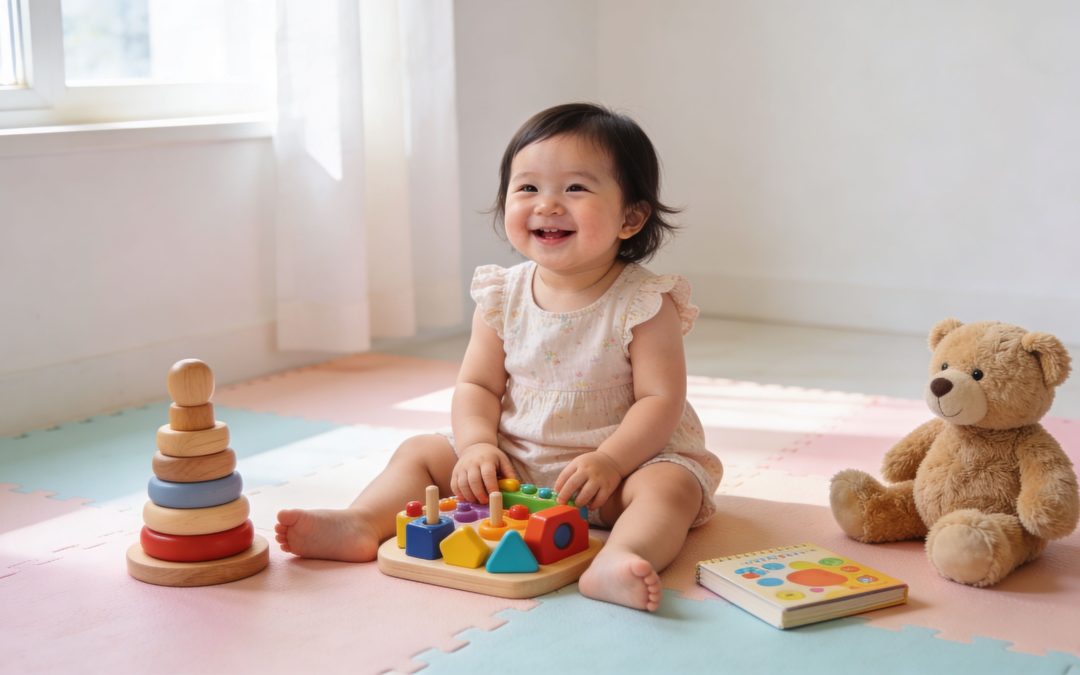
You’re probably doing one of two things right now. You’re either staring at a dozen tabs full of “cute” birthday gifts and feeling none the wiser, or you’ve already bought something once for a one-year-old and realised later that it was noisy, flimsy, or completely ignored.
That’s why choosing gifts for 1 year old girl can feel oddly hard. A first birthday matters. You want the gift to feel joyful, but you also want it to be useful, safe, and not just another random thing taking up lounge room space.
My advice is simple. Stop shopping by trend, and start shopping by development. At one, babies are learning to move with more confidence, use their hands with more purpose, test cause and effect, and copy the people around them. The right gift supports that. It doesn’t need to be expensive. It needs to fit what her body, brain, and attention span are doing right now.
Choosing the Perfect First Birthday Gift
A great first birthday gift does three jobs at once. It gives her something fun to do today, something she can grow into over the next few months, and something her parents won’t want to hide in a cupboard by the end of the week.
That rules out a lot of junk very quickly.
If you’re unsure where to start, look at gifts through three filters:
Supports a real skill: Think walking, gripping, sorting, posting, banging, turning pages, or copying simple actions.
Feels good to use: One-year-olds love objects they can hold, push, shake, stack, open, and repeat.
Works in everyday family life: If it’s too loud, too messy, too fragile, or too huge, it’s not thoughtful. It’s work.
A first birthday is also when many families start getting duplicate toys, random clothing sizes, and presents that don’t match what the child needs. Browsing sample birthday and baby registries can help you see how other families organise practical choices without making the list feel stiff or transactional.
If you want extra inspiration before narrowing things down, it’s useful to discover ideal toys for young children and then edit ruthlessly. Fewer, better items always beat a pile of forgettable ones.
The perfect gift isn’t the fanciest one. It’s the one she’ll return to again and again.
Understanding a One-Year-Old's World
At one, everything is active. She’s not sitting back and admiring a toy. She’s testing it, mouthing it, dropping it, carrying it across the room, and trying again. That’s why the best gifts for 1 year old girl are hands-on and simple.
Motor skills are the big story
This age is full of movement. Some babies are cruising along furniture. Some are taking first steps. Others are crawling at top speed and climbing anything they can reach. That physical drive shapes what they enjoy.
Hand use is changing fast too. Research notes that toys for fine motor development at 12 to 18 months should target hand-eye coordination, grasp refinement, and bilateral hand coordination, with textured surfaces, varied grip diameters, and multi-sensory feedback worth prioritising according to this toy and developmental milestone guide.
That’s why certain classics keep earning their place:
Shape sorters: Great for hand control, turning objects, and early problem-solving.
Stacking rings: Good for grasping, releasing, and visual matching.
Pop-up toys: Useful for finger strength, persistence, and cause-and-effect learning.
Bath toys and simple instruments: These add sound and sensory feedback, which helps keep babies engaged.
Thinking happens through repetition
Adults often underestimate how much learning happens when a baby does the same thing over and over. Posting a block into a box. Knocking over a tower. Pressing a button to hear a chime. That repetition is not boredom. It’s practice.
Play is how a one-year-old studies the world. Repetition is how she makes sense of it.
Good gifts at this age usually have an obvious action and an immediate result. Put in, take out. Push, roll. Tap, hear sound. Open, close. If a toy needs too much explanation, it’s probably wrong for now.
A quick way to assess any gift is to ask, “Can she do something with this by herself within a minute or two?” If the answer is yes, it’s promising.
Social development matters too
One-year-olds also learn by watching people. They copy clapping, pretend to talk on toy phones, feed dolls, hug soft toys, and mimic household routines. That’s why soft dolls, toy cups, simple pretend-play sets, and board books work so well.
Use this cheat sheet when deciding:
Development area
What she’s doing
Gifts that fit
Gross motor
Crawling, standing, cruising, walking
Push toys, ride-ons, soft climbing pieces
Fine motor
Grasping, releasing, turning, poking
Stackers, sorters, chunky puzzles, pop-up toys
Cognitive
Repeating actions, testing cause and effect
Activity centres, posting toys, musical toys
Social-emotional
Imitating, cuddling, simple pretend play
Dolls, plush toys, books, toy household items
If you remember one rule, make it this. Buy for the child she is becoming over the next few months, not just the exact skills she shows today.
The Golden Rules of Safe Gifting
Safety comes before style, brand, or cuteness. Every time.
A lot of gifts marketed for babies look lovely online and fail the basic common-sense test in real life. If you’re buying for a one-year-old, be strict. Parents will thank you for it.
What to check before you buy
Use this checklist in shops or while scrolling online:
Age label: Start with the packaging or product listing. If it isn’t clearly suitable for around age one, move on.
Part size: Avoid anything with detachable small pieces. If a part looks like it could fit easily in a little mouth, that’s enough reason to skip it.
Construction: Tug at seams, wheels, buttons, ribbons, eyes, and decorations. If it feels flimsy in your hand, it won’t survive a toddler.
Materials: Look for BPA-free plastics, solid wood, and non-toxic paints or finishes.
Cord length: Long strings, cords, and loops are not worth the risk.
What I’d avoid without debate
Some categories cause too many headaches.
Button battery toys: Hard no unless the battery compartment is secured and the toy is clearly made with safety in mind.
Loose magnets: Also no. If magnets can come free, the item shouldn’t be anywhere near a baby.
Novelty dress-up bits: Tiny tiaras, beads, sequins, and glued-on embellishments are cute in a photo and annoying in a real home.
Overly loud electronic toys: These aren’t just irritating. They often lead to shorter play because the child gets overstimulated and the parents switch the toy off.
Practical rule: If you wouldn’t feel comfortable watching her explore it with both hands and her mouth, don’t buy it.
Safer choices usually look simpler
The best safe gifts are often the least flashy. A sturdy wooden stacking toy. A board book with thick pages. A plush doll with embroidered features. A push walker with a broad base. A silicone bath toy that’s easy to clean.
That simplicity matters because one-year-olds explore with their whole bodies. They chew corners, bash toys on the floor, sit on them, and carry them upside down. Products that survive that kind of use tend to be better designed from the start.
If you’re buying a bigger item, check for stability as well. A walker or ride-on should feel balanced, not tippy. An activity table should stand firmly. If it wobbles in the shop, it’ll wobble more at home on timber floors or rugs.
Safety isn’t a boring extra. It’s part of what makes a gift thoughtful.
Top Gift Categories for Her First Birthday
A giant list isn’t what’s needed; a shortlist that makes sense is more helpful. These are the categories I’d focus on when buying gifts for 1 year old girl, with options that match how one-year-olds really play.
One useful market signal is price. In the Australian baby gift market, 39.80% of top-selling products for one-year-olds sit in the $20 to $50 range according to ASInsight’s market report on one-year-old gift trends. That lines up with what many parents already know. You don’t need to spend big to give something strong, useful, and well loved.
Gifts for moving and grooving
If she’s desperate to be upright, buy something that supports movement.
Push walkers are a strong pick when chosen carefully. Go for a weighted base, wide stance, and smooth wheels. Skip anything flimsy or too fast. Some activity walkers include spinners, beads, or shape elements, which adds more long-term use.
Ride-on toys work well for babies who love to scoot, climb on, and push off with their feet. A low ride-on with a stable seat usually gets more use than a fancy model with too many features.
Soft climbing pieces are brilliant if the family has space. Foam steps, wedges, or a soft play set give a cautious early walker a safe place to practise climbing, balancing, and getting down again.
A quick demo can help if you’re comparing movement toys:
Gifts for little thinkers
This is the category with the longest shelf life.
Shape sorters: Still one of the smartest buys. They build coordination and frustration tolerance in a good way.
Stacking rings or cups: Cheap, compact, and useful for ages far beyond one.
Large-knob puzzles: Better than standard puzzles for this age because little hands can grip them properly.
Posting toys: Anything that lets her drop balls, blocks, or shapes into an opening tends to be a hit.
These toys don’t need screens, characters, or elaborate sound effects. Their value comes from repetition and problem-solving.
Gifts for creative souls
One-year-olds aren’t making masterpieces. They’re exploring texture, colour, and action. That’s the point.
Chunky crayons or toddler-safe colouring tools are good if parents are comfortable with supervised mess. Water-play mats are a smarter option for families who want creativity without cleanup stress. Bath crayons and simple sensory play tools can also work if they’re easy to rinse and store.
For a softer birthday extra, clothing can be lovely when it’s practical and a bit special. If the family enjoys personalised keepsakes, personalized 1st birthday princess pajamas can make a sweet first-birthday morning gift or photo option.
Gifts for cuddles and comfort
Not every great gift needs to “teach” something obvious.
Soft dolls help with imitation and nurturing play. Interactive plush toys can work if they’re gentle, washable, and not too noisy. Board books are one of the safest bets in this whole guide. They support language, routine, closeness, and quiet time.
Choose at least one gift category that settles her, not just one that excites her.
If I had to narrow the field to three foolproof ideas, I’d pick a shape sorter, a sturdy push toy, and a stack of board books. That trio covers movement, thinking, and calm.
Beyond Toys Gifts of Experience and Sentiment
Some of the best first birthday gifts don’t live on the nursery floor.
A family friend once gave a first birthday child a contribution towards swimming lessons instead of another toy. It wasn’t flashy on party day. But months later, that gift was still in use, still appreciated, and far more memorable than the fifth plastic activity toy in the pile.
Experience gifts that actually help
Experience gifts work especially well for families trying to keep clutter down. Good options include:
Swimming lessons
Music or movement classes
Zoo or aquarium memberships
Indoor play centre passes
A family photo session
These gifts support routines and memory-making, and they often feel more personal than a generic toy chosen in a rush.
If you want a clean way to organise these, a gift card and cash fund registry option can help families collect contributions for lessons, outings, or a larger shared experience.
Sentimental gifts that won’t feel cheesy
Keepsakes work when they’re useful or beautiful enough to keep. They fail when they’re fussy.
The good sentimental gifts tend to be simple:
A personalised storybook where she’s part of the story
A name puzzle that can later sit on a shelf
A keepsake box for birthday cards, hospital bands, and first shoes
A special book inscription from a grandparent, aunt, uncle, or godparent
These gifts land well because they carry family meaning without creating a lot of daily clutter.
Future-focused gifts parents often prefer
Plenty of parents would prioritize practical value over another toy with flashing lights. A contribution towards savings, education, classes, or a future milestone can be greatly appreciated.
A thoughtful gift doesn’t have to be opened at the party to matter.
If you’re unsure whether to give an object or an experience, ask one question. Will this still feel useful or meaningful in six months? If yes, it’s probably a smart choice.
That’s often the difference between a gift that gets photographed once and a gift the family fondly remembers.
Organising Gifts with EasyRegistry
A first birthday registry works best when it feels like a plan, not a wishlist dump. Parents don’t need fifty random items. They need a clear mix of everyday favourites, one or two larger pieces, and a few non-toy options so guests can choose what suits their budget and relationship.
If you’re setting one up, keep it tight and readable.
Build the registry in categories
The easiest format is to group items by purpose, not by shop.
Try something like this:
Everyday play Add shape sorters, stackers, bath toys, board books, simple instruments, and push toys.
Bigger shared gifts Include items people may want to contribute to together, such as a ride-on, soft play piece, or climbing frame.
Experiences and funds Add swim lessons, museum outings, or a birthday cash fund for future activities.
Practical extras Include sun hats, books, storage baskets, or replacement basics if the family wants them.
Using a dedicated birthday registry setup makes this easier because it keeps links, notes, and guest choices in one place instead of scattered across messages.
Write notes that guide people properly
Registry notes are where most parents get too vague. “Would love this” is fine, but it doesn’t help guests understand why it’s there or what alternatives are acceptable.
Use direct notes like these:
For a wooden toy: “We’re focusing on sturdy, open-ended toys she can use for more than a few months.”
For books: “Board books are always welcome. Short, durable, and easy to reread.”
For a group gift: “Happy for group contributions towards this item rather than one person buying the full gift.”
For a class fund: “Any contribution towards her first swim lessons would be appreciated.”
For sensory items: “We prefer low-mess play items that are easy to wipe clean.”
Those short notes do two important jobs. They reduce confusion, and they stop people second-guessing whether the item is useful.
Set priorities without sounding demanding
A good registry gently guides people. It doesn’t bark orders.
Mark a few items as main priorities. Usually that means the gifts the child is ready for now, plus one or two larger items for shared giving. Leave a mix of lower-cost and mid-range choices so nobody feels awkward.
A simple structure works well:
Priority level
What belongs there
Highest
Current developmental toys, books, practical favourites
Medium
Nice-to-have extras, keepsakes, backup play options
Group gift
Bigger movement toys, play furniture, experience funds
Keep the tone warm
Families sometimes worry that a registry feels grabby. It doesn’t, if the wording is normal and grateful.
A short intro can say everything it needs to say:
We’ve put together a small list of ideas in case it helps. We’re focusing on useful, age-appropriate gifts she’ll grow with, and contributions to experiences are welcome too.
That’s clear, polite, and practical. It saves guests from guessing. It saves parents from duplicates. It also makes thank-you notes easier later because everything is already organised.
Give a Gift That Grows with Her
The smartest gifts for 1 year old girl aren’t chosen by accident. They’re chosen with a bit of discipline.
Pick something that matches how she moves, how she uses her hands, and how she learns through repetition. Keep safety paramount. Don’t underestimate books, soft toys, and simple classics. And don’t assume a meaningful gift has to be a toy at all. Lessons, memberships, keepsakes, and shared contributions can be just as valuable.
Most of all, don’t let the internet convince you that more is better. Better is better. A well-made shape sorter, a sturdy push walker, a favourite book, or a contribution towards something useful will beat a pile of noisy impulse buys every time.
A first birthday is a celebration of growth. The gift should reflect that. When the choices are organised clearly and shared thoughtfully, giving becomes easier for everyone involved.
If you want one place to gather toy ideas, experience contributions, and bigger shared gifts, EasyRegistry gives families a simple way to organise it all and share a single link with guests.
You’re probably weighing the same question many couples ask once the mood board starts taking shape. Are disposable cameras for weddings a cute idea that guests will use, or a nostalgic extra that ends up costing more effort than it’s worth?
The honest answer is that they can be brilliant when you treat them as a guest experience, not as a substitute for your photographer. Done well, they give you messy dance-floor snapshots, table laughs, half-perfect portraits, and the kind of off-guard moments your formal gallery won’t always catch. Done badly, they produce a basket of cameras full of dark, blurry frames and one stressed-out person trying to find them at bump-out.
In Australian weddings, I’ve found the best results come from planning them properly from the start. That means choosing the right number, buying reliable stock, telling guests exactly how to use them, and having a clear plan for collecting and developing everything afterwards. If you go in with realistic expectations, they can be one of the most charming details of the reception.
Planning Your Disposable Camera Experience
You’re at the end of the night, your photographer has packed down, and a friend hands over a disposable camera full of crooked group shots, flash-lit dance floor moments, and one unexpectedly lovely photo of your grandparents laughing at their table. That is the win.
Disposable cameras work best when you plan them as part of the guest experience, not as extra coverage for the moments your professional photographer is already handling. They add personality, spontaneity, and a slightly chaotic kind of fun. They do not replace your ceremony photos, family portraits, or anything you would be upset to lose.
Start with the role they’ll play
Set the brief early. Disposable cameras are best used for candids, guest interaction, and the parts of the reception that feel loose and social.
That decision shapes everything else. Couples who expect polished, consistent coverage from film disposables are usually disappointed. Couples who want table laughs, guest portraits, and a few delightfully imperfect frames are usually thrilled with what comes back.
Practical rule: Plan disposable cameras around atmosphere and participation.
This is also the point where I ask couples one simple question. Do you want this to be a styling detail, an interactive activity, or both? If it is mainly visual, you may only need a small number. If you want guests using them all night, you need enough cameras, clear signage, and someone assigned to collect them later.
Work out the right number for your reception
The easiest planning benchmark is one camera per table for a seated reception, then adjust from there based on your crowd.
A 60-person wedding with six or seven tables might only need a modest batch. A 150-person reception with a big dance floor, lots of social guests, and multiple spaces usually needs more so the cameras do not all disappear into one corner early in the night. In practice, I tell couples to order with guest behaviour in mind, not just headcount.
A good starting point:
Seated reception: One camera per table often works well.
Very social guest list: Add a few extras for the bar, lounge, or dance floor area.
Short or formal reception: Keep the count tighter to avoid paying for unused film.
Multiple rooms or outdoor zones: Split cameras across spaces so guests can find them easily.
Under-ordering is the mistake I see most. Guests use what is visible and convenient. If they have to hunt for a camera, many will not bother.
Budget for the full cost, not just the purchase price
Couples often face unforeseen expenses. The camera itself is only part of the spend. You also need to account for film developing, scanning, possible postage to a lab, and sometimes replacement cameras if stock arrives in poor condition.
In Australia, that total can shift the idea from “cheap and cheerful” to “worth it, but planned properly.” I recommend putting disposable cameras into the same part of the budget as guest entertainment or reception extras. That keeps the decision honest.
If you are still shaping your broader wedding priorities, it helps to discover how to plan your wedding with your logistics and extras mapped out before you start buying novelty items you may not fully use.
One smart option for Australian couples is to treat the cameras as a funded experience rather than another out-of-pocket add-on. If guests are already asking for gift ideas, a registry can cover practical costs and fun extras at the same time. EasyRegistry has a good roundup of unique wedding gift ideas that fits this approach well, especially if you would rather receive contributions toward experiences than more physical presents.
Disposable cameras are most successful when they feel relaxed for guests and tightly organised behind the scenes. Get the role, quantity, and budget right first, and the rest becomes much easier to manage.
Sourcing and Preparing Your Cameras
Buying disposable cameras for weddings isn’t as simple as grabbing the first multipack you see. The camera itself matters. So does where you buy it, how long it’s been sitting around, and whether the flash is reliable.
What to look for when buying
The safest approach is to choose a known model from a reputable retailer or film supplier. Prioritise cameras with a built-in flash and avoid stock that looks old, dusty, or poorly stored. Wedding receptions are rarely kind to cheap gear.
When I’m helping couples shortlist options, I tell them to check four things first:
Flash included: Indoor receptions need it. No flash means disappointment.
Expiry date: Fresh film matters. Old stock is a gamble.
Packaging condition: Damaged packaging can mean rough storage.
Consistent brand quality: Unknown branded wedding disposables often look cute and perform badly.
If you’re shopping locally, couples often compare pharmacies, camera stores, and online film retailers. Some look at chains like Chemist Warehouse for convenience, while specialist camera retailers can be better for consistency. If buying in bulk, ask how the cameras have been stored and whether the stock is current.
Personalise without making them hard to use
Couples often over-style the camera. A wrap covering the flash, film wheel, or shutter button is a problem. Decorative tags that dangle over the lens are also a problem.
Keep styling light and practical. Good options include:
Small custom stickers with your names or wedding date
A simple paper belly band that slides off easily
Colour-matched ribbon tied loosely so it won’t interfere
Instruction tag attached separately rather than stuck on the camera body
The best personalised cameras still feel obvious to use after a couple of drinks.
Think of them as part décor, part activity
Disposable cameras work best when they feel intentional. Match them to the room rather than dropping random retail packaging onto beautifully styled tables.
That might mean using wicker baskets for a garden wedding, acrylic trays for a modern venue, or little linen-lined boxes on long tables. If your wedding style leans playful, they can also sit well alongside other guest interaction details. For inspiration in that direction, this round-up of unique wedding gift ideas is useful because it shows how couples are building more personality into the whole celebration.
A disposable camera should feel like it belongs on the table, not like someone forgot to unpack the shopping bag.
Preparation matters too. If you’re using tags or cards, attach them before the wedding week. Don’t leave labelling, counting, or styling for the venue setup window. That’s exactly when things go missing or end up rushed.
Setting Up for Success on Your Wedding Day
Most disposable camera failures don’t start with the film. They start with confused guests.
If people don’t know when to use the cameras, how to use them, or where to put them afterwards, the whole idea falls apart. The operational side matters more than most couples realise.
Place them where guests will actually use them
Reception tables are usually the best spot. Guests see the camera, pass it around naturally, and use it during speeches, dinner, and dancing. A single camera station can work, but only if it’s in a high-traffic area and clearly signposted.
Avoid placing cameras too early in the day unless you want them used up before dinner. Ceremony arrivals and cocktail hour tend to scatter guests. If you want stronger reception candids, put the cameras out after guests are seated or just after mains.
A few placement rules help:
Keep them visible: Hidden cameras don’t get used.
Avoid direct sun or heat: Film doesn’t love harsh conditions.
Don’t place them beside drinks service points: Spills happen.
Give each cluster of guests easy access: No one wants to hunt for one.
If you’re still finalising the room flow, supplier timing, and table layout, a practical list of wedding venue questions can help you spot where camera placement may clash with catering, speeches, or bump-in logistics.
Use signage that leaves no room for guesswork
You don’t need clever wording here. You need useful wording.
Put one instruction card with every camera or one larger sign per table group. Keep it short enough to read in seconds. Guests won’t study a paragraph.
Use something like this:
Use me for fun candid photos Please always use the flash Stand 4 to 8 feet from your subject One click only, then wind on Leave the camera on the table or return it to the collection box later tonight
That script works because it answers the questions guests have. What is this for? How close should I stand? Do I use the flash? Where does it go afterwards?
Assign one person to own the collection
This part is not glamorous, but it’s critical. Choose one reliable person to gather the cameras during the final part of the reception. Don’t assume guests will all remember.
A planner, venue coordinator, sibling, or organised friend can do it. They just need a clear brief and a container to place everything in. If you’re already having a wishing well, guestbook table, or card station, the collection point can sit nearby as long as it’s clearly labelled.
Don’t leave camera collection to chance. A nice idea can disappear table by table at pack-down.
The best setups feel casual to guests and tightly organised behind the scenes. That balance is what makes disposable cameras enjoyable instead of fiddly.
Getting Great Shots and Avoiding Duds
A common wedding-day scene goes like this. A guest spots the camera on the table, snaps a photo from across the room, forgets the flash, and puts it down with a smile. Weeks later, that frame comes back dark and soft.
Disposable cameras reward simple habits, not guesswork. The practical advice from The Darkroom’s wedding disposable camera guidance is consistent with what planners and labs see all the time. Guests get better results when they use a reliable camera such as the Kodak FunSaver, stay within 4 to 8 feet, and turn the flash on for indoor or evening shots.
Why good intentions still produce bad photos
These cameras are simple, but they are not forgiving. The lens is fixed, the film needs light, and there is very little room to rescue a poor shot later.
The usual problems are predictable:
No flash indoors: faces look dim or blurry
Shooting from too far away: people become tiny and the frame loses impact
Big room shots: the camera cannot handle distance well
Clicking while walking or dancing: motion blur takes over
Not winding properly: the next guest picks it up confused, or the frame is wasted
A few direct instructions save a lot of disappointment.
The three rules that improve your hit rate
Guests do not need a lesson in film photography. They need clear, repeated prompts they can follow in two seconds.
Use these three rules on table cards or camera tags:
Use the flash indoors and after sunset
Stand 4 to 8 feet from your subject
Photograph people, not whole-room scenes
Those three lines will improve your results far more than custom stickers, ribbons, or pretty baskets ever will.
One more tip from experience. If your reception is dim, ask your MC or DJ to give a quick reminder early in the night. A ten-second mention gets far more compliance than relying on signage alone.
Disposable cameras do their best work on faces, laughter, hugs, and dance-floor chaos. Distance is the enemy.
Pick moments the camera can handle well
The best disposable photos usually come from parts of the night where guests are close together and relaxed. Dinner table candids, quick group shots, dance-floor moments, and outdoor portraits before it gets fully dark tend to work well.
For Australian weddings, timing matters more than couples expect. A summer reception in Brisbane or Perth can stay bright long enough for decent candid shots outside. A winter wedding in Melbourne, Hobart, or the Adelaide Hills often pushes you into flash conditions much earlier, so guests need that reminder sooner.
Keep disposable cameras away from moments that matter too much to leave to chance. Ceremony entrances, family formals, first kiss shots, and other must-have images belong with your professional photographer.
The best way to judge each frame is simple. If it captures the feeling of the night, a little grain or imperfect framing is part of the charm.
Developing and Sharing Your Film Photos
Once the wedding ends, the cameras need attention quickly. Not because the film instantly expires, but because bags of wedding bits have a habit of getting shoved into cupboards, cars, or storage tubs and forgotten.
The smarter move is to sort and send them off while the event is still fresh.
Choose development based on how you want to use the images
Most couples want digital copies first. That makes develop and scan the most practical option for wedding film. You’ll be able to share the files with guests, create an online album, and decide later whether any are worth printing.
“Develop only” makes less sense for most weddings unless you’re committed to a print-only reveal. Standard scans are usually enough for casual sharing. Higher-resolution scans are worth asking about only if you expect to enlarge selected images.
One useful local benchmark appears in guidance that references Melbourne’s Analog Film Lab as an experienced processor of wedding batches. The practical takeaway is simple. Use a reputable lab that handles colour film regularly and communicates clearly about scan delivery, packaging and turnaround.
A simple way to compare your options
Here’s a sample decision table you can use when contacting Australian labs.
Lab Name
Location
Develop + Standard Scan Cost (per roll)
Turnaround Time
Analog Film Lab
Melbourne
Ask the lab for current pricing
Confirm current turnaround directly
Local camera store lab partner
Varies
Ask before dropping off
Ask whether processing is done in-house or sent away
Online mail-in film lab
Australia-wide
Compare package inclusions carefully
Check posting time plus lab processing time
The key is not finding the cheapest line item. It’s finding the clearest process. Ask what format the scans arrive in, whether negatives are returned, and how they want the cameras packaged.
Share the photos while the excitement is still there
Don’t let the scans sit on your desktop for months. Guests love these images because they reveal parts of the night they didn’t see.
A clean sharing plan can be as simple as:
One shared online album for all guests
A small highlights gallery sent in your thank-you message
A private social post or story recap for close friends and family
A printed mini album for yourselves with the best frames only
The magic of wedding film isn’t just in developing it. It’s in getting those rough, funny, lovely images back into people’s hands.
If the photos include a lot of overlapping groups, label folders by table, dancing, or late-night moments. Guests find themselves faster, and the whole thing feels more curated.
Funding Your Fun and Exploring Alternatives
Disposable cameras for weddings are charming, but they’re not automatically good value. That’s the part couples deserve to consider carefully.
Some wedding data shows only 15 to 25% of photos are usable, and the total can run to over $400 AUD for minimal results. The same discussion also notes that QR code photo sharing apps are becoming popular at Australian weddings because they offer higher engagement, instant uploads and lower cost, according to this comparison of disposable cameras and newer wedding photo options.
When disposables are worth it
They’re worth it if you care about:
the nostalgia of film
the surprise of waiting for scans
tangible, imperfect memories
a guest activity that doubles as table entertainment
They’re less compelling if your top priorities are volume, speed, or cost control.
If budget is already tight, it helps to review broader savings across the day before adding another paid extra. These tips to save money on your wedding day can help you decide where film fits comfortably and where a digital option may be smarter.
Consider a hybrid instead of an either-or choice
A lot of couples don’t need to choose one system only. A hybrid approach often works better.
Use a small number of disposable cameras on key tables for the analogue feel. Then add a digital guest-sharing option for everyone else. That way, you keep the novelty without relying on film for all your guest candids.
If you’re weighing digital alternatives, this guide to wedding photo apps for 2026 is useful because it helps frame what app-based sharing does well compared with older guest-photo setups.
There’s also a practical funding angle many couples overlook. If film is something you really want, treat it like any other meaningful wedding extra and include it in your broader gift planning as a dedicated contribution item or cash fund. That’s often a cleaner solution than trimming something else late in the process just to cover processing costs.
If you’d like a simple way to organise wedding contributions, gift ideas, and cash funds in one place, EasyRegistry makes it easy to set up a registry that fits the way Australians plan events. It’s a straightforward option for couples who want less admin and a smoother guest experience.