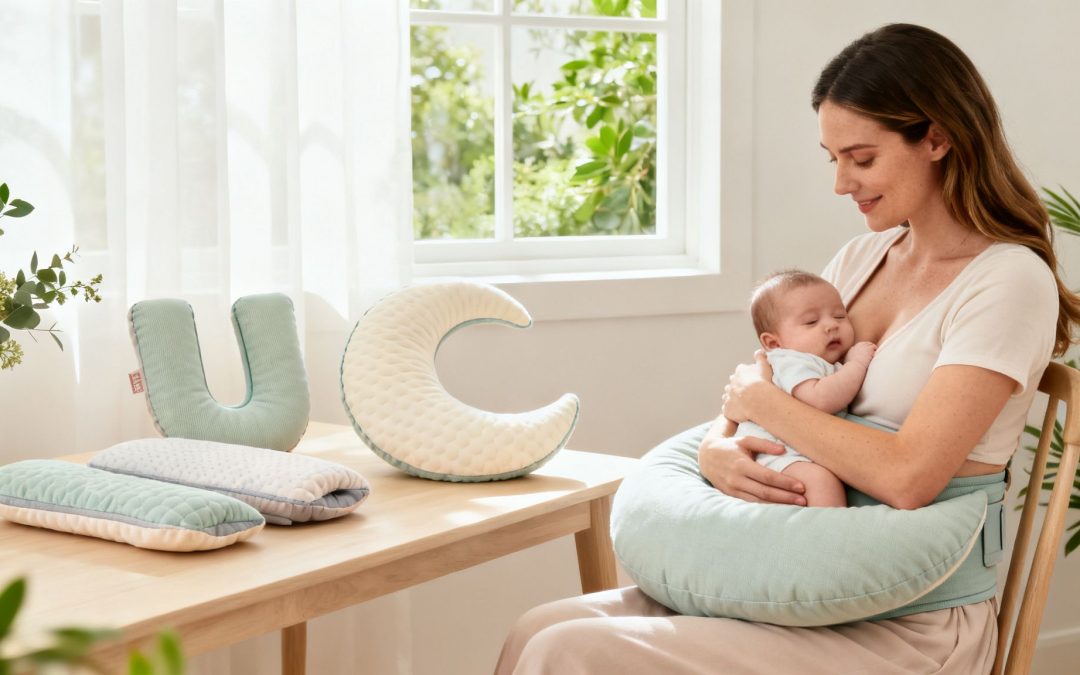
For new parents, finding the best nursing pillow can feel less like a purchase and more like a lifesaver. Ask anyone who's been there—brands like Boppy and My Brest Friend are often at the top of the list for a reason. They’re designed to save your back, neck, and arms from the strain of round-the-clock feeding, making that precious bonding time so much more comfortable.
Why a Nursing Pillow Is an Essential Tool
Let's be honest, a nursing pillow is much more than just a fancy cushion. It's a clever ergonomic tool built to make feeding less of a strain on you and your baby. In those early newborn days, you’ll spend hours feeding, and holding your little one without any support gets exhausting, fast. That's where a good pillow really shines.
Think of it as a little portable shelf that brings your baby right up to the perfect height for feeding. This simple boost means you're not hunched over, which is a notorious cause of back and neck pain for new mums. The pillow provides a stable, comfy surface, which in turn helps your baby get a good latch—a key to successful breastfeeding and avoiding sore nipples. And for parents who are bottle-feeding, it means anyone can hold the baby securely and comfortably, making feeding a peaceful experience for all.
More Than Just a Feeding Aid
One of the best things about a quality nursing pillow is how it grows with your baby, serving different purposes long after the newborn feeding frenzy has settled down.
Tummy Time Support: It’s perfect for propping up your baby during tummy time, giving them the little lift they need to build up that all-important neck and shoulder strength.
Assisted Sitting: Once they're a bit older, it acts as a soft, supportive bumper to help them practise sitting up on their own.
Postpartum Recovery: For mums recovering from a C-section, a wrap-around pillow is a godsend. It creates a gentle barrier, protecting your sensitive incision from any accidental pressure or bumps.
As you get ready for your baby's arrival, pulling together a list of first time mum essentials is a fantastic way to feel organised. Making sure a great nursing pillow is on that list is a small step that will make a huge difference to your comfort in those early months.
In this guide, we'll walk you through all the different shapes, materials, and features to look for. For more parenting tips and guides, feel free to explore our other articles right here on the https://blog.easyregistry.com.au/.
Getting Your Head Around the Different Nursing Pillow Shapes
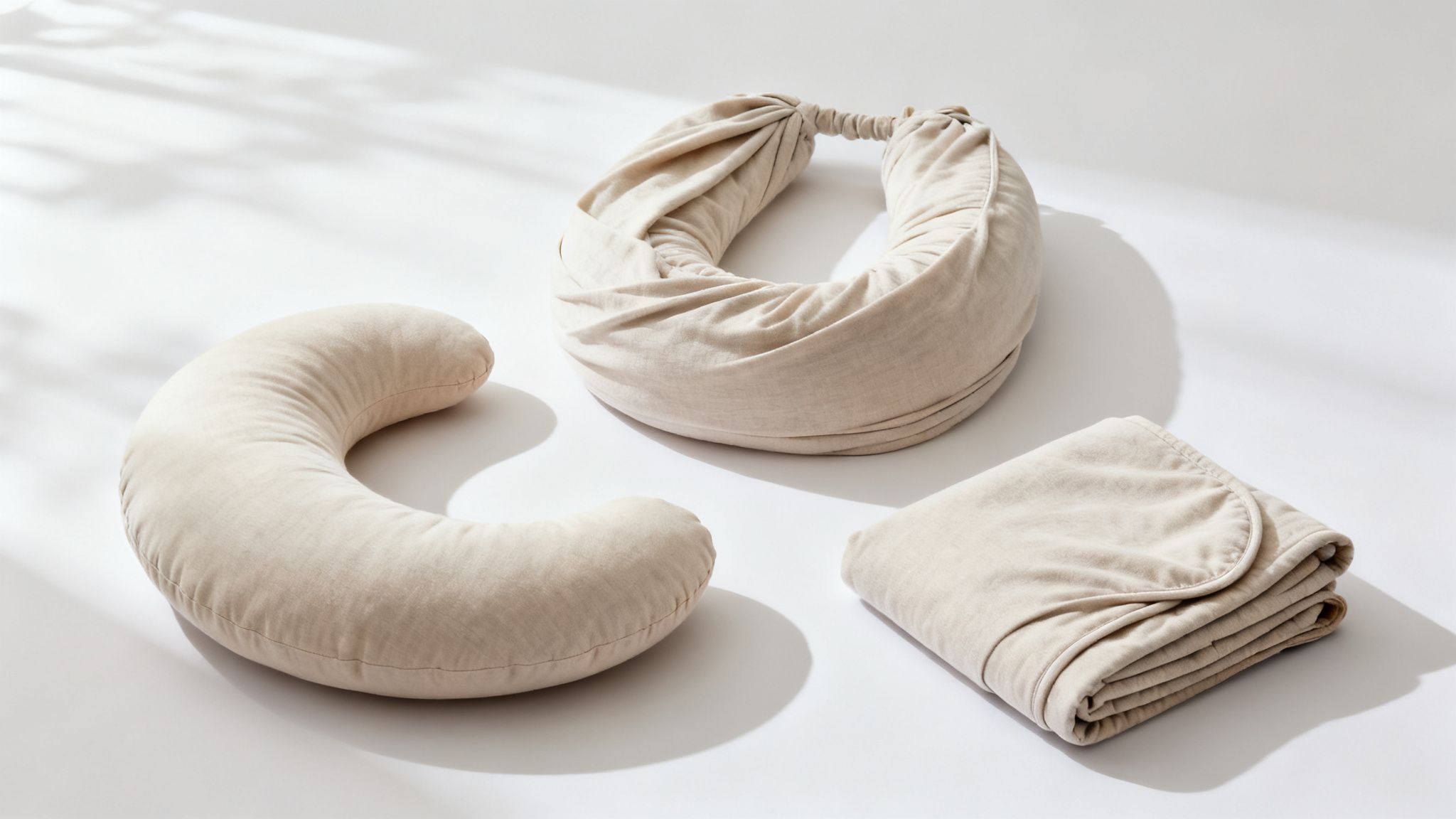
When you first start looking for the best nursing pillow, you’ll quickly discover they come in more shapes and sizes than you probably imagined. This isn’t just for aesthetics; each design has a specific job to do, suiting different body types, feeding styles, and even post-partum recovery needs. Think of it like picking the right tool for a job—a hammer and a screwdriver both work, but you need the right one for the task at hand.
Figuring out the main pillow types is your first big step. Get this part right, and you're well on your way to more comfortable feeds, better support for your baby, and turning what can be a physically demanding part of your day into a relaxed, bonding moment. Let's dive into the most common shapes you'll come across.
The Classic C-Shape Pillow
The C-shape is the one you’ve probably seen everywhere—it’s the most common and popular design for a reason. Just as the name suggests, it’s a simple, open cushion that wraps around your front or side. It’s incredibly intuitive and easy to manoeuvre, which is a lifesaver when you’re trying to get it in place with one hand while holding a hungry baby in the other.
Its versatility is its biggest selling point. The C-shape is a fantastic all-rounder that supports various breastfeeding holds like the cradle and cross-cradle, but it's just as useful for bottle-feeding. Because it doesn't lock you in, it's quite forgiving for different body shapes and works well in most chairs or on the sofa.
Key Takeaway: The C-shape pillow is like the Swiss Army knife of nursing pillows. It isn't a highly specialised tool, but it does a great job in lots of different situations—from feeding to tummy time and even helping bub practice sitting up as they get older.
The Secure U-Shape (or Wrap-Around) Pillow
If you’re after maximum stability and some serious back support, the U-shape pillow is a game-changer. Often called a wrap-around or O-shape, this design goes all the way around your waist and clips together with a buckle or clasp. This creates a really snug, secure platform that won't budge, even with a wriggly baby.
Its signature feature is the built-in backrest. By encouraging you to sit upright, it helps fight that all-too-common feeding slouch that leads to an aching back and neck. This secure, all-in-one support makes it a brilliant choice for a few key scenarios:
C-Section Recovery: The wrap-around design acts like a protective bumper, keeping your baby’s weight and feet well away from your sensitive incision. It gives you a sense of security, letting you feed without worrying about painful pressure.
Tandem Feeding Twins: That wide, stable surface is a lifesaver for parents of multiples. It provides more than enough room to position two babies comfortably and securely at the same time.
Newborns Needing Extra Support: The firm, gap-free fit is perfect for tiny babies, helping to keep them in just the right position for a deep, effective latch.
The Adaptable Multi-Use Pillow
Beyond the two main shapes, you’ll find some clever multi-use pillows designed to see you through pregnancy and well into your baby's toddler years. These often come in more flexible forms—some are long and straight like a body pillow, while others have adjustable parts you can configure.
During pregnancy, they’re brilliant for tucking between your knees or behind your back to help you get a decent night's sleep. Once your baby arrives, they work perfectly well as a nursing pillow. And their job isn’t done yet! As your little one grows, these pillows can be used as a prop for tummy time, a soft barrier for sitting practice, or even a little lounger for supervised quiet time.
While they might not offer the same rock-solid security as a U-shape, their longevity makes them a fantastic, budget-friendly investment. If you want to get the most bang for your buck from a single item, a multi-use pillow is one of the best nursing pillow options to add to your baby registry.
Getting the Right Feel: A Guide to Pillow Materials, Firmness, and Sizing
So, you’ve picked a shape that looks right for you. Now, let’s get into what really makes or breaks a nursing pillow: what’s on the inside. The filling, firmness, and overall size are the details that turn a simple cushion into your most reliable feeding companion.
Think of it like buying a mattress. Something super soft might feel lovely for a minute, but it won't give you the support you need for a good night's sleep. It's the same idea here. The right internal construction ensures your baby is positioned safely and that you’re not slumping over in discomfort thirty minutes into a feed.
A Look Inside: Decoding Pillow Materials
What a nursing pillow is filled with completely changes its feel, weight, and how well it stands up to daily use. Each material offers a different experience, so knowing the pros and cons is a huge help.
Polyester Fibre-fill: This is your classic, go-to filling. It’s lightweight, affordable, and you can usually chuck the whole thing in the wash. The downside? It can get a bit lumpy or go flat over time, especially with a lot of use.
Memory Foam: If you want something that really moulds to your baby’s shape, memory foam is it. It provides incredibly firm, customised support and holds its shape brilliantly. Just be aware that it can be a bit heavier and doesn't have the best airflow.
Natural Latex: This is a fantastic option if allergies or sensitivities are a concern. Latex is naturally hypoallergenic and antimicrobial, plus it's super durable and supportive without that "sinking" feeling you get from memory foam. It’s also naturally resistant to dust mites and mould.
Organic Fillings: For the eco-conscious parent, some pillows are filled with natural materials like buckwheat hulls or kapok. They’re often very breathable, but they can be a little noisy and aren't always the easiest to clean.
It’s clear that Aussie parents are prioritising quality materials, a trend reflected across the entire Australian pillows market. The market hit USD 513.6 million in 2022 and is expected to soar to USD 971.8 million by 2030. If you're building an EasyRegistry, it's worth noting that premium fillings like memory foam and latex are a big part of that growth. In fact, latex is the fastest-growing segment, likely because its hypoallergenic properties are a perfect match for a baby’s sensitive skin. You can discover more insights about the Australian pillow market trends and see how preferences are shifting.
Why Firmness and a Flat Surface Are So Important
A soft, squishy pillow might seem like the cosiest choice, but when it comes to nursing, firm is always better. A pillow that’s too soft can actually be a safety risk, as your baby could sink into it or roll towards you, potentially blocking their airway.
A firm, relatively flat top surface is non-negotiable. It creates a stable platform that keeps your baby securely at breast height, preventing them from rolling and helping you maintain an optimal latch without constantly readjusting.
This stability is also your back's best friend. A firm pillow holds your baby’s weight so your arms, shoulders, and neck don’t have to. You can actually relax your body into a comfortable posture, which makes feeding sessions—especially those marathon ones in the middle of the night—so much more manageable.
Finding Your Perfect Fit
The ideal nursing pillow should fit you like a great pair of jeans—snug, but not tight. If it's too small, you'll have a gap between your body and the pillow, which is exactly where a tiny baby can slip. On the other hand, a pillow that’s too big and bulky will just feel awkward and get in the way.
When you're choosing, think about your own body shape—your torso length and waist size are good starting points. Look for pillows with adjustable straps or belts, especially the U-shaped ones. These are brilliant because they let you cinch the pillow in for a secure, gap-free fit. It’ll stay exactly where you put it, even when you shift around. Plus, that adjustability means other caregivers can use it comfortably for bottle feeds, too.
And one last thing: messes are going to happen. It's just a fact of life with a newborn. Make sure the pillow has a removable, machine-washable cover. It’s an absolute must-have for keeping things clean and hygienic.
How a Nursing Pillow Can Help in Different Scenarios
A nursing pillow isn't a one-size-fits-all gadget; its real magic is how it adapts to your family's unique feeding journey. The best nursing pillow for you is the one that fits right into your life, whether you're a first-time mum, recovering from surgery, or juggling multiples.
When you look past the basic shapes and materials, you start to see how these pillows become a trusted companion in very specific situations. Let's walk through how they work in the real world.
Perfecting the Art of Breastfeeding
For mums who are breastfeeding, the number one goal is getting a comfortable and effective latch. A nursing pillow is like a little platform that lifts your baby to just the right height. This simple boost is a total game-changer, helping you get that crucial 'tummy-to-mummy' alignment without hunching over.
Getting the position right helps your baby latch on deeply, which can make a world of difference in preventing nipple soreness and ensuring they get a full feed. Instead of straining your back, shoulders, and arms to hold your baby up, the pillow does the heavy lifting. This frees you up to relax, breathe, and focus on that special connection. Learning the ropes of positioning is key, and you can explore more in this guide on the best breastfeeding positions for newborns.
Key Insight: Think of a nursing pillow as an ergonomic bridge. It closes the gap between your lap and your breast, creating a stable, elevated surface. You bring the baby to the breast, not the other way around.
Supporting Every Caregiver with Bottle-Feeding
Nursing pillows are fantastic for bottle-feeding, too, and they're a great way to get the whole family involved. When a partner, grandparent, or friend wants to give a bottle, the pillow helps them hold the baby at a consistent and comfy height every time.
This consistency helps everyone feel more confident, especially if they haven't spent much time holding a tiny newborn. It provides solid arm support, stopping that shaky-arm feeling that creeps in halfway through a feed. Ultimately, it makes the whole experience more relaxed and enjoyable for both baby and caregiver, helping build that beautiful bond.
A Gentle Ally for C-Section Recovery
Recovering from a C-section is a major physical undertaking. The last thing you want is any pressure on your tender incision. This is where a wrap-around or U-shaped nursing pillow really shines, becoming an essential tool for healing.
Its shape creates a protective buffer between your abdomen and your baby. By wrapping securely around your waist, it lifts your little one completely away from the sensitive area, letting you feed and cuddle without worrying about pain from kicks or pressure.
Here’s how it helps you heal:
Reduces Strain: It helps you sit up straight, taking the pressure off your core muscles while they recover.
Promotes Relaxation: Knowing your incision is safe helps you truly relax, which is so important for healing and for your milk supply.
Builds Confidence: It empowers you to hold your baby close and get into a comfortable feeding rhythm right from the start.
Mastering the Challenge of Feeding Multiples
For parents of twins, feeding time can feel like a high-stakes juggling act. A nursing pillow designed specifically for multiples isn't a luxury—it's often the key to successful tandem feeding (feeding both babies at once).
These pillows are much larger, firmer, and wider than standard ones. They create a spacious and secure platform that can safely support two infants at the same time. This setup is a lifesaver; it saves you precious time and helps get your babies on a similar feeding and sleeping schedule. The firm support keeps both babies positioned correctly, freeing up your hands to adjust a latch or burp one baby while the other keeps feeding.
Nursing Pillow Suitability for Different Needs
This table breaks down how different pillow shapes stack up for various feeding and recovery situations, helping you find the perfect match.
Scenario
C-Shape Pillow
U-Shape (Wrap-Around) Pillow
Multi-Use Pillow
Breastfeeding
Good for traditional holds like cradle and cross-cradle. Easy to position.
Excellent for multiple positions, including the football hold. Very secure.
Versatile, but may require more adjusting to find the right height and stability.
Bottle-Feeding
Great. Provides good arm support for any caregiver.
Very good. Offers secure, wrap-around support for longer feeds.
Good. Flexible design works well, but firmness can vary.
C-Section Recovery
Can work, but may put pressure on the incision if not positioned carefully.
Ideal. Keeps baby's weight completely off the abdomen, protecting the incision.
Possible, but depends on the shape. Ensure it doesn't rest on the sensitive area.
Feeding Multiples
Not recommended. Too small and lacks the structure for tandem feeding.
Not suitable. Only specialised twin pillows offer enough space and support.
Not suitable. Lacks the size and firmness needed to safely support two babies.
Choosing the right pillow shape really comes down to your personal circumstances. A wrap-around pillow is a clear winner for C-section recovery, while a classic C-shape is a great all-rounder for many families.
Safety, Cleaning, and Long-Term Care
A nursing pillow can be a real game-changer for comfort and support, but let's be clear: its most important job is to be used safely. Your baby’s wellbeing is everything, so a few key safety rules are non-negotiable.
The golden rule is simple: a nursing pillow is for supervised, awake time only. It is never, ever a sleep surface. Please don't use it in a cot, bassinet, or any other sleep space, as the soft, cushioned surface creates a serious suffocation risk if a baby is left unattended.
Always double-check that your baby’s airway is clear and unobstructed. A pillow that’s too soft or has lost its shape can cause an infant to sink in too deeply. This can lead to their chin tucking down to their chest, which restricts their breathing. A good nursing pillow provides a firm, stable surface that keeps them safely and correctly positioned.
Keeping Your Nursing Pillow Hygienic
Babies are messy. It's just a fact of life! Spit-up, milk dribbles, and the occasional nappy leak are all part of the journey. Keeping your nursing pillow clean isn't just about hygiene; it helps it last longer, protecting your investment.
Thankfully, most quality pillows are designed for real life, which means they come with removable, machine-washable covers. Honestly, I’d consider this a must-have feature for any new parent.
Check the Care Label First: Always follow the manufacturer’s instructions. This goes for both the cover and the inner pillow—some inserts are machine washable, while others are spot-clean only.
Wash Covers Regularly: I'd suggest washing the cover at least once a week, or straight away after any major spills. A gentle, baby-friendly detergent is your best bet.
Air Dry When You Can: While a low-heat tumble dry is often fine, air drying is even better for helping the cover keep its shape and avoid shrinking.
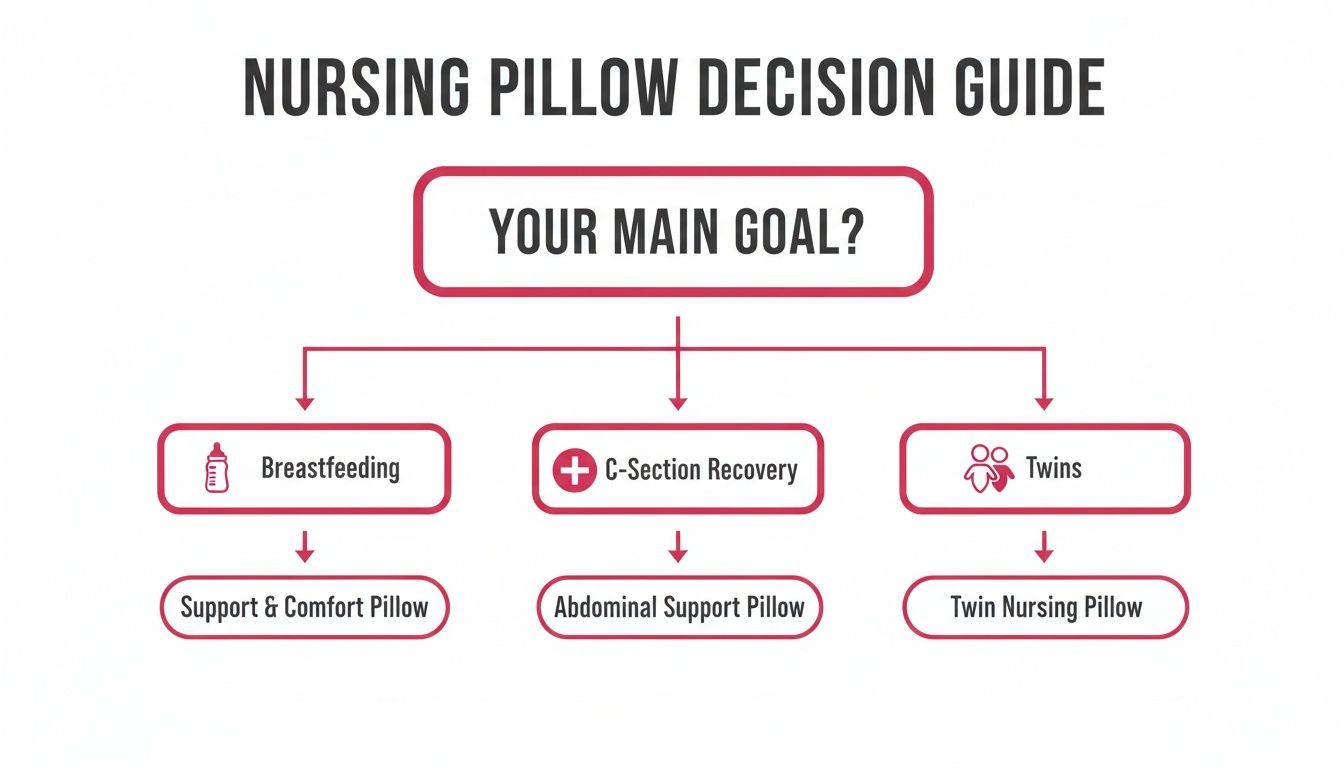
This handy decision guide can help you match a pillow's features to what you need it for most—whether that’s breastfeeding comfort, C-section recovery, or feeding twins.
Just by answering that first question about your main goal, you can quickly see which pillow type is likely to be the best fit for you.
How to Handle Stains and Deep Cleaning
For those bigger messes that soak through the cover (or for pillows that don't have one), you’ll need to do a bit of spot cleaning.
Pro Tip: Move quickly! The sooner you get to a stain, the better your chances of getting it out completely. Don't let spills sit and set into the fabric.
Here’s a simple method for effective spot cleaning that I've found works well:
Blot, Don't Rub: Grab a clean cloth and blot up as much of the liquid as you can. Rubbing just grinds the stain deeper into the fabric.
Use a Mild Cleaning Solution: A small amount of gentle soap or baby-safe detergent mixed with water is all you need.
Dab Gently: Use another clean cloth to apply the solution, dabbing the stain from the outside in. This stops it from spreading.
Rinse Lightly: With a fresh cloth dampened with plain water, blot the area again to lift out any soap residue.
Air Dry Completely: Make sure the pillow is 100% dry before you use it again. This is crucial for preventing any mould or mildew from growing inside the pillow.
Taking good care of your nursing pillow not only keeps it safe and hygienic but also helps maintain its firmness and shape, ensuring it gives you reliable support for many months ahead.
Choosing and Adding Your Pillow to Your Registry
Alright, you’ve done the research. You know the different shapes, the best materials, and how a nursing pillow can be a real game-changer. Now for the fun part: picking the one that’s going to be your new best friend.
Think of this as your final check before you commit. A few key questions now can save you a world of hassle and discomfort down the track. So, before you click ‘add to cart’, let’s run through what really matters.
Your Decision-Making Checklist
To find the best nursing pillow for you, take a moment to ask yourself these questions. The right answers will point you straight to your perfect match.
Does it fit my body snugly? You want the pillow to wrap securely around your waist. A big gap between you and the pillow is a recipe for your baby slipping down. Some pillows even come with adjustable straps for a truly custom fit.
Is the cover easy to remove and wash? Let’s be real: spit-up happens. So do milk dribbles and nappy leaks. A machine-washable cover isn't just a nice-to-have; it's essential.
Is it firm enough? A soft, squishy pillow might seem comfy, but it won’t give your baby the support they need. You’re looking for a firm, stable surface that keeps your baby safely positioned at the right height without them sinking in.
Will it suit my recovery needs? If a C-section is on the cards, you'll want a pillow that wraps around and protects your incision from any accidental bumps or pressure.
Does it fit my budget? A quality pillow is an investment in your comfort, but you don’t have to break the bank. There are fantastic, supportive options at all sorts of price points.
Once you’ve found ‘the one,’ adding it to your gift registry is the easiest way to let friends and family know exactly how they can help.
How to Add Your Pillow to EasyRegistry
A baby registry is one of the best ways to guide your loved ones towards gifts you’ll actually use. With so many baby products on the market in Australia, your friends and family will appreciate knowing they’re getting you something genuinely helpful.
Adding a nursing pillow to a flexible online registry like EasyRegistry is super simple, as you can see here.
The best part is that you can add any item from any online store. You can even set up a cash fund if you’ve got your eye on a more premium pillow.
This kind of flexibility means you can avoid getting three of the same thing and instead let people chip in for a higher-quality nursing pillow you might not have bought for yourself. It’s a growing trend, too. With Australia’s cushion and pillow market expected to hit USD 1,382.1 million by 2033, it's clear people are choosing to gift practical, high-quality items. A top-rated nursing pillow is seen as an essential, so it’s a gift people feel good about giving.
Here’s how to get it done:
Create Your Registry: First, head over to the EasyRegistry website and set up your baby shower registry.
Add Your Pillow: Found the perfect pillow online? Just grab the link and use the "Add to Registry" button to pop it straight on your list.
Or, Create a Cash Fund: If you'd rather people contribute, you can create a specific fund. Just name it something like "Our Dream Nursing Pillow," and guests can add any amount they like.
Share Your Link: Once your registry is good to go, you get a single, simple link to share with all your friends and family. Easy as that.
Frequently Asked Questions About Nursing Pillows
Even with all the info, it’s natural to still have a few lingering questions. Let's tackle some of the most common ones we hear from new and expecting parents, so you can feel completely confident in your choice.
Can I Just Use a Regular Pillow Instead?
Look, in a pinch, a regular bed pillow is better than nothing. But honestly, it’s a bit like trying to chop veggies with a butter knife – you can do it, but it’s not the right tool for the job.
Regular pillows are usually too soft and squishy. They compress under your baby’s weight and tend to slide around, meaning you’ll still end up hunched over, straining your back and arms. Nursing pillows are specifically engineered to be firm and stay put, wrapping around your body to bring your baby up to the perfect height for feeding. That ergonomic support is a real game-changer.
How Do I Choose the Right Firmness?
When it comes to nursing pillows, firm is your friend. Think supportive, not sink-in soft. A firm surface is really important for safety, as it prevents your baby’s head from tilting in a way that could block their airway or make it difficult to latch properly.
Key Takeaway: The pillow needs to be dense enough to hold your baby’s full weight without sagging. When you press down on it, it should have a little give but spring right back. This ensures you get consistent, reliable support every single feed.
What Is the Best Nursing Pillow for Plus-Size Mums?
If you're a plus-size mum, you’ll want to look for U-shaped or full wrap-around styles that come with an adjustable strap or belt. This feature is brilliant because it lets you secure the pillow snugly against your body, closing that annoying gap that can sometimes form between your tummy and the pillow.
Brands that offer larger designs or extended straps are your best bet. A nice, wide surface area is also a huge plus, giving you plenty of stable space for your baby to rest on. For more general advice, you can also check out our main page covering frequently asked questions about baby registries.
When Should I Stop Using a Nursing Pillow?
There’s no hard and fast rule here. Most parents rely on their nursing pillow heavily for the first six to nine months. By then, your baby has much better head and neck control and you’ve both found your rhythm.
That said, many pillows have a life beyond feeding! They’re fantastic for propping your baby up for assisted sitting practice or for giving them a comfy boost during tummy time. The right time to stop is simply whenever you and your little one no longer feel you need it to feed comfortably.
Ready to add the perfect nursing pillow to your gift list? With EasyRegistry, you can add any pillow from any online store in Australia, create a cash fund for a premium model, and share a single, simple link with your friends and family. Create your free baby registry today at https://www.easyregistry.com.au.
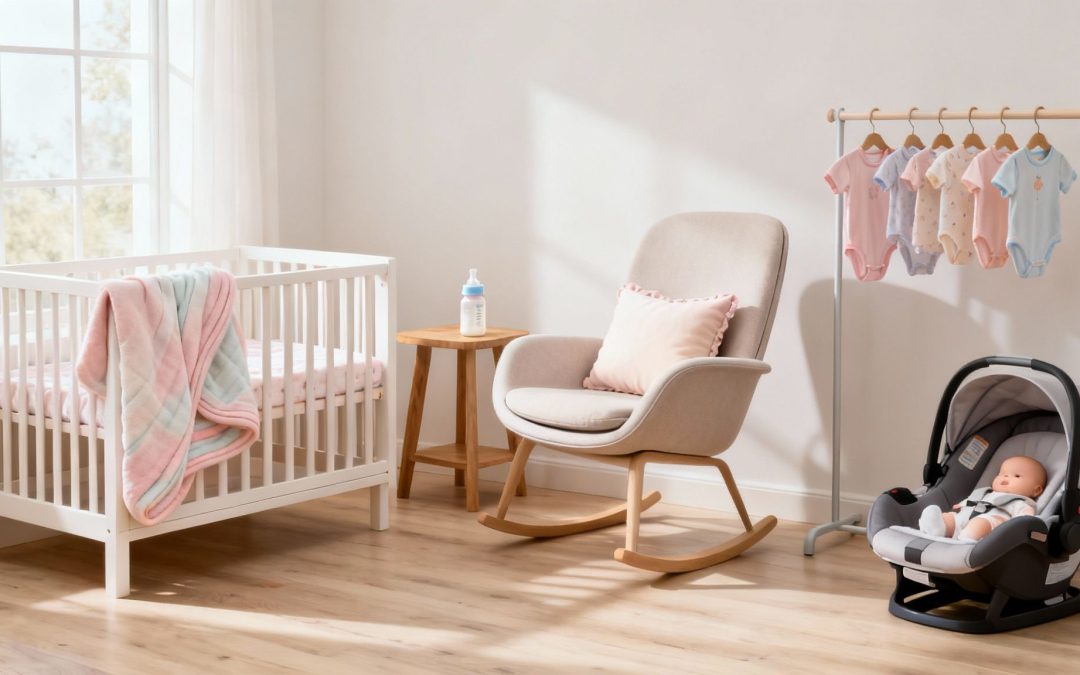
Getting ready for a new baby is one of life’s most exciting chapters, but figuring out what you need for a newborn can feel a little daunting. Let's cut through the noise. It really all comes down to four core activities: sleeping, feeding, changing, and travelling. Think of these as the absolute foundations for your baby's first few weeks.
Your Essential Newborn Starter Pack
Walking into a baby store or scrolling online can be an overwhelming experience. There are so many gadgets and gizmos, all marketed as "must-haves." The truth? You can start with a much shorter, focused list of essentials that will confidently get you through those precious early days. The aim is to feel prepared, not buried under a mountain of baby stuff.
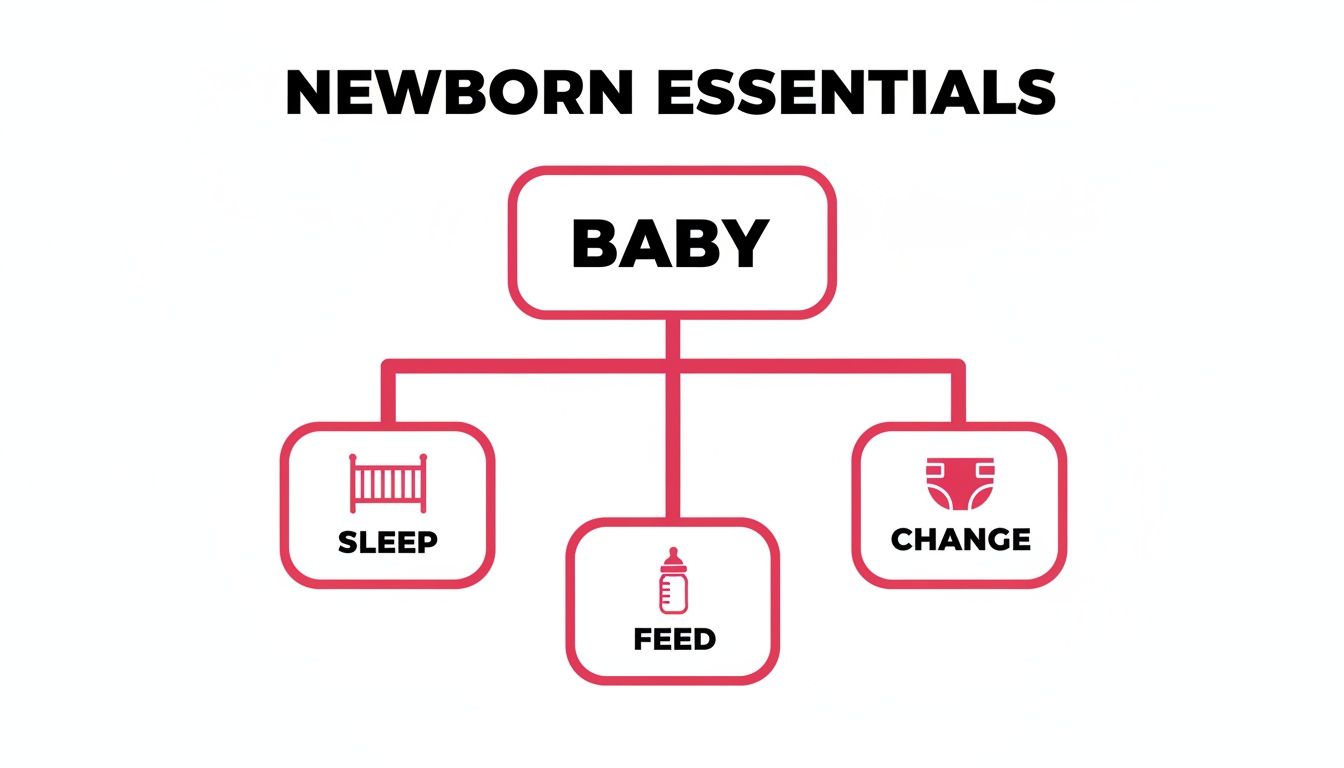
This handy diagram breaks it all down into the three simplest categories: sleep, feeding, and changing.
It’s a great way to visualise how every essential item you buy should really just support one of these basic functions, keeping your newborn safe, comfortable, and happy.
Newborn Essentials at a Glance
To make it even clearer, here’s a quick rundown of the non-negotiable items every new parent in Australia needs. Think of this as your starting checklist to get organised.
Category
Must-Have Items
Why It's Essential
Sleep
Safe Cot/Bassinet, Firm Mattress, Swaddles
A safe sleep space is critical from day one to reduce the risk of SIDS. Swaddles mimic the womb, helping your newborn feel secure.
Feeding
Bottles, Formula (if using), Breast Pump, Bibs
Whether breastfeeding, formula feeding, or a mix of both, having the right gear on hand makes those frequent feeds much smoother.
Changing
Nappies, Wipes, Change Mat, Nappy Rash Cream
Newborns go through a surprising number of nappies! Being prepared makes changes quick, easy, and comfortable for your baby.
Travel
Approved Car Seat
This is a legal requirement and a non-negotiable for bringing your baby home safely. It must meet Australian standards.
This list covers the bare essentials you'll be glad to have ready before your little one arrives.
Prioritising Your Purchases
By focusing on these core areas first, you can sort out your budget and energy. For instance, a safe cot and a correctly installed car seat are absolute must-haves from day one, whereas things like a high chair or a bouncer can definitely wait a few months.
It's a big market out there. In Australia alone, the baby care products market was valued at USD 1.70 billion in 2023 and is expected to hit USD 3.50 billion by 2033. This just shows how much Aussie parents care about getting safe, high-quality gear that meets our strict local standards.
Preparing for a newborn is less about having everything and more about having the right things. A strategic approach ensures you have the essentials covered without unnecessary clutter or expense.
Putting together your list is a fantastic way to get your thoughts in order, especially if you're planning a baby shower. If you're looking for ideas on how to structure your list, you can check out some great sample registries for inspiration.
Of all the things you'll prepare for your newborn, their sleep space is one of the most critical. This is where your little one will spend a huge chunk of their time, so making sure it’s a secure and soothing haven is a top priority for every new parent. It all comes down to choosing the right gear and clearing out any potential hazards.
The centrepiece of this whole setup is the cot or bassinet. Here in Australia, it’s absolutely vital to choose a cot that meets the mandatory safety standard AS/NZS 2172. This standard isn't just a suggestion; it ensures the cot has safe spacing between the bars, a secure base, and other features specifically designed to keep your baby safe.
Choosing Your Baby's First Bed
When you start looking around, you'll see a few different options for where your newborn will sleep. Each has its own pros and cons, and figuring out the differences will help you land on what works best for your family and your home.
Cots: Think of a cot as a long-term investment. It’s a full-sized crib that can see your baby right through from their first night home to their toddler years. They do take up more space, but you won't have to worry about transitioning to a bigger bed after just a few months.
Bassinets: These are smaller, more portable beds that are perfect for the first four to six months. Their compact size is a huge plus, making it easy to keep your baby in your room for those late-night feeds. This is not only convenient but also aligns with safe sleep recommendations.
Co-sleepers: A co-sleeper is essentially a type of bassinet that’s designed to attach securely to the side of your bed. This lets you stay incredibly close to your baby while making sure they have their own separate, safe sleep surface.
No matter which bed you choose, the most important part is the mattress. It must be firm, flat, and fit snugly inside the frame, with absolutely no gaps around the edges. A firm surface is non-negotiable as it helps reduce the risk of suffocation and SIDS. To really dive deep into this, check out this excellent guide to a breathable crib mattress.
Essential Bedding and Sleep Aids
Once you've sorted out the bed, it's time to think about bedding. For a newborn, the golden rule is simple: less is more. The safest sleep space is a bare one.
A bare cot is a safe cot. The only things inside should be a firm mattress, a fitted sheet, and your baby. All soft toys, pillows, bumpers, and loose blankets should be kept out to minimise risks.
So, how do you keep them warm? Instead of blankets, which can be a suffocation hazard, opt for swaddles or wearable sleeping bags. These are fantastic because they keep your baby cosy and secure without the risk of loose bedding.
Beyond the absolute must-haves, there are a couple of other items that many parents swear by for creating a calm vibe and offering a little extra peace of mind.
Baby Monitor: Whether it’s audio or video, a monitor lets you keep an eye (or an ear) on your baby without having to constantly tiptoe into their room. It's a real comfort during those early months.
White Noise Machine: The gentle, consistent hum can be incredibly soothing for a fussy baby, as it mimics the sounds of the womb. It’s also brilliant for blocking out random household noises that might otherwise startle them awake.
By focusing on safety standards and keeping the sleep space beautifully simple, you'll be creating a secure little haven for your newborn to rest and grow.
2. Navigating Your Newborn Feeding Journey
Feeding your newborn is one of the very first ways you'll connect and bond. It’s a time filled with cuddles, learning your baby’s cues, and figuring out a rhythm that works for both of you. Whether you decide on breastfeeding, formula feeding, or a bit of both, having the right gear ready will make the whole experience feel much calmer and more focused on your little one.
Think of it as setting up your support station. Just like a chef has all their ingredients prepped, having your feeding supplies organised means you’re not scrambling when your baby gets hungry. You can simply relax and enjoy those precious moments.
Essentials for Breastfeeding Mums
If you’re planning to breastfeed, think comfort and convenience. You’ll be spending a lot of time nursing in those early weeks, so creating a comfortable space will make a huge difference, especially during those 3 am wake-up calls.
A Comfortable Nursing Chair: While you can definitely nurse anywhere, a dedicated supportive chair or glider can be a real back-saver for long feeding sessions.
Supportive Nursing Pillows: These are a lifesaver for getting your baby into the right position without straining your arms, neck, and back.
Breast Pads: Leaks happen! Having a stash of disposable or reusable breast pads on hand will keep you comfortable and dry between feeds.
An Efficient Breast Pump: Even if you plan to exclusively breastfeed, a pump is fantastic for relieving engorgement, building up a supply for when you need a break, or letting your partner take over a feed.
These items are all about supporting you, making the beautiful (and sometimes challenging) journey of breastfeeding that little bit easier.
Must-Haves for Bottle Feeding
For parents using formula or expressed breast milk, a good system is your best friend. With bottle feeding, hygiene is absolutely paramount to keep your baby’s developing immune system safe.
The baby food and beverages market is actually the fastest-growing part of the Australian baby care industry, showing just how much parents value high-quality, safe options. That's why you'll see popular starter sets like the Closer to Nature® Newborn Feeding Pack from Tommee Tippee, which bundles essentials for around $39.95. This focus on early-life nutrition is even backed by government initiatives, a trend you can explore in this market analysis of Australian baby care products.
So, what do you actually need to get started?
Key Tip: Newborn tummies are tiny, so they need a slow, steady flow of milk to avoid gulping air. Always start with slow-flow teats and only size up when you notice your baby is getting frustrated or taking a very long time to finish a bottle.
Here’s a simple checklist to get you ready:
Bottles and Slow-Flow Teats: Start with about 4-6 bottles. This is usually enough to get you through a few feeds before you have to run a wash-and-sterilise cycle. Anti-colic designs are a great feature to look for.
Steriliser: This is a non-negotiable. Whether you choose a microwave, electric steam, or UV steriliser, it’s the only way to ensure bottles, teats, and pump parts are free from nasty germs.
Bottle Brushes: You'll need a dedicated brush for bottles and a smaller one for teats to get them perfectly clean before they go into the steriliser.
Infant Formula: If you're going the formula route, have at least one tin of a newborn-appropriate brand at home before your baby arrives. You don't want to be caught out.
Having all this organised and ready to go takes the stress out of preparing a bottle, whether it's midday or the middle of the night.
To make things even clearer, let's break down the gear based on how you plan to feed your baby.
Feeding Essentials Comparison
Every family's feeding journey is unique. This table breaks down what you'll need for breastfeeding, formula feeding, or a combination of both, helping you build a shopping list that’s right for you.
Feeding Method
Essential Gear
Nice-to-Have Extras
Breastfeeding
Nursing bras, breast pads, nipple cream
Nursing pillow, comfortable chair, breast pump, milk storage bags
Formula dispenser for travel, bottle warmer, prep machine
Combination Feeding
All essentials from both lists above (e.g., breast pump, bottles, steriliser, formula)
Portable bottle warmer, extra sets of bottles and pump parts
Ultimately, choosing the right feeding method is a personal decision. Having the essentials for your chosen path on hand before the baby arrives just means you can spend less time worrying about logistics and more time soaking in all those newborn cuddles.
Mastering Nappy Changes and Baby Hygiene
Keeping your newborn clean and comfy is a round-the-clock job, but these everyday routines are also beautiful moments for connection. Getting your nappy station organised and knowing how to tackle that first gentle bath makes everything feel less overwhelming. Let's walk through exactly what you'll need.
Think of your nappy changing area as a mission control centre. It doesn’t have to be fancy, but it absolutely needs to be practical and safe. Whether you've got a proper change table or just a mat on the floor, the golden rule is to have everything within arm's reach.
Setting Up Your Nappy Change Station
The secret to a stress-free nappy change is having everything ready before you start. A well-stocked station means you never have to take your eyes (or a hand) off your baby to grab a wipe.
Change Table or Mat: A dedicated table with shelves is brilliant, but a simple, wipeable change mat is a great space-saver. Something like the popular Keekaroo Peanut is fantastic because it means no extra laundry.
Newborn Nappies: You will be blown away by how many you use—we’re talking 10-12 per day in those first few weeks. Grab one or two large boxes of newborn size to start, but don't go overboard, as they grow out of them in a flash.
Gentle Baby Wipes: Always opt for fragrance-free and water-based wipes to protect that delicate skin. A weighted dispenser might sound like a gimmick, but being able to pull out a single wipe with one hand is a game-changer.
Barrier Cream: A solid nappy rash cream containing zinc oxide is your best friend for preventing and soothing any redness. A thin layer at each change, especially before their longest sleep, works wonders.
Nappy Bin: Look, it’s not a must-have, but a purpose-built nappy bin that locks away odours can be a very, very welcome addition to the nursery.
Pro Tip: Set up a small portable caddy with a few nappies, wipes, and cream. This little "grab-and-go" kit is perfect for handling nappy changes in the living room or when you’re out, saving you a trip back to the nursery every time.
Navigating Bath Time with Confidence
Your baby’s first few baths are such special milestones, but they can also feel a bit nerve-wracking. Having the right gear makes the whole experience safer and more relaxed for everyone involved. Remember, newborns don't need a daily bath—two or three times a week is more than enough to keep them clean without drying out their sensitive skin.
Before you even turn on the tap, get everything you need lined up and ready to go. Once your baby is in the water, one hand needs to be on them at all times, no exceptions.
Bath Time Essentials Checklist
When it comes to bath products, think gentle. A baby's skin is incredibly delicate and needs mild, simple formulas to stay happy and healthy.
Baby Bath or Sink Insert: A small, supportive baby bath gives you a secure spot. An insert like the foldable Puj tub is a clever solution for sink baths, as it cradles your baby and saves your back.
Mild Baby Wash and Shampoo: Look for soap-free, pH-balanced formulas made specifically for newborns. This helps protect the natural oils in their skin and hair.
Soft Towels and Washcloths: You don’t need anything special, but a few super-soft washcloths and a hooded towel are lovely for wrapping them up in a warm, snuggly bundle straight from the water.
Bath Thermometer: This is a non-negotiable safety tool. The perfect water temperature for a baby's bath is between 37°C and 38°C, and a simple thermometer takes all the guesswork out of getting it right.
By getting organised for nappy changes and baths, you turn what could be repetitive chores into predictable, positive moments. It’s in these small, everyday interactions that you build a real sense of connection and trust with your little one.
Building a Practical Newborn Wardrobe
Dressing a newborn is… an experience. They're tiny, they're wriggly, and they seem to need a new outfit every few hours. The key isn't to have a wardrobe bursting at the seams, but to have the right pieces that make those constant changes as painless as possible.
Your main focus should be on soft, breathable fabrics. Think organic cotton and bamboo – they're incredibly gentle on a baby's delicate skin and perfect for helping them regulate their temperature, which is a big deal in our Australian climate. Forget fussy buttons and complicated outfits for now. Your new best friends are comfort and convenience.
Your Newborn Clothing Checklist
It's so easy to get swept up in buying every adorable outfit you see, but trust me, they grow out of things in the blink of an eye. The best strategy is to start with a solid set of essentials you can mix and match. This should give you enough to last a couple of days between laundry cycles.
Here’s a realistic list to get you started:
6-8 Wondersuits or Onesies: These all-in-ones are the true MVPs of a newborn wardrobe. They’re perfect for sleep, play, and everything in between.
6-8 Singlets or Bodysuits: These are fantastic for layering under a wondersuit on a cool day or just wearing on their own when it’s warm.
3-4 Pairs of Leggings: Soft, stretchy pants are a lifesaver. You can just pull them on over a singlet for a quick, comfy outfit.
3-5 Pairs of Socks or Booties: Newborns get cold feet easily, so keeping their tiny toes warm is a must.
2-3 Swaddles or Sleeping Bags: These are a much safer alternative to loose blankets in the cot and help your baby feel snug and secure while they sleep.
Starting with this core collection means you’ll have everything you actually need without a pile of clothes they only wear once.
Smart Features to Look For
When you're bleary-eyed at 3 am for a nappy change, you'll thank yourself for choosing clothes with clever features. Look for designs that are all about making your life easier.
The best baby clothes are the ones you can get on and off in the dark with your eyes half-closed. Function truly trumps fashion in these early months.
Here are a few game-changing features to look for:
Two-Way Zips: An absolute must-have. A zip that opens from the bottom means you can change a nappy without completely undressing your baby and making them cold. Genius!
Envelope Necklines: You know those bodysuits with the overlapping fabric at the shoulders? They're designed so you can pull the whole thing down over your baby's body instead of up over their head. This is your secret weapon for managing the inevitable "poonami."
Built-in Mittens and Socks: Many wondersuits come with little cuffs you can fold over your baby’s hands and feet. They're brilliant for stopping newborns from scratching their own faces and keeping their hands and feet warm without needing separate items that always go missing.
By sticking to a small, functional wardrobe filled with these smart features, you’ll be set to keep your newborn comfy while keeping your own stress levels down.
How to Build a Smarter Baby Registry
A baby shower is such a lovely way for your friends and family to get excited and share in the joy of your growing family. But let’s be honest, that incredible generosity can sometimes mean you end up with ten newborn-sized bodysuits (that your baby outgrows in a week!) when what you’re really stressing about is the car seat. Or you might get three different bouncers and not a single nappy. This is exactly where a modern baby registry comes in to save the day.
Think of a traditional gift list as a bit of a guessing game. Your loved ones pick something and just hope it’s what you wanted. A smart registry, on the other hand, is like a helpful roadmap. It gently guides people toward the things you genuinely need, taking the guesswork out of it for them and saving you from a mountain of returns and double-ups. It just makes sure every single gift is thoughtful, useful, and truly helps you start this new chapter on the right foot.
Design Your Perfect Wishlist
The real beauty of a flexible platform like EasyRegistry is that it lets you build a wishlist that truly reflects what your family needs. You're not locked into one department store's inventory. You can literally add any item from any online store, all pulled together into one simple, shareable link for your guests.
Here’s a practical way to think about organising your list so you cover all your bases:
Big-Ticket Items: This is for your prams, cots, and car seats. They're absolute must-haves but come with a hefty price tag, making them perfect for group contributions.
Mid-Range Essentials: Pop things like a good baby monitor, a breast pump, or a high-quality baby carrier in this category.
Everyday Necessities: Don't feel bad about adding the practical stuff! Boxes of nappies, wipes, and barrier cream are things you'll be so grateful for. Guests actually love knowing they’re helping out with the daily essentials.
This screenshot shows just how clean and organised your registry can look, making it incredibly simple for guests to chip in.
The straightforward layout means your friends and family can see exactly what you’re hoping for, what it costs, and how they can contribute—whether that’s by covering the full amount or just a portion of it.
The Power of Group and Cash Funds
One of the best things about a modern registry is the ability to let people pool their money for a gift. So many of your friends and family would love to contribute to a big, meaningful present but probably can't shoulder the whole cost on their own.
A group fund empowers your community to collectively purchase high-value items. It turns an expensive pram from an impossible ask into a manageable group effort, making gift-giving more inclusive for everyone.
This team approach is a total win-win. It ensures you get those big-ticket items you spent hours researching, instead of a pile of smaller things you might not need. Your guests get to feel like they’ve made a really significant contribution, and you get exactly what’s on your wishlist.
And it doesn't just stop at physical items. Cash funds give you the ultimate flexibility for things you can’t exactly buy in a store. You could create funds for specific goals, like:
A Night Nanny Fund: For some desperately needed sleep in those early weeks.
A Meal Delivery Fund: To make life that little bit easier when you’re too tired to cook.
A Future Savings Fund: A lovely way for people to contribute to your baby’s future.
Building a smart registry really does change the whole gift-giving experience for the better. It’s a practical tool that helps you feel organised and lets your loved ones give gifts with confidence, knowing they're getting you something perfect. For more in-depth tips, our guide to creating the perfect baby shower registry has all the info you need to get started. A little planning now ensures every gift you receive is a perfect fit for your new family.
Common Questions from New Parents
It’s totally normal to feel like you’re drowning in questions when you start shopping for a newborn. Are you buying the right things? Too much? Not enough? Don't worry, every parent has been there.
Let's cut through the noise and get straight to the practical answers for the questions we hear most often from expecting parents.
How Many Newborn Clothes Do I Actually Need to Buy?
It's so easy to get carried away buying adorable tiny outfits, but trust me, they grow out of them in the blink of an eye. The best approach is to start small with a practical wardrobe that can handle spit-ups and nappy blowouts without leaving you with a mountain of laundry.
A great starting point looks something like this:
6-8 wondersuits (you'll probably live in these)
6-8 singlets or bodysuits, which are perfect for layering
3-4 pairs of soft leggings or comfy pants
A few pairs of tiny socks
2-3 swaddles or wearable sleeping bags
This little collection gives you enough to get through a few days between washes and covers all your bases. You can always grab more later if you find you’re running short, but this is a solid start for those first few chaotic weeks.
What Are the Most Important Safety Items I Need?
When it comes to safety, there are three things you absolutely must have ready before your little one arrives. These are the non-negotiables that form the foundation of a safe environment at home and on the move.
Your baby's safety is everything. Before you buy anything else, make sure you have a compliant car seat, a safe sleep space, and a reliable thermometer sorted. You can't compromise on these.
First up is a professionally fitted Australian-standard (AS/NZS 1754) car seat or capsule. You literally can't leave the hospital without one, so this is top priority. Next is a safe sleeping space, which means a cot that meets Australian standards (AS/NZS 2172) with a firm, flat mattress and nothing else in it—no bumpers, blankets, or toys. Finally, a good digital thermometer is a must-have for those moments when you're worried your baby might be unwell.
Should I Buy a Bassinet or Go Straight to a Cot?
Ah, the great bassinet vs. cot debate! The answer really comes down to your living situation, budget, and personal preference. A bassinet is compact, portable, and great for keeping your baby in your room for the first few months, which is super convenient for those middle-of-the-night feeds and aligns with safe-sleep advice. The catch is they'll probably outgrow it by four to six months.
On the other hand, a cot is a long-term investment that will see your child through from birth to their toddler years. Some parents love the convenience of a bassinet for the early days, while others prefer to save the money (and the hassle of a later transition) by using the cot from day one. Have a think about the layout of your home and what feels right for you.
When Is the Best Time to Start Buying Baby Gear?
Most people find the second trimester, somewhere between 20 and 30 weeks, is the sweet spot for starting to shop and set up the nursery. You’ve usually got a bit more energy, and it gives you plenty of time to research, hunt for bargains, and build furniture without a last-minute panic.
As a rule of thumb, it’s a good idea to have the absolute essentials ready to go by 36 weeks – that’s your car seat, a safe place to sleep, and some basic clothes and feeding supplies. You never know if your baby might decide to make an early entrance! Creating a baby registry early in your second trimester also gives your loved ones plenty of time to choose a gift. For more on this, you can find answers to other common queries in our frequently asked questions section.
Ready to create a registry that’s as practical and unique as your family? With EasyRegistry, you can add any item from any store, create group gifts for big-ticket items, or set up cash funds for anything you need. Take the stress out of gift-giving and get exactly what you want by starting your free registry today.