You see the happy news pop up on your feed. A friend, sibling, colleague, or cousin is expecting, and your first reaction is easy: joy. Your second reaction is harder. What should you say?
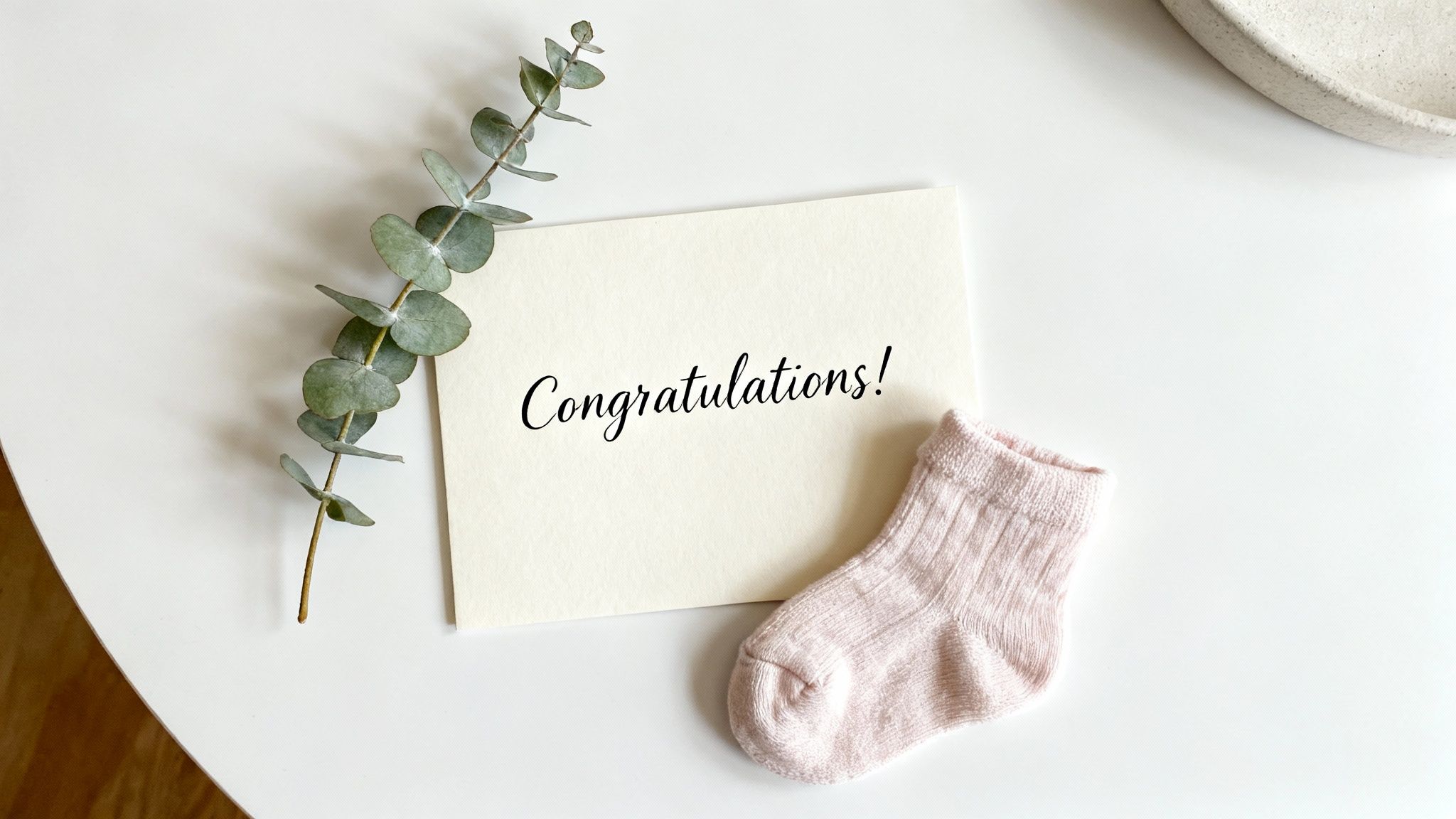
Many default to “Congratulations!” and stop there. That’s polite, but it often feels thin. Pregnancy news can carry excitement, relief, nerves, tenderness, or a long backstory you may not fully know. The best congratulations on pregnancy messages don’t just sound nice. They fit the relationship, respect the moment, and make the parents feel seen.
That matters more than people realise. A text to your best friend can be playful. A card for a colleague should stay warm but professional. A note to someone who’s had a difficult road to pregnancy needs extra care. And if you’re also thinking about gifts, baby showers, or whether to ask for a registry link, timing and wording make all the difference.
Good messages do three jobs at once. They celebrate the news. They match the emotional tone of the recipient. They leave the door open for support, whether that means a meal, a kind check-in, or an easy way to give something useful rather than random.
This guide goes beyond generic lines. You’ll find eight practical ways to offer congratulations on pregnancy, with examples, etiquette tips, and honest advice on what works well and what usually falls flat. You’ll also see how to handle gifts and registries naturally, so your message doesn’t sound transactional or awkward.
If you’re staring at a blank card, drafting a text, or trying to comment on an announcement without sounding generic, start with the relationship and the moment. Then choose the style that fits.
1. Warm and Personal Heartfelt Congratulations
Some pregnancy news deserves more than a quick reaction. If this is a close friend, sibling, or someone whose life you know well, a heartfelt message lands best when it sounds specific rather than polished.
A strong version is simple: acknowledge the joy, name what you admire about them, and add one sentence that makes the note unmistakably personal.
“Congratulations on your beautiful news. I’m so happy for you both. You’re such a caring, grounded person, and I know your baby is going to be surrounded by so much love.”
That works because it doesn’t try too hard. It avoids clichés like “your life will never be the same” and focuses on the parents, not your own reaction.
What makes it feel genuine
The detail is what lifts a message from polite to memorable. Mention the trait you’ve seen in them. Maybe they’re patient with everyone around them. Maybe they build calm in chaotic moments. Maybe they’ve wanted this for a long time.
A few lines that often work well:
For a close friend: “I’ve watched how thoughtfully you care for people, and that’s why this news makes me smile even more.”
For family: “This little one is already so loved, and it means a lot to celebrate this moment with you.”
For a couple: “You make such a strong team, and I’m excited to see you step into this new chapter together.”
Practical rule: If you could swap their name with someone else’s and the message still works, it’s too generic.
What to avoid in heartfelt notes
Even warm messages can miss the mark if they get too presumptive. Don’t jump straight to labour jokes, parenting advice, or comments about how exhausted they’ll be. Don’t write a long paragraph about your own pregnancy unless they’ve invited that kind of sharing before.
Keep the focus on them, then add support in a grounded way. “If you ever want help with meals, errands, or baby shopping, I’m in” is better than “Let me know if you need anything,” which usually sounds kind but vague.
If gifts come up naturally, keep it low-pressure. You can say, “When you’re ready, send me your registry if you make one.” That gives them an easy path without making the message feel like an admin task.
2. Celebratory and Enthusiastic Exclamation
Not every congratulations on pregnancy message needs to be deep. Sometimes the right response is pure delight.
This style works best for text messages, group chats, social comments, and friendships where energy matters more than formality. If the person announced the news with excitement, an upbeat reply usually feels right.
“Congratulations! This is such amazing news. I’m so excited for you both!”
Short. Bright. Easy to receive.
When enthusiasm works best
Use this tone when your relationship is naturally casual. It suits a uni friend, a cousin you joke with often, or a colleague you’re friendly with outside rigid office etiquette. It also fits public spaces like Instagram comments, where a long emotional message can feel overly intimate.
A few examples:
“Ahh congratulations! I’m so happy for you.”
“This is the best news. So excited for your growing family.”
“Baby news! Huge congratulations to you both.”
The biggest mistake here is overdoing it. Too many exclamation marks can start to look forced. So can a flood of emojis if that’s not how you usually write.
A good rule is to keep the energy high and the wording clean. One to three exclamation marks is plenty. One or two emojis can work in a text. In a card, skip them.
Keep it brief, then follow through
Enthusiasm is a strong opener, but it can feel shallow if that’s all you ever send. If you’re close enough, follow up later with one practical message.
For example: “Still smiling about your news. If you end up putting together a registry or baby list, I’d love to see it.”
That second touchpoint matters. The first message celebrates. The next one supports.
A fast, joyful reply is better than waiting days to craft the perfect sentence.
There’s also a trade-off here. An enthusiastic message is easy to send and often warmly received, but it usually isn’t the right choice for sensitive situations. If the parents have had fertility treatment, prior loss, or a more private communication style, dial the volume down. Excited doesn’t have to mean loud.
In practice, this format works because it matches the emotional pace of digital life. People announce big moments quickly, and a lively response helps them feel surrounded by happiness. Just don’t let “quick” become careless. The right amount of enthusiasm says, “I’m thrilled for you,” without sounding performative.
3. Practical and Helpful Support-Focused Message
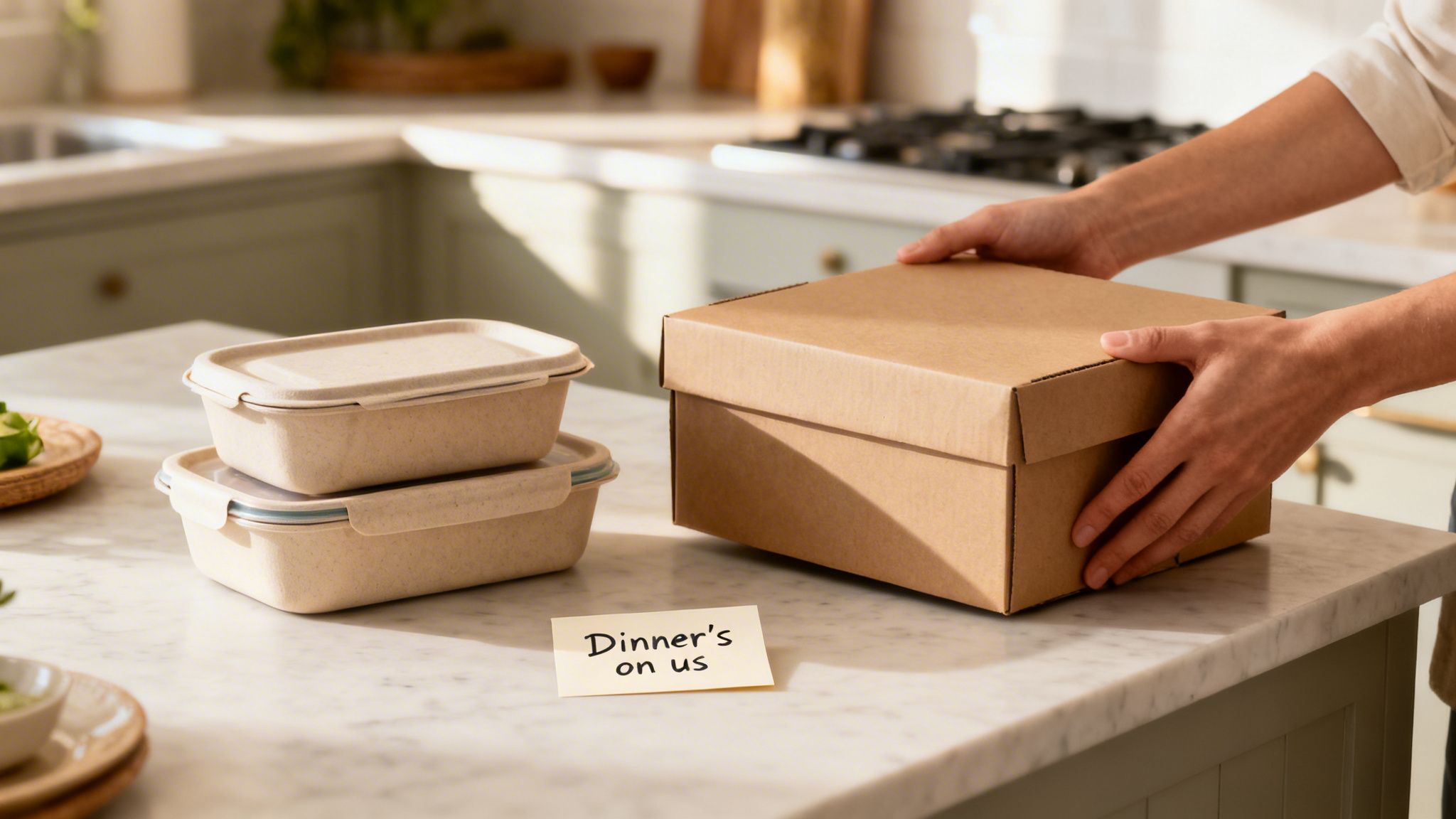
Your friend texts the news on a Tuesday morning. They are thrilled, tired, a little overwhelmed, and already fielding a wave of hearts, emojis, and “So exciting!” replies. A useful message stands out because it gives comfort and reduces one future task.
A support-focused pregnancy message works best when you know the person well enough to help in a real way. The goal is simple. Congratulate them, then offer one specific form of support they can accept without having to manage you.
“Congratulations on your pregnancy. I’m so happy for you. I’d love to drop off a couple of dinners later on, or help with a shop when you’re getting things ready.”
That message works because it does two jobs at once. It celebrates the baby and makes the offer easy to picture.
Offer help they can say yes to
“Let me know if you need anything” is generous, but it puts the planning back on the expectant parent. In practice, specific offers are easier to accept and more likely to lead to real support.
Useful examples include:
Meal support: “I can bring dinner one evening after the baby arrives.”
Errand help: “I’m happy to do a chemist run or pick up groceries.”
Baby prep: “If you want company for nursery shopping, I’d love to come.”
Group gift help: “If friends want to chip in together, I’m happy to organise it.”
This is also the point where gifts can come up naturally, without making the message feel transactional. A simple line like, “If you put together a list, send it through when you’re ready,” keeps the focus on their preferences. If they do want one place to organise gifts, group contributions, and avoid duplicates, they can see how a baby registry works on EasyRegistry and decide whether it suits them.
Match the offer to the relationship
Practical support is not one-size-fits-all.
A sibling might appreciate direct help with meals or errands. A colleague may prefer a lighter touch, such as a meal delivery voucher or a note that says you are happy to contribute to a group gift. A close friend may welcome hands-on help but still want space early on.
That trade-off matters. The more intimate the offer, the more important consent becomes. “I can drop dinner by your door if that would help,” often lands better than assuming they want visitors, advice, or a long catch-up.
Sensitive pregnancy journeys call for extra care. If the parents have come through loss, fertility treatment, or a long period of uncertainty, keep the tone warm and steady. “I’m so happy for you and holding this news with a lot of care” is often better than language that assumes they want loud celebration right away.
Later, if you want a practical example of what useful support can look like, this short video gives a good sense of the everyday help parents often appreciate most.
The best support-focused messages remove friction. They do not just mark the moment. They make life a little easier.
4. Inspirational and Motivational Message
Some people respond best to words that feel uplifting, steady, and hopeful. Not sugary. Not dramatic. Just reassuring.
An inspirational message works well when the expectant parent is reflective by nature, entering parenthood after a long season of waiting, or sharing the news in a way that invites something deeper than a quick “Congrats”.
“Congratulations. You’re stepping into a life-changing chapter, and I know you’ll meet it with love, strength, and so much heart.”
That kind of message acknowledges the scale of the moment without pretending everything will be effortless.
Hopeful without sounding naïve
The best motivational notes hold two truths at once. Pregnancy can be beautiful, and it can also be uncertain, tiring, and emotionally complex. If you lean too hard into “every moment will be magical,” the message can feel detached from real life.
Better options sound like this:
Grounded encouragement: “You don’t have to have everything figured out to be a wonderful parent.”
Quiet confidence: “You already have the qualities that matter most. Care, patience, and the willingness to grow.”
Forward-looking warmth: “Your baby is arriving into a family built with intention and love.”
This style often suits cards more than texts because it has a little more emotional weight. It also works well in a longer email to a sibling, close friend, or mentor.
“You can be hopeful and realistic in the same sentence. That’s often the tone people trust most.”
Pair inspiration with something useful
A motivational message can become too abstract if it stays in the clouds. Add one practical line to ground it.
For example: “I’m excited for you, and when you start getting ready, I’d love to help however I can.” If they ask about managing gifts or sharing one list with family and friends, you can point them to how EasyRegistry works, which explains a straightforward way to organise gifts and contributions without a lot of back-and-forth.
This style is especially effective when the recipient values meaning. It tells them you see this as more than an event. You see it as a major life transition.
The trade-off is that inspiration can sound generic if it’s too polished. Keep the language plain. Skip lofty lines you’d never say out loud. If it sounds like it belongs on a wall print, rewrite it.
A good inspirational message should feel like a calm hand on the shoulder, not a speech. It should leave the parents feeling encouraged, not overwhelmed by sentiment.
5. Humorous and Lighthearted Congratulations
You get the pregnancy announcement, smile, and immediately think of the joke you always make with this friend. This is the moment to pause for half a beat.
Humour works well here when it sounds like you, fits your relationship, and still leaves the parents feeling cared for.
A strong example is: “Congratulations. Your life is about to get louder, messier, and a whole lot cuter.”
That line works because the joke is aimed at the shared chaos ahead, not at the pregnant person. That distinction matters. In practice, funny pregnancy messages go wrong when the sender reaches for an easy stereotype instead of writing to the actual person.
What usually works
Light humour tends to land best with friends, siblings, and close coworkers you already joke with. It is less about being witty than being safe, affectionate, and recognisable.
A few reliable options:
Gentle chaos humour: “Welcome to the sweetest kind of mayhem.”
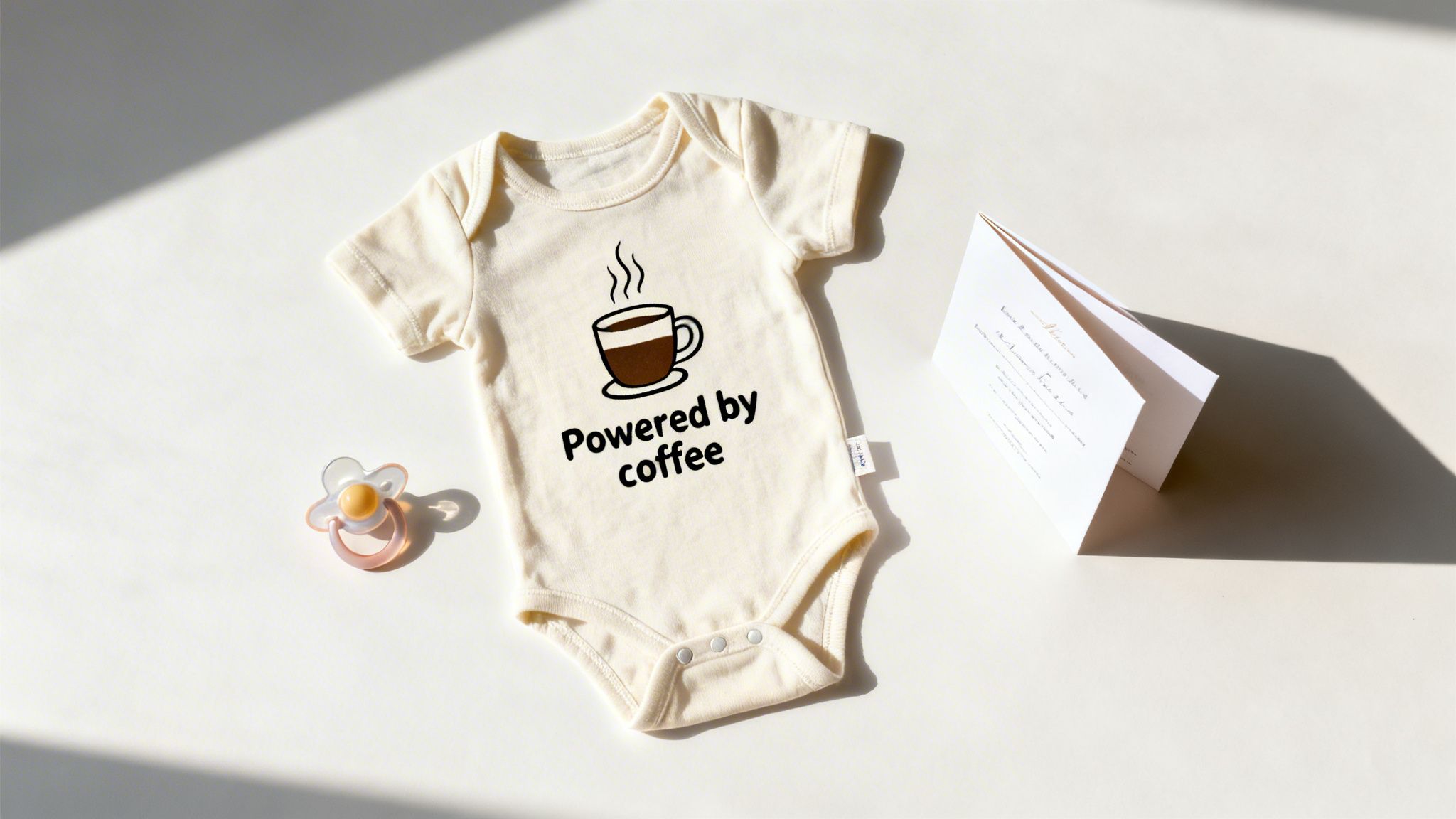
Sleep joke, used carefully: “Wishing you lots of joy and at least a few decent naps.”
Teamwork humour: “You two are about to become experts in tiny socks and very big feelings.”
These lines work because they keep the tone upbeat without turning the message into a roast.
What to avoid, even if people say it all the time
Skip jokes about body size, hormones, mood swings, stretch marks, or “losing your freedom.” Those comments often get passed off as harmless banter, but they can feel personal fast. They also date your message in the worst way.
Use extra care if you do not know the full story. Earlier in the article, it was noted that many people hold back on congratulations because they worry about saying the wrong thing. That instinct is reasonable. Some announcements come after loss, IVF, high anxiety, or a very long wait.
In those cases, humour needs a short runway and a safe landing.
A practical formula is joke first, sincerity second: “Congratulations on your tiny new boss. I’m so happy for you.”
That second sentence does real work. It tells them the humour is there to lighten the moment, not dodge it.
The etiquette behind a funny message
Humorous congratulations are best kept short. One joke is enough. Two can feel like a performance.
This is also not the place to wedge in gift talk unless they have already raised it. If you are sending a funny card or text and want to be helpful, keep it separate: congratulate them first, then later ask whether they are sharing a registry or if they would prefer practical help in another form. That approach keeps the message warm and keeps logistics from crowding out the emotion.
Used well, humour lowers pressure. It makes your note feel human, familiar, and easy to receive. The trade-off is simple. The funnier you try to be, the more careful you need to be. If there is any doubt, choose the line that sounds kind out loud.
6. Formal and Professional Congratulation
A pregnancy announcement at work creates a different writing problem than a note to a sibling or close friend. The goal is simple. Be warm, be respectful, and leave the parent-to-be room to decide how personal the conversation becomes.
In professional settings, restraint is a strength. A good message marks the milestone without reaching for private details. Skip questions about the due date unless they have already shared it. Skip comments on appearance. Skip assumptions about parental leave, childcare plans, or who will take which role at home.
A reliable version is: “Please accept my sincere congratulations on your pregnancy. Wishing you good health and happiness during this exciting time.”
That works in an email, a team card, or a workplace chat.
What professional warmth sounds like
Professional messages do not need originality. They need judgment. The best ones sound considerate and steady, especially in workplaces where relationships are friendly but not overly personal.
A few examples that travel well:
“I was delighted to hear your news. Congratulations to you and your partner.”
“Wishing you all the very best as you prepare for this new chapter.”
“Warm congratulations on this wonderful milestone.”
If you manage the person, separate the human response from the operational conversation. Congratulate them first. Discuss workload, cover, or leave planning later, in the right setting. That order matters because it shows you saw the person before the process.
Why this style works
Formal congratulations protect dignity. They are especially useful when you do not know the full backstory, when the news is being shared selectively, or when the workplace is public enough that a highly personal message would feel exposing.
That same logic applies to gifts.
Group gifts can be generous, but they can also create pressure fast. The practical approach is to keep any registry mention optional and low-stakes: “If you decide to share a registry for anyone who would like to contribute, feel free to send it through.” That wording keeps the congratulations separate from the ask, which is why it feels professional instead of transactional.
Cultural expectations also shape what feels appropriate at work. In diverse teams, public excitement, gift customs, and even the preferred wording can vary widely. A neutral, gracious note is often the safest choice unless the parent-to-be has already signalled a more personal tone.
If you are unsure, shorten the message. Two or three sentences is usually enough, and in a professional context, that often reads as more thoughtful, not less.
7. Cultural and Tradition-Honouring Message
You hear the news in a group chat. One relative responds with excited baby emojis. Another replies with a blessing. A third says nothing publicly and sends a private note instead. That is a good reminder that pregnancy etiquette is shaped by culture, faith, family norms, and timing.
A respectful message leaves room for those differences. For example: “I’m so happy to hear your news. Wishing you health, peace, and every blessing as your family prepares for this new arrival.”
That wording works because it does not force your style onto their moment.
Start with what you know
If the parent-to-be has already used specific language, reflect it back naturally. If they said “Mazel tov,” mentioned a faith tradition, or shared a family custom, you can respond in kind. If they have not, keep your message warm and neutral.
I usually give this advice: do not reach for cultural detail to sound thoughtful. Use it only when you are sure it is welcome. Getting that wrong can make a kind message feel performative.
A practical way to handle it:
Mirror familiar language: Use terms or blessings they have already used themselves.
Ask only if your relationship supports it: “Is there a way your family usually marks this kind of news?” can be respectful with a close friend or relative.
Match the gift style to the family, not to your defaults: Some families want useful baby items. Others prefer cash gifts, shared contributions, or tradition-specific presents.
Cultural fit matters with gifts because a registry can either reduce awkwardness or create it. A generic list may miss what the family wants. A better approach is to ask whether they would prefer practical items, pooled contributions, or culturally meaningful gifts, then organise that through a flexible baby gift registry that can suit different family preferences if they want one.
A respectful message does not need cultural decoration. It needs cultural humility.
This style works because it shows restraint, which is often what respect looks like. You are not trying to write the most original line in the card. You are trying to honour the family in a way that feels right to them.
People remember that. They remember that you paid attention, asked instead of assuming, and let their traditions set the tone.
8. Milestone-Focused and Reflective Message
Some pregnancy announcements call for a message that marks the significance of the moment itself. This style works well for close friendships, siblings, long-time friends, and handwritten cards where a little reflection feels natural.
Instead of reacting only to the baby news, you place it in the wider story of the person’s life.
“What a beautiful milestone. I’ve loved watching the life you’ve built, and I’m so happy to see this new chapter beginning for you.”
That kind of message carries warmth, history, and perspective.
Make the milestone feel personal
This approach works best when you’ve witnessed some part of their journey. Maybe you’ve seen them grow into a steadier version of themselves. Maybe you’ve watched their relationship become stronger over time. Maybe you know this moment matters, but you don’t want to make assumptions about how easy or hard the path has been.
That last point matters. You can acknowledge significance without saying things like “finally” or “at last,” which can accidentally expose private pain or pressure.
A few lines that tend to work:
For a long-time friend: “This feels like such a meaningful chapter in your life, and I’m grateful to celebrate it with you.”
For a sibling: “You’ve always brought so much care into the people around you. Seeing you become a parent feels especially beautiful.”
For a couple: “This is such a special step in the story you’re building together.”
Use the message to open the next chapter gracefully
Milestone messages are ideal for cards because they create space for one extra practical sentence. That might be support, encouragement, or a gentle nod to preparation.
If gifts are part of the conversation, this is a natural place to mention them without sounding transactional: “When you’re ready to share what would be most useful, send your list through.” If they want one place to gather items, cash contributions, and group gifts, an EasyRegistry gift registry can make that process much cleaner for both hosts and guests.
This style is especially helpful when you want to say something meaningful without becoming overly sentimental. The key is restraint. One thoughtful observation is enough. Three can start to feel like a speech.
The trade-off is that reflective notes take a bit more effort to write. But when the relationship is close, that effort shows. It tells the parents you’re not only happy for them. You understand why this moment matters.
8-Style Comparison: Congratulations on Pregnancy
Style
? Implementation complexity
? Resource requirements & speed
? Expected outcomes
? Ideal use cases
? Key advantages
Warm and Personal Heartfelt Congratulations
Moderate – needs personalization and genuine tone
Moderate time investment; slower to craft
Deep emotional connection; memorable response
Close friends & family; EasyRegistry guest messages
Strengthens relationships; highly heartfelt
Celebratory and Enthusiastic Exclamation
Low – simple, punchy language
Low effort; very fast for SMS/social
Immediate excitement and high engagement
Social media, texts, younger audiences
Energetic, shareable, attention-grabbing
Practical and Helpful Support-Focused Message
Moderate–High – specifies offers and follow-through
Higher resource commitment (time, actions)
Tangible relief; reduced anxiety for parents
Close supports, neighbours, workplace groups
Actionable support; highly appreciated
Inspirational and Motivational Message
Low–Moderate – choose authentic quotes/tone
Low–medium effort; adaptable length
Encouragement and positive reframing
Announcements, thank-you notes, broader audiences
Inspiring, broadly resonant
Humorous and Lighthearted Congratulations
Moderate – requires audience-aware humour
Low effort but needs careful calibration
Memorable, tension-relieving reactions
Informal friends, social posts, like-minded groups
Engaging, likely to be shared
Formal and Professional Congratulation
Low – uses standard professional phrasing
Low effort; quick to send via email/card
Maintains respect and workplace boundaries
Colleagues, supervisors, formal contexts
Safe, appropriate, preserves professionalism
Cultural and Tradition-Honouring Message
High – requires cultural knowledge and care
Medium–high effort; may need research
Deep respect and meaningful connection
Multicultural families, faith communities, international users
The words matter, but delivery matters too. A beautiful message can feel flat if it arrives in the wrong format. A simple message can feel perfect if it arrives in the right way, at the right moment, with the right tone.
Text is best when the relationship is close and casual, or when you’ve just seen the news and want to respond promptly. It’s immediate and human. A short, warm note sent quickly usually beats a longer message delayed for days because you were trying to get every word perfect.
Cards work best when the relationship is deeper or the message is more reflective. They also suit baby showers, workplace gifts, and family milestones. If you’re writing in a card, don’t try to fill every inch of space. A concise, thoughtful note almost always reads better than a long, repetitive one.
Social media comments should stay lighter. Public spaces aren’t the place for personal references, fertility assumptions, or private jokes that need explanation. A bright, kind line is enough. If you want to say more, send a private message after.
If there’s any chance the pregnancy follows loss or fertility treatment, go gentler. You don’t need to sound sombre. You just don’t want to presume a simple emotional picture. Warmth with a little care usually lands best.
Gift etiquette is where many people become awkward. The easiest fix is to separate the emotional message from the practical question. First, congratulate them. Then, either later in the same note or in a follow-up, ask in a relaxed way, “If you put together a registry, I’d love the link when you’re ready.” That sounds considerate; “What do you want me to buy?” can sound abrupt, even if you mean well.
If you’re the expectant parent, sharing a registry isn’t rude. It becomes awkward only when it feels like the first or only thing communicated. The smoother approach is to let the announcement stay about the news. Share the registry when people ask, when shower invitations go out, or when a host includes it for convenience. Registries are practical tools. They help guests give usefully and help parents avoid duplicate or unsuitable gifts.
That practicality matters even more in mixed groups of family, friends, and colleagues, where budgets and preferences vary. One well-organised list gives people options. It also makes group gifts much easier to coordinate. If you want broader inspiration before choosing something, this guide on how to choose the best baby shower gifts offers a useful starting point.
A few rules keep the whole exchange graceful:
Lead with joy: The first message should celebrate the pregnancy, not the shopping list.
Keep the ask soft: “Send it through when you’re ready” feels better than “Where’s your registry?”
Match the relationship: Close friend, longer note. Colleague, shorter note. Public comment, simplest note.
Respect preferences: Some parents love public celebration. Others prefer quiet support.
Offer help specifically: Meals, errands, a group gift, or one useful item are easier to receive than vague goodwill.
The best congratulations on pregnancy messages do more than mark an announcement. They make the recipient feel understood. And when gifts enter the picture, the same rule applies. Keep it thoughtful, clear, and easy.
If you’re organising a baby shower, preparing for a new arrival, or just want one simple way to share gift preferences without the awkward back-and-forth, EasyRegistry makes it easy to create a registry, collect contributions, and give guests a clear, thoughtful way to celebrate with you.
Welcoming a new baby is a monumental occasion, and finding the right words to share in the joy can feel surprisingly tricky. While a simple "congrats" is always appreciated, a thoughtfully crafted message can become a cherished keepsake for the new parents. Saying congratulations on your baby is more than just a formality; it’s an opportunity to share in their happiness, offer support, and celebrate the beginning of a brand-new chapter.
This guide moves beyond generic phrases, providing a curated collection of messages designed for every situation. We'll break down what makes a message truly memorable, whether you're sending a quick text, writing a heartfelt card, or posting on social media. You’ll find examples tailored for different relationships and tones, from funny and light-hearted quips to sincere and supportive notes.
Inside, we explore specific tactics for personalising your message, ensuring your words resonate with warmth and authenticity. We’ll cover everything from what to write for grandparents and same-sex parents to appropriate messages from coworkers. You’ll also find practical tips on gift-giving etiquette, including how to gracefully link to a gift registry. By the end, you’ll have the confidence and inspiration to craft the perfect welcome for the newest arrival.
1. Heartfelt Personal Message with Specific Details
Moving beyond a generic "congrats," a heartfelt personal message shows the new parents you are genuinely invested in their happiness. This approach involves referencing specific details about their journey, the baby, or their family, creating a deep emotional connection that stands out. It acknowledges their unique story, making your congratulations on your baby feel authentic and deeply considered.
This type of message is most powerful when you have a close relationship with the parents. It demonstrates that you’ve been paying attention to their lives and share in the significance of this moment.
Example Analysis
Let’s examine two examples to see how specific details elevate a message.
Example A:
"Congratulations, Sarah and Tom! Watching your dream of becoming parents come true has been such an honour. All those years of hope and patience have led to this beautiful moment. Welcome to the world, little Noah!"
Strategic Insight: This message directly references the parents' long journey ("years of hope and patience"). This acknowledgement validates their past struggles and amplifies the joy of the present, showing true empathy.
Actionable Takeaway: If you know the parents have faced challenges or waited a long time, mentioning their perseverance shows profound support.
Example B:
"We are so overjoyed for you both! We know how much this moment means after all your thoughtful planning, right down to the perfectly organised nursery we saw on your EasyRegistry page. Your love and dedication are already so clear, and they will make you the most amazing parents."
Strategic Insight: This message connects a specific, recent action (setting up a registry) to the parents' positive character traits ("thoughtful planning," "dedication"). It turns a practical detail into a meaningful compliment.
Actionable Takeaway: Mention a small, positive detail you've observed. It could be how they decorated the nursery, a book they mentioned buying, or their organised approach to preparing. This shows you’re paying attention.
How to Apply This Method
Mention the Baby's Name: If known, addressing the baby by name makes the welcome feel personal.
Reference Their Journey: Acknowledge their path to parenthood, whether it was long-awaited, a surprise, or followed a family tradition.
Highlight Parental Qualities: Connect their known character traits (e.g., kindness, humour, patience) to their new role as parents.
Keep it Sincere: The goal is genuine connection, not formal praise. Write from the heart in a warm, natural tone.
2. Celebratory Announcement with Exclamation and Joy
Sometimes, the best way to say congratulations on your baby is with pure, unrestrained excitement. A celebratory announcement uses energetic language, exclamation marks, and an upbeat tone to mirror the immense happiness of the occasion. This style is perfect for sharing on social media, sending as a quick text, or for anyone who wants their message to radiate pure joy and enthusiasm.
This approach is highly effective because its energy is contagious. It instantly communicates your happiness for the new parents in a way that is simple, direct, and full of positive spirit. It’s a wonderful choice for friends, cousins, or anyone with a close, informal relationship with the family.
Example Analysis
Let’s break down two examples to see how to craft an effective celebratory message.
Example A:
"WOOHOO! The best news ever! Huge congratulations on your beautiful new arrival. We are so incredibly thrilled for you both and can't wait for all the baby cuddles. Sending so much love! ?"
Strategic Insight: This message leads with an outburst of pure joy ("WOOHOO!"), immediately setting an enthusiastic tone. The use of all-caps for "WOOHOO" and the party popper emoji amplifies the celebratory feeling.
Actionable Takeaway: Start your message with a celebratory word or phrase. Think "Hooray!", "OMG!", or "So exciting!". It instantly conveys high energy and genuine happiness.
Example B:
"What amazing news! Welcome to the world, little one! We saw the announcement and are just bursting with happiness for your new family of three. The adventure begins now! ???"
Strategic Insight: This example directly references the "announcement," showing the sender is actively following the parents' updates. It frames parenthood as an "adventure," which is a positive and exciting way to look at the journey ahead. It also demonstrates how a gift registry can be a part of this journey; many parents share news alongside their EasyRegistry to help friends and family contribute.
Actionable Takeaway: Use forward-looking, exciting language. Words like "adventure," "journey," and "new chapter" add a sense of wonder and anticipation to your congratulations on your baby message.
How to Apply This Method
Use Enthusiastic Language: Employ words like "thrilled," "overjoyed," "amazing," and "wonderful."
Lean on Punctuation and Emojis: Exclamation marks are your best friend here! Add relevant emojis (like ?, ?, ?, ?) to visually express your excitement.
Keep it Short and Punchy: This style works best with brief, high-impact sentences that get straight to the point.
Focus on Shared Celebration: Use phrases like "celebrating with you" or "so happy for you" to make it clear you share in their joy.
3. Supportive and Encouraging Message for New Parents
Parenthood is a monumental transition, and a message that offers reassurance and empowerment can be a true gift. This approach goes beyond simple congratulations by acknowledging the challenges of new parenthood while expressing confidence in the parents' abilities. It's a way to provide emotional support and let them know they are not alone, which is especially meaningful for first-time parents feeling a mix of joy and anxiety.
This type of message builds a strong foundation of support, reminding new parents that it's okay to feel overwhelmed and that asking for help is a sign of strength. It's a warm, empathetic way to say "congratulations on your baby" while also saying "we've got your back."
Example Analysis
Let’s explore two examples that master the art of supportive encouragement.
Example A:
"Congratulations on your beautiful baby! You're going to be fantastic parents. Remember, everyone needs help sometimes – don't hesitate to reach out. We're here for you every step of the way."
Strategic Insight: This message perfectly balances a compliment ("fantastic parents") with a practical offer of support. It normalises the need for help, removing any potential guilt the new parents might feel about needing assistance.
Actionable Takeaway: Explicitly state your willingness to help. Phrases like "we're here for you" or "don't hesitate to reach out" are powerful and direct, opening the door for them to ask for what they need.
Example B:
"What an incredible journey begins now! Trust yourselves – you've got this. Wishing you patience and joy, and please know it's okay to ask for support. We're so excited to watch you grow as a family."
Strategic Insight: The phrase "Trust yourselves" is a direct injection of confidence. It empowers the parents by affirming their instincts at a time when they might be second-guessing every decision. When offering genuine encouragement, you might also point them towards valuable resources like postpartum support services that can ease their journey.
Actionable Takeaway: Use affirming language that focuses on their inherent capabilities. Simple phrases like "you've got this" or "you'll be amazing" can provide a much-needed morale boost.
How to Apply This Method
Offer Specific Help: Instead of a vague "let me know if you need anything," offer concrete help like, "I'd love to drop off a meal next Tuesday" or "Can I do a grocery run for you?" You can check their EasyRegistry for ideas or see our registry FAQ page for more on how it works.
Use Affirming Language: Focus on their strengths and instincts as parents.
Acknowledge the Challenge, Then Reassure: Validate that parenthood is tough but immediately follow up with your confidence in their ability to handle it.
Avoid Unsolicited Advice: Unless you are explicitly asked, stick to encouragement rather than instruction. Let them find their own parenting style.
4. Gratitude-Based Message Thanking Parents for Sharing the Joy
A gratitude-based message shifts the focus from simple congratulations to expressing thankfulness for being included in such a significant family moment. This approach acknowledges the privilege of sharing in their joy and witnessing the expansion of their family. It communicates that you don’t take their trust for granted, creating a sense of reciprocal appreciation and strengthening community bonds around the new baby.
This style of message is particularly effective because it frames your congratulations on your baby as a shared celebration. It shows the new parents that their happiness is infectious and that their community feels honoured to be a part of their journey.
Example Analysis
Let’s explore two examples that master the art of expressing gratitude.
Example A:
"Thank you so much for letting us be part of this wonderful moment in your lives. We feel so honoured to celebrate with you. Congratulations on your beautiful new arrival!"
Strategic Insight: This message leads with gratitude ("Thank you so much for letting us be part of…"). This immediately establishes a warm, appreciative tone and makes the congratulations feel more personal and less like an obligation.
Actionable Takeaway: Start your message by thanking the parents for including you. Phrases like "honoured to celebrate with you" or "privileged to share this moment" are powerful ways to convey respect and appreciation.
Example B:
"We're so grateful for the opportunity to share in your joy and welcome your precious baby to the world. And thank you for organising an EasyRegistry page; it made finding the perfect, meaningful gift so simple. Congratulations on this amazing blessing!"
Strategic Insight: This example combines gratitude for being included in the moment with a specific thank you related to their planning. Mentioning the registry shows appreciation for the practical steps they took to make others feel included and helpful.
Actionable Takeaway: If the parents have created a gift registry, thank them for their thoughtfulness. It acknowledges their effort and shows you appreciate how they've made it easy for friends and family to contribute meaningfully.
How to Apply This Method
Lead with Appreciation: Begin your message with phrases like "Thank you for sharing…" or "We're so grateful to be included…"
Acknowledge Their Trust: Recognise the significance of being one of the people they chose to share their big news with.
Use Warm and Respectful Language: Words like "honoured," "privileged," and "grateful" set the right tone without being overly formal.
Connect to a Shared Community: Frame the baby's arrival as an event that brings everyone closer, reinforcing your bond with the new family.
5. Milestone and Legacy-Focused Message
A legacy-focused message frames the baby's arrival within the grander narrative of family history and continuity. This approach elevates your congratulations on your baby by celebrating not just a new life, but also the extension of a family’s heritage, values, and story into the future. It’s a powerful way to honour the family's past while celebrating its expanding future.
This type of message resonates deeply with families who value tradition, have a strong sense of heritage, or have passed down a family name. It acknowledges that the new arrival is another important link in a long, unbroken chain.
Example Analysis
Let’s look at two examples to see how referencing legacy adds depth and meaning.
Example A:
"Welcome to our family, little one! You represent the continuation of a beautiful legacy of love, strength, and values that will guide you through life. We can't wait to watch your story unfold."
Strategic Insight: This message uses powerful, abstract nouns like "legacy," "love," "strength," and "values" to connect the baby to the family's core identity. It positions the family's heritage as a guiding force for the child's future.
Actionable Takeaway: Identify two or three key values the family embodies (e.g., resilience, creativity, kindness) and weave them into your message as part of their ongoing legacy.
Example B:
"What a joy to welcome a new generation into our family! Your arrival carries forward the love, traditions, and dreams of those who came before. Congratulations to your proud family!"
Strategic Insight: This message explicitly mentions "a new generation" and "those who came before," creating a direct link between the past, present, and future. The word "dreams" adds an emotional layer, suggesting the hopes of ancestors are being fulfilled.
Actionable Takeaway: When writing, think about the baby's journey and all the exciting major baby milestones ahead that will become part of the family’s shared history. This future-oriented perspective adds a hopeful tone.
How to Apply This Method
Mention Family Traditions: If you know of a specific family tradition, whether cultural or unique to them, referencing it can make your message especially poignant.
Connect Generations: Use phrases like "a new chapter," "carrying the torch," or "honouring the legacy of…" to connect the baby to their ancestors.
Acknowledge Special Significance: If the baby is the first grandchild, carries a family name, or marks a special milestone, mentioning this adds a layer of personalised meaning.
Use a Reverent Tone: This style often suits a slightly more formal or ceremonial tone, but always ensure it remains warm and heartfelt.
6. Practical and Gift-Forward Message
A practical and gift-forward message expertly combines warm congratulations with clear information about a gift. This approach is efficient and helpful, removing any ambiguity for new parents by letting them know a gift has been sent or a contribution has been made to their registry. It seamlessly blends genuine excitement with the practicalities of gift-giving, making it a thoughtful and organised way to show your support.
This type of message is especially useful when you've contributed through an online registry or are sending a gift that will arrive separately. It’s a modern and considerate way to manage the logistics of gift-giving while keeping the focus on celebrating the new baby.
Example Analysis
Let’s explore two examples that show how to merge congratulations on your baby with gift details effectively.
Example A:
"Huge congratulations on your beautiful baby boy! We are so thrilled for you. We've just sent something special from your EasyRegistry that we hope will be helpful in these early months. Can't wait for newborn cuddles!"
Strategic Insight: This message leads with enthusiasm before mentioning the gift. By referencing the registry directly, it confirms the gift is something the parents specifically wanted, showing respect for their choices.
Actionable Takeaway: When gifting from a registry, mention it by name. This assures the parents you’ve chosen a desired item and simplifies their tracking of gifts received.
Example B:
"What wonderful news about your new arrival! We were so excited to hear. We've contributed to your baby shower registry fund for the pram. We hope it helps you get out and about for many family adventures. Congratulations!"
Strategic Insight: This message specifies which fund or large item the contribution went toward ("the pram"). This helps the parents visualise the collective effort and feel the community support behind a significant purchase.
Actionable Takeaway: If you contribute to a group gift or a cash fund for a specific big-ticket item, mention it. This connects your contribution to a tangible goal and makes the gift feel more personal than a generic cash donation.
How to Apply This Method
Lead with Emotion: Always start with your genuine congratulations before mentioning any practical details.
Be Clear and Concise: State that you have sent a gift, contributed to a fund, or purchased from their registry.
Mention the Registry: Referencing services like EasyRegistry helps the parents keep organised.
Set Expectations (Optional): If you know the delivery timeline, briefly mention it (e.g., "should arrive next week").
7. Humorous and Light-Hearted Message with Warmth
A fun, tongue-in-cheek message uses humour to celebrate the new baby while maintaining genuine warmth. This style often includes playful commentary about parenthood, sleep deprivation, or the reality of having a newborn. The key is to balance the jokes with sincere affection, making it a great choice for friends and family who appreciate a bit of levity.
When done well, a humorous message can be a welcome relief from the endless stream of purely sentimental notes. It acknowledges the challenging parts of having a baby in a supportive, "we're in this together" kind of way, offering both a laugh and a reminder of your support.
Example Analysis
Let’s explore two examples that master the balance between comedy and care.
Example A:
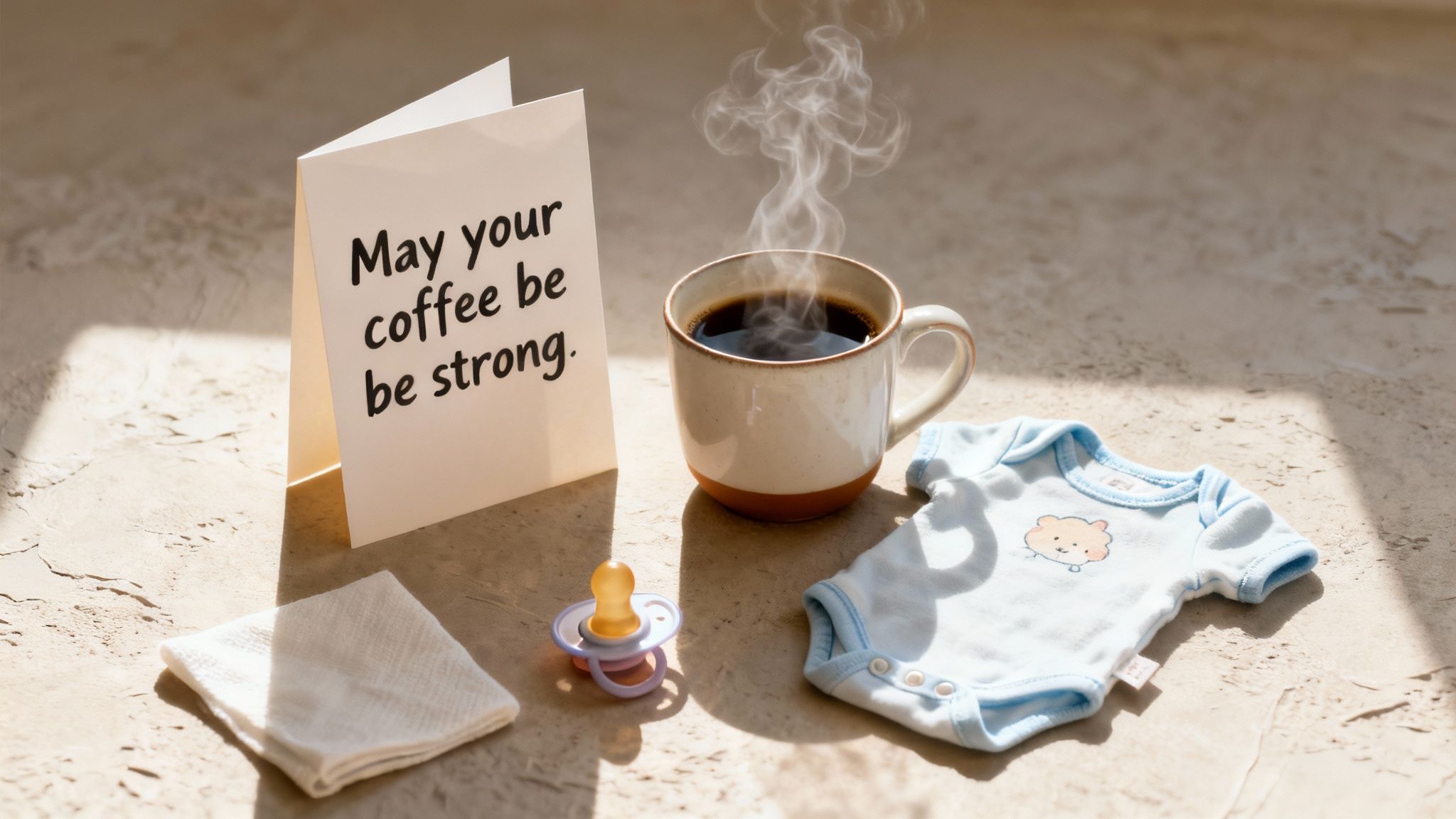
"Congratulations on your new tiny human! May your coffee be strong and your sense of humour stronger. You're going to be amazing parents (even without sleep)! ??"
Strategic Insight: This message uses a classic, relatable joke about sleep deprivation and coffee. The phrase "tiny human" is an affectionate, modern way to refer to the baby, setting a light-hearted tone from the start. It ends with a strong, sincere compliment that reassures the new parents.
Actionable Takeaway: Frame a common parenting challenge (like lack of sleep) as a shared experience. Pair the joke with a direct and encouraging statement about their parenting abilities to ensure the message lands warmly.
Example B:
"Welcome to the sleep deprivation club! We hear it's a very exclusive organisation. Seriously though, congratulations – your little one is lucky to have such wonderful parents."
Strategic Insight: This message creates a sense of camaraderie by framing a tough reality ("sleep deprivation club") as an "exclusive organisation." The phrase "Seriously though" acts as a perfect pivot, shifting the tone from playful banter to heartfelt sincerity, making the final compliment feel even more meaningful.
Actionable Takeaway: Use a clear transition to move from your joke to your genuine congratulations on your baby message. This structure ensures your humour is seen as a fun opening, not the main point.
How to Apply This Method
Know Your Audience: Only use humour if you are confident the parents will appreciate it. Avoid sarcasm or edgy jokes if you are unsure.
Balance with Warmth: Every joke should be paired with a sincere statement of congratulations, support, or admiration.
Focus on Relatable Truths: Stick to universal parenting experiences like nappy changes, lack of sleep, or the sudden need for caffeine.
Keep it Positive: The goal is to make them smile, not to point out the negatives. The humour should feel supportive, not critical.
7-Style Comparison of Baby Congratulations Messages
Message style
? Implementation complexity
? Resource requirements
? Expected effectiveness
? Expected outcomes
? Ideal use cases & key advantages
Heartfelt Personal Message with Specific Details
High — requires tailored details and tone
High — time, accurate personal info, emotional effort
??? — strong emotional resonance
Deepened relationships; highly memorable
Close family/friends; registry notes that strengthen bonds
Celebratory Announcement with Exclamation and Joy
Low — short, upbeat, formulaic
Low — quick to write, minimal info needed
?? — high visibility, lower depth
Immediate excitement; highly shareable
Social media, casual contacts, quick congrats
Supportive and Encouraging Message for New Parents
Medium — needs sensitivity and balance
Medium — thoughtful phrasing, possible offers of help
??? — strong support for anxious parents
Emotional reassurance; opens ongoing support
First-time parents; messages offering practical help
Gratitude-Based Message Thanking Parents for Sharing the Joy
Casual friends, social posts, playful registry promos
Putting It All Together: Your Guide to a Perfect Message
Welcoming a new baby is a profound moment, and your words of congratulations carry significant weight. As we've explored, the most memorable messages are those that move beyond a simple "congrats" to reflect genuine warmth, personalisation, and thoughtful consideration for the new parents' unique journey. Your goal isn't just to acknowledge the news but to contribute a small, meaningful piece to their new family story.
The key is to select an approach that feels authentic to your relationship with the recipients. A funny, light-hearted quip might be perfect for a close friend with a great sense of humour, while a more heartfelt, reflective message is better suited for a family member. By matching the tone and content of your message to the context, you show that you've put real thought into your wishes. This consideration transforms a standard greeting into a cherished keepsake.
Mastering the Art of the Message
To truly craft the perfect congratulations on your baby message, remember these core principles:
Specificity is Your Superpower: Vague compliments are easily forgotten. Mentioning a specific detail you admire about the parents, a hope you have for the baby, or a shared memory makes your message uniquely theirs. This is what separates a good message from a great one.
Balance Emotion with Support: It's wonderful to express your joy, but remember to also offer encouragement. The early days of parenthood can be overwhelming, and a message that says, "I'm here for you," can be incredibly comforting. This dual approach acknowledges both the celebration and the reality of the journey ahead.
Context Dictates Form: The platform you use shapes your message. A short, emoji-filled text is ideal for an immediate reaction, while a handwritten card allows for more depth and sentiment. A social media comment should be celebratory and public-facing, while a note from a coworker might blend personal warmth with professional respect.
Ultimately, the best congratulations on your baby messages come from the heart. Whether you're aiming for humour, heartfelt emotion, or practical support, your sincerity will always shine through. Don't overthink it to the point of paralysis; choose a message that feels right, add a personal touch, and share in their incredible joy. Your thoughtful words will be a beautiful welcome gift for the newest little person in their lives and a comforting reminder of the community surrounding them.
Planning a baby shower or organising a group gift to celebrate the new arrival? EasyRegistry makes it simple for friends and family to contribute to one big-ticket item or a cash fund, taking the guesswork out of gifting. Create a beautiful, free registry today and give the new parents exactly what they need for their growing family. EasyRegistry
The blank space inside a baby shower card holds so much potential. It's an opportunity to share joy, offer support, and create a keepsake the parents-to-be will treasure long after the gifts are unwrapped. But staring at that empty card can feel surprisingly daunting. You want your message to be heartfelt without being generic, and personal without overstepping.
Finding the perfect words is a common challenge, whether you're a close family member bursting with excitement, a supportive workmate, or a dear friend ready to welcome the new arrival. Your message adds a meaningful, human layer to the gift you've chosen, transforming a simple card into a cherished memento of this special time. This is where moving beyond a simple "congratulations" makes all the difference.
This guide provides a comprehensive roundup of exactly what to write in a baby shower card, with practical examples and tips tailored for every relationship and tone. We'll explore 8 distinct approaches to help you craft a message that truly resonates and celebrates this incredible milestone.
Here’s a snapshot of the message styles we’ll cover:
Personal Wishes and Congratulations: Classic, heartfelt messages.
Practical Support and Offers of Help: Actionable ways to show you care.
Shared Excitement and Personal Stories: Adding a unique, personal touch.
Humorous and Light-Hearted Messages: Bringing a smile to their faces.
Values-Based Affirmations: Acknowledging their future parenting style.
We’ll also cover essential do's and don'ts, sign-off ideas, and how to gracefully mention the wonderful gift you found on their EasyRegistry. By the end, you'll have all the inspiration you need to write a message that feels authentic, supportive, and full of love for the growing family.
1. Personal Wishes and Congratulations
The most classic and universally appreciated message you can write in a baby shower card is one filled with genuine, personal wishes and heartfelt congratulations. This approach focuses on celebrating the momentous occasion and sharing in the joy of the parents-to-be. It’s a timeless choice that works for any relationship, from a close family member to a colleague, because it centres on the pure, simple happiness of welcoming a new life.
When you’re unsure what to write in a baby shower card, starting with a warm congratulatory message is always a safe and thoughtful bet. It sets a positive, celebratory tone that perfectly complements any gift, including one selected from a registry.
How to Write Personal Wishes
Focus on sincerity and warmth. The goal is to convey your excitement for the growing family. You can keep it simple or add a personal touch that reflects your relationship with the recipients.
Examples of Personal Wishes:
Simple & Sweet: "Congratulations on your little one on the way! Wishing you all the happiness in the world."
A Bit More Personal: "We are so incredibly thrilled for you both! Can’t wait to meet your baby boy and watch you become amazing parents."
For a Close Friend: "What wonderful news! Sending so much love to you and your growing family. I'm so excited to share this incredible journey with you."
Tips for Making It Special
A few small details can elevate a simple congratulatory message into something truly memorable.
Mention the Baby: If you know the baby’s name or gender, use it! "We can't wait to meet little Leo," feels much more personal.
Acknowledge Their Journey: Tailor your message to their situation. For first-time parents, you could write, "Parenthood is the most beautiful adventure, and you two are going to be naturals."
Reference Your Gift: If you used a platform like EasyRegistry, you can connect your message to your gift. For example, "We saw the pram on your registry and were so happy to contribute. We hope it leads to many wonderful family walks!" This shows you put thought into their specific needs.
2. Practical Support and Offers of Help
While gifts and warm wishes are cherished, one of the most meaningful messages you can write in a baby shower card is a genuine offer of practical help. This approach acknowledges that the first few weeks and months with a newborn are incredibly demanding. An offer of support shows you care about the parents' well-being during this transitional period, transforming your card into a promise of ongoing care that extends far beyond the baby shower itself.
This type of message is particularly valuable for new parents who may feel overwhelmed and hesitant to ask for assistance. By making a specific, tangible offer, you remove the guesswork and give them a concrete resource to rely on. It’s a thoughtful way to show your love and support in action.
How to Write an Offer of Help
Be clear, specific, and genuine. The goal is to offer help that is both practical for you to provide and genuinely useful for the new parents. Avoid vague promises and instead suggest concrete ways you can lend a hand.
Examples of Offers of Help:
For Meal Support: "We would love to bring you a home-cooked dinner in your first week home. No need to worry about a thing! We'll text you to coordinate."
For Practical Help: "If you need a hand with anything-whether it's grocery shopping, laundry, or just someone to hold the baby while you have a shower-please call us anytime. We mean it!"
For Babysitting: "Count us in for future babysitting duties! We'd love to spend time with your little one and give you both a well-deserved break when you're ready."
Tips for Making It Special
A thoughtful offer becomes even more valuable when it’s specific and easy for the parents to accept.
Be Specific: Instead of saying, "Let me know if you need anything," offer something concrete. "I'm free on Tuesday afternoons to walk the dog," or "I make a great lasagne and can drop one off," is much more effective.
Follow Up: New parents are often sleep-deprived and may forget your offer. Send a gentle text a week or two after the baby arrives to remind them you’re ready to help.
Coordinate with Others: If you're contributing to a group gift through a baby shower registry, consider organising a meal train or a schedule of help with other friends.
Think Beyond the Obvious: Beyond meals, you could also offer to help with older siblings, run errands, or simply provide adult conversation. Beyond the words you write, you might also consider accompanying your card with some truly unique baby shower gifts that parents will actually want.
3. Shared Excitement and Personal Stories
One of the most touching things you can write in a baby shower card is a message that shares in the parents’ excitement and connects it to your personal relationship. This approach goes beyond a simple "congratulations" by incorporating a shared memory, a personal story, or a specific observation about the parents-to-be. It creates emotional intimacy and shows you’ve thoughtfully considered their unique journey.
This method is perfect for close friends and family because it draws on your shared history. It turns your card into a keepsake, a reminder of the love and support that surrounded them as they prepared to welcome their new baby.
How to Share Excitement and Stories
Focus on authenticity and specific details that only you could share. Your message should reflect your genuine enthusiasm and highlight the special bond you have with the expectant parents.
Examples of Shared Excitement and Stories:
For a Close Friend: "I still remember when you first told us you were expecting, the joy in your eyes was unforgettable! I can't wait to see you both as parents and to share those first moments together."
Highlighting Their Qualities: "Your little one is so lucky to have parents who are this prepared and thoughtful. Watching you plan for this baby's arrival reminds me of why we're such good friends."
Relating Your Own Experience (Carefully): "I remember my first week as a parent, the sleepless nights and the overwhelming love. I can't wait to hear all about your adventure and be there cheering you on every step of the way."
Tips for Making It Special
A few thoughtful additions can make your personal message even more meaningful and cherished.
Reference Specific Memories: Mention a conversation or moment you've shared. "From our late-night chats about the future to this beautiful reality, I'm so thrilled to see your family grow."
Admire Their Partnership: Compliment them as a couple and future parents. "The love and support you show each other is the perfect foundation for your little one. You're going to be an amazing team."
Connect to Your Gift: If you've contributed to a gift through a registry like EasyRegistry, you can weave it into your story. For example, "We were so happy to contribute to the nursery mobile on your registry. I can just picture your little one gazing up at the stars, feeling so loved."
4. Milestone Celebration and Family Significance
A truly heartfelt baby shower card message acknowledges the unique journey the parents-to-be have taken to reach this moment. This approach goes beyond standard congratulations by celebrating the specific significance of this baby in their family story. It shows you recognise what makes this milestone special, whether it’s their first child, a long-awaited miracle, or a new addition to a growing family.
When you want your message to resonate deeply, focusing on the milestone itself is a beautiful choice. It adds a layer of empathy and personal connection that honours their path, making your words feel incredibly thoughtful and tailored specifically to them.
How to Write a Milestone-Focused Message
The key is to write with awareness and sensitivity. Your goal is to celebrate their specific joy, reflecting your understanding of their family's context without being intrusive. This approach validates their experience and amplifies the celebratory spirit of the occasion.
Examples of Milestone-Focused Wishes:
For a First Child: "Becoming parents is such a life-changing milestone! We are so excited to watch you step into this amazing new role. Congratulations!"
For a Sibling: "Your family is growing again! What an exciting time to welcome a new little brother into your home. Wishing you all the best on this new chapter."
For a Long-Awaited Baby: "We know how much this baby means to you both. What a beautiful moment to celebrate after your patient, hopeful journey. We are overjoyed for you."
Tips for Making It Special
A little consideration for the family’s background can transform a good message into a cherished keepsake.
Acknowledge Their Journey: Be mindful of their path. For parents who have faced challenges, a message like, "Your strength and hope have been so inspiring, and we are thrilled to celebrate this happy outcome with you," can be incredibly meaningful.
Be Inclusive and Specific: Tailor your words to their family structure. Celebrate single parents, same-sex couples, or blended families with equal enthusiasm. For example, "You are going to be the most incredible duo of dads!"
Reference Their Preparations: Mentioning their readiness connects your message to their actions. You might write, "Seeing all the thoughtful items on your registry shows how ready you are for this adventure. We were happy to contribute to the car seat to help get you started!" If you're curious about how a registry works for group gifting, you can learn more about how it works.
5. Humorous and Light-Hearted Messages
If the parents-to-be are known for their sense of humour, a witty or light-hearted message can be a fantastic way to stand out. This approach adds a touch of fun and personality to the card, celebrating the joy of the occasion with a laugh. A funny message acknowledges the wild, wonderful, and often comical adventure of parenthood, making your card memorable and appreciated for its originality.
Choosing a humorous note is perfect for close friends or family members whose personalities you know well. It creates a moment of levity and shared amusement, showing that you understand and celebrate their unique style. When done right, it can be the perfect complement to a practical gift.
How to Write Humorous Messages
The key is to keep the humour gentle, positive, and celebratory. The goal is to make them smile, not to offer cynical commentary on the challenges ahead. Focus on the funny, universal truths of becoming a parent.
Examples of Humorous Messages:
Playful & Relatable: "Welcome to parenthood, where you'll become an expert at functioning on zero sleep and perfecting the one-handed nappy change. You've got this!"
A Bit Cheeky: "Congratulations! You've officially upgraded from planning weekends around yourselves to planning everything around a tiny human. Buckle up-it's the best ride ever!"
Sweet with a Punchline: "Fair warning: Your house will never be clean again, but it will be filled with infinitely more love. Totally worth the trade-off!"
Tips for Making It Special
Humour is subjective, so a few guidelines can help ensure your joke lands perfectly and adds to their special day.
Know Your Audience: This is the most important rule. Only use humour if you are confident the parents-to-be will appreciate it. What’s funny to one person might not be to another.
Keep It Positive: Avoid cynical or negative jokes about parenthood. The tone should be light and encouraging, not discouraging.
Avoid Sensitive Topics: Steer clear of jokes about the pregnancy itself, fertility, body changes, or parenting choices. Stick to safe, universal themes like sleep deprivation or messy houses.
Balance Humour with Heart: Always pair your joke with a genuinely warm and congratulatory closing. For example, "Jokes aside, we are so incredibly happy for you both and can't wait to meet your little one."
6. Values-Based and Parenting Philosophy Affirmation
One of the most thoughtful and contemporary approaches to what to write in a baby shower card is to affirm the parents' anticipated parenting style or values. This message goes beyond general well-wishes by acknowledging and supporting the specific choices they are making for their child. It shows you've paid attention to their vision, whether it's focused on eco-conscious living, early education, or a particular parenting philosophy, and that you respect their journey.
This type of message is particularly meaningful because it validates the hard work and research that modern parents often put into their decisions. By noticing the themes in their registry or conversations, you can craft a message that resonates deeply and communicates true support for their unique path.
How to Write a Values-Based Affirmation
The key is to observe and appreciate, not to advise. Your message should reflect the values you've noticed, showing that you see and honour their intentions for their new family.
Examples of Values-Based Messages:
For Eco-Conscious Parents: "We love how thoughtfully you've chosen eco-friendly and sustainable items for your baby. Your commitment to raising an environmentally conscious child is truly inspiring."
For Education-Focused Parents: "Your registry shows such wonderful intentionality about development and learning. We are so excited to see how you'll nurture your little one's curiosity and growth."
For Parents with a Specific Philosophy: "We admire your approach to gentle parenting and creating a calm, loving environment. Your baby is already so lucky to have parents who care this deeply."
For Faith-Based Parents: "It's beautiful to see how you are preparing to raise your child with faith and love. We are praying for your family as you begin this blessed journey."
Tips for Making It Special
A message that affirms parenting choices requires a bit of observation, but the result is a deeply personal and supportive note.
Review the Registry: Look for patterns. Are there lots of wooden toys, organic cotton clothes, or specific brands known for sustainability? This is a great clue.
Comment on Specifics: Mentioning a category of items can make your message more genuine. For example, "Seeing all the beautiful books on your registry makes us so excited for all the stories you'll share."
Support, Don't Advise: The goal is to affirm their choices, not to suggest your own. Avoid phrases like "You should also try…" and stick to supportive language.
Acknowledge Their Faith: For parents whose faith is central to their life, acknowledging this can be very meaningful. For Muslim parents, you might offer words of encouragement, perhaps referencing these practical Muslim parenting tips for babies to support their new journey.
7. Looking Forward to Connection and Involvement
A truly touching message in a baby shower card goes beyond the present moment and expresses your excitement for a future relationship with the new baby and their family. This approach communicates a deep, lasting commitment to being a part of the child’s life, transforming your well-wishes into a promise of continued love and support. It assures the parents-to-be that they have a village ready to celebrate every milestone alongside them.
When you're trying to figure out what to write in a baby shower card for a close friend or family member, this forward-looking message adds a layer of genuine warmth. It shows you see your gift not just as a one-time offering but as the beginning of your investment in the child’s future happiness and wellbeing.
How to Write About Future Involvement
Focus on genuine enthusiasm and specific intentions. The goal is to convey that you aren’t just a guest at the shower, but an active, loving presence in the baby's life for years to come. Your message should feel like a warm, open invitation for future connection.
Examples of Looking Forward:
For a Close Friend: "We can't wait to meet your little one and watch them grow. We are so ready for future playdates, babysitting nights, and being your biggest cheerleaders!"
For a Family Member: "From first giggles to first steps, we want to be there for all of it! We are so grateful to be part of your growing family and can’t wait for all the memories we'll make."
Warm & Supportive: "We already have first birthday party plans in our minds! We're so excited to watch this precious new life unfold and be your support system along the way."
Tips for Making It Special
A few thoughtful details can make your promise of involvement feel authentic and deeply meaningful.
Be Specific: Instead of a vague "I'll be around," mention something concrete. "I can't wait to read my favourite childhood books to him," or "Looking forward to our annual family camping trips with a new little member!"
Make Realistic Promises: Only offer what you can genuinely follow through on. Promising to be a regular babysitter is a wonderful sentiment, but only if your lifestyle allows for it.
Acknowledge Your Role: Tailor your message to your relationship. An aunty might write about spoiling the baby, while a close friend might focus on being a supportive confidant for the new parents.
Connect it to Your Gift: If you've contributed to a larger item through a gift registry, you can tie your message to it. For example, "We were so happy to help with the high chair and can't wait for the day we can share a meal with your little one sitting at the table with us."
8. Gratitude and Appreciation for Being Included
Sometimes, the most touching message you can write in a baby shower card is one that expresses gratitude for simply being invited. This approach focuses on thanking the parents-to-be for including you in such a personal and significant milestone. It's a humble, heartfelt gesture that shows how much you value their friendship and the opportunity to share in their joy.
This type of message is particularly appropriate when the invitation itself feels like a meaningful gesture, perhaps from a newer friend, a colleague you admire, or family you don’t see often. It acknowledges the effort and thought that goes into planning a celebration and makes the parents feel appreciated for creating a community around their growing family.
How to Express Gratitude
Focus on sincerity and warmth to convey how much the invitation means to you. This message isn’t just about the baby; it's about celebrating your connection to the parents and honouring their journey into this new chapter.
Examples of Gratitude Messages:
Simple & Sincere: "Thank you so much for including us in this special celebration. It means the world to be part of your journey as you welcome this precious new family member."
A Bit More Personal: "We were genuinely honoured that you thought of us for your baby shower. Being part of this milestone with you is a true gift, and we can't wait to meet your little one."
Warm & Appreciative: "What an honour to celebrate this moment with you and your family. We are so grateful for the invitation and absolutely thrilled to be part of your baby's story from the very beginning."
Tips for Making It Special
A few thoughtful details can turn a simple thank you into a message that truly resonates with the parents-to-be.
Be Specific: Mention why you feel honoured. For example, "Watching your family grow has been such a joy, and we're so thankful to celebrate this next step with you."
Acknowledge Their Effort: Compliment their planning. You could write, "Thank you for inviting us to such a beautiful shower. You’ve organised everything so thoughtfully."
Combine It with Other Wishes: This message pairs perfectly with congratulations or offers of support. For instance, "Thank you for including me today! I'm so excited for you both and am here for anything you need."
Reference Their Thoughtful Registry: Connecting your gratitude to their planning shows you noticed the details. For example, "It was a joy to contribute to your pram through your EasyRegistry. Thanks for making it so simple to be part of your baby’s welcoming committee!"
Baby Shower Card: 8 Message Types Compared
Item
? Implementation complexity
? Resource requirements
? Expected outcomes
? Ideal use cases
? Key advantages
Personal Wishes and Congratulations
Low — quick to write and personalize
Minimal — short time, no logistics
Warm emotional connection; broadly effective
Any relationship; pairing with registry gifts
Universally appropriate; easy to pair with presents
Practical Support and Offers of Help
Medium — requires coordination and clear offers
Moderate–High — time, scheduling, follow-through
High practical value; tangible relief for parents
Close friends/family; early postpartum period
Delivers real help; strengthens bonds beyond gift
Shared Excitement and Personal Stories
Medium — needs thoughtful recollection
Low–Moderate — time to craft meaningful anecdotes
High memorability; emotional keepsake quality
Close relationships; keepsake cards or messages
Highly personal and memorable; deepens connection
Milestone Celebration and Family Significance
Medium — sensitive contextual framing needed
Moderate — may require background knowledge
High emotional validation; resonates deeply
Long-awaited pregnancies, adoption, new sibling
Honors unique journey; affirms family significance
Humorous and Light-Hearted Messages
Low–Medium — depends on humor calibration
Low — little time but needs audience insight
Moderate–High if well-matched; risk if misjudged
Playful parents; informal gatherings
Makes card stand out; creates joy and levity
Values-Based and Parenting Philosophy Affirmation
Medium — requires accurate interpretation
Moderate — review registry/preferences
High alignment with parents’ identity and values
Eco-conscious, educational, or intentional parents
Validates choices; builds identity-based rapport
Looking Forward to Connection and Involvement
Medium — must set realistic expectations
Moderate–High — ongoing time commitment
High long-term relationship growth and support
Close friends/family planning ongoing roles
Encourages sustained involvement; builds support network
Gratitude and Appreciation for Being Included
Low — simple, gracious wording
Minimal — brief time investment
Moderate goodwill; reinforces appreciation
When invitation is meaningful or unexpected
Shows humility and respect; strengthens relationship
Crafting Your Perfect Message: From Our List to Your Card
Writing a baby shower card message can feel like a small task, but its impact is anything but. Your words become a cherished keepsake, a tangible piece of the love and support surrounding the parents-to-be as they embark on one of life's most profound adventures. Throughout this guide, we've explored a wide spectrum of approaches, from short and sweet congratulations to deeply personal and humorous anecdotes. The goal was never to give you a script to copy, but to provide a comprehensive toolkit to help you craft a message that is uniquely and authentically you.
The true art of figuring out what to write in a baby shower card lies in the thoughtful blend of your personality, your relationship with the expectant parents, and the specific circumstances of their growing family. A message that resonates is one that feels genuine. Whether you're a close family member sharing a heartfelt prayer, a coworker offering light-hearted advice, or a best friend promising late-night support, your sincerity is what will shine through.
Key Takeaways for Your Perfect Card
As you put pen to paper, remember these core principles we've covered. Think of them as your final checklist before sealing the envelope.
Authenticity Over Everything: Your message should sound like you. If you're known for your sense of humour, a funny note is perfect. If you're more sentimental, lean into heartfelt wishes. Trying to be someone you're not will feel forced; your genuine voice is always the best choice.
Personalisation is Paramount: Move beyond generic phrases like "congratulations on your new arrival". Mention a specific quality you admire in the parents-to-be, reference a shared memory, or express your excitement about a particular future moment, like "I can't wait for our kids to have their first playdate". This small detail transforms a simple card into a treasured memento.
Focus on Support, Not Just Stuff: While gifts are a wonderful part of any celebration, your words of encouragement and offers of practical help are invaluable. A simple "I'm here for you, for coffee runs, babysitting, or just a listening ear" can mean the world to new parents navigating the beautiful chaos ahead.
Acknowledge the Journey: Every path to parenthood is unique. Acknowledging the parents (not just the baby) and celebrating them as they step into this new role is a powerful and affirming gesture. Celebrate their strength, their partnership, and the amazing parents you know they will become.
From Inspiration to Action
You now have a wealth of ideas at your fingertips. You’ve seen how to tailor messages for twins, for a rainbow baby, for colleagues, and for your own sibling. You have templates for religious blessings, funny quips, and everything in between. The next step is simple: choose the approach that resonates most with you.
Don't be afraid to mix and match. You can start with a heartfelt sentiment, add a touch of humour, and end with a concrete offer of help. The most memorable messages often layer different elements to create a rich and complete expression of your joy.
Ultimately, the perfect baby shower card message isn't about finding some magic, poetic phrase. It's about taking a moment to connect, to share in the joy, and to let the growing family know they are loved and supported. Your thoughtful words are a gift in themselves, a beautiful contribution to the story of this new life. So relax, write from the heart, and know that your message will be received with gratitude and warmth.
Finding the perfect words for your card is just one part of celebrating a new arrival. If you're also organising a gift and want to ensure it’s exactly what the parents-to-be need, consider using EasyRegistry. Our platform makes it simple for friends and family to contribute to big-ticket items or a wishing well, taking the guesswork out of gifting and ensuring your generosity makes a real impact. Learn more and create a seamless gift-giving experience at EasyRegistry.
Welcoming a new baby is a momentous occasion, but finding the right words to express your joy can be surprisingly tricky. The blank space in a baby shower card can feel daunting, often leading to a simple "Congratulations" when you want to say so much more. The perfect baby card message depends entirely on your relationship with the parents, the specific occasion, and the unique sentiment you wish to convey. Choosing the right tone is crucial; do you opt for something short and sweet, deeply personal, or light and funny?
This guide is designed to help you move beyond generic greetings and craft a message that feels both authentic and heartfelt. We have organised a comprehensive collection of ideas to ensure your words become a cherished keepsake for the growing family. This isn't just a list of phrases; it's a practical resource to inspire genuine connection.
You will find actionable examples and short templates across eight distinct categories, each tailored to a specific situation or relationship. Our goal is to provide the inspiration you need to articulate your excitement and support with confidence.
Here’s what we will cover:
Short & Sweet Messages: Perfect for when you need something concise but meaningful.
Heartfelt & Personal Messages: For crafting a deeper, more emotional note.
Humorous Messages: To share a laugh and celebrate the lighter side of parenthood.
Religious & Blessing Messages: Offering words of faith and hope.
Messages for Family: Special notes tailored for grandparents, aunts, and uncles.
Messages for Twins & Multiples: Celebrating the arrival of more than one bundle of joy.
Adoption-Specific Messages: Thoughtful words to honour this unique journey to parenthood.
Keepsake & Long-Form Messages: For when you want to write something truly memorable that can be treasured for years.
1. Short Congratulatory Messages
Sometimes, the most heartfelt sentiments are the simplest. A short and sweet baby card message is the perfect way to convey your joy and excitement for the new parents, especially when you want your congratulations to be warm, direct, and sincere. These concise messages are incredibly versatile, fitting beautifully on a small gift tag, in a text message, or as a quick note accompanying a larger gift.
This approach is ideal for a variety of situations: contributing to a group gift card, sending a digital message, or for acquaintances and colleagues where a lengthy, personal note might not feel appropriate. They get straight to the point while still feeling personal and celebratory.
When to Use This Approach
Group Gifts: When multiple people are signing one card, space is limited.
Digital Messages: Perfect for social media posts, texts, or online guestbooks.
Acquaintances or Colleagues: Maintains a warm yet professional tone.
Gift Tags: When you only have a small space to write your message.
Pairing with a Practical Gift: A short note complements a functional gift from a registry perfectly. For instance, pairing a concise message with an item from a baby shower registry shows you’ve thoughtfully considered the parents' needs.
Examples of Short Messages
Congratulations on your beautiful new arrival! Wishing you a lifetime of happiness.
Welcome to the world, little one! So thrilled for your growing family.
So excited to hear your news! Can't wait for all the baby cuddles.
Wishing you all the best on this new adventure into parenthood.
Congratulations! Your family just got a little more wonderful.
Pro Tip: Elevate a simple message by adding a personal touch. Including the baby’s name if you know it, mentioning the gender, or adding a specific well-wish like "wishing you peaceful nights" can make a short note feel incredibly thoughtful and tailored to the family.
2. Heartfelt & Personal Messages
When you share a deep, intimate connection with the new parents, a heartfelt and personal message is the most meaningful way to express your joy. This type of baby card message moves beyond simple congratulations, drawing on shared memories, inside jokes, and genuine admiration for the parents-to-be. It’s a chance to reflect on your relationship and share your profound hopes for the child's future, creating a cherished keepsake the family will treasure for years.
These messages are less about etiquette and more about pure emotion. They are best suited for close family members like grandparents, siblings, and lifelong friends who have witnessed the parents' journey. The goal is to write something that could only have come from you, filled with authenticity and love.
When to Use This Approach
Closest Friends & Family: When writing to a sibling, best friend, or child.
Godparent Messages: Perfect for expressing your lifelong commitment to the baby.
First-Time Grandparents: To welcome a new generation and share family pride.
Baby Books & Memory Boxes: When you know your card will be saved as a memento.
Overcoming a Long Journey: For parents who have faced challenges on their path to parenthood, a personal note honours their resilience.
Examples of Heartfelt Messages
I've always known you'd be an incredible parent. I've watched how you care for the people you love, and I see that same devotion already. Your child is so lucky to have you as their guide through life.
Watching you prepare for parenthood has been one of my favourite journeys to witness. Your excitement, your thoughtfulness, your readiness to embrace this new chapter, it all reminds me why you two are going to be absolutely brilliant at this.
This baby will know what real love looks like because they'll learn it from you every single day. Thank you for letting me be part of their story. I can't wait to see the amazing person they'll become under your love.
From our childhood dreams of having families to this very moment, it’s an honour to see your dream come true. You were born to be a mum/dad.
Pro Tip: Find a quiet moment to write without distractions. Reference a specific quality you admire in the parents, like their kindness or sense of humour, and connect it to how they will raise their child. For heartfelt and personal messages that resonate deeply, consider drawing inspiration from timeless sentiments such as the 'I Love You To The Moon And Back' quote. This helps frame your emotions in a classic, loving way.
3. Humorous Messages
Parenthood is a beautiful, messy, and often hilarious journey. A humorous baby card message is a fantastic way to acknowledge this reality, offering new parents a moment of levity and a knowing wink amidst the sleepless nights and endless nappy changes. This approach works best with friends and family who appreciate a good joke and can connect with the shared, often comical, challenges of raising a tiny human.
This style of message cuts through the overly sentimental cliches and offers something genuinely relatable. It says, "I see you, I get it, and we can laugh about it together." By blending congratulations with a dash of honest humour, you provide both celebration and solidarity, which can be exactly what a new parent needs to hear.
When to Use This Approach
Close Friends: Perfect for friends with whom you share an inside joke or a similar sense of humour.
Parents Who Are Already Experienced: They'll definitely appreciate the realistic (and funny) take on parenthood.
Casual, Relaxed Baby Showers: When the overall vibe is more about fun and celebration than formal tradition.
Parents with a Witty Personality: If they're known for their sharp wit or love of comedy, this is the perfect fit.
To Offer Practical Support: Humour can be a great way to offer real help, like promising to bring over coffee and snacks.
Examples of Humorous Messages
Congratulations on creating a tiny human! May your coffee be strong and your patience infinite.
Welcome to the club! Get ready for the best, most exhausting, and messiest years of your life. We're here for you.
Goodbye sleep, hello love! So thrilled for you both on the arrival of your adorable new alarm clock.
Well, you did it. You created a creature that will ensure you never sleep again. Totally worth it! Congratulations!
Your life is about to change in ways both magical and bewildering. Enjoy the cuddles; they make the chaos worthwhile.
Pro Tip: The key to a great humorous message is to know your audience. Keep the jokes warm and supportive, not cynical or critical. Always balance the humour with a genuinely heartfelt sentiment to ensure your message lands as a loving celebration of their new journey.
4. Religious & Blessing Messages
For families who hold their faith dear, a religious or spiritual message can be one of the most meaningful and heartfelt ways to welcome a new baby. This approach incorporates faith-based sentiments, prayers, scripture, or specific blessings that acknowledge the child as a divine gift. A spiritual baby card message connects the joy of a new life to the family's deepest values and beliefs.
This style of message is particularly powerful when you share a common faith with the new parents. It allows you to offer not just congratulations but also spiritual support, prayers, and blessings for the child’s future. It honours the sacred role of parenthood and frames the new arrival within a tradition of faith and community.
When to Use This Approach
Shared Faith: When you and the recipients share the same religious or spiritual beliefs.
Known Religious Family: For parents who are active in their church, synagogue, mosque, or other faith community.
Religious Ceremonies: When the card accompanies a gift for a baptism, christening, brit milah, or baby naming ceremony.
Request for Prayers: If the parents have asked for prayers or blessings during the pregnancy or birth.
Expressing Deep Connection: To show that you are thinking of the family on a spiritual level.
Examples of Religious Messages
Christian: What a blessing to welcome this precious new life. We're praying for health, joy, and a strong foundation of faith as you guide [baby name] through life. May God's love surround you all.
Jewish: Mazel Tov on this beautiful addition to your family! May your home be filled with countless simchas (joys) as you raise this child in the Jewish tradition.
General Blessing: This child is truly a gift from above. As you begin this sacred journey of parenthood, may you be blessed with patience, wisdom, and endless love. We are honoured to celebrate this miracle with you.
Islamic: Mashallah! Congratulations on your new baby. May Allah bless your child with good health, happiness, and a strong faith.
Pro Tip: Always be certain of the family's beliefs before writing a religious message. If you are unsure, a general message of "blessings" is a warm and inclusive choice. For interfaith families, consider a message that honours both traditions or focuses on universal spiritual values like love, gratitude, and hope.
5. Messages for Grandparents & Extended Family
Welcoming a new baby is a profound moment not just for the parents, but for the entire family tree. A baby card message for grandparents, aunts, uncles, and cousins celebrates this shared joy and acknowledges the unique significance of a new generation. These messages honour family legacy, celebrate new roles, and connect the past, present, and future through the arrival of a precious new member.
This approach moves beyond a simple "congratulations" to recognise the deep emotional importance of family roles. It’s a beautiful way to express gratitude for the love and support that will surround the child, making family members feel seen, valued, and integral to the baby's life from the very beginning.
When to Use This Approach
Announcing to Your Parents: When sharing the news that they are becoming grandparents.
Thank You Cards: Acknowledging a special gift from a family member from a gift registry.
Celebrating a First Grandchild: Marking the milestone of your family line continuing.
Involving Aunts and Uncles: Highlighting their special future roles as mentors and fun-loving supporters.
Bridging Generations: Acknowledging the continuation of family traditions and values.
Examples of Messages for Family
Dear Mum and Dad, your greatest adventure is about to begin: grandparenting! This little one is so lucky to have you.
To the new Grandma and Grandpa: your legacy of love continues. We can't wait to watch you spoil your grandchild with the same wisdom and joy you've always shown us.
Dear Auntie [Name], get ready for your new role as the official fun-maker and secret-keeper! Our baby is so fortunate to have you.
To my wonderful brother, watching you become an uncle is a joy. Thank you for already loving this little one so much.
Welcome to the family, little one! You are surrounded by the most amazing grandparents, aunts, and uncles a baby could ask for.
Pro Tip: Make it deeply personal by referencing a specific family trait or memory. Mentioning how you can't wait for "Grandpa to teach them about gardening" or how the baby has "Nonna's determined spirit" makes the message incredibly meaningful and strengthens the bond across generations.
6. Messages for Twins & Multiples
Welcoming twins, triplets, or more is a uniquely exciting and intense experience. A baby card message for multiples should celebrate this special journey, acknowledging the incredible joy while also recognising the unique challenges the new parents are embarking on. These messages go beyond standard congratulations by addressing the plurality of the new arrivals.
This approach shows parents you've thought specifically about their situation. It validates the immense love they're about to receive and the extra support they'll need. A thoughtful message that celebrates each baby while acknowledging the parents' super-sized effort feels incredibly personal and supportive.
When to Use This Approach
Friends & Family: For close connections where you can offer genuine, practical support.
Baby Showers for Multiples: When the event is specifically themed around two or more babies.
Group Gifts: Perfect for pooling resources for a larger, essential item like a double pram or bulk supplies.
Parents with a Sense of Humour: When you know the recipients will appreciate a lighthearted nod to the "beautiful chaos" ahead.
When You Want to Offer Help: A card is a great place to extend a specific offer of support, which is often deeply appreciated by parents of multiples.
Examples of Messages for Twins & Multiples
Congratulations on your beautiful twins! We're so excited to meet these two unique individuals. Each one is their own special person, and we can't wait to get to know them both.
Double the love, double the laughter, double the sleepless nights. Honestly, you two are going to be amazing at this. Can't wait to meet your incredible team!
Two babies at once? You're either incredibly brave or slightly mad (probably both). We're here to help, celebrate, and occasionally take them off your hands so you can sleep. So thrilled for your growing family!
Wishing you all the best as you welcome your wonderful twins. May your hearts and your coffee pot always be full.
Welcome to the world, little ones! We are so overjoyed for your family and can't wait to watch your special bond grow.
Pro Tip: Focus on celebrating each child as an individual. Use their names if you know them. Instead of just saying "the twins," try "We can't wait to meet [Baby A] and [Baby B]." This small shift acknowledges their unique identities right from the start and shows a deeper level of thoughtfulness.
7. Adoption-Specific Messages
Celebrating a new arrival through adoption requires a special kind of message, one that honours the unique and beautiful journey the parents have undertaken. An adoption-specific baby card message acknowledges the intentionality, patience, and profound love that brought this family together, respecting the significance of their story while focusing on the joy of the new child.
This approach moves beyond generic congratulations to create a deeply personal and meaningful note. It celebrates the creation of a "forever family" and recognises that this child was wished for, wanted, and loved long before they arrived home. It’s about celebrating the destination while honouring the path it took to get there.
When to Use This Approach
For any family formed through adoption: Whether domestic, international, or from foster care.
When you know the parents well: Acknowledging their specific journey shows you’ve been paying attention.
For older child adoptions: Messages can be adapted to welcome an older child into their new family.
To show deep respect and understanding: This type of message validates the parents' experience.
When you want to offer more than a simple "congrats": It provides a heartfelt acknowledgment of their unique path to parenthood.
Examples of Adoption-Specific Messages
Your little one is so incredibly lucky to have parents who wanted them so intentionally and loved them so completely before they even met. Your family was meant to be.
We've watched your patience and love throughout this journey, and now you finally get to hold the child you've been dreaming of. Welcome to your family!
What a gift you've given each other. Wishing you a lifetime of joy, laughter, and love as you begin this beautiful new chapter together.
We're in awe of your journey and your beautiful heart. Your child will always know they were chosen, wanted, and deeply loved. Congratulations on your forever family.
This little one was always meant to be yours. So thrilled for you all as you start your life together!
Pro Tip: Use positive and respectful adoption language. Terms like "birth parent" (not "real parent") and "adoption journey" are preferred. Focus on the love and intentionality that created the family, celebrating the child as the centre of the celebration, not just the adoption narrative itself.
8. Keepsake & Long-Form Messages
For those who want to give a gift that transcends the moment, a keepsake or long-form message is a deeply personal and meaningful choice. This is more than a simple congratulatory note; it's a heartfelt letter intended to be preserved, cherished, and revisited by both the parents and the child for years to come. These messages often take the form of a letter to the baby, filled with family history, hopes for their future, and personal anecdotes.
This approach is perfect for close family members like grandparents, aunts, uncles, or godparents who share a profound connection with the new family. The goal is to create a time capsule of your love, wisdom, and the world as it is at the moment of the baby's arrival. It’s a powerful way to document your relationship and the significance of this new life.
When to Use This Approach
Close Family: Ideal for grandparents, godparents, and immediate family members.
A "Forever" Gift: When you want your words to become a cherished family heirloom.
Milestone Birthdays: Can be written to be opened by the child on their 18th or 21st birthday.
Paired with a Personalised Gift: Complements handmade gifts beautifully. For instance, pairing a letter with a handmade baby announcement cross stitch creates a truly unforgettable present.
Documenting Family History: A wonderful way to pass down stories and values to the next generation.
Examples of Keepsake Messages
From a grandparent: "My Dearest Grandchild, As I write this, I’m thinking about the world you’re about to enter and the wonderful person you will become. I want to tell you about your family – about the strength of your grandmother, the kindness of your grandfather, and the values we hope to pass on to you…"
A letter to the baby: "Dear [Baby’s Name], It feels surreal writing this to you before we've even met. I want you to know right from the start what your arrival means. I have watched your parents build a life full of love, and I cannot wait to see them share all of that love with you…"
From a close friend or mentor: "To the new little one, I’ve known your parents since we were just kids, and I’ve watched them prepare to welcome you. I’m writing this so that someday, when you're old enough to read it, you'll know just how amazing the people who raised you are…"
Pro Tip: Write in a quiet, reflective space where you can be authentic. Consider addressing the child at a specific future age, like "When you read this at 18…" Include specific memories, sensory details, and family stories to bring your words to life. Don't be afraid to be vulnerable; this is a gift from the heart.
8-Point Comparison of Baby Card Message Types
Message Type
? Implementation Complexity
? Resource Requirements
?? Expected Outcomes
? Ideal Use Cases
? Key Advantages
Short Congratulatory Messages
? Low — 1–3 sentences, quick
? Minimal — name & brief time
?? ? Immediate acknowledgment; low keepsake value
? Digital cards, group gifts, busy senders
? Fast, versatile, easy to coordinate
Heartfelt & Personal Messages
? High — multi-paragraph, reflective
? Moderate — time + personal knowledge
???? ? Deep emotional impact; high keepsake value
? Close family/friends, keepsake compilations
? Creates lasting connection and meaning
Humorous Messages
? Medium — tone-sensitive, punchy
? Low — creativity and audience sense
??? ? Memorable and shareable; mood-lifting (some risk)
? Friends, social posts, casual relationships
? Lightens mood, highly relatable
Religious & Blessing Messages
? Medium — tradition-sensitive language
? Moderate — faith knowledge & sensitivity
??? ? Deep comfort for faith families; may exclude others
? Shared-faith families, blessing ceremonies
? Offers spiritual comfort and community ties
Messages for Grandparents & Extended Family
? Medium — nostalgic, role-aware
? Low–Moderate — family anecdotes
??? ? High sentimental value for elders; intergenerational bond
? Announcements to extended family, keepsakes
? Validates roles; encourages storytelling
Messages for Twins & Multiples
? Medium — plural and individual balance
? Moderate — acknowledge logistics & identities
??? ? Specific relevance; validates unique experience
? Expecting multiples, registry coordination
? Shows understanding; prompts useful practical support
Adoption-Specific Messages
? High — requires sensitive, current language
? Moderate–High — adoption literacy, discretion
???? ? Deeply meaningful if respectful; potential for harm if not
? Letters to child, heirloom books, milestone gifts
? Creates enduring family history and guidance
Making Your Message Matter
From the briefest "congrats!" to a deeply personal keepsake letter, the art of crafting the perfect baby card message is a beautiful way to welcome a new arrival into the world. Throughout this guide, we've explored a wide spectrum of messages, demonstrating that there's no single "right" way to share your joy. Your words are a gift in themselves, a tangible piece of the love and support surrounding the new family during one of life's most transformative chapters.
Ultimately, the most resonant messages are those that ring with authenticity. Your unique relationship with the parents-to-be is your greatest asset. Whether you’re a soon-to-be doting grandparent, a best friend ready for aunty duties, or a colleague thrilled for their new adventure, letting your genuine personality shine through will always make your message more meaningful.
Weaving Your Words into a Treasured Keepsake
As you reflect on the numerous examples we’ve covered, from humorous quips for twins to heartfelt blessings for an adopted child, the central theme is connection. A well-chosen baby card message does more than just congratulate; it validates the parents' journey, acknowledges their joy and potential anxieties, and offers a promise of community and support. It becomes part of the baby's story, a memento tucked away in a keepsake box to be reread years down the line.
Think of your card as a small but significant contribution to a new family's legacy. The parents will remember who reached out, who shared a laugh, and who offered words of profound encouragement.
Key Takeaway: Your message is not merely an accompaniment to a gift; it is a standalone expression of love and celebration. The goal is to capture your genuine feelings in a way that feels true to you and your relationship with the family.
Practical Steps to Your Perfect Message
To distil our advice into a simple, actionable process, consider these final steps as you sit down to write:
Reflect on Your Relationship: Are you known for your humour, your sentimentality, or your practical wisdom? Start there. A funny message from a serious friend might feel out of place, just as a generic note from a close relative might feel impersonal.
Choose Your Category: Look back at the sections in this article. Do you want to offer a simple blessing, a funny observation, or a longer, more personal note? Having a clear direction prevents writer's block.
Personalise, Personalise, Personalise: Even a short message can be made special. Mention the baby’s name if you know it, reference a shared memory with the parents, or share a specific hope you have for the little one. This small effort elevates your words from a simple pleasantry to a cherished memory.
Embrace Imperfection: Don't stress about finding the "perfect" words. Sincerity will always outshine poetic flair. A simple, honest message written from the heart is more valuable than an elaborate quote that doesn't feel like you.
Your thoughtful baby card message is a powerful gesture. It’s a celebration of new life, a testament to enduring friendship, and a warm embrace in written form. By choosing words that are authentic, personal, and supportive, you are giving a gift that will be treasured long after the nappies and onesies have been outgrown.
Ready to pair your heartfelt message with the perfect gift? For new parents hoping to streamline the process and for friends wanting to give something truly wanted, EasyRegistry offers a simple and flexible solution. Create a beautiful baby shower registry that combines items from any store, cash contributions, and help-in-kind gifts, ensuring you receive exactly what you need to welcome your little one. Visit EasyRegistry to start your free registry today!