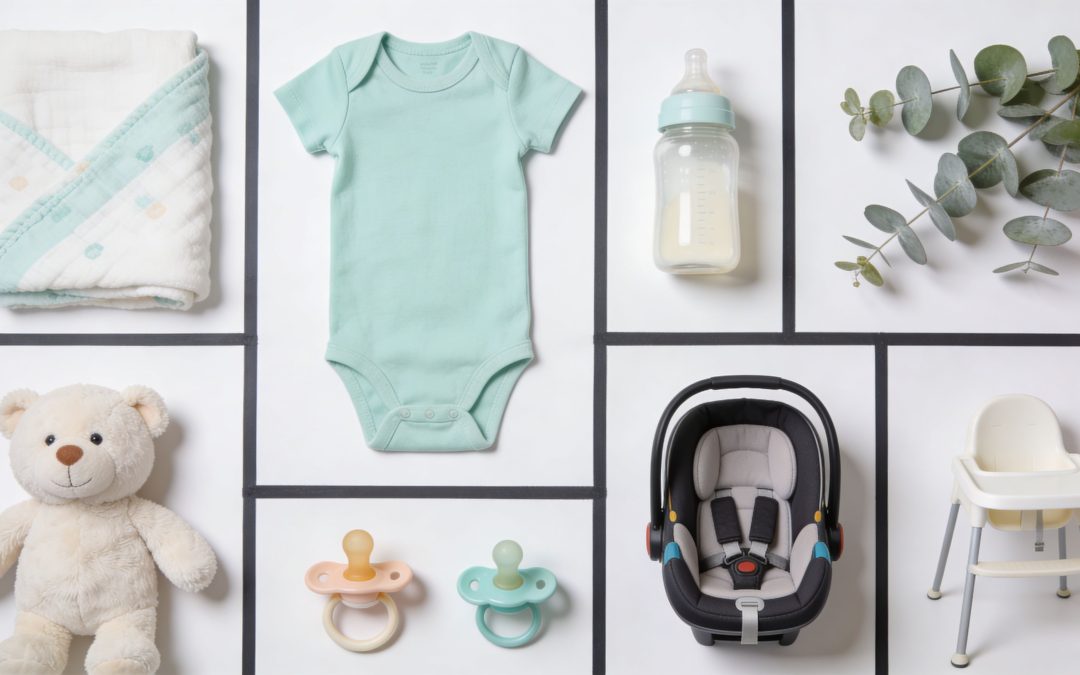
You’re probably staring at tabs full of prams, cots, bottles, carriers, nappies, swaddles, pumps, monitors, and twenty different versions of the same thing, wondering how any parent is meant to sort the useful from the nonsense.
That feeling is normal. Baby shopping in Australia can get out of hand fast because shops, social media, and well-meaning friends all push more gear than most families need. The trick isn’t buying everything. It’s choosing the few items that are safe, practical, and worth having in your home from day one.
My view is simple. Start with safety. Add the daily basics. Leave room for your baby’s preferences, because some things you won’t know until they arrive. And build your registry around real life, not a styled nursery photo.
Feeling Overwhelmed by Baby Gear? Start Here
Walk into a baby store when you’re pregnant and everything suddenly sounds urgent. The cot has to be perfect. The pram has to last for years. Every bottle claims to solve feeding issues. Every sleep product promises longer nights. Most of it just creates noise.
Start smaller. Ask one question: what does my baby need in the first week home? Not in six months. Not for a picture-perfect nursery. Just in those first tired, messy, beautiful days.
For most Australian parents, the answer boils down to a safe place to sleep, a compliant car seat, enough clothes for constant changes, feeding basics, and nappy supplies. Everything else sits lower on the list.
Baby showers have become a much bigger part of preparing for a baby here. In Australia, 78% of new mothers reported they held or attended one in recent years, up 45% from 2010, and 85% of registries include critical safety items according to baby product statistics covering Australian baby shower and registry trends. That matters because a good registry isn’t just a wish list. It’s a filter.
Use a decision rule
When you’re unsure about an item, sort it into one of these buckets:
Must have: You’ll need it immediately or very soon after birth.
Nice to have: Helpful, but you can wait and see.
Skip for now: Looks useful, but you don’t yet know if your baby or home setup will suit it.
That one habit stops panic buying.
Keep your list boring on purpose
The best registry is usually the least exciting one. It has breast pads, muslins, fitted sheets, wipes, singlets, and a proper thermometer. It doesn’t blow half the budget on trendy gear before you’ve covered basics.
Practical rule: If an item doesn’t help with sleep, feeding, transport, nappy changes, bathing, or safety, it probably isn’t a first-round purchase.
If you’re organising gifts, one list also makes life easier for everyone else. Friends and family want direction. They don’t want to guess whether you need another bunny rug or the bassinet sheets you forgot to buy. If you need help with setup details, the EasyRegistry FAQs answer the common practical questions quickly.
The Newborn Checklist What You Need (0-3 Months)
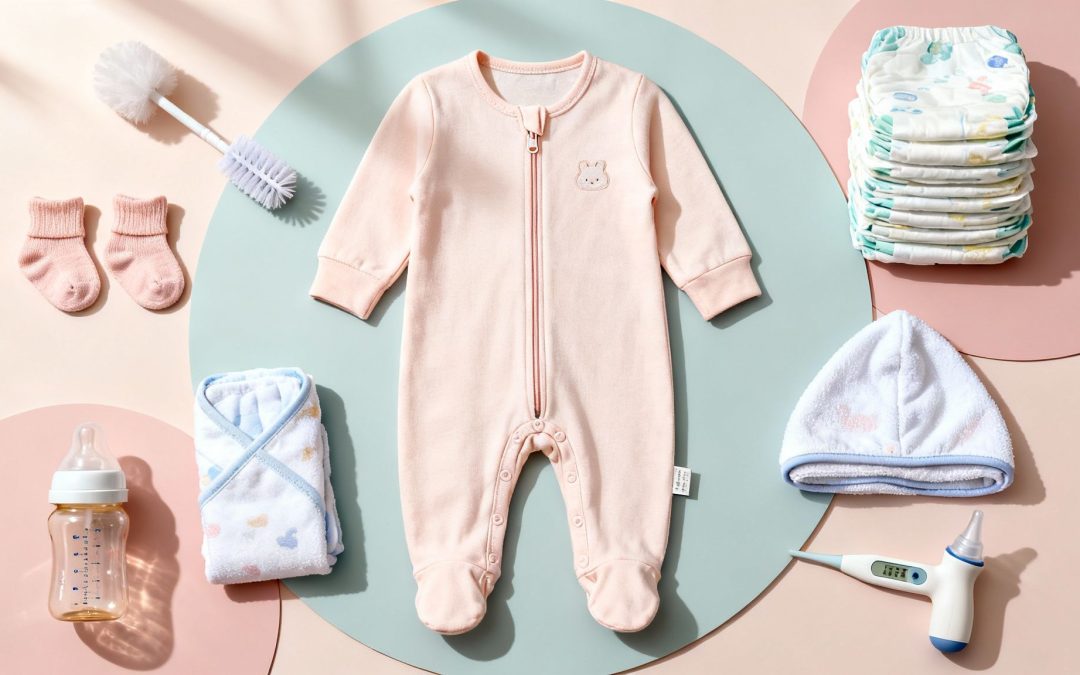
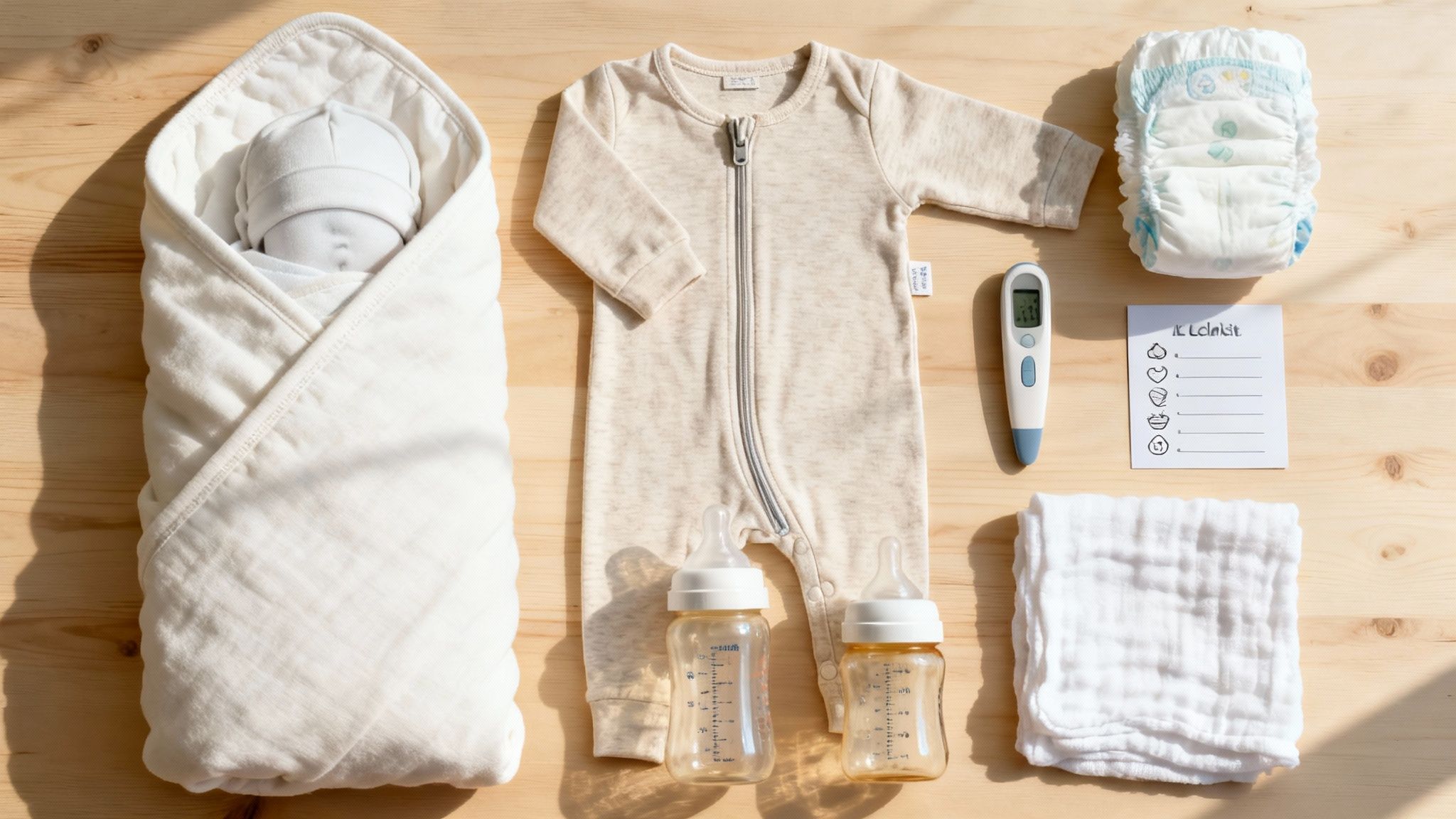
Newborns need less gear than marketing suggests. They need frequent feeds, clean nappies, a safe sleep space, weather-appropriate clothing, and parents who aren’t scrambling for basics at 10 pm.
I’d buy for the first three months only. Babies grow fast, and your preferences will change once real life starts.
Start with five categories
Think in daily routines, not shops:
Sleep: where baby sleeps, and what keeps that setup simple
Feeding: whether you’re breastfeeding, bottle feeding, or both
Nappy changes: enough supplies in the right spots
Clothing: easy layers, not complicated outfits
Bath and health: basic care items, nothing fancy
Newborn Must-Haves Checklist (0-3 Months)
Category
Item
Recommended Quantity
Reason
Sleep
Bassinet or cot
1
Safe place for sleep from the first night
Sleep
Firm mattress that fits properly
1
A proper fit matters for safe sleep
Sleep
Fitted sheets
3
One on the bed, one in the wash, one spare
Sleep
Lightweight swaddles or zip swaddles
3 to 5
Helpful for settling and frequent laundry
Sleep
Baby sleeping bags for later transition
2
Useful once swaddling no longer suits
Feeding
Newborn bottles
4 to 6
Enough for mixed feeding or bottle feeding without constant washing
Feeding
Bottle brush
1
Keep bottle cleaning separate and simple
Feeding
Burp cloths or muslins
8 to 12
You’ll use these all day
Feeding
Bibs
4 to 6
Handy once spit-up ramps up
Feeding
Breast pump if needed
1
Useful if you’re expressing, mixed feeding, or building flexibility
Feeding
Breast pads
1 pack
Often needed early, even if you’re not sure yet
Nappy changing
Newborn or size 1 nappies
1 small stockpile
Enough to get started without overcommitting to one brand
Nappy changing
Baby wipes or cotton pads
1 starting stockpile
Daily essential
Nappy changing
Barrier cream
1
Good to have before you need it
Nappy changing
Changing mat
1
Makes changes easier on any surface
Nappy changing
Nappy caddy or basket
1 to 2
Keeps essentials in reach, especially in a two-storey home
Clothing
Onesies or bodysuits
6 to 8
Frequent spills and nappy leaks
Clothing
Zip suits
6 to 8
Easier than snaps during night changes
Clothing
Singlets
4 to 6
Good layering in cooler weather
Clothing
Socks or booties
3 to 4 pairs
Useful if baby runs cool
Clothing
Beanies
2
Handy for outings and cooler days
Bath and health
Soft towels
2 to 3
Enough rotation for early baths
Bath and health
Washcloths
4 to 6
Gentle and practical
Bath and health
Baby wash
1
Keep it simple and mild
Bath and health
Baby bath or bath support
1
Optional for some families, but easier for many
Bath and health
Digital thermometer
1
Buy it before you need it
Bath and health
Nasal aspirator
1
Small item, big help when baby is congested
What to buy less of
Don’t load up on newborn-size clothes. Don’t buy heaps of one bottle brand before you know what your baby likes. Don’t fill drawers with blankets, shoes, or elaborate outfits.
The other thing I’d avoid is buying too many “problem-solving” gadgets before a problem exists. If your baby ends up needing reflux-specific bottles, a different swaddle, or extra feeding support, you can buy those later.
What’s worth having in two spots
If your home has more than one main living area, duplicate a few cheap basics:
Nappy supplies: wipes, nappies, cream
Muslins: keep them everywhere
A spare change of clothes: for baby and for you
A portable change mat: saves your back and your couch
Buy the expensive items carefully. Buy the cheap daily items in enough quantity to stay sane.
That’s the balance.
Understanding Australian Baby Safety Standards
I'm firm on this point. Some baby purchases are flexible. Safety items are not. In Australia, compliance matters more than aesthetics, influencer reviews, or whether a product is popular overseas.
If a product protects your baby in a car, during sleep, or in daily transport, check the standard first and the colour second.
Car seats are not the place to improvise
In Australia, infant car seats must comply with AS/NZS 1754:2013. Compliant seats reduce infant mortality risk by 78% in frontal crashes, and 28% of parents are unaware of recall histories according to the cited guidance in this newborn baby essentials checklist discussing Australian-compliant car seats.
That should change how you shop.
A seat can look clean, expensive, and barely used, and still be the wrong choice if you can’t verify its history. I’m cautious with secondhand car seats for exactly that reason. If you can’t confirm the model, recall status, instructions, and full crash history, walk away.
What to check before you buy
For high-risk gear, use a short checklist.
Look for the standard label: For car seats, check for AS/NZS 1754 compliance on the product itself, not just the box copy online.
Ask about recalls: Search the ACCC Product Safety Australia recall database before you buy, especially if it’s secondhand.
Check instructions are included: Missing manuals increase installation mistakes.
Inspect all parts: Harnesses, buckles, clips, mattress supports, brakes, and locking points should all be present and working.
Skip vague listings: If a seller can’t answer basic questions, don’t gamble.
Prioritise correct installation: A compliant product installed badly can still be dangerous.
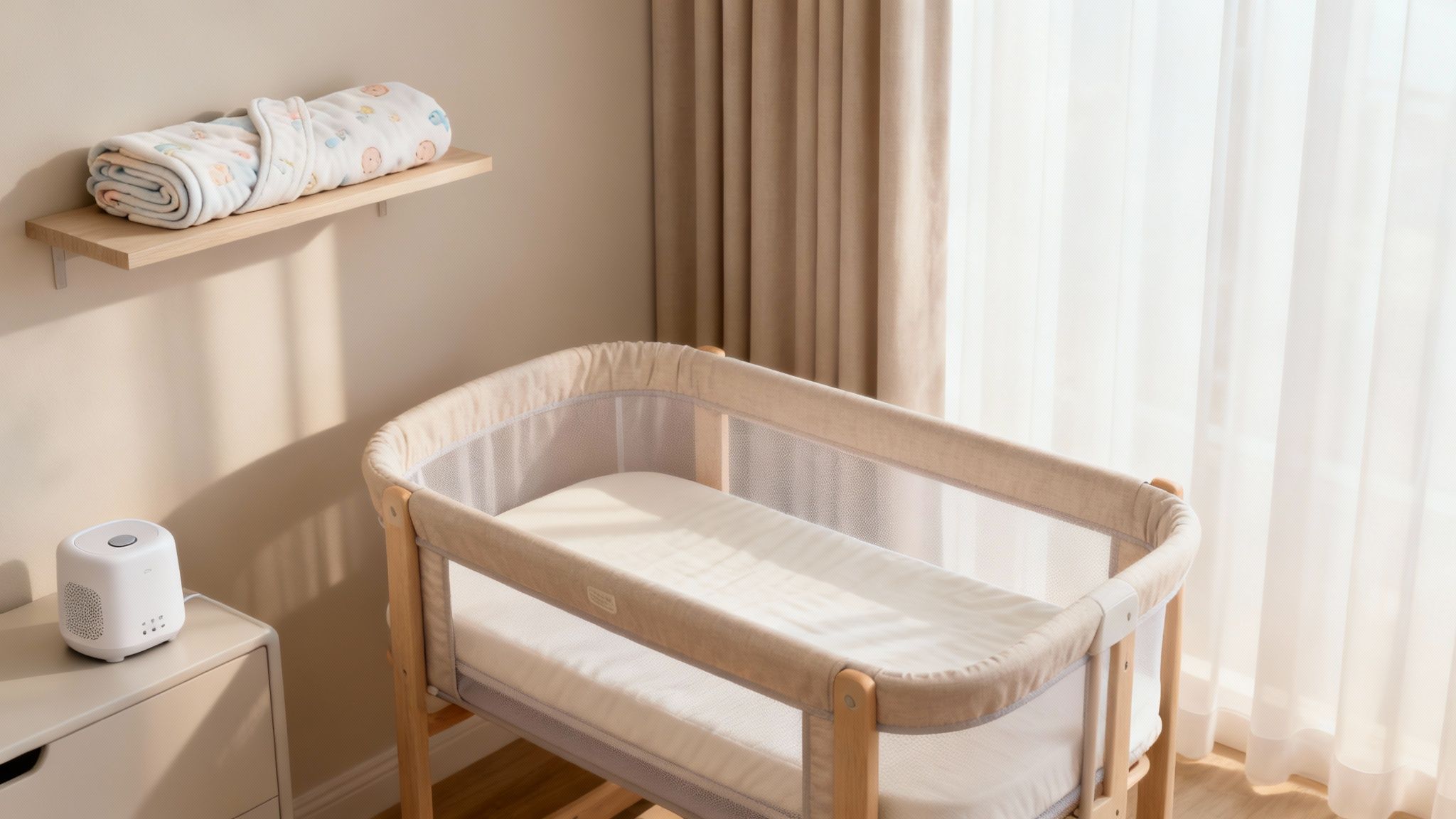
The same rule applies to cots. You want a cot that meets the relevant Australian standard, with a firm mattress that fits properly and no extra padding, loungers, or loose bedding added in.
A safe sleep space should look plain. That’s a good sign, not a missing feature.
The gear I’d treat as essential
Some items deserve extra scrutiny every single time:
Car seat
Buy new if your budget allows. If you buy secondhand, verify everything. No exceptions.
Cot or bassinet
Check compliance labelling, mattress fit, and overall condition. Don’t use makeshift mattress toppers or padding to “improve” comfort.
Pram or stroller
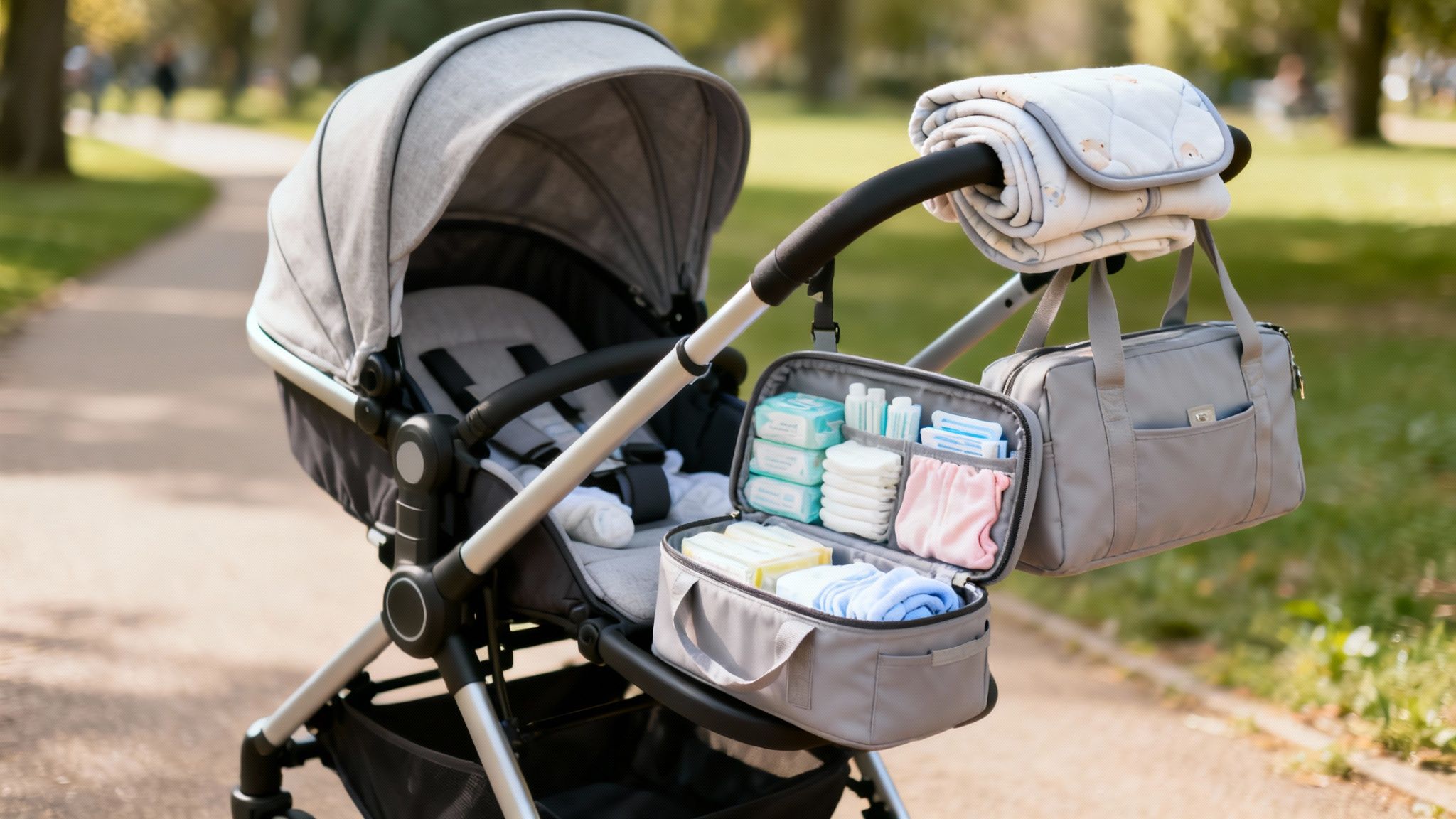
Test the brakes, harness, folding mechanism, and stability. If it feels flimsy in store, it won’t feel better with a nappy bag hanging off the handle.
Toys for young babies
Avoid anything with small detachable parts, loose decorations, or unclear age suitability.
Questions to ask a retailer or seller
You don’t need to sound technical. Just ask directly.
What standard does this comply with?
Has this model had any recalls?
Can I see the compliance label?
Is the instruction manual included?
Has any part been replaced?
For a car seat, has it ever been in an accident?
If the answers are fuzzy, move on.
Safety beats convenience every time
Parents often get sold convenience first. Rotating features, fancy fabrics, compact folds, sleep add-ons, designer finishes. Some of that is useful. None of it matters if the product isn’t compliant and fit for purpose in Australia.
The safest baby must haves are often the least glamorous. A plain compliant cot. A correctly installed restraint. A sturdy pram with a proper harness. That’s the gear worth your money.
Essentials for Your Growing Baby (3-12 Months)
By three months, your baby starts changing fast. They’re more alert, more mobile, and a lot more interested in the world around them. This is the stage where your registry or shopping list should shift from pure survival to support for movement, play, and solids.
What changes after the newborn phase
You won’t need a completely new setup. You’ll just add a few items that match development.
A good play mat becomes more useful once baby starts rolling and spending more awake time on the floor. A sturdy high chair matters when solids begin. Bibs get messier. Storage gets more important because small toys somehow multiply overnight.
I’d also start thinking ahead about baby-proofing before you think you need it. Don’t wait until the first proper roll, crawl, or attempt to pull up on furniture. By then you’re reacting, not preparing.
The next round of practical baby must haves
Here’s what tends to earn its keep in this stage:
High chair: Choose one that’s easy to wipe down. If it has too many creases, crumbs will live there forever.
Silicone bibs and soft spoons: Easier for early solids and easier to clean.
Suction bowls or plates: Not essential on day one, but useful once grabbing starts.
Play mat: A large, easy-clean floor space gets used constantly.
Simple toys: Rattles, stacking cups, soft books, teething toys, and basic cause-and-effect toys are enough.
Baby gate: Worth buying before full crawling.
Power point covers and cupboard latches: Not exciting, but necessary.
A bigger sleep bag or next-size clothing: Babies outgrow gear before you expect.
Buy for the stage you’re entering, not the whole year
A common mistake is buying too far ahead. You don’t need a toy mountain for a five-month-old. You don’t need toddler feeding gear for a baby who hasn’t started solids. Buy what suits the next season of your life.
That’s also why I like adding later-stage items to a registry rather than rushing to purchase them all before birth. It gives friends and family useful options after the newborn essentials are covered.
Here’s a helpful visual if you want a quick reset on what babies use as they grow:
Keep play simple
Babies don’t need a lounge room full of flashing plastic to develop well. They need safe floor time, a few interesting objects, and your attention.
Some of the best baby gear is the gear that gives your child room to move and gives you less to tidy.
That applies to this whole stage. Useful beats impressive.
Budgeting for Baby A Guide to Needs Wants and Savings
Baby costs add up quickly, and pretending otherwise helps no one. The average baby setup in Australia is AU$5,200, up 12% year over year, and 55% of Australian baby shower guests prefer contributing to cash funds over buying physical items, according to this piece on newborn essentials and baby setup costs.
My opinion is blunt. If money matters, and for most families it does, stop treating every baby purchase as a one-time emotional decision. Treat it like household planning.
Split everything into needs and wants
This works better than setting a vague budget.
Needs
Wants
Car seat
Designer nappy bag
Safe sleep space
Matching nursery décor
Nappies and wipes
Multiple swaddles “just in case” beyond a sensible amount
Basic clothing
Special occasion outfits
Feeding supplies
Extra gadgets before a feeding issue exists
Thermometer and basic care items
Trend-driven accessories
A want isn’t bad. It just shouldn’t push a need off the list.
Where to save without making life harder
Some baby categories are good places to be frugal. Others aren’t.
Buy secondhand for low-risk items: Clothing, books, nursery drawers, and some toys are often great pre-loved buys if they’re clean and in good condition.
Be stricter on safety gear: As covered earlier, high-risk gear needs proper verification.
Accept hand-me-downs selectively: Say yes to the useful things that suit your home. Say no to clutter.
Buy small amounts first: Especially with nappies, bottles, and swaddles.
Use cash funds for big-ticket needs: This is far more practical than receiving five blankets and no car seat contribution.
If you’re trying to build better habits before the baby arrives, this guide on saving money as a family is worth reading because it focuses on everyday systems, not guilt.
Use your registry as a budget tool
In this context, a registry becomes more than a gift list. It becomes a plan.
Instead of listing only products, include a mix of:
Cash contributions: for larger essentials or flexible spending after birth
Notes: mention preferred colours, sizes, or why an item matters
That last part matters more than people realise. Guests are usually happy to help when the request is clear and specific.
If you want one place to combine physical items and funds, the EasyRegistry features page shows how that setup works in practice.
A budget-friendly mindset that helps
Don’t aim for the cheapest possible baby setup. Aim for the setup that avoids waste.
That means:
Spend properly on safety.
Keep daily basics stocked.
Delay uncertain purchases.
Use gifts to fill genuine gaps, not duplicate impulse buys.
That approach cuts stress because it keeps you from buying the same category twice. Once before the baby, then again after you realise the first version wasn’t right.
Building Your Perfect Baby Registry with EasyRegistry
A useful registry should answer one question for your guests: what do you need?
That’s it. Not what looks cute. Not what someone else bought for their cousin. What your household will use.
Build your list in layers
Don’t create one giant undifferentiated list. Break it up mentally.
Layer one
Your immediate essentials. Car seat, sleep setup, nappies, wipes, basic clothes, feeding supplies.
Layer two
Helpful items that make the first months smoother. Extra sheets, muslins, bath basics, carrier, thermometer.
Layer three
Later-stage gear. High chair, feeding bibs, gates, play mat, simple toys.
This stops your list from becoming random.
Add products from different shops
Australian parents rarely buy everything from one retailer. That’s normal. One shop has the cot you want, another has the bottles, another has the nappy caddy, and your local marketplace might have a secondhand dresser.
That’s why it helps to use a registry system that lets you pull everything into one link rather than sending guests all over the internet. If you want a broad starting point for ideas, this essential baby registry checklist is a useful reference to compare against your own real priorities.
Use cash funds properly
Cash funds work best when they’re specific. Don’t just write “baby fund”.
Write things like:
Infant car seat contribution
Post-birth essentials top-up
Nappies and wipes fund
Feeding support fund
Pram contribution
That gives guests context. It also makes the gift feel concrete, which people appreciate.
Write notes like a normal person
You don’t need polished registry copy. Just be clear.
Good examples:
We’d love help with our car seat, as this is one of our key safety purchases.
We’re keeping clothing simple, so practical zip suits and bodysuits are most useful.
We’d happy with pre-loved books in good condition.
We’d prefer fewer toys and more help with daily basics.
Those notes stop duplicate gifting and save awkward follow-up later.
Keep the list tidy and current
A registry only works if it reflects what you still need. Remove items you’ve bought yourself. Mark priorities clearly. If your plans change, update the notes.
For a simple walkthrough of how online registry setup works, from creating the list to sharing one link with guests, use how EasyRegistry works.
One practical point matters most. Don’t pad your registry to make it look full. A short, useful registry beats a long one stuffed with filler every time.
Guests want to give something that helps. Your job is to make that easy.
Welcome Your Baby with Confidence and Joy
The point of preparing for a baby isn’t to own every product marketed to new parents. It’s to create a home that’s safe, functional, and calm enough for you to settle into life with your child.
If you remember three things, remember these. Buy the essentials first. Take Australian safety standards seriously. Use your budget on what you’ll use every day. That alone will put you in a far better position than chasing every trend.
You also don’t need to do all of this in one weekend. Build your list gradually. Check the safety details properly. Leave room for hand-me-downs, thoughtful gifts, and remember that some purchases make more sense after the baby arrives.
Group gifting has shifted how many parents handle big purchases. For baby must haves, 70% of Australian baby showers now feature group-funded items via platforms like EasyRegistry, and user feedback suggests this can reduce duplicate gifts by up to 40%, as noted earlier in the Australian baby shower data. That’s a sensible move because it keeps the focus on what families need.
You’re not trying to win baby prep. You’re trying to make those first months easier.
That’s enough. More than enough.
If you want one place to organise physical gifts, larger contributions, and a single shareable list for family and friends, EasyRegistry is a practical way to keep your baby registry clear, useful, and easier to manage.
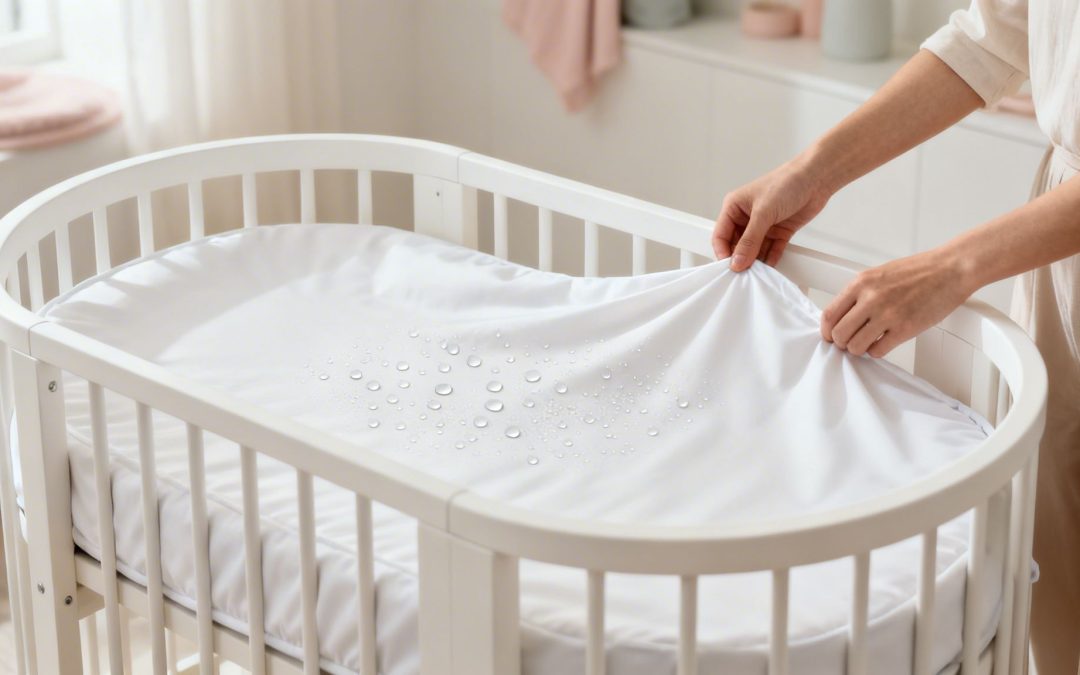
When you're preparing for a new baby, it's easy to get swept up in the adorable outfits and nursery decor. But let’s be honest: parenthood is also filled with unexpected, and often messy, surprises. One of the most practical things you can get is a bassinet waterproof mattress protector—it’s an absolute lifesaver.
A waterproof protector is the unsung hero of the nursery. It’s a simple, fitted layer that acts as a shield for your baby’s mattress, catching the inevitable spills, spit-ups, and nappy leaks.
Your Guide to a Cleaner and Safer Nursery
Think of it as your first line of defence against late-night chaos. Without one, every little accident means a full-on mattress cleaning session. With a protector, you can just whip it off, throw it in the wash, and get everyone back to sleep. It turns a potential disaster into a minor hiccup.
Protecting Your Investment and Your Baby
A good bassinet mattress is an important purchase for your baby’s comfort and safety. A waterproof protector is the best way to make sure it lasts, keeping it free from the stains and smells that can ruin it over time. This saves you money in the long run and, more importantly, ensures your baby always has a clean, fresh place to sleep.
But the benefits go far beyond just keeping things clean:
A More Hygienic Sleep Space: It creates a barrier that stops allergens, dust mites, and bacteria from getting into the mattress itself.
Seriously Easy Cleanups: When accidents happen (and they will!), you can forget about scrubbing a mattress at 3 a.m. Just pop the protector in the wash.
Supports Safe Sleep: A core part of safe sleep is a clean, dry environment, and a protector helps you maintain that effortlessly.
This isn’t just a niche item anymore. In Australia, birth rates are on the rise, with the Australian Bureau of Statistics reporting 291,687 births in 2022—a 4.6% increase from the previous year. On top of that, studies show over 70% of babies have reflux, which means frequent spit-ups are a reality for most families. It’s no wonder 82% of Australian parents now see waterproof bedding as essential. A simple protector can extend a mattress's life by up to 50%.
A bassinet waterproof mattress protector turns a potential late-night disaster into a minor inconvenience. It transforms the dreaded "oh no" moment of a major leak into a simple, two-minute fix, letting you and your baby get back to sleep faster.
Ultimately, this small addition to your nursery gives you something priceless: peace of mind. Knowing your baby’s sleep space is hygienic and protected lets you focus on soaking up all those precious newborn moments. As you put together your gift registry, don’t underestimate how much these practical items can help. To see what other parents are adding, check out some sample registries from other parents.
When you start shopping for a bassinet waterproof mattress protector, the product descriptions can feel a bit overwhelming. You'll see terms like polyurethane, vinyl, and Tencel, but what does it all mean for your baby? Let's cut through the jargon and get to what really counts: keeping your little one safe, comfortable, and dry.
Choosing the right material is about much more than just a soft feel. It’s about creating a truly healthy sleep space. The ideal protector will stop leaks in their tracks while letting air flow freely, so your baby doesn't get too hot.
The Waterproofing Layer Underneath
The real magic of a waterproof protector happens in a hidden layer. This is the thin barrier that stops messes from ever reaching the mattress. For a long time, many protectors were made with vinyl (PVC), but it’s a material you’ll want to steer clear of for baby products. Not only is it not breathable, but it can make annoying crinkly sounds and potentially contain chemicals like phthalates.
Thankfully, there's a much better, safer option: polyurethane (PU). It’s now considered the gold standard for a bassinet waterproof mattress protector.
Why Polyurethane (PU) is the Best Choice: Think of PU as being like the fabric in high-tech activewear. It's a microporous membrane, which means it has tiny holes. These holes are small enough to block water molecules (like spit-up or wee) but big enough to let heat and vapour escape. The result? It's 100% waterproof but still completely breathable.
A Safe and Silent Solution: Good quality PU is non-toxic and won't release any harmful fumes, so you can have peace of mind knowing it's safe for your newborn. It’s also completely silent—no more crinkling noises waking the baby with every little movement.
A quality protector is a cornerstone of creating a safe and hygienic nursery, which brings benefits for both baby and you.
As you can see, a clean and secure sleep space gives you peace of mind, promotes better hygiene, and helps your baby gear last longer.
The Fabric on Top: Comfort and Feel
While the waterproof layer does the heavy lifting, the top fabric is what’s closest to your baby. This surface needs to be soft, absorbent, and quiet. Here are some of the best materials to look for:
Cotton: A true classic for good reason. It's naturally soft, absorbent, and breathable. If you can, opt for organic cotton. It’s grown without pesticides and processed without harsh chemicals, making it perfect for a newborn’s sensitive skin.
Bamboo: Famous for being silky soft and fantastic at wicking away moisture. Bamboo fabric is also wonderfully breathable and has natural antibacterial properties that help keep the sleep surface feeling fresh. If you're curious about different material options, a good guide to a bamboo waterproof mattress protector can offer some great insights.
Tencel™ (Lyocell): A premium, eco-friendly choice made from eucalyptus wood pulp. It’s incredibly smooth, gentle on the skin, and one of the most breathable fabrics you can find, actively helping to regulate your baby's temperature.
To help you decide, here’s a quick comparison of these common materials.
Comparing Common Bassinet Protector Materials
This table breaks down the key features of popular protector materials to help you make the best choice for your nursery.
Material
Waterproofing Layer
Breathability
Noise Level
Best For
Cotton (Organic)
PU
High
Silent
Parents prioritising natural fibres and softness for sensitive skin.
Bamboo
PU
Very High
Silent
Those looking for silky softness, excellent moisture-wicking, and antibacterial properties.
Tencel™
PU
Excellent
Silent
Babies who tend to overheat, as it offers superior temperature regulation and smoothness.
Vinyl (PVC)
PVC
None
Crinkly
Generally avoided in modern baby products due to safety and comfort concerns.
Ultimately, the best protectors pair a non-toxic polyurethane (PU) waterproof barrier with a soft, breathable top fabric like organic cotton, bamboo, or Tencel. This combination gives you everything you need: reliable protection and a safe, comfortable place for your baby to sleep.
Finding the Perfect Size and Secure Fit
When it comes to your baby’s bassinet, getting the fit of the bedding just right isn't about looking tidy—it's one of the cornerstones of safe sleep. A bassinet mattress protector that's too loose can easily bunch up, creating an uneven surface or dangerous gaps, which is a serious suffocation hazard.
The tricky part is that bassinet mattresses don't really have a "standard" size. Unlike cots, their dimensions can vary wildly from one brand to another. This means you absolutely have to measure your specific mattress before you even think about buying a protector. Guesswork just won't cut it here; it can lead to a frustrating return process and, far more importantly, an unsafe sleep setup for your little one.
How to Measure Your Bassinet Mattress
Getting those measurements right is simple. Just grab a tape measure and jot down these three key numbers:
Length: Measure the mattress from one end to the other at its longest point.
Width: Now measure from side to side at the widest part.
Depth (or Thickness): This is the one people often forget! Measure the height of the mattress. It’s crucial for ensuring the protector’s skirt is deep enough to tuck securely all the way underneath.
Keep these numbers in your phone or on a sticky note while you shop. A protector that's even a few centimetres too big will create dangerous slack, while one that's too small will fight you at every corner and likely pop off.
A secure fit is paramount. The protector should hug the mattress tightly, with no loose fabric or bunching. According to safe sleep guidelines, anything loose in the sleep space is a potential risk, and bedding is no exception.
Fitted vs. Flat Designs: Which Is Safer?
You'll generally see two styles of bassinet mattress protectors on the market: fitted and flat. From a safety standpoint, the choice for a bassinet is clear.
Fitted-Sheet Style: This is the design you should always look for. It works just like a fitted sheet, with elasticated edges that wrap snugly around and under the mattress. This design is engineered to create a taut, secure fit, leaving no extra fabric on the surface where your baby sleeps.
Flat Pads: These are simply waterproof pads that lie on top of the mattress. While they might seem like an easy option, they aren't recommended for unsupervised sleep. They can shift around and bunch up as your baby moves, posing a serious safety risk.
For peace of mind, always opt for a fitted-sheet style protector. The elasticated design is purpose-built to eliminate loose fabric and maintain that safe, flat surface your baby needs.
Tips for Popular Bassinet Brands
Many of the most popular bassinets have unique mattress shapes, from the well-known ovals to rectangles with heavily rounded corners. If you have a SNOO, Bugaboo, UPPAbaby, or HALO, you're in luck—you can often find protectors made specifically for your model.
A quick search on the manufacturer's website or for protectors "compatible with" your bassinet model can save you a world of hassle. These custom-fit options are designed to match the mattress dimensions perfectly, guaranteeing a secure fit straight out of the packet.
Keeping Your Bassinet Protector Clean and Hygienic
A good quality bassinet waterproof mattress protector is built to last, but how you care for it makes all the difference. Nailing the right washing and drying routine means it will stay effective and safe for your little one, no matter how many messes it sees.
This isn't just about keeping things clean; it's about looking after the waterproof membrane that does all the heavy lifting. The wrong detergent or a too-hot dryer cycle can quickly ruin this layer, leaving your bassinet mattress unprotected.
The Right Way to Machine Wash Your Protector
First things first, always give the manufacturer's care label a quick read, as the advice can vary a little. That said, most modern protectors have similar needs, all centred on protecting that polyurethane (PU) waterproof backing. Following these steps will get you a perfect wash every time.
Use a Gentle Cycle: Pop it in the machine on a gentle or delicate cycle. This reduces the amount of pulling and friction on the protector’s fabric and its waterproof layer.
Wash with Warm, Not Hot, Water: High heat is the enemy of waterproof materials. It can damage or even melt the membrane, making it useless. Stick to a warm wash (around 40°C) to clean away germs without causing any harm.
Choose a Mild Detergent: Harsh detergents, bleach, and fabric softeners can break down the waterproof lining and even make the top layer less absorbent. Your best bet is a gentle, baby-safe liquid detergent.
Drying Your Protector Without Damaging It
How you dry your protector is just as crucial as how you wash it. The golden rule is simple: avoid high heat at all costs. It's the fastest way to wreck that waterproof barrier.
Tumble Dry on Low Heat: If you're using a machine dryer, make sure you select the lowest heat setting or a specific "air dry" cycle. This gets the job done gently without putting the waterproof layer at risk.
Line Dry for Best Results: Honestly, the best method is to hang it on the line. Drying it in the shade stops direct sunlight from degrading the materials and ensures it dries out completely with zero chance of heat damage.
Owning at least three protectors is the ultimate parent hack. It's the "one on the bassinet, one in the wash, and one ready to go" system. This simple strategy gets rid of the late-night panic when you're faced with an unexpected accident and your only spare is still damp.
This approach isn't just a sanity-saver; it’s smart. The Australian Retailers Association noted that sales of these protectors soared to 450,000 units in 2026 for a reason. A VicHealth survey found that a whopping 89% of parents reported doing 40% less laundry each week by using them. This saves an estimated 1,200 litres of water per household every year—a huge plus, especially with Australia's frequent droughts. You can read more about these waterproof bassinet protector findings.
Tackling Common Baby Stains
From spit-up to the dreaded nappy leaks, your protector is going to see it all. The key is to act fast. For a fresh spill, blot the spot straight away with a damp cloth to lift as much of the mess as possible before it has a chance to set.
For those tougher, dried-on stains, you can pre-treat the area before washing. Just mix up a simple solution of one part white vinegar and two parts water, then gently dab it onto the stain. Let it sit for about 10 minutes before chucking the protector in for its usual warm, gentle wash. Try to avoid any frantic scrubbing, as this can damage the fabric and the waterproof layer underneath.
By following these simple care steps, your bassinet waterproof mattress protector will keep your baby's sleep space hygienic and protected for a long, long time.
Adding a Protector to Your Baby Registry
Alright, now that you're an expert on what to look for in a bassinet waterproof mattress protector, let's make sure this absolute must-have actually makes it onto your gift list. Building a baby registry can feel overwhelming, but one of the smartest things you can do is prioritise items that genuinely make life easier.
A mattress protector might not get the same oohs and aahs as a tiny pair of booties, but trust me, your future self will be thanking you for it during a 3 a.m. nappy leak. It’s one of those gifts that keeps on giving, offering peace of mind and saving you from yet another load of laundry.
How to Add Any Protector to Your EasyRegistry
One of the best things about using EasyRegistry is the freedom. You aren't stuck with one department store's limited selection. You can add literally any product from any online retailer in Australia, which is perfect for finding that exact protector that fits your bassinet and meets all your safety standards.
Here’s how simple it is to add a protector from your favourite online shop:
Find Your Perfect Protector: First, do your online detective work and find the bassinet protector you want. Just remember to double-check your bassinet’s measurements for that all-important snug and safe fit.
Copy the Product URL: Once you’ve landed on "the one," just copy the web address (the URL) from your browser's address bar.
Paste it into EasyRegistry: Log into your EasyRegistry account and find the button to add a new gift. You’ll see a spot waiting for you to paste in that URL.
Fill in the Details: EasyRegistry is clever and will usually pull in the product's name, picture, and price for you. From there, you can adjust the quantity—and we seriously recommend asking for at least three protectors!
The whole process is designed to be incredibly straightforward. You just paste a link, and the system does the heavy lifting.
Crafting the Perfect Wording for Your Registry
Your friends and family want to get you things you’ll actually use. While a protector definitely tops the list of practical baby shower gifts that seasoned parents swear by, it isn't the most glamorous item. Adding a short, friendly note can help your guests understand just how valuable it is.
Pro Tip: A personal note helps your guests feel more connected to the gift they're giving. When you explain why something is important, even the most practical item feels special and full of thought.
Here are a few examples you can tweak to match your own style. Feel free to copy and paste!
Example 1: The Short & Sweet "We'd be so grateful for a few of these bassinet mattress protectors to help with those inevitable baby messes. Having spares will be an absolute lifesaver for late-night changes!"
Example 2: The Safety-First "To help us keep bub's sleep space clean and safe, we've added these waterproof protectors. A snug-fitting protector is essential for hygiene and keeping the mattress fresh. Thank you for helping us with this practical must-have!"
Example 3: The Group Gift Bundle "We've created a 'Safe Sleep Starter Pack' to help get the nursery ready! This bundle includes a few bassinet mattress protectors and some organic cotton fitted sheets. Any contribution towards this would be amazing!"
Bundle It for a Complete Gift
A brilliant way to present practical items on your registry is to bundle them together. This turns a few smaller necessities into one thoughtful, attractive gift package that guests can contribute towards. For a deep dive into setting up your registry from start to finish, our complete guide on creating a baby shower registry has you covered.
Here are a few bundle ideas you can build around your mattress protector:
The "Midnight Mess" Kit:
3 x Bassinet Waterproof Mattress Protectors
3 x Bassinet Fitted Sheets
1 x Gentle, Baby-Safe Laundry Detergent
The "Sweet Dreams" Bundle:
2 x Bassinet Waterproof Mattress Protectors
2 x Bamboo or Organic Cotton Fitted Sheets
1 x Swaddle or Baby Sleep Sack
The "Hygienic Sleep" Pack:
3 x Bassinet Waterproof Mattress Protectors
1 x Pack of Reusable Cloth Wipes (for quick clean-ups)
1 x Portable Changing Mat
By adding a bassinet waterproof mattress protector to your registry and explaining its importance, you're helping your loved ones choose a gift that is genuinely helpful. They’ll feel great knowing they've contributed to your sanity and peace of mind.
Your Top Questions Answered
Alright, let's talk about those questions that pop into your head at 2 a.m. while you're scrolling through baby gear. Even with all the research, it’s totally normal to have a few lingering doubts, especially about something as crucial as your baby’s sleep. You want to feel 100% confident you've got it right.
So, let's dive into the most common questions we hear from parents about bassinet waterproof mattress protectors. Think of this as a chat with a seasoned parent who's been there, done that, and cleaned up the spit-up to prove it.
Do I Need a Protector If My Mattress Is Already Waterproof?
In a word: yes. I know it sounds like doubling up, but trust me, this is one of the smartest decisions you'll make. Think of the mattress’s own waterproof layer as the last line of defence—the emergency backup you hope you never need. The separate, removable protector is your frontline worker.
There are two massive wins here. First, a good protector adds a soft, breathable layer that makes the plastic-y feel of a waterproof mattress far more comfortable for your little one.
More importantly, it’s all about surviving those 3 a.m. messes. When a leak happens, you don't want to be wiping down the entire mattress and waiting for it to dry. You just want to whip off the soiled protector, throw on a fresh one, and get everyone back to sleep in minutes. It also saves the mattress itself from the wear and tear of constant cleaning, making it last much longer.
How Many Bassinet Mattress Protectors Should I Own?
Ask any experienced parent, and they'll tell you the magic number is three. This isn't just a random suggestion; it's a battle-tested system that will absolutely save your sanity.
Here’s how it works: one on the bassinet, one in the wash, and one clean and ready to go in the cupboard. Accidents rarely happen at convenient times, and sometimes they happen back-to-back (looking at you, tummy bugs and nappy blowouts).
Having a clean, dry protector on hand at all times means you can reset the sleep space in minutes, with minimal disruption to your baby's rest—and yours. Adding three protectors to your baby registry is a practical request your guests will be happy to fulfil.
There’s nothing worse than realising your only spare is still damp on the washing line when you're dealing with another unexpected mess. The "rule of three" eliminates that stress.
Are Waterproof Protectors Safe for Newborns?
Yes, when you choose the right one, a bassinet waterproof mattress protector is not just safe—it’s a vital part of creating a hygienic sleep space. Safety experts like Red Nose Australia are clear about needing a firm, flat, and clear sleep surface, and a good protector is designed to support that.
Safety all comes down to two critical things:
A Snug, Secure Fit: This is non-negotiable. The protector must fit the mattress like a glove, with absolutely no loose fabric, bunching, or gaps. Anything baggy is a potential suffocation risk. This is exactly why you need to measure your mattress before buying.
Breathability: Don't picture a sweaty plastic sheet. Modern protectors are engineered to be waterproof and breathable. They often use a polyurethane (PU) layer bonded to a natural fabric like cotton or bamboo, which allows heat and moisture to escape, helping to regulate your baby's temperature and prevent overheating.
Always look for a protector that is thin and made specifically for newborns. Steer clear of anything thick, quilted, or padded, as it can make the sleep surface too soft. A well-fitting, breathable protector is a key player in your baby's sleep safety.
Can I Just Use a Pillowcase Instead?
I know parents are brilliant at creative hacks, but this is one shortcut you must absolutely avoid. Using a pillowcase as a makeshift mattress cover is incredibly dangerous and goes against all safe sleep advice.
First, a pillowcase is not designed to fit a bassinet mattress. It will be loose and baggy, creating folds and pockets of fabric that pose a serious suffocation hazard. A baby can easily turn their face into the loose material and have their breathing obstructed. It's a risk that is simply not worth taking.
Second, a pillowcase isn't waterproof. It completely defeats the purpose of protecting the mattress. Any moisture will soak right through to the mattress core, creating a breeding ground for mould, mildew, and bacteria—making for a very unhealthy sleep environment. For more common questions about baby registries and products, our full frequently asked questions page offers even more great information.
Please, stick to products that have been specifically designed and safety-tested for infant sleep. Your baby's safety is too important to gamble with a DIY solution. A proper bassinet waterproof mattress protector is the only safe choice.
At EasyRegistry, we're all about making your journey into parenthood as smooth and stress-free as possible. Add any bassinet protector from any store to your registry with a single click, so you can get the practical gifts you'll actually use. Start your free baby registry today!
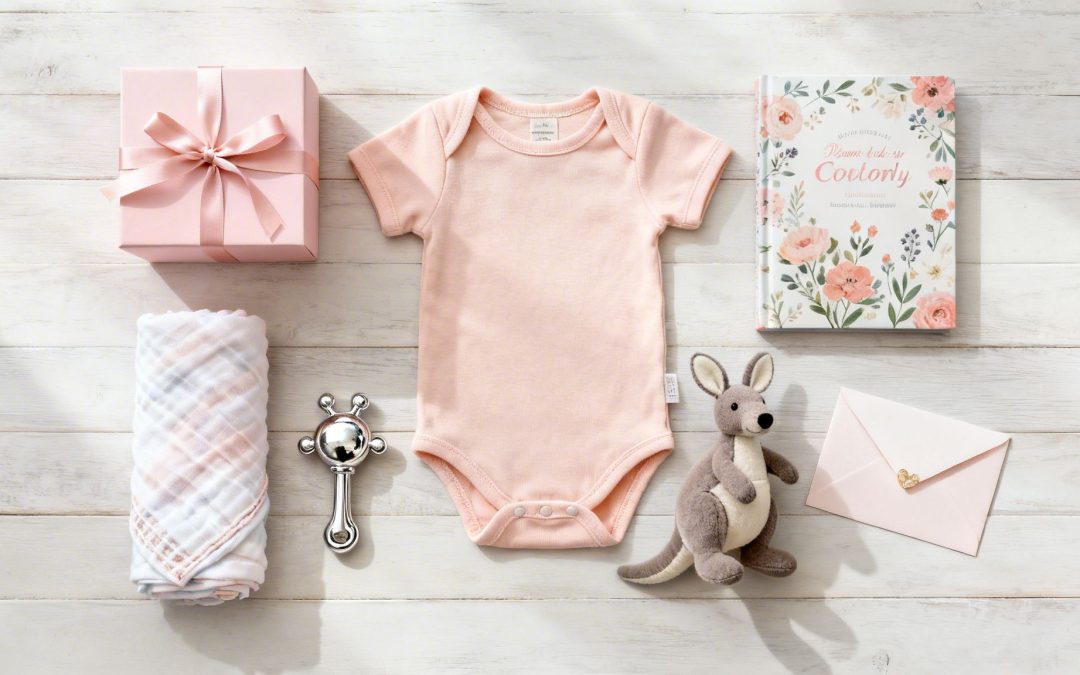
When a precious new baby girl arrives, it’s such a special time, and of course, you want to find a gift that’s just right. But with so many options out there, it’s easy to feel a bit lost. Should you go for something practical that the new parents will be reaching for every day, or a beautiful memento she’ll have for years to come?
This guide will walk you through it all. We’re here to help you choose a gift that’s not only gorgeous but genuinely useful, taking the guesswork out of the equation so you can give with confidence.
Practical vs. Keepsake Gifts
The first big decision is often whether to choose a practical gift or a sentimental one. Honestly, both are fantastic choices—it just depends on what the new family needs most.
Practical Gifts: These are the unsung heroes of the newborn phase. Think ultra-soft cotton onesies, breathable muslin wraps, and an endless supply of nappies and wipes. They’re the things that make those first few chaotic months just a little bit easier for tired parents.
Keepsake Gifts: These are the treasures that capture the magic of her arrival. This could be anything from a custom-engraved rattle to a ‘My First Year’ photo album or a sweet piece of art for her nursery.
As you can see, both paths lead to a thoughtful and appreciated present. If you’re looking for a gift that’s both beautiful and beneficial, it’s also worth exploring the best toys for newborn development to give her a head start on learning and discovery.
A Quick Look at Gift Ideas
To help you get started, here's a quick overview of gift options to find the perfect match for your budget and the family's needs.
Quick Guide to Newborn Gift Ideas by Type and Budget
Gift Type
Budget-Friendly (Under $50)
Mid-Range ($50-$150)
Premium & Group Gifts ($150+)
Practical
Muslin wraps, nappies, quality bibs
Baby carrier, nappy bag, bath set
High chair, car seat, cot
Keepsake
Personalised ornament, memory book
Custom name plaque, silver rattle
Professional photoshoot, jewellery
Developmental
High-contrast cards, soft book
Play gym, activity mat
Toy subscription box
For Parents
Meal delivery voucher, nice hand cream
House cleaning service, pamper pack
Night nurse service, weekend getaway
This table should give you a good starting point, whether you're looking for a small token or planning to chip in for a larger group present.
Making Gifting Easier
Thankfully, you don't have to navigate gift-giving on your own. There are some great tools available that make it much easier for friends and family across Australia to coordinate.
Using a registry service like EasyRegistry eliminates the guesswork and helps avoid duplicate gifts. It allows friends and family to coordinate and contribute to presents that make a real difference, from big-ticket items to smaller essentials.
By using a registry, you can be sure your gift for the new baby girl is something the family truly wants and needs, making your present all the more special.
Choosing Between Essential Needs and Thoughtful Luxuries
Deciding what to buy for a new baby girl often comes down to one big question: should you go for something practical or something precious? It’s a bit like stocking a new kitchen. The essentials are the flour and oil—the workhorse items you need every single day. The luxuries? They’re the fancy saffron or that special vanilla bean paste, the ingredients that add a little bit of magic.
For new parents, those essential gifts are the absolute backbone of daily life with a baby. They solve real, immediate problems and make the day-to-day grind just that little bit easier. Believe me, when they're reaching for a clean swaddle at 3 am, they'll be thanking you.
On the other hand, a thoughtful luxury is a gift that pampers, celebrates, and helps create beautiful memories. It's often something parents wouldn't dream of buying for themselves, especially when they're focused on a budget full of nappies and wipes. A luxury gift says you're not just thinking about their needs, but also about their joy.
To help you figure out where your gift might fit, here’s a quick comparison of the two approaches.
Essential Gifts vs. Luxury Gifts for a Newborn Girl
This table offers a clear comparison to help you decide between practical necessities and delightful extras when choosing a gift.
Gift Category
Essential Items (Must-Haves)
Luxury Items (Nice-to-Haves)
Clothing
Bulk packs of cotton onesies (size 0000 and 000) and singlets.
A designer dress for a special occasion or a hand-knitted cashmere cardigan.
Sleeping
Breathable muslin or cotton swaddles, safe sleeping bags.
A high-tech baby monitor with video and breathing sensors.
Feeding
An abundance of bibs and burp cloths, quality bottles if bottle-feeding.
A high-end electric steriliser or a stylish high chair for later on.
Playtime
A simple, safe play mat and a few basic rattles or soft toys.
A beautifully designed, plush activity gym or a wooden heirloom toy set.
Out & About
A well-designed nappy bag, a safe and comfortable baby carrier.
A luxury pram liner or a professional newborn photoshoot session.
Ultimately, both categories are fantastic. Essentials lighten the load for exhausted parents, while luxuries create treasured moments and keepsakes. Your choice just depends on the kind of support or joy you want to give.
The Power of Practical Essentials
Gifting an essential is one of the most direct ways to support new parents through what is an amazing, but also physically and emotionally draining time. These are the gifts that are all about function and are used constantly.
When you give a parent a pack of high-quality cotton onesies, you’re not just giving clothes. You're giving them a fresh, clean outfit that’s ready to go after the inevitable spit-up or nappy leak.
Here are some of the most-wanted practical gifts:
Breathable Muslin Swaddles: These are the Swiss Army knife of baby gear. They’re used for swaddling, as a light blanket, a pram cover, or a nursing shield. You can never have too many.
An Abundance of Bibs and Burp Cloths: Newborns can go through an astonishing number of these each day. A big, stylish pack means there's always a clean one within arm's reach.
A High-Quality Nappy Bag: This is the mobile command centre for any new parent. A bag with smart compartments keeps everything organised and easy to find when you're out.
A Comfortable and Safe Baby Carrier: This is the gift of free hands! It lets parents keep their baby close and comforted while still managing to make a cup of tea or answer an email.
A truly great essential gift feels like a sigh of relief. It’s one less thing for tired parents to think about, and its value is felt every single day.
When you're choosing essentials, always put quality and safety first. Look for items made from natural, baby-safe materials like organic cotton or bamboo. It’s a small detail that shows an extra layer of care.
The Joy of Thoughtful Luxuries
While essentials cover the needs, luxuries are all about the wants and the wonder. These gifts sprinkle a bit of beauty and ceremony into the newborn blur, creating moments of pure delight for both baby and her parents. They are often the 'wow' presents that get passed around at a baby shower.
But a luxury gift doesn't have to break the bank. It's more about the sentiment and the quality—the difference between a standard-issue baby blanket and a sumptuously soft, personalised cashmere one.
Consider these ideas for a touch of luxury:
A Designer Outfit for a Special Occasion: A stunning little dress or a stylish romper for her first family photos is a gift that helps create a lifelong memory.
A Plush, High-Quality Play Mat: A beautifully designed activity gym can become the gorgeous centrepiece of the nursery and a soft, stimulating world for her to explore.
A High-Tech Baby Monitor: Advanced monitors that track video, breathing, and room temperature offer parents something truly priceless: peace of mind.
A Professional Newborn Photoshoot: This is a gift that literally stops time, capturing that fleeting, sleepy newborn stage in beautiful images the family will treasure forever.
Finding the Right Balance
So, how do you decide between the two? Your best clue is a baby registry. If the parents have set one up with a service like EasyRegistry, it's your perfect guide. The list will spell out the essentials they're hoping for and might even point to a few 'dream' luxury items.
If there isn't a registry, think about your relationship with the parents and your budget. A close family member might feel totally comfortable splurging on a big-ticket item like a pram, while a friend or colleague might prefer to put together a beautiful bundle of high-quality essentials.
In the end, the best gift for a new baby girl is one that comes from the heart and shows you've thought about this new family and what they might need or love most.
How to Navigate Gift Budgets and Group Gifting
Let’s talk about money. It can feel a bit awkward, but figuring out your budget is the first, most practical step in choosing a gift for a new baby girl. Getting this sorted means you can give with genuine joy, without any lingering financial stress. The great thing is, there’s no single "right" amount to spend; it almost always comes down to your relationship with the parents-to-be.
Think of it like this: your gift is a gesture of support and celebration. A colleague might pop $25-$50 towards a gorgeous set of bibs or a classic storybook. A close friend will often spend a bit more, usually in the $50-$100 ballpark. Grandparents and other immediate family members might set their sights higher, anywhere from $100 to $250 and beyond, often contributing to one of the bigger, essential items.
This way of thinking helps explain a huge shift we’re seeing in Australian baby shower culture. With 292,318 registered births in 2023, the sheer cost of setting up a nursery is on everyone's mind. While individual Australian baby shower gifts for a newborn girl tend to fall between $20 to $250, it's telling that nearly 40% of gift contributions are now part of a collective effort for a big-ticket item.
The Smart Way to Give Big with Group Gifting
This is where group gifting really shines. What happens when you’d love to gift something truly game-changing, like a $1,200 pram or a top-of-the-line car seat, but that’s way beyond your personal budget? You chip in.
Imagine a group of workmates, friends, or family members all pooling their funds. Everyone contributes an amount they’re comfortable with, and together, you can buy a high-impact gift that the new parents desperately need but might have struggled to afford on their own.
It completely changes the dynamic of gift-giving. The pressure is off any one person, and the focus shifts to a shared goal: supporting the new family in a genuinely meaningful way.
Group gifting isn't just about splitting the cost of an expensive item. It’s a community wrapping its arms around a new family, providing a foundational piece of gear that will make their day-to-day lives that little bit easier.
Modern registries make this process incredibly simple. Instead of one person having the awkward job of chasing up cash, platforms like EasyRegistry let parents add a "group gift" fund for a specific item. Guests can contribute directly online, see the total grow, and feel like they’re part of a team effort. It’s also the perfect setup for a flexible wishing well registry where parents can use the funds as needed.
Common Spending Ranges in Australia
To give you a clearer picture, here are some typical budget guidelines based on how well you know the family. Just remember, these are only suggestions—the best gift comes from the heart, not the price tag.
Work Colleagues & Acquaintances ($20 – $50): Focus on smaller, thoughtful essentials. You can’t go wrong with a set of organic cotton muslin wraps, a classic board book, or some of the best newborn onesie girl options that are both practical and adorable.
Friends ($50 – $100): Here you can start looking at more substantial items or a beautifully curated gift set. Think a quality baby carrier, a stylish nappy bag, or a soft, engaging play mat.
Close Friends & Family ($100 – $250+): This budget opens up the bigger items. A bouncer, a high-tech baby monitor, or a significant contribution towards a group gift are all fantastic choices in this range.
Ultimately, whatever your budget, your thoughtful gesture is what will be remembered. Choosing to give, whether on your own or with others, is a beautiful way to welcome a precious new life.
Giving a Gift That Becomes a Cherished Memory
While all those practical gifts are the absolute workhorses of the newborn phase, some presents aren't about daily use at all. They’re about capturing a feeling. These are the keepsake gifts, the treasures chosen to freeze a moment in time and become a beautiful part of a little girl's family story.
They look beyond the immediate needs of 'right now' and focus on the 'forever'. This is your chance to give something with real heart—a gift that will always remind her of the incredible love that surrounded her from her very first day.
Moving Beyond the Practical
A keepsake is the difference between an item that gets used up and one that becomes an heirloom. Think of a gorgeous, custom-engraved silver rattle. Sure, she might shake it for a little while, but its real purpose is to one day sit on a shelf, catching the light and reminding everyone of those precious first few months.
Or what about a personalised storybook that casts her as the brave hero of her own adventure? These aren't just presents; they're the beginnings of future family treasures.
A keepsake gift is like planting a tree on the day a child is born. It may seem small at first, but it grows in meaning and significance over the years, becoming a landmark of love and memory for the entire family.
These gifts are all about bottling the magic of this fleeting time. They transform a simple object into something packed with sentiment—the kind of thing that gets carefully stored away, brought out on special occasions, and maybe even passed down to the next generation.
Ideas for Timeless Keepsake Gifts
When you're hunting for a keepsake, your compass points should be personalisation, quality, and longevity. The aim is to find something that won't be outgrown in a few months but will instead be treasured for decades.
Here are a few beautiful ideas that are destined to become cherished memories:
'My First Year' Memory Journal: A beautifully bound book is the perfect spot for parents to jot down milestones, stick in photos, and write letters to their daughter. It becomes an incredible time capsule of her first 12 months.
A Custom Piece of Nursery Art: Nothing makes a room feel more special than custom art. Commission a piece with her name, birth date, or a sweet illustration that makes her first room uniquely hers and can move with her as she grows.
A Handcrafted Jewellery Box: A small, elegant box for her future treasures is a wonderfully thoughtful gift. To make it extra special, you could pop a tiny, delicate bracelet or locket inside as her very first piece.
A Personalised Storybook: There are some amazing services out there that create stunning books where the baby girl is the main character. It’s a magical way to make her the star of her own fairytale right from the start.
Using a Registry for Sentimental Gifts
You might think a gift registry is only for practical stuff, but it's actually a brilliant way to coordinate keepsake gifts, too. On a flexible platform like EasyRegistry, parents can guide friends and family toward the exact kind of sentimental gift they’d adore.
This is a game-changer for those more unique or custom items. For example, parents could add a link to a specific Etsy artist whose nursery prints they love. They could even create a group fund for a bigger keepsake, like a handmade quilt or a professional newborn photoshoot. This way, the gift is not only deeply personal but also a perfect match for the family's taste, guaranteeing it will be a truly cherished memory for years to come.
Why a Baby Registry Is a Parent’s Best Friend
Let's be honest, the idea of a baby registry can feel a bit formal or even demanding. But trust me, it’s one of the single most helpful things you can do as a new parent. Think of it less as a list of demands and more as a helpful, friendly guide for all the wonderful people who want to shower your little girl with love. It’s all about making their generosity easy and incredibly effective.
The real magic of a registry is how it solves the two biggest gifting headaches: getting five of the same baby blanket and receiving lovely, but not quite right, items that don't match your style or fit in your home. It’s a gentle way to coordinate everyone’s good intentions so every gift is genuinely wanted and will be used to its fullest.
Eliminating the Guesswork for Guests
For friends and family, the pressure to find that "perfect" gift is very real. They want their present to be thoughtful and adored, but it's almost impossible to know what you already have or what you truly need. A baby registry takes all that stress and guesswork right off their plate.
Instead of spending hours scrolling online or wandering through shops, they can simply choose from a list you've curated yourself. It turns the gifting experience from a shot in the dark into a confident, happy choice. And it’s becoming the new normal for a reason.
In 2023, Australia saw 292,318 registered births—that’s a huge wave of gift-giving! With over 40% of urban families now using registries to build lists of 75-125 items, the results speak for themselves. These lists have been shown to cut down on duplicate gifts by a whopping 70%, saving families and their guests both money and hassle.
Ultimate Flexibility for Modern Parents
One of the best things about modern registries is their amazing flexibility. Not so long ago, you were stuck with one department store and their limited selection. Today, that's all changed. Universal registries let you add items from literally any store, all in one simple, shareable place.
This is where a platform designed specifically for Aussies, like EasyRegistry, really shines. You can add a specific swaddle from a small online boutique, a cot from Baby Bunting, and a high chair from another retailer entirely. That freedom means your list can perfectly reflect your personal style and practical needs, without being locked into a single shop's inventory.
A modern baby registry is like a universal wishlist for your new life. It lets you gather all the things you need and love from all over the internet and organise them in one beautiful, easy-to-use spot for your loved ones.
This level of customisation just makes the whole process more personal and effective. It's an organised, polite way to communicate your needs without having dozens of separate conversations about what to buy. To see just how straightforward it is, you can explore how a baby shower registry works and check out its features.
More Than Just Physical Items
Today’s registries have evolved far beyond just physical products. They understand that sometimes the most valuable gifts for a newborn baby girl and her family aren't "things" at all.
Modern registries open up a world of non-traditional but hugely helpful options, including:
Group Gifting: This fantastic feature allows multiple people to chip in for a big-ticket item, like a pram or car seat. Everyone contributes an amount they feel comfortable with, making those expensive essentials feel much more achievable.
Cash Funds: You can set up specific funds for things like a "Nursery Decoration Fund" or a "Meal Delivery Service." This gives you the cash and flexibility to use it exactly where it's needed most when the time comes.
Experience Gifts: Your loved ones can even contribute towards a newborn photoshoot or a house cleaning service—gifting you precious memories or the even more precious gift of rest.
By offering these choices, a registry ensures every single dollar spent by your generous friends and family is channelled into something that provides real, tangible value. It’s a coordinated, respectful, and incredibly practical way to make sure every gift truly counts.
Giving the Invaluable Gifts of Time and Support
While tiny outfits and soft toys are always lovely, some of the most helpful gifts for a new baby girl don’t come in a box at all. In the beautiful but exhausting blur of those first few weeks, the gifts of time, rest, and practical support can feel like a genuine lifeline for new parents.
These "experience" or service-based gifts get right to the heart of the biggest challenges of early parenthood. They show a depth of care that a physical item can't always match, directly easing the burden of sleepless nights and the never-ending to-do list every new parent knows so well.
Giving the Gift of Rest and Relief
Think about it this way: what if you could give new parents a week off from thinking about dinner? Contributing to a fund for a meal delivery service doesn't just provide food; it gives back precious hours they would have spent planning, shopping, and cooking. It's the simple, wonderful gift of a hot, nourishing meal without any of the work.
In the same way, pooling funds for a professional house cleaning service can feel like an absolute godsend. It lifts the mental weight of trying to keep things tidy, letting parents focus purely on their new baby and their own recovery.
A service-based gift is a direct investment in a new parent's wellbeing. It acknowledges their exhaustion and provides a tangible solution, making it one of the most thoughtful and impactful presents you can give.
These kinds of ideas are gaining traction for a good reason—they solve real, immediate problems. They help create a calmer, more supportive home for the new family to settle into, and that's truly priceless.
Powerful Service-Based Gift Ideas
These non-traditional gifts offer genuine help right when it’s needed most. You might consider adding a fund for one of these to a baby registry; most parents would be thrilled to receive this kind of support.
Meal Delivery Vouchers: Services delivering ready-to-eat meals or healthy meal kits are a lifesaver. This is a top-tier gift that supports the parents' health and saves an incredible amount of time.
Professional House Cleaning: Even just a few hours of professional cleaning can completely reset a household, giving parents a clean, peaceful space to enjoy with their baby.
Postpartum Doula Support: A postpartum doula offers expert care, hands-on help with the baby, and crucial guidance, allowing mum to truly rest and recover. A contribution towards this is an incredibly powerful gift.
Newborn Photoshoot Session: This captures a fleeting, magical time that passes in the blink of an eye. By funding a professional photoshoot, you’re giving the family beautiful memories they will cherish forever.
Organising contributions for these larger gifts is actually quite simple with a modern registry. You can check out some sample registries to see how easy it is to set up funds for non-physical items. This approach allows friends and family to chip in together, collectively giving a truly invaluable gift of support.
Your Newborn Gifting Questions Answered
When it comes to buying a gift for a new baby, a few questions always seem to pop up. Let's walk through the most common ones so you can feel confident you're choosing a present that’s genuinely helpful and appreciated.
What Is the Best Clothing Size to Buy?
This is the number one question for a good reason! While those tiny newborn (0000) outfits are impossibly cute, babies grow at a startling pace. Most newborns will only be in that size for a few short weeks, and new parents often end up with a mountain of them.
If you want your gift to have a bit more staying power, it’s always a smart move to buy a size or two up.
Size 000 (0-3 months): This is a fantastic, safe choice. It gives the baby a little room to grow into the outfit without it being huge on them straight away.
Size 00 (3-6 months): This is even better! Gifting for the next season down the track means parents will be sorted when a sudden growth spurt hits.
A great rule of thumb is to think about the seasons. If a baby is born in summer, a cosy winter outfit in size 00 is a wonderfully thoughtful gift they'll get heaps of use out of in a few months' time.
Is It Okay to Give Cash?
Absolutely. Any old-fashioned idea that cash is an impersonal gift is well and truly gone. For modern parents, cash is often the most practical and welcome gift they can receive for their new baby girl.
It gives them complete freedom to put the money towards whatever they need most, whether that’s another box of nappies, a big-ticket item they’re saving for, or simply helping with bills while on parental leave. If you’d like to make it feel more personal, contributing to a specific fund on their baby registry is a perfect way to do it.
What If They Have a Registry?
If the parents-to-be have shared a baby registry link, consider it your golden ticket to perfect gifting. A registry isn't a demand—it's a helping hand from them to you, designed to make your life easier.
It completely removes the guesswork. You can choose something with total confidence, knowing it's a style and brand they love and something they don't already have. Sticking to the registry is the most certain way to give a gift that will be used and loved.
What Do You Get for Parents Who Have Everything?
This is a common one, especially for parents on their second or third child who seem to have all the gear. When this happens, think beyond physical items and towards the gift of time and support.
A voucher for a meal delivery service, a contribution towards a house cleaner, or a genuine offer to babysit older siblings can be worth more than any baby gadget. These acts of service are gifts of rest and breathing room, which is truly priceless in those early weeks.
Ready to take the guesswork out of gifting? With EasyRegistry, you can create a beautiful, flexible registry that includes anything from any store, alongside cash funds and group gifting options.
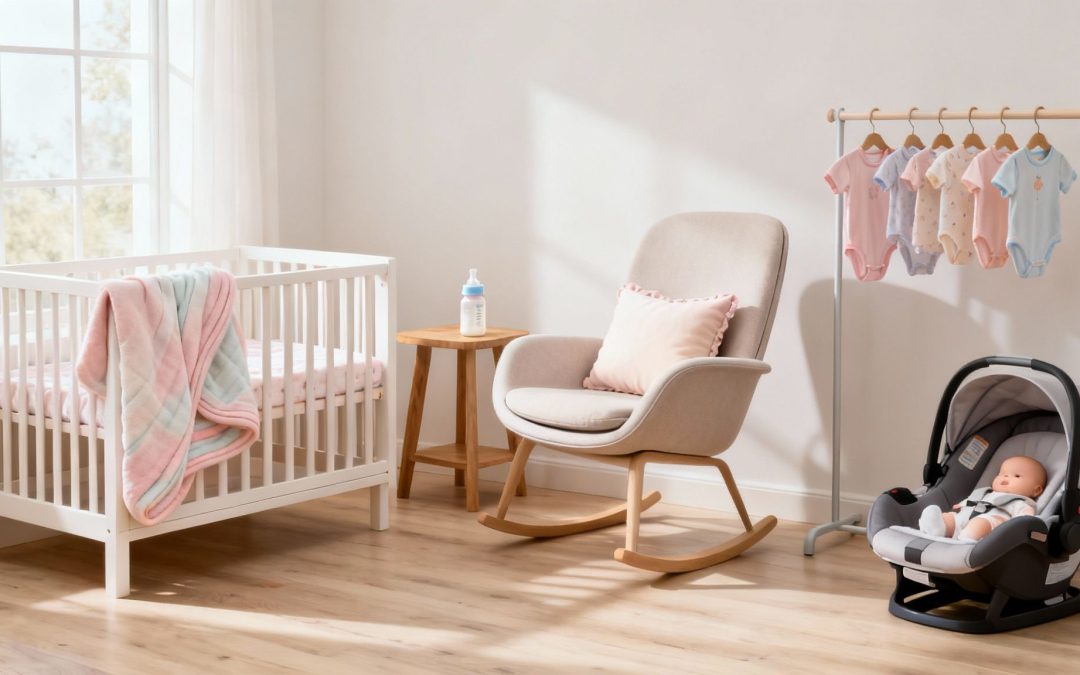
Getting ready for a new baby is one of life’s most exciting chapters, but figuring out what you need for a newborn can feel a little daunting. Let's cut through the noise. It really all comes down to four core activities: sleeping, feeding, changing, and travelling. Think of these as the absolute foundations for your baby's first few weeks.
Your Essential Newborn Starter Pack
Walking into a baby store or scrolling online can be an overwhelming experience. There are so many gadgets and gizmos, all marketed as "must-haves." The truth? You can start with a much shorter, focused list of essentials that will confidently get you through those precious early days. The aim is to feel prepared, not buried under a mountain of baby stuff.
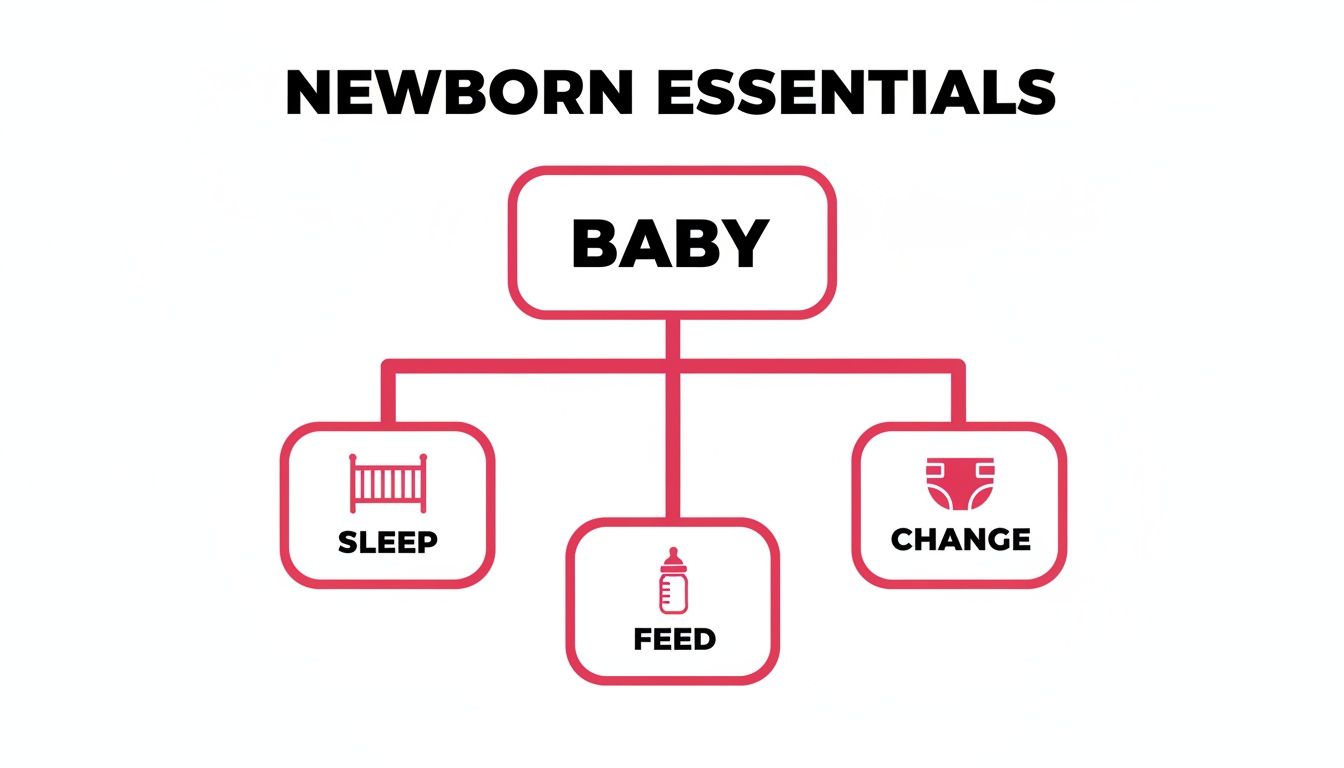
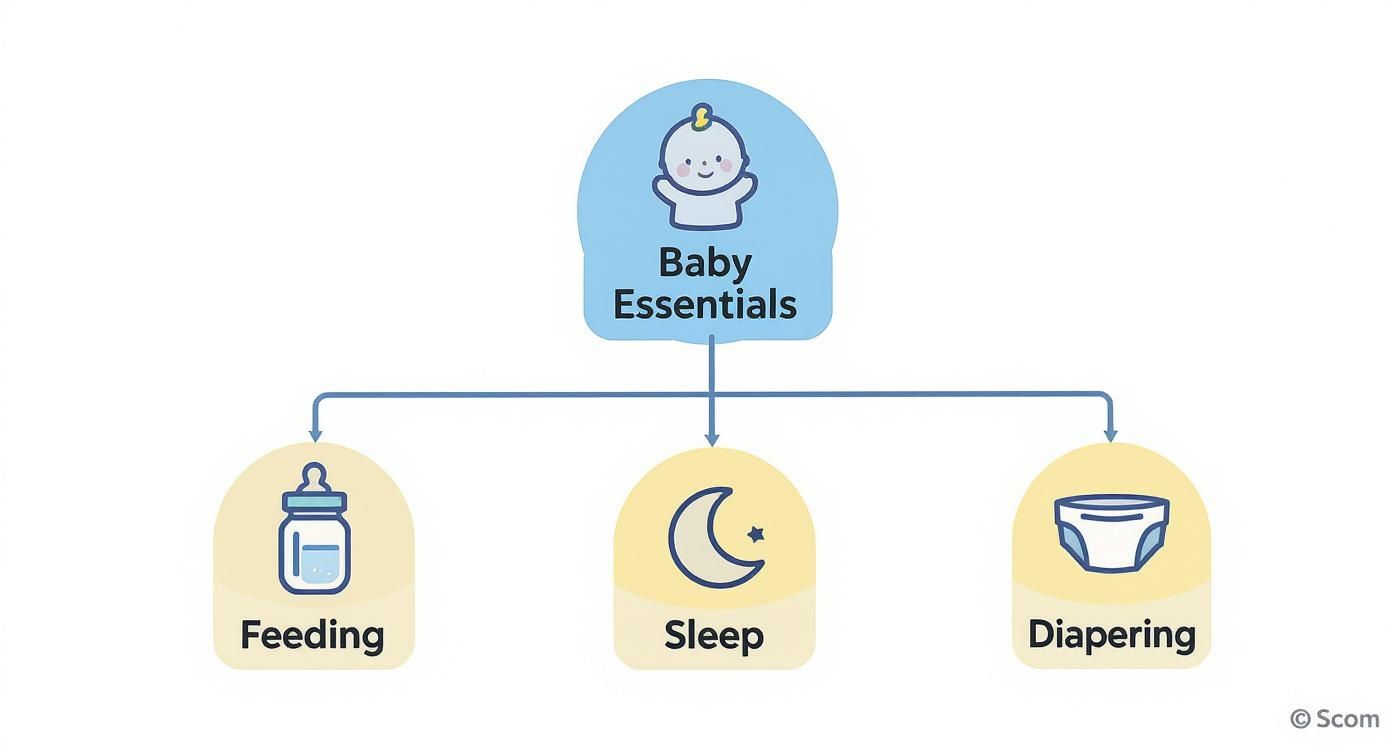
This handy diagram breaks it all down into the three simplest categories: sleep, feeding, and changing.
It’s a great way to visualise how every essential item you buy should really just support one of these basic functions, keeping your newborn safe, comfortable, and happy.
Newborn Essentials at a Glance
To make it even clearer, here’s a quick rundown of the non-negotiable items every new parent in Australia needs. Think of this as your starting checklist to get organised.
Category
Must-Have Items
Why It's Essential
Sleep
Safe Cot/Bassinet, Firm Mattress, Swaddles
A safe sleep space is critical from day one to reduce the risk of SIDS. Swaddles mimic the womb, helping your newborn feel secure.
Feeding
Bottles, Formula (if using), Breast Pump, Bibs
Whether breastfeeding, formula feeding, or a mix of both, having the right gear on hand makes those frequent feeds much smoother.
Changing
Nappies, Wipes, Change Mat, Nappy Rash Cream
Newborns go through a surprising number of nappies! Being prepared makes changes quick, easy, and comfortable for your baby.
Travel
Approved Car Seat
This is a legal requirement and a non-negotiable for bringing your baby home safely. It must meet Australian standards.
This list covers the bare essentials you'll be glad to have ready before your little one arrives.
Prioritising Your Purchases
By focusing on these core areas first, you can sort out your budget and energy. For instance, a safe cot and a correctly installed car seat are absolute must-haves from day one, whereas things like a high chair or a bouncer can definitely wait a few months.
It's a big market out there. In Australia alone, the baby care products market was valued at USD 1.70 billion in 2023 and is expected to hit USD 3.50 billion by 2033. This just shows how much Aussie parents care about getting safe, high-quality gear that meets our strict local standards.
Preparing for a newborn is less about having everything and more about having the right things. A strategic approach ensures you have the essentials covered without unnecessary clutter or expense.
Putting together your list is a fantastic way to get your thoughts in order, especially if you're planning a baby shower. If you're looking for ideas on how to structure your list, you can check out some great sample registries for inspiration.
Of all the things you'll prepare for your newborn, their sleep space is one of the most critical. This is where your little one will spend a huge chunk of their time, so making sure it’s a secure and soothing haven is a top priority for every new parent. It all comes down to choosing the right gear and clearing out any potential hazards.
The centrepiece of this whole setup is the cot or bassinet. Here in Australia, it’s absolutely vital to choose a cot that meets the mandatory safety standard AS/NZS 2172. This standard isn't just a suggestion; it ensures the cot has safe spacing between the bars, a secure base, and other features specifically designed to keep your baby safe.
Choosing Your Baby's First Bed
When you start looking around, you'll see a few different options for where your newborn will sleep. Each has its own pros and cons, and figuring out the differences will help you land on what works best for your family and your home.
Cots: Think of a cot as a long-term investment. It’s a full-sized crib that can see your baby right through from their first night home to their toddler years. They do take up more space, but you won't have to worry about transitioning to a bigger bed after just a few months.
Bassinets: These are smaller, more portable beds that are perfect for the first four to six months. Their compact size is a huge plus, making it easy to keep your baby in your room for those late-night feeds. This is not only convenient but also aligns with safe sleep recommendations.
Co-sleepers: A co-sleeper is essentially a type of bassinet that’s designed to attach securely to the side of your bed. This lets you stay incredibly close to your baby while making sure they have their own separate, safe sleep surface.
No matter which bed you choose, the most important part is the mattress. It must be firm, flat, and fit snugly inside the frame, with absolutely no gaps around the edges. A firm surface is non-negotiable as it helps reduce the risk of suffocation and SIDS. To really dive deep into this, check out this excellent guide to a breathable crib mattress.
Essential Bedding and Sleep Aids
Once you've sorted out the bed, it's time to think about bedding. For a newborn, the golden rule is simple: less is more. The safest sleep space is a bare one.
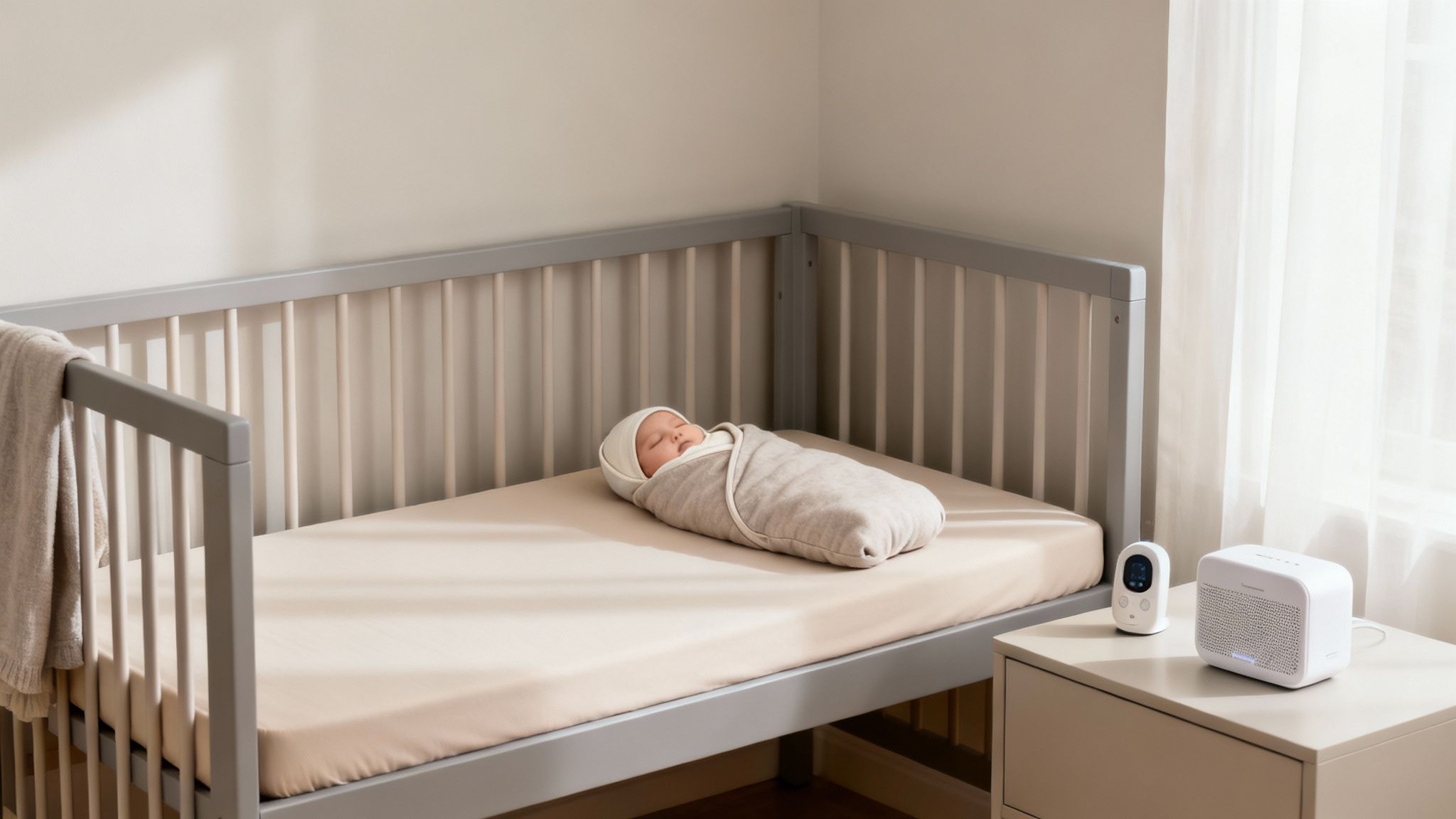
A bare cot is a safe cot. The only things inside should be a firm mattress, a fitted sheet, and your baby. All soft toys, pillows, bumpers, and loose blankets should be kept out to minimise risks.
So, how do you keep them warm? Instead of blankets, which can be a suffocation hazard, opt for swaddles or wearable sleeping bags. These are fantastic because they keep your baby cosy and secure without the risk of loose bedding.
Beyond the absolute must-haves, there are a couple of other items that many parents swear by for creating a calm vibe and offering a little extra peace of mind.
Baby Monitor: Whether it’s audio or video, a monitor lets you keep an eye (or an ear) on your baby without having to constantly tiptoe into their room. It's a real comfort during those early months.
White Noise Machine: The gentle, consistent hum can be incredibly soothing for a fussy baby, as it mimics the sounds of the womb. It’s also brilliant for blocking out random household noises that might otherwise startle them awake.
By focusing on safety standards and keeping the sleep space beautifully simple, you'll be creating a secure little haven for your newborn to rest and grow.
2. Navigating Your Newborn Feeding Journey
Feeding your newborn is one of the very first ways you'll connect and bond. It’s a time filled with cuddles, learning your baby’s cues, and figuring out a rhythm that works for both of you. Whether you decide on breastfeeding, formula feeding, or a bit of both, having the right gear ready will make the whole experience feel much calmer and more focused on your little one.
Think of it as setting up your support station. Just like a chef has all their ingredients prepped, having your feeding supplies organised means you’re not scrambling when your baby gets hungry. You can simply relax and enjoy those precious moments.
Essentials for Breastfeeding Mums
If you’re planning to breastfeed, think comfort and convenience. You’ll be spending a lot of time nursing in those early weeks, so creating a comfortable space will make a huge difference, especially during those 3 am wake-up calls.
A Comfortable Nursing Chair: While you can definitely nurse anywhere, a dedicated supportive chair or glider can be a real back-saver for long feeding sessions.
Supportive Nursing Pillows: These are a lifesaver for getting your baby into the right position without straining your arms, neck, and back.
Breast Pads: Leaks happen! Having a stash of disposable or reusable breast pads on hand will keep you comfortable and dry between feeds.
An Efficient Breast Pump: Even if you plan to exclusively breastfeed, a pump is fantastic for relieving engorgement, building up a supply for when you need a break, or letting your partner take over a feed.
These items are all about supporting you, making the beautiful (and sometimes challenging) journey of breastfeeding that little bit easier.
Must-Haves for Bottle Feeding
For parents using formula or expressed breast milk, a good system is your best friend. With bottle feeding, hygiene is absolutely paramount to keep your baby’s developing immune system safe.
The baby food and beverages market is actually the fastest-growing part of the Australian baby care industry, showing just how much parents value high-quality, safe options. That's why you'll see popular starter sets like the Closer to Nature® Newborn Feeding Pack from Tommee Tippee, which bundles essentials for around $39.95. This focus on early-life nutrition is even backed by government initiatives, a trend you can explore in this market analysis of Australian baby care products.
So, what do you actually need to get started?
Key Tip: Newborn tummies are tiny, so they need a slow, steady flow of milk to avoid gulping air. Always start with slow-flow teats and only size up when you notice your baby is getting frustrated or taking a very long time to finish a bottle.
Here’s a simple checklist to get you ready:
Bottles and Slow-Flow Teats: Start with about 4-6 bottles. This is usually enough to get you through a few feeds before you have to run a wash-and-sterilise cycle. Anti-colic designs are a great feature to look for.
Steriliser: This is a non-negotiable. Whether you choose a microwave, electric steam, or UV steriliser, it’s the only way to ensure bottles, teats, and pump parts are free from nasty germs.
Bottle Brushes: You'll need a dedicated brush for bottles and a smaller one for teats to get them perfectly clean before they go into the steriliser.
Infant Formula: If you're going the formula route, have at least one tin of a newborn-appropriate brand at home before your baby arrives. You don't want to be caught out.
Having all this organised and ready to go takes the stress out of preparing a bottle, whether it's midday or the middle of the night.
To make things even clearer, let's break down the gear based on how you plan to feed your baby.
Feeding Essentials Comparison
Every family's feeding journey is unique. This table breaks down what you'll need for breastfeeding, formula feeding, or a combination of both, helping you build a shopping list that’s right for you.
Feeding Method
Essential Gear
Nice-to-Have Extras
Breastfeeding
Nursing bras, breast pads, nipple cream
Nursing pillow, comfortable chair, breast pump, milk storage bags
Formula dispenser for travel, bottle warmer, prep machine
Combination Feeding
All essentials from both lists above (e.g., breast pump, bottles, steriliser, formula)
Portable bottle warmer, extra sets of bottles and pump parts
Ultimately, choosing the right feeding method is a personal decision. Having the essentials for your chosen path on hand before the baby arrives just means you can spend less time worrying about logistics and more time soaking in all those newborn cuddles.
Mastering Nappy Changes and Baby Hygiene
Keeping your newborn clean and comfy is a round-the-clock job, but these everyday routines are also beautiful moments for connection. Getting your nappy station organised and knowing how to tackle that first gentle bath makes everything feel less overwhelming. Let's walk through exactly what you'll need.
Think of your nappy changing area as a mission control centre. It doesn’t have to be fancy, but it absolutely needs to be practical and safe. Whether you've got a proper change table or just a mat on the floor, the golden rule is to have everything within arm's reach.
Setting Up Your Nappy Change Station
The secret to a stress-free nappy change is having everything ready before you start. A well-stocked station means you never have to take your eyes (or a hand) off your baby to grab a wipe.
Change Table or Mat: A dedicated table with shelves is brilliant, but a simple, wipeable change mat is a great space-saver. Something like the popular Keekaroo Peanut is fantastic because it means no extra laundry.
Newborn Nappies: You will be blown away by how many you use—we’re talking 10-12 per day in those first few weeks. Grab one or two large boxes of newborn size to start, but don't go overboard, as they grow out of them in a flash.
Gentle Baby Wipes: Always opt for fragrance-free and water-based wipes to protect that delicate skin. A weighted dispenser might sound like a gimmick, but being able to pull out a single wipe with one hand is a game-changer.
Barrier Cream: A solid nappy rash cream containing zinc oxide is your best friend for preventing and soothing any redness. A thin layer at each change, especially before their longest sleep, works wonders.
Nappy Bin: Look, it’s not a must-have, but a purpose-built nappy bin that locks away odours can be a very, very welcome addition to the nursery.
Pro Tip: Set up a small portable caddy with a few nappies, wipes, and cream. This little "grab-and-go" kit is perfect for handling nappy changes in the living room or when you’re out, saving you a trip back to the nursery every time.
Navigating Bath Time with Confidence
Your baby’s first few baths are such special milestones, but they can also feel a bit nerve-wracking. Having the right gear makes the whole experience safer and more relaxed for everyone involved. Remember, newborns don't need a daily bath—two or three times a week is more than enough to keep them clean without drying out their sensitive skin.
Before you even turn on the tap, get everything you need lined up and ready to go. Once your baby is in the water, one hand needs to be on them at all times, no exceptions.
Bath Time Essentials Checklist
When it comes to bath products, think gentle. A baby's skin is incredibly delicate and needs mild, simple formulas to stay happy and healthy.
Baby Bath or Sink Insert: A small, supportive baby bath gives you a secure spot. An insert like the foldable Puj tub is a clever solution for sink baths, as it cradles your baby and saves your back.
Mild Baby Wash and Shampoo: Look for soap-free, pH-balanced formulas made specifically for newborns. This helps protect the natural oils in their skin and hair.
Soft Towels and Washcloths: You don’t need anything special, but a few super-soft washcloths and a hooded towel are lovely for wrapping them up in a warm, snuggly bundle straight from the water.
Bath Thermometer: This is a non-negotiable safety tool. The perfect water temperature for a baby's bath is between 37°C and 38°C, and a simple thermometer takes all the guesswork out of getting it right.
By getting organised for nappy changes and baths, you turn what could be repetitive chores into predictable, positive moments. It’s in these small, everyday interactions that you build a real sense of connection and trust with your little one.
Building a Practical Newborn Wardrobe
Dressing a newborn is… an experience. They're tiny, they're wriggly, and they seem to need a new outfit every few hours. The key isn't to have a wardrobe bursting at the seams, but to have the right pieces that make those constant changes as painless as possible.
Your main focus should be on soft, breathable fabrics. Think organic cotton and bamboo – they're incredibly gentle on a baby's delicate skin and perfect for helping them regulate their temperature, which is a big deal in our Australian climate. Forget fussy buttons and complicated outfits for now. Your new best friends are comfort and convenience.
Your Newborn Clothing Checklist
It's so easy to get swept up in buying every adorable outfit you see, but trust me, they grow out of things in the blink of an eye. The best strategy is to start with a solid set of essentials you can mix and match. This should give you enough to last a couple of days between laundry cycles.
Here’s a realistic list to get you started:
6-8 Wondersuits or Onesies: These all-in-ones are the true MVPs of a newborn wardrobe. They’re perfect for sleep, play, and everything in between.
6-8 Singlets or Bodysuits: These are fantastic for layering under a wondersuit on a cool day or just wearing on their own when it’s warm.
3-4 Pairs of Leggings: Soft, stretchy pants are a lifesaver. You can just pull them on over a singlet for a quick, comfy outfit.
3-5 Pairs of Socks or Booties: Newborns get cold feet easily, so keeping their tiny toes warm is a must.
2-3 Swaddles or Sleeping Bags: These are a much safer alternative to loose blankets in the cot and help your baby feel snug and secure while they sleep.
Starting with this core collection means you’ll have everything you actually need without a pile of clothes they only wear once.
Smart Features to Look For
When you're bleary-eyed at 3 am for a nappy change, you'll thank yourself for choosing clothes with clever features. Look for designs that are all about making your life easier.
The best baby clothes are the ones you can get on and off in the dark with your eyes half-closed. Function truly trumps fashion in these early months.
Here are a few game-changing features to look for:
Two-Way Zips: An absolute must-have. A zip that opens from the bottom means you can change a nappy without completely undressing your baby and making them cold. Genius!
Envelope Necklines: You know those bodysuits with the overlapping fabric at the shoulders? They're designed so you can pull the whole thing down over your baby's body instead of up over their head. This is your secret weapon for managing the inevitable "poonami."
Built-in Mittens and Socks: Many wondersuits come with little cuffs you can fold over your baby’s hands and feet. They're brilliant for stopping newborns from scratching their own faces and keeping their hands and feet warm without needing separate items that always go missing.
By sticking to a small, functional wardrobe filled with these smart features, you’ll be set to keep your newborn comfy while keeping your own stress levels down.
How to Build a Smarter Baby Registry
A baby shower is such a lovely way for your friends and family to get excited and share in the joy of your growing family. But let’s be honest, that incredible generosity can sometimes mean you end up with ten newborn-sized bodysuits (that your baby outgrows in a week!) when what you’re really stressing about is the car seat. Or you might get three different bouncers and not a single nappy. This is exactly where a modern baby registry comes in to save the day.
Think of a traditional gift list as a bit of a guessing game. Your loved ones pick something and just hope it’s what you wanted. A smart registry, on the other hand, is like a helpful roadmap. It gently guides people toward the things you genuinely need, taking the guesswork out of it for them and saving you from a mountain of returns and double-ups. It just makes sure every single gift is thoughtful, useful, and truly helps you start this new chapter on the right foot.
Design Your Perfect Wishlist
The real beauty of a flexible platform like EasyRegistry is that it lets you build a wishlist that truly reflects what your family needs. You're not locked into one department store's inventory. You can literally add any item from any online store, all pulled together into one simple, shareable link for your guests.
Here’s a practical way to think about organising your list so you cover all your bases:
Big-Ticket Items: This is for your prams, cots, and car seats. They're absolute must-haves but come with a hefty price tag, making them perfect for group contributions.
Mid-Range Essentials: Pop things like a good baby monitor, a breast pump, or a high-quality baby carrier in this category.
Everyday Necessities: Don't feel bad about adding the practical stuff! Boxes of nappies, wipes, and barrier cream are things you'll be so grateful for. Guests actually love knowing they’re helping out with the daily essentials.
This screenshot shows just how clean and organised your registry can look, making it incredibly simple for guests to chip in.
The straightforward layout means your friends and family can see exactly what you’re hoping for, what it costs, and how they can contribute—whether that’s by covering the full amount or just a portion of it.
The Power of Group and Cash Funds
One of the best things about a modern registry is the ability to let people pool their money for a gift. So many of your friends and family would love to contribute to a big, meaningful present but probably can't shoulder the whole cost on their own.
A group fund empowers your community to collectively purchase high-value items. It turns an expensive pram from an impossible ask into a manageable group effort, making gift-giving more inclusive for everyone.
This team approach is a total win-win. It ensures you get those big-ticket items you spent hours researching, instead of a pile of smaller things you might not need. Your guests get to feel like they’ve made a really significant contribution, and you get exactly what’s on your wishlist.
And it doesn't just stop at physical items. Cash funds give you the ultimate flexibility for things you can’t exactly buy in a store. You could create funds for specific goals, like:
A Night Nanny Fund: For some desperately needed sleep in those early weeks.
A Meal Delivery Fund: To make life that little bit easier when you’re too tired to cook.
A Future Savings Fund: A lovely way for people to contribute to your baby’s future.
Building a smart registry really does change the whole gift-giving experience for the better. It’s a practical tool that helps you feel organised and lets your loved ones give gifts with confidence, knowing they're getting you something perfect. For more in-depth tips, our guide to creating the perfect baby shower registry has all the info you need to get started. A little planning now ensures every gift you receive is a perfect fit for your new family.
Common Questions from New Parents
It’s totally normal to feel like you’re drowning in questions when you start shopping for a newborn. Are you buying the right things? Too much? Not enough? Don't worry, every parent has been there.
Let's cut through the noise and get straight to the practical answers for the questions we hear most often from expecting parents.
How Many Newborn Clothes Do I Actually Need to Buy?
It's so easy to get carried away buying adorable tiny outfits, but trust me, they grow out of them in the blink of an eye. The best approach is to start small with a practical wardrobe that can handle spit-ups and nappy blowouts without leaving you with a mountain of laundry.
A great starting point looks something like this:
6-8 wondersuits (you'll probably live in these)
6-8 singlets or bodysuits, which are perfect for layering
3-4 pairs of soft leggings or comfy pants
A few pairs of tiny socks
2-3 swaddles or wearable sleeping bags
This little collection gives you enough to get through a few days between washes and covers all your bases. You can always grab more later if you find you’re running short, but this is a solid start for those first few chaotic weeks.
What Are the Most Important Safety Items I Need?
When it comes to safety, there are three things you absolutely must have ready before your little one arrives. These are the non-negotiables that form the foundation of a safe environment at home and on the move.
Your baby's safety is everything. Before you buy anything else, make sure you have a compliant car seat, a safe sleep space, and a reliable thermometer sorted. You can't compromise on these.
First up is a professionally fitted Australian-standard (AS/NZS 1754) car seat or capsule. You literally can't leave the hospital without one, so this is top priority. Next is a safe sleeping space, which means a cot that meets Australian standards (AS/NZS 2172) with a firm, flat mattress and nothing else in it—no bumpers, blankets, or toys. Finally, a good digital thermometer is a must-have for those moments when you're worried your baby might be unwell.
Should I Buy a Bassinet or Go Straight to a Cot?
Ah, the great bassinet vs. cot debate! The answer really comes down to your living situation, budget, and personal preference. A bassinet is compact, portable, and great for keeping your baby in your room for the first few months, which is super convenient for those middle-of-the-night feeds and aligns with safe-sleep advice. The catch is they'll probably outgrow it by four to six months.
On the other hand, a cot is a long-term investment that will see your child through from birth to their toddler years. Some parents love the convenience of a bassinet for the early days, while others prefer to save the money (and the hassle of a later transition) by using the cot from day one. Have a think about the layout of your home and what feels right for you.
When Is the Best Time to Start Buying Baby Gear?
Most people find the second trimester, somewhere between 20 and 30 weeks, is the sweet spot for starting to shop and set up the nursery. You’ve usually got a bit more energy, and it gives you plenty of time to research, hunt for bargains, and build furniture without a last-minute panic.
As a rule of thumb, it’s a good idea to have the absolute essentials ready to go by 36 weeks – that’s your car seat, a safe place to sleep, and some basic clothes and feeding supplies. You never know if your baby might decide to make an early entrance! Creating a baby registry early in your second trimester also gives your loved ones plenty of time to choose a gift. For more on this, you can find answers to other common queries in our frequently asked questions section.
Ready to create a registry that’s as practical and unique as your family? With EasyRegistry, you can add any item from any store, create group gifts for big-ticket items, or set up cash funds for anything you need. Take the stress out of gift-giving and get exactly what you want by starting your free registry today.
When you're expecting a baby, it's easy to feel like you need to buy one of everything. The good news is, you really don't. The absolute essentials boil down to a few key areas: a safe place for your baby to sleep, a way to feed them, and the gear for nappy changes and basic hygiene. Nailing these core things you need for a newborn first will help you feel ready without getting totally overwhelmed.
Your Practical Newborn Essentials Checklist
Staring at endless lists of baby gear and feeling swamped? You're not alone. This guide is designed to cut through the noise and give you a clear, organised list of true must-haves for your newborn’s first three months.
Think of this as your starting block—the non-negotiable items that will get you through those precious, hazy first weeks with a bit more confidence and a lot less stress. We're focused on what's practical and safe, helping you figure out what you really need to buy and what you can skip for now.
Building a baby registry can feel like a mammoth task, but breaking it down by category makes it so much more manageable. Sometimes, the best way to get your head around it is to see what others have done. If you're looking for inspiration, checking out well-organised sample registries at a site like https://www.easyregistry.com.au/sample-registries can be a great way to start structuring your own wish list.
The Core Categories of Newborn Needs
Before we get into specific products, let’s zoom out. It helps to think in terms of the main areas you’ll need to cover. Every single item you buy will likely fall into one of a handful of key groups, each serving a fundamental purpose in your baby's daily life. This approach simplifies your planning and makes sure all the important bases are covered.
For a really deep dive into all the items you might consider, you can explore this ultimate baby shopping list. It offers a much broader look that can nicely complement the essentials we’re focusing on here.
The goal isn't to have the most gear; it's to have the right gear. The best strategy is always to prioritise items that boost safety, comfort, and your own peace of mind.
This simple flowchart breaks down the core things you need for a newborn into those three primary branches: feeding, sleeping, and diapering.
As you can see, while heaps of products are marketed as 'essential', your baby's foundational needs are actually pretty straightforward. Getting a handle on these three areas will form the backbone of your daily routine for the first few months.
To make it even clearer, here’s a quick-glance table to summarise these critical items.
Quick-Glance Newborn Essentials Checklist
Category
Essential Items
Recommended Quantity (0-3 Months)
Feeding
Bottles, teats, burp cloths, formula or breast pump
6-8 bottles, 8-10 burp cloths
Sleep
Bassinet or cot, fitted sheets, swaddles/sleep sacks
1 cot, 3-4 sheets, 3-5 swaddles
Nappies
Disposable or cloth nappies, wipes, change mat, barrier cream
8-12 nappies per day, as needed
This table covers the bare minimum you'll want to have ready before the baby arrives. You can always add more specialised items later once you figure out what works for you and your little one.
Setting Up Your Baby Feeding Station
Feeding your newborn is one of the first, and most profound, ways you'll connect. It's a quiet dance of nourishment and bonding that happens around the clock. Setting up a dedicated, organised feeding station can make these moments calmer and far more comfortable for both of you, whether you’re planning to breastfeed, formula-feed, or a bit of both.
Think of this setup as your command centre. When your baby is hungry and letting you know about it (loudly!), the last thing you want is to be scrambling for a clean bottle or a burp cloth. A well-stocked station means everything is within arm's reach, day or night, making the whole routine feel much smoother.
Core Feeding Equipment For Every Parent
No matter how you plan to feed your little one, some items are universally helpful. These are the non-negotiables that form the foundation of any feeding setup.
Bottles and Teats: It's a good idea to start with 6-8 bottles. This gives you enough of a buffer so you’re not constantly washing and sterilising. You'll also need a few different teats, as newborns typically start with a slow flow to mimic breastfeeding and stop them from gulping down too much milk too quickly.
Burp Cloths: Honestly, you can never have enough of these. Aim for at least 8-10 muslin or cotton cloths. They’ll be your best friend for catching spit-up and protecting your clothes (and the couch, and the carpet…).
Sterilising Equipment: A newborn’s immune system is still a work in progress, so proper sterilisation is crucial. You've got options: electric steam sterilisers, handy microwave steriliser bags, or even the traditional boiling-on-the-stove method.
Having these basics ready to go before your baby arrives will take a huge layer of stress out of those first few weeks.
Essentials For Breastfeeding Mums
If breastfeeding is part of your plan, a few specific items can make the journey so much more comfortable and manageable. These tools are all about supporting you and your supply.
A high-quality breast pump is a game-changer. It’s useful for relieving engorgement, building up a supply of milk for when you return to work, or just letting your partner take over a feed so you can get some rest. You can opt for a manual pump for occasional use or a double electric pump if you'll be expressing regularly. Don't forget milk storage bags for safely freezing your liquid gold.
A comfortable nursing pillow isn’t just a luxury—it's an ergonomic lifesaver. It helps you position your baby correctly at the breast, which dramatically reduces the strain on your back, neck, and arms during those long feeding sessions.
Other must-haves include a couple of good nursing bras for easy access, reusable or disposable breast pads to handle any leaks, and some soothing nipple cream for the early days.
Essentials For Formula Feeding
For parents going the formula route, precision and hygiene are the names of the game. Having the right gear on hand ensures every bottle is prepared safely and correctly.
You’ll obviously need a good supply of your chosen infant formula, but it’s wise not to stockpile one brand until you know it agrees with your baby’s tummy. A formula dispenser is brilliant for pre-measuring powder for night feeds or days out, saving you time and fumbling with a scoop.
Many parents also swear by a bottle warmer for bringing chilled formula or expressed breast milk to the perfect temperature. It's a much safer and more reliable option than a microwave, which can create dangerous hot spots in the milk.
Proper nutrition in these early stages is so important. In Australia, the market for baby nutrition is massive, reflecting just how focused parents are on high-quality products. In fact, the Australia baby care products market was valued at USD 1.70 billion in 2023 and is set to grow even more, highlighting the demand for safe, effective feeding solutions. You can find out more about the growth of the Australian baby care market to see the trends for yourself.
Creating a Safe and Soothing Sleep Space
When it comes to your newborn, safe sleep isn't just a recommendation; it's the absolute foundation of their care. Your number one job is to create a sleep environment that's not only calming but, most importantly, completely secure. The aim is to build a simple, sparse space that strictly follows proven safety guidelines.
Think of your baby’s sleep area as a minimalist retreat. Everything in it serves a purpose, and anything that doesn't actively contribute to safety is left out. This mindset drastically cuts down on risks and will give you invaluable peace of mind when you finally get to rest.
The Foundation of Safe Sleep
The absolute centrepiece of this whole setup is where your baby will actually sleep. This single choice sets the stage for months of safe nights and naps to come.
Your two main options are a cot or a bassinet. A bassinet is a fantastic choice for those first few months. Its smaller size means it can easily fit in your room, which is recommended to reduce the risk of SIDS. The catch is that babies grow out of them fast, usually by the 4-6 month mark.
A cot, on the other hand, is a long-term investment that your little one can use for two years or even longer. Whichever you land on, make sure it meets current Australian safety standards (AS/NZS 2172 for cots).
The frame is only half the story; the mattress is just as crucial.
A Firm Mattress: It needs to be firm, flat, and fit perfectly inside the frame with no gaps around the edges. Any softness or gaps can pose a serious suffocation risk.
Fitted Sheets Only: The only bedding you need is a tight-fitting sheet made specifically for the mattress. Trust me, you'll want 3-4 on hand to deal with the inevitable middle-of-the-night messes.
The golden rule for a safe sleep space is "bare is best." This means no pillows, no cot bumpers, no loose blankets, no quilts, and no soft toys. They might look adorable, but these items are significant suffocation and overheating hazards.
Creating a Soothing Atmosphere
Once you've nailed the safety essentials, you can start adding a few elements that help soothe your baby and signal that it's time to wind down. These are some of the most effective tools for building a healthy newborn sleep routine.
A white noise machine can be an absolute game-changer. It works by mimicking the constant, gentle sounds of the womb, which is incredibly comforting for a newborn. It also does a brilliant job of drowning out sudden household noises (like a dropped pan or a barking dog) that can jolt them awake.
Similarly, blackout curtains are a lifesaver for regulating your baby’s internal clock. By creating a dark, womb-like space even during the day, you encourage their body to produce melatonin, the hormone that tells us it's time to sleep.
Dressing Baby for Sleep
How you dress your baby for bed is the final piece of the safety puzzle. The goal is to keep them comfortably warm without the danger of overheating or the risk that comes with loose bedding.
This is where swaddles and sleep sacks come into play.
Swaddles (0-3 months): For the first few months, a snug swaddle helps contain the startle reflex (Moro reflex) that can often wake a sleeping baby. Stick to lightweight, breathable fabrics like cotton or muslin.
Sleep Sacks (3+ months): As soon as your baby starts showing signs of trying to roll, it’s time to ditch the swaddle and move to a sleep sack. Think of it as a wearable blanket—it keeps them warm and cosy without any risk of it covering their face.
A good rule of thumb is to dress your baby in one more light layer than you’re wearing yourself. To check if they're comfortable, feel the back of their neck or their tummy. It should feel warm, but not hot or sweaty.
Stocking Up on Clothing and Diapering Supplies
Let's talk about two of the biggest jobs you'll have in those first few weeks: dressing a tiny, wriggly newborn and managing what feels like a never-ending cycle of nappy changes. Getting your clothing and nappy stations sorted before baby arrives is a game-changer. It makes these daily routines so much smoother and less stressful.
Think of newborn clothing as practical work attire, not a fashion show. The real priorities are comfort, ease of use, and fabrics that are gentle on their delicate skin. In the same way, your nappy change setup should be a well-oiled machine, with everything you need within arm's reach to tackle messes quickly and cleanly.
Essential Newborn Clothing Items
Babies grow at a truly astonishing rate in the first three months, so a word of advice: don’t go overboard on the tiniest sizes. It's much smarter to focus on a practical rotation of core items that can stand up to frequent washing. Look for soft, breathable fabrics like cotton or bamboo—they’re perfect for a newborn's sensitive skin.
Here are the clothing essentials you’ll actually use:
Zip-up Onesies/Sleepsuits (6-8): Trust me, forget fiddly buttons in the middle of the night. Two-way zippers are a lifesaver, letting you change a nappy without completely undressing your baby and waking them up.
Singlets or Bodysuits (8-10): These are the ultimate base layer for any outfit and help regulate your baby’s temperature. Pro tip: get the ones with envelope necks. They make it so much easier to pull the suit down over the body after a major nappy leak, avoiding a mess near their face.
Socks or Booties (5-7 pairs): Newborns get cold feet surprisingly easily, even when you're indoors. A good stash of soft socks is an absolute must-have.
Cardigans or Jumpers (2-3): A couple of lightweight cardigans are perfect for layering, especially in cooler weather or if you're in an air-conditioned space.
Beanie or Soft Hat (1-2): A soft, breathable beanie is really important for keeping your newborn warm on outings, particularly in their first few weeks of life.
It's a great idea to have a mix of sizes ready to go. Start with a few items in size 0000 (newborn) but have more in size 000 (0-3 months). So many babies outgrow that first size in a flash!
Setting Up Your Nappy Change Station
You'll be changing 8-12 nappies a day at the start, so creating a functional change station is one of the most practical things you can do. It doesn't matter if you have a dedicated change table or just use a portable mat on top of a dresser—the key is having all your supplies organised and right where you need them.
Think of your nappy change station as a high-traffic zone. The goal is to create an assembly line where you can clean, dry, and dress your baby without ever needing to turn your back or step away. Safety and efficiency are everything.
The core parts of your setup are pretty straightforward. You’ll need a comfortable and secure change mat, ideally with a waterproof cover. Then, stock a caddy or basket right next to it with all the essentials.
This should include:
Nappies: Whether you go for disposable or cloth, have a big stack ready.
Wipes: Opt for fragrance-free, water-based wipes to minimise the risk of skin irritation.
Barrier Cream: A good nappy rash cream is vital for protecting your baby's delicate skin.
Nappy Sacks or a Lidded Bin: This is a simple trick to help contain odours and keep the nursery smelling fresh.
In Australia, nappies and wipes are consistently among the most used products for newborns. The Australian baby healthcare products market hit USD 2,666.67 million in 2024 and is set to grow even more, which just shows how central these items are to daily baby care. You can learn more about the baby healthcare market trends in Australia to see the full picture.
Disposable vs Cloth Nappies: A Quick Comparison
Choosing between disposable and cloth nappies is a really personal decision, and both have their pros and cons. Disposables win on convenience, while modern cloth nappies are a fantastic eco-friendly and budget-friendly option in the long run.
Feature
Disposable Nappies
Modern Cloth Nappies
Upfront Cost
Low
High
Long-Term Cost
High
Low
Convenience
High (throw away after use)
Lower (requires washing)
Environmental Impact
High (landfill waste)
Low (reusable)
Many families actually end up using a combination of both—disposables for outings and overnight, and cloth while at home. If you're not sure which way to go, consider adding funds to a gift card registry. That way, you can buy what works best for your family once the baby arrives. You could even set up a flexible gift card registry for baby supplies to give yourself that freedom of choice.
Keeping Your Little One Clean and Healthy
As a new parent, keeping your baby healthy, clean, and safe is top of mind. Beyond the constant cycle of feeds and nappy changes, you'll need a small but mighty collection of items for bathtime, grooming, and basic first aid. Think of this as your baby's own little wellness kit—it's not about creating a mini-pharmacy, but about having the right tools ready to go.
Having these things on hand helps you confidently tackle everything from a stuffy nose to those surprisingly sharp fingernails. A well-organised kit just makes those moments a lot less stressful.
Creating a Gentle and Calm Bathtime
Newborn skin is incredibly delicate, so bathtime is all about gentle care. You really don't need a shelf full of fancy products; simplicity is your best friend here. The real goal is to make bath time a calm, safe, and lovely bonding experience for both of you.
You won't need to bathe your baby every single day. In fact, 2-3 times per week is usually perfect to keep them clean without drying out their sensitive skin. Having the right setup makes it all go smoothly.
Here’s a quick list of what you'll actually use:
A Baby Bath: A small, dedicated baby bath is a game-changer. It offers better support for a slippery baby and uses way less water than a standard tub. Look for one with a non-slip surface for that extra bit of safety.
Soft Washcloths: Grab a few soft cotton washcloths. It’s handy to have one for their body and a separate one for gently wiping their face.
A Hooded Towel: There’s nothing cuter than a baby wrapped in a hooded towel. More importantly, it keeps their head warm and snuggles them up tight the second they're out of the water.
Tear-Free Baby Wash: Opt for a mild, soap-free, and fragrance-free wash made specifically for newborns. This will help protect their skin's natural barrier.
Assembling Your Baby's First-Aid and Grooming Kit
You'll be surprised how much grooming and minor health care a tiny human requires! Keeping all the essentials in one place means you can grab what you need in a pinch, without a frantic search.
Start with these absolute must-haves:
Digital Thermometer: A reliable digital thermometer is non-negotiable for checking your baby’s temperature if you think they’re unwell. An underarm reading is a safe and easy way to get an accurate number.
Baby Nail Clippers or File: Newborn nails are tiny but can be razor-sharp. Specialised baby clippers with a safety guard, or even just a soft emery board, are the safest way to keep them short.
Nasal Aspirator: Babies breathe through their noses, so a bit of congestion can make them really unhappy. A simple bulb syringe or a snot-sucker style aspirator can help clear their nose, especially before a feed.
Of course, having the gear is one thing, but knowing what to do is another. Taking the time to learn essential paediatric first aid skills can give you a huge confidence boost in handling whatever comes your way.
Your baby's health kit is for reassurance. Most days, you won't even touch it. But on the day you do, you'll be so glad you have everything ready and know how to use it.
Looking After That Delicate Skin
A newborn's skin is still developing its protective barrier, which makes it prone to dryness and irritation. This is why choosing the right skincare products is so important. In Australia, the baby skincare market is booming as parents seek out gentle and safe products, with revenue expected to hit AUD 11.02 million in 2025. You can discover more insights about the Australian baby skincare market on Statista.
When it comes to skincare, always follow a "less is more" approach. A gentle, fragrance-free baby lotion is usually all you need to tackle any dry patches.
Before slathering on a new product, always do a quick patch test on a small area of skin first. It’s a simple step that can save you from a potential reaction and ensures the product is a good fit for your baby's delicate skin.
Getting Out and About With Your Baby
Leaving the house with a newborn for the first time can feel like you're planning a royal tour. It seems like a monumental task, but I promise, with the right gear and a bit of prep, it gets so much easier. The trick is to have your transport sorted and a nappy bag packed and ready by the door.
Think of it this way: your travel gear is your baby's home-away-from-home. It needs to be safe, comfortable, and practical for you to handle, especially when you're also juggling keys, a coffee, and the baby itself. A little organisation goes a long way in making these first outings feel less daunting and more like the fun adventures they should be.
Your Baby's Ride: The Travel System
The two big-ticket items for getting around are your car seat and your pram. They’re the foundation of your travel setup, designed to get you from point A to B safely and with minimal fuss.
Infant Car Seat: This one is absolutely non-negotiable and safety is paramount. In Australia, any car seat you buy must meet the strict AS/NZS 1754 safety standard. I can't stress this enough: get it professionally fitted before your due date. A poorly installed seat just isn't safe. You'll be looking for a rear-facing capsule designed specifically for newborns.
Pram or Stroller: The options for prams can feel endless. The best way to choose is to think about your daily life. Are you navigating tight city footpaths and cafés, or are you more likely to be pounding the pavement on long park walks? A popular choice is a "travel system," which lets you click the baby's car capsule directly onto the pram frame. It's a game-changer for not waking a sleeping baby during the car-to-pram transfer.
Don't forget about a baby carrier or sling, either. They are brilliant for keeping your baby snuggled up close to you, which newborns love. Plus, it gives you two free hands to grab groceries or just hold a much-needed cup of tea.
Think of your travel system as your passport to the outside world. A safe car seat and an easy-to-use pram mean you can get to appointments, see friends, or just get some fresh air without the stress.
Packing the Perfect Nappy Bag
Your nappy bag will become your best friend. The goal isn't to haul the entire nursery around with you, but to be ready for the most common baby situations. A well-organised bag means you can find what you need in a hurry, which is a lifesaver when you're dealing with a sudden nappy explosion.
Here’s a simple checklist of what you'll actually need:
Nappies and Wipes: Always pack more than you think you'll need. A good rule is one nappy for every hour you plan to be out, plus a couple of spares just in case. A travel pack of wipes is your best bet.
Change Mat: A portable, foldable mat makes nappy changes on the go much cleaner and more hygienic.
A Spare Outfit: Pack at least one complete change of clothes for the baby. Trust me, leaks and spit-up happen when you least expect them.
Feeding Gear: If you're bottle-feeding, bring pre-measured formula and a bottle with sterilised water. If you're breastfeeding, you might want a light muslin wrap for a bit of privacy if it makes you more comfortable.
Burp Cloths: Pop one or two in for mopping up any little spills.
Plastic Bags: A few nappy sacks or plastic bags are crucial for sealing away dirty nappies or soiled clothes until you can get home.
Feeling prepared for that first trip to the shops or a café is a huge confidence booster. It’s these little wins that help you feel like you’ve got this new parent thing down, letting you and your little one enjoy exploring the world together.
Common Questions About Newborn Essentials
Stepping into the world of baby gear can feel overwhelming, and it's completely normal to have a million questions. You're not alone! Let's clear up some of the most common things expecting parents wonder about as they put together their newborn checklist.
How Many Baby Clothes Do I Actually Need?
Between spit-up and nappy leaks, you'll be surprised how many outfits a tiny baby can go through in a day. For those first few months (sizes 0000 and 000), a good rule of thumb is to have enough clothing to last at least two days, so you're not constantly doing laundry.
Here's what that looks like in practice:
7-10 onesies or bodysuits for easy daily wear and layering.
5-7 sleepsuits, and trust me, the ones with two-way zips are a lifesaver for those middle-of-the-night nappy changes.
A couple of cardigans to pop on for an extra layer of warmth.
Remember, babies grow like weeds in the beginning, so don't go overboard buying too much in the tiny sizes. Stick to the basics that prioritise comfort and easy access.
Should I Buy a Bassinet or Go Straight to a Cot?
This really comes down to what works best for your family and your home. Bassinets are small and portable, which is perfect for keeping your baby close in your bedroom for the first few months—something that's recommended for safe sleep. The catch is that most babies outgrow them by 4-6 months.
A cot, on the other hand, is a long-term purchase your little one can use for two or three years. Many parents start with a bassinet for the convenience and closeness, then move their baby into a cot in their own room when they're ready.
Before your baby even arrives, the two non-negotiable safety items you need are a professionally fitted, Australian-standard infant car seat and a dedicated safe sleeping space—like a cot or bassinet with a firm mattress and absolutely no loose bedding.
Do I Really Need a Special Nappy Bin?
Honestly, this one is a ‘nice-to-have,’ not a ‘must-have’. Those special nappy bins that individually seal each nappy are brilliant at containing odours, but they're not essential. For many families, a simple lidded bin that's taken out regularly does the job just fine. It’s all about your personal preference and budget.
Pulling together your list of essentials is a huge task, but it doesn't have to be stressful. Creating a gift registry is a fantastic way to get organised and let your loved ones know what you actually need. You can learn how to create the perfect baby shower registry here to keep things simple for everyone.
At EasyRegistry, we make it simple to create a beautiful, easy-to-use registry for your baby shower. Add any gift from any store, or create cash funds for bigger items, all in one place. Get started today at https://www.easyregistry.com.au.