Finding the Best Humidifier for Infants in 2026
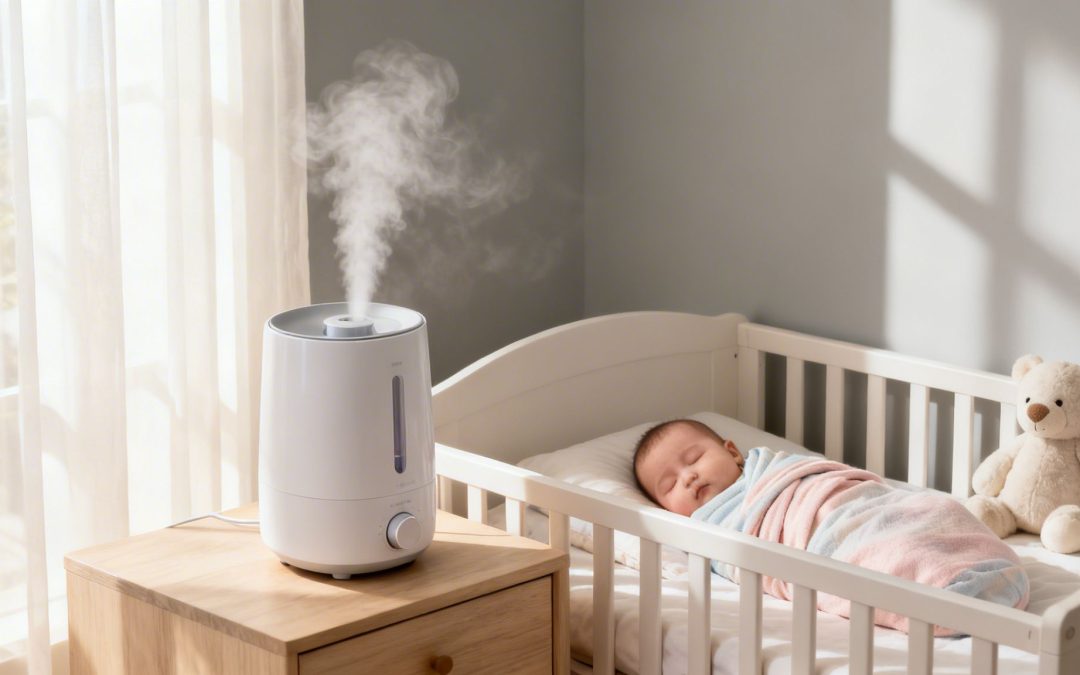
When you bring your new baby home, your entire world shifts to creating the perfect, comfortable sanctuary for them. A simple yet brilliant addition to any nursery is the best humidifier for infants: a cool-mist ultrasonic model. It gently adds moisture to the air, helping your little one breathe easier and sleep more soundly, all without the burn risk that comes with warm-mist units.
Think of it as one of the foundational pieces for your baby's comfort and well-being.
Why a Humidifier Is a Nursery Essential

The air inside our homes, especially in Australia where we rely heavily on heating and air-conditioning, can get surprisingly dry. This dry air acts like a sponge, quietly pulling moisture from your baby's delicate skin and their tiny airways. The result? Congestion, irritated sinuses, and even dry, flaky skin.
A good humidifier is your best defence against that dryness. By maintaining the right amount of moisture in the air, it makes it so much easier for your baby to breathe and find relief from the stuffiness that always seems to come with coughs and colds.
The Science of Comfort and Health
There’s real science behind why a properly humidified nursery feels so much better for a baby. When the air has enough moisture, it helps to:
- Thin Mucus: Moist air is fantastic for loosening congestion in your baby’s little nose. This makes their coughs more productive and breathing less of a struggle.
- Soothe Skin: It helps prevent the moisture loss that leads to irritated, dry skin and can be a big help in managing flare-ups of conditions like eczema.
- Promote Better Sleep: A comfortable baby is a sleepy baby. By cutting down on coughing fits and stuffiness, a humidifier can lead to longer, more peaceful sleep for everyone in the house.
It's no surprise that baby humidifiers have become so popular in Australia, particularly as parents become more aware of infant respiratory health during our dry winter months. Data from 2022 showed that neonatal respiratory distress affected 12.5% of live births. More recent studies have found that proper humidification (40-60% RH) can reduce how often an infant coughs by 35% and even improve their sleep by 22%.
Choosing a humidifier is more than just a comfort purchase; it’s a proactive step in creating a healthier indoor space where your infant can truly thrive. For a deeper dive, it's worth understanding the best humidity level for home to ensure a balanced environment for your baby.
Adding one to your nursery is a simple decision with a big impact. As you plan everything out, you can check out https://www.easyregistry.com.au/sample-registries to see how other parents are incorporating these must-have items.
Cool Mist vs Warm Mist: The Safest Choice for Your Baby
One of the first big decisions you'll make when picking a humidifier is choosing between a cool mist and a warm mist model. While they both do the same job—adding moisture to the air—there’s a clear winner when it comes to safety in a nursery, and it's the one paediatricians across Australia consistently recommend.
The main difference is how they make that mist. A warm mist humidifier is a bit like a tiny, quiet kettle. It has a heating element inside that boils the water, creating a warm, comforting steam. A nice side-effect of this is that the boiling process kills off most bacteria and mould in the water before it even gets into the air.
But that very feature is what makes it a real hazard in a baby's room. The boiling water and hot steam pose a serious burn risk for curious little hands. An accidental knock or a toddler's touch could lead to a nasty scald.
Why Cool Mist Is the Gold Standard for Nurseries
This is where cool mist models shine. They work without any heat at all, releasing a fine, room-temperature mist. This simple fact makes them inherently safer for a nursery. It's the number one reason experts overwhelmingly point to cool mist technology as the best humidifier for infants.
We’ll get into the different types of cool mist humidifiers later, but the most important thing to know is that they all share this core safety benefit. They create moisture using either ultrasonic vibrations or a simple evaporative fan, completely sidestepping the risk of burns. When it comes to your baby's room, that peace of mind is everything.
According to Kids Health Australia guidelines, avoiding models with heating elements is crucial to prevent scalds. This safety-first approach is something parents have clearly taken to heart. Cool mist humidifiers captured 61.37% of the portable market share in 2025. Sales notably spiked by 24% during the 2023 bushfire seasons, a period when indoor air pollutants rose by an estimated 40%. You can learn more about these market trends and safety preferences by exploring the full research on medical humidifier markets.
Additional Benefits Beyond Safety
It’s not just about safety, though. Cool mist humidifiers have a few other practical perks for a nursery. Because they aren't using energy to boil water, they're generally more energy-efficient. When you're running a humidifier every night for months on end, those little energy savings can really add up on your power bill.
They also tend to do a better job of humidifying larger rooms. The cool mist is a bit denser, so it can travel further across the room before it dissipates, giving you more even coverage throughout the entire nursery.
To make it even clearer, let’s put the two side-by-side.
Cool Mist vs Warm Mist: A Safety Comparison for Nurseries
When you look at the key differences, it becomes obvious why one is better suited for a nursery. This table breaks down what really matters for your baby's room.
| Feature | Cool Mist Humidifier | Warm Mist Humidifier |
|---|---|---|
| Safety | Excellent. No heating element means no burn risk for infants. | Poor. Uses boiling water, creating a serious scald hazard. |
| Energy Use | Low. More energy-efficient as it doesn't heat water. | High. Requires more electricity to power the heating element. |
| Cleaning | Crucial. Requires regular cleaning to prevent bacteria growth. | Important. Less prone to bacteria but still needs regular maintenance. |
| Noise Level | Generally very quiet, especially ultrasonic models. | Can be slightly louder due to the sound of boiling water. |
So, what's the verdict? While both types of humidifiers will get moisture into the air, the potential for a severe burn from a warm mist model is an unnecessary risk in your baby's space. A cool mist humidifier gives you all the breathing benefits without the danger, making it the only sensible choice for your little one's nursery.
Choosing Your Technology: Ultrasonic vs Evaporative
Once you've settled on a cool mist model for the nursery, the next fork in the road is deciding how it makes that mist. Think of it like choosing the engine for a car; both get the job done, but the mechanics behind them are quite different. For infants, the two most common technologies are ultrasonic and evaporative, and knowing the pros and cons of each is the key to finding the right fit for your family.
This decision tree nails the first, most critical safety choice for any nursery humidifier.

As you can see, for a nursery, a cool mist model is the only way to go. It completely sidesteps the burn hazards that come with warm mist units.
The Whisper-Quiet World of Ultrasonic Humidifiers
Picture an ultrasonic humidifier as a tiny, silent speaker. It uses high-frequency vibrations—well outside our range of hearing—to shatter water particles into a superfine, visible mist that drifts into the room. The process is almost completely silent, which is its biggest selling point for a nursery.
For babies who are light sleepers (and for their equally exhausted parents), the lack of fan noise can be an absolute godsend. This silent operation is a massive reason why ultrasonic cool mist models are so popular, holding a 47.62% market share. In fact, a 2023 Choice Australia survey of 5,000 families found that 68% of Aussie parents rank dry air as a top nursery concern, making the silent relief from these models a huge draw. If you're interested in the data, you can explore detailed insights on the baby humidifier market.
The one catch with ultrasonic models is something called "white dust." Because they aerosolise everything in the water tank, using hard tap water can leave a fine, white mineral residue on your furniture.
Pro Tip: To avoid white dust from an ultrasonic humidifier, always use distilled or demineralised water. It’s a simple switch that ensures you’re only adding pure moisture to your baby's room, without any of the minerals found in tap water.
The Self-Regulating Power of Evaporative Humidifiers
An evaporative humidifier works a bit like a mini swamp cooler. Inside, a wick filter soaks up water from the tank, and a fan blows air through this damp filter. As the air passes through, it naturally picks up moisture and releases it into the room as a clean, invisible vapour.
This method comes with two major perks. First, the filter acts as a gatekeeper, trapping minerals and other impurities from the water. This means no white dust, even if you use regular tap water. Second, evaporative models are naturally self-regulating. The air will only absorb as much moisture as it can physically hold, which makes it much harder to accidentally over-humidify the room.
The main trade-off here is the noise. While modern units are designed to be pretty quiet, the fan will always create some ambient sound. For some parents, this is a bonus—it doubles as a gentle white noise machine. For others, the dead silence of an ultrasonic model is a must-have.
Here’s a quick comparison to help you weigh it up:
| Feature | Ultrasonic Humidifier | Evaporative Humidifier |
|---|---|---|
| Noise Level | Virtually silent. | A low fan hum (can act as white noise). |
| Mist Type | Visible, cool mist. | Invisible, cool moisture. |
| "White Dust" | Yes, if you use tap water. | No, the filter traps minerals. |
| Filter | Usually filter-free (but may have a demineralisation cartridge). | Requires periodic filter replacements. |
Ultimately, the best choice really boils down to your priorities. If absolute silence is your number one goal, an ultrasonic model running on distilled water is your winner. But if you'd rather have a low-maintenance, self-regulating system and don't mind a little background hum, an evaporative unit is a fantastic, fuss-free option.
Must-Have Features for an Infant Humidifier

When you’re looking at humidifiers for your baby's room, the list of specs can feel a bit much. It's easy to get lost in the technical details. Let’s break down what actually matters for a nursery and turn that jargon into real-world benefits for you and your little one.
These are the non-negotiable features. They're the ones that find the sweet spot between doing the job well and fitting into the hectic life of a new parent. Think of this as your go-to checklist for a humidifier that's safe, simple, and ready for nursery duty.
Whisper-Quiet Operation
A nursery is meant to be a calm space, and the last thing you want is a noisy appliance ruining the peace. The sound a humidifier makes, measured in decibels (dB), is a huge factor. A gentle hum can be quite soothing, but a loud, clunky motor is a surefire way to startle a sleeping baby.
- Aim for a low decibel (dB) rating. The quietest models out there, usually the ultrasonic ones, operate at around 25-30 dB. That's about as loud as a whisper and perfect for even the lightest of sleepers.
- Don't forget the 'white noise' effect. Some evaporative humidifiers have a soft fan sound that can actually be a bonus. It often works just like a white noise machine, helping to mask other noises from around the house.
Your goal is to find a unit that just melts into the background, adding comfort without calling attention to itself.
Automatic Shut-Off Function
As a parent, your mental to-do list is already a mile long. You don't need to add "Did I turn off the humidifier?" to it. This is where an automatic shut-off feature becomes an absolute lifesaver. It’s a smart little sensor that knows when the water tank is empty and turns the machine off for you.
This simple function stops the motor from running dry, which can cause it to overheat and burn out. It's a true set-and-forget feature that gives you total peace of mind, knowing the humidifier is running safely all night long without you having to check on it.
Easy-to-Clean Design
A clean humidifier is a healthy humidifier—it's as simple as that. Because cool mist models don't boil the water to kill off germs, you have to clean them regularly to stop mould and bacteria from setting up camp. If a humidifier is a nightmare to take apart, you’ll start putting off the cleaning, and that's not what you want.
The ideal humidity level for a nursery is between 40% and 60%. But this perfect, moist environment is also great for microbial growth if the unit isn't clean. A hard-to-clean machine can end up puffing out the very contaminants you're trying to avoid.
Look for models with a big, wide tank opening. You should be able to get your hand right in there with a sponge for a proper scrub. The fewer weird corners and tiny parts, the fewer places for grime to hide. This one design choice can be the difference between a quick weekly wipe-down and a dreaded chore.
The Filter Question: Filter-Free vs. Filtered
Choosing between a filtered or filter-free model usually boils down to the type of water you have and how much maintenance you’re up for.
- Filter-Free (Mostly Ultrasonic) Models: These are great because you don't have to worry about buying and changing filters. The catch? They work best with distilled or demineralised water. If you use regular tap water, you might notice a fine "white dust" (mineral deposits) settling on your furniture.
- Filtered (Mostly Evaporative) Models: These units use a special wick filter to trap all the minerals and gunk from your tap water, releasing only clean, invisible moisture. The filter does an amazing job but will need to be replaced every so often, which adds a small ongoing cost.
If you’d rather just use tap water and have the machine do the purifying, a filtered evaporative model is a fantastic choice. If you prioritise silent operation and don’t mind using distilled water, a filter-free ultrasonic unit will probably be the best fit for your nursery.
Runtime and Tank Capacity
A humidifier's runtime is simply how long it can go on one tank of water. This depends on the tank size and the mist setting you're using. For a nursery, you really want something that can power through the entire night without you having to stumble in for a refill.
A good benchmark is a runtime of at least 12 to 15 hours on a low setting. This ensures your baby gets continuous, comfortable air from bedtime to morning. A bigger tank usually means a longer runtime, but just make sure it’s not so big that it’s a pain to carry and fill at the sink.
Simple Steps for Humidifier Cleaning and Maintenance
Keeping your humidifier clean is just as important as using it. Think of it this way: a dirty humidifier can do more harm than good, puffing out mould and bacteria instead of clean, soothing moisture. It’s a bit like a fish tank—if you don't clean it, the water gets murky and unhealthy. The same principle applies here.
But don't worry, it's not a huge chore. A simple, consistent routine is all it takes to keep your unit working safely for your little one.
Your Daily Maintenance Checklist
The best way to stop germs from growing is to never give them a chance. A few quick steps each day will make a massive difference and turn your weekly clean into a breeze.
- Empty and Rinse: Once you're done using it for the day, pour out any leftover water from the tank and base. Give everything a quick rinse with fresh water.
- Air Dry Completely: This is the most crucial step. Wipe the tank and base dry with a clean cloth, then leave all the parts separated to air dry completely before putting them back together.
This daily reset takes maybe two minutes, but it’s your best defence against nasty buildups. You get to start fresh every single time.
The Essential Weekly Deep Clean
Once a week, it’s time for a slightly deeper clean to get rid of any mineral buildup and properly sanitise the unit. Tap water often leaves behind a scaly residue, which is a perfect hiding spot for germs. All you need for this is a bit of white vinegar.
Step 1: Decalcify with Vinegar
- Pour a mix of one part white vinegar and one part water into the tank until it's about half full.
- Pop the lid on and give it a good swish to make sure the solution coats the entire inside.
- Place the tank on the base and let the vinegar mix drain into the reservoir. Let it all soak for about 20-30 minutes to dissolve any gunk.
Step 2: Rinse and Scrub
- Empty the vinegar solution out of the tank and base.
- Use a soft brush (an old toothbrush is perfect for this) to gently scrub any stubborn spots or get into those tricky corners.
- Rinse every part thoroughly with clean water until you can no longer smell the vinegar.
This weekly routine keeps the internal parts of your humidifier pristine and running just as they should.
Monitoring Nursery Humidity Levels
Even a spotless humidifier can cause issues if it makes the nursery too damp. You're aiming for that sweet spot: the ideal humidity level for a baby's room is between 40% and 60%. This is moist enough to soothe their airways without creating a welcoming home for mould and dust mites.
A humidity level above 60% can actually encourage the growth of mould and mildew. It’s a delicate balance—you want just enough moisture to be helpful, but not so much that it creates a whole new problem.
So, how can you tell if the room is getting too humid? Your windows are a great clue. If you start seeing condensation forming on the inside of the glass, or if the air just feels damp and clammy, it’s time to dial back the humidifier's output or run it for shorter periods.
For a more precise measurement, a simple and affordable tool called a hygrometer will give you an exact reading of the room's humidity.
By following these straightforward steps, you can confidently use the best humidifier for infants to create a safe, comfortable, and healthy space for your baby. It’s a small bit of effort that offers huge peace of mind.
How to Add the Perfect Humidifier to Your Baby Registry
You’ve done the research and figured out exactly what makes the best humidifier for infants. Now, how do you make sure that’s the one you actually receive? Adding your chosen model to a baby registry is the easiest way to steer friends and family toward a gift that’s genuinely helpful and, most importantly, safe for your new nursery.
It's a simple step that prevents well-meaning loved ones from accidentally buying a model that isn't quite right, like a warm-mist unit that could pose a burn risk. Using a universal registry platform is a game-changer here, as it lets you add items from any Australian retailer. That means you get the exact quiet, cool-mist humidifier you’ve got your eye on.
Making Your Choice Clear
A service like EasyRegistry lets you link directly to the product page of your preferred store, which takes all the guesswork out of it for your guests.
As you can see, you just pop in the URL, a photo, and the price. This makes it simple for friends and family to either chip in for a bigger ticket item or buy it outright. This kind of organised approach is a huge part of setting up a successful baby shower registry filled with things you’ll actually need.
Here’s a great little tip: add a short, personal note to the humidifier on your list. Something like, “This cool-mist humidifier will help baby breathe easier during their first cold and sleep so much more comfortably.” It turns a practical appliance into a really thoughtful gift because your guests can see exactly how it will help.
A well-researched baby registry item is a gift that keeps on giving. By selecting a high-quality humidifier, you’re not just getting an appliance; you're receiving peace of mind and more restful nights for your family.
A humidifier is one of those brilliantly practical choices. If you’re looking for more inspiration, you can find other ideas for practical baby shower gifts parents will actually use to get your nursery sorted. By guiding your guests, you make sure every gift they give is one that truly helps you prepare for your new arrival.
Common Questions About Using a Humidifier for Infants
Even after you've picked out the perfect humidifier, you'll probably still have a few questions. That's completely normal. Using one in your baby's room is straightforward, but getting the little details right makes all the difference for safety and effectiveness. Let's walk through some of the most common things parents ask.
Can I Put Essential Oils in My Baby's Humidifier?
This is a big one, and the answer is a firm no. Paediatricians are very clear on this: avoid using essential oils in the water tank or even in a separate diffuser in your baby’s room. A newborn's respiratory system is incredibly delicate and still developing, which makes them highly sensitive to the strong compounds in essential oils.
A scent that feels calming to you could easily irritate your baby's tiny airways, potentially leading to breathing issues or other reactions. It’s safest to stick with pure, clean water. That way, you know the air your little one is breathing is as pure as it can be.
How Do I Know if the Nursery Humidity Is Right?
Think of it like the Goldilocks principle—you don't want it too dry or too damp, you want it just right. The sweet spot for a nursery is between 40% and 60% relative humidity.
You can usually tell if the room is getting too humid. If you see condensation forming on the inside of the windows or feel a slight dampness on surfaces, that’s your cue to dial back the humidifier's output or run it for shorter periods. For a surefire way to know, a simple hygrometer is a fantastic little gadget. It gives you an exact humidity reading, taking all the guesswork out of the equation.
Where’s the Best Place to Put the Humidifier in the Nursery?
Placement is actually really important for making sure the mist spreads out evenly and safely.
- Find a High Spot: Put the humidifier on a flat, sturdy surface like a dresser or a small table. Make sure it's at least a metre or two away from the cot.
- Give It Breathing Room: Avoid pushing it right up against a wall or tucking it under shelves. Good air circulation all around the unit is key.
- Keep It Out of Reach: Most importantly, position it so the mist isn't blowing directly onto your baby or their bedding. The power cord should also be tucked away where curious little hands can't get to it.
Do I Really Need to Use Distilled Water?
Using distilled or demineralised water is one of the best things you can do, especially if you have an ultrasonic model. A lot of tap water in Australia is "hard," which just means it's full of minerals. When an ultrasonic humidifier atomises this water, it can spray those minerals into the air, which then settle on your furniture as a fine 'white dust'.
But more than just preventing dust, using distilled water helps stop bacteria and mould from growing inside your machine, as it lacks the nutrients found in tap water. While evaporative models are a bit better at catching these minerals in their filters, distilled water is hands-down the cleanest, safest choice for any type of cool-mist humidifier. If you're looking for more general info, you can always check out our frequently asked questions for extra tips.
Ready to pop the perfect, parent-approved humidifier onto your wishlist? With EasyRegistry, you can add any product from any Australian store, making sure you get exactly what your new nursery needs. Start building your free baby registry today at https://www.easyregistry.com.au and make gift-giving simple and meaningful for everyone.