
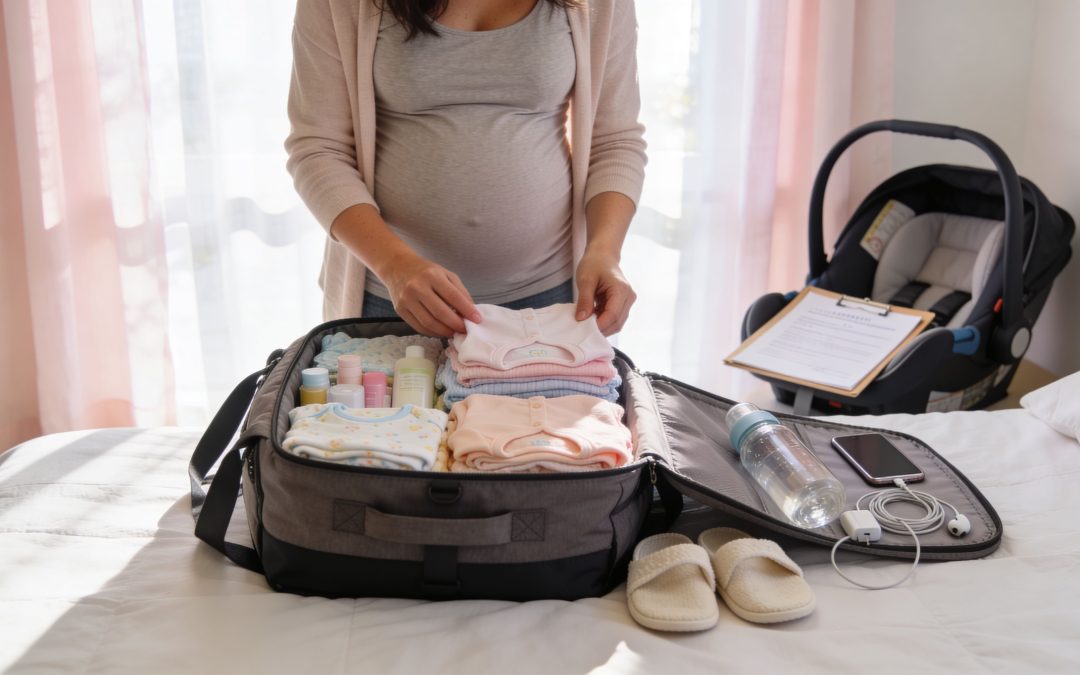
You’re probably somewhere in the third trimester, opening notes on your phone, half-starting a packing list, then closing it again because you’re not sure if it’s too early or somehow already late. That hesitation is common. Hospital bag advice online often swings between “pack at the first Braxton Hicks” and “you’ve got plenty of time”, which isn’t very helpful when you want a real answer.
For Australian parents, timing matters because local hospital routines, travel distances, and public versus private ward setups change what makes sense. The best plan isn’t to panic-pack one giant bag. It’s to pack in stages, at the right time for your pregnancy, and with a clear idea of what your hospital is likely to provide.
That Third Trimester Feeling Is It Time Yet
By the third trimester, the mental list gets noisy. You’re keeping track of appointments, washing tiny clothes, answering texts about the baby shower, and trying to work out whether the hospital bag should be done now or later. Most parents don’t struggle because packing is hard. They struggle because the timing feels unclear.
I see the same pattern again and again. Someone starts by buying travel-sized toiletries and a zip bag for baby clothes. Then they stop, because the due date still feels far away. A week later, they’re awake at night wondering if they’ve left it too late.
That stop-start cycle creates more stress than the bag itself.
A calm rule of thumb: if you’re thinking about when to pack hospital bag, it’s time to at least start the essentials.
What works is a timeline that matches real life. Not a dramatic all-at-once packing session. Not a vague promise to “do it soon”. A proper plan that takes into account whether your pregnancy is straightforward, whether you live close to your hospital, and whether you’re going public or private.
Australian parents also deal with practical differences that many overseas checklists skip. Some public hospitals provide more basics than people expect. Some private stays call for more of your own comfort items. If you’ve got a longer drive, older children at home, or a planned caesarean, your version of “ready” will look different from someone else’s.
The goal isn’t to have a perfect bag. It’s to remove one source of uncertainty, so when labour starts or your admission gets moved forward, you’re not scrambling for phone chargers, underwear, or baby clothes in the middle of it all.
Your Ideal Hospital Bag Packing Timeline
The best answer to when to pack hospital bag depends on risk, location, and how likely you are to need admission earlier than expected. Generic timelines don’t help much when your reality might include a long drive, a private hospital stay, or a care team already talking about earlier monitoring.

Pack earlier if your pregnancy needs closer planning
If you’re in a high-risk pregnancy group, packing earlier is sensible, not overcautious. In Australia, approximately 11.6% of babies are born preterm, which is one reason earlier preparation matters. For high-risk pregnancies, packing by 35 weeks is a practical benchmark, while for low-risk pregnancies, RANZCOG recommends packing between 36 and 38 weeks. The same source also notes that 70% of Australian births occur at term. You can read that summary in this hospital bag timing reference.
High-risk can include situations like:
- Multiples such as twins
- Previous preterm labour
- Planned earlier admission
- Medical monitoring that could lead to a change in birth timing
- Regional travel where getting to hospital isn’t quick
If any of those sound familiar, don’t wait for the “normal” week to start. Aim to have your core bag mostly done earlier, then top it up later with fresh items.
The sweet spot for most low-risk pregnancies
For many parents with a straightforward pregnancy, 36 to 38 weeks is the most realistic packing window. It’s late enough that you know more about your hospital plan and early enough that you won’t feel rushed if things shift.
A simple timeline looks like this:
| Pregnancy situation | Best time to have the bag packed |
|---|---|
| High-risk or likely early admission | By 35 weeks |
| Low-risk and metro-based | Between 36 and 38 weeks |
| Regional or rural travel concerns | Earlier end of your expected window |
That middle window works well because you can pack with more confidence. You’ll usually know whether you’re likely to have a vaginal birth or planned caesarean, whether your hospital has given you admission paperwork, and what kind of stay to prepare for.
If your bag is fully packed before you think you “need” it, that isn’t wasted effort. It’s one job off your mind.
When earlier is better even if everything seems fine
Some parents are technically low-risk but still benefit from packing sooner. That includes people who already feel physically tired, anyone juggling work and other children, and parents living a long way from their hospital.
If you know you’re someone who leaves practical jobs until the last minute and then feels overwhelmed, build in margin. Get the bag done before the pressure starts. Readiness is easier to maintain than to create in a rush.
A useful test is this: if your care team asked you to come in tonight, would you only need to grab your daily essentials and go? If the answer is no, your timeline should move forward.
A Stress-Free Staged Packing Plan
Trying to pack everything in one go often leads to feeling stuck. A staged approach works better because it separates the essentials from the comfort items and the true last-minute things. You stop staring at an empty bag and start making visible progress.

Stage one gets the basics done early
By the earlier part of your packing window, put aside the items you won’t miss day to day. This is your “already sorted” group.
Pack things like:
- Hospital paperwork folder if you’ve got it ready
- A set of baby clothes in newborn and slightly larger sizing
- Maternity bras and underwear
- Post-birth comfortable clothes
- Basic toiletries duplicates if you’ve bought extras
- Any planned feeding items your hospital has asked you to bring
This stage matters because it covers the items that create the biggest scramble when labour starts unexpectedly.
Stage two finishes the main bag
Closer to the end of pregnancy, move to the items that depend more on weather, your admission plan, or your comfort preferences. This is when your bag starts feeling complete.
Focus on:
- Labour clothes you don’t mind getting messy
- Pyjamas and a robe
- Slides or slippers
- Snacks and drink bottle
- Baby wraps and going-home outfit
- Support person basics so they’re not relying on you for everything
If you’re still setting up nursery and shower gifts, a seasonal planning guide like the perfect registry for your summer baby can help you think through what’s useful now versus what can wait until after birth.
Stage three is the grab list, not the packed list
Some things shouldn’t go into the bag until the day you leave. That doesn’t mean you should trust yourself to remember them.
Write a list and keep it in the front pocket or on top of the bag:
- Phone charger
- Toothbrush and toothpaste
- Glasses or contact lens supplies
- Current medications
- Your favourite pillow
- Daily-use cosmetics or skincare
- House keys and wallet
The last-minute list should be short. If it gets too long, you haven’t really packed yet.
This method works because it reduces decision fatigue. You don’t need a free afternoon and a burst of motivation. You just need to finish one stage at a time.
The Ultimate Australian Hospital Bag Checklist
A good checklist shouldn’t just tell you what to bring. It should stop you from overpacking. That matters in Australia, because public and private hospitals often handle basics differently.

Many public hospitals provide basics such as maternity pads and mesh underwear, which can cut down what you need to bring. Private hospital stays may call for more of your own supplies, particularly because stays can be longer, and caesareans account for 32% of births nationally. That practical public versus private difference is noted in this discussion of labour and delivery bag essentials.
For the birthing parent
Start with the items that affect comfort and recovery most.
Admission essentials
Medicare card, private health details if relevant, hospital paperwork, and any birth preferences you want on hand.Clothing that allows movement
Loose nighties, button-front pyjamas if you plan to breastfeed, a robe, socks, and easy slip-on shoes.Post-birth underwear
High-waisted, soft pairs are often more comfortable than anything tight, especially if you’ve had surgery or a tender abdomen.Toiletries you’ll use
Toothbrush, toothpaste, hairbrush, lip balm, deodorant, face wash, moisturiser, hair ties, and any shower products that make you feel human again.Recovery items
If your hospital doesn’t provide enough basics for your preference, add your own maternity pads and extra underwear.Labour comforts
Water bottle, lip balm, snacks approved by your care team, a fan if you like airflow, and a long charging cable.
A solid secondary reference if you want to compare your list against another parent-focused resource is Hospital Bag Checklist For Labor And Delivery.
Here’s a short video many parents find useful when they’re checking their own list against real-world packing habits.
For baby
Baby needs less than most first-time parents expect. The trick is bringing the right basics, not heaps of “just in case” outfits.
A few simple outfits
Zip suits or onesies are easier than fiddly outfits.A baby hat
Useful for warmth after birth and on the way home.Wraps or swaddles
Soft, easy-to-use options are best.Nappies and wipes
Check what your hospital provides before packing too many.A blanket for discharge
Especially helpful in cooler weather or air-conditioned cars.Car seat already installed
This isn’t optional. Don’t leave it until discharge day.
For the partner or support person
Partners often become the accidental owners of all the forgotten jobs. Their bag matters too.
- Fresh clothes for an overnight stay or long labour
- Charged phone and charger
- Snacks and drinks
- Basic toiletries
- Any medications they need
- A jumper or light blanket, because hospital temperatures can feel unpredictable
- A small pillow if they’re likely to be there for a while
What doesn’t work is assuming your support person can “just pop out later”. Sometimes they can. Sometimes parking, timing, ward policies, or labour progression make that unrealistic.
For leaving hospital
This part gets forgotten because it feels far away when you’re packing for labour.
Pack or prepare:
Your outfit for home
Soft, loose, easy to put on. Think comfort, not appearance.Baby’s going-home outfit
Choose one suited to the season and the car trip.Installed car seat
Check straps and setup before you need to use it.A bag for paperwork and extras
Hospitals often send you home with documents, feeding notes, and a few bits to carry.
Special situations that change your list
Some births need a slightly different setup.
Planned caesarean
You’ll usually want:
- Higher-waisted underwear
- Clothes that don’t sit on the incision area
- Slip-on shoes
- A longer phone charger
- Extra comfort items if you expect a longer stay
Public hospital stay
Ask what’s supplied before you buy in bulk. You may need less than online lists suggest.
Private hospital stay
Bring more personal comfort items, extra clothing, and enough toiletries for a longer stay.
If you want one printable list
For a second checklist focused on practical packing categories, this pregnancy hospital bag list is handy to keep open while you pack.
Pack for recovery, not for photos. The most useful items are usually the least glamorous ones.
Beyond the Bags Critical Hospital Logistics
A packed bag helps. Smooth logistics help more. Many last-minute hospital scrambles happen because the bag is ready but everything around it isn’t.

Get your paperwork into one place
Don’t scatter documents across handbags, kitchen counters, and email inboxes. Use one folder or pouch.
Include:
- Medicare card
- Private health insurance details if relevant
- Hospital admission paperwork
- Photo ID
- Any referral letters or pregnancy notes
- A printed birth preferences page if you have one
If you’ve also been preparing for the first weeks at home, a broader baby prep list like this newborn baby needs checklist can help you spot what belongs in the house rather than in the hospital bag.
Sort the trip before the trip matters
Getting to hospital sounds simple until it’s late at night, raining, and someone is trying to remember which entrance is open after hours.
Do these practical checks ahead of time:
- Drive the route once if it’s unfamiliar
- Save the maternity ward number in both phones
- Check after-hours entry points
- Know where to park
- Keep the car fuelled
- Have a backup driver if your first plan falls through
For regional families, this matters even more. Long travel changes what you need in the car as much as what you need in the bag.
Don’t forget the home-side plan
The hospital bag often gets all the attention, but home logistics cause just as much stress.
Make decisions about:
- Who looks after older children
- Who feeds pets
- Who waters plants or handles parcels
- Who updates close family if you want privacy
The easiest hospital departure is the one with no unresolved questions at home.
A final practical step is to put the bags in the car boot or beside the front door once you’re close to your expected window. Visibility helps. If you have to think about where the bag is, it isn’t ready enough.
Your Final Checks Before You Leave Home
The day usually doesn’t arrive in a neat, cinematic way. It’s often awkward timing, partial contractions, uncertainty, and someone asking whether this is really it. That’s why your final checks should be simple enough to do even when you’re distracted.
A useful Australian reminder is that a QLD Health survey found 22% of first-time mums deliver 1 to 2 weeks before their due date, and the same source notes that 40% of Australian births are outside metro areas. For regional or rural families, packing earlier and keeping the car ready with practical extras for longer drives matters. That guidance appears in this labour and delivery checklist article.
Do the fast five-minute check
Before you leave, confirm:
- Phones are charged
- Chargers are packed
- Wallet, keys, and paperwork folder are with the bag
- Water bottle is filled
- Snacks are in the car or support person’s bag
- The car seat is installed
- The hospital number is saved
Keep the exit routine boring
The calmer your routine, the better it works. Leave the bags in one visible spot from the later weeks of pregnancy. Keep your last-minute list on top. Ask your support person to do the same final scan every time, rather than relying on memory.
If labour starts early, you don’t need a perfect house. You need your documents, your bag, your phone, and a safe way to get to hospital.
If you live further from care, treat the car as part of the hospital bag. Add water, snacks, and anything that makes the drive easier.
When people ask when to pack hospital bag, they’re usually asking a deeper question. They want to know when they can stop worrying about being caught unprepared. The answer is earlier than panic, later than superstition, and always with enough margin for real life.
If you’re organising a baby shower or want a simple way for family and friends to give useful gifts without duplicates, EasyRegistry makes it easy to create one shareable registry for baby essentials, comfort items, and cash contributions. It’s a practical way to stay organised before birth and avoid ending up with five muslin wraps and none of the things you need.
