Nsw Registry Wedding: A Simple Guide for Planning nsw registry wedding
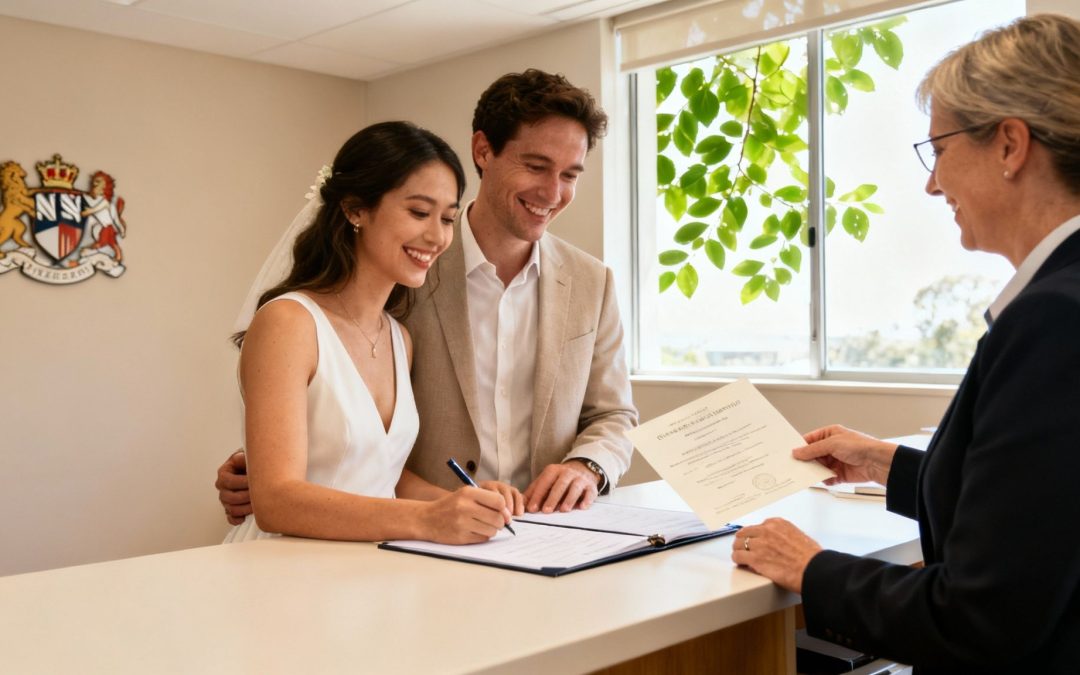
A NSW Registry wedding is simply a legal marriage ceremony held at an official government office, conducted by a government-appointed celebrant. It's a fantastic option for couples who want to skip the stress and expense of a big event, focusing instead on the actual commitment they're making to each other.
Why a Registry Wedding Just Makes Sense
Getting married is a massive milestone, but the planning doesn't have to be. For a lot of couples today, the thought of spending months (or even years!) organising a huge, traditional wedding is just plain overwhelming. A NSW registry wedding is a beautiful, practical alternative that brings the focus back to what it's all about: the two of you.
The reasons couples go this route are as unique as they are. It's a deliberate choice to prioritise what really matters to them.
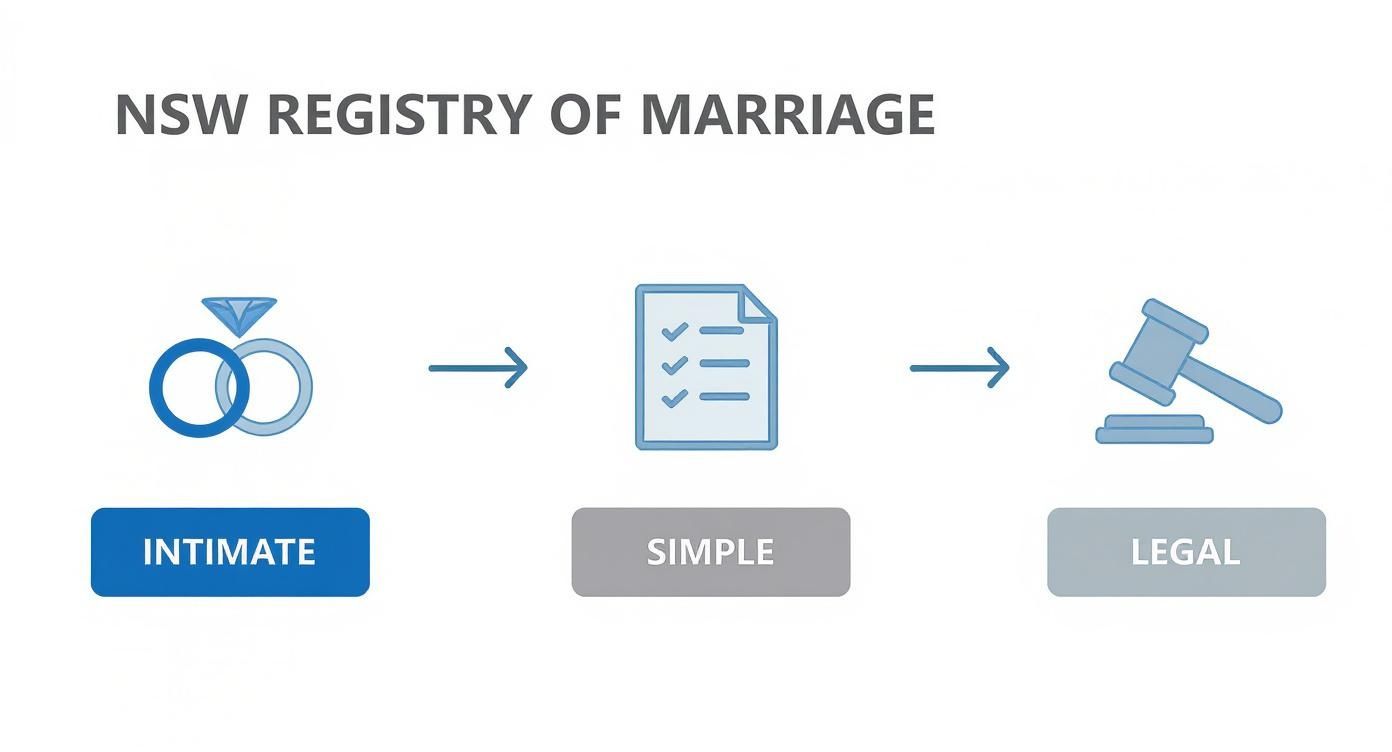
Keeping it Simple and Real
Let's be honest, some couples just don't want all the fuss. They'd much rather have a meaningful ceremony that feels private, intimate, and true to who they are. The idea of juggling guest lists, seating charts, and colour palettes can quickly zap the joy out of the whole experience.
A registry wedding cuts through all that noise. It leaves you with a pure, simple celebration of your love. This is for the couple who knows their union is the main event, not the party.
A Smart Financial Start
Money is a huge factor, and there's no shame in that. Traditional weddings can be incredibly expensive, and starting married life in debt is a very real worry for many. This has made the NSW Registry of Births, Deaths & Marriages a go-to for savvy couples who want to "go big on love, not budget." As wedding costs climb, more people are opting for these straightforward ceremonies to stay on track with their financial goals. You can find more stats on marriage trends in Australia over on the AIFS website.
Choosing a registry wedding frees up your money for other big life goals. Instead of dropping tens of thousands on a single day, that cash could go towards a house deposit, an unforgettable honeymoon, or just building a solid financial future together.
Real-Life Scenarios Where It’s the Perfect Fit
Think about these common situations where a registry wedding is the ideal solution:
- Saving for a home: A couple like Sarah and Tom, focused on getting into the Sydney property market, can get married without derailing their savings plan.
- Planning an epic honeymoon: Maybe you'd rather put that money towards a month-long adventure through Southeast Asia than a one-day event.
- Second marriages: For those who've done the big white wedding before, something simpler and more intimate often feels right the second time around.
- International couples: When you need to formalise your relationship for visa or immigration purposes, a registry wedding is an efficient and clear legal path.
At the end of the day, choosing a NSW registry wedding is about taking control. It’s a powerful way to say that your marriage is going to be on your terms, right from the very beginning. Less stress, more meaning, and a clear focus on the life you're building together.
Booking Your Ceremony and Sorting Out the Paperwork
Let's be honest, the paperwork is probably the least romantic part of getting married, but it’s the most important step in making it all legal. Sorting this out for a NSW registry wedding is actually quite straightforward. A bit of forward planning here means you can breeze through the admin and get back to the fun stuff.
First things first, you need to lock in your date. The main registry offices in Chippendale and Parramatta are popular spots and can get booked out weeks, sometimes even months, ahead of time. I always tell couples to book online as soon as they have a date in mind to avoid disappointment.
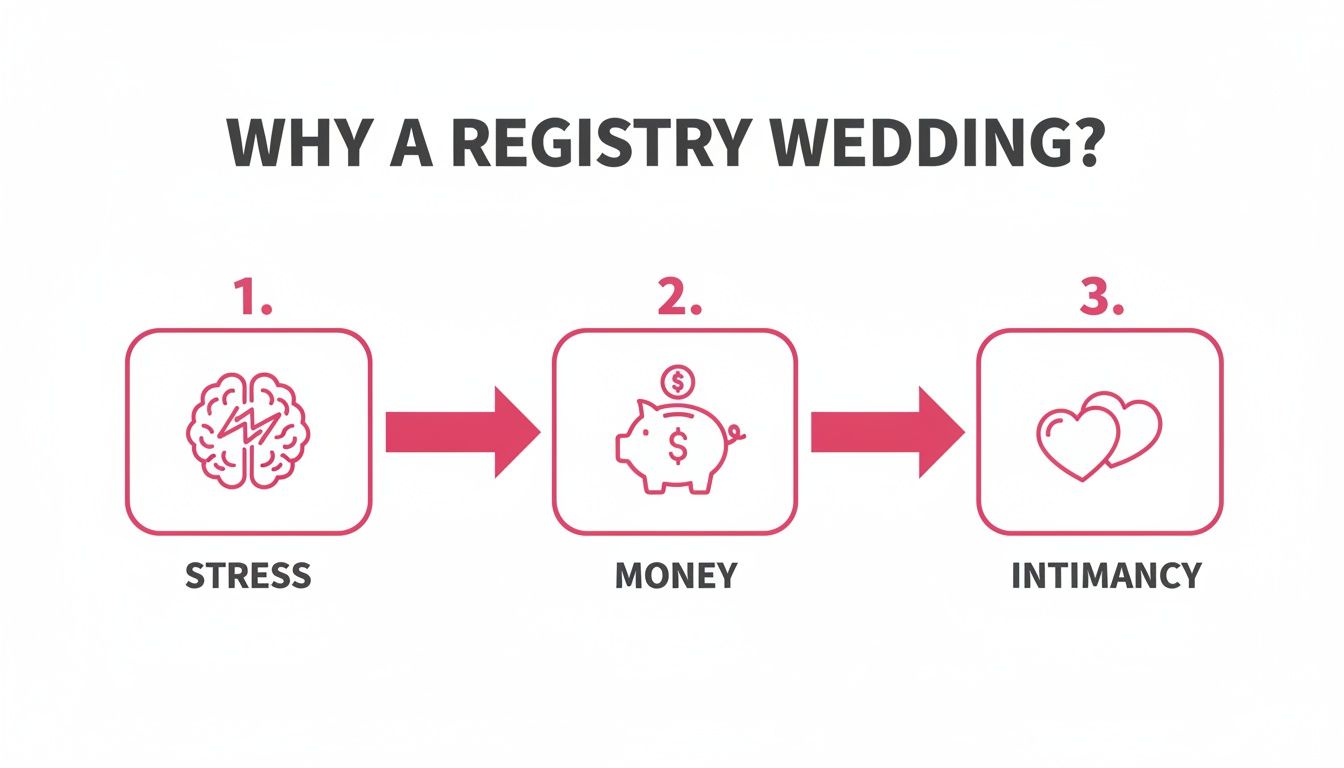
The simplicity of a registry wedding is a huge drawcard. Less stress and less admin are built right into the process, starting with how you book and handle the paperwork.
The All-Important Notice of Intended Marriage (NOIM)
If there's one document to get right, it's the Notice of Intended Marriage (NOIM). This is your official application to get married in Australia. You must lodge it with the registry office at least one full month before your ceremony.
This one-month waiting period isn't just a guideline; it's the law. So, if you hand in your NOIM on March 15th, the absolute earliest you can legally marry is April 15th. It’s a critical timeline to factor into your plans, especially if you’re aiming for a meaningful date.
Pro Tip: Lodge your NOIM a minimum of one calendar month before your wedding. It's valid for up to 18 months, so get it done early to tick the biggest box on your to-do list.
You can download the NOIM form directly from the Attorney-General's Department website. Once filled out, your signatures need to be witnessed by an authorised person. The list is pretty broad, which makes things easier.
Who can witness your NOIM signatures?
- A Justice of the Peace (JP)
- An authorised marriage celebrant
- A barrister or solicitor
- A legally qualified medical practitioner (your GP)
- A member of the Australian Federal Police or any state/territory police force
The easiest option for most people is to find a local JP, who you can often find at a library or council building. If one of you is overseas, an Australian Diplomatic or Consular Officer can witness the signature abroad.
Gathering Your Documents
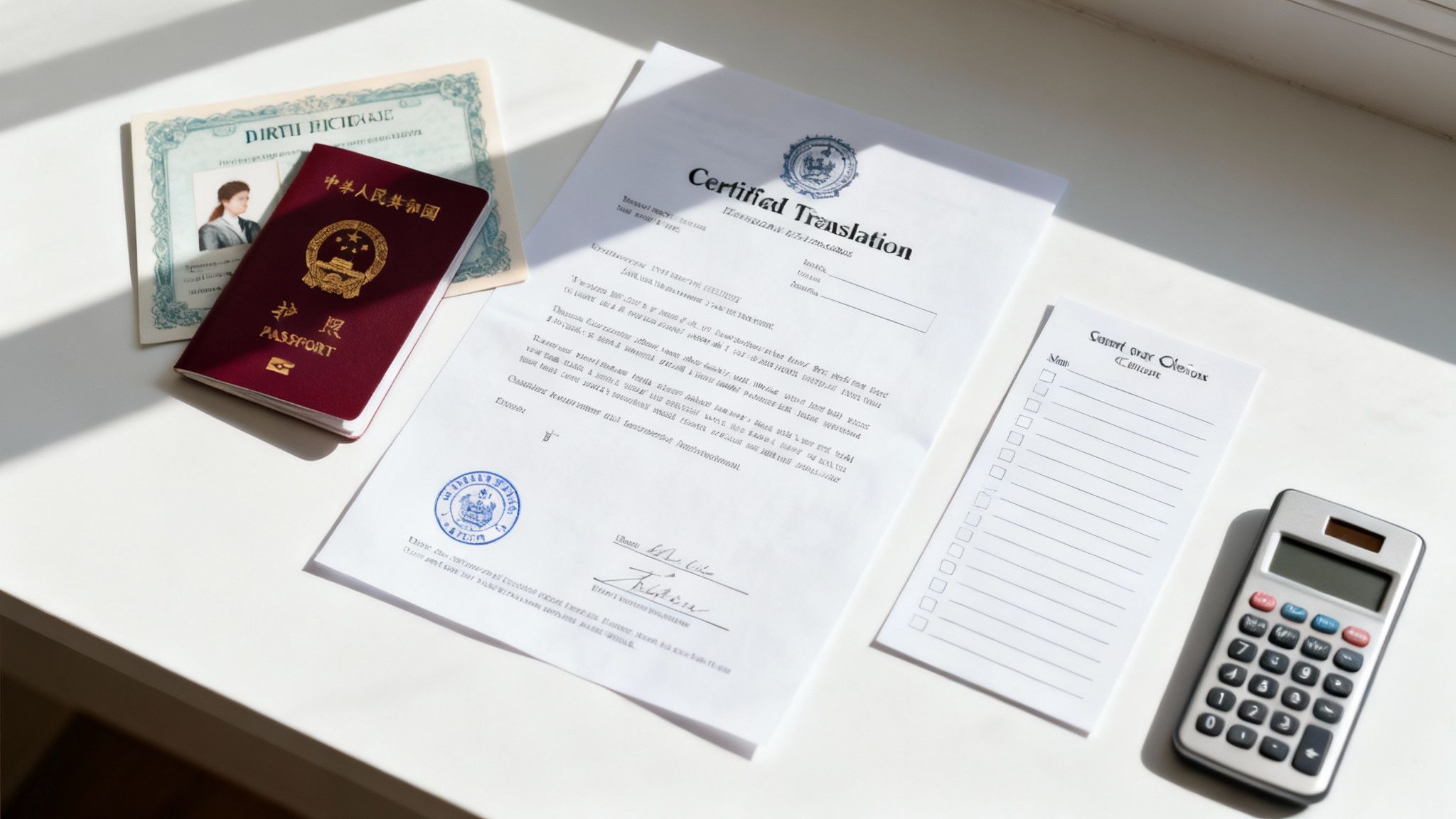
With the NOIM sorted, you just need to pull together a few original documents to prove who you are, when you were born, and that you're both free to marry. Getting these together early will save you a world of last-minute stress.
Here’s a quick checklist of what you'll need to show the registry.
NSW Registry Wedding Document Checklist
| Document Type | Who Needs It | Key Details & Tips |
|---|---|---|
| Proof of Birth & Identity | Both partners | Your original birth certificate plus photo ID (like a driver's licence) is perfect. If you were born overseas, your foreign birth certificate or a valid passport will do the job. |
| Proof of Previous Marriage Ending | Any partner who has been married before | You must provide the original divorce certificate (the final one, sometimes called a decree absolute) or the death certificate of your former spouse. A separation notice is not enough. |
| Change of Name Certificate | Anyone whose current name differs from their birth certificate | If you’ve legally changed your name, bring the official certificate. This is needed to connect the name on your birth certificate to the one you use now. |
My advice? Grab a folder and keep all these originals together. You'll need to present the actual documents, not photocopies, when you lodge your paperwork in person.
Two common slip-ups I see are people getting the NOIM witnessed incorrectly or forgetting to bring the original copies of their documents. A quick double-check can save you another trip.
And while you're simplifying your wedding plans, you might also be thinking about gifts. Understanding how an online gift registry works can be another great way to cut down on admin and keep things simple for you and your guests.
Understanding the Costs and What's Included
One of the best things about getting married at the NSW registry is how refreshingly straightforward the pricing is. There's no hidden guesswork. You get a clear, upfront cost that lets you sidestep the budget headaches and spiralling expenses that can come with a more traditional wedding.
This simple, all-in-one approach means you can plan with certainty. The standard fee is more than just a number; it’s a complete package that covers every legal essential for a simple, meaningful ceremony.
Breaking Down the Standard Fee
When you book with the NSW Registry of Births, Deaths & Marriages, you pay a single, all-inclusive fee. It bundles all the crucial services together, so you don't have to worry about surprise costs popping up later.
So, what are you actually paying for?
- Venue Hire: Your payment secures a dedicated ceremony room at one of their locations, like the popular spots in Chippendale or Parramatta. These are purpose-built, professional spaces perfect for intimate gatherings.
- An Authorised Celebrant: The registry provides a government-appointed celebrant to conduct your ceremony. They're experts in handling all the legal wording and official parts of the proceedings.
- Official Marriage Certificate: The fee also covers one standard marriage certificate. This is the official document you'll need for any legal to-dos after the wedding, like changing your name. It gets posted to you once your marriage is officially registered.
This bundle is all about making things efficient and stress-free. By packaging these key elements, the registry lets you focus on your big moment instead of juggling different suppliers and invoices. To get a better idea of how these packages work, you can explore a clear overview of wedding registry pricing and inclusions.
Potential Extra Costs to Consider
While the base fee covers the essentials, a couple of things can affect the final price. It pays to be aware of these so you can set an accurate budget.
The biggest factor is usually the timing of your ceremony. Weddings held on a standard weekday are the most budget-friendly option. If you set your heart on a Friday, Saturday, or a particularly popular time slot, expect the fee to be higher to reflect the demand.
A quick tip: Location can sometimes influence the cost too. While the main Sydney registry offices have standard pricing, ceremonies at other venues (when offered) might have a different price tag. Always double-check the final cost for your chosen date and location when you book.
The Financial Advantage Over a Traditional Wedding
When you stack a NSW registry wedding up against a big, traditional wedding, the savings are massive. The average Australian wedding can run into tens of thousands of dollars, a figure that's either out of reach or just not a priority for many couples.
Opting for the registry is a deliberate choice to begin your married life on a strong financial foundation. It frees up your money for things that matter more to you as a couple—maybe a down payment on a house, an unforgettable honeymoon, or just building your future without starting it in wedding debt. It’s a smart, modern approach that puts the focus on the marriage itself, not just the wedding day.
What to Expect on Your Wedding Day
The big day is finally here! It's completely normal to feel a few last-minute butterflies, but knowing exactly how your NSW registry wedding will unfold can help you relax and truly be in the moment. The entire process is designed to be straightforward and beautiful, keeping the focus right where it should be: on the two of you.
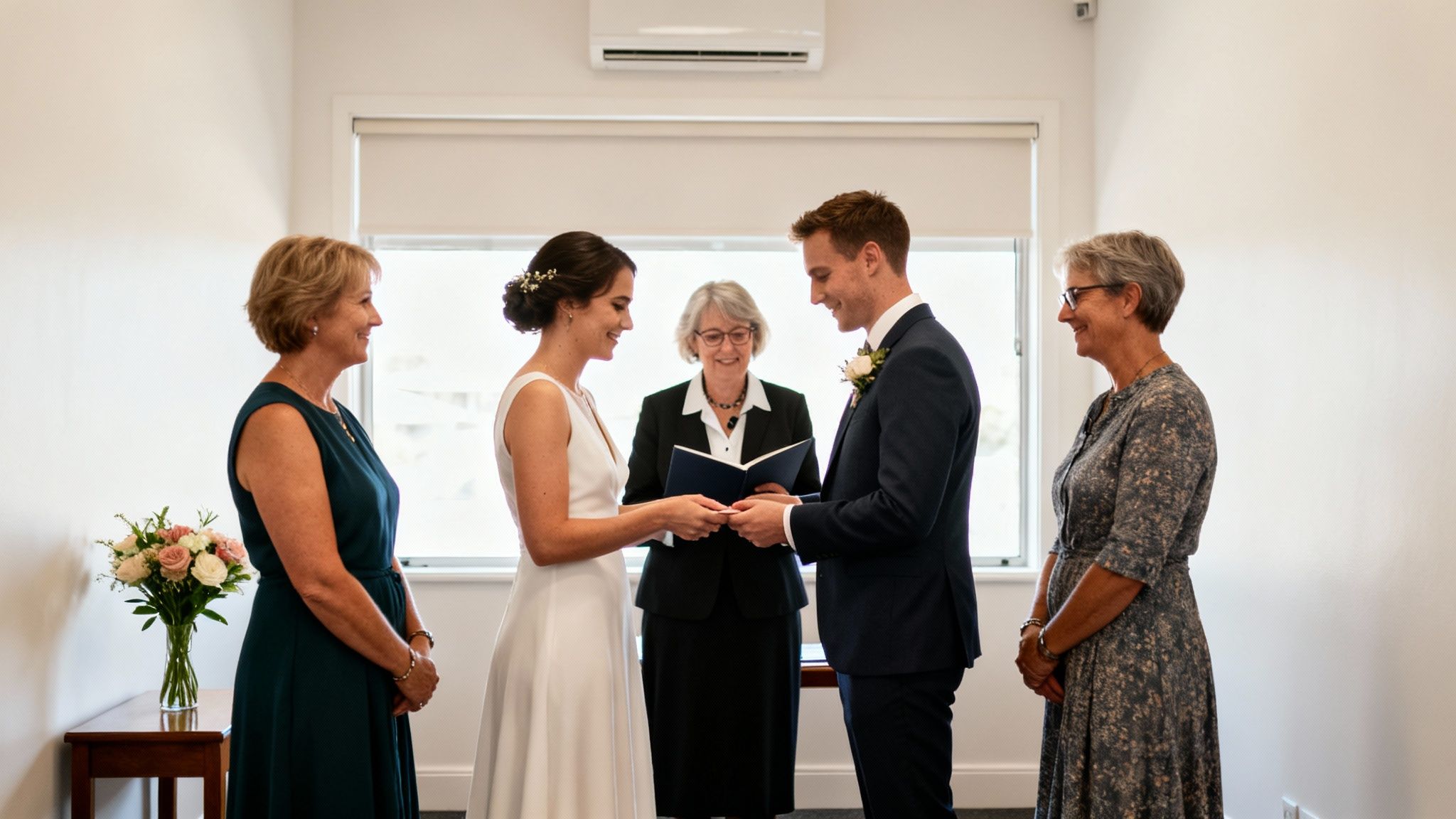
From the moment you walk in the door to your exit as a newly married couple, everything is organised to feel special without being overwhelming. This is where all your planning pays off in a simple, meaningful ceremony.
Arrival and Final Checks
You’ll want to get to the registry office about 15-20 minutes before your ceremony is scheduled to start. This little buffer gives you time to catch your breath, greet your guests, and check in without feeling frazzled. Make sure your witnesses know to arrive early, too.
A staff member will greet you at check-in and quickly go over the final details. This is the point where you’ll need to show your original photo ID, and your two witnesses will need to do the same.
What to bring on the day:
- Your Photo ID: A current driver's licence or passport for each of you.
- Your Witnesses' Photo ID: They’ll also need valid ID to prove they're over 18.
- Personal Vows: If you've written your own, bring a printed copy to hand over to the celebrant. It's one less thing to worry about!
- Wedding Rings: It sounds obvious, but you'd be surprised! Keep them somewhere safe.
A quick heads-up: the ceremony rooms run on a very tight schedule. Being late could unfortunately cut into your ceremony time, so aiming to be a little early is always a smart move for a stress-free start.
And don't forget the practical details that make you feel good, like choosing the perfect wedding shoes that are both stylish and comfortable enough to stand in.
The Ceremony Itself
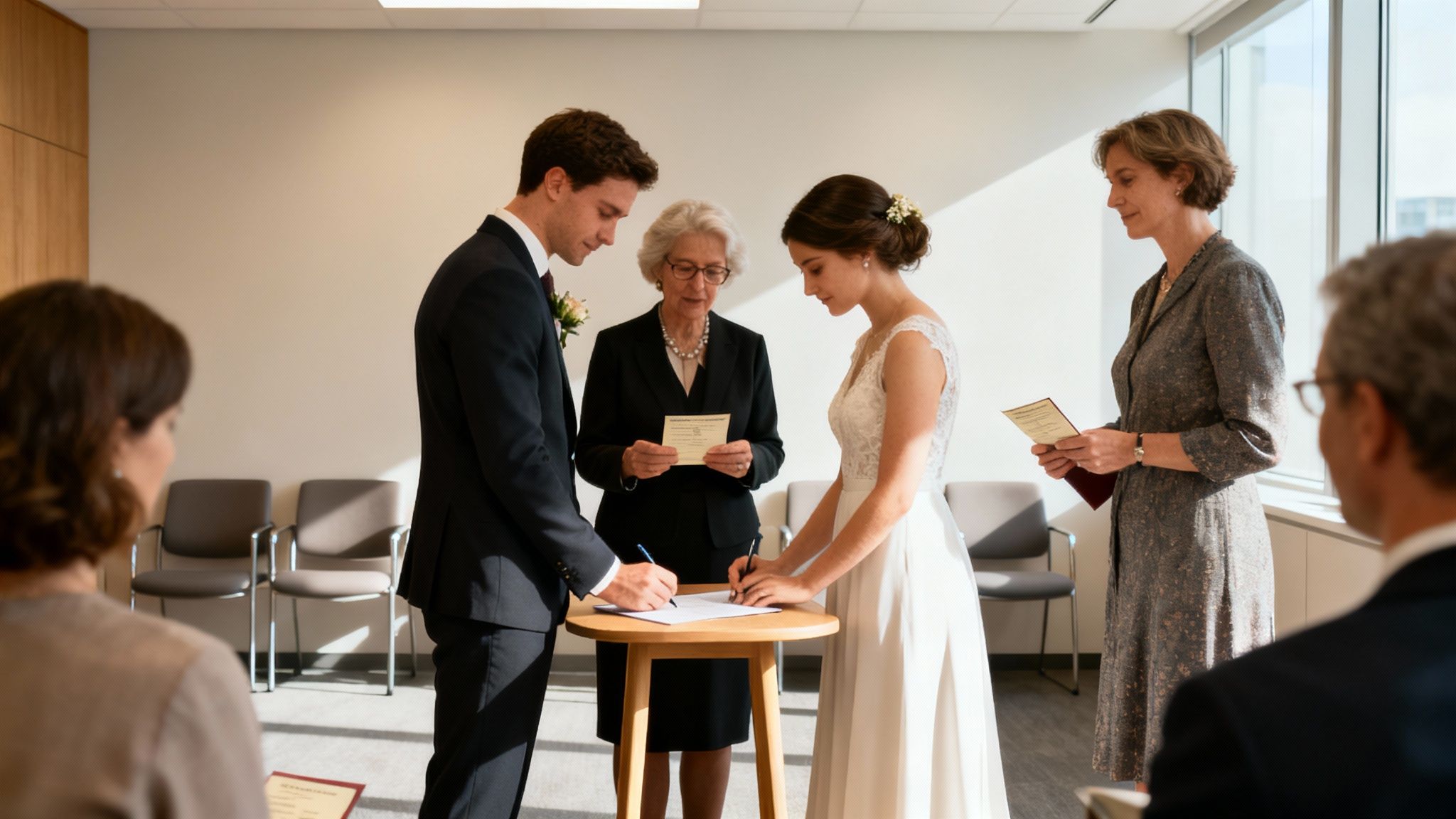
Once you step into the ceremony room, the vibe is calm and intimate. Your government-appointed celebrant will welcome you and your guests, creating a warm atmosphere right from the start. The ceremony is quite brief—usually around 15-20 minutes—but it thoughtfully includes every legal element required to make your marriage official.
Here’s a simple rundown of what to expect:
- Welcome: The celebrant starts with a warm introduction.
- The Monitum: This is a non-negotiable part where the celebrant recites a specific legal phrase explaining marriage in Australia.
- Legal Vows: You'll each repeat the mandatory vows required by law. These are the words that legally bind you.
- Ring Exchange (Optional): If you’re exchanging rings, the celebrant will guide you through this classic tradition.
- Personal Vows (Optional): This is your moment! You'll share the personal promises you’ve written for one another.
- The Declaration: The best part—the celebrant officially declares you a married couple.
- Signing the Register: To wrap things up, you, your two witnesses, and the celebrant will sign three copies of the marriage certificate.
This well-practised flow ensures everything is legally sound while still feeling incredibly special and personal.
Making a Registry Ceremony Your Own
While there's a set script for the legalities, you have some wonderful opportunities to inject your own personality into the day. The most powerful way is by writing your own vows.
This is your chance to move beyond the legal script and share what’s in your heart. You can tell your story, make promises that are unique to your relationship, and add a deeply personal touch that your guests will remember. Just be sure to let the registry know in advance.
You can also express yourselves through your outfits and, of course, the people you invite. The intimate setting makes every guest feel truly part of the moment. It’s no surprise that registry weddings are so popular across the state, with suburbs like Sydney, Manly, and Newcastle consistently being top spots for marriage registrations. Whether it’s the city buzz or a coastal backdrop, these locations offer a perfect setting for couples. You can even dive into the marriage data yourself on the Data.NSW website.
After the Ceremony: Your Certificate and Changing Your Name
The confetti has settled, the vows have been exchanged, and you’re officially married—congratulations! While the emotional heavy lifting is done, there are a couple of final admin steps to tick off. This is all about making your marriage legally recognised everywhere and, if you choose, navigating the name change process.
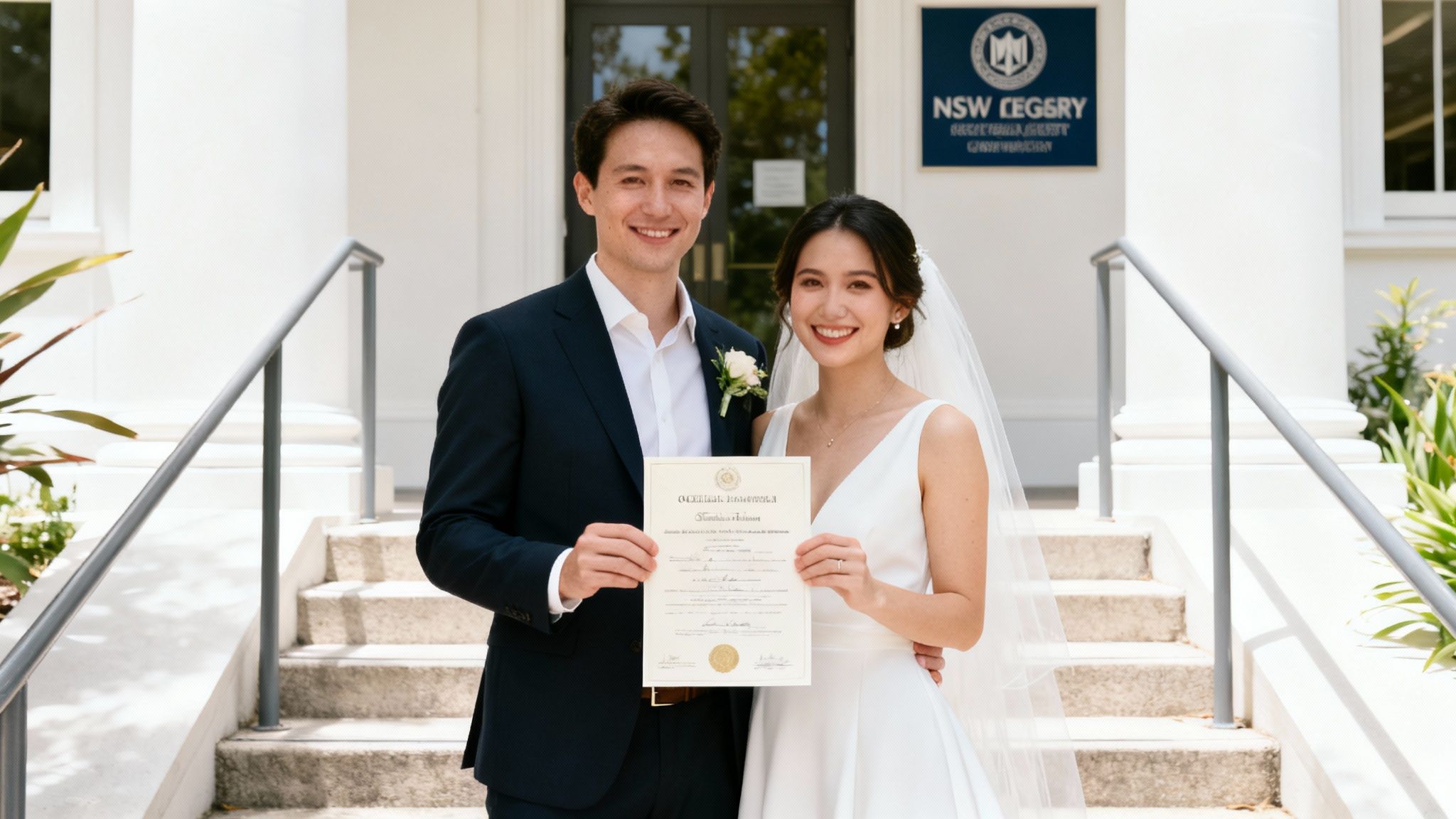
Here's something that catches a lot of couples by surprise: the decorative certificate you sign on the day is a beautiful memento, but it's not your legal proof of marriage. For that, you need to apply for the official version from the NSW Registry of Births, Deaths & Marriages.
Applying for Your Official Marriage Certificate
After the ceremony, your celebrant takes care of lodging all the legal paperwork with the registry. Once your marriage is officially in the system—this usually takes a few business days—you can then jump online and apply for your certificate.
This document is your golden ticket for everything that comes next, especially if one of you plans to change your surname. It's the proof required by every government agency, bank, and institution you can think of.
Here's how to get it:
- Apply Online: The quickest path is through the Service NSW website. It's straightforward.
- Wait for Processing: Standard processing usually takes a couple of weeks. If you're in a real hurry, you can opt for priority processing for an extra fee.
- Receive by Post: The certificate is sent securely to your nominated address via registered post.
A Quick Tip from Experience: Don't put this off. Applying for your official certificate as soon as you know the marriage is registered means you’ll avoid frustrating delays when you start the name change process.
The classic NSW registry wedding is as popular as ever, which reflects a broader shift towards simple, meaningful celebrations. In fact, 2024 saw a 1.6% increase in marriages registered in New South Wales compared to the previous year—that's 641 more couples tying the knot. This rebound shows just how much people value making their union official, even after the big post-pandemic wedding boom of 2022. You can dig into these trends in the latest Australian marriage statistics from the ABS.
Your Guide to Changing Your Name in NSW
First things first: deciding to change your name is a personal choice, not a legal requirement. If you do decide to take your partner’s surname (or create a new one), that official marriage certificate is the primary document you'll need to get it done. The process is essentially a checklist of updating your details with various organisations, one by one.
The Name Change Checklist
Grab your official marriage certificate, a cup of tea, and start working through this list. My advice? Tackle the government IDs first. They act as the foundational proof you'll need for almost everything else, like your bank accounts.
1. Government and Official IDs
- Service NSW (Driver Licence): This should be top of your list. You’ll need to pop into a service centre in person with your marriage certificate and current licence.
- Australian Passport Office: A great perk—you can get a new passport in your married name for free if your current one has more than two years of validity left.
- Medicare: Update your details to make sure you’re both listed correctly on your card.
- Australian Taxation Office (ATO): This one's crucial. Let the ATO know about your name change to keep all your tax records in order.
- Australian Electoral Commission (AEC): Make sure your name is correct on the electoral roll so you can vote without any hassles.
2. Finances and Employment
- Banks and Financial Institutions: Head into a branch with your new ID and marriage certificate to update all your accounts, cards, and any loans.
- Superannuation Fund: Notify your super fund. It’s important that your details here match your ATO records.
- Your Employer: Just let your HR department know so they can update your payroll and employment files.
3. Utilities and Memberships
- Household Bills: Don't forget electricity, gas, internet, and your mobile phone provider.
- Insurance Policies: Car, health, home, and life insurance providers all need to be in the loop.
- Professional Memberships and Subscriptions: Think about any professional bodies, alumni associations, or even streaming services you’re subscribed to.
Working through this list systematically makes a seemingly huge task feel much more manageable. It’s really the final piece of the puzzle in kicking off your new chapter together.
Got Questions About Your NSW Registry Wedding? We’ve Got Answers
Even when you’re planning something as straightforward as a registry wedding, a few questions are bound to pop up. It's completely natural! While a NSW registry wedding is refreshingly simple, there are always those little "what if" scenarios that come to mind as the day gets closer.
We’ve pulled together the most common queries we hear from couples to give you clear, direct answers and a bit of extra peace of mind.
Can We Personalise Our NSW Registry Wedding Ceremony?
This is a big one, and the short answer is yes—with a few boundaries, of course. While every ceremony must follow a set legal script to be valid, you absolutely have the chance to make it feel like yours.
The best way to add that personal touch is by writing and exchanging your own vows. This is your moment to share promises that are meaningful to you and your relationship, turning a simple legal proceeding into something deeply personal.
Just keep in mind the registry's ground rules:
- Outside music generally isn’t an option during the ceremony.
- Religious readings or rituals are not part of a civil ceremony.
- Decorations are a no-go, as the rooms are in constant use for back-to-back ceremonies.
Your best bet is to chat with the registry staff when you book. They’ll give you the clear rundown on what you can and can’t do, so there are no surprises on the day.
What Happens If We Need to Postpone or Cancel?
Life happens, and sometimes plans have to shift. The NSW Registry has clear policies for postponements and cancellations, so you’ll know exactly where you stand.
If you need to change your date, it’s usually doable, but you might be looking at a fee. The closer you get to your original ceremony date, the more likely a fee will apply, simply because that time slot was held just for you.
Should you need to cancel altogether, you’ll likely forfeit some or all of your booking fee. The amount really depends on how much notice you give. The key is to let the registry know as soon as your plans change. All the specifics about fees and timelines will be in the terms and conditions you receive when you book.
It’s a smart move to read the cancellation and postponement policy carefully before you lock anything in. Knowing the rules upfront can save you a world of stress if things take an unexpected turn.
Are Children Allowed to Attend a Registry Office Wedding?
Absolutely! Kids are more than welcome to come and share in your special moment. A registry wedding is a fantastic family-friendly option, and having your little ones there to witness it can be incredibly special.
The main thing to remember is that every person, big or small, counts towards the room's maximum guest capacity. Whether the room holds four guests or a few more, children are included in that final headcount.
The ceremonies themselves are quite short, but they do take place in a professional office setting. It might be a good idea to bring a quiet activity—like a book or a tablet with headphones—to keep very young children happy and occupied. For more answers to common queries, our complete frequently asked questions guide has you covered.
How Soon After the Ceremony Is Our Marriage Legally Registered?
Great question! Your marriage is legally binding the second you, your partner, and your two witnesses sign the marriage certificates during the ceremony. That's it—you're officially married in the eyes of the law.
After you've celebrated, your celebrant takes care of the final piece of admin. They lodge all the signed paperwork with the NSW Registry of Births, Deaths & Marriages. This official registration process usually takes a few business days to be finalised.
Once it's registered, you can then apply for your official marriage certificate. This is the document you’ll need for all the important stuff, like changing your name on your driver's licence or passport.
Planning your gift list should be just as simple as your wedding day. At EasyRegistry, we make it easy for you to create a beautiful, personalised gift registry for cash funds, experiences, or traditional gifts. Start building your perfect registry today at https://www.easyregistry.com.au.