More Than Just Words: Finding the Perfect Anniversary Message
The anniversary card is open, the pen is in your hand, and somehow “Happy Anniversary” feels far too small. You’re trying to fit years of ordinary tenderness, hard seasons, private jokes, loyalty, attraction, forgiveness, and shared history into a few lines. That’s why so many people freeze. It isn’t a lack of love. It’s the pressure of saying something worthy of it.
The strongest heart touching anniversary wishes for husband don’t try to sound poetic for the sake of it. They sound recognisable. They sound like your marriage. A good message makes him feel seen, not just praised. It names what he’s given, who he’s become, and what the two of you have carried together.
That matters even more for milestone anniversaries. In Australia, marriages that reach the 25th anniversary represent about 22% of all first marriages, which shows how meaningful a silver anniversary really is, according to Australian marriage and divorce data. When a marriage lasts, the words you choose often carry the weight of a whole life built side by side.
So instead of giving you one long generic list of quotes, this guide sorts wishes by emotional purpose. That’s the useful part. If you know what you want your message to do, whether that’s thank him, flirt with him, honour your resilience, or celebrate your future, the words come more easily. You can also pair the message with a gift, experience, or shared fund in EasyRegistry so the sentiment doesn’t sit alone in a card and disappear into a drawer.
1. The Gratitude and Appreciation Message
Some anniversaries call for romance. Others call for honesty. Gratitude is often the most moving choice because it tells your husband, plainly, “I don’t take you for granted.”
A gratitude message works best when it’s specific. “Thank you for everything” is kind, but forgettable. “Thank you for how you stayed calm when I was overwhelmed, for how you make the house feel lighter, and for how you keep showing up even when life is messy” lands differently. It gives him something real to hold onto.
What makes this message work
Pick two or three things he does that shape your daily life. Maybe he’s steady under pressure. Maybe he remembers practical details when you forget them. Maybe he’s the person who turns a difficult week around with one cup of tea and one well-timed joke.
That kind of appreciation isn’t flashy. It’s powerful because it proves you notice him.
Practical rule: If the message could be given to any husband, it isn’t finished yet.
A strong gratitude message might sound like this:
“Happy anniversary to the man who has loved me in ways big and small. Thank you for being patient when I’m stressed, generous when life feels crowded, and dependable in all the moments that matter most. The life we’ve built means everything to me because I built it with you.”
What to pair it with
This message suits gifts that reflect shared history. Think printed photos, a dinner at a favourite restaurant, or a registry filled with meaningful pieces for your home. If family and friends are celebrating with you, EasyRegistry’s guest message feature can turn the moment into something communal, where others add their own memories and appreciation.
That works especially well for milestone anniversaries, where the marriage itself is being celebrated, not just the date. If you’re adding gifts to mark the occasion, browse ideas that feel personal rather than generic, such as experiences or keepsakes inspired by your story through unique wedding gift ideas.
The common mistake here is going too formal. Gratitude should sound warm, not ceremonial. Don’t write like you’re accepting an award. Write like you’re telling the truth about the man you love.
A short video can help spark phrasing if you’re still stuck.
2. The Romantic and Passionate Message
Not every anniversary message needs to be soft and sensible. Sometimes the right message reminds him he’s still desired, still chosen, and still the man who turns your head.
Romantic writing goes wrong when it becomes vague. “You are my forever and always” can be lovely, but it gains force when you anchor it in memory or sensation. Mention the look he gives you across the table. The way you still relax when he pulls you into a hug. The fact that after all this time, he can still change your whole mood by walking into the room.
Say what still feels alive
A passionate anniversary message doesn’t have to sound dramatic. It just needs emotional heat. Tenderness and attraction belong in the same sentence if that’s what your marriage holds.
Try this approach:
Name the spark: Mention what still draws you to him.
Name the comfort: Show that romance and safety can coexist.
Name the choice: Let him know that your love is still active, not just historical.
For example:
“Happy anniversary, my love. I still feel it when you reach for my hand. I still notice the way you look at me when the room is busy and we somehow find each other in it. You are still the man I want, the man I trust, and the man I’d choose all over again.”
The trade-off to keep in mind
A public message and a private message don’t need to do the same job. If you’re posting something with a registry or sharing it with friends and family, keep the language intimate but not overexposed. Save the more personal lines for a handwritten note, a text sent before dinner, or what you say face to face.
That split works well. Publicly, you honour the relationship. Privately, you deepen it.
This category also pairs beautifully with experience gifts. A weekend away, a spa booking, a special dinner, or a slow overnight stay can turn the message into an actual memory rather than just a nice sentence in a card. When people ask what to give for your anniversary, a romantic experience often feels more useful than another object you didn’t choose.
The strongest heart touching anniversary wishes for husband in this style don’t try to sound like someone else’s quote collection. They sound like chemistry that has lasted.
3. The Growth and Partnership Message
Some anniversary messages sound lovely for thirty seconds and disappear. A growth and partnership message stays with him because it names what the two of you have built.
This style works best when your marriage has been shaped by change. Jobs shifted. Plans failed. One of you carried more for a season, then the other did. The point of the message is not to polish the story. It is to honour the fact that love matured under pressure and kept becoming more dependable.
Write from evidence. Start with who he was to you at the beginning. Then name how he showed up when life got harder, messier, or less predictable. Finish with what that partnership has created in you both now. That sequence gives the message weight, and it keeps it from sounding like a generic compliment.
For example:
“Happy anniversary to the man who has grown with me through every version of life we didn’t see coming. You have stood beside me in change, told me the truth with love, and kept choosing this marriage with steady hands and a full heart. I loved you for who you were then. I love you even more for the partner you have become.”
Growth is romantic because it costs something. Patience. Repair. Honesty. Recommitment.
I usually suggest this category for couples who want their words to feel mature rather than performative. It is especially strong for longer marriages, second chapters, or relationships that have come through strain and are now more solid because of it. If that is your story, say so plainly. “We have learned each other better.” “We handle hard seasons differently now.” “I trust the life we are building.” Lines like these land because they are specific and earned.
The gift pairing should match the message. If your note is about partnership, choose something that supports the next stage of your life together. That might be a trip, a class, a practical upgrade for a shared goal, or an experience you have postponed for too long. A thoughtful wedding gift registry for anniversary celebrations or vow renewals can help guests contribute to something that fits your real life, instead of adding another item you did not ask for.
Keep one trade-off in mind. If the relationship has had hard seasons, avoid pretending everything was easy. Warmth matters, but accuracy matters more. The strongest heart touching anniversary wishes for husband in this category sound hopeful because they are honest.
4. The Playful and Humorous Message
Some marriages are held together, at least partly, by timing. One of you says the absurd thing at exactly the right moment. The other laughs before the argument gets too serious. Humour isn’t a side note in those relationships. It’s part of the glue.
That’s why a funny anniversary message can still be affectionate. It tells your husband, “I love the joy of us.”
Make the joke serve the love
A playful message works when the humour reveals closeness, not when it turns into a roast. The aim isn’t to embarrass him. It’s to bring your shared rhythm onto the page.
A line about his snoring, his obsession with one television remote, or the fact that he still loads the dishwasher “creatively” can work well if you balance it with real warmth. Without that balance, the note can read as a list of complaints wearing party clothes.
Try something like this:
“Happy anniversary to the man who still makes me laugh, still steals the doona, and still somehow makes life better every single day. Thank you for being my favourite person to be ridiculous with. I wouldn’t want to do this life, or this laundry, with anyone else.”
Good public choice, better if you know your audience
Humorous messages are often the safest option for a party speech, social caption, or registry note because they feel light and approachable. They invite other people into the joy without giving away private details.
A few ways to sharpen it:
Use one inside joke, not five: Too many references leave everyone else outside the moment.
End sincerely: Let the final sentence carry emotional weight.
Keep the target gentle: Tease habits, not wounds.
A real-life example. If your husband is the kind of man who triple-checks directions for a trip you’ve taken many times, your message could smile at that trait while also praising the care behind it. “Thank you for making sure we’re never lost, even when I tease you for opening the map too early.” That’s affectionate because the joke sits on top of appreciation.
This style pairs well with fun anniversary gifts. Think concert tickets, games, comedy shows, tasting experiences, or a group dinner with friends. If your relationship naturally runs on banter, don’t force a solemn message just because anniversaries are supposed to sound serious. For many couples, laughter is the most accurate love language they have.
5. The Gratitude for Everyday Moments Message
Big declarations are easy to admire. Small truths are often more moving. One of the best heart touching anniversary wishes for husband is the kind that notices ordinary love.
This style works because marriage is mostly lived in routine. Not in anniversary dinners. Not in posed photos. In weekday mornings, tired evenings, passing conversations in the kitchen, the way he checks whether you got home safely, the way he knows when to talk and when to sit beside you.
The small moments that hold the whole thing up
Write down a few scenes before you draft the message. You’re looking for moments you almost overlook because they happen so often.
For example:
Morning comfort: The coffee he brings you, or the way you start the day together.
Emotional steadiness: How he listens when work has gone badly.
Quiet companionship: The silence that feels restful, not empty.
Practical care: The little jobs he does without fanfare.
A message in this category might read:
“Happy anniversary, my love. Thank you for the life inside the little moments. For morning coffees, for checking in when I’ve had a hard day, for making even quiet evenings feel full. The older our marriage gets, the more I realise that love lives in these ordinary moments, and you make them beautiful.”
Why this one often hits hardest
For many couples, this is the message that causes tears because it feels so accurate. It says you haven’t only noticed the highlight reel. You’ve noticed the daily giving.
No local benchmark exists for how often couples use this exact message style, and that’s worth acknowledging plainly. The available research around this topic is mostly generic message collections rather than Australian evidence, as noted in this summary of the lack of relevant local market data. That doesn’t make the approach less useful. It just means the strength of this message comes from lived experience, not trend data.
The most believable love note is usually the least theatrical one.
This category pairs beautifully with cosy, home-based gifts. A weekend breakfast hamper, new bedding, a cooking class, a date-night fund, or simple upgrades that make home life feel more restful can all reinforce the sentiment. If your marriage is built on everyday kindness, let the message and the gift honour that instead of reaching for something flashy that doesn’t sound like you.
6. The Vision and Future Message
An anniversary isn’t only proof of what you’ve survived. It’s also a chance to say, “I still want more life with you.”
That forward-looking energy can be romantic, especially in established marriages. Instead of treating the anniversary as a museum of old memories, you make it a doorway into the next chapter.
Write the future in concrete terms
The best future-focused messages don’t stay abstract. Don’t just say, “I look forward to forever.” Say what forever contains. More travel. A renovated home. Quieter mornings. New traditions. A move you’ve discussed. A shared dream you haven’t made room for yet.
A good message sounds like this:
“Happy anniversary to the man I still want beside me for all that’s ahead. I look forward to the places we haven’t seen yet, the plans we’re still shaping, and even the ordinary years waiting for us. I don’t just love our past. I love our future too, because it still has you in it.”
Hope works best when it includes realism
This style becomes stronger when it admits that the future won’t be perfect. Life will keep changing. Work, family, health, money, geography, all of it can shift. But commitment sounds more credible when it faces reality directly.
That matters for couples who’ve spent time apart due to work or distance. While the supplied material mentions long-distance and FIFO relationships as an underserved content angle, it doesn’t provide a source you can rely on for firm local data in this article. So keep the point qualitative. If distance has shaped your marriage, include that truth in the message. Talk about reunion, patience, and the kind of future you’re working toward together.
This message category pairs naturally with a shared travel or experience fund. If your anniversary is also a chance to gather support for a getaway, bucket-list trip, or practical future plan, a dedicated travel registry makes that intention clear to guests.
What doesn’t work is making promises you haven’t discussed. If you write publicly about a sea change, overseas trip, or major life pivot your husband hasn’t agreed to, the message starts feeling performative. Dream together first. Then write from the dream you share.
7. The Forgiveness and Resilience Message
Not every marriage story is polished. Some anniversary messages become meaningful because they admit that love has been tested.
This style is for the couple who has had hard conversations, disappointments, stress, grief, or seasons where choosing each other took real effort. A resilience message doesn’t put conflict on display. It honours what it took to stay tender and keep rebuilding.
Honesty without oversharing
The line is important here. You want truth, not exposure. If the anniversary note is private, you can be more direct. If it’s attached to a registry page or read aloud at a gathering, keep the details general and the respect intact.
A strong version might say:
“Happy anniversary. I’m proud of the love we have, not because it has been perfect, but because it has been real. Thank you for the ways you’ve listened, learned, forgiven, and stayed. We’ve had to grow into this marriage, and I’m grateful that we kept choosing each other.”
That language works because it names difficulty without assigning blame.
Why this message can feel more intimate than a romantic one
Anyone can write about butterflies. Fewer people can write well about repair. Yet for many marriages, resilience is the deepest romance available. It says your husband isn’t only the man you celebrate when life is easy. He’s the man who stood in the hard parts with you.
A useful rule is to focus on:
What you learned together
What you admire in how he responded
What kind of marriage you’ve become because of it
Avoid dragging old specifics back into the centre of the anniversary. This isn’t the place to rehearse the argument history. It’s the place to recognise the character built through it.
“We stayed teachable” is often a stronger anniversary line than “we stayed strong.”
This category pairs well with restorative gifts and experiences. A retreat, a wellness weekend, intentional time away from routine, or even a quiet dinner with no audience can suit the tone. If your relationship has come through something difficult, choose a gift that creates space rather than more noise. The point isn’t to prove how fine everything is. It’s to honour the work that got you here.
8. The Legacy and Impact Message
Some anniversary wishes widen the frame. They’re not only about how your husband loves you, but about what your marriage has created around you.
This category suits milestone anniversaries especially well. It’s often the right choice when children, grandchildren, close friends, or extended family are part of the celebration, because it recognises that a marriage leaves traces in other people’s lives.
Name the impact beyond the couple
Legacy doesn’t have to mean grand achievements. It can mean a home where people felt safe. It can mean values your children learned by watching the two of you. It can mean the steadiness your husband brought to your family, your friendships, your shared community, or even your own sense of self.
A message in this style could read:
“Happy anniversary to the man whose love has shaped my life in more ways than I can count. Thank you for the home we’ve built, the people we’ve loved, and the strength and kindness you’ve brought into every season of our story. Loving you has changed me for the better, and the life we’ve made together reaches far beyond just us.”
When this works especially well
This message is ideal for silver or golden anniversaries, vow renewals, and celebrations where guests are likely to reflect on your relationship as an example. If you’re marking a long marriage, that wider lens often feels more fitting than a purely romantic note.
Earlier, the article noted how uncommon major anniversary milestones are. That’s part of why this category carries such weight. A long marriage isn’t only a private bond. Over time, it often becomes part of a family’s memory and identity.
This is also a natural place to include symbolic gifts. Family experiences, a shared meal, contributions toward a reunion, memory books, or even charitable giving in honour of the occasion all fit. If keepsakes matter to your relationship, thoughtful objects can continue carrying meaning long after the celebration. There’s a useful perspective on how jewelry can keep memories alive when you’re choosing something meant to hold emotional significance.
One practical touch here is inviting other people to contribute short messages if you’re using EasyRegistry for the celebration. Children and loved ones often see dimensions of your husband that you don’t put into your own note, and those added reflections can turn an anniversary into a fuller portrait of the life you’ve built.
8-Point Comparison: Heart-Touching Anniversary Wishes for Husband
Long-term marriages (15+ years) after significant challenges
Focus on growth, avoid blame, share selectively
The Legacy and Impact Message
Medium, reflective and perspective-driven
Medium, gather examples; consider family input
Conveys meaning and honors broader contribution
25th/50th anniversaries; family or charitable registries
Cite specific impacts on family/community; stay balanced
Crafting Your Perfect Anniversary Celebration
The best anniversary message for your husband isn’t the most polished one. It’s the one that tells the truth about your marriage in words he’ll recognise immediately. That’s why these categories help. They give you a way into the message without forcing you into someone else’s tone.
If you’re stuck, don’t start by writing full sentences. Start by choosing the emotional centre. Ask yourself what you most want him to feel when he reads the card.
Do you want him to feel appreciated? Then write gratitude.
Do you want him to feel wanted? Then write romance.
Do you want him to feel proud of what you’ve built? Then write partnership, resilience, or legacy.
Do you want him to feel excited about what’s ahead? Then write the future.
Once you know the emotional job of the message, the wording gets easier. Pull in one memory, one habit, one quality, and one honest sentence that sounds like you. That combination usually beats a paragraph full of borrowed lines.
There’s also a practical point people often overlook. The setting changes the message. A private card can be more vulnerable. A message shared on a registry page or in front of family should still be personal, but with more awareness of the audience. You don’t have to say everything in one place. In fact, most strong anniversary celebrations use layers. A public message to honour the relationship. A private note to say the deepest part. A gift or experience that helps you live the next part of the story.
That’s where a coordinated celebration can help. Instead of ending with a card and a rushed present, you can tie your words to something meaningful. EasyRegistry gives you a simple way to do that. You can set up a registry around an anniversary dinner, a weekend away, a travel goal, home upgrades, family experiences, or even a vow renewal celebration. It keeps gifts intentional and avoids the awkwardness of people guessing what might be useful.
For milestone anniversaries especially, that structure is valuable. Family and friends often want to celebrate generously, but they need direction. A registry lets you give them that direction without making the event feel transactional. The message stays at the centre. The gifts support it.
If you want to deepen the celebration further, think in pairs. Match the message type to the gift type. A gratitude note with a photo book or keepsake. A romantic message with a getaway. A future-focused note with travel contributions. A legacy message with family-centred experiences. The more aligned those pieces are, the more memorable the anniversary becomes.
And if you’re still overthinking the wording, keep this in mind. Your husband probably doesn’t need a perfect speech. He needs a sentence that sounds real. One line that says, clearly and without fuss, who he is to you now. That’s what people remember. That’s what gets kept in drawers, reread years later, and quoted back with a smile.
If you’re pairing your note with a thoughtful present, this guide to romantic anniversary gifts for your husband can help you choose something that fits the tone of your message and the stage of your marriage.
If you’re planning an anniversary, vow renewal, or milestone celebration, EasyRegistry makes it simple to turn heartfelt words into a well-organised experience. Create one shareable registry for gifts, cash funds, or experiences, collect guest messages in one place, and give friends and family a clear way to celebrate your marriage with intention.
You see the happy news pop up on your feed. A friend, sibling, colleague, or cousin is expecting, and your first reaction is easy: joy. Your second reaction is harder. What should you say?
Many default to “Congratulations!” and stop there. That’s polite, but it often feels thin. Pregnancy news can carry excitement, relief, nerves, tenderness, or a long backstory you may not fully know. The best congratulations on pregnancy messages don’t just sound nice. They fit the relationship, respect the moment, and make the parents feel seen.
That matters more than people realise. A text to your best friend can be playful. A card for a colleague should stay warm but professional. A note to someone who’s had a difficult road to pregnancy needs extra care. And if you’re also thinking about gifts, baby showers, or whether to ask for a registry link, timing and wording make all the difference.
Good messages do three jobs at once. They celebrate the news. They match the emotional tone of the recipient. They leave the door open for support, whether that means a meal, a kind check-in, or an easy way to give something useful rather than random.
This guide goes beyond generic lines. You’ll find eight practical ways to offer congratulations on pregnancy, with examples, etiquette tips, and honest advice on what works well and what usually falls flat. You’ll also see how to handle gifts and registries naturally, so your message doesn’t sound transactional or awkward.
If you’re staring at a blank card, drafting a text, or trying to comment on an announcement without sounding generic, start with the relationship and the moment. Then choose the style that fits.
1. Warm and Personal Heartfelt Congratulations
Some pregnancy news deserves more than a quick reaction. If this is a close friend, sibling, or someone whose life you know well, a heartfelt message lands best when it sounds specific rather than polished.
A strong version is simple: acknowledge the joy, name what you admire about them, and add one sentence that makes the note unmistakably personal.
“Congratulations on your beautiful news. I’m so happy for you both. You’re such a caring, grounded person, and I know your baby is going to be surrounded by so much love.”
That works because it doesn’t try too hard. It avoids clichés like “your life will never be the same” and focuses on the parents, not your own reaction.
What makes it feel genuine
The detail is what lifts a message from polite to memorable. Mention the trait you’ve seen in them. Maybe they’re patient with everyone around them. Maybe they build calm in chaotic moments. Maybe they’ve wanted this for a long time.
A few lines that often work well:
For a close friend: “I’ve watched how thoughtfully you care for people, and that’s why this news makes me smile even more.”
For family: “This little one is already so loved, and it means a lot to celebrate this moment with you.”
For a couple: “You make such a strong team, and I’m excited to see you step into this new chapter together.”
Practical rule: If you could swap their name with someone else’s and the message still works, it’s too generic.
What to avoid in heartfelt notes
Even warm messages can miss the mark if they get too presumptive. Don’t jump straight to labour jokes, parenting advice, or comments about how exhausted they’ll be. Don’t write a long paragraph about your own pregnancy unless they’ve invited that kind of sharing before.
Keep the focus on them, then add support in a grounded way. “If you ever want help with meals, errands, or baby shopping, I’m in” is better than “Let me know if you need anything,” which usually sounds kind but vague.
If gifts come up naturally, keep it low-pressure. You can say, “When you’re ready, send me your registry if you make one.” That gives them an easy path without making the message feel like an admin task.
2. Celebratory and Enthusiastic Exclamation
Not every congratulations on pregnancy message needs to be deep. Sometimes the right response is pure delight.
This style works best for text messages, group chats, social comments, and friendships where energy matters more than formality. If the person announced the news with excitement, an upbeat reply usually feels right.
“Congratulations! This is such amazing news. I’m so excited for you both!”
Short. Bright. Easy to receive.
When enthusiasm works best
Use this tone when your relationship is naturally casual. It suits a uni friend, a cousin you joke with often, or a colleague you’re friendly with outside rigid office etiquette. It also fits public spaces like Instagram comments, where a long emotional message can feel overly intimate.
A few examples:
“Ahh congratulations! I’m so happy for you.”
“This is the best news. So excited for your growing family.”
“Baby news! Huge congratulations to you both.”
The biggest mistake here is overdoing it. Too many exclamation marks can start to look forced. So can a flood of emojis if that’s not how you usually write.
A good rule is to keep the energy high and the wording clean. One to three exclamation marks is plenty. One or two emojis can work in a text. In a card, skip them.
Keep it brief, then follow through
Enthusiasm is a strong opener, but it can feel shallow if that’s all you ever send. If you’re close enough, follow up later with one practical message.
For example: “Still smiling about your news. If you end up putting together a registry or baby list, I’d love to see it.”
That second touchpoint matters. The first message celebrates. The next one supports.
A fast, joyful reply is better than waiting days to craft the perfect sentence.
There’s also a trade-off here. An enthusiastic message is easy to send and often warmly received, but it usually isn’t the right choice for sensitive situations. If the parents have had fertility treatment, prior loss, or a more private communication style, dial the volume down. Excited doesn’t have to mean loud.
In practice, this format works because it matches the emotional pace of digital life. People announce big moments quickly, and a lively response helps them feel surrounded by happiness. Just don’t let “quick” become careless. The right amount of enthusiasm says, “I’m thrilled for you,” without sounding performative.
3. Practical and Helpful Support-Focused Message
Your friend texts the news on a Tuesday morning. They are thrilled, tired, a little overwhelmed, and already fielding a wave of hearts, emojis, and “So exciting!” replies. A useful message stands out because it gives comfort and reduces one future task.
A support-focused pregnancy message works best when you know the person well enough to help in a real way. The goal is simple. Congratulate them, then offer one specific form of support they can accept without having to manage you.
“Congratulations on your pregnancy. I’m so happy for you. I’d love to drop off a couple of dinners later on, or help with a shop when you’re getting things ready.”
That message works because it does two jobs at once. It celebrates the baby and makes the offer easy to picture.
Offer help they can say yes to
“Let me know if you need anything” is generous, but it puts the planning back on the expectant parent. In practice, specific offers are easier to accept and more likely to lead to real support.
Useful examples include:
Meal support: “I can bring dinner one evening after the baby arrives.”
Errand help: “I’m happy to do a chemist run or pick up groceries.”
Baby prep: “If you want company for nursery shopping, I’d love to come.”
Group gift help: “If friends want to chip in together, I’m happy to organise it.”
This is also the point where gifts can come up naturally, without making the message feel transactional. A simple line like, “If you put together a list, send it through when you’re ready,” keeps the focus on their preferences. If they do want one place to organise gifts, group contributions, and avoid duplicates, they can see how a baby registry works on EasyRegistry and decide whether it suits them.
Match the offer to the relationship
Practical support is not one-size-fits-all.
A sibling might appreciate direct help with meals or errands. A colleague may prefer a lighter touch, such as a meal delivery voucher or a note that says you are happy to contribute to a group gift. A close friend may welcome hands-on help but still want space early on.
That trade-off matters. The more intimate the offer, the more important consent becomes. “I can drop dinner by your door if that would help,” often lands better than assuming they want visitors, advice, or a long catch-up.
Sensitive pregnancy journeys call for extra care. If the parents have come through loss, fertility treatment, or a long period of uncertainty, keep the tone warm and steady. “I’m so happy for you and holding this news with a lot of care” is often better than language that assumes they want loud celebration right away.
Later, if you want a practical example of what useful support can look like, this short video gives a good sense of the everyday help parents often appreciate most.
The best support-focused messages remove friction. They do not just mark the moment. They make life a little easier.
4. Inspirational and Motivational Message
Some people respond best to words that feel uplifting, steady, and hopeful. Not sugary. Not dramatic. Just reassuring.
An inspirational message works well when the expectant parent is reflective by nature, entering parenthood after a long season of waiting, or sharing the news in a way that invites something deeper than a quick “Congrats”.
“Congratulations. You’re stepping into a life-changing chapter, and I know you’ll meet it with love, strength, and so much heart.”
That kind of message acknowledges the scale of the moment without pretending everything will be effortless.
Hopeful without sounding naïve
The best motivational notes hold two truths at once. Pregnancy can be beautiful, and it can also be uncertain, tiring, and emotionally complex. If you lean too hard into “every moment will be magical,” the message can feel detached from real life.
Better options sound like this:
Grounded encouragement: “You don’t have to have everything figured out to be a wonderful parent.”
Quiet confidence: “You already have the qualities that matter most. Care, patience, and the willingness to grow.”
Forward-looking warmth: “Your baby is arriving into a family built with intention and love.”
This style often suits cards more than texts because it has a little more emotional weight. It also works well in a longer email to a sibling, close friend, or mentor.
“You can be hopeful and realistic in the same sentence. That’s often the tone people trust most.”
Pair inspiration with something useful
A motivational message can become too abstract if it stays in the clouds. Add one practical line to ground it.
For example: “I’m excited for you, and when you start getting ready, I’d love to help however I can.” If they ask about managing gifts or sharing one list with family and friends, you can point them to how EasyRegistry works, which explains a straightforward way to organise gifts and contributions without a lot of back-and-forth.
This style is especially effective when the recipient values meaning. It tells them you see this as more than an event. You see it as a major life transition.
The trade-off is that inspiration can sound generic if it’s too polished. Keep the language plain. Skip lofty lines you’d never say out loud. If it sounds like it belongs on a wall print, rewrite it.
A good inspirational message should feel like a calm hand on the shoulder, not a speech. It should leave the parents feeling encouraged, not overwhelmed by sentiment.
5. Humorous and Lighthearted Congratulations
You get the pregnancy announcement, smile, and immediately think of the joke you always make with this friend. This is the moment to pause for half a beat.
Humour works well here when it sounds like you, fits your relationship, and still leaves the parents feeling cared for.
A strong example is: “Congratulations. Your life is about to get louder, messier, and a whole lot cuter.”
That line works because the joke is aimed at the shared chaos ahead, not at the pregnant person. That distinction matters. In practice, funny pregnancy messages go wrong when the sender reaches for an easy stereotype instead of writing to the actual person.
What usually works
Light humour tends to land best with friends, siblings, and close coworkers you already joke with. It is less about being witty than being safe, affectionate, and recognisable.
A few reliable options:
Gentle chaos humour: “Welcome to the sweetest kind of mayhem.”
Sleep joke, used carefully: “Wishing you lots of joy and at least a few decent naps.”
Teamwork humour: “You two are about to become experts in tiny socks and very big feelings.”
These lines work because they keep the tone upbeat without turning the message into a roast.
What to avoid, even if people say it all the time
Skip jokes about body size, hormones, mood swings, stretch marks, or “losing your freedom.” Those comments often get passed off as harmless banter, but they can feel personal fast. They also date your message in the worst way.
Use extra care if you do not know the full story. Earlier in the article, it was noted that many people hold back on congratulations because they worry about saying the wrong thing. That instinct is reasonable. Some announcements come after loss, IVF, high anxiety, or a very long wait.
In those cases, humour needs a short runway and a safe landing.
A practical formula is joke first, sincerity second: “Congratulations on your tiny new boss. I’m so happy for you.”
That second sentence does real work. It tells them the humour is there to lighten the moment, not dodge it.
The etiquette behind a funny message
Humorous congratulations are best kept short. One joke is enough. Two can feel like a performance.
This is also not the place to wedge in gift talk unless they have already raised it. If you are sending a funny card or text and want to be helpful, keep it separate: congratulate them first, then later ask whether they are sharing a registry or if they would prefer practical help in another form. That approach keeps the message warm and keeps logistics from crowding out the emotion.
Used well, humour lowers pressure. It makes your note feel human, familiar, and easy to receive. The trade-off is simple. The funnier you try to be, the more careful you need to be. If there is any doubt, choose the line that sounds kind out loud.
6. Formal and Professional Congratulation
A pregnancy announcement at work creates a different writing problem than a note to a sibling or close friend. The goal is simple. Be warm, be respectful, and leave the parent-to-be room to decide how personal the conversation becomes.
In professional settings, restraint is a strength. A good message marks the milestone without reaching for private details. Skip questions about the due date unless they have already shared it. Skip comments on appearance. Skip assumptions about parental leave, childcare plans, or who will take which role at home.
A reliable version is: “Please accept my sincere congratulations on your pregnancy. Wishing you good health and happiness during this exciting time.”
That works in an email, a team card, or a workplace chat.
What professional warmth sounds like
Professional messages do not need originality. They need judgment. The best ones sound considerate and steady, especially in workplaces where relationships are friendly but not overly personal.
A few examples that travel well:
“I was delighted to hear your news. Congratulations to you and your partner.”
“Wishing you all the very best as you prepare for this new chapter.”
“Warm congratulations on this wonderful milestone.”
If you manage the person, separate the human response from the operational conversation. Congratulate them first. Discuss workload, cover, or leave planning later, in the right setting. That order matters because it shows you saw the person before the process.
Why this style works
Formal congratulations protect dignity. They are especially useful when you do not know the full backstory, when the news is being shared selectively, or when the workplace is public enough that a highly personal message would feel exposing.
That same logic applies to gifts.
Group gifts can be generous, but they can also create pressure fast. The practical approach is to keep any registry mention optional and low-stakes: “If you decide to share a registry for anyone who would like to contribute, feel free to send it through.” That wording keeps the congratulations separate from the ask, which is why it feels professional instead of transactional.
Cultural expectations also shape what feels appropriate at work. In diverse teams, public excitement, gift customs, and even the preferred wording can vary widely. A neutral, gracious note is often the safest choice unless the parent-to-be has already signalled a more personal tone.
If you are unsure, shorten the message. Two or three sentences is usually enough, and in a professional context, that often reads as more thoughtful, not less.
7. Cultural and Tradition-Honouring Message
You hear the news in a group chat. One relative responds with excited baby emojis. Another replies with a blessing. A third says nothing publicly and sends a private note instead. That is a good reminder that pregnancy etiquette is shaped by culture, faith, family norms, and timing.
A respectful message leaves room for those differences. For example: “I’m so happy to hear your news. Wishing you health, peace, and every blessing as your family prepares for this new arrival.”
That wording works because it does not force your style onto their moment.
Start with what you know
If the parent-to-be has already used specific language, reflect it back naturally. If they said “Mazel tov,” mentioned a faith tradition, or shared a family custom, you can respond in kind. If they have not, keep your message warm and neutral.
I usually give this advice: do not reach for cultural detail to sound thoughtful. Use it only when you are sure it is welcome. Getting that wrong can make a kind message feel performative.
A practical way to handle it:
Mirror familiar language: Use terms or blessings they have already used themselves.
Ask only if your relationship supports it: “Is there a way your family usually marks this kind of news?” can be respectful with a close friend or relative.
Match the gift style to the family, not to your defaults: Some families want useful baby items. Others prefer cash gifts, shared contributions, or tradition-specific presents.
Cultural fit matters with gifts because a registry can either reduce awkwardness or create it. A generic list may miss what the family wants. A better approach is to ask whether they would prefer practical items, pooled contributions, or culturally meaningful gifts, then organise that through a flexible baby gift registry that can suit different family preferences if they want one.
A respectful message does not need cultural decoration. It needs cultural humility.
This style works because it shows restraint, which is often what respect looks like. You are not trying to write the most original line in the card. You are trying to honour the family in a way that feels right to them.
People remember that. They remember that you paid attention, asked instead of assuming, and let their traditions set the tone.
8. Milestone-Focused and Reflective Message
Some pregnancy announcements call for a message that marks the significance of the moment itself. This style works well for close friendships, siblings, long-time friends, and handwritten cards where a little reflection feels natural.
Instead of reacting only to the baby news, you place it in the wider story of the person’s life.
“What a beautiful milestone. I’ve loved watching the life you’ve built, and I’m so happy to see this new chapter beginning for you.”
That kind of message carries warmth, history, and perspective.
Make the milestone feel personal
This approach works best when you’ve witnessed some part of their journey. Maybe you’ve seen them grow into a steadier version of themselves. Maybe you’ve watched their relationship become stronger over time. Maybe you know this moment matters, but you don’t want to make assumptions about how easy or hard the path has been.
That last point matters. You can acknowledge significance without saying things like “finally” or “at last,” which can accidentally expose private pain or pressure.
A few lines that tend to work:
For a long-time friend: “This feels like such a meaningful chapter in your life, and I’m grateful to celebrate it with you.”
For a sibling: “You’ve always brought so much care into the people around you. Seeing you become a parent feels especially beautiful.”
For a couple: “This is such a special step in the story you’re building together.”
Use the message to open the next chapter gracefully
Milestone messages are ideal for cards because they create space for one extra practical sentence. That might be support, encouragement, or a gentle nod to preparation.
If gifts are part of the conversation, this is a natural place to mention them without sounding transactional: “When you’re ready to share what would be most useful, send your list through.” If they want one place to gather items, cash contributions, and group gifts, an EasyRegistry gift registry can make that process much cleaner for both hosts and guests.
This style is especially helpful when you want to say something meaningful without becoming overly sentimental. The key is restraint. One thoughtful observation is enough. Three can start to feel like a speech.
The trade-off is that reflective notes take a bit more effort to write. But when the relationship is close, that effort shows. It tells the parents you’re not only happy for them. You understand why this moment matters.
8-Style Comparison: Congratulations on Pregnancy
Style
? Implementation complexity
? Resource requirements & speed
? Expected outcomes
? Ideal use cases
? Key advantages
Warm and Personal Heartfelt Congratulations
Moderate – needs personalization and genuine tone
Moderate time investment; slower to craft
Deep emotional connection; memorable response
Close friends & family; EasyRegistry guest messages
Strengthens relationships; highly heartfelt
Celebratory and Enthusiastic Exclamation
Low – simple, punchy language
Low effort; very fast for SMS/social
Immediate excitement and high engagement
Social media, texts, younger audiences
Energetic, shareable, attention-grabbing
Practical and Helpful Support-Focused Message
Moderate–High – specifies offers and follow-through
Higher resource commitment (time, actions)
Tangible relief; reduced anxiety for parents
Close supports, neighbours, workplace groups
Actionable support; highly appreciated
Inspirational and Motivational Message
Low–Moderate – choose authentic quotes/tone
Low–medium effort; adaptable length
Encouragement and positive reframing
Announcements, thank-you notes, broader audiences
Inspiring, broadly resonant
Humorous and Lighthearted Congratulations
Moderate – requires audience-aware humour
Low effort but needs careful calibration
Memorable, tension-relieving reactions
Informal friends, social posts, like-minded groups
Engaging, likely to be shared
Formal and Professional Congratulation
Low – uses standard professional phrasing
Low effort; quick to send via email/card
Maintains respect and workplace boundaries
Colleagues, supervisors, formal contexts
Safe, appropriate, preserves professionalism
Cultural and Tradition-Honouring Message
High – requires cultural knowledge and care
Medium–high effort; may need research
Deep respect and meaningful connection
Multicultural families, faith communities, international users
The words matter, but delivery matters too. A beautiful message can feel flat if it arrives in the wrong format. A simple message can feel perfect if it arrives in the right way, at the right moment, with the right tone.
Text is best when the relationship is close and casual, or when you’ve just seen the news and want to respond promptly. It’s immediate and human. A short, warm note sent quickly usually beats a longer message delayed for days because you were trying to get every word perfect.
Cards work best when the relationship is deeper or the message is more reflective. They also suit baby showers, workplace gifts, and family milestones. If you’re writing in a card, don’t try to fill every inch of space. A concise, thoughtful note almost always reads better than a long, repetitive one.
Social media comments should stay lighter. Public spaces aren’t the place for personal references, fertility assumptions, or private jokes that need explanation. A bright, kind line is enough. If you want to say more, send a private message after.
If there’s any chance the pregnancy follows loss or fertility treatment, go gentler. You don’t need to sound sombre. You just don’t want to presume a simple emotional picture. Warmth with a little care usually lands best.
Gift etiquette is where many people become awkward. The easiest fix is to separate the emotional message from the practical question. First, congratulate them. Then, either later in the same note or in a follow-up, ask in a relaxed way, “If you put together a registry, I’d love the link when you’re ready.” That sounds considerate; “What do you want me to buy?” can sound abrupt, even if you mean well.
If you’re the expectant parent, sharing a registry isn’t rude. It becomes awkward only when it feels like the first or only thing communicated. The smoother approach is to let the announcement stay about the news. Share the registry when people ask, when shower invitations go out, or when a host includes it for convenience. Registries are practical tools. They help guests give usefully and help parents avoid duplicate or unsuitable gifts.
That practicality matters even more in mixed groups of family, friends, and colleagues, where budgets and preferences vary. One well-organised list gives people options. It also makes group gifts much easier to coordinate. If you want broader inspiration before choosing something, this guide on how to choose the best baby shower gifts offers a useful starting point.
A few rules keep the whole exchange graceful:
Lead with joy: The first message should celebrate the pregnancy, not the shopping list.
Keep the ask soft: “Send it through when you’re ready” feels better than “Where’s your registry?”
Match the relationship: Close friend, longer note. Colleague, shorter note. Public comment, simplest note.
Respect preferences: Some parents love public celebration. Others prefer quiet support.
Offer help specifically: Meals, errands, a group gift, or one useful item are easier to receive than vague goodwill.
The best congratulations on pregnancy messages do more than mark an announcement. They make the recipient feel understood. And when gifts enter the picture, the same rule applies. Keep it thoughtful, clear, and easy.
If you’re organising a baby shower, preparing for a new arrival, or just want one simple way to share gift preferences without the awkward back-and-forth, EasyRegistry makes it easy to create a registry, collect contributions, and give guests a clear, thoughtful way to celebrate with you.
You’re probably staring at tabs full of prams, cots, bottles, carriers, nappies, swaddles, pumps, monitors, and twenty different versions of the same thing, wondering how any parent is meant to sort the useful from the nonsense.
That feeling is normal. Baby shopping in Australia can get out of hand fast because shops, social media, and well-meaning friends all push more gear than most families need. The trick isn’t buying everything. It’s choosing the few items that are safe, practical, and worth having in your home from day one.
My view is simple. Start with safety. Add the daily basics. Leave room for your baby’s preferences, because some things you won’t know until they arrive. And build your registry around real life, not a styled nursery photo.
Feeling Overwhelmed by Baby Gear? Start Here
Walk into a baby store when you’re pregnant and everything suddenly sounds urgent. The cot has to be perfect. The pram has to last for years. Every bottle claims to solve feeding issues. Every sleep product promises longer nights. Most of it just creates noise.
Start smaller. Ask one question: what does my baby need in the first week home? Not in six months. Not for a picture-perfect nursery. Just in those first tired, messy, beautiful days.
For most Australian parents, the answer boils down to a safe place to sleep, a compliant car seat, enough clothes for constant changes, feeding basics, and nappy supplies. Everything else sits lower on the list.
Baby showers have become a much bigger part of preparing for a baby here. In Australia, 78% of new mothers reported they held or attended one in recent years, up 45% from 2010, and 85% of registries include critical safety items according to baby product statistics covering Australian baby shower and registry trends. That matters because a good registry isn’t just a wish list. It’s a filter.
Use a decision rule
When you’re unsure about an item, sort it into one of these buckets:
Must have: You’ll need it immediately or very soon after birth.
Nice to have: Helpful, but you can wait and see.
Skip for now: Looks useful, but you don’t yet know if your baby or home setup will suit it.
That one habit stops panic buying.
Keep your list boring on purpose
The best registry is usually the least exciting one. It has breast pads, muslins, fitted sheets, wipes, singlets, and a proper thermometer. It doesn’t blow half the budget on trendy gear before you’ve covered basics.
Practical rule: If an item doesn’t help with sleep, feeding, transport, nappy changes, bathing, or safety, it probably isn’t a first-round purchase.
If you’re organising gifts, one list also makes life easier for everyone else. Friends and family want direction. They don’t want to guess whether you need another bunny rug or the bassinet sheets you forgot to buy. If you need help with setup details, the EasyRegistry FAQs answer the common practical questions quickly.
The Newborn Checklist What You Need (0-3 Months)
Newborns need less gear than marketing suggests. They need frequent feeds, clean nappies, a safe sleep space, weather-appropriate clothing, and parents who aren’t scrambling for basics at 10 pm.
I’d buy for the first three months only. Babies grow fast, and your preferences will change once real life starts.
Start with five categories
Think in daily routines, not shops:
Sleep: where baby sleeps, and what keeps that setup simple
Feeding: whether you’re breastfeeding, bottle feeding, or both
Nappy changes: enough supplies in the right spots
Clothing: easy layers, not complicated outfits
Bath and health: basic care items, nothing fancy
Newborn Must-Haves Checklist (0-3 Months)
Category
Item
Recommended Quantity
Reason
Sleep
Bassinet or cot
1
Safe place for sleep from the first night
Sleep
Firm mattress that fits properly
1
A proper fit matters for safe sleep
Sleep
Fitted sheets
3
One on the bed, one in the wash, one spare
Sleep
Lightweight swaddles or zip swaddles
3 to 5
Helpful for settling and frequent laundry
Sleep
Baby sleeping bags for later transition
2
Useful once swaddling no longer suits
Feeding
Newborn bottles
4 to 6
Enough for mixed feeding or bottle feeding without constant washing
Feeding
Bottle brush
1
Keep bottle cleaning separate and simple
Feeding
Burp cloths or muslins
8 to 12
You’ll use these all day
Feeding
Bibs
4 to 6
Handy once spit-up ramps up
Feeding
Breast pump if needed
1
Useful if you’re expressing, mixed feeding, or building flexibility
Feeding
Breast pads
1 pack
Often needed early, even if you’re not sure yet
Nappy changing
Newborn or size 1 nappies
1 small stockpile
Enough to get started without overcommitting to one brand
Nappy changing
Baby wipes or cotton pads
1 starting stockpile
Daily essential
Nappy changing
Barrier cream
1
Good to have before you need it
Nappy changing
Changing mat
1
Makes changes easier on any surface
Nappy changing
Nappy caddy or basket
1 to 2
Keeps essentials in reach, especially in a two-storey home
Clothing
Onesies or bodysuits
6 to 8
Frequent spills and nappy leaks
Clothing
Zip suits
6 to 8
Easier than snaps during night changes
Clothing
Singlets
4 to 6
Good layering in cooler weather
Clothing
Socks or booties
3 to 4 pairs
Useful if baby runs cool
Clothing
Beanies
2
Handy for outings and cooler days
Bath and health
Soft towels
2 to 3
Enough rotation for early baths
Bath and health
Washcloths
4 to 6
Gentle and practical
Bath and health
Baby wash
1
Keep it simple and mild
Bath and health
Baby bath or bath support
1
Optional for some families, but easier for many
Bath and health
Digital thermometer
1
Buy it before you need it
Bath and health
Nasal aspirator
1
Small item, big help when baby is congested
What to buy less of
Don’t load up on newborn-size clothes. Don’t buy heaps of one bottle brand before you know what your baby likes. Don’t fill drawers with blankets, shoes, or elaborate outfits.
The other thing I’d avoid is buying too many “problem-solving” gadgets before a problem exists. If your baby ends up needing reflux-specific bottles, a different swaddle, or extra feeding support, you can buy those later.
What’s worth having in two spots
If your home has more than one main living area, duplicate a few cheap basics:
Nappy supplies: wipes, nappies, cream
Muslins: keep them everywhere
A spare change of clothes: for baby and for you
A portable change mat: saves your back and your couch
Buy the expensive items carefully. Buy the cheap daily items in enough quantity to stay sane.
That’s the balance.
Understanding Australian Baby Safety Standards
I'm firm on this point. Some baby purchases are flexible. Safety items are not. In Australia, compliance matters more than aesthetics, influencer reviews, or whether a product is popular overseas.
If a product protects your baby in a car, during sleep, or in daily transport, check the standard first and the colour second.
Car seats are not the place to improvise
In Australia, infant car seats must comply with AS/NZS 1754:2013. Compliant seats reduce infant mortality risk by 78% in frontal crashes, and 28% of parents are unaware of recall histories according to the cited guidance in this newborn baby essentials checklist discussing Australian-compliant car seats.
That should change how you shop.
A seat can look clean, expensive, and barely used, and still be the wrong choice if you can’t verify its history. I’m cautious with secondhand car seats for exactly that reason. If you can’t confirm the model, recall status, instructions, and full crash history, walk away.
What to check before you buy
For high-risk gear, use a short checklist.
Look for the standard label: For car seats, check for AS/NZS 1754 compliance on the product itself, not just the box copy online.
Ask about recalls: Search the ACCC Product Safety Australia recall database before you buy, especially if it’s secondhand.
Check instructions are included: Missing manuals increase installation mistakes.
Inspect all parts: Harnesses, buckles, clips, mattress supports, brakes, and locking points should all be present and working.
Skip vague listings: If a seller can’t answer basic questions, don’t gamble.
Prioritise correct installation: A compliant product installed badly can still be dangerous.
The same rule applies to cots. You want a cot that meets the relevant Australian standard, with a firm mattress that fits properly and no extra padding, loungers, or loose bedding added in.
A safe sleep space should look plain. That’s a good sign, not a missing feature.
The gear I’d treat as essential
Some items deserve extra scrutiny every single time:
Car seat
Buy new if your budget allows. If you buy secondhand, verify everything. No exceptions.
Cot or bassinet
Check compliance labelling, mattress fit, and overall condition. Don’t use makeshift mattress toppers or padding to “improve” comfort.
Pram or stroller
Test the brakes, harness, folding mechanism, and stability. If it feels flimsy in store, it won’t feel better with a nappy bag hanging off the handle.
Toys for young babies
Avoid anything with small detachable parts, loose decorations, or unclear age suitability.
Questions to ask a retailer or seller
You don’t need to sound technical. Just ask directly.
What standard does this comply with?
Has this model had any recalls?
Can I see the compliance label?
Is the instruction manual included?
Has any part been replaced?
For a car seat, has it ever been in an accident?
If the answers are fuzzy, move on.
Safety beats convenience every time
Parents often get sold convenience first. Rotating features, fancy fabrics, compact folds, sleep add-ons, designer finishes. Some of that is useful. None of it matters if the product isn’t compliant and fit for purpose in Australia.
The safest baby must haves are often the least glamorous. A plain compliant cot. A correctly installed restraint. A sturdy pram with a proper harness. That’s the gear worth your money.
Essentials for Your Growing Baby (3-12 Months)
By three months, your baby starts changing fast. They’re more alert, more mobile, and a lot more interested in the world around them. This is the stage where your registry or shopping list should shift from pure survival to support for movement, play, and solids.
What changes after the newborn phase
You won’t need a completely new setup. You’ll just add a few items that match development.
A good play mat becomes more useful once baby starts rolling and spending more awake time on the floor. A sturdy high chair matters when solids begin. Bibs get messier. Storage gets more important because small toys somehow multiply overnight.
I’d also start thinking ahead about baby-proofing before you think you need it. Don’t wait until the first proper roll, crawl, or attempt to pull up on furniture. By then you’re reacting, not preparing.
The next round of practical baby must haves
Here’s what tends to earn its keep in this stage:
High chair: Choose one that’s easy to wipe down. If it has too many creases, crumbs will live there forever.
Silicone bibs and soft spoons: Easier for early solids and easier to clean.
Suction bowls or plates: Not essential on day one, but useful once grabbing starts.
Play mat: A large, easy-clean floor space gets used constantly.
Simple toys: Rattles, stacking cups, soft books, teething toys, and basic cause-and-effect toys are enough.
Baby gate: Worth buying before full crawling.
Power point covers and cupboard latches: Not exciting, but necessary.
A bigger sleep bag or next-size clothing: Babies outgrow gear before you expect.
Buy for the stage you’re entering, not the whole year
A common mistake is buying too far ahead. You don’t need a toy mountain for a five-month-old. You don’t need toddler feeding gear for a baby who hasn’t started solids. Buy what suits the next season of your life.
That’s also why I like adding later-stage items to a registry rather than rushing to purchase them all before birth. It gives friends and family useful options after the newborn essentials are covered.
Here’s a helpful visual if you want a quick reset on what babies use as they grow:
Keep play simple
Babies don’t need a lounge room full of flashing plastic to develop well. They need safe floor time, a few interesting objects, and your attention.
Some of the best baby gear is the gear that gives your child room to move and gives you less to tidy.
That applies to this whole stage. Useful beats impressive.
Budgeting for Baby A Guide to Needs Wants and Savings
Baby costs add up quickly, and pretending otherwise helps no one. The average baby setup in Australia is AU$5,200, up 12% year over year, and 55% of Australian baby shower guests prefer contributing to cash funds over buying physical items, according to this piece on newborn essentials and baby setup costs.
My opinion is blunt. If money matters, and for most families it does, stop treating every baby purchase as a one-time emotional decision. Treat it like household planning.
Split everything into needs and wants
This works better than setting a vague budget.
Needs
Wants
Car seat
Designer nappy bag
Safe sleep space
Matching nursery décor
Nappies and wipes
Multiple swaddles “just in case” beyond a sensible amount
Basic clothing
Special occasion outfits
Feeding supplies
Extra gadgets before a feeding issue exists
Thermometer and basic care items
Trend-driven accessories
A want isn’t bad. It just shouldn’t push a need off the list.
Where to save without making life harder
Some baby categories are good places to be frugal. Others aren’t.
Buy secondhand for low-risk items: Clothing, books, nursery drawers, and some toys are often great pre-loved buys if they’re clean and in good condition.
Be stricter on safety gear: As covered earlier, high-risk gear needs proper verification.
Accept hand-me-downs selectively: Say yes to the useful things that suit your home. Say no to clutter.
Buy small amounts first: Especially with nappies, bottles, and swaddles.
Use cash funds for big-ticket needs: This is far more practical than receiving five blankets and no car seat contribution.
If you’re trying to build better habits before the baby arrives, this guide on saving money as a family is worth reading because it focuses on everyday systems, not guilt.
Use your registry as a budget tool
In this context, a registry becomes more than a gift list. It becomes a plan.
Instead of listing only products, include a mix of:
Cash contributions: for larger essentials or flexible spending after birth
Notes: mention preferred colours, sizes, or why an item matters
That last part matters more than people realise. Guests are usually happy to help when the request is clear and specific.
If you want one place to combine physical items and funds, the EasyRegistry features page shows how that setup works in practice.
A budget-friendly mindset that helps
Don’t aim for the cheapest possible baby setup. Aim for the setup that avoids waste.
That means:
Spend properly on safety.
Keep daily basics stocked.
Delay uncertain purchases.
Use gifts to fill genuine gaps, not duplicate impulse buys.
That approach cuts stress because it keeps you from buying the same category twice. Once before the baby, then again after you realise the first version wasn’t right.
Building Your Perfect Baby Registry with EasyRegistry
A useful registry should answer one question for your guests: what do you need?
That’s it. Not what looks cute. Not what someone else bought for their cousin. What your household will use.
Build your list in layers
Don’t create one giant undifferentiated list. Break it up mentally.
Layer one
Your immediate essentials. Car seat, sleep setup, nappies, wipes, basic clothes, feeding supplies.
Layer two
Helpful items that make the first months smoother. Extra sheets, muslins, bath basics, carrier, thermometer.
Layer three
Later-stage gear. High chair, feeding bibs, gates, play mat, simple toys.
This stops your list from becoming random.
Add products from different shops
Australian parents rarely buy everything from one retailer. That’s normal. One shop has the cot you want, another has the bottles, another has the nappy caddy, and your local marketplace might have a secondhand dresser.
That’s why it helps to use a registry system that lets you pull everything into one link rather than sending guests all over the internet. If you want a broad starting point for ideas, this essential baby registry checklist is a useful reference to compare against your own real priorities.
Use cash funds properly
Cash funds work best when they’re specific. Don’t just write “baby fund”.
Write things like:
Infant car seat contribution
Post-birth essentials top-up
Nappies and wipes fund
Feeding support fund
Pram contribution
That gives guests context. It also makes the gift feel concrete, which people appreciate.
Write notes like a normal person
You don’t need polished registry copy. Just be clear.
Good examples:
We’d love help with our car seat, as this is one of our key safety purchases.
We’re keeping clothing simple, so practical zip suits and bodysuits are most useful.
We’d happy with pre-loved books in good condition.
We’d prefer fewer toys and more help with daily basics.
Those notes stop duplicate gifting and save awkward follow-up later.
Keep the list tidy and current
A registry only works if it reflects what you still need. Remove items you’ve bought yourself. Mark priorities clearly. If your plans change, update the notes.
For a simple walkthrough of how online registry setup works, from creating the list to sharing one link with guests, use how EasyRegistry works.
One practical point matters most. Don’t pad your registry to make it look full. A short, useful registry beats a long one stuffed with filler every time.
Guests want to give something that helps. Your job is to make that easy.
Welcome Your Baby with Confidence and Joy
The point of preparing for a baby isn’t to own every product marketed to new parents. It’s to create a home that’s safe, functional, and calm enough for you to settle into life with your child.
If you remember three things, remember these. Buy the essentials first. Take Australian safety standards seriously. Use your budget on what you’ll use every day. That alone will put you in a far better position than chasing every trend.
You also don’t need to do all of this in one weekend. Build your list gradually. Check the safety details properly. Leave room for hand-me-downs, thoughtful gifts, and remember that some purchases make more sense after the baby arrives.
Group gifting has shifted how many parents handle big purchases. For baby must haves, 70% of Australian baby showers now feature group-funded items via platforms like EasyRegistry, and user feedback suggests this can reduce duplicate gifts by up to 40%, as noted earlier in the Australian baby shower data. That’s a sensible move because it keeps the focus on what families need.
You’re not trying to win baby prep. You’re trying to make those first months easier.
That’s enough. More than enough.
If you want one place to organise physical gifts, larger contributions, and a single shareable list for family and friends, EasyRegistry is a practical way to keep your baby registry clear, useful, and easier to manage.
The nursery often starts as the spare room with the odd lamp, a stack of boxes, and a lot of possibility. Then the practical questions arrive fast: Where will the nappies go, what belongs near the change table, and how do you make a small room feel calm instead of crowded?
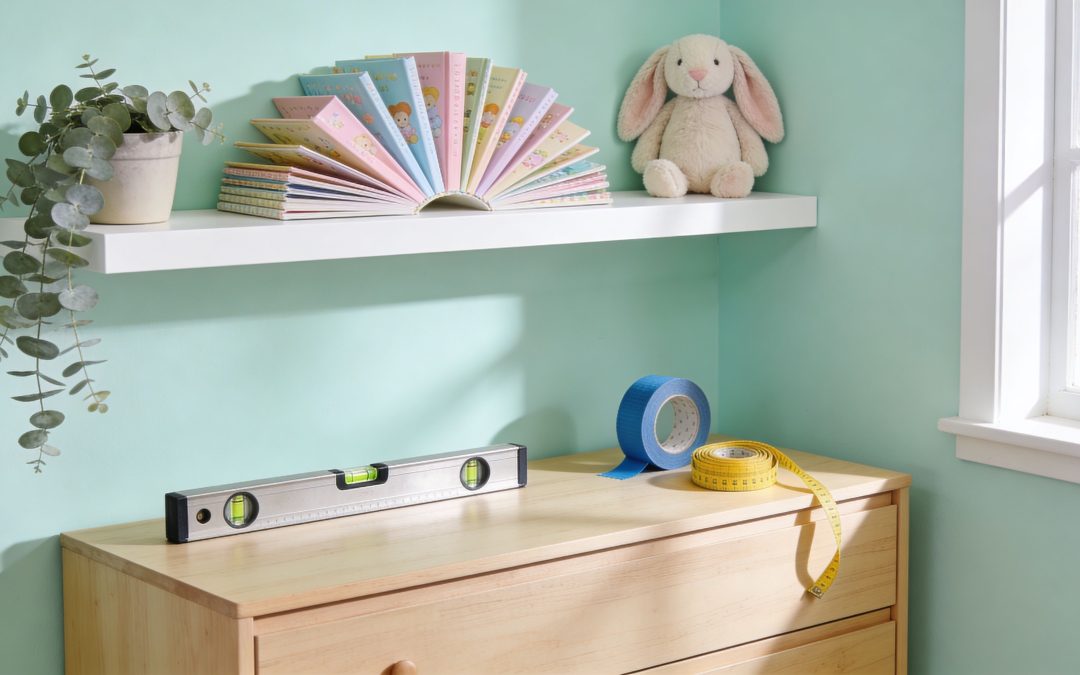
That is where wall shelves for nursery spaces earn their keep. Done properly, they free up floor space, keep everyday items close, and give the room some warmth before the cot, books, and soft toys fully move in. Done badly, they become cluttered, badly placed, or worse, unsafe.
For Australian parents, there is another layer to get right. You are often working with compact rooms, plasterboard walls, timber studs, and a real need to balance style with safety compliance. The good news is that a well-planned shelf setup is manageable, even if you are not a seasoned DIY person.
Creating Your Dream Nursery One Shelf at a Time
You get the cot position sorted, stand back, and notice the wall above the dresser is still doing no work at all. In a nursery, that empty wall is usually your best storage opportunity.
Wall shelves suit the way many Australian parents set up a nursery. Spare rooms are often compact, apartment bedrooms need to stay easy to move through, and plenty of homes use plasterboard over timber studs, which affects what you can safely mount and where. Shelves help you store the things you reach for every day without giving up precious floor space for another cabinet or trolley.
They also let the room feel finished early, even before every drawer is organised.
A well-placed shelf can hold books, creams, a small lamp, or the keepsakes people love giving at a baby shower. The trade-off is simple. The higher and lighter the styling, the safer and calmer the room tends to feel. The lower and heavier the shelf load, the more care the installation needs. That balance matters in a nursery more than in almost any other room.
I have found that parents are usually happiest with shelves when each one has a clear job. One ledge above the change area for items adults use. One display shelf well out of reach for framed photos or sentimental pieces. That approach keeps the room practical and stops it turning into a wall of decorations that collect dust.
If you are still settling on the look, browsing inspiring nursery ideas can help you narrow down finishes, colours, and shelf shapes before you buy. It also helps to review real baby registry examples from Australian parents so you can match shelf styling with the products you will use, gift, and store.
For Australian families, shelves also sit inside a bigger safety picture. The room needs to feel soft and personal, but it also needs hardware, finishes, and placement choices that support safe setup and align with the broader AS/NZS mindset many parents already apply to cots, furniture, and nursery products. Get that right, and shelves do more than fill a blank wall. They make the room easier to live in from day one.
Choosing the Perfect Shelves for Your Nursery
Not every shelf belongs in a nursery. Some look lovely online but warp, chip, or feel flimsy once you start loading them with board books and storage baskets.
The best choice usually comes down to three things: Safety, material, and use. Style matters, but it comes after those.
Start with materials that suit Australian homes
If you are buying or building shelves for a nursery, timber quality matters more than many parents expect. For Australian conditions, FSC-certified hardwoods such as Tasmanian Oak are a strong option. A custom shelf built with proper pocket-screw construction can support significant weight. Imported particleboard is far more prone to problems and can warp in humid coastal areas. A low-VOC polyurethane finish also supports compliance with AS/NZS child safety standards, based on the build guidance outlined in this nursery shelving resource.
That does not mean every family needs custom joinery. It means you should be cautious with bargain shelves made from thin engineered board, especially if the nursery gets afternoon sun or seasonal humidity.
Match the shelf type to the job
Different shelf styles do different work. Choosing one without thinking about what will sit on it is where disappointment starts.
A picture ledge is excellent for showing book covers. A bracket shelf is usually the safer choice if you know you want storage tubs or a heavier nappy caddy nearby.
The checklist I would use before buying
Some shelf listings make it hard to tell what you are really getting. This is the shortlist that helps most.
Rounded edges: Sharp corners are a poor fit for a baby’s room, especially once the nursery becomes a toddler room.
Low-VOC finish: Paints and sealants matter in small rooms.
Clear load guidance: If the product page is vague about weight, be cautious.
Solid timber or quality hardwood veneer: Better for durability than very light particleboard.
Mounting hardware worth using: Many included fixings are the first thing I replace.
Style still matters
Nursery shelves are not just storage. They help the room feel settled.
Light oak or ash works well in soft neutral rooms. Painted shelves can tie into wall colour, but I usually prefer timber in nurseries because it ages better as the room changes. A baby room with a cloud theme might later become a toddler book corner. Timber adapts without looking childish.
If you are torn between “prettier” and “stronger”, choose stronger. You can style a sturdy shelf beautifully. You cannot decorate around sagging.
Measure Twice Drill Once Planning Your Shelf Layout
The easiest time to fix a bad shelf decision is before the drill comes out. In a nursery, a layout can look fine on paper and still feel wrong once the cot, chair, and change table are in the room.
Painter’s tape helps you test the plan at full size. Mark the shelf width and depth on the wall, then mark the main furniture too if it has not been delivered yet. I do this every time because it catches problems early. A shelf that seems centred can end up crowding the glider, clipping the visual line of the dresser, or sitting awkwardly once the mattress height changes.
Plan for the room your baby will grow into
A newborn cannot reach a shelf. A toddler can drag a toy over, climb, and surprise you in seconds. That is why shelf placement needs to work for both stages.
As a practical rule, keep shelves well clear of the cot and out of a child’s climbing zone. Product safety in Australia is handled through standards and mandatory requirements for specific nursery items, and suppliers are expected to provide safe installation guidance. If a shelf is intended to hold anything with real weight, place it where an adult can use it comfortably without creating a temptation above the cot, change table, or a piece of furniture that can be climbed.
In many Australian homes, that means checking more than just eye level. Older weatherboards can have uneven walls. Brick veneer homes often limit where fixings make sense. Newer builds with plasterboard can make a shelf look easy to place until stud locations force a different spacing.
Tape first, then test the room properly
Stand in the nursery and look at the taped layout from the places you will use every day.
From the doorway: Does the wall feel settled, or does one side look heavy?
From the change table: Can you reach the top shelf without stretching while holding a baby?
From the nursing chair: Is the shelf edge or bracket sitting where your head or shoulder might end up?
From cot height: Is anything positioned above the sleep space that should be moved elsewhere?
This step matters more than people expect. A shelf over a dresser often works well because the furniture below visually anchors it. A floating shelf on a blank wall can also work, but only if it does not look stranded halfway up the room.
Layouts that usually work
One longer shelf above a dresser is often the easiest option to live with. It gives you display space without scattering visual clutter around the room.
Two shorter shelves can suit a narrow wall, especially if there is a window, a wardrobe return, or a tall chest changing the sightlines. Keep the spacing intentional. If the gap looks accidental, the whole wall feels unsettled.
Front-facing book ledges are useful in nurseries and early toddler rooms, but placement matters. Low shelves can support independent book access. They also need more thought in homes where older siblings are likely to climb, pull, or treat them like a ladder.
Leave space for what comes next
Nurseries fill up fast. Gifts, books, keepsakes, wipes, creams, and soft toys all need a home, and your baby shower list often adds pieces at different times rather than all at once. Leave enough blank wall that you can adjust after the room starts being used.
That flexibility is especially helpful if you are adding shelves to your EasyRegistry list. You might begin with one well-placed shelf, then add a second matching piece later once you know whether the room needs more books, more storage, or less visual fuss.
A taped outline costs a few minutes. Patching bad holes and living with a poor layout costs much more.
A Practical Guide to Safe Shelf Installation
A good nursery shelf should feel boringly secure. No wobble, no creak, no quiet doubt every time you put a stack of books on it.
In many Australian homes, you are working with plasterboard over timber framing. That makes the stud finder your most important tool. A spirit level is close behind.
The rule that matters most
For a safe load capacity, brackets need to be fixed directly into timber studs using 75mm galvanised wood screws. Drywall anchors alone are a weak point. They can fail under typical loads, and they often fail under levering forces. When the bracket hits two studs, success rates rise to over 95%, as outlined in this installation guide.
That single point changes almost every installation decision. If a shelf location looks pretty but misses the studs, either change the shelf, change the bracket, or change the plan.
The basic tool kit
You do not need a workshop full of gear, but you do need the right few things.
Electronic stud finder: Essential for finding timber centres behind plasterboard.
Spirit level: A short torpedo level works, but a longer one is easier for multiple shelves.
Drill and drill bits: For pilot holes and driving screws cleanly.
75mm galvanised wood screws: For fixing into timber studs.
Pencil and painter’s tape: For marking without guesswork.
Heavy-duty steel bracket: Aim for proper strength, not decorative hardware first.
A straightforward installation sequence
Mark the studs
Run the stud finder slowly across the wall and mark both edges of each stud, then mark the centre. In many homes, studs are spaced at regular intervals, but do not assume. Check them.
Be careful around switches and power points. Avoid drilling near them.
Set the bracket position
Hold the bracket where it will sit and use a level to make sure it is true. Mark the screw holes only after the bracket is level.
If you are installing more than one shelf, mark the top line for all of them first. That helps you catch alignment issues before drilling starts.
Drill pilot holes
Pilot holes make the work cleaner and reduce the risk of splitting timber. They also help the screws bite properly instead of wandering.
Drive the screws in firmly, but do not over-tighten to the point that the bracket twists or the timber compresses unevenly.
Here is a useful visual walkthrough before you start the drilling stage:
Mount the shelf and test it
Once the bracket is fixed, slide or attach the shelf according to its design. Then test it before styling.
Use a controlled load test, not a dramatic yank. Press down gently, check for movement, and make sure the shelf stays level.
Common mistakes I would avoid
Some mistakes show up again and again with wall shelves for nursery rooms.
Relying on anchors only: Fine for very light décor in some rooms. Not what I would trust for nursery storage.
Ignoring wall type: Plasterboard over brick veneer behaves differently from straight stud walls.
Installing above the cot: Even a perfectly installed shelf does not belong there.
Using flimsy included hardware: Many packaged screws are not what I would use for a child’s room.
Skipping the load test: Better to discover a problem before the books and keepsakes go up.
When to call in help
If your wall construction is unclear, the bracket span does not line up with studs, or the shelf is especially heavy, a handyman or carpenter is worth it. Nursery shelving is not the place for a “good enough” install.
In a nursery, neat holes matter less than solid fixing. You can repaint a wall. You cannot negotiate with gravity.
Styling Your Nursery Shelves from Practical to Personal
Once the shelf is secure, the room starts to feel real. This is the part where function and sentiment can sit side by side.
A nursery shelf should not be styled like a display in a shop. It needs to work on a tired Tuesday night, not just in a photo. That usually means the lower shelf carries the practical load, while the upper one gets the softer touches.
A simple way to style them
On the shelf closest to your change area, keep useful things contained. A small basket for creams, a stack of muslin cloths, and a few board books work well. Closed or soft-sided containers keep the look tidy and stop small items from spreading.
Higher up, add the pieces that make the room feel personal. A framed ultrasound photo, a timber toy, a small ceramic keepsake, or a favourite book from your own childhood all work nicely.
If you need help balancing shape and spacing, this guide on how to decorate shelves in any room gives useful visual ideas that adapt well to nurseries too. For more baby-focused inspiration, the articles at https://blog.easyregistry.com.au/ are handy for seeing how practical nursery choices fit into the bigger setup.
What tends to look best
A few styling habits make shelves feel calm instead of crowded.
Mix heights: Lean a taller book or frame behind smaller items.
Repeat one material: Timber, woven baskets, or soft fabric bins help the arrangement feel intentional.
Leave some empty space: Full shelves rarely look better. They just look busy.
Keep fragile décor high: If it can break or be grabbed later, it belongs out of reach.
What I would skip
Very heavy décor, glass pieces on low shelves, and lots of tiny objects usually create more maintenance than charm. The same goes for styling every shelf edge-to-edge. In a nursery, visual quiet is part of the comfort.
Shelves also do not need to stay the same. The display that starts with a rattle and a birth announcement can later become a row of readers and toy animals. That flexibility is one of the best things about wall shelving.
Adding Nursery Shelves to Your EasyRegistry
Registry decisions feel a lot easier once you separate the nice-to-have items from the pieces you will use every day. Nursery shelves usually land in the second group. They help with storage, they shape the look of the room, and they are the kind of gift many Australian friends and family are happy to contribute to because they can see exactly where it will go.
From our own EasyRegistry trends, nursery organisation is a steady theme on baby shower lists, and shelves are one of the more common ways parents tackle it. That makes sense. A well-chosen shelf is practical from day one, then keeps earning its place as the room changes from newborn setup to toddler space.
Why shelves work well on a registry
Shelves suit registry gifting because they solve a real problem. Guests often want to buy something more lasting than consumables, but still useful. A shelf, picture ledge, or small set of wall-mounted book ledges hits that middle ground nicely.
They also work for different budgets. One guest might purchase a single ledge. A group might chip in for a matching set, or help cover better-quality timber shelving that will last beyond the baby years.
The two registry options that make the most sense
The practical choice is to add the exact shelf you want if you have already settled on the size, finish, and fixing style. That is the best option for parents who have measured the wall, checked stud locations, and know whether they need something light for plasterboard or a sturdier shelf for books and baskets.
The flexible choice is to add a contribution toward nursery shelving or room setup through your baby shower registry at EasyRegistry. I recommend this route if you are still deciding between a ready-made shelf and a custom solution, which is common in Australian homes where wall types, room sizes, and rental rules can change the plan quickly.
That flexibility matters more than many parents expect.
A shelf that looks perfect online may not suit double brick, older lath-and-plaster, or a rental where patching holes later is part of the deal. A registry fund gives you room to buy the right version once the practical details are clear, instead of locking in the wrong product too early.
If you do add a specific shelf, include a short note on the registry with the colour, quantity, or preferred retailer. That small bit of guidance helps guests choose confidently and cuts down the chance of ending up with mismatched pieces you cannot safely install or easily return.
Your Nursery Shelf Questions Answered
A few shelf questions tend to come up once the plan gets real and the drill comes out.
What is the best height for nursery shelves
A sensible guide is to keep shelves in the 120 to 150cm range, provided they are also well clear of the cot and any climbable furniture. Height is not just about reach. It is about how the room will function once your baby becomes mobile.
Are no-drill shelves a good nursery option
For lightweight decoration in some rooms, renters may be tempted. For nursery storage, I would be cautious. Books, baskets, and everyday use put repeated strain on fixings, and this is one area where a proper mounted shelf is usually the safer call.
How do I clean nursery shelves
Keep it simple. Dust with a microfibre cloth, and wipe marks with a soft damp cloth and a mild cleaner. Harsh sprays are unnecessary, especially around baby items.
How do I childproof them as my baby grows
Reassess the room every few months. The shelf might still be secure, but the nearby armchair, toy box, or dresser may suddenly become a climbing aid. Move furniture if needed, keep fragile objects high, and remove anything you would not want pulled down.
How many items should go on each shelf
Less than you think. A shelf that is easy to dust, easy to reach, and easy to glance at during a 2 am nappy change is the one that keeps working. If styling starts to interfere with storage, practicality should win.
A well-chosen nursery shelf does not have to be complicated. It needs safe fixing, sensible placement, and enough restraint that the room still feels restful.
If you’re planning your nursery and want friends and family to contribute in a way that’s useful, thoughtful, and easy to organise, EasyRegistry makes it simple to add specific gifts or cash funds for your shelf project, décor, and other baby essentials in one place.
A guest messages you two weeks before your wedding and asks, “Can I just send a PayPal gift card?” You pause, because it sounds simple, but you are not quite sure what that means in Australia.
That confusion is common. People use PayPal all the time, so it feels like there should be one easy gift card that works like cash for a registry, a wishing well, or a baby fund. In practice, “PayPal gift card” can mean a few very different products, and that is where hosts and guests often get tripped up.
Introduction to Gifting with PayPal in Australia
If you are planning a wedding, baby shower, birthday, or group gift, you probably want one thing from gifting. Less admin. You want guests to understand what to do without needing a follow-up text, a phone call, or a rescue email on the morning of the event.
Many Australians are already leaning towards digital gifting. The Australia Gift Card market was valued at USD 6,548.12 million in 2023 and is projected to reach USD 12,981.04 million by 2032, while 57% of Australians prefer an environmentally friendly digital gift card over plastic options that contribute up to 140 tonnes of waste annually, according to Marketing Mag’s coverage of PayPal Digital Gifts in Australia.
Why the wording causes problems
The phrase paypal gift card australia sounds like it should mean “a gift card that lets someone receive money through PayPal”. That is what many hosts think. It is also what many guests hope.
But that is usually not what they are buying.
Instead, a guest may end up with:
A store-specific digital voucher for somewhere like Woolworths or JB Hi-Fi
A top-up product that adds funds to their own PayPal balance after a separate redemption step
A code with special rules that does not behave like a simple cash gift
That mismatch matters most for events. A registry fund is usually meant for something broad, like a honeymoon, pram, cot, house deposit, or general family support. A retailer voucher can be useful, but it is not the same as a flexible contribution.
Tip: If your goal is a cash-style gift for an event, treat “PayPal gift card” as a phrase that needs checking, not a ready-made solution.
What people need
Hosts need a gift flow that is easy to explain. Guests need a payment flow that feels familiar. PayPal helps with the second part. It does not solve the first part.
The key is understanding what type of product a guest is looking at before anyone clicks “buy”. Once you know the difference, the whole process gets much easier and far less awkward.
The Two Types of PayPal Gift Cards Explained
The easiest way to understand this is to stop thinking of PayPal as the gift itself. Think of PayPal as the wallet or checkout method sitting in the middle of other products.
PayPal stays top of mind because it is already widely used. 70% of surveyed Australians used PayPal for online payments between July 2023 and June 2024, and card payments represented 76% of all transactions, as shown in Statista’s Australia PayPal adoption data. That familiarity makes people assume every PayPal-related gift product works the same way. It does not.
Type one retailer e-gift cards
This is the version many people see first.
PayPal’s Digital Gifts setup in Australia lets people buy retailer-specific digital cards. These are not generic PayPal cash cards. They are store vouchers delivered digitally, often for brands people already know.
A simple analogy helps. Picture PayPal as a shopping centre.
You can use your wallet in the shopping centre to buy a gift voucher for one store inside it. That voucher only works with that store. It does not become open cash.
If a guest buys a Woolworths digital card through a PayPal-linked storefront, the recipient gets a Woolworths gift, not a flexible event contribution.
Type two third-party PayPal top-up cards
This second product is where confusion really spikes.
Some third-party sellers offer cards marketed as PayPal gift cards. In reality, these are usually top-up tools. They are designed to add value to a PayPal balance after the user redeems a code on the seller’s own system.
Using the same shopping-centre analogy, this is less like buying a store voucher and more like using a machine inside the centre to add funds to your own wallet.
This difference is key:
A retailer e-gift card points to one merchant
A top-up card points to one person’s PayPal balance
Neither one is the same as a direct event fund contribution built for a registry
Why hosts and guests mix them up
The names are similar. The goals are different.
Guests often think, “I want to send money online, so I’ll buy a PayPal gift card.” Hosts hear “PayPal” and assume it will work like a digital wishing well contribution. Both sides are acting logically. The products are what make it messy.
Here is the simplest rule to remember:
Product
Best description
Usually suited to a registry cash fund
Retailer digital gift card
A voucher for one brand
No
Third-party PayPal top-up card
A code used to load someone’s balance
Not directly
Direct payment into a fund
A contribution made at checkout
Yes
Key takeaway: In Australia, a “PayPal gift card” is usually not a universal cash gift for someone else’s event.
How to Purchase and Redeem PayPal-Linked Vouchers
From a guest’s point of view, there are really two different journeys. One is buying a store voucher through a PayPal-linked gift storefront. The other is buying a top-up code from a third party.
Those journeys look similar at first. They lead to different outcomes.
Buying a retailer digital gift card
This option suits a guest who wants to give a voucher for a specific shop or brand.
A typical process looks like this:
Find the digital gift storefront Guests usually start on a PayPal-linked marketplace such as the Australia Digital Gifts storefront.
Choose the retailer They pick a participating brand, such as a major retailer, entertainment provider, or everyday shopping option.
Select the amount and enter recipient details The guest chooses the value, adds the recipient’s name or email if required, and often includes a short message.
Pay using PayPal at checkout PayPal is the payment method here. It is not the thing being gifted.
Receive the code by email The voucher is then sent digitally, usually as a code or gift message.
Recipient redeems with that retailer The recipient follows the retailer’s rules for using it online, in app, or sometimes in store.
This is clean and fast when the host wants a retailer gift. It gets awkward when the host expected a flexible cash contribution instead.
Buying a third-party PayPal top-up product
This option works differently. It is not redeemed on PayPal itself.
According to the product details at VidaPlayer’s PayPal worldwide prepaid card listing, third-party top-up cards from platforms like Rewarble are redeemed via a 16-digit code on their specific portal, not on PayPal itself. The process takes under 60 seconds, moves the value minus a platform fee into the user’s PayPal balance, and is designed to bypass traditional credit card verification hurdles.
A guest using this route would usually do the following:
Buy an AUD-denominated top-up card from the third-party seller
Wait for the delivery email containing the redemption code
Go to the seller’s redemption page, not the PayPal app
Enter the 16-digit code and account details
Complete the transfer so the funds land in the nominated PayPal balance
That sounds simple enough, but notice what has changed. The gift is no longer a direct event contribution. It has become a balance-loading process with an extra step.
The part guests often miss
If someone says, “I bought you a PayPal gift card,” ask one polite question before assuming anything:
Is it a retailer voucher or a top-up code?
That one question prevents most mix-ups.
If you are a guest trying to work out the cleanest payment path for an event, it helps to look at a registry’s payment flow first. A practical overview of that process is available on the EasyRegistry how it works page.
Practical tip: If your goal is to contribute to a honeymoon fund, baby fund, or wishing well, check whether the event page already accepts card or PayPal payments directly before buying any code-based product.
A quick mental checklist before purchase
Use this before you press “buy”:
Question
If the answer is yes
What it means
Does the card name mention a specific retailer?
It is likely a store voucher
Good for shopping, not broad cash gifting
Does redemption happen on a third-party site?
It is likely a top-up tool
Extra step before funds appear
Does the host want money for a fund, not a shop?
A code may be the wrong fit
Direct contribution is usually better
Understanding Key Fees and Redemption Rules
Digital gifting feels frictionless until the fine print shows up. This often leads many guests to accidentally buy the wrong thing with the right intention.
Who is responsible for what
When someone buys a retailer gift through PayPal’s Digital Gifts arrangement, PayPal is acting as the facilitator, not the party taking responsibility for how that retailer handles redemption. Under its agency model with InComm Australia, PayPal Australia Pty Ltd (ABN 93 111 195 389) assumes no liability for retailer listings or redemption issues, which means buyers need to review the retailer’s own terms before purchase, as stated in PayPal Australia Digital Gifts terms and conditions.
In plain English, that means:
If the retailer limits where the card can be used, that is the retailer’s rule
If there are redemption conditions, those sit with the retailer
If there is a problem, the buyer may need to deal with the retailer or provider, not PayPal
The two trade-offs
Each product type solves one problem and creates another.
Retailer e-gift cards are usually straightforward. The trade-off is that the money is locked to one brand.
Third-party top-up cards offer more flexibility after redemption. The trade-off is that service fees can apply and the recipient has to complete an extra step.
That is why a product that looks more “cash-like” can feel less convenient for event gifting.
A simple way to judge the risk
Before buying any PayPal-linked voucher, check three things:
Where redemption happens If the code is redeemed outside PayPal, read that provider’s process carefully.
Whose terms apply Retailer card rules belong to the retailer. Top-up card rules belong to the seller.
What the host wants If they want a flexible contribution, a locked voucher may miss the mark.
For people comparing event payment options more broadly, the EasyRegistry pricing page is a useful benchmark because it makes the payment setup easy to inspect before guests choose how to give.
Rule of thumb: If a gift requires the host to learn a new redemption workflow, it is probably not the simplest option for an event.
Integrating PayPal with Your EasyRegistry Gift Fund
Here is the key shift that removes most of the confusion. Do not ask guests for a “PayPal gift card” if what you really want is money towards a fund.
That phrase sends guests down the wrong path.
A known gap in the market is that people keep searching for ways to use PayPal gift cards with Australian wedding registries, but official PayPal information focuses on retail redemption rather than registry use. It also creates a practical risk because top-up style cards are for account loading, not direct gifting, and some digital cards can revert to the sender if not activated within 30 days, as described in this G2A listing discussing Rewarble PayPal gift card use.
The better wording for hosts
If your registry includes a wishing well, honeymoon fund, nursery fund, or general contribution option, tell guests what to do in direct language.
Good wording sounds like this:
We’re saving for our honeymoon and future home. If you’d like to contribute, please use the secure fund below. You can pay using your preferred card or your own PayPal account at checkout.
Notice what is missing. No mention of gift cards.
That matters because it tells guests to pay through PayPal if they like, not to buy a PayPal product first.
A workflow that avoids confusion
For hosts, the clean workflow looks like this:
Create your fund page with a clear label such as Honeymoon Fund, Baby Essentials Fund, or House Deposit Fund
Add a short explanation so guests know what their contribution supports
Tell guests to contribute directly on the page
Use simple wording that mentions card payment or personal PayPal account access at checkout
Avoid phrases like PayPal voucher, PayPal gift card, or PayPal code
You can also look at examples of how gift-focused registries are structured on the EasyRegistry gift card registry page to get a feel for the wording guests find easiest to follow.
Copy you can paste into your registry
Different events need different tones. These examples keep the instructions clear.
Wedding
We’re lucky to have what we need at home. If you’d like to contribute to our honeymoon fund, please use the secure contribution option below. You can use your preferred payment method, including your own PayPal account.
Baby shower
Your support means so much to us. If you’d like to help with pram, nappies, and baby essentials, please contribute through the fund below using card or PayPal at checkout.
Group gift or milestone birthday
We’re collecting contributions towards one shared gift. Please use the contribution link below rather than sending store vouchers, so everything stays organised in one place.
Best practice: Ask for the outcome you want. “Please contribute to our fund below” is much clearer than “send a PayPal gift card”.
Comparing Better Alternatives for Cash Gifts
Once you stop chasing the idea of a generic paypal gift card australia product, the alternatives become easier to compare. The primary question is not “Can I buy a PayPal gift card?” It is “What is the easiest way for guests to send money without creating admin for the host?”
What to compare
For events, four things matter most:
Ease of use for the guest
Privacy for the host
Tracking and thank-you organisation
Fees and friction
If you want a broader view of digital gifting ideas beyond registries, this guide to best ways to send digital gifts is a helpful companion read because it shows how different gift formats suit different situations.
Cash Gifting Methods Comparison
Method
Ease of Use (Guest)
Privacy (Host)
Tracking & Thank You's
Fees
PayPal.Me link
Familiar for some guests, less clear for others if they do not use PayPal often
Host shares a direct payment endpoint rather than bank details
Manual tracking unless the host keeps a separate list
Varies by payment setup
Direct bank transfer
Straightforward for guests comfortable with online banking
Lower privacy because account details must be shared
Manual to reconcile names, amounts, and messages
Often simple, but depends on bank and setup
Dedicated cash fund on a registry platform
Clear for most guests because the event context sits around the payment
Better privacy because host does not need to circulate banking details
Strongest option for keeping contributions and guest notes in one place
Depends on platform settings
Retailer digital gift card
Easy if the host wants that exact store
Good privacy
Poor fit for cash gifting because value is locked to a merchant
Usually tied to the merchant terms
Third-party PayPal top-up card
More steps because code redemption happens elsewhere
Moderate privacy
Awkward for event tracking because it behaves like an account top-up
Platform fees may apply
Which option fits which situation
A PayPal.Me link can work when the host and guest already know each other well and everyone is comfortable with PayPal. It is quick, but it can feel a bit detached from the event itself.
A bank transfer is practical, especially for family members who prefer banking apps. The drawback is that hosts often end up juggling screenshots, reference notes, and message threads to work out who sent what.
A dedicated registry fund usually gives the neatest experience because the guest sees the occasion, the purpose of the fund, and the payment path in one place. That reduces the need for explanatory texts and follow-up reminders.
The simplest conclusion
For event gifting, people do best when the payment method sits inside a clear event context. That is why a registry fund generally works better than asking guests to figure out codes, vouchers, or separate payment links on their own.
Your Simple and Secure Gifting Strategy for 2026
If you are planning an event, the cleanest strategy is simple. Do not ask guests to send a “PayPal gift card” when what you want is a flexible contribution.
That phrase usually leads to a retailer voucher or a top-up product, not a smooth registry payment. Instead, ask guests to contribute directly to your event fund and let them choose a payment method they already trust, including their own PayPal account where available.
That approach is easier to explain, easier to track, and less likely to create awkward surprises. It also keeps the focus where it belongs, on the celebration.
If you are also planning pre-wedding events and want inspiration for smaller themed presents, this roundup of Hens Party Gift Ideas is a useful extra read.
If you want one link to share, one place to organise gifts, and a smoother experience for guests, explore EasyRegistry. It gives you a simple way to collect gift contributions for weddings, baby showers, birthdays, and group celebrations without the confusion that often comes with trying to use a “PayPal gift card” as a registry solution.