10 Clever Tips for Flawless Weddings on a Budget in 2025
The average Australian wedding can set couples back tens of thousands of dollars, a staggering figure that can feel overwhelming when you're just starting your life together. But what if you could have the celebration you've always imagined for a fraction of the cost? Planning weddings on a budget isn't about compromise or sacrifice; it's about making smart, strategic choices that prioritise what truly matters to you as a couple. It’s about focusing your resources on the elements that will bring you the most joy, while creatively minimising costs elsewhere.
From savvy vendor negotiations to creative DIY projects, there are countless ways to reduce expenses without sacrificing the magic and significance of your special day. To ensure your dream wedding doesn't break the bank, effectively managing your finances from the start is key. Consider utilising a comprehensive event budget planning template to track all expenses, which helps maintain financial clarity and control throughout the entire process.
This guide dives into ten of the most effective, actionable strategies to help you plan a beautiful, memorable wedding that respects your financial goals. We'll cover everything from major cost-cutters like venue selection and guest list management to clever tricks for catering, decor, photography, and entertainment. Forget the idea that a smaller budget means a lesser celebration. Get ready to discover how a little creativity and careful planning can lead to the wedding of your dreams, completely debt-free.
1. Off-Season Wedding Dates
One of the most impactful strategies for planning weddings on a budget is to sidestep the traditional peak season. By choosing a date outside the high-demand period of September to April, you unlock significant savings across nearly every category, from your venue to your photographer. This simple shift in timing leverages the basic economic principle of supply and demand in your favour.
Why Timing is Everything
Venues and vendors have higher overheads and fewer bookings during the cooler months (typically May to August in Australia) or on weekdays. To secure business, they are far more willing to offer substantial discounts and flexible packages. This isn't just a minor price reduction; it can translate into thousands of dollars in savings, freeing up your budget for other priorities.
A Saturday wedding in October is the most expensive day of the year, while a Friday in July could reduce your venue hire cost by 30-50%. Imagine saving $4,000 on your venue simply by choosing a winter date over a spring one. This is a common scenario that makes off-season planning a powerful tool.
Key Insight: The date you choose is the single biggest lever you can pull to control your overall wedding budget. A less popular date means more negotiating power and lower base prices.
Actionable Tips for Off-Season Savings
To maximise the benefits of this approach, consider these practical steps:
- Book in Advance: Secure your preferred off-season date 12-18 months ahead to get the best possible rates before vendors fill their calendars.
- Negotiate with Confidence: When demand is low, vendors are more open to negotiation. Don't hesitate to ask for included extras like a complimentary bar hour, upgraded linens, or a reduced per-head cost.
- Plan for the Weather: If you opt for a winter wedding, ensure your venue has a beautiful indoor ceremony and reception space. Consider purchasing wedding insurance for peace of mind against extreme weather events.
By being flexible with your timing, you can achieve the wedding of your dreams without the premium price tag. For more ideas on how to reduce costs, you can find additional tips to save money on your wedding day.
2. Digital and Hybrid Invitations
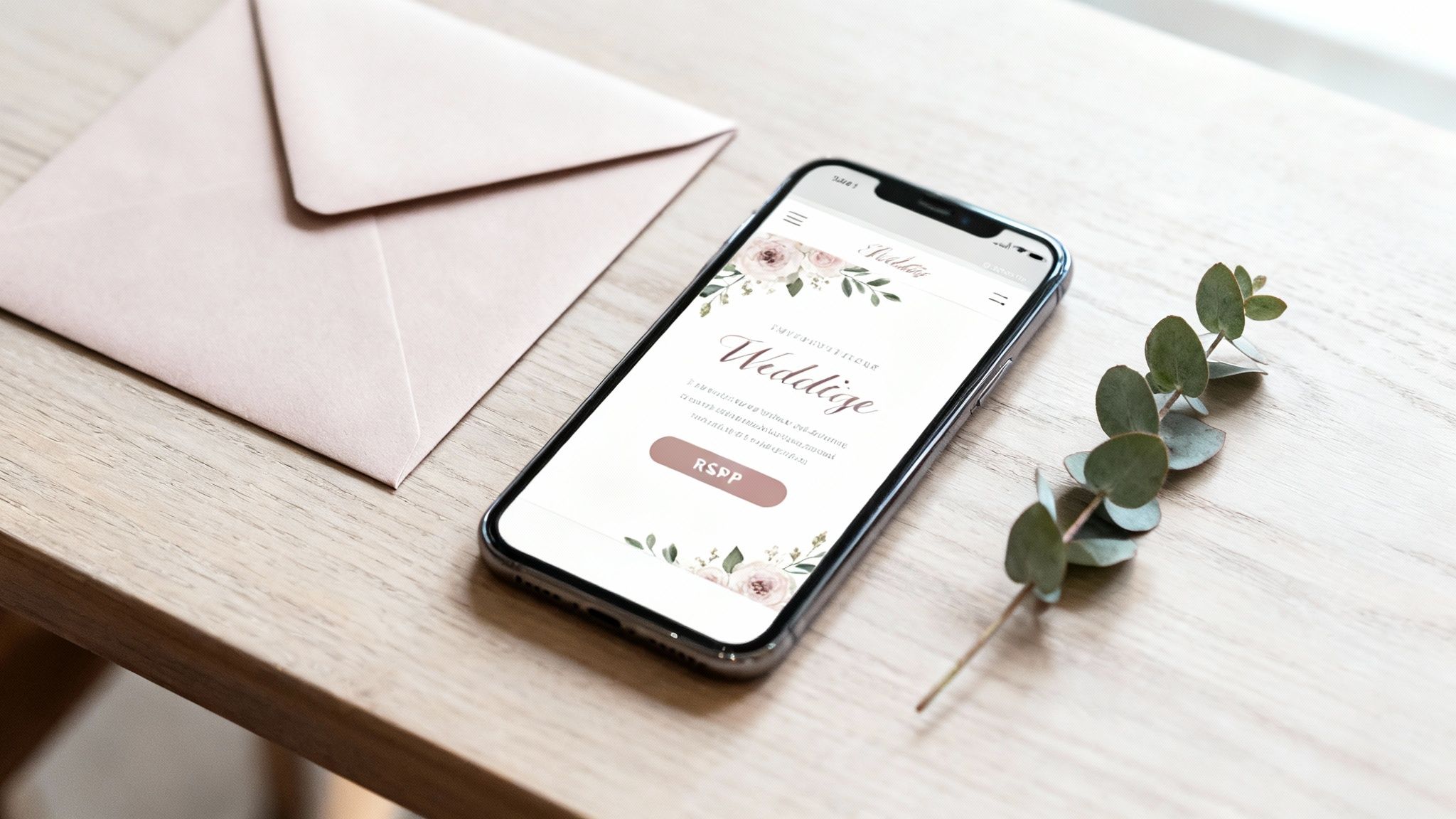
One of the most straightforward ways to cut costs when planning weddings on a budget is to rethink your invitations. By replacing or supplementing traditional paper stationery with digital alternatives, you can eliminate significant expenses related to printing, custom design, and postage while simplifying guest management and communication. This modern approach is not only cost-effective but also eco-friendly and incredibly efficient.
Why Timing is Everything
Going digital can translate to immediate and substantial savings. The cost of bespoke printed invitations, including save-the-dates, RSVP cards, and envelopes, can easily reach $500 to $1,500 or more, depending on your guest count and design complexity. Platforms like Paperless Post or a custom wedding website built on Squarespace can reduce this expense to a fraction of the cost, or even eliminate it entirely.
For example, a couple inviting 100 guests could save over $600 on printing and postage alone. This saved money can then be reallocated to more impactful areas of your wedding, such as catering or entertainment, making it a smart and strategic choice for any budget-conscious couple.
Key Insight: Digital invitations offer more than just cost savings; they provide a centralised hub for guest information, online RSVP tracking, and instant updates, streamlining your planning process.
Actionable Tips for Off-Season Savings
To maximise the benefits of this approach, consider these practical steps:
- Implement a Hybrid Model: Cater to all your guests by sending beautiful, free e-invites to the majority and a small batch of printed invitations to older relatives or those who may not be tech-savvy.
- Use QR Codes: For printed save-the-dates or invitations, include a QR code that links directly to your wedding website. This gives guests easy access to all details, maps, and your online RSVP form.
- Leverage Guest Management Tools: Choose a digital platform that includes built-in guest management features. This allows you to track RSVPs in real time, send automated reminders, and easily communicate any last-minute changes.
3. DIY Decorations and Centerpieces
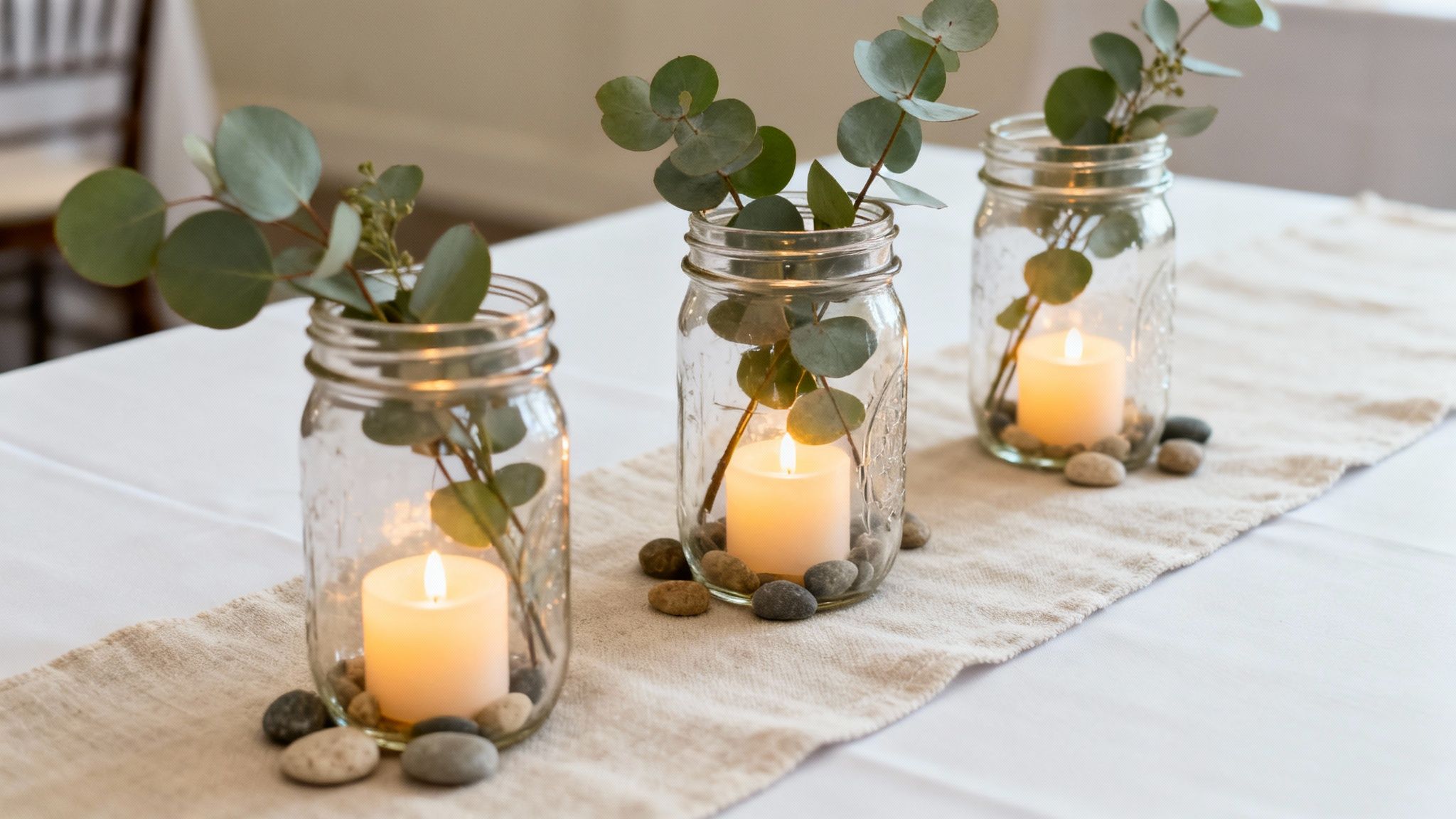
Embracing a do-it-yourself approach to your decorations and centrepieces is a classic and highly effective strategy for planning weddings on a budget. Instead of allocating thousands to professional decorators and florists, you can leverage creativity and craft supplies to design a personalised and beautiful aesthetic that reflects your unique style.
Why Crafting Cuts Costs
The savings from DIY decor are substantial because you are eliminating labour costs, which form a large portion of professional styling fees. Simple, elegant centrepieces like mason jars with LED fairy lights and baby's breath can be assembled for just a few dollars each, compared to the $50-100+ per table quoted by many professionals.
Sourcing your own materials from craft stores, wholesale suppliers, or even nature allows you to control every dollar spent. For example, couples often save over $1,000 on florals alone by purchasing bulk flowers from a market and arranging their own bouquets and centrepieces. This hands-on approach delivers immense value and a deep sense of personal accomplishment.
Key Insight: DIY decorations transform a major wedding expense into a manageable and creative project. Your personal touch becomes a memorable part of the day, not just a line item on an invoice.
Actionable Tips for DIY Success
To ensure your DIY projects look polished and professional, follow these practical steps:
- Start Early and Practise: Begin gathering inspiration and doing trial runs of your key designs, like centrepieces, at least 3-4 months before the wedding. This avoids last-minute stress.
- Enlist a Crafting Crew: Turn your DIY projects into fun pre-wedding events. Host crafting parties with friends and family who have a knack for creativity to help with assembly.
- Source Smart: Buy flowers in bulk from wholesale markets or stores like Costco. Look for decor items at discount shops or online marketplaces well in advance.
- Create a Timeline: Develop a detailed schedule for what needs to be made and when. Create simple instruction sheets for your helpers to ensure consistency across all items.
4. Buffet and Family-Style Dining vs. Plated Service
Catering is often one of the largest expenses in a wedding budget, but rethinking the service style can lead to dramatic savings. Opting for a buffet or family-style dining experience over a traditional multi-course plated service directly reduces costs by minimising the required number of kitchen and waitstaff. This approach creates a more relaxed, communal atmosphere while being kinder to your wallet.
Why Service Style Matters
The primary cost difference between plated meals and other styles lies in labour. A formal plated dinner requires a large team to individually prepare, plate, and serve each course to every guest simultaneously. In contrast, buffets and family-style service, where large platters are placed on tables for guests to share, require significantly fewer staff.
This reduction in labour can save you anywhere from $20 to $30 per person. For a wedding of 100 guests, that’s an immediate saving of $2,000 to $3,000. Additionally, these formats often allow for more cost-effective menu choices, such as a hearty barbecue or Italian feast, which can be 40% cheaper than their plated counterparts.
Key Insight: The way you serve your food is just as important as what you serve. Shifting from individual plates to shared platters is a simple change that cuts down on the single biggest catering cost: staff.
Actionable Tips for Shared Dining Savings
To get the most value from a buffet or family-style meal, consider these practical steps:
- Curate a Simple Menu: Focus on two to three delicious main dishes rather than a wide array of options. This streamlines preparation and reduces food waste and cost.
- Optimise the Buffet Layout: If choosing a buffet, position the station strategically to manage guest flow and prevent long queues. A double-sided setup is often the most efficient.
- Choose Resilient Dishes: Select menu items that hold up well in chafing dishes or on platters, such as slow-cooked meats, pasta bakes, or roasted vegetable medleys.
- Simplify Your Beverage Options: Complement your relaxed dining style with a limited beverage package. Offering a curated selection of beer, wine, and soft drinks is far more budget-friendly than a full open bar.
5. Hire Photography Students or Emerging Professionals
Wedding photography is a significant investment, often consuming a large portion of the budget. A creative and highly effective cost-saving strategy is to look beyond established professionals and consider hiring talented photography students or emerging photographers who are actively building their portfolios. This approach allows you to secure quality memories of your day for a fraction of the standard cost.
Why Timing is Everything
Newer photographers are eager to gain experience and build a strong portfolio to attract future clients. They often charge significantly lower rates than seasoned professionals, who have higher overheads and established reputations. This isn't about sacrificing quality; it's about finding skilled individuals at an earlier stage in their career who are keen to produce beautiful work.
For example, a student from a local TAFE or university might charge $300-$600 for a full day's coverage, whereas an emerging photographer with a few weddings under their belt might charge $800-$1,200. This presents a massive saving compared to the $3,000+ you would expect to pay for an experienced professional, making it a powerful choice for weddings on a budget.
Key Insight: An emerging photographer's need for portfolio-worthy images aligns perfectly with your need for a budget-friendly service. You get beautiful photos at a lower price point, and they get invaluable experience and content for their business.
Actionable Tips for Off-Season Savings
To ensure you find the right emerging talent and have a successful experience, follow these practical steps:
- Scrutinise Their Portfolio: Thoroughly review their existing work, even if it’s not all wedding-related. Look for a consistent style, good composition, and skilled editing that matches your vision.
- Request a Contract: A professional contract is non-negotiable, regardless of experience level. It should outline deliverables, hours of coverage, payment schedule, and contingency plans for emergencies.
- Schedule a Trial Run: Book an engagement shoot with your chosen photographer. This is a low-stakes way to assess their working style, see how you feel in front of their camera, and ensure you love the final product.
To make an informed decision, it's beneficial to research industry standards. Gaining insight into the market by understanding typical wedding photo costs can help you recognise a good value offer and negotiate with confidence.
6. Venue Versatility and Alternative Spaces
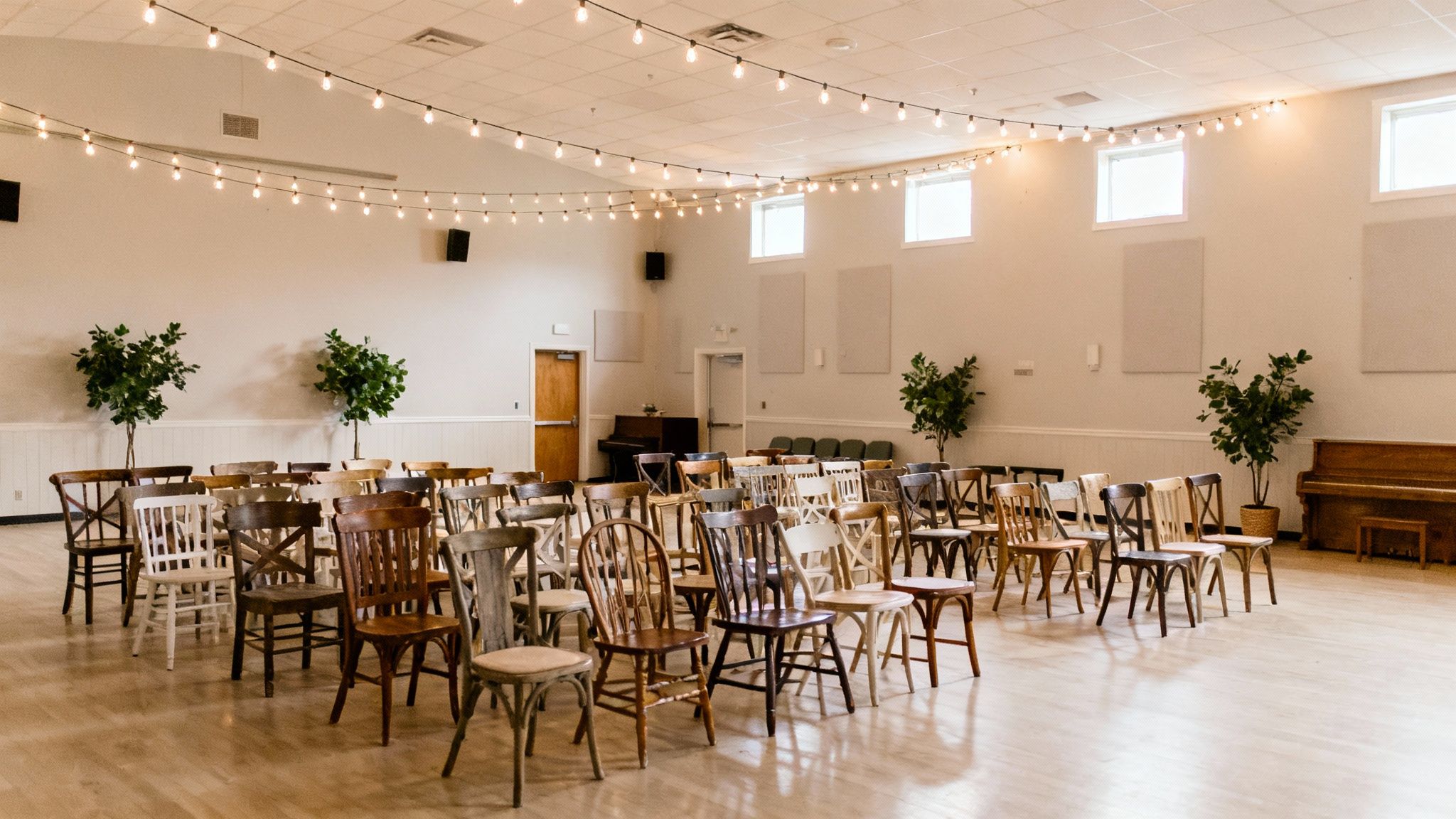
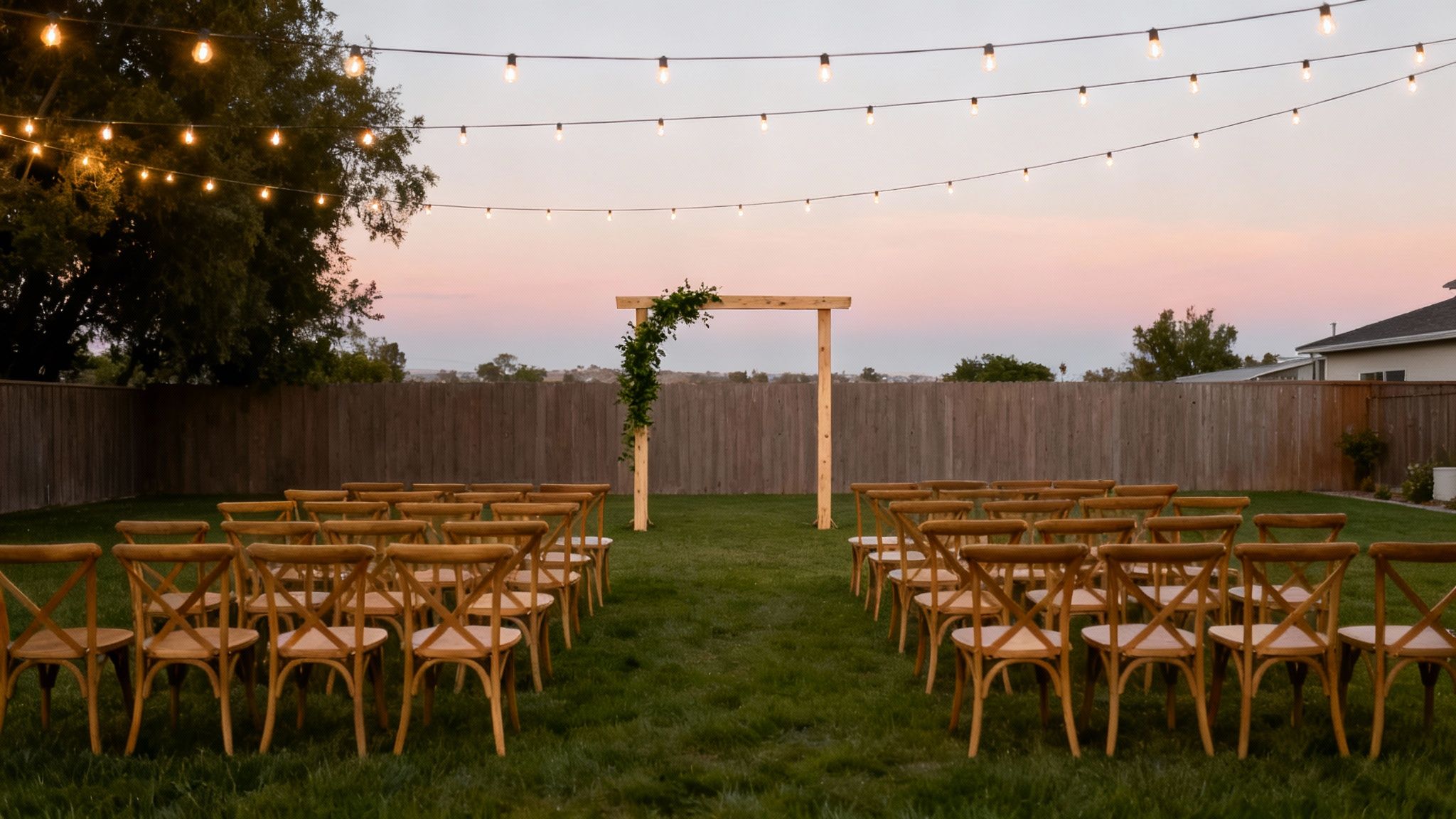
Moving beyond traditional wedding reception centres is a game-changing strategy for planning weddings on a budget. By exploring alternative spaces like community halls, public parks, or even a family backyard, you can drastically reduce one of the biggest expenses in your wedding budget. These non-traditional venues not only offer immense savings but also provide a unique, personalised backdrop for your special day.
Why Location is a Lever
The financial difference between a standard venue and an alternative space is significant. A permit for a public park ceremony might only cost $100-$300, whereas hiring a private garden could be thousands. Similarly, a family backyard eliminates venue hire fees entirely, leaving more funds for catering, entertainment, or your honeymoon.
This approach gives you a "blank canvas" to customise every detail, from the decor to the floor plan, without the restrictions often imposed by all-inclusive venues. While it requires more coordination, the creative freedom and financial rewards are often well worth the effort.
Key Insight: Your venue doesn't have to be a dedicated "wedding venue." Choosing a space for its character, location, or personal meaning can unlock thousands in savings and result in a more memorable celebration.
Actionable Tips for Alternative Venue Savings
To successfully use a non-traditional space, careful planning is essential:
- Logistics First: Before booking, confirm access to essentials like electricity, running water, and restrooms. If these aren't available, you will need to budget for hiring generators and portable toilets.
- Permits and Insurance: Check with your local council about any required permits, noise restrictions, or alcohol licensing. You may also need to arrange public liability insurance, which is often a requirement for using public spaces.
- Hire a Coordinator: Consider hiring a day-of coordinator who has experience with non-traditional venues. They will be invaluable in managing vendor arrivals, setup, and troubleshooting on the day.
Choosing an alternative space requires more hands-on organisation, but it's one of the most effective ways to host a beautiful wedding on a budget. To ensure you cover all your bases, make sure you know the essential wedding venue questions to ask before you commit.
7. Curated Playlist and DIY DJ Services
Music sets the entire mood for your celebration, but professional entertainment can consume a significant portion of your budget. Opting for a do-it-yourself (DIY) music solution allows you to maintain complete creative control while saving hundreds, if not thousands, of dollars. By leveraging streaming services and quality rental equipment, you can create a personalised and memorable soundtrack without the professional DJ price tag.
Why You Can Be Your Own DJ
A professional DJ often costs upwards of $1,200 for a standard reception. In contrast, hiring a high-quality sound system with speakers and a microphone typically ranges from $150 to $400 for a weekend. Paired with a Spotify or Apple Music subscription, this approach delivers a custom-curated atmosphere for a fraction of the cost.
This method isn't just about saving money; it’s about personalisation. You get to hand-pick every song, from the ceremony processional to the last dance, ensuring the music perfectly reflects your relationship and taste. For many couples planning weddings on a budget, this level of control is a huge bonus.
Key Insight: The money you save by forgoing a professional DJ can be reallocated to enhance other guest experiences, such as upgrading the catering, offering a late-night snack, or extending the open bar.
Actionable Tips for a Flawless DIY Playlist
To ensure your DIY music setup runs smoothly, a little preparation goes a long way:
- Organise Your Playlists: Create separate, meticulously organised playlists for each part of the day: guest arrival, ceremony, cocktail hour, dinner, and dancing. Over-plan the length to avoid any silent gaps.
- Rent Quality Equipment: Don’t rely on a small Bluetooth speaker. Invest in a proper PA system rental. Ask the rental company for a system that includes two speakers, a subwoofer for the dance music, and a wireless microphone for speeches.
- Appoint a Music Manager: Designate a reliable friend or family member to act as the informal MC. Their role is to press play at the right times, manage transitions between playlists, and handle any announcements.
- Conduct a Sound Check: Test all equipment at the venue before the guests arrive. Check volume levels, microphone clarity, and ensure your music device connects seamlessly to the system. Have a backup device and offline playlists ready just in case.
8. Limited Guest List and Intimate Gatherings
Perhaps the most direct and effective strategy for managing weddings on a budget is to curate a smaller, more intimate guest list. Each guest represents a cost for catering, seating, stationery, and favours, so reducing the number of attendees has a significant ripple effect across your entire budget. This approach prioritises a high-quality experience with your closest circle over a large-scale event.
Why Timing is Everything
The per-head cost is a primary driver of wedding expenses. A traditional 150-person wedding with a per-head cost of $150 totals $22,500 on catering alone. By contrast, an intimate gathering of 50 people at the same rate costs just $7,500, a staggering saving of $15,000. This is money that can be reallocated to elevate the guest experience, fund a dream honeymoon, or contribute to a home deposit.
Focusing on a smaller group allows you to invest in what truly matters. Instead of a standard buffet for 200, you could host a gourmet multi-course dinner for 40. The focus shifts from quantity to quality, creating a more memorable and personal celebration for everyone involved.
Key Insight: Your guest list is the most powerful budget control tool you have. Every person you add directly increases your costs, while every reduction creates significant savings and opportunities for a more meaningful experience.
Actionable Tips for Off-Season Savings
To navigate guest list decisions gracefully and maximise savings, consider these steps:
- Establish Clear Criteria: Decide on your guest "tiers" early on. This might be immediate family only, or include bridal party and closest friends. Stick to your rules consistently to avoid hurt feelings.
- Communicate Thoughtfully: If you receive questions from those not invited, be honest but kind. Explain that you've chosen to have a very small, intimate wedding to keep it personal and within your budget.
- Plan for Intimacy: A smaller group opens up possibilities for unique venues like a favourite restaurant, a boutique hotel, or a beautiful holiday home. You can also plan more interactive activities that wouldn't be feasible with a large crowd.
- Consider a Wishing Well: With a smaller guest list, a wishing well registry becomes an even more practical option, allowing guests to contribute towards larger goals. You can learn more about how a wishing well registry works.
9. Strategic Vendor Bundling and Package Deals
One of the most effective methods for managing weddings on a budget is to seek out vendors who offer bundled services or all-inclusive packages. By combining multiple necessities like catering, decor, and photography into a single agreement, you leverage volume purchasing to unlock significant discounts and simplify your planning process. This approach minimises the number of contracts you manage and reduces overall costs.
Why Timing is Everything
Vendors, particularly venues, often create comprehensive packages that include catering, tables, chairs, and basic linens because it streamlines their operations. This efficiency translates into savings for you. A venue might offer a package that, when priced out individually, would cost $1,500-$3,000 more. Similarly, a photographer might bundle an engagement shoot and a wedding album into their main package at a rate far cheaper than booking each service separately.
This strategy is about more than just convenience; it’s about maximising value. By committing to a single supplier for multiple services, you become a more valuable client, which gives you greater negotiating power to secure better rates or added perks.
Key Insight: Bundling services transforms multiple small expenses into one larger, more manageable, and often discounted, cost. It’s a powerful tool for simplifying logistics and saving money.
Actionable Tips for Off-Season Savings
To make the most of package deals, approach them with a strategic mindset:
- Request an Itemised Breakdown: Always ask for a detailed price list of what’s included in the bundle. This helps you understand where the value lies and ensures you aren't paying for services you don’t need.
- Negotiate Add-Ons: Use your larger commitment as leverage. Ask if they can include an upgrade, like premium linens or an extra hour of photography coverage, as part of the package deal.
- Compare Against A La Carte: Before signing, get individual quotes from other vendors. Sometimes, bundling isn't the cheapest option, so it’s crucial to do your research to confirm you’re getting a genuine deal.
10. Simplified Menu and Seasonal Ingredients
Your wedding catering is often one of the largest expenses, but it doesn't have to be. By designing your menu around seasonal, locally-sourced ingredients and opting for simpler preparations, you can significantly reduce costs without sacrificing flavour or quality. This approach not only supports local farmers but also ensures your guests enjoy the freshest, most delicious food possible.
Why Timing is Everything
Ingredients that are in season and readily available locally are far less expensive than those that need to be imported or grown in specialised conditions. A caterer's costs are directly tied to ingredient prices, so a menu built on seasonal abundance is a powerful strategy for planning weddings on a budget. This simple change can make a substantial difference to your final bill.
For example, a spring wedding featuring asparagus and fresh local vegetables can be far more cost-effective than demanding those same items for an autumn event. Similarly, a hearty, harvest-themed menu with pumpkin and root vegetables in autumn could reduce your per-head cost by up to 20% compared to a menu requiring out-of-season produce.
Key Insight: Aligning your menu with the seasons is a financially savvy decision that results in a higher-quality dining experience. You pay less for ingredients that are at their peak of flavour and freshness.
Actionable Tips for Seasonal Savings
To maximise the benefits of a seasonal menu, consider these practical steps:
- Consult Your Caterer Early: Discuss seasonal options with your caterer 3-4 months before the wedding. Ask them what will be at its best and most affordable for your chosen date.
- Limit Your Choices: Instead of offering a wide array of options, stick to two or three delicious main courses. This streamlines preparation and reduces food waste and cost.
- Embrace Simpler Styles: Consider more relaxed dining formats like a high-quality BBQ, a gourmet food truck, or a farm-to-table buffet. These often use whole, local ingredients and can save you $15 or more per person.
Top 10 Budget Wedding Strategies Compared
| Option | Implementation Complexity ? | Resource Requirements ? | Expected Outcomes ? | Ideal Use Cases ? | Key Advantages ? |
|---|---|---|---|---|---|
| Off-Season Wedding Dates | Low — choose non-peak dates and negotiate | Low–Medium — flexible scheduling; possible weather contingencies | High savings (20–40%); better venue/vendor availability | Budget-focused couples flexible on season/day | High cost-effectiveness and negotiation leverage ???? |
| Digital and Hybrid Invitations | Low — set up platform and guest list | Very low — internet, platform subscription or service | $300–600 saved; faster RSVPs and instant updates | Tech-savvy guests; couples who value speed and eco options | Efficient, eco-friendly, real-time tracking ??? |
| DIY Decorations and Centerpieces | Medium–High — time and skill intensive | Moderate — craft supplies, volunteers, workspace | $800–2,500 saved; highly personalized aesthetic | Hands-on couples with craft help from friends/family | High customization and significant savings ??? |
| Buffet / Family-Style Dining (vs Plated) | Low–Medium — plan flow and signage | Lower staffing; buffet/serving equipment | 15–25% catering cost reduction; flexible portions | Casual receptions, large groups, varied diets | Cost-efficient and adaptable service style ??? |
| Hire Photography Students / Emerging Pros | Low — sourcing and vetting required | Low cost; may need backup contingency | $500–1,500 saved; variable quality risk | Budget couples comfortable with portfolio-based hires | Affordable talent and flexible packages ?? |
| Venue Versatility & Alternative Spaces | Medium–High — permits, logistics, backup plans | Variable — may require rentals (tents, toilets, power) | $1,000–3,000+ venue savings; unique backdrop | Couples wanting unique, customizable venues | High customization and notable cost savings ??? |
| Curated Playlist & DIY DJ Services | Low–Medium — playlist curation and tech setup | Low — rental speakers, device, designated operator | $800–1,500 saved; risk of lower engagement | Small–medium receptions; music-savvy hosts | Total musical control and low cost ?? |
| Limited Guest List & Intimate Gatherings | Medium — set and manage guest criteria | Low — fewer seats, catering, invitations | $3,000–8,000+ saved; more intimate experience | Couples prioritizing intimacy and budget | Largest per-dollar savings; meaningful experience ???? |
| Strategic Vendor Bundling & Packages | Medium — negotiate and compare itemized quotes | Moderate — fewer vendor relationships to manage | 10–20% savings; simplified logistics | Couples wanting streamlined planning and bundled services | Simplified management and bundled discounts ??? |
| Simplified Menu & Seasonal Ingredients | Low–Medium — coordinate with caterer on seasonality | Low — local/seasonal sourcing reduces costs | $10–20 per person saved; fresher, sustainable menu | Couples valuing freshness, sustainability, lower food costs | Cost-effective, sustainable, better flavor ??? |
Bringing It All Together for Your Perfect, Budget-Friendly Day
Navigating the world of wedding planning can often feel like a tightrope walk between your dream celebration and your financial reality. As we've explored, creating unforgettable weddings on a budget isn't about sacrifice; it's about making strategic, creative, and intentional choices that reflect who you are as a couple. The journey to your special day should be filled with excitement, not financial stress.
By embracing the strategies detailed in this guide, you are now equipped with a powerful toolkit to craft a celebration that is both beautiful and affordable. The key is to shift your perspective from what you can't have to what you can create. Instead of a lavish, multi-course plated dinner, you have the opportunity to host a vibrant, communal feast with a family-style service. In place of expensive, imported floral arrangements, you can design unique, heartfelt DIY centrepieces that tell a story.
Your Roadmap to a Budget-Savvy Celebration
Let's distill the core principles we've covered into a clear action plan. These are the foundational pillars that will support your entire budget-friendly wedding strategy:
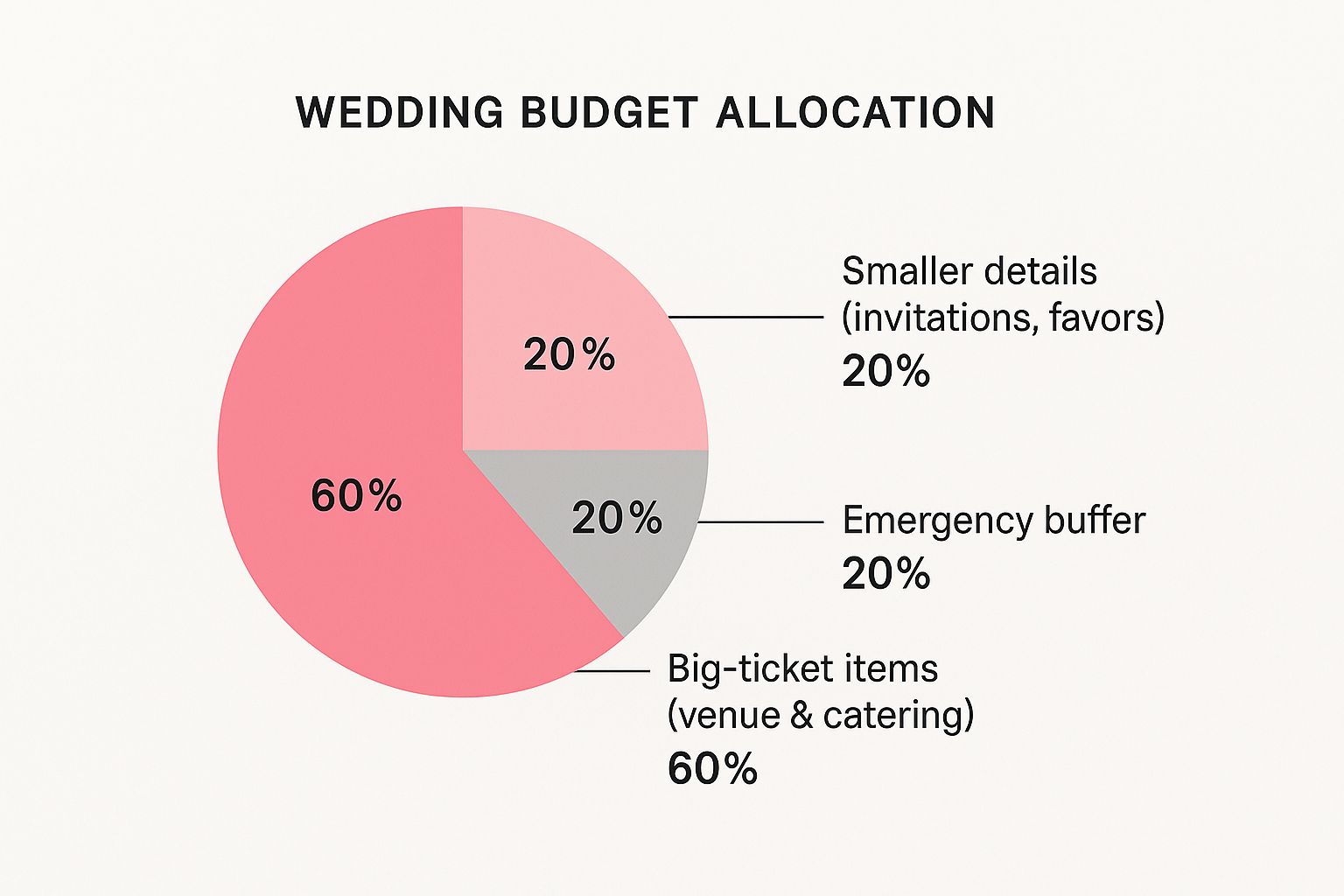
- Prioritise Ruthlessly: Before you book a single vendor, sit down with your partner and define your top three non-negotiables. Is it the photography? The food? The atmosphere? Allocating your budget to what truly matters most to you ensures that your spending has the maximum impact on your experience. Everything else becomes a flexible detail.
- Embrace Creative Flexibility: The most significant savings are found in flexibility. Being open to an off-season date, a Friday or Sunday wedding, or a non-traditional venue like a community hall or a beautiful park can slash your biggest expense right from the start. This mindset extends to every decision, from your guest list to your menu.
- Leverage Your Community (and Your Skills): Your wedding is a celebration of community, so don't be afraid to lean into it. Talented friends and family may be thrilled to help with baking, decorating, or creating a music playlist. Likewise, mastering a few simple DIY projects not only saves money but also infuses your day with a deeply personal touch that guests will remember and appreciate.
Key Takeaway: A budget-friendly wedding is not a "lesser" wedding. It is a smarter, more personalised celebration that prioritises the experience of love and connection over lavish expenditure.
The Modern Approach to Wedding Gifting
Beyond trimming costs, modern tools can fundamentally change the financial dynamic of your wedding. Traditional gift registries, while well-intentioned, often result in couples receiving items they don't need. This is where a contemporary approach can make a monumental difference for couples planning weddings on a budget.
By using a flexible registry service, you empower your guests to contribute in ways that are genuinely helpful. Instead of another toaster or set of towels, their generosity can be channelled towards your honeymoon fund, a deposit on your first home, or even directly towards a specific wedding cost, like the photographer or the catering bill. This transforms gift-giving from a simple transaction into a collaborative effort to help you build your future together. It’s a practical, meaningful, and incredibly effective way to alleviate financial pressure without compromising on your dream day. Ultimately, your wedding is a single, beautiful day, but the support you receive can set you up for a lifetime of happiness.
Ready to take control of your wedding finances and make gift-giving meaningful? Create a flexible and free cash fund or wishing well with EasyRegistry. Our platform helps you coordinate contributions for your honeymoon, home deposit, or any other goal, making it simple for guests to give a gift that truly matters. Get started today at EasyRegistry and build the foundation for your future together.