So, you're engaged. Congratulations! It’s one of the most exciting times in your life, but it can also feel a little… overwhelming. Where do you even begin? Before you get lost in a sea of Pinterest boards and venue brochures, let's take a deep breath and start with what really matters: the two of you.
The secret to sane, successful wedding planning isn't about ticking off a million tasks at once. It's about building a solid foundation first. Get these initial big-picture decisions right, and everything else will fall into place much more easily.
Your Wedding Planning Journey Starts Here
Getting engaged is a whirlwind, and it’s tempting to jump straight into the fun stuff like cake tasting and dress shopping. But hold on for just a moment. The very first (and most important) phase of planning is all about sitting down together and dreaming up your perfect day.
What does it feel like? Are you picturing a huge party with everyone you know, dancing the night away? Or is it more of an intimate, relaxed dinner with your absolute nearest and dearest? Maybe it’s a rustic country vibe or a sleek, modern city affair. There are no right or wrong answers, but getting on the same page now will save you a world of headaches down the track.
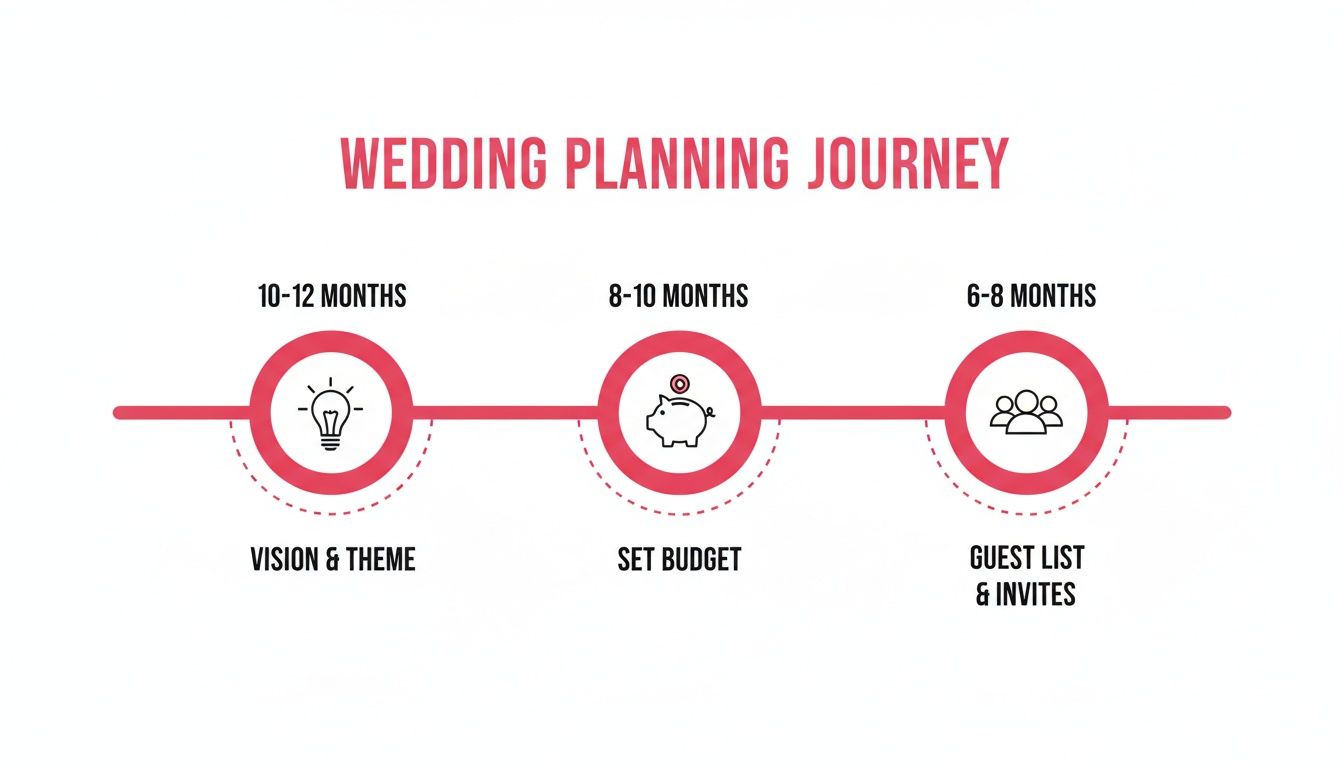
As you can see, these first three pillars—your vision, your budget, and your guest list—are completely intertwined. You can’t really decide on one without considering the others.
Setting Your Priorities Together
Before you even think about a budget spreadsheet, have a chat about your non-negotiables. What are the top three things that are most important to each of you?
Seriously, try it. One of you might be all about the food and an amazing live band, while the other’s top priority is capturing every moment with a brilliant photographer. Knowing this from the get-go is a game-changer.
By deciding on your top priorities from the outset, you create a framework for your budget. This clarity helps you allocate funds effectively, ensuring you spend money on the aspects that truly matter to you both, rather than feeling pressured by tradition or trends.
To get the ball rolling, here are the absolute first things you need to tackle.
Wedding Planning Quick Start Checklist
This table summarises the essential first steps for planning your wedding, helping you prioritise key decisions from the beginning.
Action Item
Key Consideration
Recommended Timeline
Discuss Your Vision
What’s the overall vibe? Big party or intimate gathering? Formal or casual?
12+ Months Out
Set a Realistic Budget
Figure out your total spend and who is contributing.
12+ Months Out
Draft a Guest List
Create your 'A-list' and 'B-list'. This is the biggest budget driver.
11-12 Months Out
Pick a Date Range
Choose a season or a few potential weekends.
11-12 Months Out
Research & Book Venue
Your venue often dictates the date and style. Book this first!
10-12 Months Out
This simple checklist isn't about finalising every detail; it's about creating a master plan that gives your planning direction and purpose from day one.
Embracing a Modern Approach
Let’s be honest, the idea of a "traditional" wedding has changed a lot. In Australia, with the average age for getting married now in the early thirties, many couples are coming to the table with established homes, careers, and financial goals.
This means you have complete freedom to throw out the rulebook and design a day that’s authentically you. This could look like:
Opting for a mid-week wedding: Venues and key vendors can be significantly cheaper from Monday to Thursday.
Focusing on guest experience: Maybe you'd rather spend money on incredible food and an open bar than on elaborate floral installations.
Creating a flexible gift registry: Moving beyond traditional homewares to include cash funds for a honeymoon, a house deposit, or even a puppy fund through a service like EasyRegistry.
Ultimately, knowing how to plan a wedding isn’t about following a rigid script. It's about communication, compromise, and creating a process that feels right for your relationship. Start here, with these foundational steps, and remember to have some fun along the way. This is supposed to be enjoyable, after all
Drawing Up Your Wedding Budget and Guest List
Alright, you’ve got the vision. Now comes the part that grounds your wedding dreams in reality: the money and the people. Your budget and guest list are completely intertwined—every extra person you invite adds to the cost, especially when it comes to the venue and catering. Getting these two sorted out early is honestly the best thing you can do to keep the planning process stress-free.
The money talk can feel a bit awkward, but it's a conversation you need to have. Figure out what you can realistically spend by looking at your savings, talking about any potential family contributions, and deciding what you're both comfortable allocating to this one big day. Being open and honest right from the start will save you from some major headaches down the track.
It’s also wise to be realistic about how costs can add up. The average Aussie wedding now costs around $35,315. Interestingly, most couples kick off with a budget of about $27,455 and end up stretching it by nearly 28.5%. This "budget creep" is a real thing, so do yourselves a favour and build a 10-15% contingency fund into your numbers from day one. To get a better feel for current trends, you can explore some great Australian wedding industry insights on Easy Weddings.
Crafting a Realistic Financial Plan
Forget scribbling notes on a napkin—a detailed spreadsheet will be your best mate here. A shared digital document lets you both track every single dollar in real-time. This isn’t just about listing expenses; it's about consciously deciding where your money is going and what truly matters to you both.
Your biggest costs will almost always be the venue and catering, which can easily eat up 40-50% of your total budget.
Here’s a rough guide to help you get started with allocations:
Venue, Food & Drinks: 45%
Photography & Videography: 15%
Attire & Rings: 10%
Entertainment (Band/DJ): 10%
Flowers & Décor: 10%
Celebrant, Stationery & Other Bits: 10%
Of course, this is just a starting point. If you’re both huge music lovers, you might decide to splurge on an amazing band and find ways to be more creative (and thrifty) with your floral arrangements. For some brilliant ideas, have a look at these 6 amazing tips to save money on your wedding day.
Navigating the Guest List Dilemma
Figuring out who to invite can feel like solving an emotional Rubik's Cube. It's that tricky intersection where family expectations and financial reality collide, and it causes a lot of grief for many couples. The key is to have a system in place before you even think about writing down names.
The A, B, and C list method is a tried-and-true strategy for a reason. It helps you sort guests into clear categories, which makes those tough decisions much more straightforward if you need to trim the list later.
My biggest piece of advice: Finalise your guest list before you go venue hunting. There’s nothing worse than falling head over heels for a venue that’s too small for your non-negotiables or, conversely, way too big and expensive for the intimate day you had in mind.
The A, B, and C List Strategy
First, brainstorm a master list of absolutely everyone you could possibly invite. Then, sit down together and sort every name into one of three tiers. This simple process brings so much clarity and gives you a practical way to handle any cuts.
Here's how it works:
The A-List: These are your ride-or-dies. Think immediate family (parents, siblings), your bridal party, and your absolute closest friends. You simply can't imagine your day without them.
The B-List: This is for your extended family (aunts, uncles, cousins) and good friends you catch up with regularly. You'd really love for them to be there if the budget and venue allow.
The C-List: This list typically includes colleagues, parents' friends you haven't seen in years, and the optional plus-ones for single guests. If you need to cut numbers to meet your budget, this is where you start.
Using a tiered system like this takes a lot of the emotion out of the equation. By creating these lists as a team, you ensure you're on the same page about your priorities, setting a solid foundation that respects both your relationships and your bank account.
Choosing Your Venue and Key Vendors
Alright, this is where the fun really begins. With your budget and guest list starting to look like a solid plan, it’s time to choose the people and places that will bring your wedding day to life.
Your venue is so much more than just four walls and a roof; it’s the backdrop to every memory and sets the whole vibe for the day. At the same time, your key vendors—think photographer, celebrant, florist—are the creative team you’ll be trusting to get it all right.
Getting these big-ticket items locked in early is absolutely crucial. I’ve seen it time and again: the best venues and suppliers are often snapped up 12 to 18 months in advance, especially for those popular Saturday dates. This part of the process is all about building a team you can rely on, one that gets your style and makes you feel completely at ease.
Finding and Securing Your Perfect Venue
Think of your venue as the canvas for your big day. What kind of feeling are you going for? A relaxed afternoon at a winery? A glamorous city ballroom reception? Or maybe a rustic barn party under the stars? Your choice here will ripple through every other decision, from the food to the dress code.
Before you even think about booking tours, get a shortlist together. Here's what to focus on:
Capacity: Make sure it fits your guest list comfortably. A cavernous hall can feel empty, while a space that’s too tight can feel chaotic and stuffy.
Location and Accessibility: How easy is it for everyone to get there? You’ll want to consider parking, public transport options, and how close it is to accommodation for out-of-towners.
In-house Services: Does the venue handle its own catering and bar staff, or are you expected to bring in your own? This can make a massive difference to your overall budget and workload.
Wet-Weather Plan: This is a non-negotiable in Australia. If any part of your day is outdoors, you need to know their backup plan for rain. And you need to love it just as much as Plan A.
Once you have a few contenders, it’s time for site visits. Going in prepared with the right questions will help you compare apples with apples and avoid any nasty surprises down the track. To make sure you cover all your bases, our guide on essential questions to ask your wedding venue is a lifesaver.
Assembling Your Dream Team of Vendors
After you’ve locked in your venue and set the date, your next job is to book the vendors who can only be in one place at a time. This means your photographer, videographer, celebrant, and any entertainment like a band or DJ should be top of your list. These are the people who will capture the memories and create the atmosphere.
As you start your research, look for vendors whose style genuinely resonates with yours. Spend time scrolling through their portfolios and reading recent reviews from other couples. I always recommend having a quick chat or video call, too—you need to know if your personalities click. You'll be spending the entire day with your photographer, so you want to make sure you actually like them!
Key Takeaway: Never underestimate the power of a good connection. Your vendors should feel less like hired help and more like trusted partners who are genuinely excited for you. That collaborative energy is what takes a wedding from good to absolutely unforgettable.
When it comes to your creative team, finding the right florist is key to bringing your vision to life. A great one will take your colour palette and budget and create something truly beautiful. For some fantastic advice, this guide on how to choose a wedding florist is an excellent place to start.
The Importance of Timing and Contracts
When you're planning a wedding in Australia, timing is everything. While 55% of weddings are still held on a Saturday, more and more couples are choosing Fridays (21%) and even Thursdays (8%) to secure their dream team, often at a better price.
With the average Aussie wedding having 88 guests, competition for the best suppliers on peak dates is fierce. It's why booking well in advance is so important.
Finally, before you sign anything, read every word of the contract. Make sure it clearly spells out exactly what’s included, the payment schedule, and the cancellation policy. A solid contract protects both you and your vendor, ensuring everyone is on the same page from day one.
Navigating Australian Legalities and Logistics
With all the exciting creative decisions taking shape, it’s easy to push the paperwork to the bottom of the list. But trust me, getting the administrative side of your wedding sorted early is the secret to a day that feels effortless. When you nail the legal stuff and the logistics, you’re free to soak up every joyful moment instead of stressing about the behind-the-scenes details.
In Australia, getting married is more than just a beautiful ceremony. There are a few key legal steps to follow to make sure your union is officially recognised. They’re not complicated, but they are time-sensitive, so being organised is a lifesaver.
The Legal Essentials for an Australian Wedding
First things first: the Notice of Intended Marriage (NOIM). This is the big one. It's the official form that kicks off the legal process, and you'll need to lodge it with your authorised celebrant.
The timing on this is strict. You have to lodge the NOIM at least one month before your wedding date, and no more than 18 months out. That one-month waiting period is firm, so my advice is to get this sorted as soon as you've locked in your celebrant.
To fill out the NOIM, you and your partner will need to show your celebrant a few key documents.
Proof of birth: An original birth certificate or a current Australian passport works perfectly.
Proof of identity: A driver's licence or another government-issued photo ID will do the trick.
Evidence of any previous marriages ending: If either of you has been married before, you’ll need to provide the original divorce certificate or the death certificate of your late spouse.
Your celebrant will absolutely guide you through this, but it’s up to you to track down the correct documents. Getting this sorted early on will save you a world of last-minute stress and prevent any heartbreaking delays to your wedding day.
On the day itself, you'll sign three marriage certificates alongside your celebrant and two witnesses (who must be over 18). Afterwards, your celebrant handles the final step: submitting all the paperwork to the Registry of Births, Deaths and Marriages in your state or territory to make it all official.
Mastering Wedding Day Logistics
With the legal side sorted, it's time to think about the flow of information and people. This all begins with your invitations. They don't just ask people to come; they set the tone for your day and give your guests all the info they need to celebrate with you.
Timing your invitations is key. Tradition suggests sending them out six to eight weeks before the wedding. But if you're planning a destination wedding or have a lot of guests travelling from interstate or overseas, it’s a kind gesture to send them three to four months in advance. This gives everyone plenty of time to book flights and sort out accommodation.
Managing RSVPs and Guest Needs
Your invitations need a clear RSVP deadline, usually about four weeks before the big day. This gives you a final headcount to pass on to your caterer and enough breathing room to create a seating plan without any last-minute chaos.
A wedding website can make tracking RSVPs a breeze. Guests can reply online and easily note any dietary needs. I highly recommend keeping all this information in a central spreadsheet—it will become your best friend! And don't be shy about following up with anyone who hasn't replied by the deadline. An accurate headcount is absolutely critical for your budget and finalising arrangements with your venue.
Creating a Modern Gift Registry with EasyRegistry
Let’s be honest, the days of needing a new toaster and a full set of towels are long gone for most couples. Modern weddings are all about celebrating the life you've already started building together, and your gift registry should absolutely reflect that.
Couples are tying the knot a bit later these days, with the median age now hovering in the early 30s. This often means you already have a well-established home by the time you're planning the wedding. So instead of more stuff, many Australian couples are hoping for experiences, contributions towards big-ticket items, or even a little help with a house deposit.
This is exactly where a flexible online registry shines. It steps away from the old-school department store list and gives you a single, elegant place for guests to contribute to the gifts that actually mean something to you.
Designing Your Personalised Registry Page
An online registry is so much more than a shopping list; it’s a little window into your story and your future plans for the people who care about you most. Getting started with EasyRegistry is incredibly simple, so you can focus on the fun part—curating your wish list.
The first thing you’ll want to do is make the page your own. Add a favourite photo of the two of you and write a warm, personal message. This small touch instantly transforms the page from a generic list into a genuine part of your wedding experience. You could briefly explain what you’re saving for, whether it’s your dream honeymoon in Italy or finally upgrading that tired old sofa.
You can see just how EasyRegistry works to create a page that feels completely authentic to you as a couple. That personal connection makes the act of giving so much more meaningful for your guests, too.
Mixing Traditional Gifts with Future Goals
The real beauty of a modern registry is its total flexibility. You're not stuck with just one type of gift. Instead, you can build a blended list that perfectly suits your life, mixing tangible items with your bigger goals. This approach is also fantastic for your guests, as it gives them plenty of choice at different price points.
Here’s a few ideas for how you could structure your list:
Cash Funds: Create funds for specific goals. Think a honeymoon fund, a house deposit fund, or even a "new puppy" fund! You can break it down so guests feel like they're contributing to something tangible, like "Cocktails on the beach in Fiji" or "Our first night's accommodation."
Big-Ticket Items: Eyeing a particular piece of furniture or a new appliance that’s a bit of a splurge? Let guests contribute a portion of the cost. This group-gifting approach makes expensive items feel more accessible.
Traditional Gifts: Of course, if there are specific homewares you still need, add them in! The best part is you can link to any item from any online store, giving you complete freedom.
Experience Gifts: Maybe what you’d really love is a fancy dinner out, a couples' cooking class, or tickets to see your favourite band. These gifts create lasting memories long after the wedding is over.
A well-curated registry tells the story of your future. It's not just about what you need; it's about what you dream of doing together. This makes your guests feel like they are investing in your happiness, not just buying an item off a shelf.
Sharing Your Registry with Guests
Once you're happy with your registry, sharing it is a breeze. You’ll get one clean, easy-to-remember link that you can pop onto your wedding website or a small information card sent with your invitations. This completely avoids any awkwardness and makes the whole process seamless for everyone.
Your guests can simply visit your page, browse your wishes, and make a contribution securely online from anywhere, anytime. It takes the guesswork out of gifting for them and ensures you receive things you’ll genuinely love and use as you start your married life together.
Managing the Final Countdown to Your Wedding
The last few months before your wedding are an absolute whirlwind. All those big-picture decisions you made ages ago are finally crystallising into the little details that will make your day unique. This is when it all starts to feel incredibly real! Staying on top of things now is the secret to walking into your wedding week feeling relaxed, excited, and truly ready to celebrate.
Don't look at this final stretch as one massive, scary to-do list. Instead, think of it as a series of smaller, totally manageable tasks spread over the last eight weeks. By breaking it all down, you can tick things off methodically, confirm every last detail, and tie up any loose ends without the stress. It’s time to switch from planning mode into execution mode.
Finalising Details and Confirming Vendors
With about two months to go, it's all about locking in those final details with your team of vendors. This is when you'll have your final walkthrough at the venue to go over the run sheet, lock in the menu, and finalise the floor plan. You'll also want to touch base with every single one of your suppliers to confirm their arrival times, what they need from you, and any last-minute questions.
A shared spreadsheet that you and your partner can both access is an absolute lifesaver here. You can track every conversation, note when final payments are due, and keep all their contact details in one spot.
Photographer & Videographer: Give them a clear "must-have" shot list and a copy of the day's timeline so they know where to be and when.
DJ or Band: Send over your final playlist. Make sure you include the key songs for your ceremony, first dance, and, just as importantly, your "do not play" list!
Celebrant: Schedule your last meeting to run through the ceremony from start to finish and sign off on all the legal paperwork.
Personal Touches and Wedding Party Prep
As you get closer, the focus shifts to more personal elements. Many couples find this is the perfect time for crafting your wedding vows, which is such a beautiful way to express your commitment. You’ll also be heading to your final dress or suit fittings to make sure everything fits like a glove.
This is also when you'll tackle the seating chart—a task that can feel a bit like a game of Tetris but is so important for a great reception vibe. Once your RSVPs are all in, sit down and group your guests thoughtfully to spark lively conversations. It’s also a great idea to create a simple "day-of" timeline for your wedding party, so they know exactly where they need to be for hair, makeup, photos, and transport.
My best advice? Delegate, delegate, delegate! Your wedding party and family are there to support you. Give them small, specific jobs like collecting the cake, looking after the guest book, or being the contact person for the florist. It frees you up to just be present and soak it all in.
The Final Week Checklist
The last seven days are all about final checks and taking care of yourself. This is not the time to start a new DIY project! Your job is to focus on the last few items and get plenty of rest.
Pack Your Bags: Get your honeymoon luggage ready to go. You should also pack a wedding day emergency kit with things like safety pins, Panadol, bandaids, and a mini sewing kit.
Confirm Final Numbers: Give your venue and caterer the final, confirmed guest headcount. This is usually due about a week out.
Prep Final Payments: Pop any outstanding cash payments into clearly labelled envelopes. Give them to a trusted person (like your best man or a parent) to hand out on the day.
Pamper Yourself: Book in for a manicure, pedicure, or a relaxing massage. Take a moment to breathe and connect with your partner before the big celebration.
Hand Over the Reins: Give your detailed timeline and vendor contact list to your maid of honour, day-of coordinator, or another responsible person. Your work is done. Now, all you have to do is enjoy it.
Your Top Wedding Planning Questions Answered
Even with the best checklist in hand, you're bound to run into a few specific questions along the way. I've been there! Let's clear up some of the most common queries I hear from Australian couples, so you can tackle those final details with total confidence.
What Does a Wedding in Australia Actually Cost?
This is the big one, isn't it? The classic "how long is a piece of string" question. While you'll see figures like the national average of around $35,000 thrown around, the honest answer is that your wedding budget is completely personal. It all comes down to what you prioritise, how many people you invite, and where you choose to celebrate.
The first, most crucial step is to figure out what you can genuinely afford, not what you feel you should spend based on averages. A gorgeous, meaningful wedding can happen at any price point. The secret is to align your budget with what truly matters to you both, whether that's incredible food, a legendary photographer, or that dream venue.
Who is Supposed to Pay for the Wedding?
The old tradition of the bride's family footing the entire bill is well and truly a thing of the past for most modern Australian couples. It’s just not how things are done anymore.
These days, it's far more common for the couple to fund their own wedding, often with some help from both sets of parents. The best thing you can do is have an open, honest chat with your families early on to see if they'd like to contribute. Knowing where you stand from the beginning makes setting a realistic budget so much easier.
Never assume anyone is going to contribute financially. A respectful conversation about money at the start of your planning journey is the best way to avoid awkwardness and make sure everyone feels included and on the same page.
Do We Really Need to Hire a Wedding Planner?
A wedding planner isn't a must-have, but for some couples, they are an absolute godsend. This is especially true if you're juggling busy careers or just feel completely swamped by the sheer number of decisions.
A full-service planner takes care of every single detail, from sourcing vendors to managing the budget. On the other hand, a "day-of" coordinator is perfect for organised couples who just want a professional to step in on the wedding day to make sure everything runs like clockwork.
Think about your budget and how much you want to be involved. If you're a spreadsheet whiz who loves organising, you can definitely plan an incredible wedding yourself. But if the thought of coordinating vendors and creating timelines makes you break out in a cold sweat, a planner is an investment in your own sanity.
Planning your gift registry is one part of the process that should be fun, not stressful. With EasyRegistry, you can create a beautiful, personalised registry that has it all—cash funds, honeymoon experiences, and traditional gifts—all in one easy-to-use place. Gifting becomes simple for your guests and truly meaningful for you. Start your free registry today!
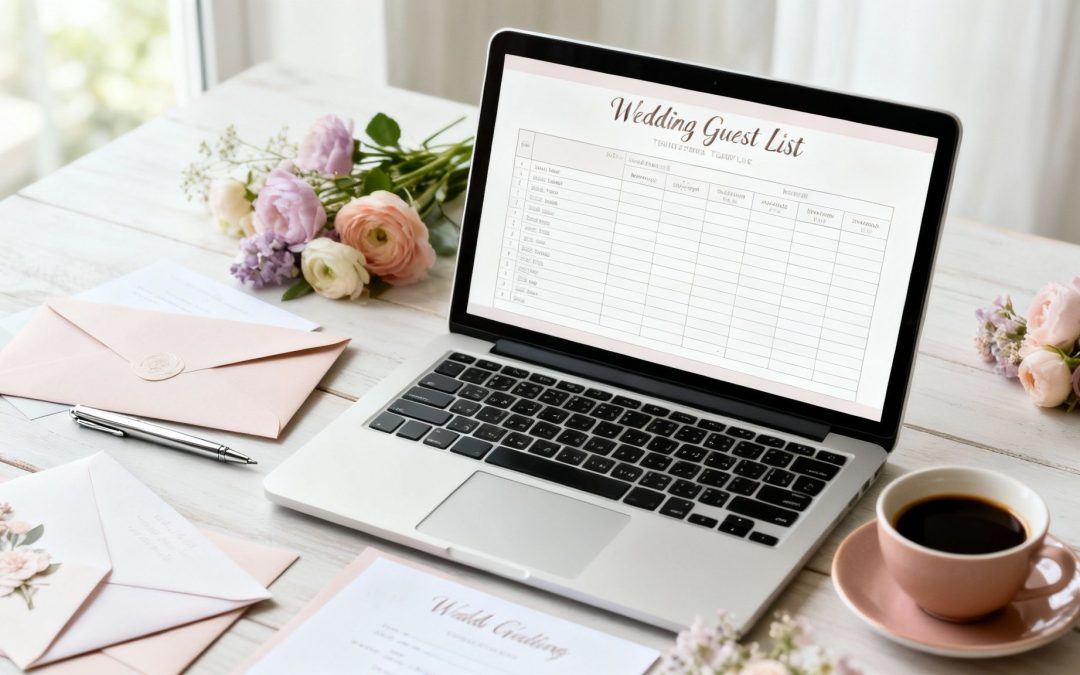
At its heart, a simple wedding guest list template is just a spreadsheet or document that helps you get a handle on everyone you want to invite to your big day. Think of it as your master control centre for names, contact details, RSVPs, and everything in between, turning what can feel like an overwhelming task into something totally manageable.
Building the Foundation of Your Wedding Guest List
Before you even think about opening a spreadsheet, you need a game plan. Your guest list isn't just a list of names; it's the very foundation of your wedding. It has a massive impact on your budget, your choice of venue, and the whole vibe of the day. Honestly, almost every other decision you make will stem from this one.
This is where you and your partner need to sit down and have a really honest chat about what you both actually want. Are you dreaming of a massive party with all your friends and extended family? Or is a smaller, more intimate day with your absolute nearest and dearest more your style?
Key Takeaway: Getting on the same page about the size and feel of your wedding before you start adding names is the single most important step. This shared vision will be your guide and save you from potential disagreements later on.
Navigating Family Expectations
Ah, the family conversation. Talking to your parents about who they think should be invited, especially if they're helping out financially, can feel like walking a tightrope. The key is to set some clear, kind boundaries right from the get-go so you stay in the driver's seat.
Get in early: Bring it up with them before they have a chance to draw up their own dream list. Share your vision and your rough numbers first.
Talk money openly: If your parents are contributing, it's totally fair for them to have some input on the guest list. A popular solution is to give each family a set number of invitations to "spend" as they wish.
Be a team: Make sure you and your partner present a united front. It shows everyone that the final decisions are being made by the two of you, together.
Tackling these conversations early means you can start building your list with confidence. A well-organised guest list also makes other parts of planning so much simpler, like setting up a wedding gift registry for the people you know are definitely coming.
Understanding Modern Wedding Sizes
If it feels like weddings are getting smaller, you're not imagining it. Couples are increasingly prioritising more personal, meaningful experiences, and a smaller guest list is often the best way to achieve that.
In fact, the average Aussie wedding now has around 88 guests. That number has been slowly dropping from 89 in 2024, 92 in 2023, and a pre-COVID high of 98. A big reason for this is the rising cost of living, which is encouraging couples to really think about who they share their day with. It’s always interesting to see how current wedding trends are shaping the way people celebrate.
Creating Your Master Wedding Guest List Template
Alright, you've got a shared vision for your wedding size. Now it's time to turn that vision into a practical, powerful tool. A simple list of names just won’t cut it; the key to staying organised is creating a proper guest list template. Think of this as your wedding command centre—the single source of truth for everything from posting invitations to finalising your seating chart.
Let's build a master spreadsheet that works as hard as you do. This isn't just about who's coming. It’s about creating a system that will save you countless hours and prevent that dreaded last-minute panic.
The Anatomy of a Perfect Guest List
A truly useful guest list goes way beyond just names and addresses. By thinking ahead and adding specific columns from the very beginning, you’ll gather all the crucial information you'll need later on. Trust me, this proactive approach means you won't be scrambling for details in the final, hectic weeks before the wedding.
Imagine this scenario: your caterer needs final numbers, and fast, including a complete list of dietary requirements. If you've been tracking this info in your spreadsheet all along, it's a simple case of filtering a column. If not, you’re suddenly faced with chasing down dozens of guests right when you’re at your busiest.
Here’s a breakdown of the essential columns you should set up in your wedding guest list template. Setting this up properly from the start is a game-changer.
Essential Columns For Your Wedding Guest List Template
This table breaks down the must-have fields for your spreadsheet, explaining why each one is so valuable for streamlined planning.
Column/Field Name
Purpose and Key Benefit
Full Name(s)
Give every single guest their own row, even if they're a couple or family. This makes getting an accurate headcount a breeze later on.
Relationship Tier (A/B/C)
This is your private prioritisation system. A-listers are the non-negotiables, B-listers are invited if space opens up, and C-listers might be for an evening reception or a reserve list.
Plus-One Status
A simple 'Yes/No' or the name of their partner. Decide on your plus-one rule early and stick to it—this column helps you apply it consistently.
Dietary Needs/Allergies
This is an absolute must-have. Capturing this information as RSVPs come in is a massive favour to your future self and your caterer.
Invitation Sent
Use a checkbox or pop in the date to confirm their invitation is in the mail. No more "Did we send that one?" questions.
RSVP Received
Another simple checkbox. It feels so good to tick this one off as the replies roll in!
Attending (Yes/No)
The most important field for locking in your final numbers and costs.
Table Number
This will stay empty for a while, but it's where you'll map out your seating plan. It's incredibly satisfying to fill this in.
Gift Log
A space to jot down a brief description of any gift received. Crucial for thank-yous.
Thank-You Card Sent
The final step! A checkbox to make sure every guest's generosity is properly acknowledged.
By setting these columns up from day one, you’ll find your spreadsheet evolves naturally with your planning journey.
It starts as a brainstorming tool, becomes an RSVP tracker, transforms into a seating chart planner, and finally, serves as your thank-you card checklist. It's a living document that supports you at every stage.
Practical Tips for Managing Your Template
Keeping this master list clean and up-to-date is everything. As you start filling it out, you'll quickly see how all the pieces of information connect. For example, that relationship tier becomes your best friend when an A-lister regretfully declines, helping you decide exactly who to invite from the B-list without any guesswork.
A well-organised gift log is another lifesaver. When you receive a present, immediately note what it is and who sent it. Trying to remember this weeks after the wedding, when you're in a post-celebration haze, is a recipe for stress and potential mix-ups.
This simple habit makes writing thoughtful, personal thank-you notes a genuinely lovely experience, rather than a dreaded chore. It’s what turns your wedding guest list template from just a pre-wedding tool into a genuinely valuable post-wedding asset.
How to Prioritise Guests and Make the Final Cut
Okay, you've emptied your brains and listed everyone from your primary school bestie to your parents' friendly neighbours. Now for the hard part – deciding who actually makes it onto the final invitation list. This is where the practical realities of your budget and venue capacity can feel a bit brutal. It often means making some really tough calls.
The secret is to come at it with a clear head and a solid plan, not just pure emotion. Having a structured approach takes a lot of the personal sting out of it and helps you and your partner work as a team. This way, the final list truly reflects who you both want standing with you on the day.
The A-List and B-List Strategy
Probably the most effective way to wrangle your list is to use a tier system. You can build this right into your guest list spreadsheet by splitting everyone into an A-list and a B-list. It creates a clear, logical path forward and seriously reduces the stress.
The A-List: These are your non-negotiables. We're talking immediate family (parents and siblings), your ride-or-die best friends, and your bridal party. Basically, the people you couldn't imagine getting married without.
The B-List: This is everyone else you’d absolutely love to celebrate with if space and budget weren't an issue. Think cousins, great-aunts, close work friends, or friends you don't get to see as often. They aren't 'second-best' guests; they’re just in the next circle out.
Here’s how it works in practice: send out invitations to everyone on your A-list first. As the RSVPs start to come back and you get a few 'regrets', you can then start sending invites to people on your B-list to fill those spots. This rolling approach lets you fill every seat without accidentally going over your headcount.
Remember, the B-list is a practical tool, not a ranking of how much you value someone. It’s simply a smart way to manage the very real constraints of space and money that almost every couple deals with.
This is more relevant than ever. On average, Australian couples are trimming their dream guest list of 116 down to a more realistic 88. It's a direct result of rising costs, with the average wedding now costing between $35,315 and $36,000. Knowing you're not alone in this can make those tough decisions a little easier. You can also find some amazing tips to save money on your wedding day while still having an incredible celebration.
Handling Tricky Guest List Situations
Even with a perfect A/B system, some tricky scenarios are bound to pop up. Having a few game plans ready will help you navigate these conversations without any awkwardness.
Dealing with Parental Input
Let's be real: your parents might have their own vision for the guest list, especially if they're helping foot the bill. It's only fair to include them in the conversation. A great compromise is to give each set of parents a specific number of invitations they can 'own'. This honours their contribution and makes them feel involved, but it keeps you in control of the overall numbers.
The Plus-One Dilemma
First, know this: you do not have to give every single guest a plus-one. A common, and very fair, rule of thumb is to offer a plus-one to anyone who is married, engaged, or in a serious, long-term relationship.
For your single friends, it’s completely up to you. The most important thing is to decide on your rule and then apply it consistently to everyone. That consistency is key to making sure nobody feels left out or unfairly treated.
RSVPs, Follow-Ups, and Nailing Down Your Final Numbers
This is when it all starts to feel real. Once those invitations are sent, your guest list spreadsheet shifts from a planning tool to your command centre for tracking RSVPs. It's an exciting time as the replies start trickling (or flooding!) in.
Whether you're getting traditional mail-in cards or digital responses through a wedding website, the game plan is the same. Update your spreadsheet the moment you get a reply. Pop a 'Yes' in the 'RSVP Received' column and, most importantly, update their status in the 'Attending' column. Staying on top of this in real-time saves you a massive headache later and gives you a constantly accurate picture of who is coming.
Dealing with the Stragglers
Don't stress – there will always be a handful of people who miss the RSVP deadline. It happens at every single wedding. A polite and gentle nudge is all you need to get an answer. The trick is to be friendly but firm, especially since your caterer and venue will be waiting on your final numbers.
A quick text or email usually does the job perfectly.
Here's a go-to script: "Hi [Guest Name], hope you're well! We're getting so excited for the wedding and are just finalising our numbers for the caterer. Just wanted to check if you think you'll be able to make it? We need to give them the final headcount by [Date], so would be great to know by then. Hope we get to celebrate with you!"
This approach works wonders because it's warm, it explains why you're chasing them (it's for the caterer, not because you're nagging!), and it gives them a new, clear deadline. It takes the pressure off and gets you the answer you need without any awkwardness.
Turning Your Final Count into Action
Once you've collected all your RSVPs, you have the magic number: your final headcount. This one number is the key to unlocking the last major phase of your wedding planning. It's what you’ll hand over to your venue and caterer, which will determine a huge chunk of your final costs.
This is also the perfect time to turn to your B-list. If you had more declines than you expected, you can now send out those invitations. Because you've been so organised, this becomes a smooth and simple process, not a last-minute scramble.
And with that confirmed list, you're ready to tackle the next big puzzle: the seating chart. Knowing exactly who will be in the room lets you start thoughtfully planning tables and making sure everyone has a great time. As you dive into these details, you can also explore the helpful EasyRegistry sharing and tracking features to make managing everything from gifts to guest communication even simpler.
Turning Your Guest List into a Seating Chart
Your guest list has been your planning bible up to this point, but it has one final, crucial job: helping you create the seating chart. This isn't just about assigning seats; it's about engineering the perfect vibe for your reception.
All that information you carefully gathered is about to pay off big time. The columns noting how you know someone, their age group, or even little personal details are your secret weapon for creating tables where conversations spark and guests feel at ease. Once you have your final numbers, tackling the seating plan is the next big puzzle. If you need some extra guidance, there are some great strategies for seating your wedding guests that can make this process a whole lot easier.
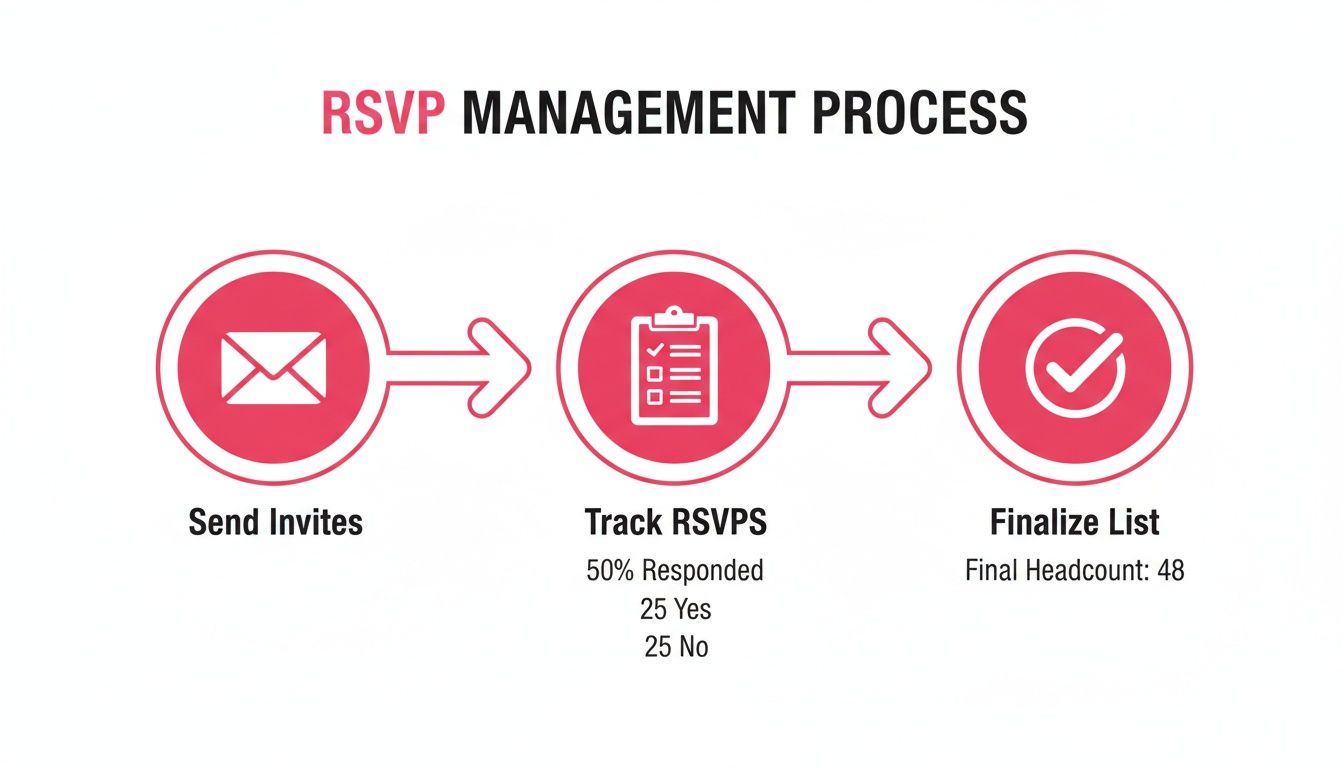
The RSVP management workflow is what gets you to this final, exciting stage.
As you can see, a clear process makes it simple to get from sending invites to having that finalised list, ready for you to work your magic on the seating plan.
Crafting a Thoughtful Seating Arrangement
The ultimate goal here is to make every single guest feel welcome and comfortable. A good place to start is with your 'anchor' tables—think immediate family and the bridal party—placing them in the best spots in the room. From there, it's all about creating mini-communities at each table.
Group by connection: The easiest win is to seat guests with people they already know. It gives them a familiar and comfortable home base for the night.
Mix in some shared interests: Think of yourself as a friendship matchmaker! Mix friends from different parts of your life who you know share similar jobs, hobbies, or are at a similar life stage.
Consider the vibe: Got some super social, outgoing friends? Put them at a table in the middle of the action to help get the party started. Your quieter guests might appreciate a table that’s a bit further from the dance floor and speakers.
A brilliant seating chart doesn't just organise people; it engineers a fantastic party. A little bit of thought here goes a long way and has a huge impact on how much your guests enjoy the celebration.
Your Template's Post-Wedding Life
Don't be so quick to delete that spreadsheet after the last dance! It has one last, very important role to play in your post-wedding to-do list: thank-you cards.
Remember those 'Gift Log' and 'Address' columns? They're now your best friends. With all the details in one place, you can breeze through your list, making sure every thoughtful gift is acknowledged with a personal note sent to the right address. This turns your wedding guest list template from a planning workhorse into a post-wedding lifesaver, making the final task of your wedding journey organised and genuinely enjoyable.
Answering Those Tricky Guest List Questions
Even the most organised spreadsheet can't answer every question that pops up when you're building your guest list. Navigating the etiquette side of things can feel like a minefield, but don't worry—we've got the answers to the most common queries couples have.
How Far Out Should We Finalise Our Guest List?
Getting your timing right is a game-changer. You'll want to have a solid draft of your guest list sorted about 9-12 months before your wedding. This isn't just a rough number; it's the key piece of information you need to choose and book a venue that can actually fit everyone you want to celebrate with.
The list you'll use for sending out invitations needs to be locked in 3-4 months before the big day. As for that final, final headcount for your caterer? They'll usually need it 1-2 weeks before the wedding, once all your RSVPs are in.
Do We Really Have to Give Everyone a Plus-One?
Honestly? No, you don't. Modern wedding etiquette has become much more flexible, which is a huge relief for most couples. A good, practical rule of thumb is to automatically offer a plus-one to any guest who is married, engaged, or in a serious, long-term relationship. It's a simple way to acknowledge and respect their partnership.
When it comes to your single friends, the decision is completely up to you. Often, it just comes down to your budget and how much space you have at the venue. The most important thing here is to be consistent. Decide on a rule for plus-ones and stick to it for everyone to avoid any awkwardness or hurt feelings.
What’s the Best Way to Manage a B-List?
Handling a "B-list" is all about being tactful and timely. As soon as you start getting RSVPs back from your initial "A-list" with a 'no', you can begin sending invitations to guests on your secondary list.
Pro Tip: You don't want anyone to feel like they were a backup choice. To avoid this, make sure their invitation is sent at least 6-8 weeks before the wedding. A good strategy is to send them out in small batches as you get declines, rather than waiting to send them all at once.
How Do We Politely Tell Someone They Aren’t Invited?
First things first: you are under no obligation to announce who isn't invited. If someone puts you on the spot and asks directly, the best strategy is to be kind, but also honest and firm.
A simple, straightforward response works best. You could say something like, "We've had to make some really tough choices to keep our wedding small and stick to our budget." Resist the urge to over-explain or make up excuses. A short, polite answer is all that's needed.
As you navigate these details, remember every decision helps shape the day you're dreaming of. For more creative ideas on planning your celebration, you can find some beautiful wedding photo shoot inspiration.
Once you've nailed down your guest list, let EasyRegistry make the next part of your wedding planning a breeze. We help you create a simple, stylish gift registry your guests will find a joy to use.
That incredible, floaty feeling after getting engaged is amazing. But it’s often followed by a slightly more terrifying thought: "Now we have to plan a whole wedding?!" Trust me, I get it. A solid wedding planning timeline is the best way to turn that overwhelming feeling into an exciting, step-by-step project. It's your roadmap, designed to keep you organised, on budget, and actually enjoying the journey to your big day.
Your Wedding Planning Journey Starts Now
The moment you said "yes!" was pure magic. The next step shouldn't be pure panic. Think of this guide as your experienced companion, a flexible framework built for modern Aussie couples. This isn’t about ticking boxes on a rigid schedule; it’s about creating a logical flow that prevents that last-minute scramble and keeps the focus on celebrating your love.
Before you fall down a Pinterest rabbit hole or book a single vendor, the most important thing you can do is get on the same page with your partner. These initial conversations are the foundation of your entire wedding.
Sit down and have a real chat about:
Your Budget: What can you both realistically afford? Is anyone else contributing? This number is the bedrock of your planning and will shape almost every decision you make. For some great ideas on this, check out these amazing tips to save money on your wedding day.
Your Vision: What’s the vibe? Are you dreaming of a relaxed beach party, a glamorous black-tie affair, or a rustic country feast?
Your Guest List: You don't need exact names yet, but a rough headcount is crucial. It’s the key to finding a venue that can comfortably hold everyone without blowing the budget.
Understanding The Australian Timeline
Here in Australia, we're seeing a trend towards longer engagements. The average wedding planning timeline now sits at around 22 months, which gives couples plenty of breathing room. It's a smart move, especially when you consider that popular venues in cities like Sydney and Melbourne can book out up to two years in advance.
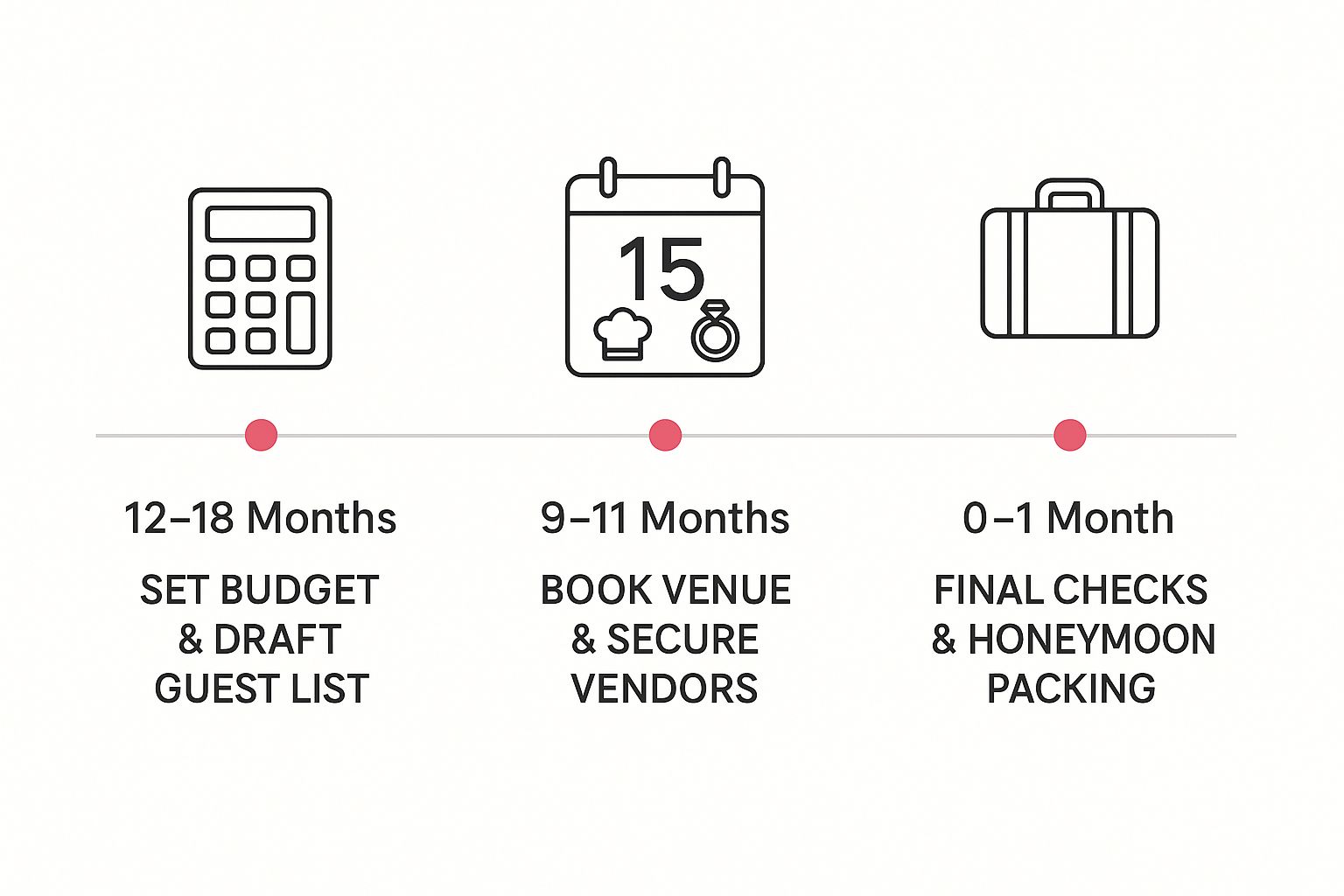
This extra time allows you to research properly, secure your first-choice vendors, and spread out the costs. This infographic gives a great bird's-eye view of how it all breaks down.
As you can see, the early months are all about locking in the big, non-negotiable things. The finer details and personal touches come into play much closer to the date.
Your timeline is personal. If you’re planning in six months instead of eighteen, you’ll simply need to condense these stages. The key is not the length of your engagement, but how effectively you organise the tasks within it.
Why A Timeline Is Your Best Friend
A good timeline is more than just a checklist; it's your sanity-saver. It stops that nagging feeling that you’ve forgotten something critical. By tackling tasks in the right order, you avoid costly mistakes—like booking a caterer before you even know your final guest count. It helps you manage your cash flow by spacing out deposits and payments, which seriously reduces financial stress.
Basically, it's the tool that lets you move from the big-picture dreams to the tiny, meaningful details without losing your mind.
Wedding Timeline At A Glance Key Milestones
Here’s a high-level overview of the major tasks and when you should aim to complete them. Use this as a quick reference to stay on track throughout your planning journey.
Timeframe Before Wedding
Key Tasks to Complete
12+ Months
Set budget, draft guest list, choose your bridal party, book venue, and hire a wedding planner (if using).
10-11 Months
Book photographer, videographer, and celebrant. Start dress shopping.
8-9 Months
Send save-the-dates. Book entertainment (band/DJ) and florist.
6-7 Months
Order invitations. Arrange transport. Start planning honeymoon.
4-5 Months
Book hair and makeup trials. Choose wedding rings. Order the cake.
2-3 Months
Send invitations. Apply for marriage licence. Finalise menu and run sheet.
1 Month
Final dress fitting. Confirm all vendors. Write vows.
1-2 Weeks
Provide final numbers to venue/caterer. Create seating chart. Pack for honeymoon.
The Day Before
Drop off items at venue. Rehearse ceremony. Get a good night's sleep!
This table is just a guide, of course. The most important thing is to make the timeline work for you, your partner, and the unique celebration you're creating.
The First Steps: 12 to 18 Months Out
Alright, you're engaged! With over a year until the big day, it's easy to feel like you have all the time in the world. But trust me, this is the most crucial period for laying a solid foundation for your wedding. Forget the tiny details for now. This is the time for the big, non-negotiable decisions that will shape everything to come.
First things first: the budget. I know, it's not the most romantic chat, but it's the most important one. Sit down together and get real about what you can comfortably spend, and have a gentle conversation with any family members who might be contributing. This number is your North Star for the entire planning process.
Next up, draft a guest list. It doesn’t have to be final, but you need a realistic ballpark figure. Are you picturing an intimate affair with 50 of your closest people, or a massive celebration for 200? This single detail will immediately narrow down your venue search.
Setting Your Wedding Foundations
Once you've got a budget and a rough guest count, the real fun can start. This is when you get to dream about the 'when' and 'where'.
Choosing a date is a mix of heart and head. Think about what season you love, if there are any special anniversaries you'd like to honour, or the overall vibe you're going for. A breezy summer wedding feels completely different (and often costs more) than a cosy winter one. Keep an eye on public holidays too, as they can seriously impact vendor pricing and your guests' ability to travel.
With a couple of potential dates circled on the calendar, you can tackle the biggest piece of the puzzle: your venue. This is the backdrop for your entire day, so it's a big one!
Getting these foundational tasks sorted early is the best thing you can do for your future, less-stressed selves. A clear budget, guest count, and venue create a framework that makes every other decision so much easier.
Booking Your High-Priority Vendors
With your date and venue locked in, it’s time to secure any other suppliers you absolutely can't live without. These are the creative professionals who get snapped up 12-18 months in advance, especially for popular dates.
Think about what matters most to you as a couple. For most, the priority list includes:
Photographer: Their style will literally define how your memories look. If you've been stalking a particular photographer on Instagram for years, reach out now.
Videographer: Just like photographers, the best ones are in high demand and their calendars fill up incredibly fast.
Wedding Planner: If you're bringing a full-service planner on board, this is the time to do it. They’ll be your guide and sanity-saver through this entire journey.
Booking these key players might feel ridiculously early, but it’s one of the smartest things you'll do. It means you get your dream team, not just who’s left.
Creating Your Wedding Vision
Now is also the perfect time to let yourselves dream. Start a Pinterest board, a scrapbook, or a shared folder and just start saving images you love. Don't just stick to weddings—pull inspiration from travel, art, fashion, and interior design. What colours, textures, and moods are you both drawn to?
This isn't about making firm decisions yet; it's about discovering your shared style. You might find you're both drawn to minimalist, clean lines, or maybe you're all about lush, romantic florals. Knowing this makes everything from choosing invitations to flowers a breeze later on.
When you start looking at venues, having this vision really helps. It allows you to ask better, more specific questions. To make sure you don't miss anything crucial, take a look at these essential questions to ask your wedding venue before you sign on the dotted line. It’s a lifesaver for making sure the space can truly bring your vision to life.
Building Your Vendor Team: 9 to 11 Months Out
Okay, deep breath. You've locked in your venue and set the date! This is huge. Your wedding has officially moved from a dream into a real event with a time and a place. Now, the real fun begins: assembling the team of creative professionals who will bring your vision to life.
Think of your vendors as the artists and experts who will execute the day you're imagining. Your photographer freezes the memories in time, your florist paints the scene with colour and life, and your band or DJ sets the entire vibe for the party. Nailing these bookings now means you get your first-choice pros, not just whoever happens to be left.
Prioritising Your Key Creatives
It's time to research and book the vendors who make the biggest splash. These are usually the people who can only be in one place at a time, so their calendars fill up incredibly fast.
You'll want to start your search with these core suppliers:
Celebrant: This person is the heart and soul of your ceremony. You need to find someone you both genuinely connect with, as they’ll be the one guiding you through your vows and setting the tone for the entire day.
Videographer: Just like photographers, the best videographers are in high demand and get booked up well in advance. Figure out what style of film you're after—is it cinematic and dramatic, or more of a candid documentary?—and start reaching out.
Band or DJ: Let's be honest, the right music makes the party. Whether you're picturing a live band that gets Grandma on the dance floor or a DJ spinning your favourite tunes all night, get your entertainment locked in.
Florist and Stylist: Your flowers and décor are what make the space feel like yours. A great florist will take your colour palette and ideas and transform the venue into something truly beautiful and cohesive.
Don't just fall in love with an Instagram feed. Always schedule a video call or, if you can, a coffee catch-up. You'll be spending the entire day with these people, so feeling comfortable and having a good rapport is non-negotiable.
The Quest for the Perfect Attire
This window is also the official green light for wedding attire shopping—a major milestone on any wedding planning timeline! Finding 'the one', whether it’s a gown, a suit, or something completely different, can take a while. Plus, you need to account for production and alteration timelines.
Believe it or not, a custom-made gown can take anywhere from six to nine months just to be made and delivered. And that's before a single stitch of alteration has been done. Starting your search now avoids that last-minute panic and gives you the freedom to explore different designers and boutiques without feeling rushed.
Remember to factor in multiple fittings. Most outfits will need at least two or three rounds of tweaks to get that perfect fit, with the final one often happening just a couple of weeks before the big day.
Tantalise Your Taste Buds
Here's one of the most enjoyable jobs on the list: sorting out your food and cake. With your venue booked, you can now line up tastings with your caterer (if they're not in-house) and your favourite cake designers.
This is your chance to really have fun with it. Sample different dishes, play with flavour combinations, and design a menu that feels personal to you as a couple. Maybe you’ll choose canapés that give a nod to your first date, or a cake flavour you both absolutely love. These tastings are your final quality check before locking in the delicious details.
Give Your Guests a Heads-Up
By now, your guest list should be pretty much set in stone. Once you have that final list of everyone you want to celebrate with, it’s time to get those 'Save the Dates' in the mail.
This isn't just a formality; it's a critical courtesy for your guests. Sending them out nine to eleven months ahead of time gives everyone, especially those who need to travel or book time off work, plenty of notice. It ensures all your favourite people can make the necessary arrangements to be there. This simple step solidifies your guest list and makes everything feel wonderfully real.
Getting Into The Finer Details: 6 To 8 Months Out
With your big-ticket vendors locked in, the wedding planning timeline now shifts from broad strokes to the beautiful, finer details. This is where your day really starts to feel like yours. You’ve built the foundation; now it’s time to add the personality, colour, and character that will make it unforgettable.
During these months, you'll be refining your vision and sorting out the logistics that make everything run smoothly. It’s a genuinely exciting time when all those separate ideas you’ve had start clicking together, forming a clear picture of the celebration ahead.
Nailing Your Wedding Style and Decor
This is the perfect window to get serious about the look and feel of your day. It’s time to move beyond the Pinterest board and make some firm decisions. Sit down with your florist and stylist to finalise your colour palette, pick out specific floral arrangements, and choose the table linens that will bring your venue to life.
Try to think about the entire guest journey, from the moment they arrive until the last song. Do you need signage to point them in the right direction? What will your table centrepieces look like? Making these calls now ensures a cohesive and polished feel throughout the event.
To keep everyone entertained, you might also want to look into some unique wedding entertainment ideas. This could be anything from a classic photo booth with quirky props to a live painter capturing the buzz of the reception.
Sorting Guest Communications and Gifts
It’s officially time to get your wedding invitations organised. Make sure they are ordered and ready to be posted right at the six-month mark. Your invitation suite needs to be crystal clear, with RSVP instructions, a non-negotiable deadline, and easy-to-follow directions to your venue.
This is also the moment to set up your gift registry. Having this sorted before the invitations go out saves you from a hundred "what should we get you?" questions. You can create a seamless experience for everyone by setting up a wedding gift registry that blends traditional gifts with cash funds for bigger things, like your honeymoon.
A well-organised invitation and registry process sets a considerate tone for your wedding. Your guests will really appreciate you making it as easy as possible for them to RSVP and find your gift information.
Locking in Logistics and Legals
Beyond the pretty stuff, this period is crucial for nailing down practicalities. Organise transport for the wedding party and decide if you need to arrange a coach for guests, especially if your ceremony and reception are in different locations. Even just providing details for local taxi services is a helpful touch.
Most importantly, it’s time to tackle the legal paperwork. In Australia, you must lodge a Notice of Intended Marriage (NOIM) with your celebrant at least one month before the wedding, but getting it done now is a very smart move. Ticking this major legal task off your list early saves a world of last-minute stress.
Finally, let's talk about the best part: your honeymoon!
Book It In: Secure your flights and accommodation now to get the best deals and your first pick of options.
Confirm Time Off: Make sure you've both officially booked the necessary leave from work.
Check Your Passports: Double-check that your passports are valid and won’t expire anywhere near your travel dates.
Planning your honeymoon at this stage gives you something incredible to look forward to as the final planning push begins. It’s a wonderful, rewarding task that feels like the treat you’ve definitely earned.
Locking It In: Your 2 to 5-Month Checklist
With the wedding day now feeling very real and getting closer by the minute, your focus will naturally shift from big-picture dreaming to nailing down the finer details. This is the time when all those abstract ideas start to take shape, from the suit you’ll wear to the vows you’ll exchange. The final countdown is officially on!
First things first, let’s talk rings. If you haven't already chosen and bought your wedding bands, now’s the time to make it happen. Whether you’re going for a custom design or picking something straight from the jeweller's case, the process of sourcing, creating, and sizing them can take a few weeks. It’s always best to get this sorted early.
Getting Your Wedding Day Look Just Right
This is the perfect window to book in your hair and makeup trials. Scheduling them now gives you plenty of breathing room to experiment with a few different styles, see how they hold up over several hours, and make sure you vibe with your chosen artists. Don't forget to bring along snaps from your Pinterest board and a photo of your dress or suit to give them a clear picture of your vision.
It’s also prime time for those all-important attire fittings. Your outfit has likely arrived, and the tailoring process is about to begin. You'll probably need two or three appointments to get the fit absolutely perfect, so locking in that first one around the four-month mark keeps everything moving smoothly and avoids any last-minute panic.
A little tip from experience: make sure you bring the exact shoes you'll be wearing on the day to your very first fitting. Heel height makes a huge difference, and it’s the key to getting the length of your dress or trousers spot on.
The Final Headcount and Seating Plan
Your RSVP deadline will probably fall somewhere in this period, which is a huge turning point. As the replies start coming in, you'll need to keep a close eye on your list and be ready to gently chase up anyone who hasn’t responded by the due date.
Getting that final, accurate number of guests is a game-changer. It’s the magic number that dictates a few major things:
Catering Numbers: You’ll need to pass this on to your caterer so they can finalise food orders and staffing for the day.
Venue Setup: Your venue coordinator will use this number to create the floor plan and arrange tables and chairs.
The Seating Chart: Once you know exactly who's coming, you can start tackling the fun (and sometimes tricky) puzzle of the seating chart.
When you get married can play a big role here. In Australia, autumn and spring are by far the most popular seasons for weddings, with autumn hosting 35% of nuptials and spring close behind at 31%. If your wedding is during one of these peak times, your venue and suppliers will be incredibly busy, so giving them your final numbers promptly is even more crucial. You can dive deeper into how the seasons affect the wedding industry in this comprehensive Australian wedding report.
Perfecting the Ceremony and Saying Thanks
With most of the logistics running smoothly, you can circle back to the real heart of the day: the ceremony. Spend some quality time with your celebrant to iron out all the details. This is your chance to choose your readings, put the finishing touches on your vows, and decide on the music for those key moments—like walking down the aisle and signing the register.
Finally, this is a great time to think about buying gifts for your wedding party and parents. It’s such a lovely way to thank them for being by your side through it all. Finding something personal and meaningful now means it’s one less thing on your to-do list during those final, busy weeks before you say "I do."
The Final Month and Finishing Touches
You’ve made it to the home stretch! This final month is all about confirming the details, tying up loose ends, and getting yourself mentally and physically ready for the big day. The heavy lifting is behind you; now it's about final checks and a bit of self-care.
Your first job is to get in touch with all your vendors. I mean everyone. Give them a call or send a quick email to lock in arrival times, final payment due dates, and any other little details they need from you on the day. A quick chat now can prevent a world of stress later.
Creating Your Day-Of Masterplan
Once you have all those timings confirmed, it’s time to build your run sheet. Think of this as the masterplan for your wedding day, mapping out everything from your morning coffee to the final farewell.
Make sure you share this schedule with your wedding party and key suppliers. It’s crucial that everyone, from your maid of honour to the DJ, knows exactly where they need to be and when. As the day gets closer, your wedding party will be looking to you for direction, so it helps to get them organised. A quick guide on the essential best man duties and responsibilities can be a lifesaver.
This is also when you'll give your final guest numbers to your venue and caterer. They need this for everything from setting the tables to prepping the meals, so don't miss their deadline.
Final Preparations and Self-Care
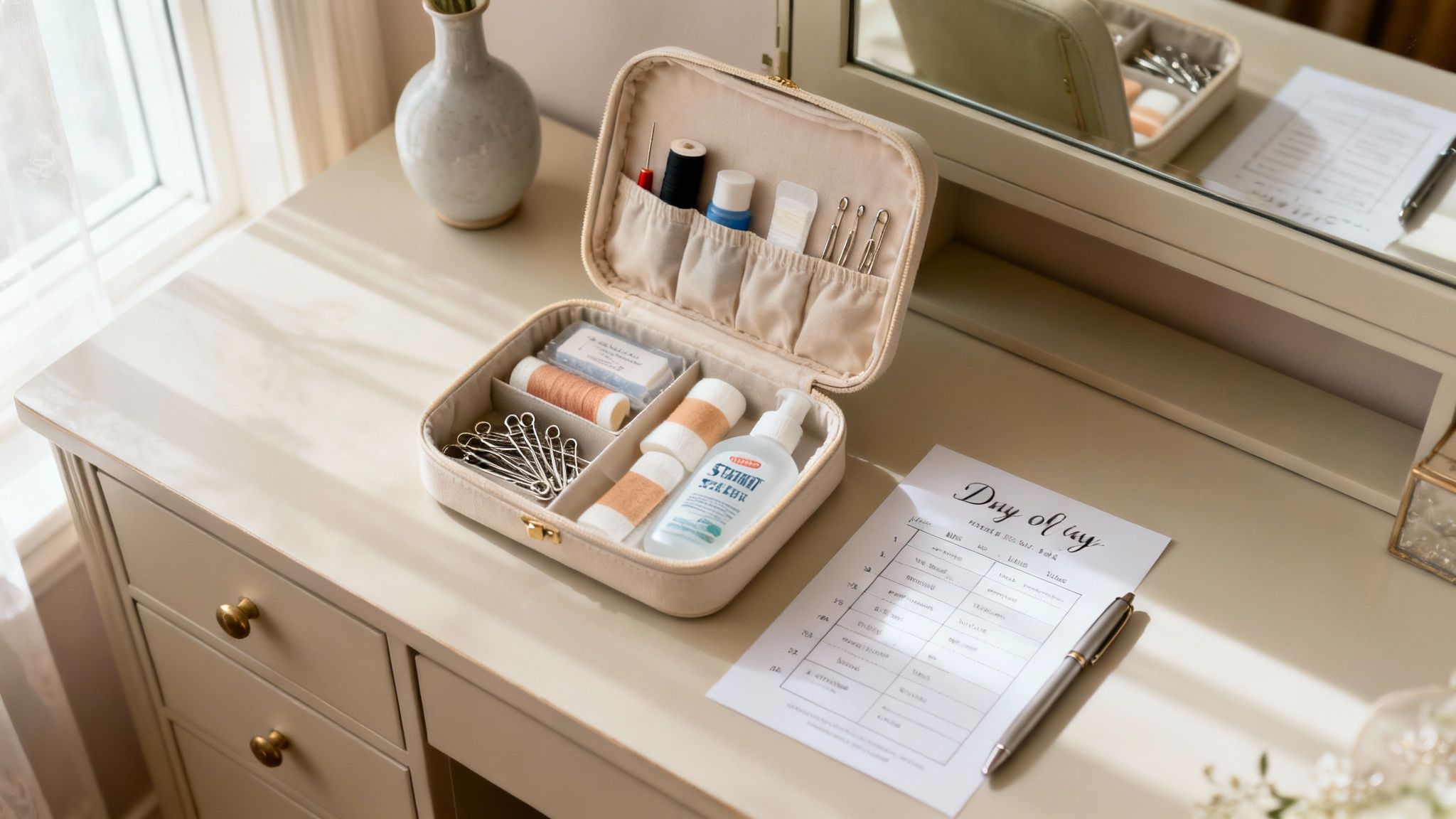
With the logistics locked in, you can shift your focus to the more personal touches. You’ll have your final attire fitting and get to bring your dress or suit home at last! Just remember to store it somewhere safe where no one (especially your partner!) can peek. This is also the perfect time to assemble a wedding day emergency kit.
A few must-haves for your kit include:
Quick Fixes: Safety pins, a mini sewing kit, and stain remover pens are absolute non-negotiables.
Personal Care: A few painkillers, some blister plasters, mints, and any personal medications.
Beauty Touch-ups: A bit of your lipstick, powder, and hairspray for those quick refreshes throughout the night.
Now's a great time to finalise your seating chart and write out your place cards. While most weddings in Australia still happen on a Saturday (55%), Fridays are becoming a popular choice, now hosting 21% of weddings. This trend is often driven by couples wanting better venue availability and pricing, which can sometimes affect how early you need to finalise details.
Most importantly, pack for your honeymoon and look after yourself. Hand off any small, lingering tasks to friends or family you trust. Get a massage, enjoy a final pre-wedding date night, and get plenty of rest. You've planned an incredible celebration—now it’s time to relax and get ready to enjoy every moment of it.
Your Wedding Timeline Questions Answered
Working your way through a wedding planning timeline can feel like you’re constantly second-guessing yourself. It's totally normal to wonder if you're on the right track or if there’s some secret, "correct" way to do things. Let's clear up some of the most common questions we hear from couples.
Probably the biggest one we get is: "What if my engagement is shorter than 12 months?" First of all, don't panic! A shorter timeline just means you'll be compressing the checklist, not throwing it out the window. The priority of tasks stays the same—budget, guest list, and venue always come first—but you'll need to be ready to make decisions much faster. You might also need to be a bit more flexible with your vendor choices, as the most in-demand suppliers often book out over a year in advance.
Another big question is about when to bring family into the picture. Our advice? Have those conversations about potential budget contributions and who they’d like on the guest list right at the very beginning, during that initial 12 to 18-month planning phase. Getting this sorted out early avoids awkward conversations and mismatched expectations down the line. Clear, upfront communication really does set a positive tone for the entire process.
Can We Plan a Wedding in Six Months?
Yes, you absolutely can! It just requires being super organised and decisive from day one. The trick is to lock in your non-negotiables—think venue, celebrant, and photographer—within the first couple of weeks.
For a compressed timeline, it might look something like this:
Months 1-2: Nail down your budget, finalise the guest list, and book your venue and all key vendors. As soon as that venue is locked in, get your save-the-dates out.
Months 3-4: It's time to order your wedding attire, send out the formal invitations, and get the legal paperwork sorted, like lodging your Notice of Intended Marriage (NOIM).
Months 5-6: This is all about the final details. Think final dress or suit fittings, confirming timings with all your suppliers, and putting together a solid day-of schedule.
It’s definitely a sprint rather than a marathon, but it's completely doable if you stay focused.
The most important part of any wedding planning timeline isn’t its length, but how it’s structured. Prioritise logically, be ready to make decisions quickly, and never be afraid to delegate or ask for help from your wedding party or a professional planner.
What Task Is Most Often Forgotten?
You'd be surprised! It’s usually the small, practical details that get overlooked. Couples get so wrapped up in the big, creative elements—the flowers, the food, the music—that they forget about things like arranging transport for the wedding party or figuring out a solid wet-weather backup plan.
Another classic forgotten task is checking when your passports expire before the honeymoon. Do yourself a favour and check this around the six to eight-month mark. It will save you from a massive, stressful scramble right before your well-deserved holiday.
At EasyRegistry, we help you streamline one of the most important parts of your planning. Create a beautiful, simple-to-use gift registry that your guests will love. Get started today.