You’re probably looking at a growing stack of open tabs right now. One for the venue. One for the photographer. Another for transport. A note on your phone with ceremony ideas. A text thread with family questions. An email from your florist asking when they can access the venue. Another from your celebrant asking how long you’ve allowed for signing.
That jumble is exactly why a wedding run sheet matters.
Not because it’s glamorous. Not because it belongs in a planner’s binder. Because it turns a day with many moving parts into a day that feels calm, clear and well held.
Why Your Wedding Day Needs a Run Sheet
A lot of couples treat the run sheet as a final admin task. It isn’t. It’s the document that protects the whole day from avoidable confusion.
In Australia, the average wedding costs approximately $36,000 AUD, and a detailed run sheet helps manage that investment by keeping timing tight, avoiding unnecessary overtime, and coordinating 15-20 suppliers. It also matters emotionally. 70% of couples report stress during planning, which is exactly where a single, reliable timeline starts earning its keep, according to Hey Jack’s wedding run sheet guide.
If you haven’t mapped your day yet, a practical place to start is to create your wedding day timeline before you worry about styling details or tiny ceremonial extras. Timing decisions affect almost everything else.
It’s not just a timeline
A proper wedding run sheet does more than list times. It answers the questions people will ask on the day without needing to ask you.
Who opens the venue? When does the florist arrive? Where does the bus wait after drop-off? Who has the rings? When does the photographer leave for the reception venue? Who tells the DJ that speeches are about to start? If rain rolls in, who calls the move indoors?
That’s why the best run sheets become the single source of truth for the whole team.
Practical rule: If a supplier or family member could need the information on the day, it belongs somewhere on the run sheet.
What happens without one
When a wedding doesn’t have a clear run sheet, the problems are rarely dramatic at first. They’re small. A bouquet delivery lands while no one is ready to receive it. Hair and makeup drift late. The family photo list hasn’t been shared. Guests reach cocktail hour before the bar is set. The MC starts speeches while mains are being cleared.
Those little slips stack up.
A delayed start can push photography, transport, venue access and meal service out of sync very quickly. The couple then becomes the decision-maker for details they should never have to manage in formalwear.
Calm is built, not hoped for
A good run sheet creates breathing room. It tells everyone what’s happening, where it’s happening, who owns it, and what happens if something changes.
That’s the difference between a schedule and a resilient plan. One assumes the day will behave perfectly. The other assumes real life will show up and makes room for it.
Building Your Wedding Run Sheet Foundation
Before you fill in times, build the frame properly. Most run sheets fail because they’re too vague, not because they’re too detailed.
The strongest version is usually a spreadsheet or table in Excel or Google Sheets. Keep it simple enough that anyone can scan it quickly, but complete enough that your key people don’t need to chase missing details.
Start with anchor points
Professional planners build the day around anchors first. These are the fixed points that can’t move without affecting everything else.
The most common anchors are:
Ceremony start: This is the spine of the day. Hair, makeup, photography, transport and guest arrival all flow backwards from it.
Reception entry: Caterers, venue staff, musicians and your MC all need this fixed early.
Sunset or portrait light: Photographers should help shape this timing because they cover most major moments and know how long movements take.
Venue rules: Bump-in, bump-out, curfews, sound checks, parking access and gate times matter more than couples expect.
Travel windows: If your ceremony and reception are in different locations, travel time becomes a mandatory block, not a rough guess.
According to Kombi Keg’s wedding run sheet template guide, planners recommend locking anchor points first, consulting photographers early, and adding 10-15 minute buffers around movements because 80% of weddings exceed planned timings without them.
Use columns that solve problems
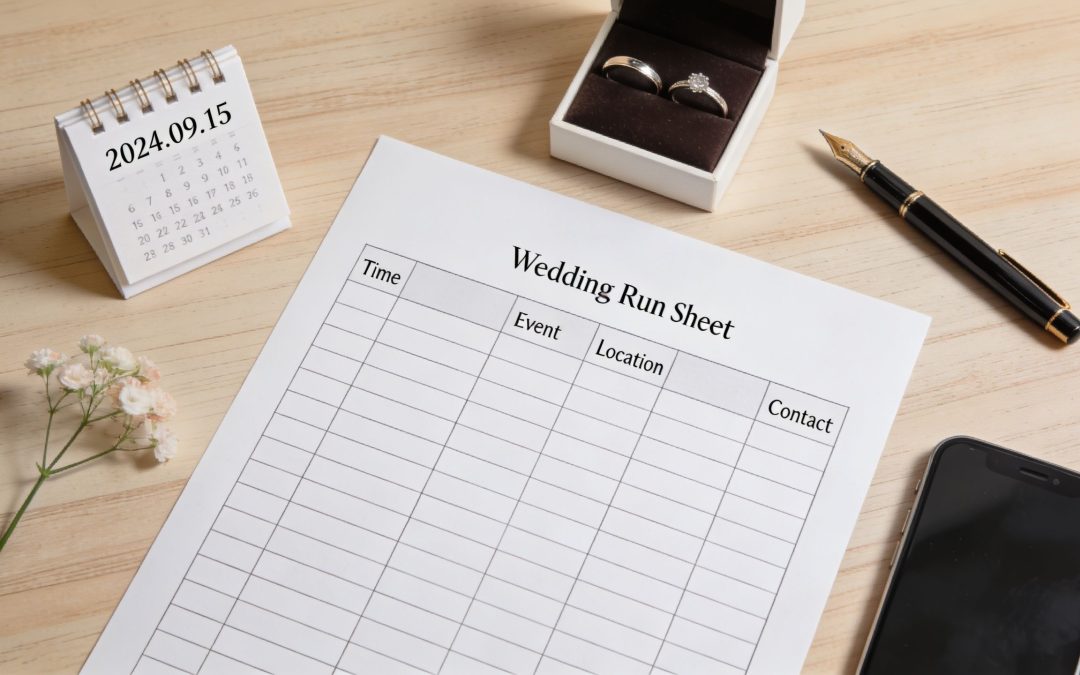
A run sheet works best when every line answers a practical question. These columns are the ones I’d consider essential:
Column
What to include
Why it matters
Time
Specific time blocks
Keeps everyone working from the same clock
Event or activity
What is happening
Removes guesswork and vague labels
Location
Exact venue area or address
Helps suppliers and family move correctly
Responsible person
One named person, not a generic team
Someone owns the task
Contact number
Day-of mobile
Fast fixes when plans shift
Notes
Access, props, weather plan, buffer reminders
Stops preventable mistakes
“Venue staff” is too broad. “Maddie, venue coordinator” is useful. “Groom’s family photos” is incomplete. “Groom’s family photos on lawn, list with photographer, grandparents first” is usable.
Include the overlooked details
Many couples write only the guest-facing moments. Professionals also include the hidden logistics.
Decision points: When a wet weather call must be made
Emergency contacts: Venue manager, planner, transport lead, family contact
Version control: One master copy, then only essential variations
A strong planning companion for this stage is a list of questions to ask your wedding venue, because venue rules shape the bones of your run sheet more than most couples realise.
The run sheet should tell people what to do without needing to interrupt the couple. That’s the standard.
Draft early, finalise late
Create the first proper draft a few weeks before the wedding. Final details will still move, and that’s normal. Finalise the live version closer to the day once your suppliers have confirmed arrival times, setup windows and service order.
The goal isn’t perfection on the first pass. The goal is a structure solid enough that refining it becomes easy.
Planning the Morning From Wake-Up to 'I Do'
The wedding morning sets the emotional tone for everything that follows. If the first half of the day feels frantic, that tension carries forward. If it feels paced and prepared, the rest of the day has a much better chance of staying steady.
Start with the immovable point. The ceremony time. Once that’s fixed, work backwards through transport, getting dressed, photography, hair and makeup, and breakfast or lunch. Don’t build the morning from when someone wants to wake up. Build it from when you need to arrive calm, dressed and ready.
Build backwards from the ceremony
This part catches couples out all the time. They allow enough time for makeup itself, but not for the moments around it.
There’s the delay when someone’s running late to the room. The extra touch-up after a happy cry. The time it takes to steam a dress that was hanging perfectly yesterday and somehow creased overnight. The search for a missing cufflink. The bouquet delivery that arrives during lipstick.
A practical morning sequence often includes:
Wake-up and food: You need time to eat and hydrate, not just sit for styling.
Hair and makeup start: Confirm the artist’s schedule for every person receiving services.
Photographer arrival: This should line up with detail shots, prep candids and dressing.
Florals delivered: Bouquets, buttonholes and any special family flowers need a receiving person.
Getting dressed: Build proper time for fastening, adjusting and portraits.
Travel to ceremony: Include loading time, not just driving time.
Arrival buffer: Aim to arrive ready, not in a sprint.
The reason planners consult photographers early is simple. They see and document nearly every key moment, so they often have the clearest sense of realistic timing. As noted in the earlier planning guidance, buffers around movement matter because transitions are where mornings usually slip.
Where buffers save the day
The most useful morning buffer isn’t hidden at the end. It’s woven through the entire lead-up.
If hair and makeup is scheduled tightly with no flex, one slow appointment affects everyone after it. If transport arrives exactly when you hope to walk out the door, any delay becomes a stress point. If you plan to finish dressing the minute the photographer arrives, you lose all breathing room for natural photos.
Leave white space around movement, dressing and travel. That’s where a wedding morning either settles down or unravels.
Here’s the practical standard. Add a small cushion around every transition. Dressing takes longer when jewellery, veils, suit buttons, shoes and family involvement are part of the moment. Group movement always takes longer than one person expects.
A short visual guide can help if you want to see how planners think through the flow of the day:
A realistic wedding morning mindset
The morning shouldn’t feel like a production line. It should feel managed.
That means deciding in advance who handles practical interruptions. One person can receive deliveries. One can answer supplier calls. One can keep an eye on time. If you don’t assign those jobs, they fall back to you.
A resilient run sheet for the morning also notes the little local realities that affect Australian weddings:
Warm weather: Build in time for touch-ups and cool-down breaks
Remote venues: Allow extra time for travel, patchy reception and supplier access
Shared accommodation: Know which room is for prep, photography and dress storage
Regional transport: Confirm exactly where drivers meet you and who has their number
What works and what doesn’t
What works is a morning with clear ownership. Your stylist knows who is first. Your photographer knows when details are ready. Transport knows where to wait. A trusted person keeps the room clear enough for everyone to work.
What doesn’t work is optimism disguised as planning. If six people are having styling and the sheet says “Hair and makeup done by late morning,” that isn’t a plan. It’s a hope.
The best wedding mornings feel unhurried because the work was done before the alarm went off.
Mapping the Main Events From Vows to Last Dance
Once the ceremony begins, your day shifts from private preparation to guest experience. At this point, flow matters most.
Guests don’t see the spreadsheet. They feel the rhythm. They notice whether drinks appear at the right time, whether speeches drag too long before dessert, whether the room feels ready when they enter, and whether there’s a natural build from formal moments into celebration.
Sequence the guest experience first
A strong reception run sheet doesn’t start with “what traditions do we want?” It starts with “what will guests need at each point?”
Immediately after the ceremony, guests need direction. If you’re leaving for portraits, they need drinks, canapés, shade or shelter, bathrooms and a clear sense of where to go next. If you’re staying on site, they still need hosting while family photos happen.
Then the reception needs a sensible shape. Entrance. Seating. Service. Speeches. Cake. Dance floor. Farewell. Not every wedding uses every tradition, but the order still matters because catering, entertainment and venue operations depend on it.
According to Blue Wren Farm’s reception run sheet advice, couples often underestimate timings by 20-30%, and group photos typically need an extra 10 minutes for guest herding. The same guidance notes that a detailed run sheet shared one week prior yields an 85% on-time execution rate.
A sample reception flow
For a reception beginning at 5:30pm, one practical sequence is:
6pm entrée
7pm main and speeches
8pm cake and dance
11pm last call
That doesn’t mean every wedding should copy those exact placements. It means the major parts of the evening need a deliberate order that supports service and energy.
Here’s a simple example of how that can look on paper.
Time
Event
Key Contact
Notes
5:30pm
Guests seated for reception
Venue coordinator
Confirm all guests called in from cocktail hour
5:45pm
Couple entrance
MC
DJ cued, photographer in position
6:00pm
Entrée served
Catering lead
Check dietary meals first
7:00pm
Main and speeches
MC
Confirm speech order before mains land
8:00pm
Cake cutting and first dance
DJ or band lead
Cake knife ready, photographer alerted
11:00pm
Last call and final farewell prep
Venue manager
Transport contact on standby
Don’t forget the hidden logistics
The guest-facing schedule is only half the story. The stronger run sheets also include the operational moments that keep the public moments smooth.
Those often include:
Supplier bump-in times
Ceremony pack-down
Sound check completion
Band or DJ meal timing
Cake delivery and storage
Styling resets between ceremony and reception
Venue bump-out and collection instructions
These details are where Australian venue realities show up fast. Rural properties may have stricter access windows. Heritage spaces may control sound and candles closely. Private properties often need firmer guidance for parking and supplier arrivals. If your vendors are travelling from different areas, your sheet needs to account for who arrives first, who needs site access, and who can’t do their job until another supplier has finished.
Guests remember a wedding as seamless when the handover between moments feels natural. That smoothness usually comes from logistics they never see.
Keep formalities moving
Reception energy rises and falls. That’s normal. The trick is not leaving guests in a long flat stretch.
A common mistake is stacking too many formalities together. If you place speeches, then cake, then a long video, then another thank-you before opening the dance floor, the room can lose momentum. A better approach is to use formal moments with intention and give the room a release point.
That matters even more if you’ve planned a choreographed dance. If you’re doing that, build in private rehearsal confidence before the day. Couples sometimes find outside resources useful for this, even if they’re overseas, because the teaching cues are still applicable. A good example is Philadelphia first dance instruction that breaks down how to prepare for a dance without overcomplicating it.
Build for movement, not perfection
A wedding reception run sheet should be specific, but not brittle. You want enough structure that the evening stays on track, and enough flexibility that a heartfelt speech or a weather-related reset doesn’t ruin the whole night.
That’s why the best planners write notes like “hold cake until mains cleared” or “delay entrance if grandparents need seating” rather than treating the timeline as untouchable. A resilient run sheet keeps the night moving without making people feel managed.
Sharing the Plan With Your Wedding Day Team
A wedding run sheet only works if the right people have the right version at the right time.
That’s the part couples often leave too late. They build a good document, then send one giant file to everyone and assume it will sort itself out. It won’t. Different people need different levels of detail.
Give each person the version they need
Your photographer may need prep details, family photo timing, travel notes and reception formalities. Your MC needs a clean list of cues, order of events and who to check with before announcing anything. A driver needs pickup times, addresses and the correct contact person. A parent usually only needs a high-level overview.
Think in layers.
Master run sheet: Full operational version for planner, coordinator or lead organiser
Supplier version: Relevant logistics and timing for each vendor
Family version: Key moments, arrival times, transport details, special responsibilities
MC version: Event order, pronunciation notes, speech order, cue points
If gift logistics are part of your wider wedding planning, couples often appreciate having one organised place for that side of things too. A practical example is a wedding services registry that keeps giving simple and clear without creating extra back-and-forth.
When to send it
You don’t need to flood inboxes months ahead with a document that will still change. You do need to send a near-final version early enough that suppliers can query anything important.
A clean process looks like this:
Draft the full run sheet once your key timings are established.
Check it with major vendors such as venue, photographer, celebrant and catering lead.
Refine access details and contact numbers once all suppliers confirm.
Send final versions to the relevant people before the wedding.
Confirm they’ve received it rather than assuming they have.
Appoint one keeper of the sheet
Someone needs to own the live document on the day. If you have a planner or coordinator, that’s ideal. If you don’t, choose a calm, reliable person who won’t vanish during cocktail hour.
This person does not need to micromanage every supplier. They need to know the plan, hold the contacts, and make minor timing calls without dragging the couple into every decision.
The couple should be the least interrupted people at their own wedding.
What to include at the top
The first lines of the run sheet should solve the fastest-moving problems.
Put these at the top of the page:
Couple names and wedding date
Ceremony and reception addresses
Primary day-of contact
Emergency backup contact
Wet weather decision note
Version date
That top section matters when someone opens the sheet on a phone in a hurry and needs the key details immediately.
Avoiding Common Wedding Run Sheet Mistakes
Most run sheet problems aren’t caused by laziness. They’re caused by assumptions. Couples assume travel will be smooth. They assume speeches will stay short. They assume everyone knows where to be. They assume a venue run sheet covers the whole day.
Those assumptions are where avoidable stress sneaks in.
Mistake one. Treating the venue sheet as the full plan
Venue teams usually focus on what happens inside their walls. That leaves gaps around off-site prep, transport, ceremony logistics, family movements and supplier coordination before arrival.
Fix it by building one master run sheet for the entire day, then folding the venue timing into it. Don’t let two competing documents run side by side.
Mistake two. Skipping the wet weather call
Outdoor weddings need more than a vague backup idea. They need a decision-maker, a decision time and a practical switch plan.
If rain becomes likely, your run sheet should already note who makes the call, who informs suppliers, what changes for seating and styling, and how guests are directed. If you need a little financial breathing room elsewhere in your plans so you can budget for sensible contingencies, this guide with tips to save money on your wedding day can help you prioritise what’s worth spending on.
Mistake three. Forgetting direct contact details
On the day, nobody wants to dig through old emails to find a mobile number. If the florist is at the wrong gate or the driver can’t locate the pickup point, speed matters.
Put day-of contact numbers directly on the sheet. Not office numbers. Not social handles. The mobile number that will be answered.
Mistake four. Planning too tightly
A run sheet should guide the day, not squeeze the life out of it.
If every minute is packed with no room to breathe, the plan becomes fragile. If a heartfelt hug line forms after the ceremony or your grandparents need more time getting to photos, the whole afternoon shouldn’t collapse. Build in room for the human parts of the day.
A good wedding run sheet is firm on sequence and flexible on exact pace.
Mistake five. Writing a document nobody can use
The prettiest run sheet is not always the most practical one. Overdesigned PDFs, tiny fonts and vague labels make life harder for the people trying to use them quickly.
Keep it readable. Use plain language. Name real people. Make the notes useful. If someone opens the sheet on a phone while standing in a car park, they should still be able to understand it immediately.
A resilient wedding run sheet doesn’t promise a flawless day because weddings are live events and real life always gets a vote. It does something better. It gives your people a clear plan, a backup plan, and enough structure to protect the feeling of the day when small things shift.
If you’re organising all the moving parts of a wedding, gifts shouldn’t be another messy spreadsheet to manage. EasyRegistry gives couples one simple place to create a registry, share it with guests, track contributions and keep everything organised in one link. It’s a practical way to reduce admin while keeping your wedding plans clear and guest-friendly.
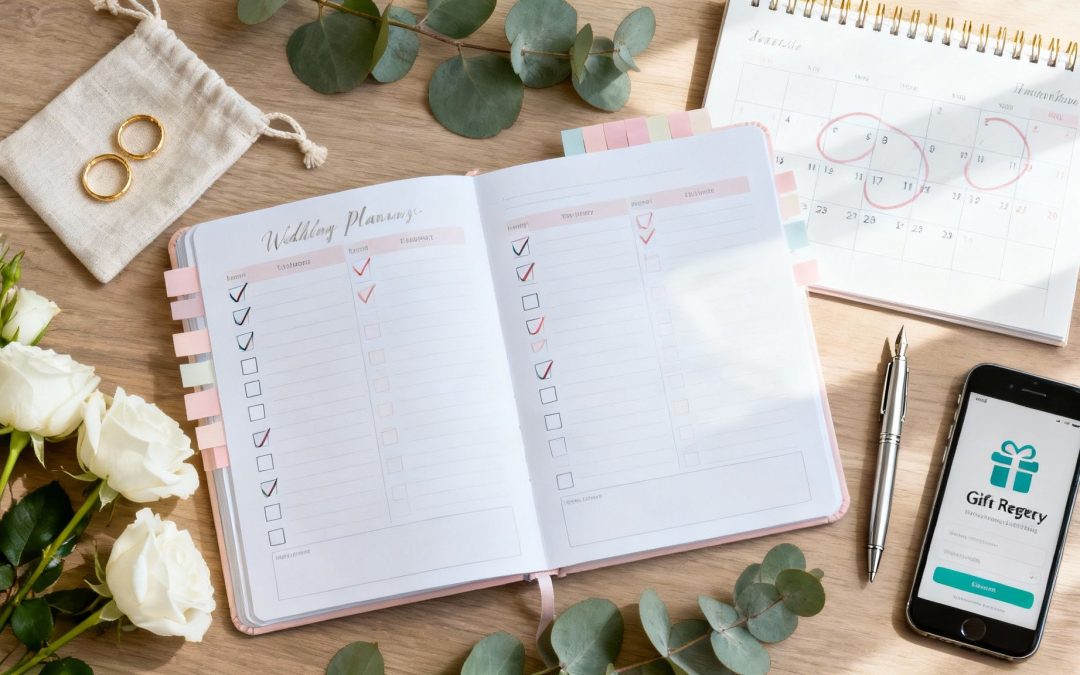
Planning your wedding is an exhilarating journey, filled with countless decisions, deadlines, and details. The excitement of saying "I do" can quickly be overshadowed by the sheer volume of tasks, leaving many couples feeling overwhelmed without a clear roadmap. That's why we've created the ultimate to do list for wedding planning, specifically tailored for Australian couples navigating this process. This is more than just a simple checklist; it's a strategic, timeline-based guide designed to break down the monumental task of organising your special day into manageable, actionable steps.
Our comprehensive list will guide you from the initial big-picture decisions made 12 or more months in advance, right through to the final post-wedding follow-ups. We will cover critical milestones such as setting a realistic budget, booking your dream venue, coordinating with vendors, and managing your guest list. You'll find practical advice on everything from selecting catering to arranging decorations, ensuring every element comes together seamlessly. For a comprehensive guide to organizing every detail of your special day, refer to this ultimate wedding planning checklist and timeline.
This guide is designed to be your central resource, keeping you organised, on-budget, and as stress-free as possible. We’ll also highlight how smart tools, like a well-structured online gift registry, can significantly streamline the experience for both you and your guests. By following this structured plan, you can confidently navigate the complexities of wedding planning and focus on what truly matters: celebrating your love and creating memories that will last a lifetime. Let's begin the journey to your perfect day.
1. Set Your Wedding Budget and Financial Timeline
Before you dive into venue tours or taste-testing cakes, your first and most crucial task is to establish a clear wedding budget. This financial blueprint is the foundation for every decision you'll make, transforming your dream day from a vague idea into an actionable plan. It’s the most important first step on your to-do list for a wedding, as it dictates the scale, style, and scope of your celebration.
How to Create Your Budget
Start by determining your total available funds. This involves having honest conversations with your partner and any family members who have offered to contribute. Create a shared spreadsheet or use a dedicated wedding planning app to track all incoming funds and outgoing expenses in one centralised place. This transparency prevents misunderstandings and keeps everyone aligned.
Once you have a total figure, break it down into categories. A typical allocation might look like this:
Venue, Catering & Rentals: 45-55%
Photography & Videography: 10-15%
Attire & Beauty: 5-10%
Entertainment/Music: 5-10%
Flowers & Décor: 5-10%
Contingency Fund: 10-15%
Why It's a Priority
Finalising your budget before you start booking vendors is non-negotiable. It allows you to research and engage with suppliers who fit within your financial reality, saving you time and potential disappointment. It also empowers you to prioritise what truly matters. If incredible food is your top priority, you'll know you can allocate more to catering by perhaps simplifying your floral arrangements.
Pro Tip: Always build a contingency of 10-15% into your budget from the very beginning. This buffer covers unexpected costs like last-minute guest additions, vendor overtime, or price adjustments, ensuring you aren't financially stressed in the final weeks. For more expert advice, explore these 6 amazing tips to save money on your wedding day.
2. Create and Share Your Wedding Gift Registry
Once your budget is set, another exciting item on your wedding to-do list is creating your gift registry. A registry is a curated list of gifts, experiences, and cash funds that guides your guests, helping them choose something you genuinely want and need. It simplifies the gift-giving process for everyone, prevents duplicate presents, and ensures you start your married life with meaningful items.
How to Create Your Registry
Start by choosing a flexible registry platform like EasyRegistry, which allows you to combine items from various stores, create cash funds for a honeymoon or home deposit, and even add charity donations. This "universal" approach gives you ultimate freedom. Sit down with your partner and brainstorm a list that reflects your lifestyle, needs, and aspirations. Include a mix of practical homewares, personal items, and bigger-ticket goals.
A well-rounded registry caters to all your guests. Aim for a variety of price points:
Under $50: Small kitchen gadgets, elegant tea towels, or a contribution to a cash fund.
$50 – $150: Quality cookware, a set of wine glasses, or a contribution towards an experience.
$150+: Major appliances, artwork, or significant contributions to your honeymoon fund.
Group Gifting: Enable group gifting for larger items so multiple guests can contribute.
Why It's a Priority
Creating your registry early (around 4-6 months before the wedding) is crucial because guests will start looking for it as soon as they receive their save-the-dates or invitations. Having it ready avoids confusion and streamlines their experience. A thoughtfully prepared registry shows gratitude and consideration for your guests' generosity, making them feel confident their gift will be loved and used. It's a modern, organised approach to a timeless tradition.
Pro Tip: Share your registry link discreetly on your wedding website or via a details card in your invitation suite. Avoid putting it directly on the main invitation. For inspiration on what to include beyond the usual homewares, explore these unique wedding gift ideas to make your registry truly personal.
3. Book Your Venue and Secure the Date
With your budget and guest list established, the next monumental step on your to-do list for a wedding is booking your venue. This decision sets the entire scene, influencing everything from your wedding's style and date to your choice of vendors and guest capacity. In Australia, popular venues can be booked 12 to 18 months in advance, making this a time-sensitive priority.
How to Find Your Perfect Venue
Begin by researching locations that align with your vision and budget. High-demand spots like Sydney's Royal Botanic Garden or Melbourne's Royal Exhibition Building often require booking 18+ months ahead. Don't overlook regional options like wineries in the Yarra Valley or stunning coastal venues that offer a unique backdrop.
Create a shortlist of 3-5 venues and schedule in-person tours. Pay close attention to the following:
Capacity and Layout: Does it comfortably fit your guest list?
Inclusions: What is covered in the package (tables, chairs, linen, staff)?
Vendor Policies: Are you restricted to a list of preferred suppliers?
Accessibility: Is there adequate parking and access for all guests?
Contingency Plans: What are the options for wet weather?
Why It's a Priority
Securing your venue and date is the key that unlocks the rest of your planning. You cannot hire other vendors like a photographer, caterer, or florist without a confirmed date and location. It transforms your wedding from an idea into a tangible event on the calendar, providing momentum and a clear deadline for all subsequent tasks. Once the deposit is paid and the contract is signed, you can officially announce your date to friends and family.
Pro Tip: Before signing the contract, thoroughly read the terms, especially the cancellation and postponement clauses. Ask about peak versus off-peak pricing, as shifting your date to a weekday or a different season can sometimes lead to significant savings. For a complete checklist, review these essential wedding venue questions to ask before booking.
4. Determine Guest List and Send Invitations
Once your budget and venue are locked in, your next major task is finalising the guest list. This step is a critical part of any to-do list for a wedding because it directly impacts almost every other decision, from catering headcounts and seating arrangements to the number of invitations you need to order. Finalising your guest list brings your celebration to life, turning it from a concept into a gathering of your most cherished friends and family.
How to Finalise Your List
Start by creating a master list, often broken into an 'A-list' (must-invites) and a 'B-list' (if space and budget allow). This requires open conversations with your partner and contributing family members to ensure everyone feels represented. For example, Australian weddings often average between 80-120 guests, so be realistic about your venue’s capacity. Establish clear rules early on, such as your policy on plus-ones and children, to avoid awkward conversations later.
Once the list is set, it's time to send invitations. The standard timeline is to send them 6-8 weeks before the wedding day, or 8-12 weeks for destination weddings that require more travel planning.
Why It's a Priority
Your final guest count is the magic number that your caterer, venue, and rental companies need to give you accurate quotes. Booking vendors without a firm idea of your guest numbers can lead to overspending or, conversely, not having enough resources for your attendees. An organised approach also ensures a smoother RSVP process, allowing you to collect crucial information like dietary requirements and meal preferences well in advance.
Pro Tip: Set a clear RSVP deadline for 3-4 weeks before the wedding day. This gives you enough time to give final numbers to your vendors, chase up any late responses, and create a thoughtful seating chart without last-minute stress. Using digital RSVP tools can streamline this process significantly.
5. Plan and Book Catering and Menu Selection
Arguably one of the most memorable parts of any wedding celebration, your food and drink selection significantly shapes the guest experience. Catering often accounts for a large portion of the budget, so finalising your menu and booking a supplier is a major milestone in your to-do list for a wedding. This task involves everything from choosing a service style to curating a menu that reflects your tastes and accommodates your guests.
How to Plan Your Menu
Start by deciding on the style of dining that best suits your wedding's atmosphere. Will it be a formal seated dinner, a relaxed cocktail reception with canapés, or a trendy food truck experience? Modern Australian weddings are embracing extended aperitif periods, tapas-style share plates, and interactive food stations like wood-fired pizza or oyster bars. Research and shortlist 2-3 caterers whose offerings align with your vision and budget, then schedule tastings to make your final decision.
Once you’ve chosen a caterer, work with them to design a menu. Consider these key elements:
Dietary Needs: Discuss their process for managing allergies and dietary requirements (gluten-free, vegan, etc.) and any associated costs.
Service Style: Confirm if you want plated meals, a buffet, or family-style service.
Beverages: Decide whether to offer a full bar, a limited selection of beer and wine, or premium non-alcoholic options, which are becoming increasingly popular.
Why It's a Priority
Securing your caterer 9-12 months in advance (if they aren't included with your venue) is crucial, as the best suppliers book out quickly. This decision impacts other planning areas, including your timeline for the day, rental needs (tables, chairs, linens), and overall budget. Finalising the menu early allows you to accurately inform guests on your invitations and gives you peace of mind knowing a core element of your reception is locked in.
Pro Tip: When you receive a catering proposal, read it carefully to see what’s included. Clarify costs for staffing, bar service, equipment rentals, and cleanup to avoid any surprise fees. Request a detailed service timeline for the wedding day to ensure a smooth flow from cocktails to dessert.
6. Hire and Schedule Your Photographer and Videographer
Once your venue and date are locked in, your next high-priority task is to secure the professionals who will capture every moment. Your photos and videos are the tangible memories you'll revisit for a lifetime, making this a critical part of your wedding to-do list. The best photographers and videographers are often booked 9-12 months in advance, especially for popular dates and seasons across Australia, so acting quickly is key.
How to Secure Your Visual Team
Begin your search by exploring portfolios that match your desired aesthetic, whether it’s light and airy, moody and dramatic, or candid and photojournalistic. Top-tier professionals, like Sydney-based Josh Carrott or Cavanagh Photography, are in high demand and command premium rates for their expertise. It's crucial to review not just their highlight reels, but full wedding galleries to get a true sense of their storytelling ability and consistency throughout an entire day.
Once you've shortlisted your favourites, schedule consultations to discuss their packages, approach, and personality. A typical package includes 8-10 hours of coverage, which is usually sufficient to capture everything from getting ready to the main reception events. Be prepared to discuss key moments you want captured and ask about their communication style on the day.
Why It's a Priority
These vendors can only be in one place at a time, so their availability is extremely limited. Booking them early ensures you get your first choice and avoids the stress of scrambling to find a quality professional last minute. Finalising your photographer also allows you to schedule an engagement shoot, which is a fantastic way to get comfortable in front of the camera and get to know your photographer before the big day. It solidifies a crucial part of your wedding day timeline and vendor team.
Pro Tip: When reviewing contracts, look closely at the deliverables. Clarify the exact number of edited images, the delivery timeline for photos and video (which can be several months post-wedding), and what rights you have for sharing and printing. Also, confirm if a second shooter is included, as this can be vital for capturing multiple angles during key moments like the ceremony.
7. Arrange Flowers, Decorations, and Styling
Your flowers and decorations are the visual heart of your wedding day, transforming a venue into a personalised celebration space. This crucial step on your to do list for a wedding involves more than just picking pretty blooms; it’s about crafting an atmosphere and telling your story through colour, texture, and style. From the ceremony arch to the reception centrepieces, your styling choices create the backdrop for every moment and every photograph.
How to Plan Your Wedding Styling
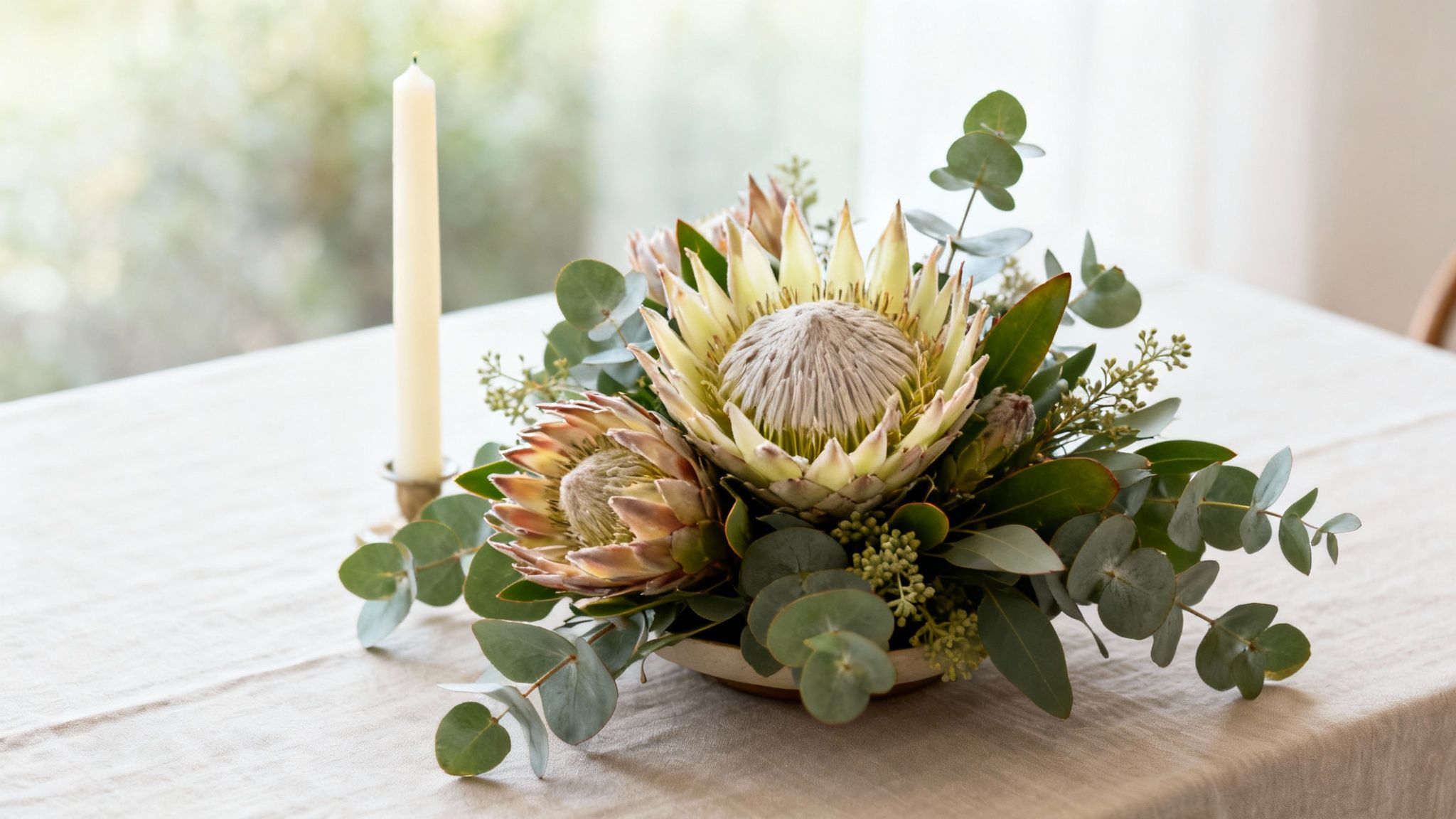
Begin by creating a mood board with your partner. Use platforms like Pinterest to gather images that capture your desired aesthetic, colour palette, and overall vibe. This visual guide will be invaluable when communicating your vision to potential florists and stylists. Research vendors who specialise in the style you love, whether it’s modern minimalism, rustic romance, or bohemian chic. For a uniquely Australian feel, consider incorporating native flora like stunning king proteas, delicate waxflowers, and aromatic eucalyptus.
Once you’ve chosen your vendors, work with them to design a cohesive look that includes:
Personal Flowers: Bouquets, buttonholes, and corsages.
Ceremony Décor: Aisle markers, arch or backdrop arrangements.
Reception Styling: Centrepieces, table linens, lighting, and signage.
Sustainable Elements: Consider potted plants as centrepieces that double as take-home guest favours.
Why It's a Priority
Booking your florist and stylist 6-9 months in advance is essential, as the best professionals are often in high demand. Finalising your décor early allows you to coordinate other visual elements, such as invitations and bridesmaid dresses, ensuring a harmonious look. It also helps manage your budget effectively, as you can prioritise key floral moments and find creative solutions for other areas. Discussing seasonal flower availability with your florist can also lead to significant cost savings and fresher, more beautiful arrangements.
Pro Tip: When meeting with your florist, provide your mood board but also be open to their suggestions. They are experts in seasonality and can recommend beautiful, cost-effective alternatives if your first-choice blooms aren't available. Always ask them to have backup flower varieties in mind in case of unexpected supply issues.
8. Select and Coordinate Wedding Attire for Wedding Party
Selecting the attire for yourselves and your wedding party is one of the most exciting visual decisions in your wedding planning journey. This task solidifies your wedding’s aesthetic and ensures a cohesive look for your key photos. It’s a crucial item on your to-do list for a wedding that requires early planning, especially for custom garments and alterations.
How to Coordinate Attire
Begin with the couple's outfits, as they will set the tone. For bridal gowns, start shopping 9-12 months out, especially if you're considering premium Australian designers like Alex Perry or Suzanne Harward, whose creations often require long lead times. Once your attire is chosen, you can select complementary styles for your wedding party. Provide bridesmaids with a clear colour palette, fabric type, and deadline, giving them 6-8 months to order. For groomsmen, decide whether a classic tuxedo rental or a purchased suit aligns better with your budget and formality.
Here's a sample timeline to keep things organised:
9-12 Months Out: Start shopping for your wedding dress.
6-8 Months Out: Finalise and order bridesmaids' dresses.
5-6 Months Out: Choose and reserve groomsmen's suits or tuxedos.
2-3 Months Out: Schedule first fittings for all wedding party members.
1 Month Out: Coordinate shoes and accessories.
Why It's a Priority
Attire selection requires a long lead time. Wedding dresses can take 6-8 months to arrive after being ordered, and you must also factor in 2-3 months for alterations. Leaving this task too late can lead to rush fees, limited choices, and immense stress. Coordinating early ensures everyone has time to find their correct size, budget for the expense, and schedule necessary fittings without feeling pressured. It’s a foundational step that brings your wedding vision to life and ensures everyone looks and feels their best on the day.
Pro Tip: When choosing bridesmaids' dresses, consider giving your party a specific colour and fabric but allowing them to choose their own style. This approach ensures a cohesive look while letting each person select a silhouette that flatters their body type, increasing their comfort and confidence.
9. Plan Entertainment, Music, and Reception Activities
Your entertainment choices are the heartbeat of your celebration, setting the tone from the moment guests arrive until the final farewell. This part of your wedding to-do list for a wedding is all about crafting the atmosphere and energy of your day. It involves everything from the string quartet at your ceremony to the DJ who gets everyone on the dance floor and the activities that keep guests engaged throughout the reception.
How to Plan Your Entertainment
Start by deciding between a live band or a DJ, as this choice significantly influences the vibe. Live bands offer a dynamic, high-energy performance, while DJs provide a vast and versatile music library. Many couples in Australia opt for a combination, perhaps a live acoustic set for the ceremony and cocktail hour, followed by an experienced DJ for the reception who can read the crowd and cater to diverse age groups.
Once you’ve chosen your primary entertainer, create a detailed timeline of events. This includes:
Ceremony Music: Processional, signing of the register, and recessional songs.
Cocktail Hour: Background music to encourage mingling.
Grand Entrance: An upbeat track to announce your arrival.
Key Moments: Songs for the first dance, cake cutting, and bouquet toss.
Additional Activities: Plan for things like a photo booth, lawn games, or speeches.
Why It's a Priority
Booking your entertainment 6-9 months in advance is crucial, as popular vendors get snapped up quickly. Finalising these details early allows your chosen professional to prepare adequately and seamlessly integrate with your run sheet. A well-planned entertainment schedule ensures a smooth flow, prevents lulls in the celebration, and creates a memorable experience for you and your guests. This isn't just about music; it's about curating the entire guest journey.
Pro Tip: Provide your DJ or band leader with a detailed list of "must-play" and, just as importantly, "do-not-play" songs. Schedule a final meeting a few weeks before the wedding to run through the entire timeline and confirm pronunciations for bridal party names to avoid any awkward moments.
10. Manage Guest Accommodations, Invitations, and Communication
Once your guest list is finalised, a key part of your wedding to-do list is ensuring your guests have a seamless and enjoyable experience. This is especially crucial for friends and family travelling from interstate or overseas. Thoughtful planning around accommodations, clear invitations, and consistent communication demonstrates your appreciation for their effort and sets a welcoming tone for the entire celebration.
How to Coordinate Guest Logistics
Begin by researching and securing accommodation options for out-of-town guests around six to eight months before the wedding. Aim to provide three to four choices at varying price points, from budget-friendly motels to more luxurious hotels. Contact these venues to negotiate a group discount or a room block, which guarantees a set number of rooms at a fixed rate for your guests to book.
Create a dedicated page on your wedding website with all logistical details. This central hub should include accommodation recommendations with booking codes, travel advice, local transport options, and a clear schedule of events. Your formal invitations, sent out two to three months prior, should then direct guests to this website for all the essential information they need.
Why It's a Priority
Managing guest logistics proactively prevents last-minute stress for both you and your attendees. Clear, centralised information reduces the number of individual queries you'll receive and ensures everyone arrives on time and prepared. Arranging group transport, for example, is a considerate touch that significantly improves the guest experience. To streamline your wedding day, careful planning of transportation to and from wedding venues is a must for your guests, ensuring they can relax and celebrate without worrying about navigating an unfamiliar area.
Pro Tip: For destination or regional weddings, consider organising a welcome dinner or casual get-together the night before. It's a wonderful way to thank guests for travelling, help them mingle, and kick off the festivities in a relaxed setting before the main event.
Plan Entertainment, Music, and Reception Activities
Moderate — programming and technical coordination
Moderate: vendor fees, sound/lighting equipment
??? — increased guest engagement and mood control
Receptions prioritizing dancing and mixed-age appeal
Keeps guests engaged; manages event flow and timing
Manage Guest Accommodations, Invitations, and Communication
Moderate — hotel negotiation and logistics
Moderate: time, website tools, negotiation with hotels
?? — improved guest convenience and attendance
Destination/regional weddings with traveling guests
Eases travel logistics; centralizes info; can secure group rates
Bringing It All Together: Your Final Countdown to the Big Day
Navigating the journey from "yes" to "I do" can feel like an overwhelming odyssey of decisions, deadlines, and details. This comprehensive to do list for wedding planning has been designed to serve as your trusted roadmap, breaking down a monumental task into a series of manageable, timeline-based steps. From establishing your foundational budget and securing the perfect venue more than a year out, to managing the final guest communications and vendor confirmations in the week before, each stage has its own unique focus and set of priorities. By following this structured approach, you transform a potentially chaotic process into a controlled, organised, and even enjoyable experience. The goal is to move from one milestone to the next with confidence, knowing you have a clear framework guiding you.
The true value of a meticulous checklist isn't just about ticking boxes; it's about creating mental space. When you have a system for tracking everything from catering deposits and attire fittings to your gift registry and RSVP deadlines, you are free to focus on what truly matters: celebrating your love story with your partner, family, and friends. The most memorable weddings are not necessarily the most lavish, but the ones that authentically reflect the couple's personality. Your organised approach to planning is the backstage work that allows the main event to feel effortless, personal, and full of joy. Remember the key takeaways: start early, delegate effectively, and communicate clearly with both your vendors and your support network.
From Checklist to Celebration: Final Actionable Steps
As you enter the final phase of your planning, your focus should shift from broad decision-making to precise execution. This is the time to bring all the threads together into a cohesive, beautifully woven tapestry.
Final Vendor Lock-In: In the last month, schedule final confirmation calls or meetings with every vendor. This includes your venue coordinator, caterer, photographer, florist, and entertainment. Provide them with a finalised day-of timeline, contact lists for key people (like your maid of honour or wedding planner), and any last-minute logistical details such as specific photo requests or song choices.
Create Your Wedding Day Survival Kit: Assemble a small bag with essentials you might need. Think safety pins, stain remover pens, pain relief medication, a portable phone charger, and a copy of your vows. Entrust this kit to a reliable member of your wedding party.
Practice and Prepare: Take time to practice your vows out loud. If you're having a first dance, run through the steps a few more times. Feeling prepared with these personal elements will help calm any day-of nerves and allow you to be more present in the moment.
The Art of Letting Go: Perhaps the most crucial item on your final to do list for wedding planning is to consciously decide to let go. Once the day arrives, trust in your preparation, your vendors, and your support system. Your only job on the wedding day itself is to be present, savour each moment, and marry the love of your life.
Ultimately, this checklist is more than just a list of tasks; it is a strategy for peace of mind. By methodically addressing each component, from the financial groundwork to the post-wedding thank-you notes, you are investing in a seamless, stress-reduced celebration. You've laid the foundation for a day that is not only perfectly organised but also deeply meaningful, marking the beautiful beginning of your next chapter together.
Ready to simplify one of the most important items on your to do list for wedding? Create a truly flexible and user-friendly gift registry with EasyRegistry. Our platform allows you to add any gift from any store, include cash funds, or even request contributions for your honeymoon, all in one beautiful and easy-to-share list. Start your free registry with EasyRegistry today and give your guests the gift of choice.