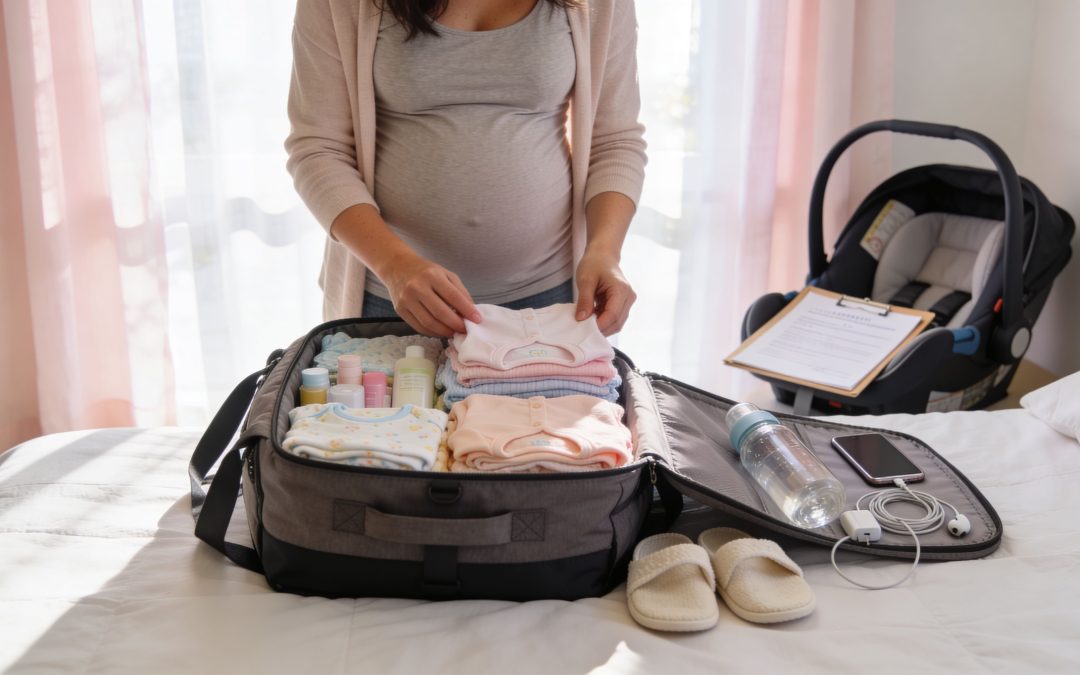
You’re probably somewhere in the third trimester, opening notes on your phone, half-starting a packing list, then closing it again because you’re not sure if it’s too early or somehow already late. That hesitation is common. Hospital bag advice online often swings between “pack at the first Braxton Hicks” and “you’ve got plenty of time”, which isn’t very helpful when you want a real answer.
For Australian parents, timing matters because local hospital routines, travel distances, and public versus private ward setups change what makes sense. The best plan isn’t to panic-pack one giant bag. It’s to pack in stages, at the right time for your pregnancy, and with a clear idea of what your hospital is likely to provide.
That Third Trimester Feeling Is It Time Yet
By the third trimester, the mental list gets noisy. You’re keeping track of appointments, washing tiny clothes, answering texts about the baby shower, and trying to work out whether the hospital bag should be done now or later. Most parents don’t struggle because packing is hard. They struggle because the timing feels unclear.
I see the same pattern again and again. Someone starts by buying travel-sized toiletries and a zip bag for baby clothes. Then they stop, because the due date still feels far away. A week later, they’re awake at night wondering if they’ve left it too late.
That stop-start cycle creates more stress than the bag itself.
A calm rule of thumb: if you’re thinking about when to pack hospital bag, it’s time to at least start the essentials.
What works is a timeline that matches real life. Not a dramatic all-at-once packing session. Not a vague promise to “do it soon”. A proper plan that takes into account whether your pregnancy is straightforward, whether you live close to your hospital, and whether you’re going public or private.
Australian parents also deal with practical differences that many overseas checklists skip. Some public hospitals provide more basics than people expect. Some private stays call for more of your own comfort items. If you’ve got a longer drive, older children at home, or a planned caesarean, your version of “ready” will look different from someone else’s.
The goal isn’t to have a perfect bag. It’s to remove one source of uncertainty, so when labour starts or your admission gets moved forward, you’re not scrambling for phone chargers, underwear, or baby clothes in the middle of it all.
Your Ideal Hospital Bag Packing Timeline
The best answer to when to pack hospital bag depends on risk, location, and how likely you are to need admission earlier than expected. Generic timelines don’t help much when your reality might include a long drive, a private hospital stay, or a care team already talking about earlier monitoring.
Pack earlier if your pregnancy needs closer planning
If you’re in a high-risk pregnancy group, packing earlier is sensible, not overcautious. In Australia, approximately 11.6% of babies are born preterm, which is one reason earlier preparation matters. For high-risk pregnancies, packing by 35 weeks is a practical benchmark, while for low-risk pregnancies, RANZCOG recommends packing between 36 and 38 weeks. The same source also notes that 70% of Australian births occur at term. You can read that summary in this hospital bag timing reference.
High-risk can include situations like:
Multiples such as twins
Previous preterm labour
Planned earlier admission
Medical monitoring that could lead to a change in birth timing
Regional travel where getting to hospital isn’t quick
If any of those sound familiar, don’t wait for the “normal” week to start. Aim to have your core bag mostly done earlier, then top it up later with fresh items.
The sweet spot for most low-risk pregnancies
For many parents with a straightforward pregnancy, 36 to 38 weeks is the most realistic packing window. It’s late enough that you know more about your hospital plan and early enough that you won’t feel rushed if things shift.
A simple timeline looks like this:
Pregnancy situation
Best time to have the bag packed
High-risk or likely early admission
By 35 weeks
Low-risk and metro-based
Between 36 and 38 weeks
Regional or rural travel concerns
Earlier end of your expected window
That middle window works well because you can pack with more confidence. You’ll usually know whether you’re likely to have a vaginal birth or planned caesarean, whether your hospital has given you admission paperwork, and what kind of stay to prepare for.
If your bag is fully packed before you think you “need” it, that isn’t wasted effort. It’s one job off your mind.
When earlier is better even if everything seems fine
Some parents are technically low-risk but still benefit from packing sooner. That includes people who already feel physically tired, anyone juggling work and other children, and parents living a long way from their hospital.
If you know you’re someone who leaves practical jobs until the last minute and then feels overwhelmed, build in margin. Get the bag done before the pressure starts. Readiness is easier to maintain than to create in a rush.
A useful test is this: if your care team asked you to come in tonight, would you only need to grab your daily essentials and go? If the answer is no, your timeline should move forward.
A Stress-Free Staged Packing Plan
Trying to pack everything in one go often leads to feeling stuck. A staged approach works better because it separates the essentials from the comfort items and the true last-minute things. You stop staring at an empty bag and start making visible progress.
Stage one gets the basics done early
By the earlier part of your packing window, put aside the items you won’t miss day to day. This is your “already sorted” group.
Pack things like:
Hospital paperwork folder if you’ve got it ready
A set of baby clothes in newborn and slightly larger sizing
Maternity bras and underwear
Post-birth comfortable clothes
Basic toiletries duplicates if you’ve bought extras
Any planned feeding items your hospital has asked you to bring
This stage matters because it covers the items that create the biggest scramble when labour starts unexpectedly.
Stage two finishes the main bag
Closer to the end of pregnancy, move to the items that depend more on weather, your admission plan, or your comfort preferences. This is when your bag starts feeling complete.
Focus on:
Labour clothes you don’t mind getting messy
Pyjamas and a robe
Slides or slippers
Snacks and drink bottle
Baby wraps and going-home outfit
Support person basics so they’re not relying on you for everything
If you’re still setting up nursery and shower gifts, a seasonal planning guide like the perfect registry for your summer baby can help you think through what’s useful now versus what can wait until after birth.
Stage three is the grab list, not the packed list
Some things shouldn’t go into the bag until the day you leave. That doesn’t mean you should trust yourself to remember them.
Write a list and keep it in the front pocket or on top of the bag:
Phone charger
Toothbrush and toothpaste
Glasses or contact lens supplies
Current medications
Your favourite pillow
Daily-use cosmetics or skincare
House keys and wallet
The last-minute list should be short. If it gets too long, you haven’t really packed yet.
This method works because it reduces decision fatigue. You don’t need a free afternoon and a burst of motivation. You just need to finish one stage at a time.
The Ultimate Australian Hospital Bag Checklist
A good checklist shouldn’t just tell you what to bring. It should stop you from overpacking. That matters in Australia, because public and private hospitals often handle basics differently.
Many public hospitals provide basics such as maternity pads and mesh underwear, which can cut down what you need to bring. Private hospital stays may call for more of your own supplies, particularly because stays can be longer, and caesareans account for 32% of births nationally. That practical public versus private difference is noted in this discussion of labour and delivery bag essentials.
For the birthing parent
Start with the items that affect comfort and recovery most.
Admission essentials Medicare card, private health details if relevant, hospital paperwork, and any birth preferences you want on hand.
Clothing that allows movement Loose nighties, button-front pyjamas if you plan to breastfeed, a robe, socks, and easy slip-on shoes.
Post-birth underwear High-waisted, soft pairs are often more comfortable than anything tight, especially if you’ve had surgery or a tender abdomen.
Toiletries you’ll use Toothbrush, toothpaste, hairbrush, lip balm, deodorant, face wash, moisturiser, hair ties, and any shower products that make you feel human again.
Recovery items If your hospital doesn’t provide enough basics for your preference, add your own maternity pads and extra underwear.
Labour comforts Water bottle, lip balm, snacks approved by your care team, a fan if you like airflow, and a long charging cable.
Here’s a short video many parents find useful when they’re checking their own list against real-world packing habits.
For baby
Baby needs less than most first-time parents expect. The trick is bringing the right basics, not heaps of “just in case” outfits.
A few simple outfits Zip suits or onesies are easier than fiddly outfits.
A baby hat Useful for warmth after birth and on the way home.
Wraps or swaddles Soft, easy-to-use options are best.
Nappies and wipes Check what your hospital provides before packing too many.
A blanket for discharge Especially helpful in cooler weather or air-conditioned cars.
Car seat already installed This isn’t optional. Don’t leave it until discharge day.
For the partner or support person
Partners often become the accidental owners of all the forgotten jobs. Their bag matters too.
Fresh clothes for an overnight stay or long labour
Charged phone and charger
Snacks and drinks
Basic toiletries
Any medications they need
A jumper or light blanket, because hospital temperatures can feel unpredictable
A small pillow if they’re likely to be there for a while
What doesn’t work is assuming your support person can “just pop out later”. Sometimes they can. Sometimes parking, timing, ward policies, or labour progression make that unrealistic.
For leaving hospital
This part gets forgotten because it feels far away when you’re packing for labour.
Pack or prepare:
Your outfit for home Soft, loose, easy to put on. Think comfort, not appearance.
Baby’s going-home outfit Choose one suited to the season and the car trip.
Installed car seat Check straps and setup before you need to use it.
A bag for paperwork and extras Hospitals often send you home with documents, feeding notes, and a few bits to carry.
Special situations that change your list
Some births need a slightly different setup.
Planned caesarean
You’ll usually want:
Higher-waisted underwear
Clothes that don’t sit on the incision area
Slip-on shoes
A longer phone charger
Extra comfort items if you expect a longer stay
Public hospital stay
Ask what’s supplied before you buy in bulk. You may need less than online lists suggest.
Private hospital stay
Bring more personal comfort items, extra clothing, and enough toiletries for a longer stay.
If you want one printable list
For a second checklist focused on practical packing categories, this pregnancy hospital bag list is handy to keep open while you pack.
Pack for recovery, not for photos. The most useful items are usually the least glamorous ones.
Beyond the Bags Critical Hospital Logistics
A packed bag helps. Smooth logistics help more. Many last-minute hospital scrambles happen because the bag is ready but everything around it isn’t.
Get your paperwork into one place
Don’t scatter documents across handbags, kitchen counters, and email inboxes. Use one folder or pouch.
Include:
Medicare card
Private health insurance details if relevant
Hospital admission paperwork
Photo ID
Any referral letters or pregnancy notes
A printed birth preferences page if you have one
If you’ve also been preparing for the first weeks at home, a broader baby prep list like this newborn baby needs checklist can help you spot what belongs in the house rather than in the hospital bag.
Sort the trip before the trip matters
Getting to hospital sounds simple until it’s late at night, raining, and someone is trying to remember which entrance is open after hours.
Do these practical checks ahead of time:
Drive the route once if it’s unfamiliar
Save the maternity ward number in both phones
Check after-hours entry points
Know where to park
Keep the car fuelled
Have a backup driver if your first plan falls through
For regional families, this matters even more. Long travel changes what you need in the car as much as what you need in the bag.
Don’t forget the home-side plan
The hospital bag often gets all the attention, but home logistics cause just as much stress.
Make decisions about:
Who looks after older children
Who feeds pets
Who waters plants or handles parcels
Who updates close family if you want privacy
The easiest hospital departure is the one with no unresolved questions at home.
A final practical step is to put the bags in the car boot or beside the front door once you’re close to your expected window. Visibility helps. If you have to think about where the bag is, it isn’t ready enough.
Your Final Checks Before You Leave Home
The day usually doesn’t arrive in a neat, cinematic way. It’s often awkward timing, partial contractions, uncertainty, and someone asking whether this is really it. That’s why your final checks should be simple enough to do even when you’re distracted.
A useful Australian reminder is that a QLD Health survey found 22% of first-time mums deliver 1 to 2 weeks before their due date, and the same source notes that 40% of Australian births are outside metro areas. For regional or rural families, packing earlier and keeping the car ready with practical extras for longer drives matters. That guidance appears in this labour and delivery checklist article.
Do the fast five-minute check
Before you leave, confirm:
Phones are charged
Chargers are packed
Wallet, keys, and paperwork folder are with the bag
Water bottle is filled
Snacks are in the car or support person’s bag
The car seat is installed
The hospital number is saved
Keep the exit routine boring
The calmer your routine, the better it works. Leave the bags in one visible spot from the later weeks of pregnancy. Keep your last-minute list on top. Ask your support person to do the same final scan every time, rather than relying on memory.
If labour starts early, you don’t need a perfect house. You need your documents, your bag, your phone, and a safe way to get to hospital.
If you live further from care, treat the car as part of the hospital bag. Add water, snacks, and anything that makes the drive easier.
When people ask when to pack hospital bag, they’re usually asking a deeper question. They want to know when they can stop worrying about being caught unprepared. The answer is earlier than panic, later than superstition, and always with enough margin for real life.
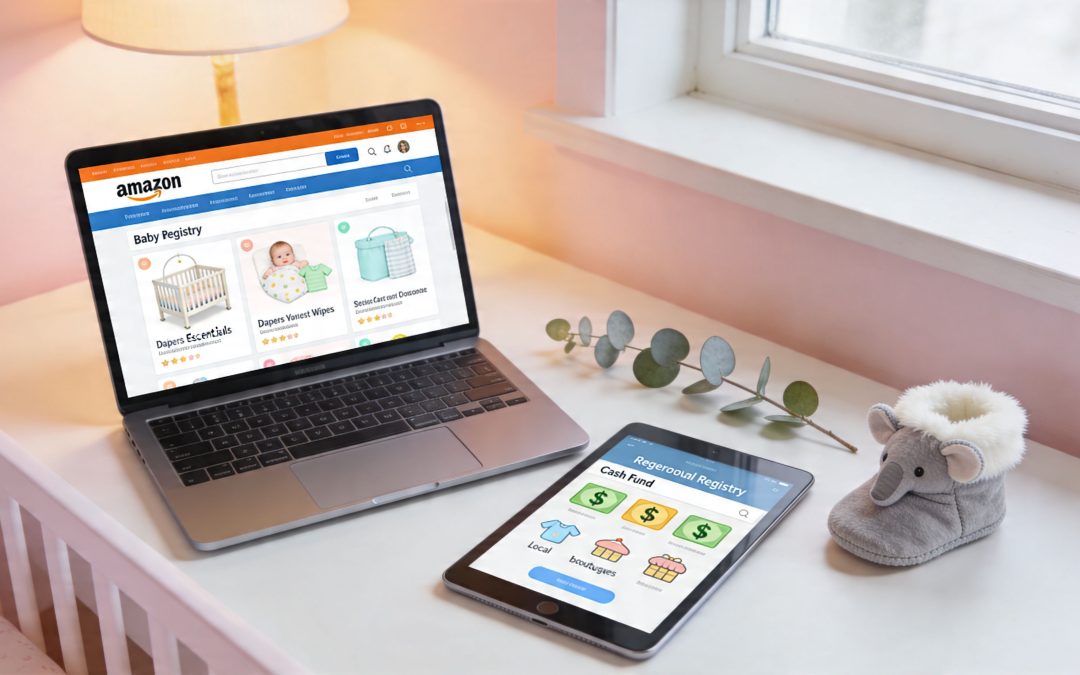
If you’re organising a baby shower or want a simple way for family and friends to give useful gifts without duplicates, EasyRegistry makes it easy to create one shareable registry for baby essentials, comfort items, and cash contributions. It’s a practical way to stay organised before birth and avoid ending up with five muslin wraps and none of the things you need.
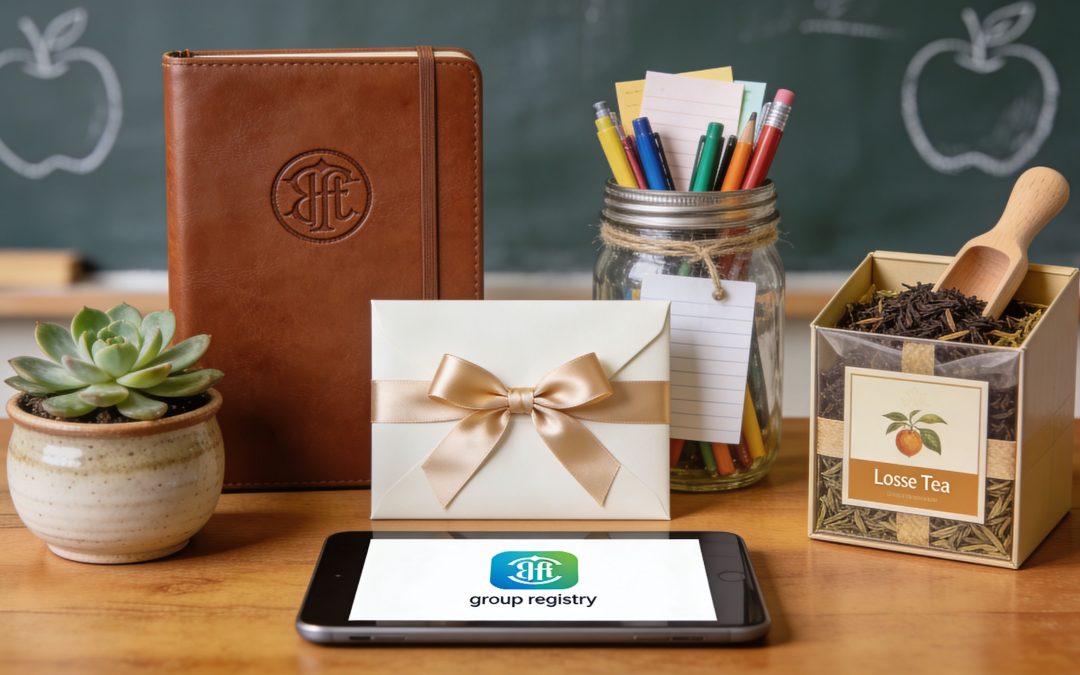
More Than an Apple: Finding a Teacher Gift They'll Actually Love
The end-of-year bell is about to ring, and with it comes the familiar scramble. You want a thank you gift for teacher that feels thoughtful, useful, and not like the fifth mug of the term.
Most parents are trying to solve two problems at once. First, what will the teacher enjoy? Second, how do you buy it without creating extra work, awkwardness, or duplicate gifts from half the class?
That’s where a little strategy helps. Some gifts work because they’re practical. Others work because they feel generous and celebratory. The best ones usually combine both, especially when they come with a note from your child or a card from the whole class. In a 2023 ThankBox survey of Australian teachers, 80% said they strongly preferred a card from the whole class over physical gifts, and 85% endorsed gift vouchers as the best physical option if a gift is given, according to ThankBox’s teacher gift guide.
So yes, the note matters. The gift still matters too.
If you're pairing a card with something cosy and consumable, this guide on how to give tea as a gift is also handy.
1. Edible Blooms
Edible Blooms is the easiest pick when you want the gift to feel polished without overthinking it. If you're buying for one teacher as a family, or sending something on behalf of a class rep, the chocolate bouquet format looks more celebratory than a plain box of sweets.
The practical advantage is delivery coverage. They offer same-day delivery in major metro areas and broader national delivery through their Edible Blooms website. That matters when you remember the gift the day before the last assembly.
Best for a celebratory thank you
This works well for teachers who don’t need more “teacher stuff”. A dessert box or gourmet hamper lands better than another novelty desk item because it’s enjoyable, finite, and doesn’t create clutter.
What I like here is the presentation. It feels like a proper gift, not a fallback option. That makes it useful for milestone moments such as end of year, graduation from primary school, or thanking a teacher who’s gone well beyond the basics.
Practical rule: Consumable gifts are usually safer than decorative ones because they don't ask the teacher to store, display, or manage another item.
There are trade-offs. Some hampers include alcohol, and that won’t suit every school community or staff policy. It also won’t suit every teacher personally, which is why this is one of those gifts where checking the contents matters.
A few details are worth checking before you order:
Review the hamper contents carefully: Some options are very school-appropriate, others are better for private adult gifting.
Check delivery timing early: Regional and remote areas can be tighter around peak periods.
Choose simpler over bigger: A smaller, well-selected edible gift often feels more considerate than an oversized bundle full of filler.
Where it works best
Edible Blooms is strongest when you want a warm, generous thank you gift for teacher and don't want to build a custom hamper yourself. It’s less ideal if you're trying to be highly personalised around dietary needs, scent sensitivity, or cultural preferences.
That inclusivity issue comes up often with teacher gifting. Many gift guides ignore it, but it matters in diverse Australian classrooms. If you don't know whether the teacher eats certain foods, drinks alcohol, or has allergies, a voucher or class card is often the safer move than a food-heavy hamper.
2. LVLY
LVLY is the option I’d use when you want something soft, stylish, and school-appropriate without becoming too generic. Their flower jars and native posies feel modern rather than formal, and the add-ons make it easy to turn flowers into a fuller gift.
Their Australia-wide gifting range at LVLY is especially useful if you’re sending to a teacher after the school term ends and you’re no longer doing playground handover.
Best for a personal but not overly intimate gift
Flowers can be tricky. They can feel lovely, but they can also feel impersonal if they’re picked without thought. LVLY handles that better than many flower services because the products are already packaged as gifts, not just bunches.
That makes it a good fit when your child has had a close connection with a teacher and you want the gift to say “we noticed your care” rather than “we bought something obligatory on the way home”.
A well-built LVLY order usually looks like this:
Start with a neutral floral option: Native flowers or simple posies tend to suit a wider range of recipients.
Add one practical extra: Chocolates or a small pamper item can round it out without overcomplicating things.
Write a proper card message: The flowers get attention, but the message gives the gift meaning.
Flowers work best when the note does the real emotional heavy lifting.
LVLY is also good at setting expectations. Their coverage notes and quarantine restrictions are clear, which saves frustration. That’s important if you're ordering across state lines, especially to places where plant delivery is restricted.
The main caution
Fresh flowers aren’t the best answer if the teacher is travelling, heading straight into school holidays, or works in a classroom where carrying gifts home is already a nuisance. In those cases, digital vouchers or a coordinated class gift often create less hassle.
This is also one of the gifts where inclusivity matters. Some teachers love flowers. Others are sensitive to fragrance, pollen, or do not want one more thing to transport. If you know the teacher well, LVLY can be excellent. If you don’t, flexibility beats guessing.
3. Koko Black
Koko Black sits in the sweet spot between indulgent and dependable. If supermarket chocolate feels too casual and a full hamper feels too much, a curated gift box from Koko Black usually lands well.
This is the kind of thank you gift for teacher that feels premium without becoming awkwardly extravagant. It’s especially good when several families are contributing and you want one elegant item rather than a pile of mixed smaller presents.
Best for shared staff gifts or polished class presents
One reason Koko Black works is shareability. A teacher can take the box home, keep it for themselves, or put it in the staffroom and share it. That flexibility is underrated.
The refrigerated shipping and express delivery options also make a practical difference in Australian weather. Chocolate gifts can go wrong fast if delivery is sloppy. Koko Black has built the logistics around that problem, which makes it more reliable than sending fragile confectionery from a general gift store.
A few scenarios where it works particularly well:
For specialist teachers: Music, art, language, and support teachers often receive fewer large gifts. A premium chocolate box feels generous without assuming personal preferences too much.
For co-teaching teams: One box can be shared more easily than one single-use personal item.
For class reps under time pressure: You can order quickly and still look organised.
What to watch for
The main downside is price. You’re paying for quality, presentation, and handling, so this isn't the budget option. Seasonal favourites can also sell out close to holidays, which matters if you're leaving your order until the final week.
Worth remembering: A smaller premium gift usually feels more intentional than a larger low-quality bundle.
This still isn't the most inclusive option if you're unsure about dietary restrictions. Chocolate is broadly popular, but not universal. If the classroom community is diverse and you don’t know the teacher’s preferences well, a voucher paired with a heartfelt class message is often the safer and more useful choice.
4. Officeworks Gift Card
Officeworks gift cards are not glamorous. They are, however, one of the most useful teacher gifts you can give.
That matters more than people like to admit. Teachers often end up buying classroom supplies, organisation tools, printing bits, stationery, and random extras that no one sees but everyone benefits from. A card from Officeworks gift cards gives them room to choose what actually helps.
Best for practical support
If your goal is usefulness, this is hard to beat. It supports either classroom needs or personal work-related purchases, and it avoids the usual “hope they like it” guessing game.
It also fits what Australian teachers say they want. In a GroupTogether 2025 survey, 88.1% of teachers preferred a single combined class gift over individual presents from families, according to Giftronaut’s teacher appreciation write-up. A practical pooled gift card lines up neatly with that preference.
If you're organising contributions from multiple families, using a dedicated gift card registry through EasyRegistry can make this much cleaner than collecting transfers manually.
Here’s when an Officeworks card works best:
For classroom teachers who buy supplies themselves: It can directly offset practical needs.
For year-level or specialist staff: It keeps the gift neutral and useful.
For group gifts with uneven budgets: Families can contribute what suits them without affecting the final presentation.
What doesn’t work so well
On its own, it can feel a bit transactional. If you hand over a bare gift card with no note, it risks feeling more like reimbursement than appreciation.
The fix is simple. Pair it with a proper class card or a handwritten message from your child. That emotional layer changes the whole tone of the gift.
A few card details are also worth checking before purchase, especially around online and in-store redemption. Gift card convenience is only convenient if the teacher can use it the way they want.
5. Booktopia Gift Certificate
Some teachers want classroom supplies. Others want a book they’d never buy for themselves during term. That’s where a Booktopia gift certificate makes sense.
A gift certificate from Booktopia gift certificates is one of the few gifts that can work equally well for professional reading, children’s books, classroom texts, or a completely unrelated holiday read.
Best for readers, English teachers, and thoughtful all-round gifting
This is a gift that feels more personal than a general retailer voucher, but it still gives the teacher control. That balance is why it works.
Instant e-delivery also helps if you're late. You can still give something polished, especially if you print the certificate and place it inside a card signed by your child or the class.
If you're trying to coordinate a class contribution without endless messages in the parent chat, it helps to use a shared system that keeps everyone in one place. A quick overview of how EasyRegistry works gives a good sense of how to organise that without chasing people individually.
Why this feels less generic than a cash-style card
Books are still a personal category. Even when the recipient chooses for themselves, the gift says you’ve thought about what they might enjoy outside pure necessity.
That makes Booktopia a strong middle ground between indulgent and practical. It can support the teacher’s work, but it can also give them something purely for themselves, which many classroom gifts forget to do.
A good fit looks like this:
For teachers who talk about books often: Obvious match.
For teachers in literacy-heavy roles: Useful without being prescriptive.
For group gifts that need to stay broadly safe: Personal enough to feel considered, flexible enough to avoid waste.
The trade-off
It’s online-only for redemption through Booktopia’s site, so it doesn’t suit someone who strongly prefers browsing in person. Stock and shipping also depend on the title they choose later.
Still, as a low-fuss thank you gift for teacher, it’s a strong option. Especially when you want to avoid clutter and still offer something with personality.
6. Prezzee Smart eGift Card
Prezzee is what I’d choose when the parent group can’t agree, no one knows the teacher’s preferences well enough, and time is running out. In those situations, flexibility beats creativity.
The Prezzee Smart eGift Card lets the recipient swap into a wide range of retailer options, which removes a lot of the risk from teacher gifting.
Best for uncertain preferences and fast group coordination
This is especially useful in diverse school communities where assumptions can backfire. Food gifts can clash with dietary needs. Pamper gifts can feel too personal. Alcohol can be inappropriate. Home décor creates clutter. A flexible digital card avoids most of that.
That matters because many teacher gifting guides still ignore cultural and personal fit. In real school communities, that’s one of the biggest reasons gifts miss the mark.
Prezzee works well when:
You don't know the teacher’s tastes: They can choose a retailer that suits them.
The class is contributing online: Delivery is instant, and there’s no physical handover problem.
You need a backup plan: It’s ideal for late decisions or absent students at the end of term.
If you’re unsure, give choice. A flexible gift almost always beats an overly specific wrong one.
The compromise
A smart eGift card doesn’t feel as warm as a handpicked hamper or flower delivery. It solves a practical problem, but it won’t create the same “special occasion” effect unless you package it well.
That’s why I’d always attach it to a proper message collection. Even a simple digital card with notes from families gives the gift some heart.
Also keep in mind that brand availability can change, and some retailers handle redemption differently. That’s not a deal-breaker, but it’s a reminder that flexibility is only helpful when the recipient understands how to use it easily.
7. GroupTogether
GroupTogether is less about the gift itself and more about solving the hardest part. Coordination.
If you've ever been the parent rep chasing contributions across text messages, bank transfers, screenshots, and “I thought someone else was handling it”, you already know the problem isn't choosing the gift. It's getting the group organised. That’s exactly what GroupTogether is built for.
Best for class-wide thank you gifts
This is the cleanest option when you want one combined gift, one collection link, and one digital card instead of twenty-seven separate mini presents. Parents contribute through a single flow, leave messages, and the final gift can be delivered in a way that feels unified.
That matters because the logistics gap in teacher gifting is real. Many gift idea roundups talk about what to buy, but not how to coordinate collection, avoid duplication, or keep contributions transparent. For class parents and P&C volunteers, that admin side is usually the hardest part.
If you're comparing options, a broader gift registry setup through EasyRegistry is another way to organise pooled gifting when you want more flexibility around the final purchase.
Where GroupTogether is strongest
The digital card feature is a big part of the appeal. Teachers often remember the messages more than the object itself, and bringing those together in one place makes the gift feel collective rather than transactional.
A few practical strengths stand out:
Single link for the whole class: Easier than managing individual transfers.
Messages and photos in one card: The sentimental part doesn't get lost.
Teacher-focused flow: The product is clearly designed for this exact use case.
Coordinator’s note: The best group gift systems reduce awkward follow-ups. Parents should be able to contribute privately and quickly.
The trade-off is control. Funds are generally used within the GroupTogether ecosystem rather than paid out as unrestricted cash, so it won’t suit every organiser or every gift idea. If you already know you want to buy from a specific store outside that flow, check the limitations first.
Teacher Thank-You Gifts: 7-Item Comparison
Item
Complexity ?
Resources ?
Expected outcome ?
Ideal use cases ?
Key advantages ?
Edible Blooms
Low, simple online order; delivery timing varies (metro same-day)
Moderate, perishable stock, shipping fees; range of price points
High novelty and celebratory impact
Same-day teacher thank-yous; class celebration gifts
Distinctive chocolate bouquets; reliable metro delivery
LVLY
Low, clear cut-offs; same-day in key metros
Moderate, flower care packaging, add-ons affect price
Fresh, attractive presentation that lasts several days
Teacher-specific bundles; last-minute metro delivery
Hydration packaging; dedicated teacher section; fast turnaround
Practical class contributions; supplies/tech purchases
Recognised national brand; directly supports classroom costs
Booktopia Gift Certificate
Very low, instant e-delivery and printable option
Low, flexible denominations; long validity (36 months)
Teacher-chosen books/resources; targeted professional value
Professional development; classroom texts; avid readers
Wide catalogue; instant delivery and long expiry
Prezzee Smart eGift Card
Very low, instant digital delivery and swapping
Low, fully digital; redeemable across many brands
Maximum flexibility; recipient chooses preferred retailer(s)
Pooled gifts, unknown preferences, last-minute gifting
Swap to 400+ brands; instant email/SMS delivery
GroupTogether
Low–Moderate, set up collection and digital card; manage contributors
Low, platform fees for payments; digital message aggregation
Consolidated class gift with group messages and transparency
Class coordinators collecting pooled funds and messages
Easy group collections; custom digital card; clear fees
The Ultimate Hack Organising a Stress-Free Class Gift
Individual gifts are lovely, especially when they come with a sincere note from your child. But if you’ve ever organised a whole-class present, you know the hard part isn’t generosity. It’s admin.
The usual problems show up fast. Some families want to contribute early, some forget, some ask for bank details again, and someone always wants to know who’s already paid. Then there’s the card, the messages, the final purchase, and the awkward question of what to do if too much or too little money comes in.
A simple online registry or pooled gifting setup solves most of that. It gives the organiser one place to collect contributions, one link to share, and one record of what’s been contributed. That’s much easier than juggling cash envelopes or chasing screenshots in a class WhatsApp thread.
This approach also lines up with what teachers tend to prefer. Earlier, I mentioned the strong preference for whole-class appreciation and combined gifting. That matters because it confirms what many parents already suspect. One coordinated, well-chosen gift usually lands better than a pile of unrelated small items.
Here’s the straightforward way to run it:
Create the gift page: Set up a registry or contribution page with the teacher’s name and occasion.
Choose the format: Add a cash fund or decide on the exact gift category, such as a flexible eGift card or store voucher.
Share one link only: Send that link in the class app, parent email thread, or year-level group.
Collect messages as you go: Encourage families to add a short thank you note so the gift feels personal.
Buy one strong final gift: Use the pooled amount for something useful or flexible.
The sweet spot is usually a combined gift card plus a class message bundle. That gives the teacher choice, avoids clutter, and still feels warm. It also helps with inclusivity. If you don’t know someone’s dietary restrictions, fragrance sensitivity, cultural preferences, or whether they even want a physical item, flexible gifting is often the most respectful option.
For organisers who want a simple way to pool contributions around a teacher gift, EasyRegistry is one relevant option. It allows Australian users to create a registry, add gifts or cash funds, share a single link, and keep contributions in one place.
The best thank you gift for teacher still comes down to the same thing. Show that you noticed the work, the patience, the extra effort, and the impact on your child. The format can vary. The appreciation shouldn’t.
If you’re organising a class present and want one place to collect contributions, gift ideas, and messages, EasyRegistry can help you set up a simple shared registry without the usual back-and-forth.
You’ve got a birthday coming up, Sydney is expensive, and you’d still like the day to feel fun rather than like a budgeting exercise. That’s exactly where a good freebie crawl comes in. Done properly, free birthday stuff sydney isn’t just a random grab for a doughnut and a coupon. It can become a full birthday plan with breakfast, a drink, lunch, dessert, and one genuinely memorable outing.
Australia’s birthday freebie scene is broad enough that families can stack more than $500 worth of birthday offers across the year, according to this 2026 Australian birthday freebies roundup. Sydney is one of the best places to take advantage of that because so many chains and local favourites have convenient city, suburban, and shopping-centre locations.
The trick is timing. Some rewards are birthday-day only. Some appear at the start of your birthday month. Others need prior spend or early sign-up, and that’s where requirements can be overlooked. This guide skips the fluff and gets straight to the offers that are useful for building a Sydney birthday crawl.
If you’re sorting presents at the same time, it also helps to keep gift planning separate from freebie chasing. That’s where tools such as other gift guides and registry options can keep things tidy while you focus on the fun part.
1. Captain Cook Cruises Sydney
If you want one freebie that feels like a proper Sydney birthday, this is the one I’d put near the top. Food offers are easy to find. A harbour experience is what makes the day feel like an occasion.
Join the free Captain’s Club at Captain Cook Cruises Sydney and you may receive a complimentary birthday cruise, commonly tied to a lower-key harbour experience such as a Coffee Cruise, with exact inclusions changing by season and promotion. That seasonal variability matters. It’s not the kind of birthday reward you should assume will stay identical every year.
Why it works well in a crawl
This is the best “anchor event” on the list because it shapes the rest of your day. A harbour sailing gives you a central-city start, which makes it easy to continue the crawl around Circular Quay, the CBD, or onward by train to another food stop.
The practical upside is value. A drink or snack reward is nice, but a Sydney harbour cruise feels harder to justify as a paid add-on. If you can claim it as your birthday perk, the day immediately feels bigger.
Practical rule: Book this one first, then build the rest of your birthday route around the sailing time.
There are trade-offs. You’ll need to join before redeeming, you’ll usually need to book ahead, and limited sailings can make spontaneous plans tricky. If your birthday falls on a busy weekend, flexibility helps.
Best for
Couples: A scenic freebie beats another generic app voucher.
Visitors with a Sydney birthday: It’s more local than a chain food stop.
Locals doing a city day: Easy to pair with drinks, lunch, and dessert offers later.
If you’re also organising gifts for a milestone birthday, keep the admin separate from your outing. A dedicated birthday registry helps avoid chasing messages while you’re trying to board a cruise.
My honest take is simple. This is not the easiest reward on the list, but it’s one of the few that can make free birthday stuff sydney feel special rather than purely transactional.
2. Boost Juice
Boost is the reliable “slot it anywhere” stop on a birthday crawl. You don’t need a sit-down plan, a long time window, or a giant appetite. You just need your app set up properly.
Sydney has plenty of Boost locations, and the brand’s Vibe Club signup page makes it one of the easier drink rewards to keep in your rotation year-round. The verified Australian freebie guides note that Boost offers a free juice, smoothie, or protein shake for Vibe members around their birthday at Sydney locations.
Where Boost shines
Some birthday offers are better on paper than in real life because the store footprint is awkward or the product isn’t worth detouring for. Boost usually avoids that problem. If you’re moving through a shopping centre, major station precinct, or busy retail strip, there’s a decent chance one is nearby.
That makes it useful as a mid-morning or afternoon stop, especially if your crawl includes richer food like burritos, doughnuts, or churros later.
A few things matter more than people expect:
Register early: Birthday rewards are only useful if your account details are correct before the birthday window opens.
Check the app, not your memory: Some people assume an offer will appear automatically, then realise too late the account wasn’t completed.
Carry ID if you can: Verification can come up at some chains, and Canstar notes Boost may ask for ID in birthday redemptions in Australia via this birthday freebies explainer from Canstar.
Grab Boost early in the day if you’re doing multiple food stops. It’s easier to enjoy before lunch than after doughnuts, burritos, gelato, and churros.
The real trade-off
Boost is convenient, but it’s not a leisurely experience. This is a grab-and-go freebie, not a birthday centrepiece. If you’re chasing atmosphere, save your “event” energy for a harbour cruise, zoo entry, or dinner booking.
Still, for pure crawl efficiency, it’s excellent. It’s quick, familiar, and easy to pair with almost any route through the city, Inner West, or major suburban centres. Among free birthday stuff sydney options, that convenience counts for a lot.
3. Krispy Kreme Australia
Some birthday freebies are best enjoyed solo. Krispy Kreme is better when you’ve got company, because a free four-pack of Original Glazed doughnuts feels more generous than the usual single-item birthday perk.
On a crawl, doughnuts work best in one of two ways. Either they’re breakfast-adjacent if you’ve got an early city start, or they become the easy “bring something to the group” stop if friends are joining later.
That's a key advantage here. It doesn’t force everyone into your personal loyalty app ecosystem. You redeem once, then split the reward with whoever’s nearby.
There are still a few practical catches:
Subscribe before your birthday month: Leaving it late is the classic mistake.
Expect exclusions at some stores: Not every outlet always participates the same way.
Watch your inbox and junk folder: If the birthday email goes missing, you’ll want time to sort it.
What works and what doesn’t
What works is using Krispy Kreme as a social stop. Meet friends, grab the four-pack, take a quick coffee break nearby, then move on. What doesn’t work is placing it after several sweet rewards and expecting anyone to be excited for more sugar.
This is also one of the easier offers to redeem outside the exact birthday date, which helps if your birthday falls on a workday and your actual celebration happens on the weekend.
I’d rate it as a strong support player in a birthday crawl rather than the main event. It won’t define the day, but it can make the day feel more generous.
4. Mad Mex
If you want one reward that covers lunch, Mad Mex is one of the most practical options in Sydney. Verified Australian guides list Mad Mex as a birthday freebie participant, with a free burrito for Mad Members after prior spend, and that’s a much more useful reward than the tiny “free side” offers some chains push.
The current Mad Mex loyalty program is worth joining well ahead of time because the birthday perk requires a minimum lifetime spend of $10 as a member. That prior spend requirement is the part people miss.
The burrito is the payoff, the setup is the catch
This is a classic example of a birthday offer that rewards planners, not last-minute sign-ups. If you already eat there occasionally, the hurdle is small. If you don’t, you’ll need to think ahead and make that qualifying purchase before your birthday month.
That’s why Mad Mex works best in a crawl when you treat it as your “substantial meal” stop rather than just another app freebie.
Best use: Make it lunch so you’re not stacking too many sweets too early.
Best timing: Aim for your birthday month, not necessarily your exact birthday day.
Best expectation: Keep extras simple, because add-ons can turn a free meal into a paid one fast.
A free burrito beats a free sample. Use this as the meal that keeps the rest of the crawl from becoming an all-dessert marathon.
Where it fits in Sydney
Mad Mex has enough Sydney presence to be flexible. It suits a CBD lunch break, a shopping-centre route, or a suburban birthday run where you don’t want to go into the city at all.
This is also the point where birthday admin and gift admin can start colliding. If friends are asking what to get you while you’re juggling bookings and reward apps, a separate free gift registry keeps that organised without cluttering your phone with even more birthday messages.
My verdict is straightforward. Mad Mex isn’t the most effortless freebie, but it’s one of the most useful. In a real Sydney birthday crawl, useful usually beats flashy.
5. San Churro
San Churro is for people who want dessert with a proper sitting-down moment attached. Some birthday rewards are over in ninety seconds at the counter. This one can feel more like an actual birthday pause.
The San Churro el SOCIAL program gives eligible members a free Medium Churros during their birthday month, provided they’ve made a full-priced purchase in the prior period set out by the program. In practical terms, that means this reward is for people who planned ahead, not birthday-week opportunists.
Why it’s stronger than it first looks
Month-long redemption windows are underrated. They make a huge difference if your actual birthday lands on a Monday, if the weather turns awful, or if you don’t want to cram every reward into one day.
That flexibility makes San Churro ideal as a “celebration extension” stop. You can save it for a different evening and still feel like the birthday is continuing.
The dessert itself also suits groups better than some of the smaller single-item perks. Not because it’s massive, but because the venue style lends itself to a catch-up rather than a quick grab-and-go.
The catch to watch
The prior-purchase requirement matters. The broader Australian birthday freebie ecosystem is fragmented, with more than 40 verified retailers participating across categories, and eligibility rules vary heavily across brands according to the OzBargain birthday deals wiki. San Churro is one of those offers where the setup requirement is part of the deal.
That’s the wider lesson with free birthday stuff sydney. The best rewards often aren’t fully free in the “sign up today, collect tomorrow” sense. They reward a bit of habit and a bit of admin.
Save San Churro for evening if your daytime crawl already includes gelato or doughnuts. It feels better as a nightcap than as sweet stop number three before lunch.
For a low-stress birthday week, that’s exactly how I’d use it. Not as a rushed add-on, but as a flexible dessert booking with a reward attached.
6. Starbucks Australia
Starbucks is the customiser’s birthday freebie. If you’re picky about milk, extra shots, syrups, or size, it tends to feel more flexible than simpler drink offers.
You can join Starbucks Rewards Australia and receive a birthday beverage reward issued in your birthday month. In crawl terms, that means you can plan around it rather than hoping a one-day voucher lines up with your schedule.
Why some people will prefer this over Boost
Boost wins on convenience and health-adjacent energy. Starbucks wins on control. If your ideal birthday drink is a larger customised coffee or a more dessert-style beverage, Starbucks gives you more room to make the reward feel personal.
That matters on a birthday. A freebie feels better when it matches what you’d choose for yourself.
The flip side is that the app setup needs to be done properly. If you’re not already using the account, don’t leave registration until the last minute and assume it’ll all sort itself out.
A few good uses for this reward:
Morning city start: Grab it before a harbour activity or shopping loop.
Afternoon reset: Use it between lunch and dessert stops.
Rainy birthday backup: A warm drink reward is more useful than cold dessert when Sydney weather turns.
Real-world fit in a crawl
I wouldn’t pair Starbucks and Boost back-to-back unless you’re splitting your birthday over multiple outings. Too many drink redemptions in one day can turn a crawl into admin with straws.
Where Starbucks works best is when your route already includes a nearby location and you want one reward that feels a bit more customized than standard chain birthday offers. It also suits people who don’t want the pressure of dining in or committing to a full meal.
This is one of the easiest birthday freebies to make feel intentional. Pick the drink you want, not the one you think you should get because it’s free.
7. Gelatissimo
A birthday crawl in Sydney should have at least one easy dessert stop, and Gelatissimo is one of the cleaner options if you prefer something simple over a loaded app deal.
The Gelatissimo Club Gelato terms and conditions set out a free single scoop birthday reward for members, with eligibility tied to registration before your birthday and a $5+ purchase in the previous 12 months. That makes it accessible for regulars, but not a true last-minute freebie.
Why it works so well on the day
Gelato is easy. No booking. No heavy meal commitment. No trying to decide whether you’ve got room for a whole dessert plate after lunch. You just redeem, choose your flavour, and keep moving.
That makes Gelatissimo one of the best filler stops in a free birthday stuff sydney itinerary. It slips neatly between larger plans.
There’s also a family-friendly angle here. If your birthday celebration includes kids, parents, or a mixed group with different energy levels, gelato is usually the lowest-friction option on the list.
The trade-off worth knowing
This reward is modest. You’re getting a single scoop, not a huge bundle. If you want the biggest dollar-style win, other offers will beat it. If you want a clean, pleasant stop that doesn’t derail the day, Gelatissimo does its job.
The main mistake people make is assuming all birthday gelato rewards are equal. They aren’t. Some chains need prior spend, some don’t, and some have wider windows than others. Verified Sydney birthday freebie coverage also highlights similar prior-purchase hurdles at dessert brands, so it pays to read the app details before relying on one reward for your route.
If the birthday itself is a bigger milestone and gifts are part of the plan, a sample setup like Rob’s 40th birthday registry example shows how to keep group gifting organised while the day itself stays relaxed.
For the crawl itself, I’d place Gelatissimo late afternoon or early evening. It’s a soft landing before dinner, or a tidy finish if you’re keeping the whole birthday low-cost.
Membership and minimum $10 prior spend; in-app voucher; some location exclusions
Moderate, voucher valid ~30 days
High, full-meal value (burrito)
Good for a substantial free meal; meet $10 threshold ahead of birthday
San Churro (el SOCIAL)
Low–Medium, requires prior full-priced purchase in prior 11 months
At least one full-priced purchase in last 11 months; app redemption; in-store only
Moderate, redeem anytime during birthday month
Moderate, dessert-focused treat
Best as a dessert stop; make qualifying purchase before eligibility window closes
Starbucks Australia (Starbucks Rewards)
Low, account setup and linked rewards
Starbucks Rewards account; reward auto-issued at month start
Very fast, redeem any beverage including customisations
High, flexible and customizable beverage reward
Perfect for customization/upsize; ensure account is registered before month starts
Gelatissimo (Club Gelato)
Low–Medium, membership + $5+ prior purchase
Club membership; $5+ purchase in previous 12 months; in-store redemption
Quick, single scoop redeemed in-store
Low, single-scoop treat, kid-friendly
Good for casual treat; make small purchase within 12 months to qualify
Your Blueprint for a Free Birthday Celebration
You wake up on your birthday in Sydney with half a dozen offers sitting in your apps, a mate texting brunch suggestions, and no interest in spending the day zigzagging across the city for a free donut. A better plan is to build a birthday freebie crawl that fits how Sydney works. Pick one main stop, cluster the easy redemptions nearby, and leave at least one reward for later in the week.
That approach matters because birthday deals rarely run on the same rules. Some rewards land automatically. Others only appear if you joined early enough, spent a small amount beforehand, or redeem through the app rather than at the counter. Verification and eligibility are a common friction point, and many roundup articles skip over that practical detail. One Sydney guide notes that birthday freebie lists often mention conditions like ID checks or prior spend without explaining what to do when an offer does not show up properly in your account, especially for brands with tighter terms in this Sydney birthday freebie discussion.
The smartest crawl usually has three parts. Start with your anchor experience, then slot in one proper food stop and one quick treat nearby. Save any month-long dessert reward for a slower day unless your route already passes the store. That is how you get value without turning your birthday into admin.
A practical Sydney plan looks like this:
Choose an anchor first: If you are doing Captain Cook Cruises, Circular Quay becomes your centre of gravity for the day.
Group by area: CBD, Newtown, Bondi Junction, Parramatta, and Chatswood all work better as self-contained loops than trying to chase every brand on the list.
Use one substantial redemption: A meal-based offer gives the crawl structure and saves real money.
Treat desserts as flexible extras: Free churros, gelato, or donuts are more useful when they fit the route rather than dictate it.
Check every app before you leave home: Look for expiry dates, store exclusions, and whether the barcode is already loaded.
Carry photo ID: Some venues are relaxed. Others will ask.
There is also a trade-off between maximum value and a relaxed day out. Readers often try to redeem everything on the exact date, then run into closed locations, missing vouchers, or time lost on trains. In practice, the best Sydney birthday freebie crawl uses the high-value offers on the day and pushes the lower-stakes ones into the rest of your birthday month.
If you want to add one bigger perk outside the seven clubs above, verified Australian roundups highlight Taronga Zoo's $1 birthday entry with photo ID on your actual birthday in this Pointhacks birthday freebies guide. That kind of anchor can shape the whole day. Food rewards then become the supporting stops rather than the main event.
Gifts can create a different planning problem. Friends message at different times, group presents get messy, and duplicate gifts are common. If you want to keep that side organised while your freebie crawl stays simple, EasyRegistry is one practical option for managing gift preferences, cash contributions, and shared presents in one place.
If you’re planning a birthday and want gifts sorted without duplicate presents or scattered messages, EasyRegistry lets you create an online birthday registry that guests can use for gift purchases, cash gifts, or wishing well contributions in one place.
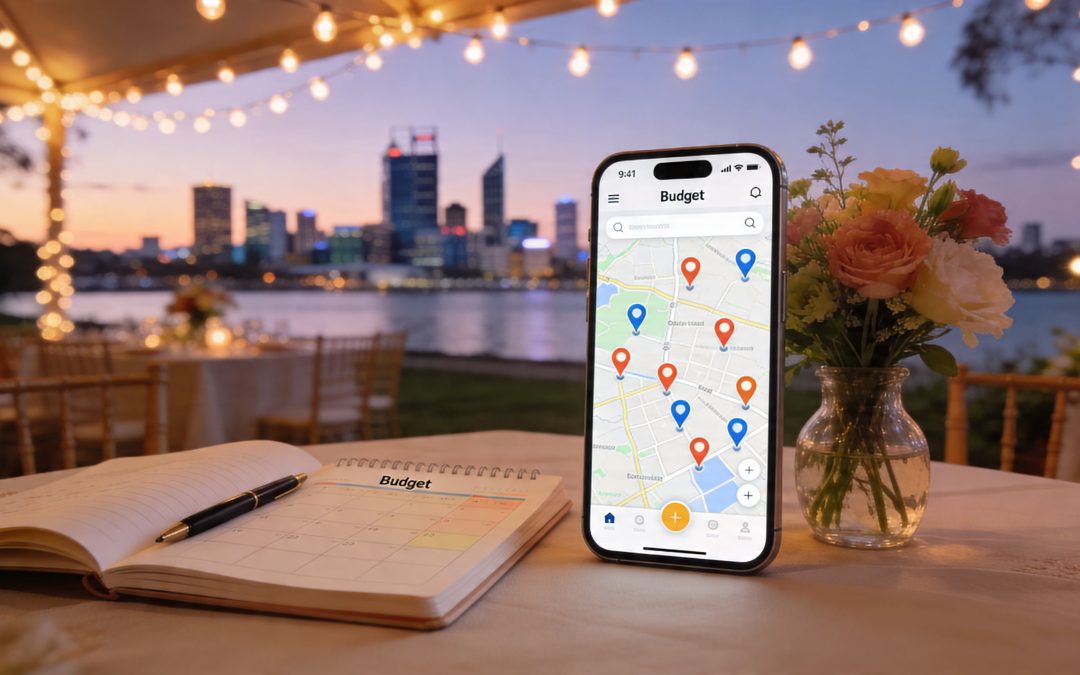
You’re probably in the part of wedding planning where every venue looks good until the numbers land in your inbox. One place has a great view but a steep minimum spend. Another looks affordable until you realise you need to hire chairs, glassware, staff, and a bar setup on top. That’s exactly why searching for affordable wedding reception venues perth can get frustrating fast.
The good news is Perth gives couples more room to move than many other Australian markets. Affordable venues in Perth commonly start around $65 per person on Tagvenue, while local venue pricing also spans package-style and hourly models, which makes it easier to match the format to your guest list and priorities. If you’re planning something outdoors or want to compare venue style against setup complexity, these outdoor wedding reception ideas are also worth a look before you lock anything in.
The smartest way to shortlist venues isn’t by asking which one is “cheapest”. It’s asking which pricing model suits your wedding. Dry hire can save money if you’re organised and selective. Packages can cost less overall when they remove coordination mistakes and vendor creep. Small receptions can also work well on hourly or minimum-spend formats if you keep the run sheet tight.
Below are seven Perth venues that are worth serious consideration, plus the negotiation angles and cost-control moves that work for each one.
1. Perth Town Hall
Perth Town Hall hire details make sense for couples who want scale and atmosphere without defaulting to a hotel ballroom. The room already has the heritage presence, so you’re not paying to manufacture character from scratch.
This is the classic blank-canvas trade-off. You usually get more control over catering, drinks, styling, and layout, but you also become the person stitching the event together. For couples who are organised, or who have a planner for the key logistics, that flexibility is exactly where the savings sit.
Where the value is
Perth Town Hall works best when your guest count is large enough to justify the room, but not so elaborate that your styling budget blows out. It suits couples who want a sit-down reception with a formal feel, or a cocktail format with a dramatic central space and easy city access.
The hidden win with civic venues is predictability. You’re usually dealing with a clearly defined hire structure rather than layers of package upsells that appear later.
Best fit: Couples who want a heritage backdrop and are happy to choose their own suppliers.
Watch for: Liquor approvals, bump-in timing, and whether your caterer has worked in dry-hire venues before.
Strong savings move: Keep florals focused on one feature area. The room itself already carries visual weight.
Practical rule: In a dry-hire hall, save money on décor first, not on logistics. Cheap staffing or weak furniture hire causes more problems than simple centrepieces ever will.
Negotiation angle
The useful negotiation here isn’t usually “Can you lower the venue fee?” It’s “Can we optimise access and inclusions?” Ask about practical points such as setup windows, pack-down timing, existing furniture, loading access, and approved service conditions. Small operational wins can trim real costs.
Before booking, run through a proper supplier checklist so you don’t miss costs hiding outside the hire fee. This guide to questions to ask your wedding venue is especially helpful for dry-hire venues where the base quote rarely tells the whole story.
What doesn’t work here is booking the room because the hire fee feels affordable, then discovering your furniture, staffing, bar service, and lighting choices push the total well beyond a simpler package venue. Perth Town Hall is a strong value option, but only if you price the whole event, not just the room.
2. Perth City Farm
A lot of couples tour Perth City Farm after pricing a hotel package and realising they are paying for formality they do not want. Perth City Farm weddings suits couples who care more about atmosphere, flexibility, and local character than silver-service polish. That can be a smart budget move, but only if the plan matches the venue.
The value here comes from control. The barn and Art Room already have warmth and texture, so styling does not need to do all the heavy lifting. The venue’s not-for-profit, community-run model also appeals to couples who want their spend tied to something local rather than a standard event machine.
Where the savings actually come from
Perth City Farm is a dry-hire style decision in practice, even if couples describe it more casually. Dry hire creates the opportunity for savings, but it also shifts more budget decisions onto you. If you bring in premium catering, custom furniture, full bar staffing, upgraded lighting, and detailed florals, the numbers can climb fast.
The couples who usually do well here keep the brief tight. Share platters, food trucks, grazing-style service, simple table settings, and a guest count that fits the room properly all tend to work in your favour.
Best fit: Couples who want a relaxed reception and are comfortable coordinating several suppliers.
What works well here: Long tables, festoon or ambient lighting, simple menus, and a guest experience built around conversation rather than formal production.
Watch for: Equipment hire, glassware, cool-room or drinks storage, waste removal, and who is handling pack-down at the end of the night.
Perth City Farm rewards restraint. Every add-on should earn its place, because this venue already gives you the atmosphere.
Negotiation angle
The strongest negotiation here is rarely about cutting the hire fee. It is about reducing the expensive friction around the event. Ask about access hours, bump-in the day before, what furniture is already available, whether preferred suppliers offer sharper rates for the space, and how strictly pack-down timing is enforced. A longer setup window can save more than a small discount on the venue itself.
This is also the kind of venue where funding pressure often shows up late. Styling upgrades, extra catering staff, and transport logistics tend to appear after the first quote. Couples who want more flexibility for those extras sometimes use a wedding services registry to help cover practical wedding costs, especially when the venue choice saves money in one area but increases supplier spend in another.
If you’re trying to stay realistic with the budget, this guide with money-saving wedding day tips pairs well with venues like Perth City Farm because the savings come from decisions across the whole event, not one single discount.
One caution matters here. BYO only works out cheaper when drinks service, chilling, RSA staffing, ice, glassware, and cleanup are priced from the start. Miss those line items and a flexible venue stops looking affordable very quickly.
3. Royal Perth Golf Club
Royal Perth Golf Club tends to suit couples who want the reception to feel established from the moment guests arrive. The room, service structure, and grounds already carry a certain formality, so you are not paying to build that atmosphere from scratch.
That matters for budget control.
A golf club reception usually lands in a practical middle tier. You get more built-in polish than a community hall or true dry-hire venue, but you are often not taking on the full cost load that comes with a large hotel wedding. For couples who want a classic sit-down reception, that balance can be excellent value.
Where the savings actually come from
A key saving here is not always a cheaper headline package. It is the reduction in hidden planning costs. Clubs usually have an experienced events team, established service flow, workable parking, furniture, and a kitchen set up for functions. That lowers the chance of paying extra later for problem-solving, rushed supplier fixes, or add-ons that only appear once the run sheet gets tested.
As noted earlier in this guide, Perth reception pricing can climb quickly once premium inclusions start stacking up. Royal Perth Golf Club can make sense if you want a more refined setting without automatically stepping into top-end hotel pricing.
Best fit: Couples who want a traditional reception, strong service structure, and fewer operational surprises.
Likely trade-off: Less flexibility around external catering, bar choices, and heavily customised formats.
Smart question to ask: Which items are standard in the package, and which ones trigger upgrade fees, especially for beverages, staffing, chair covers, and extended access time?
Negotiation angle
The best negotiation tactic here is usually package shaping, not hard price cutting. Ask whether the venue can swap inclusions you do not need for ones you do, such as a better beverage selection instead of upgraded styling items, or a longer drinks service instead of late-night food. Couples often get better value by refining the package around their actual priorities than by pushing for a small discount on the base rate.
Extras can also accumulate at this sort of venue. The common ones are upgraded wines, longer bar service, dessert additions, signage, florals, and those last-minute styling decisions that seem minor on their own. If family and friends are already asking how they can help, EasyRegistry’s wedding services registry can be a practical way to direct contributions toward those real costs instead of ending up with gifts that do not ease the wedding budget.
One final check is worth making before you sign. Ask how the venue handles minimum spends, public holiday surcharges, and timing for vendor access. At golf clubs, those details can have more impact on the final number than the advertised package itself.
4. Pagoda Resort & Spa
Pagoda Resort & Spa weddings suits couples who want a one-stop venue and don’t want the wedding to feel like a logistics project. That’s the package-venue advantage. You’re not only buying food and a room. You’re buying fewer decisions.
Hotel venues can look more expensive at first glance, but that isn’t always how the total spend lands. Once you add furniture, staffing, setup, and service ware to a DIY venue, a package hotel can become the cleaner value play.
When packages beat dry hire
Pagoda is strongest for couples who want clear event flow, weather protection, on-site accommodation, and a venue team that can handle the standard reception sequence without much hand-holding. That matters if you’re working full-time, planning from interstate, or don’t want to spend your engagement managing ten separate suppliers.
VenueNow’s historic Perth data places local wedding venues in the $150 to $225 per person range, shaped by food and beverage packages and venue style. That makes package comparison easier. Instead of only asking whether the per-head cost looks low, ask what headaches it removes.
If you’re comparing a package venue with a dry-hire venue, compare the final invoice categories, not just the starting price. The cheapest quote rarely stays the cheapest.
Negotiation angle that works
Ask whether there are midweek offers, expo specials, or package substitutions that suit your priorities. Couples often get better value by swapping inclusions they won’t use rather than asking for a straight discount. If chair covers, late-night snacks, or premium beverage upgrades don’t matter to you, ask what can be adjusted.
This venue style also rewards guest-count honesty. If your numbers are likely to shift, don’t overcommit too early. Package venues are efficient, but minimums can bite if you’re too optimistic.
Pagoda isn’t ideal for couples who want total supplier freedom or a heavily DIY aesthetic. It is ideal for couples who value convenience, weather-safe rooms, and the ability to keep planning contained inside one venue relationship.
5. Mounts Bay Sailing Club
Guests arrive just before sunset, the river is doing most of the visual work, and suddenly you do not need a huge styling brief to make the room feel special. That is the core value of Mounts Bay Sailing Club weddings. It gives couples a Perth foreshore setting with city access, but without the price pressure that often comes with premium hotel venues.
That trade-off matters. Scenic venues can save real money, but only if you resist the urge to spend those savings on unnecessary décor. At Mounts Bay, simple florals, good lighting, and a clean layout usually outperform elaborate installations because the water and skyline already set the tone.
Where couples usually save, and where they overspend
This venue suits couples who want atmosphere built into the room. Cocktail receptions often make strong financial sense here because they use the outlook well, keep the event moving, and can reduce furniture and styling costs. A seated reception can still work well, but it needs tighter planning around floorplan, sightlines, and how much of the room you need.
The common mistake is treating every waterfront venue as interchangeable. They are not. Some are flexible but sparse. Others look affordable at first, then recover margin through staffing rules, beverage minimums, or furniture upgrade costs. Ask for the full inclusion list early and compare the final invoice categories, not just the venue hire figure.
Best fit: Couples who want river views, central access, and a reception that already feels polished before styling starts.
Smart savings move: Price both cocktail and seated formats against your real guest count, then compare what each format changes in staffing, furniture, and food spend.
Watch for: Extra costs tied to layout changes, longer bump-in times, or premium date minimums.
Negotiation tactics that actually work here
Ask a practical question first. What becomes cheaper if the event starts earlier, finishes earlier, or runs as a Sunday lunch instead of a Saturday night reception? Venues like this can have more room to adjust timing than headline package rates.
Then get specific about what you will and will not use. If the package includes elements that do not matter to you, ask whether those can be swapped for something with more value, such as a better beverage selection, extra service time, or fewer hire items elsewhere. Straight discounts are harder to get than sensible substitutions.
This is also a venue where cash flow can catch couples out. The base reception cost may be reasonable, then the extras arrive later: better chairs, additional styling, transport, signage, or upgraded drinks. If the venue itself is the right call but the add-ons stretch the budget, EasyRegistry can help cover the gap for those optional extras without forcing you to cut the reception style back too far.
Mounts Bay is a strong option for couples who want a reception that feels distinctly Perth, photographs well, and does not need heavy production to justify the spend. It is less suited to couples who want full DIY control or a highly customised supplier setup.
6. Rothwood Garden Weddings & Micro-Weddings
Rothwood Garden Weddings & Micro-Weddings is the clearest fit here for couples planning small. If you already know you don’t want a large guest list, venues built around micro-weddings can save you from paying for space and service capacity you’ll never use.
That’s the mistake many couples make. They fall in love with a venue designed for bigger numbers, then try to “scale it down”. Smaller-format venues usually do this better because the experience still feels complete at an intimate size.
Why micro venues deserve a separate strategy
Hourly and compact packages matter much more for intimate receptions. Peerspace reports Perth wedding reception venues averaging $98 per hour, which shows why short-format receptions, lunch events, and tightly run evening celebrations can work well for smaller weddings.
Rothwood is a good example of where low-entry packages and a garden setting can create a reception that feels finished without a giant styling budget. Couples who prioritise photos, atmosphere, and a relaxed guest experience often get more value here than in a larger mainstream venue.
Best fit: Intimate receptions, midweek weddings, and couples who want a garden backdrop with a manageable budget.
Works well: A shorter celebration with strong food, drinks, and photography.
Less suitable: Anyone likely to expand the guest list later or who needs a large indoor fallback.
Smaller weddings reward discipline. Spend on guest experience and photography first. Don’t inflate the format just because traditional wedding advice assumes a bigger event.
How to negotiate smartly
Instead of chasing a lower starter price, ask what package variations are available around day, timing, and inclusions. A venue focused on micro-weddings may have more flexibility around format than a large venue that runs on standard banquet systems.
Also ask what happens if weather turns. With garden venues, the backup plan is part of the value equation, not a side note. If the wet-weather option feels compromised, the cheap package can stop looking cheap very quickly.
7. Cottesloe Surf Life Saving Club – Don Morrison Room
Late afternoon ceremony, beach photos at golden hour, then straight upstairs for a relaxed reception. That is the Don Morrison Room at its best. Cottesloe Surf Life Saving Club weddings suits couples who want a real Perth coastal setting without paying hotel-level beach venue pricing.
The smart play here is to treat the view as part of your styling budget. You already have coastline, sunset potential, and a location guests instantly understand. That usually means you can keep florals, hire items, and decorative extras tighter than you could in a blank function room.
The trade-off is operational, not aesthetic. Community-style beach venues often need more hands-on planning than a resort or full-service hotel. Ask early about bump-in times, pack-down deadlines, sound limits, supplier access, kitchen use, and what furniture is included. Those details shape the actual cost.
Where couples save and where budgets drift
Savings usually come from keeping the format matched to the room. Cocktail style, shared feasting, or a shorter reception often works better here than trying to force a highly formal ballroom template into a surf club setting. Once couples start adding heavy styling, premium hire furniture, and a long list of extras to make it feel more luxe, the value can thin out fast.
This venue rewards clear priorities.
If food, music, location, and photos matter more than a traditional black-tie setup, the numbers usually stack up well. If you want a heavily produced reception with layered styling and hotel-style coordination, a packaged venue may end up being better value after all.
EasyRegistry can also help cover the gap between the base venue spend and the extras that make the day feel complete, such as upgraded catering, better chairs, transport, or a photo booth. That is often a cleaner solution than stretching the initial venue budget too far.
Practical trade-offs
The room works best for couples who are comfortable making a few deliberate planning decisions and using suppliers carefully.
Best fit: Beachside receptions with a relaxed or semi-formal feel, especially for couples who value location over luxury finish.
Best savings move: Keep styling simple, schedule photos on-site, and spend harder on food and entertainment than decor.
Watch-out: Ask for the full conditions sheet before paying a deposit. Finish times, access windows, and supplier rules matter more here than they do at all-inclusive venues.
Less suitable: Couples who want a fully managed reception package with very little vendor coordination.
My usual advice with venues like this is simple. Negotiate on inclusions and timing before you negotiate on price. An extra hour for setup, clearer pack-down terms, or flexibility around suppliers can save more money than a small discount on hire.
Moderate ?, dry?hire requires vendor coordination and possible permits
Moderate ?, predictable hire fee; external catering/staff required
Historic ballroom ambience and flexible capacity; good value for size, ???
Couples wanting a heritage ballroom feel on a budget and flexible layouts
Affordable for size; central CBD location; reputable civic venue
Perth City Farm
High ?, true dry?hire with extensive DIY setup
Low–Moderate ?, low hire cost but need suppliers, labour and equipment
Industrial/garden aesthetic; very cost?effective for DIY events, ??
Budget DIY weddings, food?truck or multi?day setups; supporters of local not?for?profit
Highly flexible spaces; extended hire windows; strong local social proof
Royal Perth Golf Club
Low–Moderate ?, in?house team simplifies logistics
Moderate ?, room hire with in?house catering; clear inclusions
Classic, elegant seated receptions with smoother execution, ???
Couples wanting a traditional reception with professional coordination
Clear pricing and inclusions; experienced venue staff; scenic views
Pagoda Resort & Spa
Low ?, hotel handles coordination and supplier management
High ?, packages can be efficient but often have minimums
Polished, one?stop hotel weddings with reliable delivery, ????
Couples seeking all?inclusive convenience and on?site accommodation
On?site rooms; established packages and supplier network; weather?safe
Mounts Bay Sailing Club
Moderate ?, some coordination and club policy navigation
Moderate ?, variable packages; confirm inclusions
Scenic waterfront receptions with good value relative to hotels, ???
Couples wanting river views and indoor/outdoor flow without 5?star costs
Strong setting?to?cost ratio; experienced with weddings; good photo locations
Rothwood Garden Weddings & Micro?Weddings
Low ?, package?driven, limited coordination for small events
Low ?, transparent starter pricing and small?scale logistics
Intimate garden ceremonies and micro?receptions with easy budgeting, ???
Micro?weddings, elopements and small guest lists prioritising garden photos
Clear published pricing; purpose?built for small celebrations; relaxed vibe
Cottesloe SLSC – Don Morrison Room
Moderate ?, option to hire clean or furnished; some logistics
Low–Moderate ?, BYO options reduce per?head costs but require coordination
Beachside casual to semi?formal receptions with ocean outlooks, ??
Seaside receptions with beach photography and budget control
Ocean views without resort pricing; BYO flexibility; community?club atmosphere
Final Thoughts
The best affordable wedding reception venues perth couples choose aren’t always the ones with the lowest starting price. They’re the ones where the pricing model matches the kind of wedding you want. That’s the whole game.
If you want freedom, venues like Perth Town Hall, Perth City Farm, and Cottesloe Surf Life Saving Club can be smart buys. But they only stay affordable when you control the supplier stack and resist the urge to rebuild a hotel package from scratch. Dry hire rewards confident planners. It punishes vague budgets.
If you want simplicity, places like Pagoda Resort & Spa and Royal Perth Golf Club can offer better real-world value than many couples expect. You may give up some flexibility, but you gain coordination, structure, and fewer opportunities for cost creep. For busy couples, that trade-off is often worth it.
Then there are venues that shine because they fit a specific format. Mounts Bay Sailing Club works when the view is part of the experience and you don’t need excessive décor. Rothwood works when you’re planning intentionally small and want the celebration to feel complete without scaling up the spend. Matching the venue to the format is what keeps budgets healthy.
The broader Perth market also helps. Local venue pricing spans per-person, hourly, per-session, and minimum-spend models across different venue types, which gives couples more ways to build around guest count, style, and timing than a one-size-fits-all wedding market. That flexibility is the primary advantage.
My practical advice is to shortlist by operating model first, then by look. Ask yourself three things. Do you want supplier freedom or packaged ease? Are you hosting a long reception or a tight, well-run celebration? Do you want the venue to provide atmosphere, or are you planning to create it?
Once you answer those accurately, the shortlist usually gets much clearer.
And don’t ignore how you’ll fund the details that sit outside the venue quote. The extras are where many wedding budgets wobble. A registry that lets guests contribute toward meaningful parts of the day can make those upgrades feel much more manageable, especially when you’d prefer support with catering, styling, music, or accommodation over another boxed gift.
If you’re piecing together your venue budget and wondering how to cover the extras without awkward conversations, EasyRegistry gives you one simple place to create a wedding registry, add cash funds or group gifts, share a single link with guests, and track contributions as your plans come together. It’s a practical option for couples who’d rather put generosity toward real wedding costs than end up with duplicate presents.
The most popular advice on the amazon baby registry is too simplistic for Australian families. It usually goes like this: Amazon is massive, easy, and packed with perks, so just use that and move on.
I don’t agree.
If you’re in Australia, your registry isn’t just a cute wishlist for baby showers. It’s a planning tool for avoiding duplicate gifts, covering expensive essentials, handling family expectations, and making sure people can buy what you’ve asked for without getting confused. A registry that works beautifully in the US can feel clunky, expensive, or oddly limited here.
That matters more than people admit. New parents don’t need more friction. They need fewer random soft toys, fewer duplicate swaddles, fewer guest questions, and a clearer path to getting the pram, cot, monitor, nappies, and practical support they’ll use.
Why Your Baby Registry Choice Matters More Than You Think
A bad registry creates work for you. A good one removes it.
That’s the part most guides miss. They treat a baby registry like a shopping list with a bow on top. In real life, it’s a small logistics system. It decides whether your guests can contribute easily, whether your family buys the right things, and whether you end up with support that suits how Australians give gifts.
A lot of first-time parents start with brand recognition. They see Amazon, assume it’s the safe option, and don’t stop to ask better questions. Can Nan buy from it without getting lost? Can your mates chip in for a bigger item? Can people give cash for the things you’ll sort out later? Can you include items from local shops you already trust?
Those questions matter because baby gear isn’t one neat category. You’ve got bulky essentials, safety-sensitive items, local brands, second-stage purchases, and things people want to fund rather than physically wrap. If your registry can’t handle that mix, you’ll feel it quickly.
What a registry should actually do
A registry worth using should help with three things:
Gift coordination: stop duplicate presents and make it obvious what’s already covered
Real-life flexibility: support products, contributions, and different buying preferences
Less admin: keep you out of endless text threads answering “what do you still need?”
If your partner is still adjusting to the whole pregnancy planning side of things, this practical guide for dads-to-be is worth sending over. It’s useful because registry decisions usually sit inside a much bigger pile of mental load.
Your registry choice affects money, convenience, and guest experience. It’s not a minor decision.
Understanding the Amazon Baby Registry in Australia
Amazon does have real strengths. That’s why so many parents look at it first.
The biggest draw is obvious. Amazon already sells a huge range of baby products, lots of people already have accounts, and the interface feels familiar. If you want to set up something quickly and mostly stick to mainstream brands and online shopping, the amazon baby registry can look like the practical choice.
Early on, that convenience is hard to ignore.
The headline perks
The clearest selling point is the completion discount. In Australia, Amazon Baby Registry offers a 10% discount, or 15% for Prime members, on remaining items up to a $2,000 value. Prime members also get 365-day free returns and a welcome box with samples valued around AU$100, which gives Amazon a strong edge on raw discount and return flexibility according to this Amazon baby registry review on Baby Chick.
That’s the sort of perk that gets people in the door. If you expect to buy a lot of your remaining essentials yourself, a completion discount is appealing.
There’s also a universal-style tool. Amazon uses a Chrome extension to let you add non-Amazon items, which sounds useful if you’re browsing beyond Amazon’s own catalogue. On paper, that makes the registry feel broader than a standard single-store setup.
Why Amazon appeals to organised shoppers
If you like keeping things in one ecosystem, Amazon is tidy. You can build a registry without much fuss, keep your items in one place, and send one link around. For families already paying for Prime, the shipping and returns side can feel especially convenient.
A few parts of the setup are handy:
Completion discount: useful if you plan to purchase leftover essentials yourself
Long return window: helpful when you receive duplicates or change your mind after birth
Welcome box: a nice extra if you qualify
One familiar account: easier for regular Amazon users than learning a new platform
The practical upside in daily life
Amazon also suits a certain kind of family. If you live comfortably online, don’t care much about boutique or local retailers, and mostly want mainstream gear delivered fast, it can absolutely work.
That’s especially true if your needs are product-heavy rather than contribution-heavy. If your registry is mostly bottles, wraps, change mats, feeding gear, sleep sacks, and nursery basics, Amazon keeps things straightforward enough.
Practical rule: Amazon works best when your registry is mostly “buy this item” rather than “help us fund this stage of life”.
Comparison table
Before getting into the Australian pain points, here’s the simple version.
Weak fit for local retailers, cash-style gifting, and mixed gift types
Australian universal-style registry
Families wanting products plus contributions and local flexibility
Broader gift formats and easier local relevance
May not have Amazon’s specific discount perks
Store-specific registry
Parents loyal to one retailer
Simple if most items come from one shop
Narrow product choice and less flexibility for guests
That table sums up the trade-off. Amazon is strongest when you treat your registry as a product basket. It gets shakier when you treat it as a full gift-planning tool.
The Hidden Frustrations of Using Amazon Down Under
Here, the glossy advice falls apart.
Most write-ups about the amazon baby registry assume the US experience maps neatly onto Australia. It doesn’t. Once you move beyond the headline perks, the local gaps start showing up fast.
Cash gifts are common here, and Amazon doesn’t handle that well
Australian families often give more flexibly than overseas guides assume. A 2025 Babyology survey found that 68% of Australian baby shower gifts involve cash contributions, yet Amazon’s registry lacks native support for that. The same source notes that a 2026 Choice Australia review found only 23% of users could effectively redeem completion discounts due to stock issues with AU-compliant items, which is a serious knock against one of Amazon’s biggest selling points, as covered in this analysis of Amazon baby registry limitations for Australians.
That’s a bigger deal than it sounds.
A lot of Australian guests prefer to chip in for a pram, nursery furniture, postpartum help, or just give money towards whatever you realise you need after the baby arrives. If the platform doesn’t support that naturally, people end up asking for bank details, messaging you separately, or buying random fillers because they can’t contribute the way they wanted.
That’s not elegant. It’s messy.
“Universal” doesn’t mean seamless
Amazon’s non-Amazon item tool sounds more flexible than it really is. Yes, you can add outside items through the Chrome extension. But the guest experience is less polished than people expect, because those purchases redirect externally rather than working like one smooth checkout.
That creates friction in obvious ways:
Guests leave the registry flow: they click out to another retailer instead of staying in one process
Tracking gets murkier: outside purchases don’t feel as clean or unified
Confusion increases: some guests assume every item works like a normal Amazon purchase when it doesn’t
If your registry includes local favourites or niche Australian retailers, this starts to matter quickly. The whole point of a registry is to make gifting easier, not to send guests on a scavenger hunt across tabs and websites.
If a guest has to stop and wonder, “Am I still buying this correctly?”, your registry is already doing a poor job.
Australian compliance and local stock matter more than hype
Parents here aren’t just shopping for cute stuff. They’re often looking for products that align with Australian expectations around safety, sizing, local availability, and retailer support.
That’s where the “just use Amazon” advice gets lazy. A discount is only useful if the items you need are available in forms that make sense for Australia. If stock is patchy or local-compliant options are limited, the perk isn’t as valuable as it looks in screenshots.
And then there are the hidden costs people don’t talk about enough. Cross-border quirks, delivery inconsistencies on certain products, and the general mismatch between a global catalogue and local shopping habits all make the experience less smooth than the branding suggests.
Amazon can still work, but only for a narrow use case
If you want my blunt view, Amazon is fine when your baby registry is basically a discounted shopping list for yourself with some guest purchases attached. It’s weaker when you want a registry that reflects how Australian friends and family give.
That difference matters.
Use Amazon if you’re mostly buying standard items from Amazon anyway and you’re happy to manage the rough edges. Don’t use it blindly because American articles keep calling it the default best option.
Exploring a Flexible Australian Registry Alternative
Australian parents often need something simpler in one sense and more flexible in another. Simpler for guests. More flexible for what can go on the registry.
That usually means one link, one place to browse, and room for more than just boxed products.
What Australian families usually want instead
A more flexible registry suits the reality of baby showers here. Some guests want to buy a muslin wrap or baby monitor. Others want to chip in towards a pram, a bassinet upgrade, a nappy fund, meal delivery, or a few nights of practical help after the birth.
That kind of setup works better when the registry can handle different gift types without making people jump between systems. It also helps when local retailers fit naturally into the plan instead of feeling bolted on.
A solid Australian-friendly registry should let you do things like:
Mix products and contributions: not everything needs to be a single-item purchase
Include local stores: handy if you prefer Australian brands or want to see products in person first
Keep guests on one page: less confusion, fewer abandoned gift attempts
Reflect real priorities: practical support often matters as much as nursery décor
Why local fit beats global scale
Big catalogue size sounds impressive. It isn’t always the thing that matters most.
Most families don’t need endless options. They need the right options presented clearly. For Australian parents, that can mean local furniture shops, Baby Bunting finds, boutique nursery items, or contributions towards services rather than another novelty onesie.
That’s why a flexible registry often feels less stressful in practice. It matches how people give, not just how one retailer sells.
Here’s a quick look at how a modern registry approach tends to work in practice:
The better question to ask
Instead of asking, “Does this registry have the biggest brand name?”, ask, “Will this make life easier for us and for the people giving gifts?”
That’s the smarter test.
If your family wants a mix of physical gifts, pooled contributions, local shopping, and fewer awkward side messages, a flexible Australian registry style usually fits better than a US-centric platform trying to stretch into universality.
Amazon vs EasyRegistry A Detailed Feature Showdown
The differences now become practical instead of theoretical.
Amazon is strong at being Amazon. That sounds obvious, but it matters. It’s a retailer first. A registry built around a retailer tends to work best when the goal is buying products from that retailer’s world. A universal registry platform is trying to solve a different problem. It’s trying to coordinate gifting across products, stores, contributions, and guest preferences.
Universal item addition
This is the category where a lot of people assume Amazon wins. It doesn’t, at least not automatically.
Amazon’s universal registry integration relies on a Chrome extension that adds non-Amazon items by redirecting purchases externally, with no consolidated checkout or tracking. That’s the limitation highlighted in this overview of registry features and universal item handling, and it’s the key distinction people miss.
A true universal approach is cleaner because it treats the registry as the central experience, not as an Amazon list with side doors.
The difference isn’t whether you can add outside items. It’s whether guests can handle those items without friction.
Winner: EasyRegistry
Group gifting and cash funds
This one is straightforward. If your registry includes larger items, pooled gifting matters. If your family prefers wishing-well style giving or practical contributions, cash support matters too.
Amazon can handle group gifting for specific items. That’s useful. But it still frames the registry around products first. That works for a cot, pram, or monitor if the item sits neatly in Amazon’s system. It’s less graceful if people want to contribute towards mixed needs or non-product support.
EasyRegistry suits broader gifting styles better because it’s built for more than single-product transactions.
Winner: EasyRegistry
Guest experience and ease of use
Guest experience is where a lot of registries ultimately succeed or fail. You might tolerate a clunky setup because you made it. Your aunt, neighbour, or colleague won’t.
Amazon has the advantage of familiarity. Plenty of guests already use it, and that lowers the learning curve. But that advantage drops the moment your registry includes non-Amazon links, off-platform purchases, or gifting methods Amazon doesn’t support well.
A unified registry page is usually easier for mixed groups of guests, especially when some are very online and some definitely are not.
For parents comparing options, it’s worth browsing the registry platform features available here and checking which setup feels clearer from the guest side, not just the host side.
Best lens: judge the platform by your least tech-savvy guest, not by yourself.
Winner: EasyRegistry for mixed guest groups. Amazon for heavy Amazon users.
Fees and hidden costs
Amazon is generally free to use as a registry, which is a legitimate strength. If your only comparison point is sign-up cost, Amazon looks great.
But “free” isn’t the whole story. Hidden cost can also mean guest confusion, less useful outside-item handling, weaker support for cash-style gifting, and registry compromises that push you into manual work later. If a platform saves money upfront but creates admin and awkward workarounds, it’s not really costless.
EasyRegistry’s value depends more on whether flexibility saves you hassle. For a lot of Australian families, it does.
Winner: Amazon on simple upfront cost. EasyRegistry on practical flexibility.
Local focus and retailer fit
The Australian angle is particularly relevant.
Amazon is an international retailer operating in Australia. That gives it scale, but not necessarily local fit. If you mainly want globally available products and standard online fulfilment, that’s fine. If you want local shops, local service habits, and gifting that reflects Australian expectations, it feels less natural.
EasyRegistry is the more local-minded option by design. That matters if you want your registry to reflect where you shop.
Winner: EasyRegistry
Privacy and customisation
Amazon covers basic registry sharing well enough. You can send the link and manage the list without much fuss. For some families, that’s enough.
But broader registry platforms generally give you more room to shape the experience around your event and your preferences. That includes how gifts are presented, how contributions are handled, and how the page feels to guests.
Amazon is functional. EasyRegistry is more adaptable.
Winner: EasyRegistry
Quick verdict table
Category
Amazon Baby Registry
EasyRegistry
Winner
Universal item handling
Outside items added via extension, then redirected externally
Built around broader registry coordination
EasyRegistry
Group gifting
Works for selected items
Better suited to pooled and varied giving
EasyRegistry
Cash-style contributions
Limited fit
Better aligned with contribution-based gifting
EasyRegistry
Familiarity
Strong for regular Amazon shoppers
Clear for guests using one registry page
Depends on audience
Local relevance
More global than local
Better suited to Australian gifting habits
EasyRegistry
Upfront cost feel
Generally free
Varies by use and options
Amazon on pure simplicity
If your registry is mostly an Amazon shopping list, Amazon makes sense. If it’s a real mix of products, stores, and contributions, EasyRegistry is the stronger tool.
Which Baby Registry Is Right for Your Family
The best choice depends less on features and more on how you want people to give.
That’s why broad “best registry” lists are usually unhelpful. They flatten everyone into one use case. Most families aren’t one use case.
Choose Amazon if your registry is mostly a shopping basket
Pick Amazon if you want the simplest version of a retailer-based registry.
This suits you if most of these sound right:
You already buy heavily from Amazon: the account, checkout, and delivery flow feel normal
You want mainstream products: not niche local brands or boutique retailers
You expect to finish buying the leftover items yourself: the completion discount is part of your plan
Your guests are comfortable shopping online: especially if they already use Amazon often
In that scenario, Amazon is a decent tool. Not perfect. Just decent and predictable.
Choose EasyRegistry if your gifting needs are mixed
Choose EasyRegistry if your ideal registry includes more than product links.
That’s the better fit if you want any of the following:
Local retailer flexibility: you’re not building the whole list around one global store
Contribution-style giving: guests can help with bigger priorities instead of buying fillers
A cleaner one-link experience: especially useful for guests across different age groups
More realistic support: products, funds, services, and practical help can sit together better
If your baby shower crowd includes grandparents, work friends, close mates, and extended family, this kind of flexibility tends to make life easier for everyone.
For families with interstate or overseas guests
This group often assumes Amazon is the automatic winner. Sometimes it is. Sometimes it isn’t.
If those guests mainly want a familiar online checkout and you’ve kept the list product-based, Amazon can be convenient. If those guests are just as happy contributing towards practical support, a flexible registry still works well and can reduce confusion because everything sits under one shareable page.
The right answer depends on what you’re asking people to give, not just where they live.
Don’t choose based on the loudest brand. Choose based on the least awkward gifting experience.
For parents trying to control costs
A lot of parents are really asking one thing: which option leaves us with fewer wasted purchases and less clean-up after the shower?
If that’s you, don’t focus only on discounts. Focus on fit.
Amazon may suit budget-conscious parents who plan to use the completion discount and keep the registry narrow. A flexible registry suits budget-conscious parents who’d rather direct generosity towards the biggest real needs instead of ending up with duplicates and side purchases.
If you’re comparing practical setup options, have a look at the registry pricing details here and weigh that against the value of having a more useful gift mix.
My blunt recommendation
Use Amazon if you want convenience inside Amazon’s world.
Use EasyRegistry if you want a registry that fits Australian giving habits better.
That’s the cleanest way to think about it. One is a strong retailer with registry features. The other is better suited to being the registry itself.
Setting Up Your Perfect Registry With Confidence
Once you’ve picked the right platform, keep the registry tight. Don’t turn it into a catalogue of every baby product you’ve seen on Instagram.
Aim for a balanced list. Include immediate essentials, a few bigger-ticket items, some lower-cost practical gifts, and room for flexible support if that suits your family. That mix gives guests options without turning the page into chaos.
A simple setup approach that works
Try this:
Start with real needs Add feeding, sleep, travel, nappy, and bath essentials before adding aesthetic extras.
Think in stages Include what you’ll need in the early weeks, not just what looks cute before birth.
Make sharing easy Put the registry link in your invite, baby shower message, or group chat once. Don’t make people ask for it.
Review it with fresh eyes Open your own registry on your phone and pretend you’re a guest. If anything feels confusing, fix it now.
Don’t panic. Plenty of parents start with one platform and realise later it doesn’t suit them.
The easiest move is to stop adding to the old registry, rebuild a cleaner version on the platform you want, and share the updated link clearly with a short note. Keep the wording simple and polite. Something like: “We’ve updated our baby registry so everything is in one place.”
A registry should reduce your mental load. If it’s creating more admin, change it.
The best registry is the one your guests can use easily and that leaves you with gifts you truly need. That’s the true measure.
If you want one link for gifts, cash contributions, and a smoother registry experience built for Australian families, have a look at EasyRegistry. It’s a practical option when you want more flexibility than a retailer-based registry can give.