The classic order of speeches at a wedding is a time-honoured tradition for a reason. It usually kicks off with the MC, moves to the father of the bride, then the groom, the best man, and sometimes wraps up with the maid of honour.
This isn't just a random list; the sequence is cleverly designed to build an emotional story throughout the reception, taking guests from a warm welcome to heartfelt thank-yous and a few good-natured laughs.
Why The Traditional Speech Order Works
For generations, this particular lineup has set the gold standard for wedding receptions. It creates a natural, engaging flow, with each person playing a unique part in celebrating the couple.
Even if you decide to mix things up, knowing the traditional structure gives you a fantastic starting point.
Kicking Things Off: The Opening Speakers
The Master of Ceremonies (MC) gets the ball rolling. Their main job is to welcome all the guests, establish a fun and celebratory atmosphere, and make sure everyone knows who's speaking next. A good MC is the glue that holds the reception together, keeping the energy high and the transitions seamless.
Next up is traditionally the father of the bride. This speech is often a highlight—a warm welcome to everyone, especially the groom’s family. He’ll usually share a few cherished memories of his daughter growing up and officially welcome his new son-in-law to the family. It’s a moment packed with pride and emotion.
The groom follows. This is his chance to thank guests for celebrating with them, give a special nod to both sets of parents, and acknowledge the entire wedding party. But the most important part? It’s his public opportunity to speak from the heart to his new spouse, sharing his love and excitement for their future.
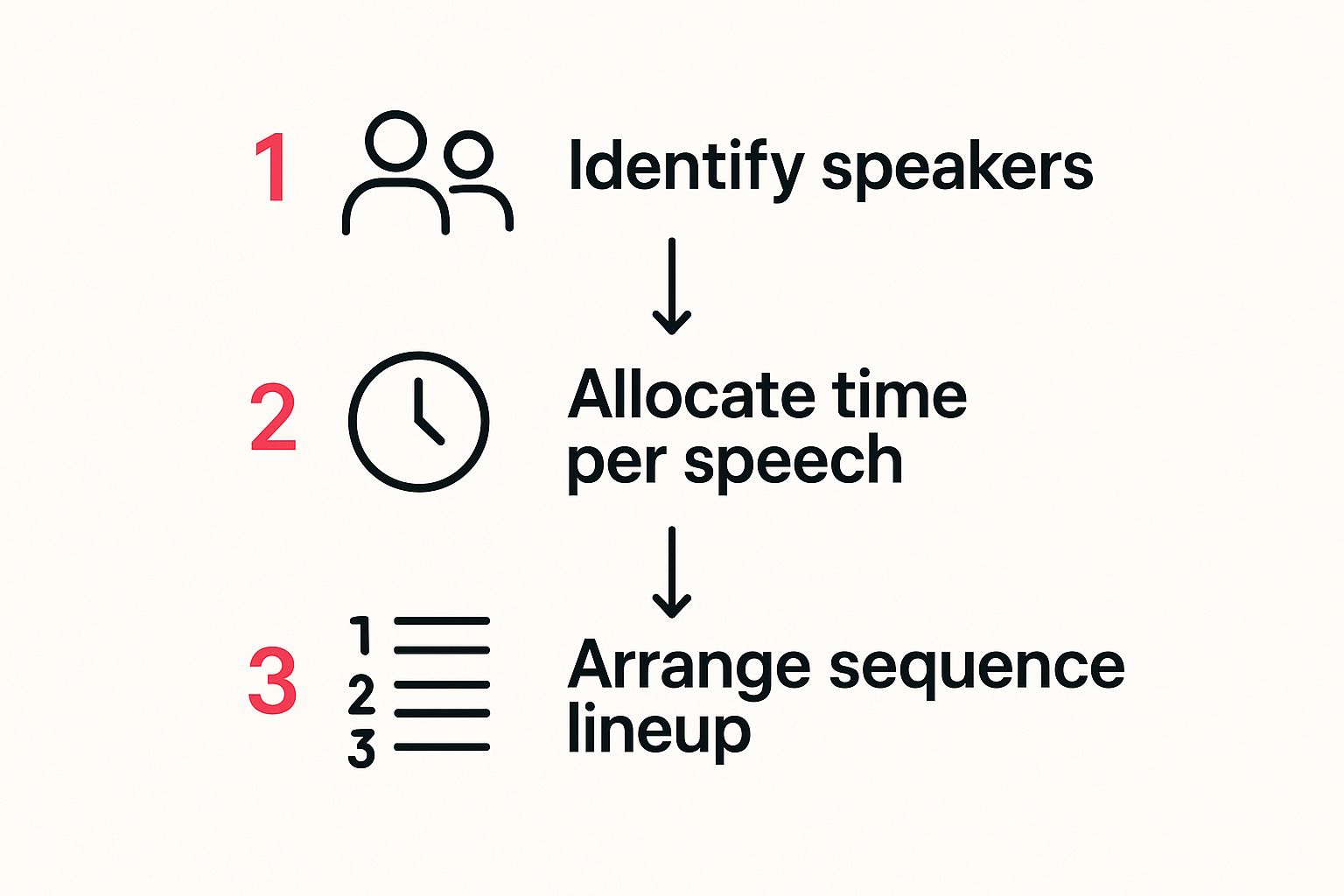
This simple infographic gives you a great visual guide for organising your speech lineup.
As you can see, creating that perfect flow is all about a bit of thoughtful planning—identifying your speakers, figuring out the timing, and putting them in an order that makes sense.
For a quick reference, here’s a breakdown of the classic roles.
Classic Wedding Speech Sequence
Order
Speaker
Primary Role
1
Master of Ceremonies
Welcomes guests and introduces each speaker.
2
Father of the Bride
Welcomes the groom's family and shares memories.
3
Groom
Thanks guests and parents, and toasts his partner.
4
Best Man
Shares humorous anecdotes and toasts the couple.
5
Maid of Honour
Offers a personal tribute to the bride and the couple.
This table shows how each speech builds on the last, creating a well-rounded and memorable experience for everyone.
The Grand Finale: Closing Speakers
After the groom, the best man steps up to change the pace. His speech is famous for bringing the humour, often filled with funny (but appropriate!) stories about the groom. The best speeches manage to perfectly blend the laughs with a genuinely sincere toast to the happy couple.
Rounding out the formalities, the maid of honour often has the final word. Her speech is usually a deeply personal and emotional tribute to her friend, the bride. It’s a beautiful moment to reflect on their friendship and wish the newlyweds all the happiness in the world.
This structure is so popular that around 85% of Australian weddings still follow a similar order. Of course, there's always room for your own spin, but it's a proven formula. If you're curious about local customs, you can read more about the trends in Australian wedding speeches and their order.
A Little Direction for Your Key Speakers
Knowing the order of wedding speeches is the easy part. The real art is helping your speakers feel confident enough to deliver a toast that lands perfectly. Each person in your lineup has a unique role to play in telling your love story, and a little bit of guidance can turn a nervous ramble into a truly memorable moment.
When you give them a few pointers, you're not just helping them—you're ensuring each speech builds on the last, creating an emotional arc for the evening that resonates with everyone. A few simple prompts can help them craft a message that feels both personal and perfectly suited for the occasion.
The Father of the Bride (or Parent)
Traditionally, this speaker is the host, so their main job is to officially welcome everyone. The tone should be a lovely blend of warmth, pride, and a touch of sentimentality, all without dragging on for too long.
Their Mission: Welcome all the guests (especially the other family), share one or two short, sweet memories of their child, and finish with a toast to the newlyweds.
A Classic Opener: "Good evening, everyone. On behalf of my wife and I, it’s a real honour to welcome you all here tonight to celebrate [Bride] and [Groom]."
What to Skip: A minute-by-minute recap of their child's entire life story. Keep inside jokes to a minimum, too—you want everyone to feel included.
The Groom (or Partner)
This is a moment for public gratitude and heartfelt love. The groom's speech is a bridge, connecting the two families and thanking the community that has gathered to support them.
The focus here is really on thanking the people who matter most. Thank the guests for travelling, both sets of parents for their endless love and support, and the wedding party for standing by their side. But the most important part? It’s the chance to speak directly to their new spouse, sharing a personal thought about their love and the future they're about to build together.
A great groom's speech is less about performance and more about sincerity. Speaking from the heart about your partner is the most powerful part of this toast. Don't overthink it; just be genuine.
The Best Man
Everyone usually looks forward to the best man’s speech, expecting a few laughs. But from my experience, the best ones are those that perfectly balance the humour with genuine warmth. The goal is to celebrate the groom and the couple's relationship, not to deliver a five-minute stand-up routine.
A few friendly tips for the best man:
Share a funny but positive story that shows off the groom's great character.
Definitely steer clear of any embarrassing stories or, even worse, mentioning past relationships. It's just not the time or place.
Remember to say something wonderful about the bride and how happy she makes your mate.
Always end with a sincere toast to the couple's health and happiness.
The Maid of Honour
This speech brings a whole new perspective, often focusing on the deep friendship with the bride and the beauty of the couple's partnership. It tends to be a bit more personal and emotional. A fantastic Maid of Honour speech might share a story that really illustrates the bride's best qualities and how her partner complements her so perfectly.
The toast should be a celebration of their unique bond and a heartfelt wish for their future. It really provides a beautiful, personal bookend to the more formal toasts.
Designing a Modern and Personal Speech Lineup
While tradition gives us a great starting point, it's definitely not the final word for your wedding day. I'm seeing more and more couples shake things up, personalising the order of speeches to better reflect their unique story, their family, and the people they truly want to hear from.
This shift towards a more customised lineup is now the norm, not the exception. A 2023 survey actually found that around 70% of Australian couples chose to break from the conventional wedding speech order to create something that felt more like them. You can read more about this growing trend in wedding speeches.
A modern approach isn't about throwing tradition out the window; it's about making it your own. It’s a chance to open the floor to other important people in your lives to share their love and support.
Who Else Can Speak?
First things first, think about who you’d love to include. Who has played a massive role in your lives, both as individuals and as a couple? This is your chance to hear from voices that don't always get a spot in the classic lineup.
Here are a few wonderful additions I’ve seen work beautifully:
The Mother of the Bride or Groom: Their perspective is often filled with incredible warmth and unique memories, offering a beautiful balance to the traditional father's speech.
A Sibling: Let's be honest, no one knows you quite like a brother or sister. They can share hilarious childhood stories or heartfelt anecdotes that bring a deeply personal touch.
The Couple Together: A joint speech is a powerful way to thank your guests as a team. It really showcases your unity and can feel a lot less daunting than going it alone.
The best modern speech lineups feel inclusive and authentic. The goal is to create a series of toasts that genuinely represent your community, rather than just ticking boxes on a traditional checklist.
Structuring Your Custom Lineup
Once you have your speakers sorted, the next step is arranging them in an order that flows well and keeps your guests hooked. A great little trick is to alternate between sentimental and humorous speeches. This creates a really dynamic emotional rhythm for the evening.
For instance, you could start with a parent's heartfelt welcome, follow it with a sibling's funny story, and then have the two of you give your joint thank-you speech. The Best Man could then round things out with his signature humour. This approach stops the speeches from feeling too same-same and keeps the energy high.
It also ensures every speaker gets their moment to shine. As you plan, just remember to give each person clear guidelines on timing to keep the reception running smoothly—much like how a wishing well registry helps streamline the gift-giving process.
Mastering the Flow: Timing and Etiquette for Wedding Speeches
Getting the order of speeches right is one thing, but timing is what makes them truly memorable. A fantastic, heartfelt toast can fall flat if it kills the party's momentum or drags on for too long. The real art is weaving the speeches into the fabric of the evening so they feel like special moments, not awkward interruptions.
As a rule of thumb, I always advise speakers to aim for 3 to 5 minutes. That’s the sweet spot. It’s just enough time to share a great story and a warm wish, but short enough to keep everyone’s full attention. When you have a few people speaking, keeping things concise maintains the energy in the room and stops guests from getting fidgety.
When to Schedule the Speeches
From my experience, the absolute best time for speeches is between the meal courses. You’re making smart use of the natural pauses in the reception, giving guests something captivating to listen to while they wait for their next plate. Plus, it guarantees your speakers have a captive—and usually very happy—audience.
Here’s a popular flow that works beautifully:
The Welcome Toast: The MC or a parent can offer a brief welcome right after guests have found their seats. It’s a lovely way to kick things off.
The Main Speeches: The perfect slot for two or three key speeches is after the main course plates have been cleared, just before dessert is served.
The Final Toast: A high-energy speech, often from the Best Man, is a brilliant way to wrap up the formalities and get everyone excited for the dance floor.
A well-timed speech schedule feels like part of the entertainment, not an obligation. By spacing them out, you create a rhythm for the evening that keeps everyone engaged from start to finish.
To help you visualise this, here is a sample timeline that shows how you might slot the speeches into your reception schedule.
Sample Wedding Reception Speech Timeline
This is just an example, of course! You can adapt it to fit the unique flow and vibe of your own celebration.
Time
Event
Notes for Speeches
6:30 PM
Guests seated for dinner
MC gives a welcome toast and housekeeping notes.
7:30 PM
Main course cleared
Father of the Bride and Maid of Honour give their speeches.
8:15 PM
Dessert is served
Best Man gives a lively speech to transition to party mode.
8:30 PM
Cake cutting & first dance
The couple can give a short 'thank you' speech here.
Remember to coordinate this schedule with your venue manager and MC. When you’re finalising your run sheet, it’s a good idea to go over these key wedding venue questions to make sure your timeline works with their kitchen and service flow.
For couples looking to organise every last detail of their big day, a comprehensive Wedding Collection can be a lifesaver, offering guidance on everything from stationery to scheduling. A little bit of planning goes a long way in making sure the speeches enhance the celebration and help make the night unforgettable.
Answering Your Top Wedding Speech Questions
Even when you've got the perfect lineup of speakers, a few niggly questions always seem to pop up during the planning. Let's run through some of the most common ones I hear, so you can feel completely ready for a smooth and memorable reception.
How Long Should a Wedding Speech Be?
The golden rule here is to keep them short and sweet. The sweet spot for a wedding speech is anywhere between 3 to 5 minutes. Honestly, that's more than enough time for a speaker to share a beautiful story, offer their best wishes, and lead a toast without guests starting to fidget.
When you have a few people lined up to speak, sticking to this timeframe is even more important. It helps keep the energy in the room up and ensures the speeches are a genuine highlight, not a drawn-out intermission. A great tip to pass on to your speakers is to have them actually time their speech beforehand—it makes a world of difference.
Can the Bride Give a Speech?
Absolutely! And I have to say, it's a trend I love to see. It’s a fantastic opportunity for you to personally thank your guests, your families, and of course, your brand-new spouse.
You can deliver it solo for a really personal touch, or you could do a joint speech with your partner. This is a brilliant way to kick off your marriage as a united team. It really is your day, so if you've got something to say, you should definitely grab the microphone.
It's your wedding, so your voice matters most. If you want to give a speech, don't let tradition stop you. It’s a powerful way to add a personal, modern touch to your celebration.
What if a Speaker Goes on for Too Long?
Ah, the dreaded rambler. This is a common worry, but prevention is your best bet. Just have a friendly, casual chat with all your speakers beforehand and gently mention the 3-to-5-minute guideline. Most people are actually grateful for the direction.
Your MC is your secret weapon here. Work out a subtle, non-verbal cue with them in advance. For example, if a speech is dragging on, the MC can gracefully stand up or move a little closer to the lectern. It's a gentle nudge that it's time to wrap things up. This allows them to step in, thank the speaker, and move the night along without any awkwardness. Keeping things on track also helps you stay on budget, and you can explore more amazing tips to save money on your wedding day in our other guides.
Is It Okay to Read a Speech from a Phone?
Look, while it's tempting, I always advise against reading a speech directly from a phone. The bright screen can look quite harsh in photos and videos, and it tends to create a bit of a barrier between the speaker and the audience.
Instead, good old-fashioned printed cue cards are the way to go.
They're less intrusive: Cue cards just blend in better than a glowing phone.
They encourage eye contact: It's so much easier to glance down at a card and then look back up at the room.
They look more polished: It shows a level of thought and preparation that guests really appreciate.
If a phone is the only option, pass on these tips: tell the speaker to pop it on airplane mode, crank up the font size, and dim the screen brightness as much as possible to minimise the distractions.
Planning a wedding involves countless details, from speeches to gifts. With EasyRegistry, you can create a beautiful, simple-to-use gift registry that takes the guesswork out for your guests. Build your perfect registry in minutes at https://www.easyregistry.com.au.
Being asked to be a bridesmaid is a huge honour, but the thought of writing and delivering a speech can be incredibly daunting. Where do you even begin? How do you strike the perfect balance between heartfelt emotion and light-hearted humour without it feeling forced? What if you get choked up? Relax, we’ve got you covered. This guide is your ultimate resource for crafting the perfect toast, providing a curated collection of powerful bridesmaid speech examples designed for different relationships and styles.
We will break down six proven types of bridesmaid speeches, offering full examples alongside strategic analysis and actionable templates you can adapt. You’ll learn precisely how to structure your toast, tell compelling stories that resonate, and deliver a memorable message that genuinely celebrates the happy couple. Your role as a bridesmaid extends beyond the speech; you'll also be a key part of the celebration's memories, so while you plan your words, you might also want to explore unique wedding party photo ideas to help capture the day perfectly.
Whether you're a childhood best friend, a beloved sister, or a university mate, you'll find the ideal framework here. This article is organised to help you honour your unique friendship and raise a glass to the newlyweds with confidence and style, leaving a lasting, positive impression on everyone in the room.
1. The Childhood Best Friend Speech
The Childhood Best Friend speech is a classic for a reason. This heartfelt approach chronicles your unique, lifelong bond with the bride, creating a narrative that feels both personal and universal. It's one of the most powerful bridesmaid speech examples because it showcases the bride's character evolution from childhood dreams to the person she is today, standing beside her new partner. The goal is to connect her past qualities to her present happiness, showing guests how her journey led her to this perfect moment.
This style works best when your friendship is genuinely long-term, spanning pivotal life stages. It builds an emotional connection with the audience by taking them on a nostalgic journey, highlighting shared experiences, inside jokes (that you briefly explain), and unwavering support through life's ups and downs.
How to Structure It
A chronological structure is the most effective way to organise this speech. You guide the audience through key moments that define your friendship and highlight the bride’s best qualities.
The Beginning: Start with a sweet, funny memory from your early days. Think primary school shenanigans, sleepovers planning your futures, or a shared quirky hobby.
The Middle: Transition to the teenage or university years. This is where you can talk about navigating challenges together, like surviving exams, first heartbreaks, or celebrating major achievements.
The Present: Bring the story to today. Describe the moment you knew the groom was 'the one' for her and how you've seen her grow even happier and more complete since they met.
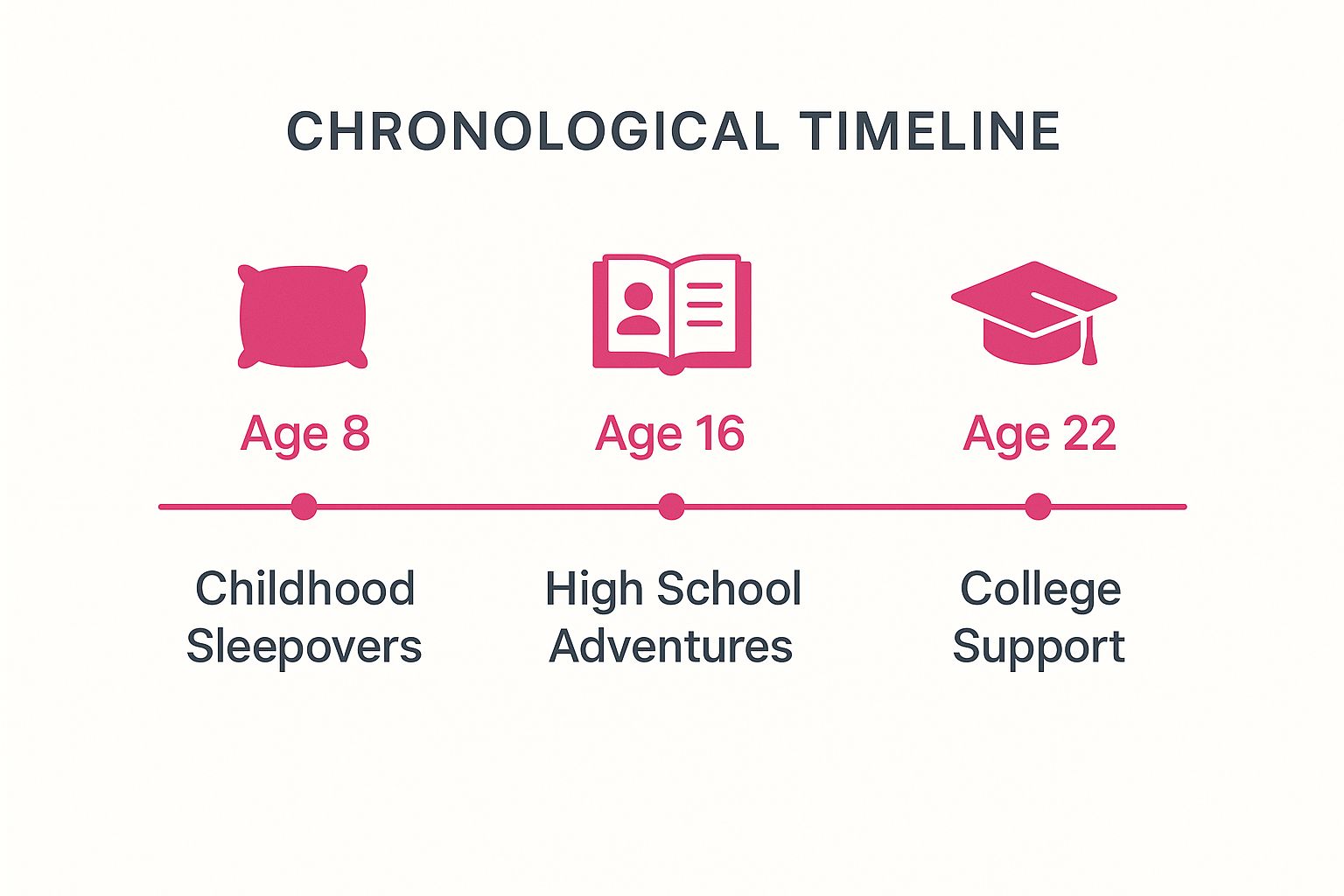
The following timeline visualises how you can select a few key milestones to structure your narrative.
This visual progression shows how focusing on just a few powerful memories creates a clear and impactful story for the audience.
Actionable Tips
To make your speech unforgettable, focus on quality over quantity.
Strategic Takeaway: Don't just list memories; connect them. Explain how a childhood quality, like her fierce loyalty on the netball court, is the same loyalty you see in her relationship with the groom. This creates a powerful, full-circle narrative.
Choose two or three distinct anecdotes that truly represent your friendship. For any inside jokes, provide just enough context for everyone to appreciate the humour. Most importantly, end by raising a toast to the couple, expressing your genuine happiness for their future together.
2. The Funny and Light-Hearted Speech
The Funny and Light-Hearted Speech aims to entertain, using humour and amusing anecdotes to celebrate the bride and her new partner. This style is one of the most engaging bridesmaid speech examples because it creates a joyful, relaxed atmosphere, getting guests laughing while still honouring the couple. The goal is to affectionately tease the bride about her endearing quirks, share funny stories, and highlight the lighter side of her personality and relationship.
This approach is perfect for bridesmaids who are naturally witty and for weddings with a more relaxed, informal vibe. It works wonders by making the speech memorable and enjoyable for everyone, steering clear of overly sentimental tones while still conveying deep affection and happiness for the couple. It’s about celebrating love through laughter.
How to Structure It
The key to a successful funny speech is balancing humour with heart. You want to organise your jokes and stories so they build up to a sincere and meaningful conclusion.
The Opener: Start with a self-deprecating joke or a funny observation about weddings in general to warm up the crowd.
The Anecdotes: Share one or two hilarious, but kind-hearted, stories about the bride. This could be about her dating life before she met the groom or a funny mishap you shared.
The Connection: Link the humour back to the couple. For example, talk about how the groom's calm nature perfectly balances her chaotic energy, which you just described in a funny story.
The Sincere Close: End with genuine emotion. Drop the humour for a moment to express how happy you are for them and what their love means to you.
This video shows how a bridesmaid perfectly blends humour with a heartfelt message, creating a truly memorable moment.
Actionable Tips
To ensure your jokes land well and your message is received with love, careful preparation is crucial.
Strategic Takeaway: The goal is to roast, not burn. Choose stories that highlight the bride’s lovable eccentricities, not her genuine flaws. The humour should come from a place of deep affection, making the bride laugh along with everyone else, not feel embarrassed.
Always test your jokes on a mutual friend to gauge their reaction. Avoid inside jokes that most of the audience won't understand, and never say anything that could be genuinely humiliating. Your primary job is to celebrate the bride, so end the speech with a warm, sincere toast to the happy couple, wishing them a lifetime of love and laughter.
3. The Sisterly Love Speech
The Sisterly Love speech taps into a unique and powerful connection that only a sister, whether by birth or by choice, can share. This deeply personal approach draws on a lifetime of shared secrets, family traditions, and unconditional support. It's one of the most moving bridesmaid speech examples because it offers an intimate glimpse into the bride’s life, shaped by the unbreakable bond of sisterhood. The goal is to celebrate this special relationship while wholeheartedly welcoming her new partner into the family.
This style is perfect for a maid of honour who is also the bride's sister. It allows you to speak from a place of unparalleled closeness, sharing stories that highlight the bride’s character from a perspective no one else has. It resonates deeply with guests, especially family, by grounding the celebration in the love and history that brought the bride to this day.
How to Structure It
A thematic approach often works best for a sister’s speech, focusing on core qualities and milestone moments that define your bond. You can weave anecdotes together to paint a complete picture of the bride and your relationship.
The Foundation: Start by acknowledging your unique bond. You could begin with a funny memory about growing up together, like sharing a room, borrowing clothes without asking, or protecting each other from trouble.
The Growth: Share a story that highlights her character. This could be about how she supported you during a tough time, a moment you saw her true strength, or a funny family holiday memory that showcases her personality.
The Union: Transition to her relationship with her partner. Describe how you’ve seen her evolve since they met and how he complements her perfectly. This is the perfect place to officially welcome him into the family fold.
This structure allows you to honour your shared past while celebrating the couple's future, creating a speech that is both nostalgic and forward-looking.
Actionable Tips
To make your sisterly speech truly shine, balance emotion with warmth and inclusivity.
Strategic Takeaway: Frame your personal stories to highlight a quality in the bride that will make her a wonderful partner. For example, a story about her fierce loyalty to you as a sister can be connected to the unwavering loyalty she will now share with her spouse.
Keep family inside jokes to a minimum, or provide brief context so everyone feels included. It’s powerful to speak from the heart, so don’t be afraid to show emotion, but prepare by practising your speech and having a glass of water nearby. End with a heartfelt toast that welcomes your new brother-in-law and wishes the couple a lifetime of happiness.
4. The 'How We Met the Groom' Speech
The 'How We Met the Groom' speech shifts the focus from a long-term friendship history to the pivotal moments when the couple's love story began. This is one of the most engaging bridesmaid speech examples because it positions you as the trusted narrator, sharing an insider’s view of the relationship's origin. The goal is to celebrate the groom's arrival into the bride's life and highlight the positive impact he has had on your friend.
This style is perfect for bridesmaids who became close friends with the bride in adulthood or who were present for the key milestones of the relationship. It offers a fresh perspective that complements other speeches, giving guests a behind-the-scenes look at how the couple’s connection blossomed and showcasing your unique observations as a close confidante.
How to Structure It
A narrative structure that follows the relationship’s early stages is the most effective way to organise this speech. You are telling the story of them, through your eyes.
The Beginning: Start with the moment you first heard about the groom. This could be a funny description of the bride’s excited phone call after their first date or your own impression when you first met him at a party.
The Middle: Describe a key moment where you realised their connection was serious. This could be a memory from a double date, seeing how naturally they complemented each other, or observing a change in the bride that showed how happy he made her.
The Present: Bring the narrative to the wedding day. Connect your early observations to the couple they are today. Share how you knew they were perfect for each other and express your joy in seeing them take this next step. This is also a great place to officially welcome the groom to the family or friend group.
Actionable Tips
To make your speech powerful, focus on the details only you would have noticed. Your unique perspective is what makes this story special.
Strategic Takeaway: Don't just tell the story; show it. Instead of saying, "He made her so happy," describe the specific change you saw: "Suddenly, the friend who meticulously planned every detail of our nights out was happy to just sit on the couch with him, completely content."
Focus on specific moments that reveal the groom's character and their shared values. Before you finalise the details, it's wise to verify key dates and facts with the bride, just as you would double-check the details when asking your wedding venue questions. End with a heartfelt toast that celebrates not just their past, but the wonderful future you see for them as a married couple.
5. The Quality-Based Tribute Speech
The Quality-Based Tribute speech moves beyond a simple timeline of events to focus on the core of who the bride is as a person. This powerful approach celebrates the bride's character by highlighting her most admirable traits, such as her loyalty, humour, or compassion. It is one of the most moving bridesmaid speech examples because it explains why she is so loved, rather than just what you’ve done together. The goal is to paint a vivid portrait of her character, connecting these qualities to her new life with her partner.
This style is perfect if you want to deliver a speech that is deeply personal and affirming. It works beautifully when you can draw on diverse experiences to illustrate her strengths, showing the audience the incredible person she is and why those qualities make her an amazing partner.
How to Structure It
An effective way to organise this speech is by selecting two or three key qualities and dedicating a short story or anecdote to each one. This creates a clear, compelling, and easy-to-follow narrative for your guests.
Introduce the Quality: Start by naming a specific trait, for example, "Anyone who truly knows [Bride's Name] knows she is fiercely loyal."
Share a Supporting Story: Tell a brief, specific story that perfectly demonstrates this quality in action. Think of a time she stood up for you, supported a friend through a tough time, or showed unwavering commitment.
Connect it to the Couple: Link that quality back to her relationship. For example, "It's that same fierce loyalty I see every time she looks at [Partner's Name], and I know it's what will make their marriage so strong."
Repeat this structure for each quality you choose, building a comprehensive and heartfelt tribute. This method of organising your speech is as thoughtful as finding unique wedding gift ideas that perfectly capture a couple's spirit.
Actionable Tips
To make your tribute truly shine, be specific and authentic. General compliments are forgettable, but a well-told story is memorable.
Strategic Takeaway: Choose qualities that directly relate to a successful partnership. Traits like resilience, generosity, and a great sense of humour are not just nice attributes; they are the foundations of a happy marriage. Explicitly connecting her character to her future happiness gives your speech profound meaning.
Select anecdotes from different areas of her life, such as work, family, or your friendship, to show her character is consistent and well-rounded. Finally, raise a toast to the couple, celebrating the wonderful qualities she brings to their union and the amazing future they will build together.
6. The Gratitude and Reflection Speech
The Gratitude and Reflection Speech is a deeply thoughtful and mature approach that goes beyond simple anecdotes. This style centres on the positive impact the bride has had on your life, focusing on the lessons you've learned from her and expressing sincere gratitude for her friendship. It's one of the most moving bridesmaid speech examples because it highlights the bride’s admirable qualities not just as a friend, but as a role model. The goal is to show guests the profound depth of your bond and how her character has shaped you for the better.
This approach works best when your friendship is built on mutual respect, support, and shared growth. It creates a powerful emotional resonance by demonstrating the bride's influence in a tangible way, making her virtues and strengths the centrepiece of the speech and illustrating why she is so ready for a lifelong partnership.
How to Structure It
A thematic structure is most effective for this speech. You'll organise your thoughts around key qualities or lessons the bride has taught you, using specific examples to bring these abstract concepts to life.
The Introduction: Start by expressing your honour in being her bridesmaid and introduce the core idea: how much her friendship has meant to you and shaped who you are.
The Core Message: Dedicate this section to one or two specific qualities. For example, discuss how watching her navigate a challenge taught you resilience, or how her unwavering honesty taught you the value of authenticity.
The Connection to the Couple: Link these admirable qualities to her relationship. Explain how the same loyalty or kindness she showed you is now the foundation of her beautiful partnership with the groom.
This structure allows you to build a powerful narrative around the bride's character, culminating in a celebration of her new marriage.
Actionable Tips
To deliver a truly impactful speech, your sincerity must shine through. It’s about honouring the bride's character in a way that feels genuine and heartfelt.
Strategic Takeaway: Avoid generic compliments. Instead of saying "she's so kind," tell a short story that shows her kindness in action. Concrete examples are far more powerful and memorable than abstract praise. This brings her virtues to life for the audience.
Connect the lessons you've learned directly to why she will be an amazing life partner. For instance, you could say, "Watching you taught me what unconditional support looks like, and I see that same incredible support in the way you and [Groom's Name] love each other." End with a heartfelt toast to the couple, wishing them a future filled with the same joy and growth they’ve already brought to the lives of others. This approach ensures your speech is a meaningful tribute to the bride and a beautiful celebration of her new journey.
Bridesmaid Speech Examples Comparison
Speech Type
Implementation Complexity ?
Resource Requirements ?
Expected Outcomes ?
Ideal Use Cases ?
Key Advantages ?
The Childhood Best Friend Speech
Medium – Chronological storytelling
Moderate – Personal stories, anecdotes
Strong emotional connection, nostalgic
Weddings with long shared history, close friends
Emotional depth, easy structure
The Funny and Light-Hearted Speech
Medium-High – Requires comedic timing
Moderate – Humor preparation and testing
Entertaining, engaging, fun atmosphere
Casual or upbeat weddings, diverse audiences
Keeps audience entertained, memorable
The Sisterly Love Speech
Medium – Sensitive personal content
Moderate – Family anecdotes, emotional
Deep emotional impact, intimate
Family-oriented weddings, sisters or close family
Authentic emotional depth, familial bond
The 'How We Met the Groom' Speech
Medium – Narrative focused on couple
Moderate – Relationship details
Romantic, balanced spotlight on couple
Weddings emphasizing couple’s love story
Includes both bride & groom equally
The Quality-Based Tribute Speech
Low-Medium – Organized around traits
Low – Clear structure, specific traits
Polished, focused on bride's character
Formal weddings, less historic relationships
Easy to organize, professional tone
The Gratitude and Reflection Speech
Medium – Reflective, philosophical tone
Low-Moderate – Personal insights
Heartfelt, mature, intimate moments
Formal or intimate weddings, mature audiences
Deeply meaningful, emotionally intelligent
Putting It All Together: Your Final Checklist for a Flawless Speech
You've explored a range of powerful bridesmaid speech examples, from the hilarious anecdotes of a childhood best friend to the deeply moving tribute from a sister. Across each of these templates, a clear pattern emerges: the most memorable speeches are not about performing perfectly, but about connecting authentically. They balance personal stories with universal sentiments, making everyone in the room feel like they're part of a special moment.
The true goal is to honour the bride and celebrate the couple's new chapter. Whether you choose a funny, heartfelt, or formal tone, the core structure remains consistent: open with warmth, share a meaningful story that showcases the bride's best qualities, welcome her partner into the family or friendship circle, and close with a heartfelt toast. This framework provides the scaffolding, but your unique memories and genuine emotion are what will truly make the speech shine.
Your Actionable Roadmap to Success
Before you step up to the microphone, let’s distil everything we've covered into a final, actionable checklist. Think of this as your pre-flight check to ensure a smooth and confident delivery.
Finalise Your Theme: Revisit the bridesmaid speech examples and decide definitively on your core theme. Are you aiming for laughs, tears, or a blend of both? A clear theme will guide your final edits and keep your message focused.
Time Your Speech: This is non-negotiable. Practice your speech out loud and time it. Aim for that sweet spot of 3 to 5 minutes. This is long enough to share something meaningful but short enough to keep the audience engaged and the wedding schedule on track.
Create Physical Prompts: Don't rely on your phone. Its screen can go dark, notifications can pop up, and it can be hard to read. Write or print your key points onto notecards in a large, clear font. Number them so you don't lose your place.
Practice, Don't Memorise: The goal is to sound natural, not robotic. Practice enough so you know the flow and key phrases, but don't memorise it word-for-word. This allows you to make eye contact and let your genuine personality come through.
Plan Your Delivery: Think about how you will say the words. Identify places to pause for effect, slow down for an emotional point, or smile during a funny memory. Your body language and vocal tone are just as important as the words themselves.
The Final Toast: Know exactly how you will end. Your last line should be a clear, confident, and celebratory toast to the happy couple. Practice it so it feels powerful and conclusive.
By internalising these steps, you transform a nerve-wracking obligation into a beautiful gift. You’re not just reading words; you are creating a cherished memory for the bride, her new partner, and all their loved ones. You are honouring your friendship in a public, meaningful way, and that is an incredible tribute. Take a deep breath, trust in your preparation, and get ready to deliver a speech that is as wonderful as she is.
Planning a wedding involves more than just perfect speeches; it's also about managing gifts and contributions seamlessly. To simplify the process for the happy couple, consider organising a group gift or pointing them towards EasyRegistry. Our platform allows them to create a flexible online registry for anything they truly want, from honeymoon funds to home goods, making it easy for guests to give a meaningful present. Explore how it works at EasyRegistry.