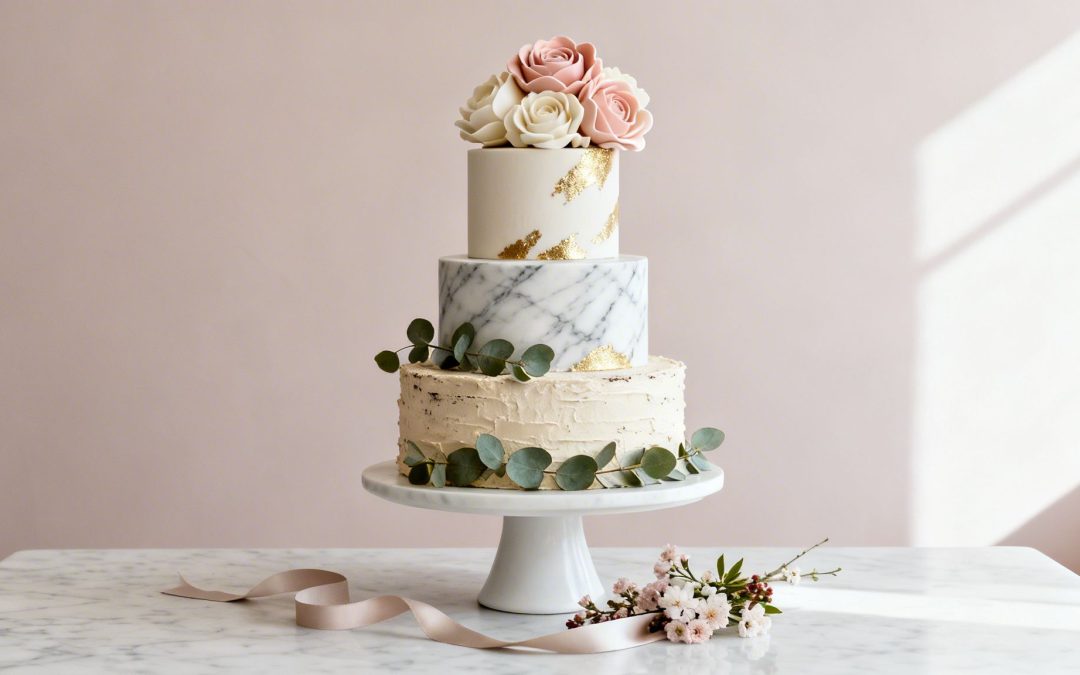
Your wedding cake is more than just a dessert; it’s a statement piece, a work of art, and a delicious reflection of your personal style. Selecting from the myriad of cake designs for wedding celebrations can feel overwhelming, but it is also one of the most exciting parts of planning your day. From towering, traditional masterpieces to sleek, modern creations, the right cake ties your theme together and creates a memorable focal point for you and your guests. This moment, like many others on your wedding day, is a cherished memory in the making.
In this guide, we'll slice into the top 10 cake designs that are capturing the imagination of couples, offering detailed insights, actionable tips, and visual inspiration to help you find the perfect confection. We will explore a curated collection of styles, including modern minimalist, hand-painted watercolour, and striking geode-inspired cakes, ensuring there’s an option to suit every aesthetic. While your wedding cake is a magnificent centrepiece, you might also consider creative ways to preserve other memories from your special day, such as how to preserve wedding photos in jewelry.
Our goal is to make your choice a joyful and straightforward process. We will cover everything from matching your cake to your venue and season, to understanding pricing and communicating your vision effectively to your baker. Let’s explore the designs set to define modern nuptials and help you choose a cake that is as unforgettable as your love story.
1. Modern Minimalist Cake
Modern minimalist cake designs champion the idea that less is truly more. This style moves away from elaborate ornamentation, focusing instead on clean lines, precise geometric shapes, and a restrained colour palette. It is the perfect choice for couples seeking understated sophistication and a design that feels contemporary and artful. The beauty of these cakes lies in their simplicity, allowing texture, form, and quality ingredients to take centre stage.
This approach is one of the most versatile cake designs for a wedding, complementing a wide range of venues, from industrial-chic warehouses to sleek art galleries. The clean aesthetic ensures the cake enhances, rather than competes with, your event's overall design. It's a statement of confidence in simplicity.
How to Achieve the Minimalist Look
Successfully creating a minimalist masterpiece requires attention to detail. Since there are no bold decorations to hide imperfections, the execution must be flawless.
Focus on Finish and Texture: A perfectly smooth fondant provides a crisp, clean canvas. Alternatively, a lightly textured buttercream, such as a semi-naked or "spatula-finished" style, can add rustic warmth without feeling cluttered.
Embrace Negative Space: Don't be afraid of empty surfaces. A single tier might feature an off-centre detail, or a multi-tiered cake could use "floating" tiers with separators, allowing the design to breathe.
Subtle Embellishments: Instead of intricate sugar flowers, consider a single, dramatic bloom or a sprig of elegant greenery. Brushed metallic accents in gold, silver, or copper can introduce a touch of luxury without overwhelming the design.
Key Insight: The impact of a minimalist cake is magnified by its surroundings. Consider how venue lighting will interact with the cake's clean surfaces; a well-placed spotlight can turn a simple design into a stunning focal point. This is an important detail to discuss when you're finalising your venue. When you're ready, you can find a list of essential wedding venue questions to guide that conversation.
2. Naked Cake with Fresh Florals
The naked cake is a celebration of rustic charm and authentic flavour, stripping away the traditional outer layer of fondant or thick buttercream. This design intentionally exposes the cake's layers and luscious filling, creating a look that is both humble and beautiful. Adorned with fresh florals like peonies, roses, and sprigs of eucalyptus, it transforms into a romantic, garden-inspired centrepiece.
Popularised by Australian florists and bakers, this style is one of the most beloved cake designs for a wedding, especially for outdoor, garden, or barn settings. The natural, "undone" aesthetic perfectly complements a relaxed and romantic atmosphere, allowing the quality of the cake and the beauty of nature to shine. It's an ideal choice for couples who prefer a less formal but equally stunning dessert.
How to Achieve the Naked Cake Look
Executing a beautiful naked cake requires a balance between rustic appeal and structural integrity. Since the cake's interior is on display, both the baking and assembly must be neat.
Ensure Food-Safe Florals: Work closely with your wedding florist to choose flowers that are non-toxic and pesticide-free. Some popular safe choices include roses, freesias, and lavender. Your florist or baker will know how to properly prepare and place them on the cake.
Maintain Moisture: Because the layers are exposed, naked cakes can dry out faster than fully iced ones. Opt for a "semi-naked" style with a very thin scrape of buttercream to lock in moisture while maintaining the look. Also, ensure the cake is kept cool until just before it's served.
Structural Support is Key: Multi-tiered naked cakes need proper support. Internal dowels and sturdy cake boards between each tier are essential to prevent the layers from compressing the filling or collapsing, especially in warmer weather.
Key Insight: Coordinate your cake florals directly with your event florals for a cohesive look. Providing your baker with a list (or even pictures) from your florist ensures the blooms on the cake match your bouquet and venue decorations perfectly. This creates a powerful, unified visual theme throughout your celebration.
3. Ombré or Gradient Cake
An ombré or gradient cake offers a breathtaking visual effect, featuring a seamless colour transition from one shade to another. This design moves colour across the tiers, from dark to light or through a series of related hues, creating a sense of movement and artistry. It’s a fantastic way to incorporate your wedding’s colour palette directly into one of its central elements, resulting in a cake that feels both personal and exceptionally beautiful.
This style is one of the most adaptable cake designs for a wedding, as it can be bold and dramatic or soft and romantic, depending on your colour choices. A deep navy-to-gold gradient suits a glamorous evening affair, while a soft blush-to-white transition is perfect for a classic garden wedding. The gradient itself becomes the main decoration, making a powerful statement with colour alone.
How to Achieve the Ombré Look
Creating a smooth, flawless gradient requires skill and precision, whether using buttercream, fondant, or airbrushing techniques. The key is careful colour mixing and application.
Choose Cohesive Colours: Pull hues directly from your wedding’s colour scheme, such as your bridesmaid dresses or floral arrangements, for a unified aesthetic. Popular choices include rose gold to champagne, sunset tones, or a cool teal-to-navy gradient.
Technique Matters: The gradient effect can be achieved in several ways. Tiered buttercream in varying shades creates a textured look, while airbrushing over smooth fondant provides a soft, ethereal finish. Discuss the best method with your baker to match your desired style.
Keep Embellishments Simple: Allow the colour transition to be the star. Complement the design with minimal additions like a few strategically placed sugar flowers, a touch of gold leaf, or a simple cake topper that doesn’t detract from the gradient effect.
Key Insight: The lighting at your reception venue will significantly impact how the colours of your ombré cake are perceived. A design with subtle pastel tones might look washed out in bright, direct sunlight but will appear soft and romantic under ambient evening light. Discuss lighting with your venue coordinator to ensure your cake is displayed in a spot that best showcases its beautiful colour transition.
4. Textured and Carved Cake
Textured and carved cake designs transform the surface of a cake into a sculptural work of art. This style uses intricate hand-carved details, embossed patterns, and tactile finishes to create a sense of depth and elegance. Moving beyond smooth fondant, it embraces techniques like relief carving, piping, and imprinting to produce surfaces inspired by everything from architecture and textiles to nature itself. This is an exceptional choice for couples who see their cake not just as a dessert, but as a central artistic statement.
The appeal of this approach lies in its ability to tell a story or reflect a specific theme with remarkable detail. A carved cake can echo the lace on a wedding dress, the botanical elements of your floral arrangements, or the art deco architecture of your venue. It offers a sophisticated, tangible beauty that invites guests to look closer, making it one of the most engaging cake designs for a wedding.
How to Achieve the Textured and Carved Look
Creating a beautiful textured or carved cake requires a skilled baker with a steady hand and an artistic eye. The precision needed for these designs means early and clear communication is vital.
Choose a Compelling Pattern: The options are nearly limitless. Consider a bas-relief effect with raised floral patterns, an intricate lace imprint for classic romance, or a sharp geometric relief pattern for a modern, bold feel. Fondant can be carved to mimic feathers, leaves, or even wood grain.
Provide Clear Inspiration: High-quality reference images are your baker’s best friend. Whether it's a photo of a fabric swatch, a piece of jewellery, or an architectural detail, visual aids ensure your vision is translated accurately onto the cake.
Enhance with Subtle Accents: The texture itself is the main event, so embellishments should be used thoughtfully. A light dusting of edible metallic paint or pearl dust can catch the light and highlight the peaks and valleys of a carved pattern without overwhelming it.
Key Insight: The structural integrity of a carved cake is paramount, especially during transport. Discuss the complexity of your chosen design with your baker. They may recommend simpler patterns or textures on the lower, heavier tiers to ensure stability, saving the most intricate work for the smaller tiers on top. This is a practical compromise that protects your edible masterpiece.
5. Geode or Crystal-Inspired Cake
Geode and crystal-inspired cakes offer a dramatic and glamorous focal point, blending the raw beauty of nature with a touch of modern luxury. This on-trend design simulates crystalline mineral formations by carving into the cake and filling the space with shimmering rock candy or isomalt crystals. The result is a stunning optical illusion that appears as though the cake has been cracked open to reveal a sparkling interior.
This style is perfect for couples wanting a unique statement piece that feels both organic and opulent. Often finished with metallic details like edible gold or silver leaf, these cake designs for a wedding can be customised to match any colour scheme, from a deep amethyst purple to a soft rose quartz pink. It’s a design that promises to captivate guests and look incredible in photos.
How to Achieve the Geode Look
Creating a realistic and structurally sound geode cake requires careful planning and precise execution. The magic lies in layering colours and textures to mimic a real crystal formation.
Choose Your Crystals: Use food-safe rock candy or isomalt sourced from specialty baking suppliers. Isomalt offers more control over colour and shape, while rock candy provides a more rustic, jagged texture.
Create the Cavity: A section of the cake is carefully carved away to create the geode "opening." This is then filled with a base layer of buttercream or fondant before the crystals are applied.
Layer for Depth: Apply the crystals in layers, starting with the darkest shades deep inside the cavity and gradually moving to lighter shades towards the edges. This creates a realistic sense of depth and dimension.
Add Metallic Accents: Frame the geode opening with edible gold or silver leaf to create a defined, luxurious border. For better adhesion on the crystals themselves, edible metallic dust mixed with a clear spirit works better than leaf.
Key Insight: Geode cakes are sensitive to humidity and heat, which can cause the sugar crystals to "sweat" or become sticky. Communicate with your venue about ensuring the cake is stored in a cool, dry area until it's time for display. The intricate detail of a geode cake can also impact your budget, but there are always amazing tips to save money on your wedding day that can help you balance costs.
6. Hand-Painted Watercolor Cake
The hand-painted watercolor cake transforms a confection into a bespoke piece of edible art. This design involves an artistically trained baker using food-grade paints to create delicate, translucent washes of colour directly onto the cake's surface, typically fondant or smooth buttercream. The result is a stunningly personal creation, featuring soft brushstrokes, gentle colour bleeds, and custom motifs that range from florals to abstract landscapes.
This style is perfect for couples who view their wedding cake as a central artistic statement. It provides a unique opportunity to incorporate personal symbols, your favourite flowers, or even the colour palette of the sunset from your engagement. As one of the most customisable cake designs for a wedding, a hand-painted cake ensures that no two are ever exactly alike, offering a true one-of-a-kind centrepiece.
How to Achieve the Watercolor Look
Achieving a beautiful watercolor effect requires a baker with a steady hand and an artist's eye. The technique is delicate and unforgiving, so collaboration and clear communication are crucial.
Provide Clear Inspiration: Supply your baker with a detailed mood board. Include images of your floral arrangements, venue, invitation suite, or any artwork that captures the desired feel. This visual guide is more effective than words alone.
Trust the Artistic Process: A true watercolor design thrives on organic movement and soft, blended colours. While you provide the vision, allow your cake artist the freedom to interpret it with their unique brushwork. A design sketch on paper is a great way to align on the composition beforehand.
Prioritise a Smooth Canvas: The best results are achieved on a flawless, smooth surface. Crisp white or ivory fondant acts like artist's paper, allowing the colours to appear vibrant and true. A very smooth, crusted buttercream can also work, but discuss the possibilities with your baker.
Key Insight: The success of a hand-painted cake hinges on the baker's artistic skill. When choosing a supplier, ask to see a portfolio specifically of their hand-painted work. This is a specialised talent, so you want to find someone who is not just a great baker, but also a confident painter. This is a crucial point to discuss when you're finalising your baker. When you're ready, you can find a list of essential wedding venue questions to guide that conversation.
7. Drip and Splash Cake
Drip and splash cakes are a celebration of creative chaos and contemporary fun, offering a visually dynamic alternative to more traditional designs. This style features intentional drips of ganache, caramel, or coloured glazes cascading artfully down the sides of the cake. It’s a free-spirited design that feels both decadent and modern, perfect for couples who want their cake to have a vibrant, celebratory personality.
The artistic, slightly rebellious nature of a drip cake makes it a standout feature at any wedding reception. From a blush cake with a shimmering gold ganache drip to a rich navy creation with a champagne-coloured cascade, this design is incredibly adaptable. It complements a variety of wedding themes, from rustic barn parties to chic city celebrations, adding a touch of playful elegance.
How to Achieve the Drip and Splash Look
Mastering the drip requires a balance of precision and artistic freedom. The goal is to create drips that look intentional and controlled, not messy or accidental.
Perfect Your Drip Consistency: The key to a beautiful drip is the temperature and consistency of your glaze or ganache. It should be fluid enough to flow but thick enough to stop partway down the tier. Room-temperature ganache often provides the best results.
Play with Colour and Texture: Don't just stop at the drip. Enhance the design with splashes of contrasting colour, delicate gold leaf accents, or a scattering of edible glitter. Textural toppings like macarons, fresh berries, or even crumbled biscuits can add another layer of interest.
Secure Your Embellishments: For heavier toppings like fresh fruit or chocolates, use a small dab of thick frosting or edible glue to hold them securely in place, especially if the cake needs to be transported.
Key Insight: The angle and height from which you apply the drip directly impact its length and shape. Test your technique on the back of the cake or a spare piece of fondant first. Control the flow by using a squeeze bottle or a spoon, applying more pressure for longer drips and less for shorter ones. This controlled approach is essential for achieving one of the most eye-catching cake designs for a wedding.
8. Tiered Cake with Mixed Heights and Asymmetrical Design
Breaking away from the perfectly aligned tradition, asymmetrical and mixed-height tiered cakes offer a modern, architectural statement. This design plays with proportion and balance, featuring tiers of varying heights, off-centre stacking, or even 'floating' sections held by discreet pillars. It is an adventurous and artistic choice for couples who want their cake to be a memorable centrepiece and a topic of conversation. The beauty of this style is its dynamic visual interest, creating movement and surprise from every angle.
This approach is one of the more contemporary cake designs for a wedding, ideal for venues with a strong artistic or architectural character, such as modern art galleries, city lofts, or botanical gardens with sculptural elements. The unconventional structure highlights a couple's creative flair and confidence. It’s a design that feels custom-built and thoughtfully composed, turning the cake into a true work of art.
How to Achieve the Asymmetrical Look
Creating a stable yet visually striking asymmetrical cake is a collaboration between your vision and your baker's engineering skill. Precision and planning are paramount to ensure the final result is both stunning and structurally sound.
Vary Tier Proportions: Combine tall, slender tiers with shorter, wider ones to create an interesting skyline. This contrast is the foundation of the design's visual appeal.
Embrace Off-Centre Stacking: Instead of aligning tiers perfectly in the middle, have your baker stack them to one side. This simple shift instantly creates a modern, dynamic silhouette.
Incorporate 'Floating' Tiers: Use clear acrylic or decorated separators between tiers to give the illusion that one layer is hovering. This adds a magical, gravity-defying element to the design.
Key Insight: Structural integrity is non-negotiable with this design. Discuss the support system with your baker in detail. They will use internal dowels and sturdy cake boards, but you should also confirm the cake will be assembled on-site. Having the baker present for final setup can prevent any last-minute stability issues, especially on uneven venue surfaces. This is a critical detail to arrange when you're finalising your cake order.
9. Monogram and Personalized Cake
A monogram and personalized cake design transforms your wedding dessert into a deeply meaningful symbol of your union. This style prominently features the couple's initials, wedding date, or custom motifs, creating a bespoke centrepiece that is both elegant and sentimental. It is a timeless choice that speaks directly to the celebration of two individuals becoming one family.
This approach offers a sophisticated way to add a signature touch to your celebration, making the cake uniquely yours. Whether achieved through delicate hand-painting, intricate sugar art, or bold metallic monograms, personalization ensures your cake tells a story. It's one of the most classic cake designs for a wedding, seamlessly fitting into formal, traditional, or contemporary themes with grace.
How to Achieve the Personalized Look
Creating a beautiful personalized cake hinges on thoughtful design choices and clear communication with your baker. The goal is to integrate your personal mark flawlessly into the overall aesthetic.
Choose Your Medium: Monograms can be applied in various ways. A gold-leaf initial on a smooth white fondant cake offers a modern, luxurious feel. Hand-painted initials with a floral border can provide a softer, more romantic touch. For a three-dimensional effect, consider a custom sugar art monogram or topper.
Font and Placement: The font of your monogram should complement the style of your wedding stationery for a cohesive look. Placement is also key; positioning the monogram on the most visible tier, often the middle one, ensures it gets the attention it deserves.
Balance with Other Elements: A monogram can be the star of the show on a simple cake or be combined with other decorations. Consider pairing it with delicate piping, sugar pearls, or a cascade of flowers that frames the personalized detail without overpowering it.
Key Insight: To create a truly cohesive event, extend your chosen monogram beyond the cake. Using the same design on wedding invitations, napkins, menus, or even favours reinforces your personal brand as a couple. This thoughtful repetition turns a simple motif into a memorable symbol of your day. A wedding services registry can be a great way to manage contributions towards these bespoke details from various suppliers.
10. Modern Cake with Geometric Patterns and Gold Accents
A modern cake featuring geometric patterns and gold accents is a celebration of precision, luxury, and contemporary art. This design merges sharp, clean lines with the opulence of metallic finishes, creating a cake that is both striking and sophisticated. It moves beyond traditional florals to embrace patterns like hexagons, chevrons, or intersecting lines, applied with meticulous detail.
This style is one of the most impactful cake designs for a wedding with a modern, glamorous, or city-chic theme. It acts as a sculptural centrepiece, perfectly complementing venues like art galleries, upscale hotels, or minimalist event spaces. The combination of structured patterns and gleaming gold creates a sense of polished, high-end elegance that feels current and bold.
How to Achieve the Geometric Look
Flawless execution is vital for this design, as the sharp lines and metallic details draw the eye. The precision of the pattern is what makes the cake stand out.
Pattern Precision: The foundation of this style is accuracy. Use food-safe rulers, stencils, or templates to map out your design before applying it. Whether it's a hand-piped pattern or fondant cut-outs, ensuring symmetry and clean edges is crucial.
Balance with Colour: A strong geometric pattern often works best against a solid-coloured tier. This contrast allows the pattern to be the hero. A crisp white, deep navy, or soft blush cake provides an ideal canvas for gold, silver, or copper accents.
Choose Your Metallics Wisely: For the cleanest and most luxurious look, edible gold leaf is often superior to metallic sprays or dusts. Leaf provides a solid, reflective finish, whereas sprays can sometimes appear mottled. Always confirm your metallic accents are certified as food-safe.
Key Insight: The success of a geometric cake is tied to its environment. Coordinate the patterns on the cake with other design elements in your wedding, such as invitations, menus, or even backdrop designs. This creates a cohesive and professionally styled look, turning your cake into an integral part of your event's aesthetic rather than just a dessert.
Top 10 Wedding Cake Designs Comparison
Cake Style
Implementation Complexity ?
Resource Requirements ?
Expected Outcome ?
Ideal Use Cases
Key Advantages ?
Modern Minimalist Cake
Low–Moderate — simple techniques but needs precise finish
Bringing Your Dream Cake to Life: A Practical Checklist
After exploring a gallery of stunning cake designs for wedding celebrations, from minimalist masterpieces to hand-painted watercolour creations, your mind is likely buzzing with ideas. Selecting a design aesthetic is a thrilling first step, but translating that vision into a delicious, beautiful reality requires careful planning and clear communication. This concluding guide moves beyond inspiration, offering a practical checklist to ensure the cake you dream of is the cake you get. The journey from a pinned image to the first slice involves logistics, budgeting, and a strong partnership with your chosen baker.
Your Action Plan: From Vision to Venue
The process of finalising your wedding cake is more than just picking a flavour. It's about ensuring every detail aligns with your overall event. Use these steps as your roadmap to a perfect wedding cake experience.
Refine Your Vision and Gather Inspiration: Revisit the styles that resonated with you. Was it the clean lines of a modern geometric cake or the organic feel of a naked cake with fresh florals? Create a dedicated mood board (on Pinterest or physically) with 3-5 of your absolute favourite designs. Add notes about what you specifically like: the texture, the colour palette, the arrangement of tiers. This focused collection will be far more helpful to a baker than a hundred disconnected images.
Set a Realistic Budget: Your cake is both a decorative centrepiece and a dessert for your guests. Before you meet with bakers, determine your budget. Remember that intricate details like sugar flowers, hand-painting, or complex structures like a geode-inspired cake will increase the cost. Be transparent about your budget from the start; a good baker can suggest modifications to achieve a similar look within your price range, such as using fresh flowers instead of sugar ones or simplifying the design on lower tiers.
Research and Select Your Baker: Look for local Australian cake artists whose portfolios match your preferred style. An artist who excels in textured and carved cakes may have a different skill set than one who specialises in delicate hand-painted watercolour effects. Read reviews, check their social media for recent work, and then schedule tastings with your top 2-3 choices. This is your chance to not only taste their flavours but also to gauge their professionalism and creative synergy.
Key Insight: Don't just look at their photos; ask about their process. A great cake designer will be interested in your wedding's overall theme, colour scheme, and venue to ensure the cake design feels cohesive and personal, whether it's a bold drip cake for an industrial-chic reception or a classic monogrammed cake for a formal ballroom affair.
Finalising the Details: A Pre-Tasting Checklist
Before you attend your cake tasting and consultation, prepare a brief. This will make the meeting incredibly productive and show the baker you're organised and serious.
Guest Count: Provide a firm or very close estimate of your number of guests. This directly impacts the size and cost of your cake.
Venue Details: Share the name and address of your venue. The baker needs to know the delivery logistics, and the venue's style can influence the final design.
Event Date and Time: Essential for booking and scheduling delivery and setup.
Your Inspiration Board: Have your curated images ready to share.
Colour and Floral Palette: Bring swatches of your wedding colours or photos of your chosen flowers. This helps in matching the cake's details, like the gradient in an ombré cake, to your event's decor.
Dietary Needs: Note any allergies or dietary requirements for you or your guests (e.g., gluten-free, nut-free).
The cake is a significant part of your reception's atmosphere and a memorable moment for you and your guests. Its planning, however, is just one piece of a much larger puzzle. To ensure every element of your celebration comes together seamlessly, a detailed wedding reception planning checklist can be an indispensable resource, guiding you through everything from vendor coordination to finalising your seating chart.
Ultimately, your wedding cake is a joyful and edible expression of your personal style. By following a structured approach, you can move confidently from inspiration to execution, ensuring your chosen design is brought to life flawlessly. Trust in the process, collaborate openly with your baker, and look forward to that sweet moment when you and your partner share the first slice of your beautiful, bespoke wedding cake.
Finding the perfect cake design is one of many decisions you'll make. When it comes to managing contributions for larger wedding expenses, like the cake itself or a honeymoon fund, EasyRegistry simplifies the process. Our platform allows you to create a tasteful and easy-to-use registry where guests can contribute money towards the things you truly want, making group gifting seamless and elegant. Create your free registry with EasyRegistry today.
Figuring out the right amount of cash to give for a wedding can feel a bit like walking a tightrope. You want to be generous, but you also need to be realistic about your own budget. A good rule of thumb for most Australian weddings is to start in the ballpark of $100 to $200 per person.
This popular guideline is sometimes called the 'cover your plate' principle, and it's meant to roughly match what the couple might be spending to host you. But let's be clear: this is just a starting point. The most important things to consider are always your relationship with the couple and what you can comfortably afford.
Your Quick Guide to Cash Wedding Gifts in Australia
These days, more and more Aussie couples are favouring cash over a traditional registry full of toasters and towels. It makes sense—many couples have already been living together for a while and have everything they need for their home.
A cash gift gives them the freedom to put the money towards something truly meaningful, whether that’s an unforgettable honeymoon, a deposit on their first home, or finally getting that kitchen renovation done. Far from being impersonal, giving cash is now seen as one of the most practical and genuinely helpful gifts you can give a newly married couple.
To help you land on a figure you feel good about, it helps to have some benchmarks. While your personal situation is always the top priority, your connection to the couple can provide a great guide.
Quick Reference for Cash Wedding Gift Amounts
Here's a simple table to give you a starting point for how much cash to give, based on your relationship with the couple.
Your Relationship to the Couple
Suggested Gift Amount (Per Person)
Co-worker or Distant Relative
$75 – $125
Friend or Relative
$125 – $175
Close Friend or Immediate Family
$175 – $250+
Just remember, these are just common ranges, not strict rules.
Suggested Gift Amounts by Relationship
How well you know the couple is probably the biggest factor in deciding how much to spend. After all, you wouldn't be expected to give the same amount as the bride's sister if you're a colleague from work.
Co-worker or Distant Relative: For someone you don't know extremely well, a gift in the $75 – $125 range is a lovely, thoughtful gesture that shows you care.
Friend or Relative: When you're a bit closer to the couple, aiming for somewhere between $125 – $175 is a common and generous choice.
Close Friend or Immediate Family: For your nearest and dearest—your siblings, your best mates—a gift of $175 – $250+ is typical and reflects just how important they are to you.
The golden rule is this: give an amount that feels right for you and your financial situation. A heartfelt card with a smaller gift is always, always better than putting yourself under financial pressure.
The wedding itself can also give you a few clues. Is it a lavish black-tie affair or a relaxed backyard celebration? For destination weddings, cash is often the preferred gift to help with travel costs. If you're wondering about the etiquette, this guide on how to plan a destination wedding has some great insights. Keep in mind, though, that your presence at an overseas wedding is a huge gift in itself, so it’s completely fine to adjust your gift amount accordingly.
Why Cash is King for Today's Couples
Let's be honest, the days of lugging a big, beautifully wrapped toaster to a wedding reception are pretty much behind us. While the thought behind a physical gift is always lovely, what newly married couples in Australia actually need has changed a lot. A wishing well or a contribution to a cash fund isn't just a convenient option anymore; for most couples, it’s the most genuinely helpful gift they could ask for.
This isn’t about couples being greedy. It’s purely about practicality. The trend towards cash gifts is huge, with a recent survey showing that 78% of couples prefer money over items from a traditional registry. Why? Well, a whopping 90% of Aussie couples already live together before tying the knot. Their cupboards are likely full, and they probably already own a perfectly good kettle and set of towels.
The old-fashioned idea that giving cash is impersonal or lazy just doesn't hold up anymore. In fact, you could argue it's the most personal gift, as it directly helps the couple build the future they're dreaming of, whatever that looks like.
From Homewares to Honeymoons and House Deposits
Think of it like this: traditional gifts helped a couple furnish a house, but cash gifts help them build a life. The classic department store registry made sense when couples were starting with an empty home. Today, cash gifts empower them to hit major life goals that a new dinner set simply can't help with.
The beauty of cash is its flexibility. Your gift can go towards things that truly matter to the newlyweds as they start their next chapter. This could be anything from:
A dream honeymoon: Your contribution could be the reason they get to enjoy that romantic dinner in Rome or go snorkelling on the Great Barrier Reef.
A deposit for their first home: You’re literally helping them put a roof over their heads and build a future together.
Much-needed home renovations: That new kitchen they've been talking about for ages could become a reality thanks to the collective generosity of their guests.
Investing in their future: The money might go towards paying off uni debt, starting a business, or just creating a solid financial safety net.
When you pop some money in a wishing well, you're giving more than just cash. You're giving the gift of choice, flexibility, and a real head start on their biggest shared goals.
Digital Wishing Wells Make it Easy
This overwhelming preference for cash has, naturally, led to much better ways of giving it. While a heartfelt card with cash tucked inside is always a wonderful gesture, digital platforms have made the whole process simpler and more secure for everyone. A dedicated wedding gift registry lets guests contribute online in a few clicks, so you don't have to worry about carrying a wad of cash to the reception.
Of course, if your heart is set on giving a physical present, exploring beautiful traditional wedding gifts is a lovely alternative. But the trend is clear: helping a couple fund their future is what really counts today. At the end of the day, giving cash is a direct and deeply meaningful way to celebrate a marriage by investing in the life they're building side-by-side.
How to Decide on the Right Gift Amount
Figuring out how much cash to give for a wedding can feel like walking a tightrope. Is there a magic number? Not really. It’s less about a single, perfect figure and more about finding a sweet spot that feels right for you. Think of it as a flexible range that depends on a few things: your connection to the couple, what your own budget looks like, and even the vibe of the wedding itself.
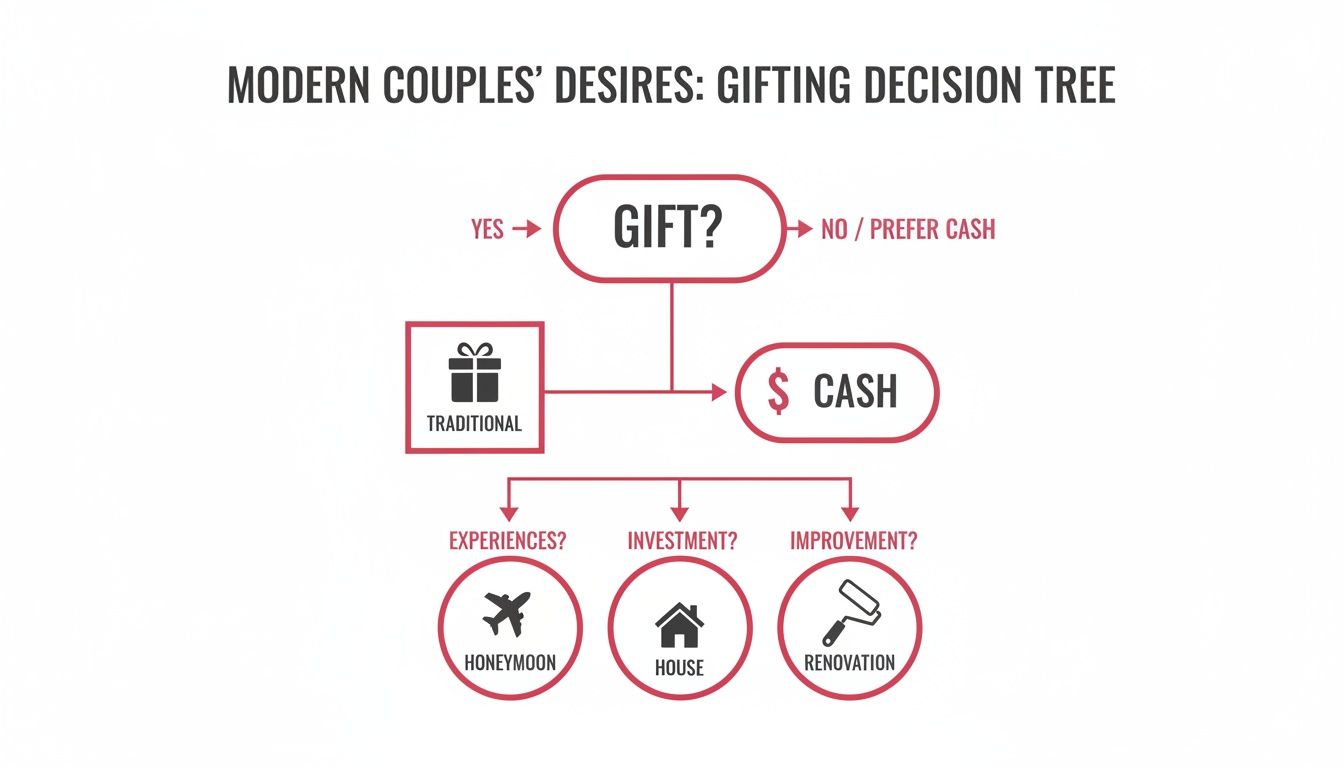
This decision tree gives you a peek into what modern couples are often saving for. It’s a great reminder of just how much a cash gift can help them kickstart their new life together.
As you can see, your gift isn’t just pocket money. It’s a tangible contribution towards a honeymoon, a home deposit, or even a much-needed renovation project.
Your Relationship with the Couple
This is the biggest factor, hands down. A gift is a personal thing, and it makes sense that the amount reflects how close you are.
Immediate Family and Best Mates: For your absolute nearest and dearest, it’s natural to be more generous. A good starting point is often $175 per person, but many choose to give more.
Friends and Extended Family: For good friends, cousins, aunts, and uncles, a gift in the $125 to $175 range is a lovely, common gesture that will be warmly appreciated.
Colleagues and Distant Relatives: If you’re celebrating with a workmate or a cousin you don’t see often, something between $75 and $125 is kind, thoughtful, and perfectly appropriate.
Your Personal Budget Comes First
Let's be clear about this: never, ever spend more than you can comfortably afford. A wedding invitation is a celebration, not an invoice. The couple wants you, your good vibes, and your dodgy dance moves—not for you to go into debt.
Your presence is genuinely the best present. A heartfelt card with a smaller amount of cash is always better than a big gift that puts you in a tight spot financially.
The Style of the Wedding
While the old 'cover your plate' idea is thankfully on its way out, the formality of the event can offer a subtle hint. A glamorous black-tie wedding in a ritzy city venue might nudge you towards a slightly higher gift than, say, a laid-back celebration in a backyard. It's not a hard-and-fast rule, but it can be a useful guide if you're on the fence.
On average, wedding guests in Australia tend to give between $150 and $200 in cash. This amount generally feels right for the occasion and reinforces why cash is often preferred over a physical gift. While some guides suggest a wide range from $100 to $300+, recent data found that 26% of Australians who attended a wedding in the last five years spent an average of $295 on the gift alone. You can dive deeper into these trends and other wedding spending habits over at EverAfterWeddings.com.au.
And a final tip: if you're attending with a partner, it's standard to give a joint gift. You don't need to straight-up double the per-person amount. A common and perfectly thoughtful approach is to increase your single gift amount by about 50-75%.
Giving Your Cash Gift With Style and Grace
You’ve settled on the perfect amount, but how you give your gift is the final, thoughtful touch. Presenting your cash gift well turns it from a simple transaction into a warm, personal gesture that celebrates the happy couple. It's all about making your generosity a memorable part of their big day.
Thankfully, you've got a couple of great options: the classic, physical approach or a more modern, digital one. Both are completely fine, and each has its own charm.
The Traditional Wishing Well
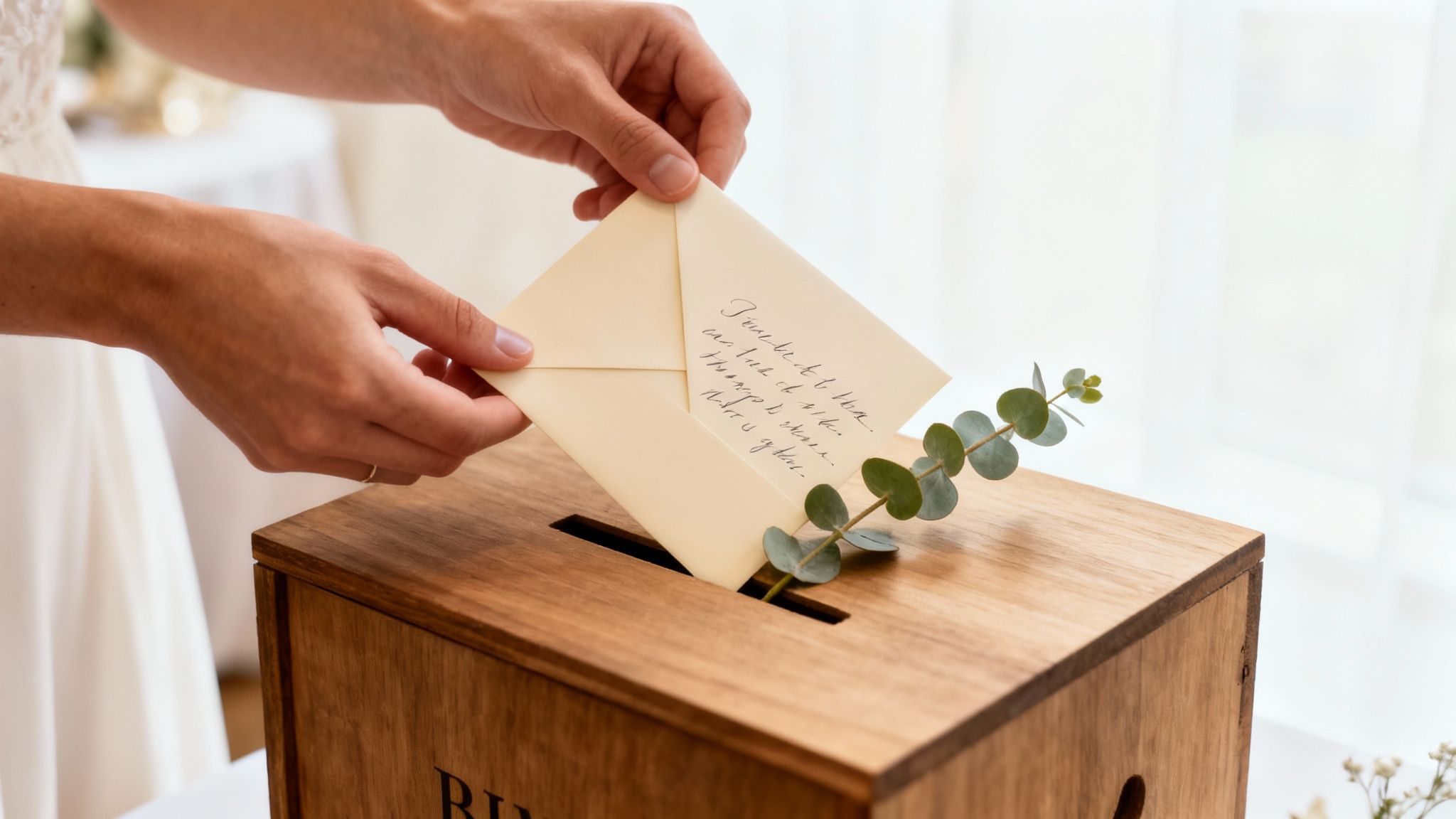
Most weddings you attend will have a "wishing well" – a beautifully decorated box set up at the reception to collect cards and gifts. It's a lovely tradition that feels direct and personal.
If you’re going this route, a few simple things make all the difference:
Pick a great card: Find one that really suits the couple's vibe or speaks to your connection with them.
Write from the heart: This is where the magic is. Share a favourite memory, tell them how excited you are for their future, or just wish them all the happiness in the world. This is what they'll remember.
Tuck the cash inside: Place the notes neatly inside the card. And a quick tip: bring the exact amount you plan to give. You definitely don’t want to be asking for change at the reception!
Modern Digital Gifting
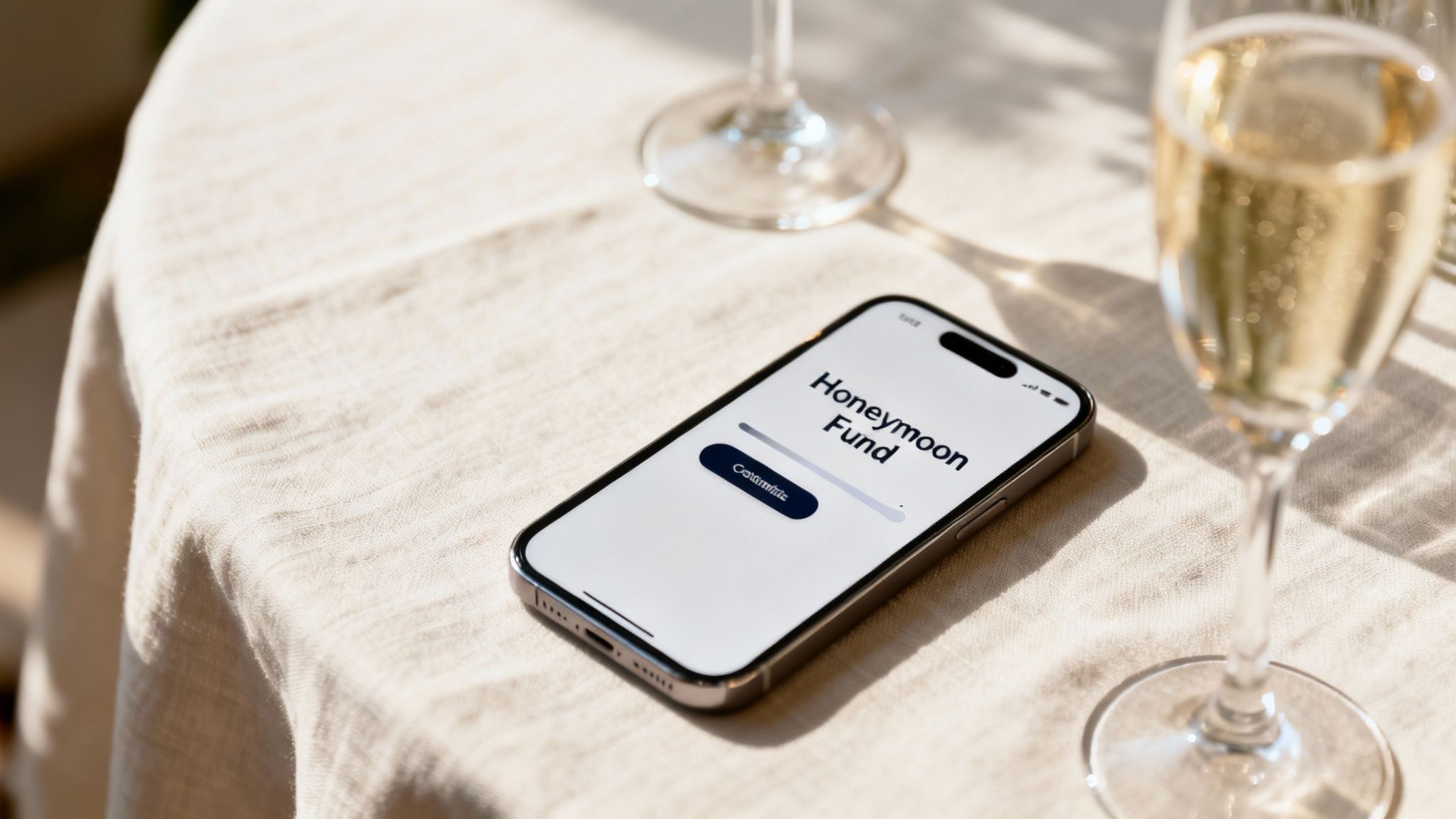
Of course, we live in a digital age, and online wishing wells are a fantastic, hassle-free alternative. A registry service like EasyRegistry lets you send your gift directly to the couple’s fund without ever leaving your couch.
This isn’t just about convenience. It’s also incredibly secure—no more worrying about your card getting misplaced during the party.
Plus, you don't lose the personal touch. Most digital platforms have a spot for you to write a message, so you can still share your heartfelt wishes. It's an ideal solution if you can't make it to the wedding but still want to be part of the celebration. And if you're looking for something other than cash, you can find plenty of unique wedding gift ideas that can often be handled through the same registry.
Sample Message Idea: "Dearest [Couple's Names], We are so incredibly happy to celebrate this amazing day with you. We hope this small gift helps you create beautiful memories on your honeymoon in Italy! Wishing you a lifetime of love, laughter, and adventure together. With all our love, [Your Name(s)]"
At the end of the day, whether you’re dropping an envelope into a wishing well or clicking "send" on a registry, what truly matters is the love behind it. Your thoughtful message and generous gift will mean the world to the couple as they start their new life together.
Making Gifting Easier with Digital Wishing Wells and Group Gifting
We all know the traditional wishing well – that charming box at the reception filled with heartfelt cards and cash. It's a lovely tradition, but let's be honest, modern weddings have evolved, and so has the way we give gifts.
Digital wishing wells are now the go-to for many couples and guests, and for good reason. They're essentially online cash funds that make the whole process safer, simpler, and far more convenient. Instead of a last-minute dash to the ATM, guests can simply follow a personalised link from the couple and contribute securely online. No more fumbling with envelopes or worrying about losing them on the dance floor.
For the happy couple, this means no more anxiety about a box of cash going missing in the chaos of the celebration. The money lands directly and securely in their account, ready to be put towards their future.
The Power of Group Gifting
Here’s where digital platforms really shine: they make group gifting a breeze. Imagine you and your friends wanting to give something truly unforgettable – maybe you want to fund the couple’s scuba diving adventure on their honeymoon or buy that fancy espresso machine they’ve been eyeing for months.
A gift like that can feel a bit steep for one person. But when you pool your money together, you can give a significant, high-impact present that the couple will cherish forever. It’s a wonderful way to show your collective love and support.
Modern registries are built for this kind of collaboration. They let couples break down big-ticket items or goals into smaller, more manageable chunks. For example:
A Honeymoon Fund: Guests can contribute towards flights, a beachfront hotel, or even a romantic dinner.
A Home Deposit Fund: Everyone can chip in to help the newlyweds get a foot on the property ladder.
A Renovation Project: Contributions could go towards building a new deck or landscaping the garden.
This approach lets every guest feel like they’re part of a bigger story, helping the couple achieve a major milestone.
Why Digital Gifting is Taking Over
The move towards digital isn't just about convenience; it's a practical response to the reality of modern weddings. With Australian weddings now bringing in an average of $8,400 in monetary gifts, security is a massive consideration for everyone.
It’s really no surprise that 73% of guests under 35 prefer making a digital payment to dropping cash in an envelope. And with security concerns worrying 68% of couples, online options offer genuine peace of mind. The funds usually arrive in their account within 24-48 hours, ready to go.
By using a digital platform, you're not just giving money. You’re making a secure, direct contribution to the couple's future, ensuring your gift arrives safely and can be used right away.
Platforms like a wishing well registry are designed to make the whole experience seamless. They act as a central hub where guests can see what the couple is saving for, contribute easily, and leave a personal message—blending modern security with the warmth of a traditional gift.
Your Top Questions About Cash Wedding Gifts, Answered
Let's be honest, figuring out the etiquette around cash wedding gifts can feel a bit like walking a tightrope. You want to be generous and thoughtful, but you also want to get it right without any awkwardness. We get it.
To help you feel completely confident, we’ve put together some straight-talking answers to the questions we hear all the time from both guests and couples. Let’s clear up the confusion so you can focus on the fun part – celebrating!
Is It Rude to Only Give Cash?
Absolutely not! In fact, in modern Australia, it’s often the preferred gift. The days of cash being seen as impersonal or a last-minute thought are long gone. For most couples, especially those who already have a home full of stuff, cash is genuinely the most practical and appreciated gift they could ask for.
Think of it this way: your gift gives them total flexibility. They can put it towards something they really need, like a house deposit, or something they’ve been dreaming of, like their honeymoon. You’re not just giving money; you’re directly investing in the first chapter of their new life together.
What if I Can't Go to the Wedding?
If you've been invited but can't make it, sending a gift is a lovely way to show you’re there in spirit. It’s a warm gesture that says, "Congratulations, we’re so sorry to miss it!"
That said, you’re not expected to give the same amount as a guest who attends. Without the costs of a new outfit or travel, it’s perfectly fine to adjust your gift. A smaller amount of cash or a thoughtful item from their registry is a wonderful and completely acceptable way to show you care.
What if I Can't Afford the "Typical" Amount?
This is a big one, so let’s be clear: you should never, ever feel pressured to give more than you can comfortably afford. A wedding invitation is about sharing a couple's joy, not an invoice for your dinner. They invited you because they want you there, and your presence is what they’ll remember.
A heartfelt card with a smaller, thoughtful contribution is always better than putting yourself in a tough spot financially. Real friends and family will understand and appreciate the gesture, no matter the dollar amount.
Remember, there are other meaningful ways to show your support. You could offer to help set up decorations, pet-sit while they’re on their honeymoon, or lend a hand with other pre-wedding tasks.
Should I Still Give a Gift for a Destination Wedding?
Yes, a gift is still customary, but the expectations are completely different. The couple knows you're already spending a significant amount on flights, accommodation, and taking time off work just to be there with them.
For a destination wedding, your presence is truly considered a massive part of the gift. It's perfectly acceptable to give a smaller cash gift than you would for a local wedding. The effort you've made to travel and celebrate with them is what means the world.
How Can Couples Politely Ask for Cash?
For couples, this can feel like the trickiest part. How do you ask for money without sounding demanding? The key is to be gracious, gentle, and maybe a little bit creative. A short, tasteful note included with the invitations is the most common way to do it.
Here are a few ways to word it that feel warm and natural:
Simple & Sweet: "Your presence at our wedding is the greatest gift of all. However, should you wish to give a gift, a contribution to our wishing well would be warmly received."
Future-Focused: "As we begin our new life together, we’re saving for our first home. If you’d like to give a gift, a contribution towards our goal would be a wonderful way to help us build our dream."
Modern & Honest: "We’ve been living together for a while and have everything we need. If you’d like to treat us, a contribution towards our honeymoon fund would be amazing!"
Using a digital wishing well link also helps make the process feel more organised and a little less direct.
Juggling a registry or cash fund can feel like one more thing on an already long to-do list. With EasyRegistry, you can create a beautiful, user-friendly registry for cash funds, physical gifts, or a mix of both. It makes it simple for your guests to contribute and helps you track everything in one spot, taking a little bit of stress out of your wedding journey. Create your free registry today!
So, you're getting married! Amidst the whirlwind of venue scouting and cake tasting, one of the very first things to land on your to-do list should be your save the date cards. Far from being just another piece of wedding stationery, they're your official opening act.
Think of them as the trailer for your wedding movie. They don't give away the whole plot, but they set the scene and get everyone excited for the main event.
Giving Your Guests a Much-Needed Heads-Up
Let's be practical. The main job of a save the date is to give your favourite people enough time to actually plan to be there. This is a game-changer, especially for anyone who needs to travel.
Whether you've got friends flying in from interstate or family making a long drive, that early notice is what allows them to:
Snag cheaper travel and accommodation: We all know booking flights and hotels last minute is a recipe for a budget blowout.
Book time off work: Getting annual leave approved often takes time, so the more notice, the better.
Line up childcare: For parents, organising a babysitter for a whole weekend isn't always a simple task.
Sort out their finances: Being a wedding guest is an honour, but it can be costly. A heads-up helps everyone budget properly.
Here in Australia, with longer engagements becoming more common, locking in your date with guests early is more critical than ever. We're seeing more couples push their weddings out to save up, with recent research showing 40% of couples are extending their engagements by a full year. This makes a save the date essential for making sure your VIPs are available. You can read more about what's happening in the local wedding scene in the 2024 Australian Wedding Industry Report.
Setting the Scene for Your Big Day
Beyond the pure logistics, your save the date is the very first taste your guests get of your wedding's vibe. It’s your chance to make a brilliant first impression and start building that buzz.
Your save the date isn't just an announcement; it's the prologue to your wedding story. It sets the scene, introduces the main characters (that’s you!), and gives everyone a reason to be excited for the main event.
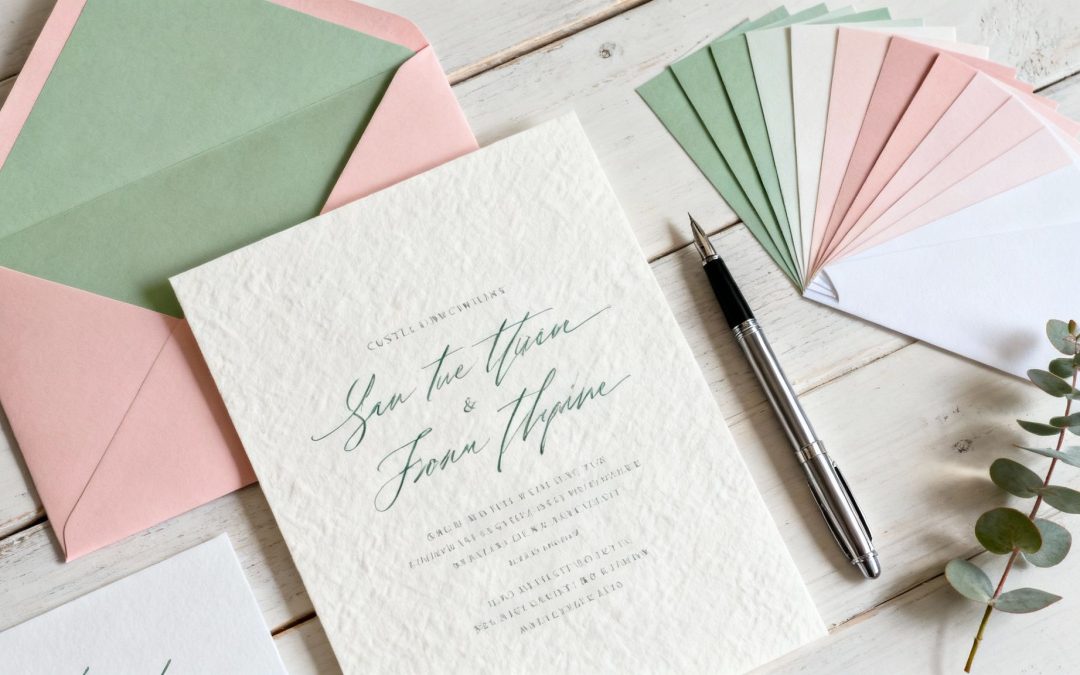
This is where you start to tell your story. A sleek, minimalist card hints at a modern city wedding, while something with a floral, rustic feel might suggest a relaxed celebration in the countryside. It’s your first real opportunity to show off your personality as a couple. You’re not just asking them to circle a date on the calendar; you're officially inviting them to be part of your journey from the get-go.
Nailing the Timing and Guest List Etiquette
Figuring out when to send your save the dates is one of the first big decisions you'll make, and it really comes down to two things: where you're getting married and who's coming. The whole point is to give your favourite people a heads-up, so the more notice they need, the earlier you should get them in the mail.
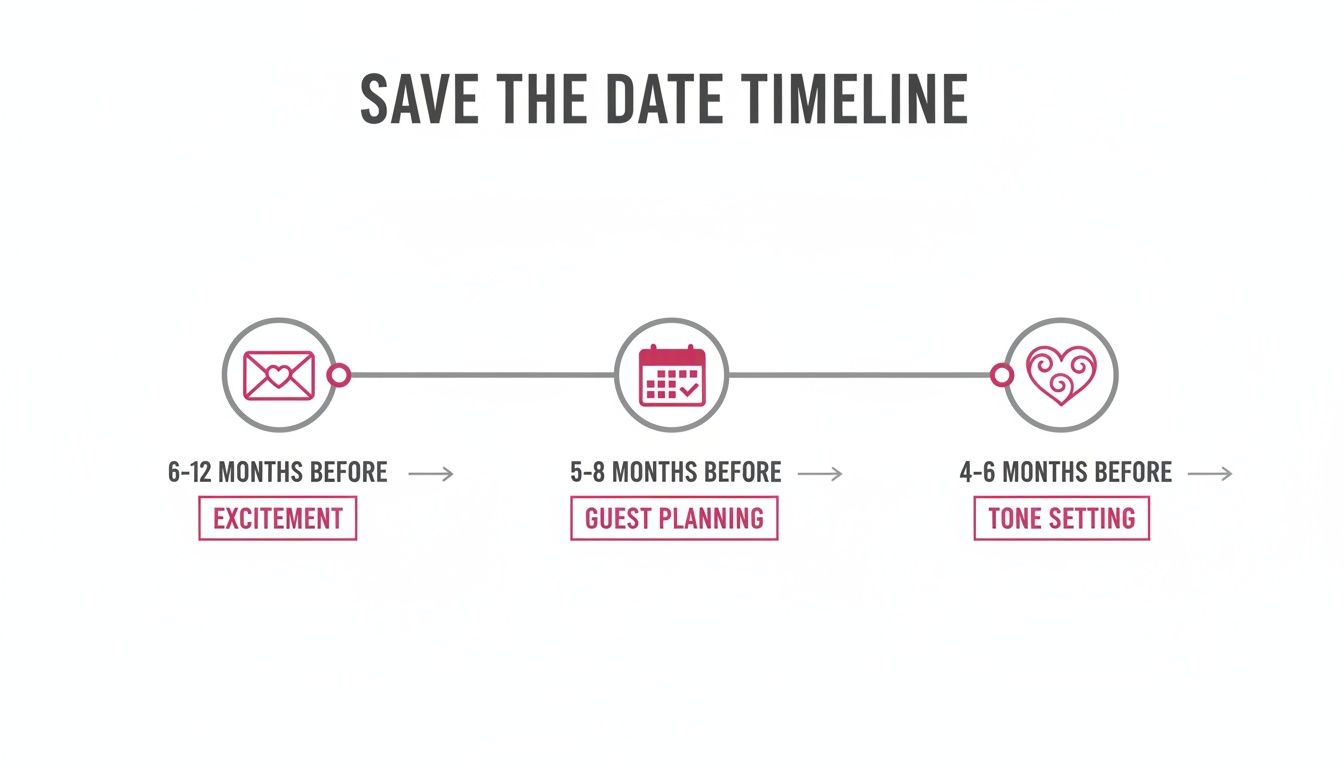
For a local wedding where most of your guests live nearby, the sweet spot is around six to eight months before the big day. This gives everyone plenty of time to pop it on their calendar and book a day or two off work, but it’s not so far in advance that they forget about it entirely.
What About Destination Weddings?
That standard timeline goes right out the window if you’re planning a destination wedding or have lots of guests flying in from interstate or overseas. For these situations, you need to be way more generous with your timing.
If your wedding involves passports and serious travel plans, you’ll want to send your save the dates nine to twelve months in advance. Honestly, you can’t give too much notice here. This gives your guests the best possible chance to scout out affordable flights, book good accommodation, and sort out their annual leave. The earlier they know, the more likely they can make it.
It all starts with that initial excitement, moves into the nitty-gritty of guest planning, and then you set the whole vibe for your event.
This journey from a happy announcement to practical planning is why a solid timeline is so crucial. Following a comprehensive ultimate wedding planning timeline can be a real lifesaver.
The Unbreakable Rule of the Guest List
Okay, let's get serious for a moment about the single most important rule of wedding etiquette: if you send someone a save the date, you must send them a wedding invitation. No ifs, ands, or buts.
A save the date isn't a "maybe" or a way to test the waters. It's a promise that a formal invitation is coming their way. Sending one and then pulling the invitation is a major faux pas that will definitely cause hurt and confusion. Before you order a single card or click 'send' on an e-vite, your guest list needs to be locked in.
Think of your save the date list as your final "A-list." You can always add more people later by just sending them an invitation, but you can never, ever subtract someone once they've received a save the date.
This is why it's so important to have your venue's capacity confirmed. Before you tell anyone to mark their calendar, be absolutely sure you and your budget can accommodate every single person on that list. If you're still deciding on a spot, check out our guide on the crucial https://blog.easyregistry.com.au/wedding-venue-questions/ to help you finalise those details.
How to Handle Plus-Ones (and Avoid Awkwardness)
Clarity is everything when it comes to your guest list. Your save the date should make it crystal clear exactly who is invited, which saves you from so many headaches later on.
Couples: Address the card to both people by name (e.g., "Sarah Chen & David Miller").
Single guests with a plus-one: If you’re happy for them to bring someone, write "James Smith & Guest." This explicitly gives them the option.
Families: If you’re inviting kids, address it to "The Thompson Family." If it’s an adults-only affair, address it just to the parents ("Mr & Mrs Thompson").
Being specific right from the start manages everyone's expectations and helps you dodge those tricky "So, can I bring my cousin?" conversations. Your save the dates are the first impression of your wedding—make it a clear and thoughtful one.
Crafting Wording That Is Clear And Captivating
The words on your save the date are more than just an announcement; they’re the very first glimpse your guests get into your wedding story. It’s their first impression, setting the tone and delivering the need-to-know info, all while showing off your unique personality as a couple. The trick is to find that sweet spot between crystal-clear information and your own personal flair.
At the end of the day, the message needs to be simple and straight to the point. Drowning your guests in details will only cause confusion and take away from the card’s main job: getting them to circle the date on their calendar. Think of it as the headline, not the full story—that can come later on your wedding website and the formal invitation.
The Absolute Must-Haves
Before you start getting creative, there are a few non-negotiable details every save the date needs. Skip any of these, and you can expect a flood of texts and calls from confused friends and family.
Make sure your card clearly states:
Your Names: Seems obvious, but you need to be clear about who’s getting married! Whether you use first names or full names really depends on how formal your wedding will be.
The Wedding Date: This is the hero of the card. Always include the full date—day of the week, date, month, and year—to avoid any mix-ups. For example, "Saturday, 25 October 2025".
The Location (City and State/Country): Your guests don't need the exact venue address just yet. What they do need is the city and state (or country, if it's a destination wedding). This is the crucial bit of info they'll use to book flights and accommodation.
A Note About the Formal Invitation: A simple line like "Formal invitation to follow" is a must. It lets everyone know this isn't the final invitation, so they shouldn't be hunting for an RSVP card.
Think of your save the date as a friendly heads-up, not a formal summons. The language should feel personal and exciting, giving guests just enough information to get them planning without overwhelming them with details that might still change.
What To Leave Out For Now
Just as important as what you put on the card is what you leave off. A common mistake is cluttering the save the date with too much information, which can create confusion. Save the finer points for the formal invitation and your wedding website.
For now, be sure to skip:
Specific Venue Details: The city is enough for now. You can share the ceremony and reception locations later on.
Registry Information: It’s considered poor etiquette to put gift registry details on a save the date. This is best placed on your wedding website or shared by close family if guests ask.
RSVP Requests: It’s way too early to ask for a firm headcount. The official RSVPs will be collected with the formal invitations, which are typically sent 6-8 weeks before the wedding.
A Detailed Schedule: Times for the ceremony, cocktail hour, and reception are not necessary at this stage. Plus, these details are often finalised much closer to the date.
Finding Your Voice: Wording Examples For Every Style
Now for the fun part—letting your personality shine through. The tone you choose should be a true reflection of you as a couple and the vibe you want for your wedding day. Are you planning an elegant, black-tie affair or a chilled-out, barefoot-on-the-beach kind of day?
Finding the right words can be tough, so here are a few examples to get you started, sorted by the kind of wedding you're planning.
Save The Date Wording Examples for Every Style
Wedding Style
Wording Example
Traditional & Formal
"Please save the date for the wedding of Amelia Grace Thompson and Liam James Carter"
Modern & Casual
"Save our date! Chloe & Ben are getting married!"
Minimalist & Chic
"Save the Date. Olivia and Jack. 25.10.25. Melbourne, VIC."
Playful & Humorous
"It’s about time! Save the date for Zoe & Leo's wedding."
Destination Wedding
"Pack your bags! We’re getting married in Bali! Save the date for Mia and Noah."
Ultimately, the best wording for your save the date is whatever feels most authentic to you. It’s the first chapter of your wedding story, so have fun with it and make it a great one.
Choosing Between Paper and Digital Designs
Alright, you’ve sorted out your guest list and locked in a timeline. Now for the fun part: deciding what your save the dates will actually look and feel like. This is where your wedding's visual story really begins, and the choice between traditional paper and sleek digital designs says a lot about your style, budget, and the vibe you want to create.
Honestly, there’s no right or wrong answer here. The best choice is the one that feels most like you as a couple. Let's break down the pros and cons of each to help you land on the perfect fit for your big day.
The Timeless Charm of Tangible Cards
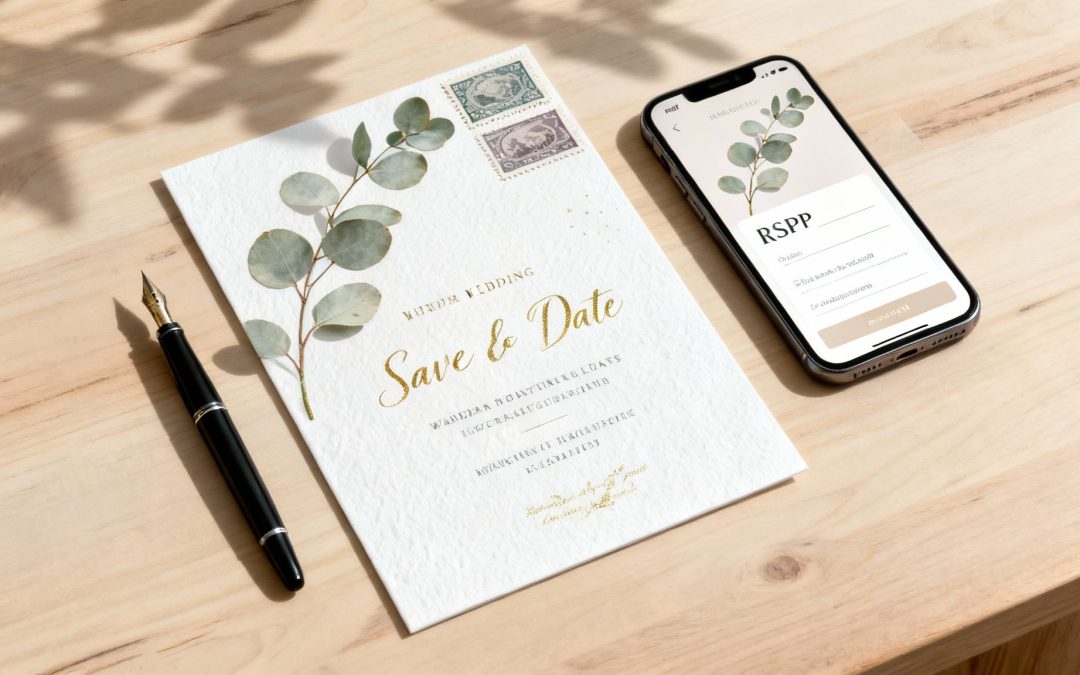
There's just something special about receiving a beautiful piece of mail, isn't there? A physical save the date is a tangible keepsake your guests can stick on the fridge—a happy, constant reminder of the celebration to come. This traditional route immediately sets a certain tone, often hinting at a more formal or classic wedding style.
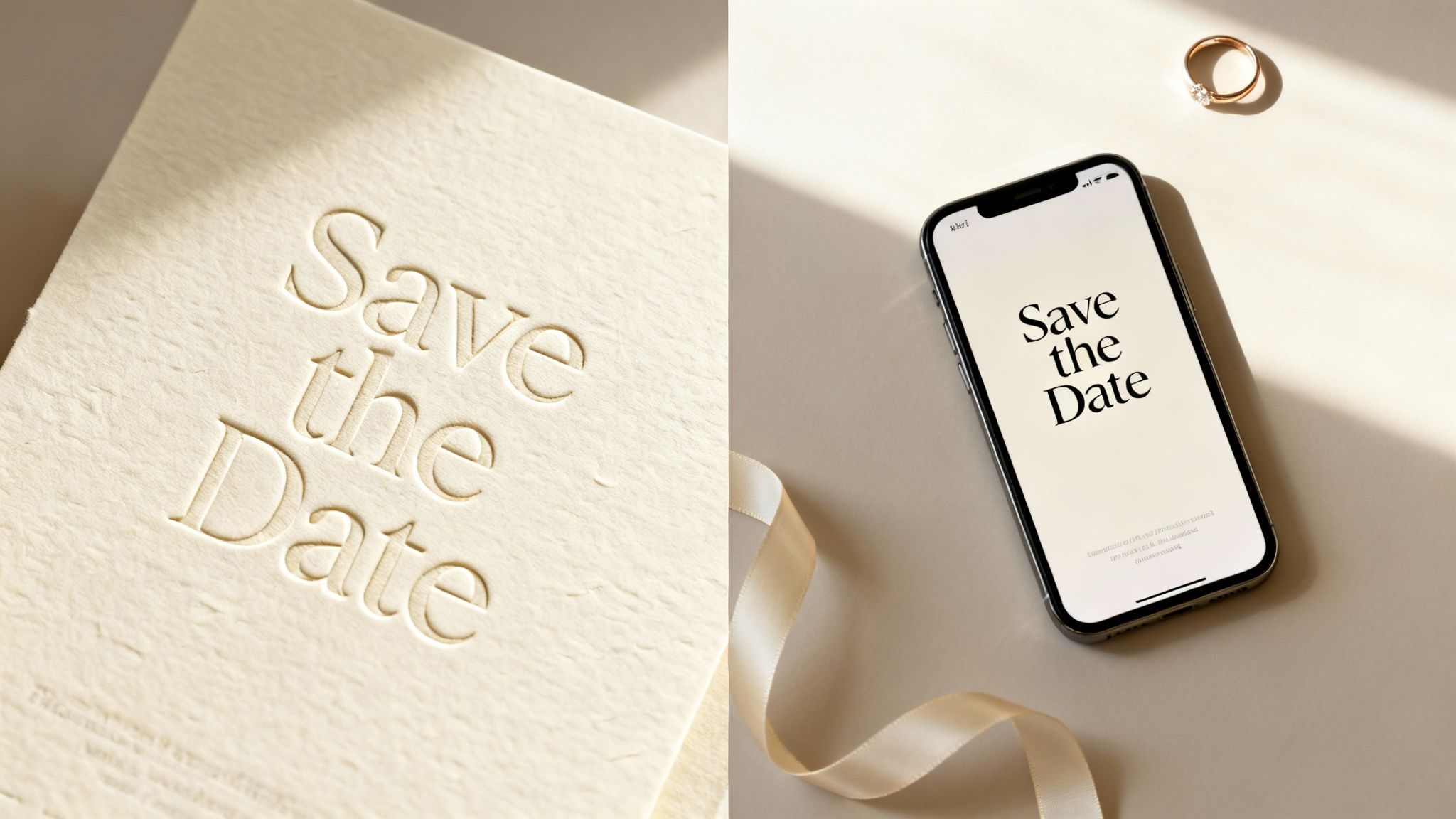
You simply can't replicate the tactile experience of paper. The weight of the cardstock, the texture of a letterpress design, or the shimmer of gold foil all combine to make a powerful first impression. These little details make your announcement feel significant and thoughtfully planned.
It's this sentiment that keeps physical cards so popular. Even with all the digital options out there, traditional stationery still dominates for milestone events like weddings because it just feels more special.
Exploring Your Paper and Print Options
If you're leaning towards paper, you’ve got a whole world of creative possibilities to explore. The materials you choose will have a huge impact on the final look and feel of your announcement.
Paper Stock: This is all about the thickness and texture of your card. A heavier stock (measured in GSM, or grams per square metre) feels more luxurious and substantial. You can choose from smooth matte and glossy finishes to more textured linen or even eco-friendly recycled paper. For a deep dive, check out a comprehensive guide to paper weights—it's surprisingly helpful.
Printing Techniques: Different methods create completely different effects. Digital printing is the most common and budget-friendly option. For a more high-end, tactile finish, look into techniques like letterpress (where the design is pressed into the paper) or foil stamping.
Key Takeaway: A physical save the date is more than just information; it’s a sensory experience. The weight, texture, and visual details create a lasting impression and give your guests a tangible piece of your wedding story to hold onto.
The Efficiency and Ease of Digital Designs
For modern, eco-conscious, or budget-savvy couples, digital save the dates are a brilliant alternative. They offer unmatched convenience and speed. With just a few clicks, your announcement can land directly in your guests' inboxes, saving you a small fortune on postage and reducing your wedding's carbon footprint.
Digital platforms also make managing your guest list a breeze. You can track who has opened the email, send out gentle reminders, and link everyone directly to your wedding website. This immediate connection is a massive plus, as it encourages guests to check out travel details or accommodation options straight away.
This approach works especially well for more casual weddings or for couples who are used to managing their lives online. It reflects a modern, streamlined style of planning.
Considering a Hybrid Approach?
You don't have to be all-or-nothing. A hybrid model can genuinely offer the best of both worlds.
Many couples send beautiful paper save the dates to close family and older guests who they know will appreciate a traditional announcement. Then, they’ll send a stylish e-card to friends and younger relatives who are perfectly happy with digital comms. This method is thoughtful and efficient, ensuring everyone feels included while you still get to take advantage of digital convenience.
Using Wedding Websites and QR Codes Effectively
Think of your save-the-date card as more than just a heads-up. It's really the first official touchpoint of your wedding experience, and by pairing it with a wedding website and a QR code, you can turn that small piece of paper into a super-helpful info hub for your guests. It’s a bit of a game-changer for modern wedding planning.
A wedding website becomes the single source of truth for your guests. It answers all their questions before they even have a chance to ask them, which drastically cuts down on those repetitive texts and phone calls about logistics. This frees you up to focus on the bigger picture and lets you share more of your story to get everyone excited.
What to Include on Your Website at This Stage
Don't feel pressured to have your entire wedding website perfectly polished when the save-the-dates go out. The real goal right now is to give your guests the essential details they need to start planning, especially if they’re travelling.
Here’s what you should aim to have live:
A Warm Welcome & Your Story: A short welcome message and a little background on you as a couple really helps guests feel connected to the celebration.
The Key Event Details: Just reiterate your names, the date, and the city or town. You don't need to have the specific venue locked in and announced, but confirming the general location is crucial.
Travel and Accommodation Advice: This is probably the most important part for out-of-towners. Suggest a few hotels (and mention any room blocks you've arranged), list the closest airports, and offer some tips for getting around.
A Simple FAQ Section: Start with the big questions you anticipate, like "Is there a dress code?" or "Can we bring our kids?". You can always add to this later as more queries come in.
The finer points—like the detailed schedule for the day, menu choices, and specific transport plans—can absolutely wait until you send the formal invitations. For now, it's all about providing just enough information to make things easy.
By directing guests to a central online hub, you streamline communication from day one. A wedding website paired with a QR code on your save the date cards empowers guests to find information independently, making their experience smoother and your planning process far more organised.
The Power of a Simple QR Code
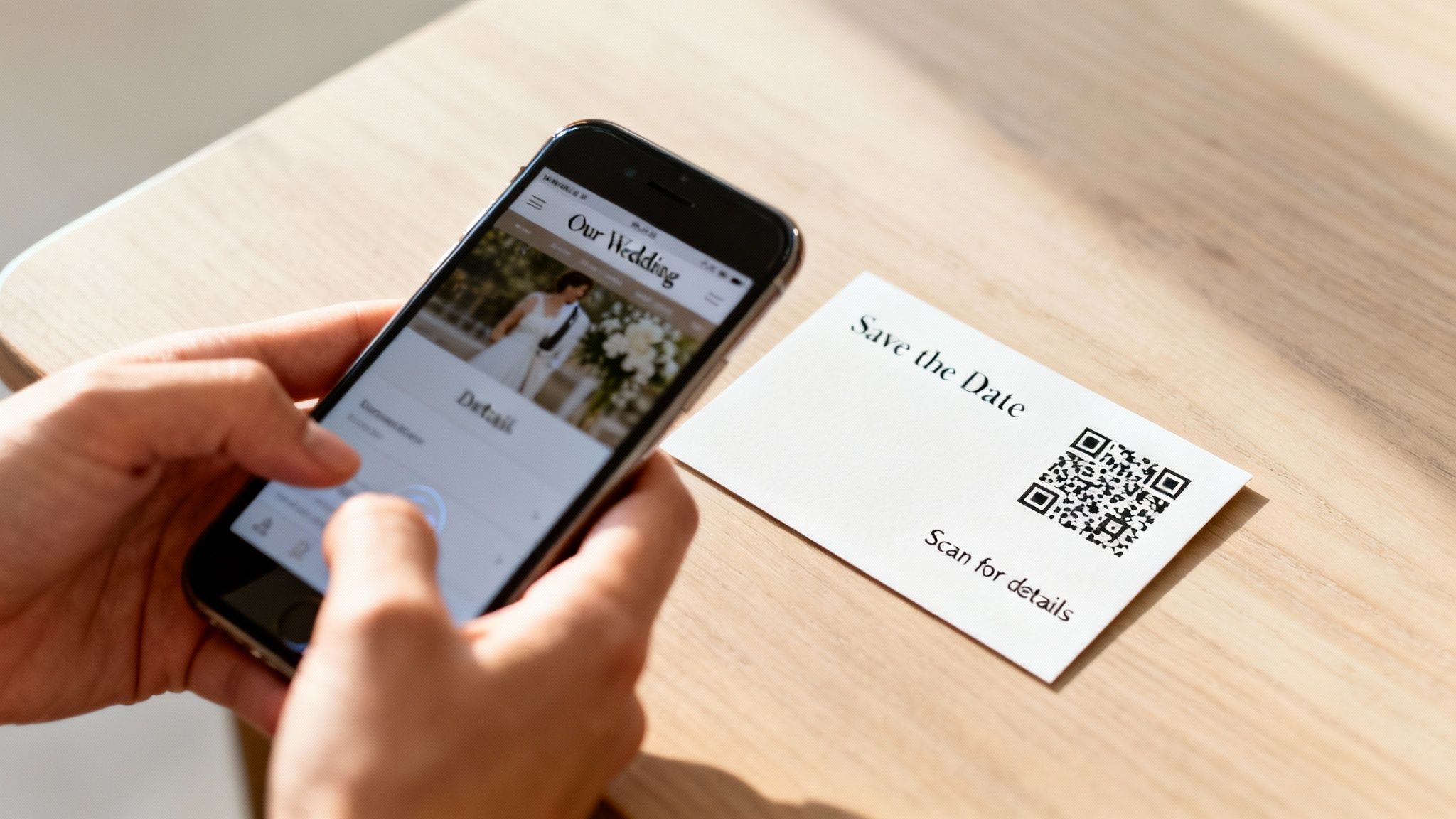
QR codes have become the seamless bridge between your physical save-the-date and your digital wedding website. In fact, recent data shows that 38% of couples now include QR codes on their wedding stationery. It's a simple, effective tool that virtually everyone with a smartphone knows how to use.
With a quick scan, your guests get instant access to all the helpful information you've put together on your website. No more squinting to type out a long, complicated URL. They just point their camera, and they’re there.
It's all about making things easy for your guests, and a clean, user-friendly interface makes all the difference. When the time comes for your gift registry, you’ll see how a simple design can make the process smooth for everyone. You can learn more about how an online registry works to see just how seamless it can be.
Getting the Call-to-Action Right
Don't just slap a QR code on your card and call it a day! You need to give your guests a little nudge in the right direction. A clear, friendly call-to-action is key to getting them to actually scan it.
Keep the wording simple and direct. Something like:
"Scan for our wedding website and travel details!"
"For more info and to read our story, pop over to our website."
"Visit our wedding website for accommodation tips and more."
This tiny bit of text removes any confusion and encourages people to engage with your website straight away. It’s a small detail that makes a huge difference in keeping everyone in the loop and excited for your big day.
Your Save The Date Questions, Answered
Even with a perfect plan, you’re bound to have questions crop up when you get to the wedding stationery stage. We get it. Let’s walk through some of the most common queries we see, with clear answers to help you tick this off your list with confidence.
Do We Really Need to Send Save The Dates to Everyone?
Not necessarily, but it’s a very smart move for your most important people. Think of them as non-negotiable for anyone travelling from interstate or overseas, your immediate family, and your wedding party. These are the people who need a serious heads-up to book flights, sort out accommodation, and take time off work.
What about local guests? It’s a lovely gesture but less critical, especially if you have a shorter engagement.
Just remember the golden rule: anyone who gets a save the date must get a formal invitation later. This is a promise, so only send them to people you are 100% sure will be on your final guest list. There’s no taking it back.
What’s the Biggest Mistake Couples Make?
Hands down, the single biggest mistake is sending save the dates before the guest list is set in stone. It’s so tempting to get excited and send them out, but a save the date is a commitment to send an invitation. If you have to cut people later due to budget or venue limits, it creates hurt feelings and incredibly awkward conversations.
Another classic slip-up is putting way too much information on the card. Details about your gift registry, the exact ceremony time, or the dress code can all wait. Keep it clean and simple—save the nitty-gritty for the wedding website and the formal invitation.
The point of a save the date is to inform, not overwhelm. Keeping it simple and sending it only to a confirmed guest list sets a clear, considerate tone for your whole wedding experience.
Should We Ask for RSVPs on the Save The Date?
Definitely not. The whole point is just to give your guests a heads-up so they can block out the date. You're not asking for a firm commitment this far out. People’s plans change, and any RSVPs you collect now will be unreliable.
However, you can use it to get a soft headcount. A great way to do this is by adding a friendly note next to your wedding website details. Something like, "Head to our website for travel info and to let us know if you think you can make it!" This gives you a rough idea of numbers without pressuring anyone for a final answer. Save the formal RSVPs for the official invitations.
Is It Okay to Send Save The Dates by Email?
Absolutely! Digital save the dates are a fantastic, modern option. They’re eco-friendly, budget-conscious, and incredibly efficient—you save a bundle on printing and postage, and they’re delivered instantly. Plus, guests can click straight through to your wedding website.
The key is to know your audience. Older relatives, like grandparents, might not be as comfortable with digital invites and would probably cherish getting a physical card in the mail.
A hybrid approach is often the perfect solution. Many couples now:
Send beautiful paper cards to close family and older guests.
Email a stylish e-card to friends and younger relatives.
This way, everyone gets the news in a format that works for them. If you have more specific questions about how online wedding tools work, our team has put together a detailed list of answers to help with your planning. You can explore our own frequently asked questions for extra guidance.
Ready to streamline your gift-giving experience? With EasyRegistry, you can create a beautiful, user-friendly registry for your wedding, baby shower, or any special occasion. Give your guests the gift of choice and make your planning process simpler. Create your free registry today at https://www.easyregistry.com.au.
Writing your own wedding vows is all about bottling up your unique love story into a few heartfelt promises. It's a process of sifting through your favourite memories, weaving them into a short, personal narrative, and making real commitments to your partner for the life you're about to build together.
Why Your Personal Vows Are So Important
Let's be real—the idea of writing your own vows can feel like one of the most nerve-wracking parts of wedding planning. But it's also, without a doubt, the most powerful. When you step away from the traditional scripts, you give yourselves the chance to create promises that actually sound and feel like you.
This is so much more than just saying "I do." You're setting the emotional tone for your entire marriage, in your own words. These vows become the heart and soul of your ceremony, creating a moment that you, your partner, and your guests will never forget. Just the act of putting these deep feelings onto paper can bring you closer before you even walk down the aisle.
A Modern Take on Tradition
These days, more and more couples are personalising their ceremonies to make them a true reflection of their partnership. The trend is huge in Australia, where a staggering 78% of couples now include personal vows in their wedding. This shift really shows how much we value a more intimate and genuine way to express our commitment.
Adding this personal touch turns the ceremony from a formal procedure into a genuine celebration of your unique love story. It’s your chance to tell everyone what makes your partner so incredible, in front of all the people who mean the most to you.
Your vows are the one part of the wedding day that is entirely yours. They are the promises that will echo long after the music fades and the flowers have wilted—the true foundation of your marriage.
More Than Just Words
Think of your vows as the script for the most important scene of the day. Just as much thought goes into choosing your wedding bands to symbolise your commitment, the promises you make are the emotional equivalent of those rings. They’re a tangible symbol of your future.
Taking the time to write your own vows allows you to:
Express your love authentically: Ditch the generic phrases. Share what your partner really means to you.
Create a lasting memory: Your guests will remember raw, genuine emotion far longer than they'll remember the table settings. Your sincerity will be the highlight.
Affirm your future together: By speaking your shared vision and promises out loud, you solidify the foundation of the life you're building.
Ultimately, your vows are a gift you give to each other. They become a cherished cornerstone of your wedding day that you’ll both look back on for decades to come.
Gathering Your Thoughts Before You Write
The best wedding vows—the ones that really hit home—come from the heart, not a cookie-cutter template. Before you even think about putting sentences together, the real work starts with a bit of quiet reflection. This is your brainstorming phase, where you’ll gather all the raw materials: the memories, the inside jokes, and the deep feelings that make your relationship what it is.
Think of it as creating a personal ‘story bank’. You’re collecting all the small, specific details that paint a picture of your love. Forget about writing perfect prose right now. Your only job is to get ideas down as they pop into your head, creating a rich well of material to pull from later.
Unlocking Your Memories with Simple Prompts
Staring at a blank page is intimidating for anyone. The hardest part is often just getting started, so a few targeted questions can work wonders to get your thoughts flowing. You don't need to answer every single one; just see which ones spark an idea or a forgotten memory.
Find a quiet moment and mull over these prompts:
What was your very first impression of your partner? How has that changed?
Can you remember the exact moment you realised you were in love with them?
What’s a small, everyday thing they do that always makes you smile?
Think of a time they really had your back. How did that feel?
Describe a challenge you conquered together. What did it teach you about your partnership?
What’s your all-time favourite memory together, and why does it stick with you?
How has your partner helped you become a better version of yourself?
What are you most excited about for your future together?
Don't censor yourself here. Jot down everything that comes to mind, no matter how small or silly it feels. The most powerful vows are often built from these tiny, authentic details.
Practical Ways to Capture Your Ideas
Let’s be honest, inspiration rarely shows up on schedule. A perfect memory is more likely to pop into your head while you’re stuck in traffic or waiting for your flat white than when you’re sitting at a desk. The trick is being ready to catch these thoughts the moment they appear.
Try a few different methods to build up your story bank:
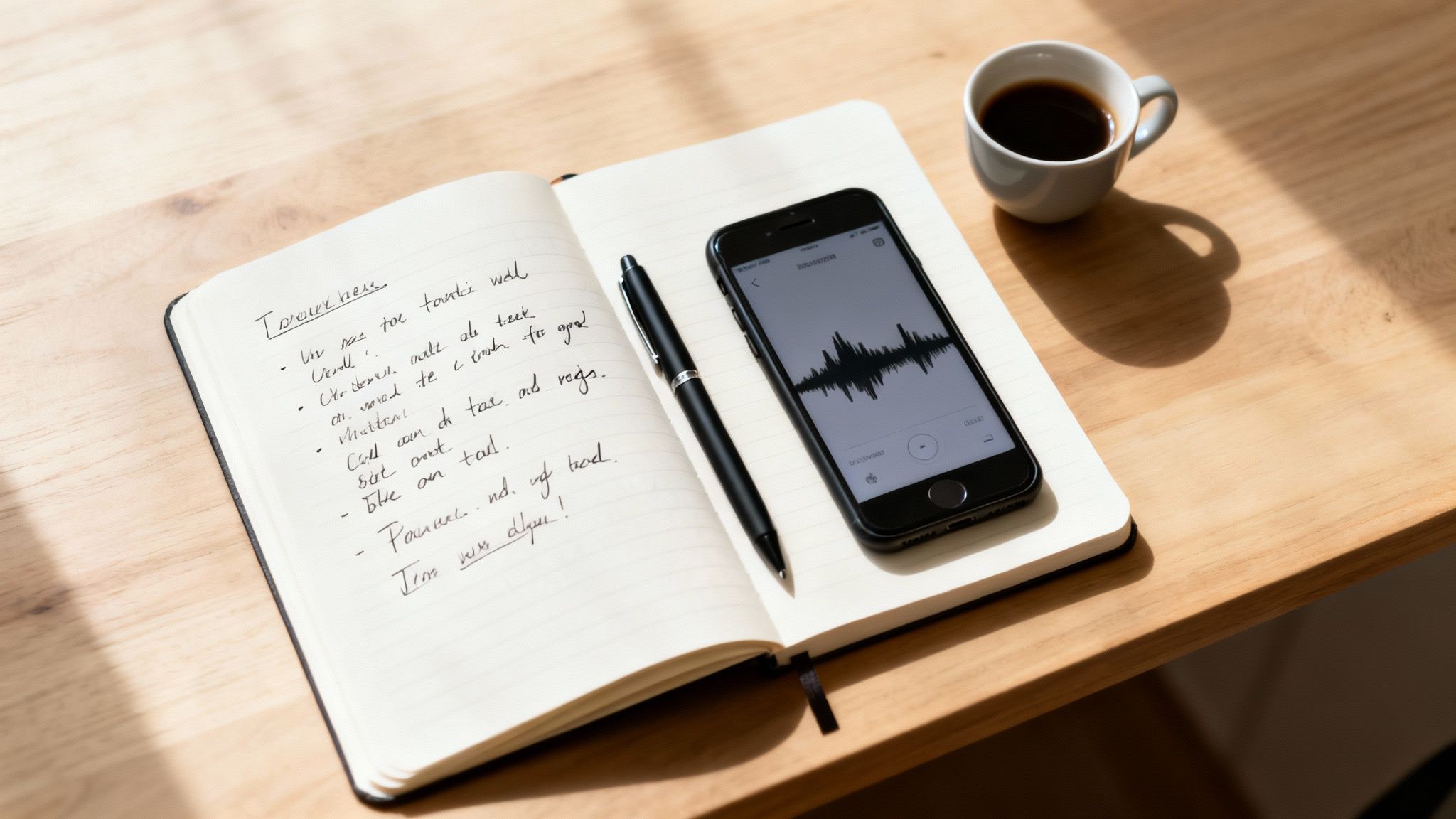
Voice Memos: Use your phone to quickly record thoughts while you’re driving or out for a walk. Sometimes speaking an idea out loud feels more natural than writing it.
Shared Digital Note: Start a shared note in an app like Google Keep or Apple Notes. You and your partner can both drop in memories as they come up—just make a pact not to peek at each other's final vow drafts!
A Dedicated Notebook: An old-school notebook works wonders. Keeping a small one on you to scribble down phrases or promises can help you connect with the emotion behind the words.
This groundwork is probably the most important part of writing your vows. By focusing on gathering real, honest material first, you’re guaranteeing your final words will be packed with genuine emotion and personal details. Taking the time to do this now makes the actual writing process so much smoother and more meaningful. It's a smart investment, much like finding amazing tips to save money on your wedding day, because it lets you focus your energy on what truly matters. Building this story bank is how you prepare to create vows that will resonate for a lifetime.
Structuring Your Vows for Emotional Impact
So, you've gathered all those wonderful memories, inside jokes, and heartfelt feelings. Fantastic. Now, how do you turn that beautiful mess of ideas into vows that actually flow? The secret is a simple structure. Think of it less like a rigid script and more like a roadmap to guide your thoughts.
Having a framework helps you build your vows piece by piece, so you feel in control rather than completely overwhelmed by the blank page. It’s the key to turning scattered notes into a story that builds emotion and feels completely natural.
This isn't about ticking boxes. It's about taking your partner—and your guests—on a journey. A good set of vows usually has four key landmarks: a heartfelt affirmation, a personal story, your core promises, and a shared vision for the future. Hitting these points ensures your vows have a beginning, a middle, and an end that truly lands.
To help you get started, here's a simple framework I've seen work countless times. It’s designed to help you organise your thoughts and promises into a coherent and heartfelt declaration.
A Simple Framework for Your Wedding Vows
Vow Section
What It Accomplishes
Guiding Questions to Ask Yourself
The Affirmation
Sets the tone and hooks your partner in immediately. It's a direct, powerful statement of love.
What is the very first thing I want them to hear? Why are we standing here today?
The Story
Shows, rather than tells, why you love them. It makes your connection real and relatable.
What one memory perfectly captures who they are or what we have together?
The Promises
This is the heart of your vows. It's your concrete commitment for your marriage.
What do they need from me? What can I realistically promise to do and be for them?
The Future
Ends on a hopeful, forward-looking note, summarising your lifelong commitment.
What is my biggest dream for our life together? What is the final thought I want to leave them with?
Let's break down each of these sections a little further.
Start with a Powerful Affirmation
Kick things off by speaking directly to your partner. This first line is your chance to grab their attention and set an intimate, personal tone. It’s where you state, without any fluff, what this day or what they mean to you.
This isn’t the place for a long-winded story; it’s for a direct, heartfelt statement of love. It could be as simple as, “From the moment I met you, I knew my life was about to change in the most wonderful way.”
Here are a few ideas to get you thinking:
A Statement of Belief: “I used to think soulmates were just a nice idea, but then I met you.”
A Direct Address: “My love, standing here with you today feels like coming home.”
A Reflection on Time: “It feels like only yesterday we were…, and now here we are, about to start our forever.”
This opening line grounds your vows and creates an anchor for everything that follows.
Tell a Brief, Meaningful Story
Okay, now it’s time to bring your love to life. A short, specific anecdote is what separates good vows from unforgettable ones. You’re moving from telling everyone you love your partner to showing them why. A well-chosen story is so much more powerful than a list of adjectives.
Pick one single memory that captures the essence of your relationship. Maybe it was a funny disaster on your first trip away that showed their incredible patience. Or perhaps it was a quiet moment where their support meant the world to you.
For example, instead of saying, “You’re so supportive,” you could share a moment: “I’ll never forget the night before my big exam when you stayed up making me flashcards and cups of tea, even though you had to be up at 5 am. In that small, quiet moment, I saw the incredible depth of your kindness.”
Choose one story and tell it well. You don’t need to recount your entire relationship timeline. A single, vivid snapshot will connect with your partner and your guests on a much deeper level.
Make Your Core Promises
This is the heart and soul of your vows. You’ve just explained why you love them with your story; now you’re going to make clear, intentional promises for your future together. These are the commitments that will guide your marriage long after the wedding day is over.
Try to go beyond the classic “in sickness and in health.” While it's a beautiful sentiment, this is your chance to make promises that are unique to your partnership. What does your partner truly need from you? What do you need to promise to be the best spouse you can be?
Feel free to mix the serious with the lighthearted:
Serious: “I promise to always be your biggest supporter, celebrating your wins and holding your hand through any challenges.”
Personal: “I promise to always listen, even when we’re debating which pizza topping is superior.”
Future-Oriented: “I promise to build a life with you that is filled with laughter, adventure, and endless cups of coffee in bed.”
These promises are the covenant you’re making. Make them count.
Close with a Vision for the Future
End your vows by looking forward. This final part ties everything together and leaves your partner and guests feeling hopeful and excited for what’s next. It’s your shared dream, spoken out loud.
Your closing line should be a powerful summary of your commitment and love. It’s the final thought you want ringing in your partner’s ears.
A strong closing might sound like one of these:
“With you by my side, I know the best is yet to come. I can’t wait to spend the rest of my life with you.”
“You are my greatest adventure, and I promise to love you fiercely and completely, today and all of our tomorrows.”
“I choose you. Today, and every day for the rest of our lives.”
Following this flow provides a simple yet incredibly effective way to organise your thoughts, ensuring your vows are coherent, emotional, and deeply personal.
Polishing Your Draft Until It Shines
Getting that first draft onto paper is a huge win. Seriously, give yourself a pat on the back. But the real magic happens in the editing. This is where your good ideas transform into an unforgettable declaration of love—where you polish every sentence until it sounds exactly like you.
Think of editing less as finding flaws and more as sharpening your focus. You’ll be amazed at how a few small tweaks can make your vows clearer, more powerful, and a whole lot easier to deliver when you’re standing up there.
Read Your Vows Out Loud
If you only do one thing to edit your vows, make it this. It’s non-negotiable. Words can look perfect on a page, but vows are meant to be heard. Reading them aloud is the only way to catch what your eyes will miss.
As you speak, listen for a few key things:
The Rhythm and Flow: Does it sound natural, like you’re actually talking? Or are some sentences a bit stiff and clunky?
Awkward Phrasing: Are there any tongue-twisters or phrases you keep stumbling over? If you trip up in your living room, you’ll definitely trip up at the altar.
Pacing and Breath: Are you running out of air mid-sentence? That’s a clear sign you need to add a comma or break a long sentence into two shorter ones.
Hearing your own voice will instantly show you where the emotional beats land and where the rhythm feels off. It’s the best way to make sure you sound like yourself, not a greeting card.
Your vows should sound like the best, most heartfelt conversation you’d ever have with your partner. Reading them aloud is the only real way to know if you've nailed it.
Find the Sweet Spot for Length
You’ve poured your heart out, but remember, your guests (and maybe even your partner!) have a limited attention span. The sweet spot for wedding vows is between one and three minutes. It might not sound like a lot, but it’s more than enough time to say something truly meaningful.
A three-minute speech clocks in at around 350-450 words, give or take, depending on how quickly you speak. The best way to check? Time yourself reading your draft aloud.
If you’re running over, it’s time to be a little ruthless. Look for repeated ideas or stories that could be told more concisely. Every single word needs to earn its place.
Get a Second Opinion From Someone You Trust
You're way too close to your own writing to see it clearly. Getting feedback from a trusted friend, a sibling, or your celebrant can be a game-changer. Just be sure to pick someone who gets you and your partner, and who you can count on for honest, constructive advice.
To get the most helpful feedback, ask them specific questions:
Does this genuinely sound like me?
Is the tone right for the kind of wedding we're having?
Are there any bits that are confusing?
Is there anything you think I could cut?
This outside perspective is especially useful when you think about your audience. Saturdays are the most popular day for weddings in Australia, hosting about 55% of all ceremonies, which often means a bigger guest list. A friend can help you find that perfect balance between the deeply personal promises meant only for your partner and the public declaration everyone is there to witness. If you're curious about other trends, the Celebrant Institute’s website has some great insights.
Ultimately, this final polish is what makes your vows land with real heart. By reading them aloud, trimming them down, and getting a fresh perspective, you'll craft words that aren't just beautiful on paper but are delivered with confidence and pure sincerity.
Delivering Your Vows with Confidence
You’ve poured your heart onto the page, and now it’s time to make sure your delivery does those beautiful words justice. This is the emotional peak of your ceremony, and a little preparation will help you feel present, connected, and wonderfully calm when the moment arrives.
This isn't about giving a flawless performance or memorising a script. It’s about getting so comfortable with your own words that you can share them with the same love you put into writing them.
Practice Makes Present, Not Perfect
Let's get one thing straight: the goal here isn't to memorise every line. In fact, being too rehearsed can make your vows sound a bit robotic. The real reason to practise is to get familiar with the rhythm and feel of the sentences.
Why? So you can look up from the page and actually make eye contact with your partner.
In the days leading up to the wedding, read your vows aloud a few times. Try it in front of a mirror to see your own expressions. This is the best way to catch any clunky phrases you might stumble over and find the natural places to pause and breathe.
The most powerful vows feel like an intimate conversation, just with a few more people watching. Familiarity with your words lets you focus on your partner, not the paper in your hands.
Speaking from the heart is what it's all about. Delivering your vows with sincerity and confidence is just as important as the writing itself. For more advice on public speaking at weddings, you might find these tips for delivering impactful wedding speeches helpful.
Managing Your Nerves on the Day
It’s completely normal to feel a rush of adrenaline and a few butterflies. Public speaking is a huge fear for many people, and when you add the emotional weight of a wedding, it’s a recipe for jitters. But you can use that energy to your advantage.
Here are a few simple tricks to keep you grounded:
Take a Deep Breath: Just before it’s your turn, take one slow, deep breath. It’s a tiny action that sends a huge signal to your nervous system to calm down.
Focus on Your Partner: Look directly into their eyes. They are your anchor. This makes the moment feel like it's just the two of you, creating an intimate bubble that shuts out everything else.
Slow Down: When we’re nervous, we talk fast. Make a conscious effort to speak more slowly than you normally would. It gives your words weight and makes you much easier to understand.
Embrace the Emotion: If your voice cracks or a tear escapes, that’s okay. It’s beautiful. Those raw moments of vulnerability are what make your vows real and unforgettable. Don’t fight it.
Remember, every single person in that room is on your team. They’re your biggest cheerleaders.
Choosing How to Read Your Vows
Finally, let’s talk logistics. You absolutely shouldn’t try to memorise your vows, so you'll need something to read from. The presentation matters, as it will be in all your ceremony photos for years to come. It's one of those practical details to sort out, just like finalising the key questions to ask your wedding venue before the big day.
Here are the most common options:
A Vow Book: Small, elegant notebooks are a fantastic choice. They look beautiful in photos and become a cherished keepsake you can hold onto forever.
Discreet Cards: Neatly written or printed cards are a classic for a reason. Go for thick cardstock so they don’t flutter in a breeze, and make sure the text is large enough to read easily at a glance.
Your Phone: While convenient, a phone can be a little distracting. The screen can cast a blueish glow on your face in photos, and there's always the risk of a notification popping up. If you must use it, put it on aeroplane mode.
Pick the option that feels most comfortable and natural for you. With these preparations sorted, you’ll be ready to deliver your vows with all the love and confidence they deserve.
Here are some of the most common mistakes I see couples make when they sit down to write their vows. Don't worry, they're all easily avoidable once you know what to look for.
Let's be real: the whole point is to make your partner feel like the only person in the world, not to confuse your guests or make promises you can’t possibly keep. A little awareness goes a long way in making sure your vows are remembered for all the right reasons.
Making It an Inside Joke
Your vows are for your partner, first and foremost. But they're also being shared with your favourite people. One of the biggest traps is packing them with so many inside jokes or super-specific references that your guests are left scratching their heads.
A touch of shared history is perfect, but if your vows need a 10-minute TED Talk to explain, you've gone too far. The emotion should feel intimate, but the message needs to land with everyone in the room.
Instead of a cryptic reference, just add a little context. For example, rather than saying, "I'll never forget 'the great emu incident'," you could say, "I knew I loved you during that disastrous road trip when we were chased by an emu, because even in total chaos, you were the one who couldn't stop laughing." See? Everyone gets it now.
Your vows are for your partner, but they are witnessed by your community. Aim for that sweet spot where the core message is deeply personal, but the story is accessible to everyone there to celebrate you.
Promising the Impossible
It’s so tempting to get swept up in the moment and promise the moon, the stars, and an eternity of perfect happiness. But grand, sweeping statements can sometimes feel a bit hollow.
Saying things like "I'll always make you happy" or "I'll never let you down" is a beautiful thought, but life is messy. No one is perfect. Making promises you can’t realistically keep can undermine the authenticity of your vows.
The trick is to be specific and grounded. Focus on the real, everyday actions that define your commitment.
Instead of saying, "I promise to always be there for you," try something like, "I promise to be the one you can always count on for a hot cup of tea and a listening ear after a rough day."
Instead of, "I promise we'll never fight," a more realistic approach is, "I promise to always fight for us—to listen with an open heart and to always find our way back to each other when we disagree."
These kinds of promises feel so much more genuine because they show you understand what it truly takes to build a life together. It’s the small, consistent actions that create a lifetime of love.
Got Questions About Your Vows? We've Got Answers
Even with the best plan, a few questions are bound to pop up as you start writing your vows. It’s completely normal. Let's tackle some of the most common ones I hear from couples, so you can sort out those final details and feel totally confident.
Should We Keep Our Vows a Secret From Each Other?
This is a big one, and honestly, it’s a great idea. Keeping your vows under wraps until the ceremony creates a truly genuine, emotional moment. There's nothing quite like hearing those words for the very first time as you stand opposite each other. It makes the experience incredibly powerful.
That said, it's not a hard and fast rule. Some couples find a lot of joy in writing their vows together. It can be a really special bonding experience, and it guarantees you’re both on the same page with the tone and feel.
Here’s what I usually recommend: Keep the final vows a secret, but chat about the general vibe and length beforehand. This way, you get the best of both worlds—your vows will feel cohesive, but you still get that magical, heart-stopping surprise on the day.
So, How Long Should My Vows Actually Be?
You're aiming for the sweet spot: between one and three minutes. That usually works out to be somewhere around 150 to 350 words.
This gives you enough time to tell a short, meaningful story and make your promises without losing everyone's attention. The last thing you want is to feel rushed or see your guests' eyes start to glaze over.
The best way to check is to time yourself. Read your draft out loud at a natural, slightly slow pace and see how long it takes. Remember, this is all about making an impact, not an endurance speech.
Do We Really Have to Memorise Them?
Please don't! In fact, I strongly advise against even trying. Attempting to memorise your vows just adds a mountain of unnecessary stress to a day that’s already full of emotion. With adrenaline and feelings running high, it's so easy to forget a line and spiral into a panic.
A much better approach is to use a vow book or a few neat note cards. Here's why:
It helps you stay present. You can focus on your partner instead of frantically trying to remember what comes next.
You can speak from the heart without the fear of your mind suddenly going blank.
They become a beautiful keepsake you can look back on for years to come.
The goal is to deliver your vows with sincerity, not to give a flawless performance. Having your notes ensures you can do just that, calmly and confidently. Thinking about these personal touches might also inspire you to explore other unique wedding gift ideas for your day.
Before you even dream about fonts, foils, and fancy paper stocks, let's talk about the essentials. A little bit of planning upfront is the single best thing you can do to make printing your wedding invitations a breeze, not a frantic, last-minute nightmare. Getting these fundamentals sorted first saves you from stress and costly mistakes down the track.
Laying the Groundwork for Your Wedding Invitations
Think of this early stage as building the foundation for your house. It’s not the most glamorous part, but without it, everything else falls apart. A clear plan acts as your blueprint, guiding every decision and keeping the process enjoyable rather than overwhelming.
First up: your budget. Be honest with yourselves about what you can comfortably spend. The cost of wedding stationery can swing wildly, from a couple of hundred dollars for a beautiful DIY project to several thousand for a custom-designed, letterpress suite. Knowing your number from the get-go immediately narrows your choices and makes decisions about printers, paper, and finishes much easier.
Finalising Your Guest List and Timeline
Once you've got a budget, it's time to lock in that guest list. This is non-negotiable, as your final numbers dictate how many invitations you actually need to print. The key here is to count households or couples, not individual people. Most families or couples living together will only need one invitation.
My go-to advice? Always order 10-15% extra. You’ll want a few for keepsakes, a couple for your photographer to capture on the day, and a buffer for any last-minute additions or post office mishaps. Trust me, it’s much cheaper to order a few extra upfront than to do a small, expensive reprint later.
With your quantity sorted, you can work out a realistic timeline. The trick is to work backwards from your wedding date. As a rule of thumb, you want to pop your invitations in the mail 8-12 weeks before the big day. This gives your guests plenty of notice, especially anyone travelling from interstate or overseas. That means you need to have them designed, printed, and addressed well before that deadline.
A well-structured timeline is your best defence against stress. It gives you breathing room for design tweaks, proofing, printing, and addressing without that rushed, panicked feeling.
Professional Printing vs a DIY Approach
This is one of the first big decisions you'll make. Do you hand it over to the experts or roll up your sleeves and do it yourselves? There are pros and cons to both, and the best choice really comes down to your budget, skills, and how much time you have.
Professional Printers: These guys are the pros for a reason. They offer incredible expertise, access to beautiful, high-quality materials, and can handle specialised techniques like letterpress or foil stamping. They manage all the technical stuff, delivering a flawless result. This is your best bet for a premium, stress-free finish.
DIY Printing: Going DIY gives you total creative freedom and can be a huge win for your budget. It’s perfect for crafty couples who know their way around design software and have the time to print, cut, and assemble everything themselves.
There's also a fantastic middle ground. You could design your own suite using a user-friendly platform like Canva and then simply send the print-ready files to a professional online printer. This gives you the creative control of DIY with the polished, high-quality finish of a pro job.
Getting these foundational elements sorted from the start is what makes the journey to print wedding invitations a smooth and genuinely exciting part of your wedding planning.
Getting Your Design File Print-Ready
This is where your vision really starts to take shape. Whether you’ve hired a designer, are tweaking a template, or are a DIY pro, getting your digital file ready for the printer is probably the single most important step in the whole process.
Nailing the technical details here is what separates a professional, polished invitation from one that just looks… off. It’s all about making sure what you see on your screen is exactly what you get in your hands.
Setting Up Your Canvas: Dimensions and Safe Zones
Before a single word of text or a swirl of calligraphy goes on the page, you need to set up your document to the correct physical size. In Australia, A5 (148 x 210 mm) is a popular choice, but the slightly more classic 5×7 inch (127 x 178 mm) size is also very common. Don't guess—check with your printer first to confirm the exact dimensions they work with.
Once your artboard is sized correctly, you need to think about the safe zone. This is a little internal buffer, usually about 3-5mm from the edge of the card. All your critical information—names, dates, venue details—must stay inside this zone. Anything outside of it risks getting lopped off when the printer trims the cards, and nobody wants half a phone number.
The Secret to a Professional Finish: Bleed and Trim Marks
Ever received a flyer with a weird, thin white sliver along the edge? That’s what happens when a design file doesn't have a bleed. A bleed is simply the background colour or image extending a little bit past where the final cut will be.
Printers can't print right to the very edge of a card. Instead, they print on a much larger sheet and then trim everything down to size. The bleed is your safety net, ensuring that even if the cutting blade is a fraction of a millimetre off, you won't see any jarring white paper.
The Golden Rule: The industry standard is a 3mm bleed on all four sides.
What This Means: Your design file will be slightly bigger than your final invitation. For an A5 card (148 x 210 mm), the file you send to the printer will actually be 154 x 216 mm.
Showing Them Where to Cut:Trim marks are tiny little lines in the corners of your file that guide the printer's cutting machine. Most design programs like Adobe InDesign or Canva can add these for you automatically when you export your final file.
Think of the bleed as a small insurance policy for your design. It's a simple step that guarantees a professional, edge-to-edge finish and prevents any unwanted surprises when your invitations arrive.
Resolution and Colour: The Non-Negotiables
The sharpness and clarity of your finished invitation comes down to one number: 300 DPI (dots per inch). This is the standard resolution for high-quality printing. If you pull an image from a website (which is usually 72 DPI), it will look fuzzy and pixelated on paper. Always start with high-resolution images and graphics.
Just as crucial is the colour mode. Your computer screen creates colours using light (RGB – Red, Green, Blue). A printer creates colours using ink (CMYK – Cyan, Magenta, Yellow, Black).
If you design in RGB, the colours can shift quite dramatically when they're converted for printing. That vibrant, electric blue on your screen might turn into a dull, flat navy. To avoid disappointment, set your design software to CMYK mode from the very beginning. For a truly flawless and impactful design, remember that mastering color theory can help you anticipate how your chosen palette will translate from screen to paper.
By getting the dimensions right, adding a bleed, using high-resolution assets, and setting the correct colour mode, you're essentially handing your printer a perfect blueprint. It gives them everything they need to bring your vision to life just as you imagined it.
Choosing the Right Paper and Printing Technique
The moment your guests open their invitations, they get their first tangible hint of your wedding day. The weight of the paper in their hands and the impression of the text don't just convey information; they set a tone and build anticipation. This is where your design truly comes to life, transforming from a file on a screen into a beautiful object they can hold.
Making the right choice really comes down to balancing your dream aesthetic with your budget. The good news is you don't need to spend a fortune to create something stunning, but knowing your options is the key to making a decision you'll absolutely love.
Getting a Feel for Paper Weight and Texture
In Australia, the standard for measuring paper thickness is GSM, or "grams per square metre." Simply put, a higher GSM means heavier, thicker paper. Your everyday office printer paper is around 80gsm—far too flimsy for a wedding invitation.
Here’s a quick guide to what the numbers mean for your stationery:
200-250gsm: This is a lighter cardstock, often a good, budget-friendly choice for simpler flat cards or supplementary items like RSVP notes. It's solid, but might feel a little less substantial.
280-350gsm: This is the sweet spot for most wedding invitations. It has a high-quality, sturdy feel that gives a premium impression without the top-tier price tag. It's also robust enough to handle specialty techniques like letterpress or foil stamping.
400gsm and above: Now we're talking serious luxury. Often called "double-thick," this ultra-heavy cardstock makes a significant impact and is perfect for a very formal or high-end wedding.
Beyond the weight, the paper's texture plays a huge part in the overall vibe. A smooth matte card is a timeless classic, but other finishes can beautifully complement your theme. Textured stocks like linen or felt can add a subtle touch of elegance, while a creamy cotton paper offers a soft, pillowy feel that's just made for letterpress. You can even find recycled paper stocks with gorgeous, subtle flecks that lend an earthy, organic character.
The right paper does more than just hold ink; it becomes part of the design itself. I always tell my clients to order samples from a few printers. There’s no substitute for feeling the difference for yourself before you commit to a full order.
Comparing Popular Printing Methods
Once you've got a handle on your paper, it's time to think about how your design will actually be printed. This decision will have the biggest impact on both the final look and your overall cost.
The table below breaks down the most common options to help you decide what's right for you.
Flat, smooth ink on the paper's surface. Crisp and modern.
$
Letterpress
Classic, elegant typography and simple graphics.
A deep, tactile impression pressed into the paper.
$$$
Foil Stamping
Adding metallic glamour and a "wow" factor.
A shiny, metallic finish pressed onto the paper.
$$$
Thermography
Mimicking the formal look of engraving on a smaller budget.
Raised, glossy lettering that sits on top of the paper.
$$
Let's dive a little deeper into what these mean for your invitations.
Digital Printing is easily the most common and budget-friendly method. It works much like a very sophisticated office printer, applying ink directly onto the surface of the paper. This makes it a fantastic choice for designs with lots of colour, watercolour illustrations, or even photo elements. It’s fast, versatile, and offers incredible value. When weighing up your options, understanding digital vs. offset printing can provide a deeper comparison of common flat-print methods.
If you’re after a more tactile and luxurious finish, you’ll want to explore specialty printing methods.
Letterpress Printing is a true artisan technique. It uses a custom plate to press an inked design deep into thick, soft paper (cotton stock is a classic partner for letterpress). The result is a beautiful, tangible impression you can feel with your fingertips. It’s a timeless and elegant choice, but it’s also labour-intensive, which is reflected in its premium price.
Foil Stamping works in a similar way to letterpress, but instead of ink, it uses heat and pressure to apply a thin layer of metallic foil to the paper. It's perfect for adding a touch of glamour with gold, silver, or rose gold accents and creates a stunning, eye-catching effect.
Thermography is a clever technique that creates raised lettering. It works by dusting the wet ink with a special powder which, when heated, rises to create a glossy, embossed-like effect without actually pressing the paper. It offers a touch of formality and texture at a more accessible price point than traditional engraving.
No matter which printing method you choose, getting these four settings—dimensions, bleed, resolution, and colour mode—correct in your design file is the foundation for a flawless final print.
Finding the best approach often means finding the sweet spot between your dream aesthetic and your real-world budget. Don't forget you can mix and match! For example, you could digitally print your main invitation to accommodate a beautiful watercolour design, then add a foil-stamped tag or belly band for that touch of luxury. This hybrid approach is a great way to get a high-end feel while keeping costs manageable when you print wedding invitations.
Finalising Your Order and Proofing Like a Pro
You've waded through design files and paper stocks, and now you’re on the home stretch. This is it—the final step before you print wedding invitations, and where paying close attention to the little things really counts. It’s time to lock in your quantities and become a master of the proofing process.
Getting this part right is what saves you from that gut-wrenching feeling of finding a typo on 100 printed invites, or realising you’ve ordered far too few. Slowing down here is your best insurance against a costly and stressful last-minute reprint.
Calculating Your Final Invitation Count
Before you hit that "confirm order" button, let's get your numbers straight. The most common mistake I see couples make is ordering one invitation per guest. Remember, it's one invitation per household, not per person.
Run through your guest list and start grouping people by their address. A family of four gets one invitation. A couple living together? Just one. Once you have that household number, you need to add a buffer.
My non-negotiable rule is to always order 10-15% extra. These spares are absolute lifesavers. They cover B-list guests, invitations that get lost in the mail, keepsakes for you and your parents, and one for your photographer to capture on the day.
For example, if you have 80 households on your list:
Calculate 15% extra: 80 x 0.15 = 12
Your total order: 80 + 12 = 92 invitations
Trust me, it is always cheaper to add a few extras to your main order than to place a small, expensive reprint order down the track.
The Art of Proofing Your Invitations
Whether your printer sends you a digital PDF or a physical paper sample, do not skip the proofing stage. This is your very last chance to catch an error before the entire run is printed. It’s so easy to get excited and just give it a quick "looks good!", but a careful, methodical review is absolutely essential.
You've probably looked at your design a hundred times by now, which means your brain will naturally start to fill in the gaps and overlook mistakes. That's why you need a fresh perspective.
Recruit a Proofing Partner: Ask a friend or family member who is known for their eagle eye—and who wasn’t involved in the design—to read it over. They’re far more likely to spot something you’ve become blind to.
Read it Backwards: It sounds a bit strange, but reading the text from the last word to the first forces your brain to focus on each word individually instead of skimming the sentence. It’s an old editor’s trick that works wonders for catching spelling mistakes.
Check it on Different Devices: For a digital proof, look at it on your computer and your phone. Colours can render differently across screens, and it just gives you another angle to spot something amiss.
Your Ultimate Proofing Checklist
When that proof arrives, don't just give it a quick glance. If it's digital, print it out. Grab a pen and physically tick off each item on this list.
Names: Are all names spelt correctly? Yours, your parents', the venue's name—triple-check every single one.
Dates and Times: Does the day of the week actually match the date? Is the time clear (e.g., "5:00 PM" vs "five o'clock in the evening")? Is the year correct? You’d be surprised.
Venue Details: Is the full address for the ceremony and reception listed correctly? It’s worth popping it into Google Maps just to be sure.
Contact Information: Check every digit of a phone number and every letter of a website URL. This is crucial for your RSVP details or if you're linking to a registry. For those using an online service, you can learn more about how a gift registry works to make sure your guests have a smooth experience.
Spelling and Grammar: Read every single word aloud. Hunt for typos, grammatical errors, and any phrasing that just sounds a bit clunky.
Only when you are 100% confident that every detail is perfect should you send back that final approval. Taking your time here guarantees the beautiful invitations you’ve worked so hard on are absolutely flawless.
Getting Your Invitations into Your Guests' Hands
You’ve designed, proofed, and finally have a beautiful stack of printed invitations. Now for the final hurdle: getting them safely to your guests. This is where the nitty-gritty of postage and mailing comes in, and a bit of forward planning here will save you a world of stress.
The last thing anyone wants is their stunning invitations returned to sender because of a simple postage error. From how you address the envelopes to getting the stamp value just right, let's make sure every single one arrives perfectly.
The Art of Addressing
The way an envelope is addressed sets the tone before it's even opened. You've got a few options here, each with its own vibe and workload.
Hand Calligraphy: For a truly formal or luxurious wedding, nothing beats professional calligraphy. It’s an art form that signals a very special event is on the horizon. This is a premium service, so you'll want to find and book a calligrapher well ahead of time.
DIY Handwriting: If you have lovely penmanship, addressing the envelopes yourself is a wonderfully personal (and budget-friendly) touch. Just be sure to use a good quality pen that won’t smudge and maybe a sneaky ruler guide to keep your lines perfectly straight.
Printed Labels: Let’s be real, this is the most efficient method by a long shot. A simple mail merge from your guest list spreadsheet can produce clear, professional labels in minutes. If you want to keep things looking sleek, opt for clear labels that almost disappear on the envelope.
Whichever path you take, consistency is your friend. Use the same format for every address and meticulously double-check the spelling of every name and street against your master guest list.
Your Most Important Trip to the Post Office
If there is one piece of advice I drill into every couple, it's this: do not guess the postage. Never. The weight of your invitation suite can be surprisingly deceptive, especially once you add multiple cards, a belly band, or a wax seal.
Before you even think about buying stamps, here’s what you need to do:
Assemble one complete invitation. Put everything inside the envelope just as a guest would receive it – the invitation, RSVP card, details card, and the return envelope.
Seal it properly. If you’re using a wax seal, add it now. You need a perfect, final-version replica of what you'll be mailing.
Take it to an Australia Post office. Walk up to the counter, hand it to a staff member, and ask them to weigh and measure it for you. They’ll tell you the exact postage cost for both domestic and any international guests.
This ten-minute trip is the best insurance policy you can get. It prevents the absolute nightmare of having dozens of invitations returned to you just weeks before your wedding, or worse, arriving with a "postage due" sticker for your guests to pay.
Once you have the correct postage value, you can buy your stamps. It's always worth asking to see the different designs available—Australia Post often releases beautiful commemorative stamps that might just match your wedding theme.
Setting Your Mailing Timeline
Timing is everything. You need to give your guests enough notice to clear their calendars, book travel, and get their RSVPs back to you without feeling rushed.
In Australia, the sweet spot for mailing your invitations is between 8 and 12 weeks before your wedding day.
12 weeks out: This is a good idea if you have a lot of guests travelling from overseas or interstate. It gives them plenty of time to hunt for flight deals and book accommodation.
8 weeks out: If most of your guests are local, eight weeks is a perfectly acceptable amount of notice.
When you print wedding invitations, this mailing date should be locked in your mind from the start. Work backwards from there to schedule your design, printing, and addressing phases. Giving yourself that buffer is the key to avoiding any last-minute panic and ensuring your beautiful invitations build excitement from the moment they arrive.
A Look at Australian Wedding Invitation Costs and Trends
Getting a handle on the local scene is the first step to planning your wedding stationery without any nasty budget surprises. The costs and styles for wedding invitations in Australia can be all over the map, but there are a few trends that are really changing the game for modern couples.
One of the biggest shifts I've seen is the move to a "hybrid" invitation. Couples are blending the classic feel of a physical invitation with the sheer convenience of digital tools. It's a clever solution: they'll print a gorgeous main invitation card, but add a simple QR code. A quick scan takes guests to a wedding website that holds all the nitty-gritty details—maps, hotel recommendations, gift registry info, and, most importantly, an easy online RSVP.
This approach gives you the best of both worlds. You still get that special, tactile moment when your guests open a beautiful piece of mail, but you also streamline all the logistics. It keeps the printed suite looking elegant and uncluttered, which is a win-win.
What to Expect on the Bill
So, what’s the real cost to print wedding invitations? The final number can swing wildly depending on where you are in Australia and the level of finish you’re after.
Recent stats show that while invitations are a must-have for 97% of Australian weddings, the average couple is spending about $1,150. But it really pays to know your local market. For example, couples in Queensland tend to spend closer to $782, whereas those over in Western Australia are looking at an average of $1,150. If you're a numbers person, you can see a full breakdown of Australian wedding statistics for more detail.
The biggest trend right now? Getting personal while keeping a close eye on the budget. In fact, a whopping 64% of couples are now choosing to DIY their printed invitations to help bring that final cost down.
This "DIY" approach doesn't mean you're stuck with something that looks homemade, either. Many couples are flexing their creative muscles with user-friendly design tools and then handing the files over to a professional printer for that flawless, high-quality finish.
If you're looking for more ways to be savvy with your spending, checking out these 6 amazing tips to save money on your wedding day can offer some great ideas. At the end of the day, whether you bring in a pro stationer or take the reins yourself, the aim is to create something that feels uniquely you and gets everyone excited for the celebration ahead.
Your Biggest Wedding Invitation Questions, Answered
Once you’ve got your beautiful invitations ready to print, a whole new world of questions tends to open up. From wording etiquette to navigating those tricky guest list situations, let’s tackle some of the most common queries we see from couples.
One of the biggest hurdles? Talking about gifts. It can feel really awkward, but trust me, being clear is the kindest thing you can do for your guests. The most elegant solution is to add a simple line directing everyone to your wedding website, where you can share all your registry details. This keeps the main invitation clean and classic.
Handling Plus-Ones and RSVPs
Deciding who gets a "plus-one" can cause some serious stress. A good rule of thumb I always recommend is to extend an invitation to the partners of guests who are married, engaged, or in a long-term, established relationship. For your single friends, it’s entirely your call and often comes down to budget and venue capacity.
The key is to be crystal clear from the start. Address the envelope specifically to the people you’re inviting. For example, "Ms Jane Smith and Mr John Doe" leaves no room for doubt, whereas "Ms Jane Smith" politely indicates the invitation is just for her.
Pro Tip: Your approach to plus-ones should be consistent. Clearly addressing the invitation to the intended guests is the most effective way to communicate your final numbers and sidestep any potential confusion.
Managing your RSVPs is the next critical piece of the puzzle. Make sure you set a clear RSVP deadline, usually about 3-4 weeks before the big day. This buffer is essential—it gives you enough time to give final numbers to your caterer and venue without a last-minute panic.
And if you find yourself chasing people after the deadline has passed? Don't worry, it happens to almost everyone. A friendly phone call or a gentle text message is the perfect way to get that final answer. For more advice on these common hurdles, our guide on frequently asked wedding questions is packed with helpful tips to get you through the final stretch.
At EasyRegistry, we're all about making your gift list simple and stress-free. Create your free registry today and give your guests a seamless way to celebrate with you.