Figuring out how much cash to give as a wedding gift can feel like a bit of a minefield. In Australia, a good rule of thumb is to start somewhere between $100 and $200 per guest, but that's really just a baseline. The right amount often comes down to your relationship with the couple and the kind of wedding they're throwing.
Decoding Modern Wedding Gift Etiquette
It's always exciting to be invited to a wedding, but let's be honest—it usually brings up that tricky question of what to give. The days of defaulting to a new toaster or a set of fancy towels are long gone.
These days, most Australian couples prefer cash gifts, often collected in a "wishing well" at the reception. This shift isn't about being impersonal; it’s a reflection of modern life. Many couples already live together and have all the household items they need. A cash gift gives them the freedom to put the money towards something truly meaningful, like a house deposit, their dream honeymoon, or just a solid financial start to their new life. If you're curious, it's fascinating to look into the history and evolving nature of gifting, as it really puts into perspective why our gifting habits have changed so dramatically.
This isn't just a hunch; it's a trend backed by what both couples and guests actually want.
For Couples: A wishing well is straightforward. It ensures they get something they'll genuinely use and appreciate.
For Guests: It takes the pressure off. You don't have to stress about finding the "perfect" physical gift, and you know your money is going towards something they really want.
The Rise of the Wishing Well
The move towards cash gifts is more than just a fleeting trend—it's become the new norm in Australian wedding culture. The numbers speak for themselves. One report found that a massive 78% of Australian couples now opt for a wishing well over a traditional gift registry.
And guests are on board, too. Around 85% of guests say they prefer giving cash because they like knowing their gift empowers the couple to fund what matters most to them.
A cash gift isn't just money in an envelope; it's a direct contribution to the couple's new life. Think of it as helping fund the first chapter of their story, whether that's a travel adventure or a down payment on their first home.
Understanding this modern context is the first step to feeling confident in your gift. Digital platforms that offer a digital wishing well registry have made the whole process even simpler and more organised for everyone.
Now, let's break down the key things to consider—your relationship to the couple, the style of the wedding, and your own budget—to help you land on an amount that feels just right.
A Simple Framework for Wedding Gift Amounts
Trying to land on the perfect cash gift amount doesn't have to be a headache. The easiest way to tackle the old "how much is enough?" question is to simply think about your relationship with the couple. How close you are naturally guides what feels right.
To make it even simpler, we can break it down into three general tiers. Think of this less as a strict rulebook and more as a handy starting point. It takes the guesswork out of the equation and helps you land on a figure that aligns with standard Aussie wedding etiquette.
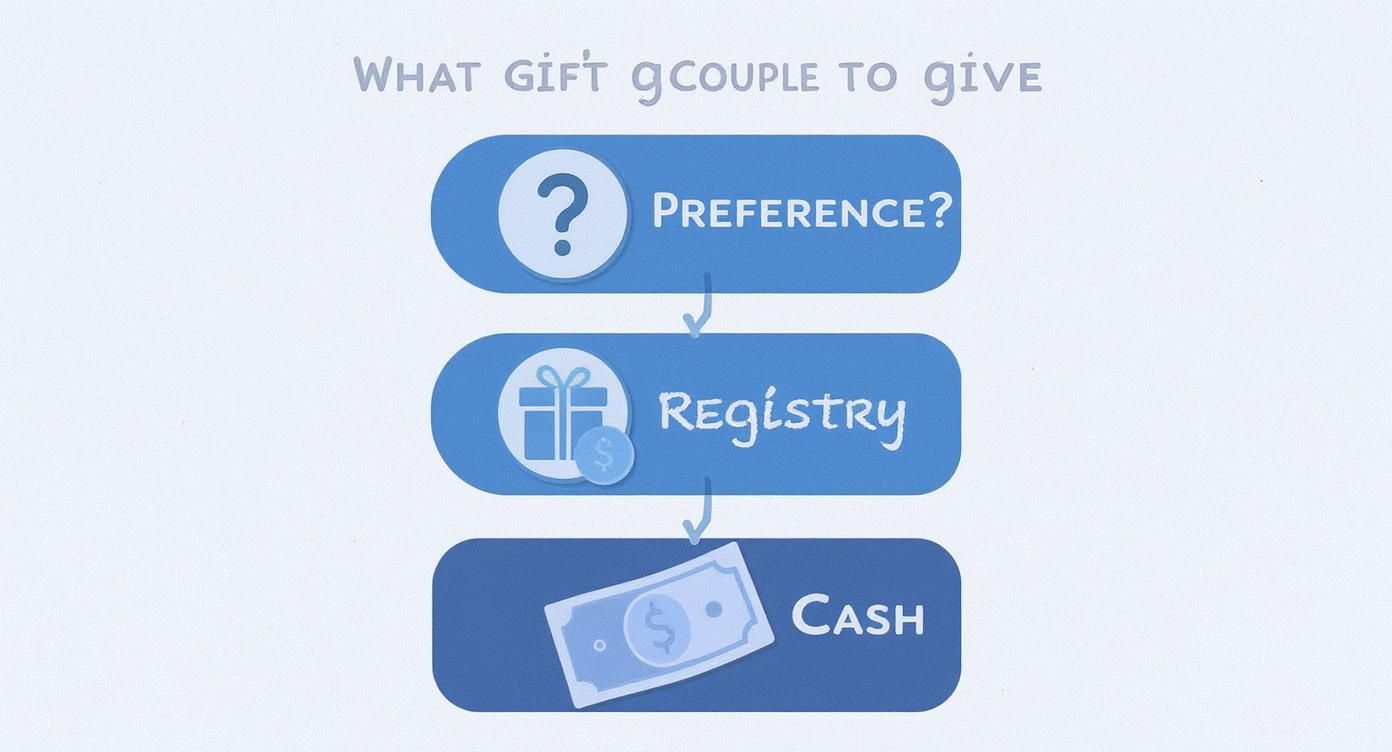
This decision tree gives you a great visual for how to approach your gift, starting with what the couple has actually asked for.
As you can see, the first port of call is always to check if the couple has a registry or has mentioned a preference for cash.
Tier 1: Distant Relatives and Colleagues
For a workmate, a distant cousin you see once every few years, or perhaps a friend of your parents, a gift in the $75 to $125 per person range is a lovely and appropriate gesture. A good rule of thumb here is to "cover your plate," meaning your gift roughly covers the cost of the meal and drinks you'll enjoy.
This amount shows you’re thrilled to be included in their special day without putting yourself out for someone you don't know on a deep level. It’s respectful, thoughtful, and very common.
Tier 2: Friends and Extended Family
This is where most of us find ourselves. If you’re celebrating with a good friend, a cousin you grew up with, or other family members you catch up with regularly, the typical amount sits somewhere between $125 and $175 per person.
A gift in this range reflects that closer, more personal connection. It’s a warm way to acknowledge your shared history and show just how happy you are for them. Most guests in this category find this range feels both generous and comfortable.
The goal is to give an amount that feels celebratory and supportive, reflecting your genuine happiness for the couple as they begin their new chapter together. Your contribution is a part of their story.
Tier 3: Close Friends and Immediate Family
When it’s your sibling, your absolute best mate, or you’re part of the bridal party, the gift amount naturally steps up to match that deep bond. For these nearest and dearest, a gift of $175 or more per person is quite standard.
Of course, this isn't about obligation; it's a reflection of a truly significant relationship. For these special people, many also find a thoughtful wedding gift registry can offer great ideas if you want to pair your cash gift with a physical present. This tiered approach simply helps you find a comfortable spot based on your unique connection to the happy couple.
How Your Relationship Shapes the Gift Amount
While those tiered gift ranges are a decent starting point, they miss the most crucial piece of the puzzle: your personal connection to the couple. Think of your gift less like a transaction and more as a reflection of your shared history and your excitement for their future.
Your gift is really just a warm gesture, a way of saying, "I'm so happy for you, and I want to help you start this new chapter." The real value is in that sentiment. It’s only natural that a gift for your lifelong best mate will look and feel different to one for a cousin you only catch up with at Christmas, and that’s completely fine.
The Heart Behind the Gift
Let the emotional weight of your relationship be your true guide. A larger gift for a sibling isn't about some stuffy obligation; it's a celebration of a lifetime of memories and a real investment in their happiness. On the flip side, a more modest gift for a colleague is a thoughtful and respectful way to share in their joy without overextending yourself.
The trick is to let your connection dictate the amount. This takes all the pressure off trying to stick to some rigid formula and lets you give something that feels genuinely meaningful to both you and them.
A cash gift becomes more than just money when it's driven by your personal connection. It transforms into a tangible piece of support, helping the couple fund their honeymoon, furnish their home, or simply build a secure foundation for their life together.
Real-World Scenarios and Australian Trends
Let's break it down with a couple of common scenarios. Giving $100 for a work colleague’s wedding is a wonderful gesture. It acknowledges your professional relationship and genuinely wishes them well. But for a best friend you've known since primary school? You'll probably feel more inclined to give $200 or more, simply because that amount better reflects the depth of your bond.
And this isn't just a gut feeling; it's backed by what other Aussie wedding guests are doing. A recent survey found that while cash gifts are incredibly popular, the amount is strongly tied to how close the guest is to the couple.
Here are the key takeaways:
52% of guests reported spending between $100 and $200 per person.
A massive 72% confirmed that their closeness to the couple was the main thing influencing their gift size.
At the end of the day, the most memorable gifts are the ones given with genuine affection. The couple will appreciate the thought and intention behind your contribution far more than the exact dollar amount, making your gift a cherished part of their celebration.
Adjusting Your Gift For Different Wedding Types
No two weddings are the same, so it makes sense that your gift shouldn't follow a strict, one-size-fits-all rule. The type of celebration a couple chooses gives you some pretty big clues about what might be an appropriate gift amount. Being thoughtful about the wedding's style and location is just good etiquette.
Think of it like this: you wouldn't wear a ball gown to a beach wedding. In the same way, your cash gift should match the vibe and circumstances of the event. It’s all about finding a balance that feels right and shows you care.
Destination Weddings
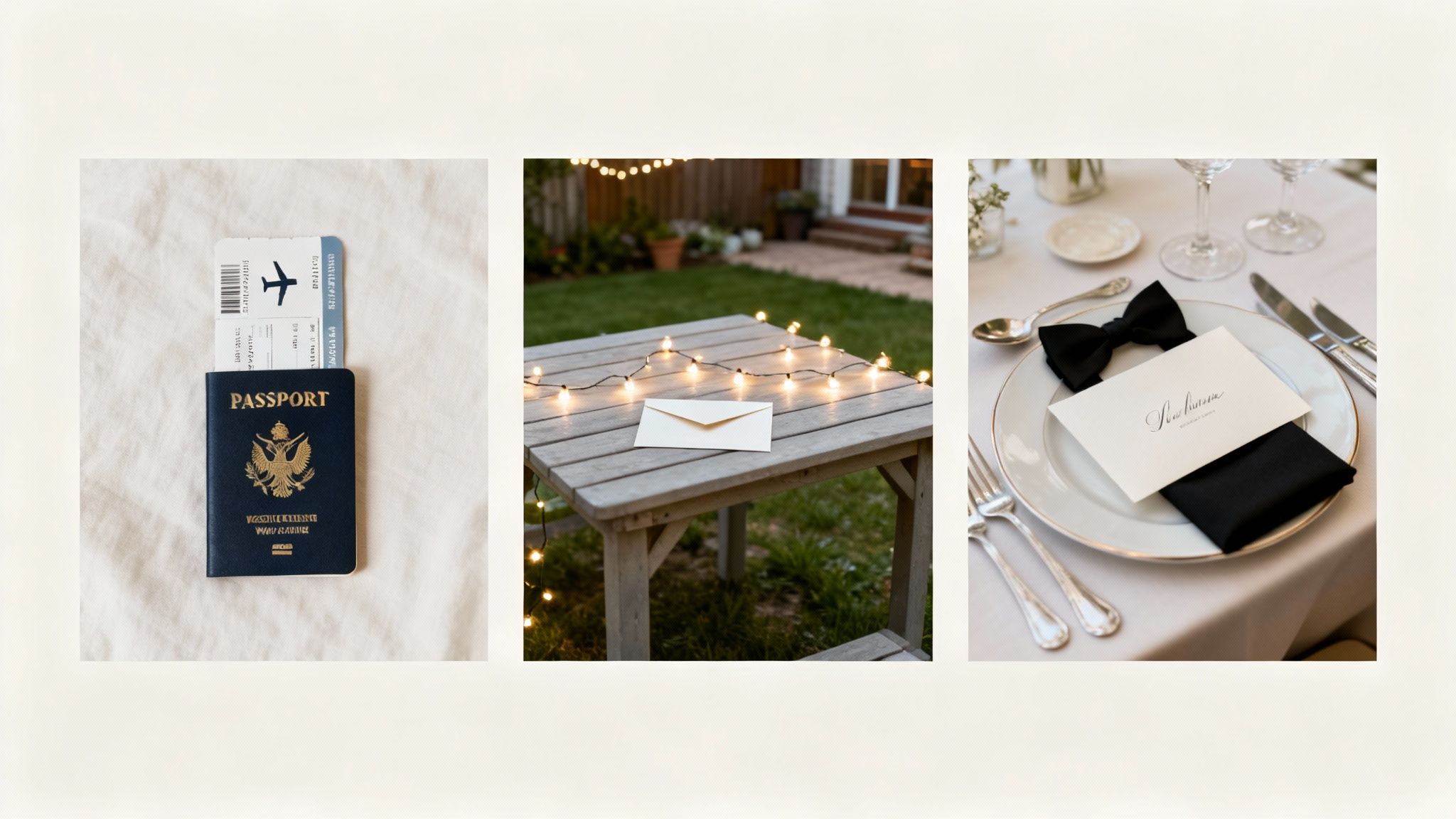
Let's be honest, if you're packing your bags and flying interstate or overseas for the wedding, your presence is a massive gift in itself. The happy couple knows you've already spent a fair bit on flights, accommodation, and taking time off.
Because of that, it's absolutely fine to give a smaller cash gift, or even just a beautiful card with a heartfelt message.
Don’t stress about matching what you'd give for a local wedding. Your effort and expense to be there is what truly matters to the couple. They invited you for your company, not for your cash.
A gift in the $50 to $100 range is a lovely, thoughtful gesture that won't strain your budget. Many guests also like to contribute to the couple's honeymoon fund, and you can find great ideas in our guide on purchasing travel registry gifts.
Casual vs Formal Events
The formality of the wedding is another great guide. A relaxed, backyard ceremony with a pizza truck is a completely different financial undertaking for the couple than a black-tie event at a swanky hotel. You're not trying to do the maths on their expenses, but the scale of the day can certainly nudge your gift amount one way or another.
Casual Weddings: For a laid-back celebration, a gift at the lower end of what you're comfortable with is perfectly appropriate. The day is more about the people than the pageantry.
Formal Weddings: When you're being treated to a lavish, multi-course meal and an open bar, guests often choose to give a little more, leaning towards the higher end of their personal budget.
Factoring In Pre-Wedding Events
Remember, your total spend isn't just about the wedding day itself. You've probably already been invited to the engagement party, hens' or bucks' night, and maybe a kitchen tea or bridal shower. These costs all add up!
It’s smart to think about your overall budget for the entire wedding journey. If you gave a generous gift for the engagement, it's completely reasonable to adjust your wedding day cash gift down a little. The couple will appreciate you celebrating with them every step of the way.
To help you navigate these different scenarios, here’s a quick guide showing how various factors might influence your final gift amount.
Wedding Scenario Gift Adjustment Guide
Wedding Scenario
Common Guest Expenses
Gift Amount Adjustment
Destination Wedding
Flights, accommodation, annual leave
Decrease: Your presence is the main gift. A smaller token amount is thoughtful.
Local, Casual Wedding
Minimal travel, simple venue
Standard/Lower End: A gift in your typical range is fine; no need to overextend.
Local, Formal Wedding
New outfit, potential accommodation
Standard/Higher End: You might choose to give a bit more to reflect the event's scale.
Multiple Pre-Wedding Events
Engagement, hens'/bucks' party gifts
Slight Decrease: Factor in your total spend across all events to find a comfortable balance.
Ultimately, this is just a guide. The most important thing is to give an amount that you're comfortable with and that genuinely comes from a place of celebrating the couple's new life together.
So, What's the Real Cost of Attending a Wedding?
Before you even start thinking about the wishing well, let's get one thing straight: the cash gift is just one slice of a much bigger financial pie. Showing up to celebrate a wedding in Australia, particularly if you have to travel, can get expensive. It's easy to fixate on the gift, but the reality is your total outlay is often much, much more.
From the new outfit and shoes to flights and a hotel for an interstate celebration, the costs can pile up surprisingly fast. And that's not even counting the pre-wedding events like hens’ and bucks’ parties, which often have their own price tags attached. It's totally understandable to feel a bit of a financial squeeze when that gorgeous invitation lands in your mailbox.
But here’s the most important thing to remember: that invitation is asking for your presence, not for you to pay an invoice. The couple wants you there to share their joy, and the last thing they'd want is for their big day to cause you any stress.
Putting It All into Perspective
When you break down all the potential expenses, it becomes obvious why figuring out your own budget is so important. A recent survey of over a thousand Aussies painted a very clear picture of just how much guests are really spending.
The results showed the average cost for a guest to attend a single wedding is a whopping $2,593. This figure covers everything from travel and accommodation to gifts and what to wear. Interestingly, the gift itself only makes up an average of $295 of that total, which really shows where the bulk of the money goes. You can dig into the full breakdown of these wedding guest costs by reading more about the research from Finder.
This isn't meant to freak you out, but to show that it’s a genuine financial commitment. Knowing what others are spending can help you feel more comfortable about setting a budget that works for you.
Your financial situation is entirely your own, and the best gift is one you can give comfortably and with genuine happiness for the couple. Your presence, your support, and your well wishes are what they will remember long after the last dance.
At the end of the day, your decision on how much cash to give as a wedding gift should come after you’ve factored in all these other expenses. True friends and family will always value you being there over the amount of money in the envelope. Give what feels right for your budget and your relationship, and know that you’re there to celebrate, not to fund the honeymoon.
Your Top Wedding Gift Questions Answered
Even after you've worked through the main factors, a few tricky questions always seem to pop up. Let's run through some of the most common queries to make sure you feel completely confident in your choice. Getting these final details right can make all the difference.
You've thought about your relationship, the style of wedding, and what your budget can handle, but now you're facing those "what if" scenarios. This is the final piece of the puzzle, covering everything from what to write in the card to navigating gifts that aren't cash.
Is It Okay to Give Something Other Than Cash?
Absolutely. While cash is a popular and seriously practical choice for many Australian couples, a thoughtful physical gift is just as wonderful. If the couple has a gift registry, that’s your best bet—it’s literally a list of things they genuinely want and need for their home.
Sometimes, the most meaningful presents can't be bought in a store. A handmade item, a piece of art, or a gift that taps into a shared memory can be incredibly special. If you're looking for a non-monetary gift that still feels significant, exploring unique personalized gifts for couples can offer them a beautiful keepsake they'll treasure for years.
The golden rule? Honour the couple's wishes first, especially if they've stated a preference. But always, always prioritise what feels right for you and your budget. A heartfelt card paired with a smaller, thoughtful gift is so much better than putting yourself under financial stress.
How Should I Word the Card for a Cash Gift?
The card is where you turn a practical cash gift into something deeply personal. A warm, genuine message is what transforms your contribution from a simple transaction into a heartfelt wish for the couple's future. Don't just sign your name!
Start with a warm congratulations, and then try to connect your gift to their plans. This simple touch makes the money feel more tangible and thoughtful.
Here are a few ideas to get you started:
"Wishing you a lifetime of happiness! Hope this helps you create some amazing memories on your honeymoon."
"So thrilled to celebrate with you both! Here's a little something to help you start building your new life together."
"Congratulations on your beautiful wedding day! We hope this contributes to making your dream home a reality."
And one crucial tip: never write the actual dollar amount in the card. The focus should always be on your well wishes, not the number.
How Much Should We Give as a Couple?
When you're attending as a couple, a single, joint gift is the way to go. You don't necessarily need to double what one person would give, but the amount should reflect that two guests are being hosted. It's a thoughtful gesture that acknowledges your shared relationship with the newlyweds.
A good rule of thumb is to increase the individual amount you were thinking of by about 50% to 75%. For instance, if you might give $150 on your own, a gift between $250 and $300 as a couple is a comfortable and generous range. Ultimately, let your combined budget and your collective closeness to the couple be your guide.
What if I Can't Afford the Suggested Amount?
This is probably the most important question of all, and the answer is simple: your presence is the real present. The couple invited you to share in their joy because they value your friendship and love—not because they're expecting a specific amount of money. Never, ever feel pressured to give more than you can comfortably afford.
Any decent couple would be horrified to think their wedding caused you financial stress. Give an amount that feels right for your personal situation, and pair it with a beautifully written card expressing your happiness for them. That’s what truly matters.
You can also think about giving a gift of your time or talent. Maybe you could offer to help with pre-wedding tasks, pet-sit while they're on their honeymoon, or cook them a celebratory meal once they've settled into married life. These kinds of gestures are often more memorable and cherished than any amount of money.
At EasyRegistry, we believe that giving and receiving gifts should be a joyful and stress-free part of any celebration. Our platform makes it simple for couples to create a registry that truly reflects their needs, whether it's for a wishing well, honeymoon fund, or specific items. Find out how we can make your next celebration easier at https://www.easyregistry.com.au.
That incredible, floaty feeling after getting engaged is amazing. But it’s often followed by a slightly more terrifying thought: "Now we have to plan a whole wedding?!" Trust me, I get it. A solid wedding planning timeline is the best way to turn that overwhelming feeling into an exciting, step-by-step project. It's your roadmap, designed to keep you organised, on budget, and actually enjoying the journey to your big day.
Your Wedding Planning Journey Starts Now
The moment you said "yes!" was pure magic. The next step shouldn't be pure panic. Think of this guide as your experienced companion, a flexible framework built for modern Aussie couples. This isn’t about ticking boxes on a rigid schedule; it’s about creating a logical flow that prevents that last-minute scramble and keeps the focus on celebrating your love.
Before you fall down a Pinterest rabbit hole or book a single vendor, the most important thing you can do is get on the same page with your partner. These initial conversations are the foundation of your entire wedding.
Sit down and have a real chat about:
Your Budget: What can you both realistically afford? Is anyone else contributing? This number is the bedrock of your planning and will shape almost every decision you make. For some great ideas on this, check out these amazing tips to save money on your wedding day.
Your Vision: What’s the vibe? Are you dreaming of a relaxed beach party, a glamorous black-tie affair, or a rustic country feast?
Your Guest List: You don't need exact names yet, but a rough headcount is crucial. It’s the key to finding a venue that can comfortably hold everyone without blowing the budget.
Understanding The Australian Timeline
Here in Australia, we're seeing a trend towards longer engagements. The average wedding planning timeline now sits at around 22 months, which gives couples plenty of breathing room. It's a smart move, especially when you consider that popular venues in cities like Sydney and Melbourne can book out up to two years in advance.
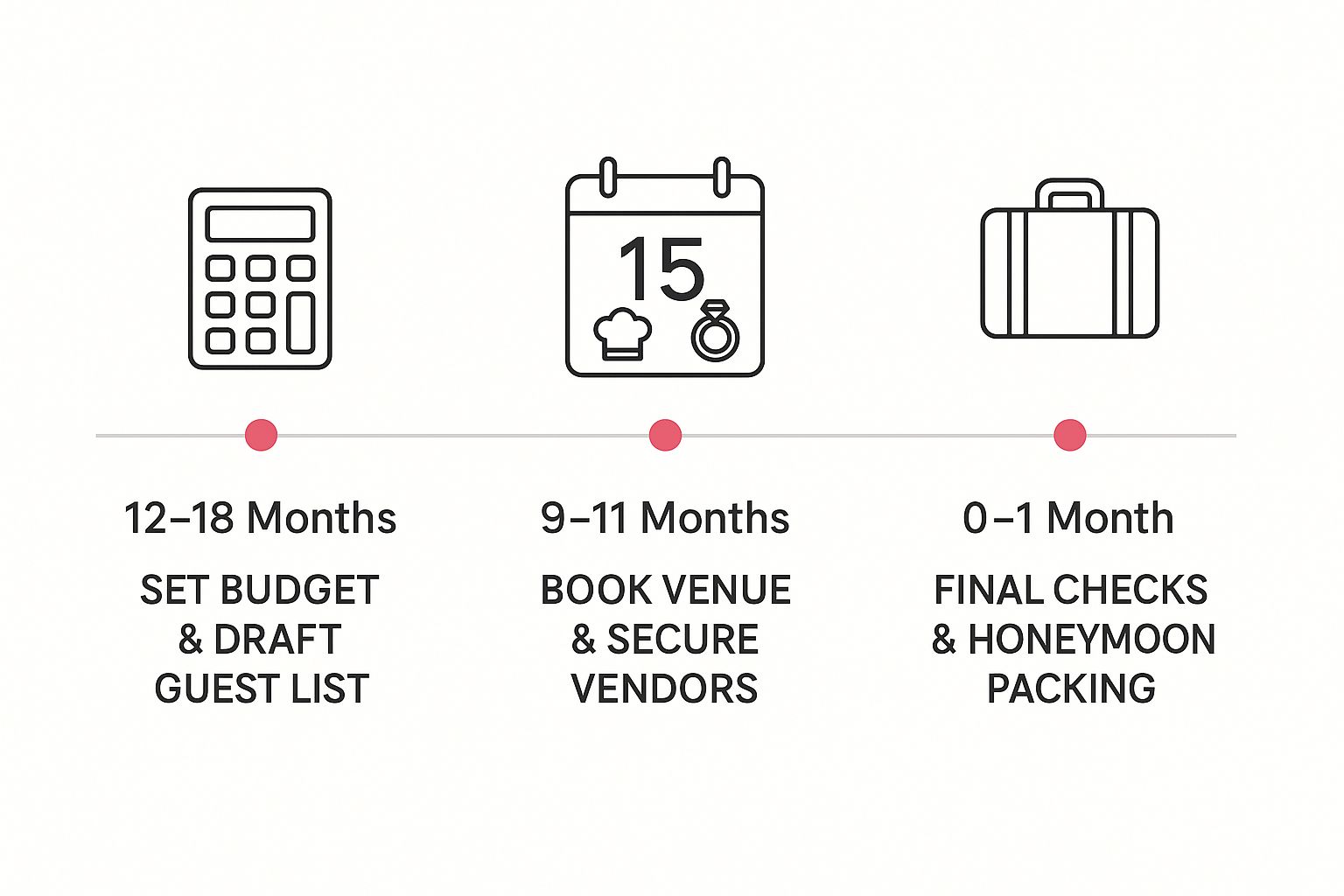
This extra time allows you to research properly, secure your first-choice vendors, and spread out the costs. This infographic gives a great bird's-eye view of how it all breaks down.
As you can see, the early months are all about locking in the big, non-negotiable things. The finer details and personal touches come into play much closer to the date.
Your timeline is personal. If you’re planning in six months instead of eighteen, you’ll simply need to condense these stages. The key is not the length of your engagement, but how effectively you organise the tasks within it.
Why A Timeline Is Your Best Friend
A good timeline is more than just a checklist; it's your sanity-saver. It stops that nagging feeling that you’ve forgotten something critical. By tackling tasks in the right order, you avoid costly mistakes—like booking a caterer before you even know your final guest count. It helps you manage your cash flow by spacing out deposits and payments, which seriously reduces financial stress.
Basically, it's the tool that lets you move from the big-picture dreams to the tiny, meaningful details without losing your mind.
Wedding Timeline At A Glance Key Milestones
Here’s a high-level overview of the major tasks and when you should aim to complete them. Use this as a quick reference to stay on track throughout your planning journey.
Timeframe Before Wedding
Key Tasks to Complete
12+ Months
Set budget, draft guest list, choose your bridal party, book venue, and hire a wedding planner (if using).
10-11 Months
Book photographer, videographer, and celebrant. Start dress shopping.
8-9 Months
Send save-the-dates. Book entertainment (band/DJ) and florist.
6-7 Months
Order invitations. Arrange transport. Start planning honeymoon.
4-5 Months
Book hair and makeup trials. Choose wedding rings. Order the cake.
2-3 Months
Send invitations. Apply for marriage licence. Finalise menu and run sheet.
1 Month
Final dress fitting. Confirm all vendors. Write vows.
1-2 Weeks
Provide final numbers to venue/caterer. Create seating chart. Pack for honeymoon.
The Day Before
Drop off items at venue. Rehearse ceremony. Get a good night's sleep!
This table is just a guide, of course. The most important thing is to make the timeline work for you, your partner, and the unique celebration you're creating.
The First Steps: 12 to 18 Months Out
Alright, you're engaged! With over a year until the big day, it's easy to feel like you have all the time in the world. But trust me, this is the most crucial period for laying a solid foundation for your wedding. Forget the tiny details for now. This is the time for the big, non-negotiable decisions that will shape everything to come.
First things first: the budget. I know, it's not the most romantic chat, but it's the most important one. Sit down together and get real about what you can comfortably spend, and have a gentle conversation with any family members who might be contributing. This number is your North Star for the entire planning process.
Next up, draft a guest list. It doesn’t have to be final, but you need a realistic ballpark figure. Are you picturing an intimate affair with 50 of your closest people, or a massive celebration for 200? This single detail will immediately narrow down your venue search.
Setting Your Wedding Foundations
Once you've got a budget and a rough guest count, the real fun can start. This is when you get to dream about the 'when' and 'where'.
Choosing a date is a mix of heart and head. Think about what season you love, if there are any special anniversaries you'd like to honour, or the overall vibe you're going for. A breezy summer wedding feels completely different (and often costs more) than a cosy winter one. Keep an eye on public holidays too, as they can seriously impact vendor pricing and your guests' ability to travel.
With a couple of potential dates circled on the calendar, you can tackle the biggest piece of the puzzle: your venue. This is the backdrop for your entire day, so it's a big one!
Getting these foundational tasks sorted early is the best thing you can do for your future, less-stressed selves. A clear budget, guest count, and venue create a framework that makes every other decision so much easier.
Booking Your High-Priority Vendors
With your date and venue locked in, it’s time to secure any other suppliers you absolutely can't live without. These are the creative professionals who get snapped up 12-18 months in advance, especially for popular dates.
Think about what matters most to you as a couple. For most, the priority list includes:
Photographer: Their style will literally define how your memories look. If you've been stalking a particular photographer on Instagram for years, reach out now.
Videographer: Just like photographers, the best ones are in high demand and their calendars fill up incredibly fast.
Wedding Planner: If you're bringing a full-service planner on board, this is the time to do it. They’ll be your guide and sanity-saver through this entire journey.
Booking these key players might feel ridiculously early, but it’s one of the smartest things you'll do. It means you get your dream team, not just who’s left.
Creating Your Wedding Vision
Now is also the perfect time to let yourselves dream. Start a Pinterest board, a scrapbook, or a shared folder and just start saving images you love. Don't just stick to weddings—pull inspiration from travel, art, fashion, and interior design. What colours, textures, and moods are you both drawn to?
This isn't about making firm decisions yet; it's about discovering your shared style. You might find you're both drawn to minimalist, clean lines, or maybe you're all about lush, romantic florals. Knowing this makes everything from choosing invitations to flowers a breeze later on.
When you start looking at venues, having this vision really helps. It allows you to ask better, more specific questions. To make sure you don't miss anything crucial, take a look at these essential questions to ask your wedding venue before you sign on the dotted line. It’s a lifesaver for making sure the space can truly bring your vision to life.
Building Your Vendor Team: 9 to 11 Months Out
Okay, deep breath. You've locked in your venue and set the date! This is huge. Your wedding has officially moved from a dream into a real event with a time and a place. Now, the real fun begins: assembling the team of creative professionals who will bring your vision to life.
Think of your vendors as the artists and experts who will execute the day you're imagining. Your photographer freezes the memories in time, your florist paints the scene with colour and life, and your band or DJ sets the entire vibe for the party. Nailing these bookings now means you get your first-choice pros, not just whoever happens to be left.
Prioritising Your Key Creatives
It's time to research and book the vendors who make the biggest splash. These are usually the people who can only be in one place at a time, so their calendars fill up incredibly fast.
You'll want to start your search with these core suppliers:
Celebrant: This person is the heart and soul of your ceremony. You need to find someone you both genuinely connect with, as they’ll be the one guiding you through your vows and setting the tone for the entire day.
Videographer: Just like photographers, the best videographers are in high demand and get booked up well in advance. Figure out what style of film you're after—is it cinematic and dramatic, or more of a candid documentary?—and start reaching out.
Band or DJ: Let's be honest, the right music makes the party. Whether you're picturing a live band that gets Grandma on the dance floor or a DJ spinning your favourite tunes all night, get your entertainment locked in.
Florist and Stylist: Your flowers and décor are what make the space feel like yours. A great florist will take your colour palette and ideas and transform the venue into something truly beautiful and cohesive.
Don't just fall in love with an Instagram feed. Always schedule a video call or, if you can, a coffee catch-up. You'll be spending the entire day with these people, so feeling comfortable and having a good rapport is non-negotiable.
The Quest for the Perfect Attire
This window is also the official green light for wedding attire shopping—a major milestone on any wedding planning timeline! Finding 'the one', whether it’s a gown, a suit, or something completely different, can take a while. Plus, you need to account for production and alteration timelines.
Believe it or not, a custom-made gown can take anywhere from six to nine months just to be made and delivered. And that's before a single stitch of alteration has been done. Starting your search now avoids that last-minute panic and gives you the freedom to explore different designers and boutiques without feeling rushed.
Remember to factor in multiple fittings. Most outfits will need at least two or three rounds of tweaks to get that perfect fit, with the final one often happening just a couple of weeks before the big day.
Tantalise Your Taste Buds
Here's one of the most enjoyable jobs on the list: sorting out your food and cake. With your venue booked, you can now line up tastings with your caterer (if they're not in-house) and your favourite cake designers.
This is your chance to really have fun with it. Sample different dishes, play with flavour combinations, and design a menu that feels personal to you as a couple. Maybe you’ll choose canapés that give a nod to your first date, or a cake flavour you both absolutely love. These tastings are your final quality check before locking in the delicious details.
Give Your Guests a Heads-Up
By now, your guest list should be pretty much set in stone. Once you have that final list of everyone you want to celebrate with, it’s time to get those 'Save the Dates' in the mail.
This isn't just a formality; it's a critical courtesy for your guests. Sending them out nine to eleven months ahead of time gives everyone, especially those who need to travel or book time off work, plenty of notice. It ensures all your favourite people can make the necessary arrangements to be there. This simple step solidifies your guest list and makes everything feel wonderfully real.
Getting Into The Finer Details: 6 To 8 Months Out
With your big-ticket vendors locked in, the wedding planning timeline now shifts from broad strokes to the beautiful, finer details. This is where your day really starts to feel like yours. You’ve built the foundation; now it’s time to add the personality, colour, and character that will make it unforgettable.
During these months, you'll be refining your vision and sorting out the logistics that make everything run smoothly. It’s a genuinely exciting time when all those separate ideas you’ve had start clicking together, forming a clear picture of the celebration ahead.
Nailing Your Wedding Style and Decor
This is the perfect window to get serious about the look and feel of your day. It’s time to move beyond the Pinterest board and make some firm decisions. Sit down with your florist and stylist to finalise your colour palette, pick out specific floral arrangements, and choose the table linens that will bring your venue to life.
Try to think about the entire guest journey, from the moment they arrive until the last song. Do you need signage to point them in the right direction? What will your table centrepieces look like? Making these calls now ensures a cohesive and polished feel throughout the event.
To keep everyone entertained, you might also want to look into some unique wedding entertainment ideas. This could be anything from a classic photo booth with quirky props to a live painter capturing the buzz of the reception.
Sorting Guest Communications and Gifts
It’s officially time to get your wedding invitations organised. Make sure they are ordered and ready to be posted right at the six-month mark. Your invitation suite needs to be crystal clear, with RSVP instructions, a non-negotiable deadline, and easy-to-follow directions to your venue.
This is also the moment to set up your gift registry. Having this sorted before the invitations go out saves you from a hundred "what should we get you?" questions. You can create a seamless experience for everyone by setting up a wedding gift registry that blends traditional gifts with cash funds for bigger things, like your honeymoon.
A well-organised invitation and registry process sets a considerate tone for your wedding. Your guests will really appreciate you making it as easy as possible for them to RSVP and find your gift information.
Locking in Logistics and Legals
Beyond the pretty stuff, this period is crucial for nailing down practicalities. Organise transport for the wedding party and decide if you need to arrange a coach for guests, especially if your ceremony and reception are in different locations. Even just providing details for local taxi services is a helpful touch.
Most importantly, it’s time to tackle the legal paperwork. In Australia, you must lodge a Notice of Intended Marriage (NOIM) with your celebrant at least one month before the wedding, but getting it done now is a very smart move. Ticking this major legal task off your list early saves a world of last-minute stress.
Finally, let's talk about the best part: your honeymoon!
Book It In: Secure your flights and accommodation now to get the best deals and your first pick of options.
Confirm Time Off: Make sure you've both officially booked the necessary leave from work.
Check Your Passports: Double-check that your passports are valid and won’t expire anywhere near your travel dates.
Planning your honeymoon at this stage gives you something incredible to look forward to as the final planning push begins. It’s a wonderful, rewarding task that feels like the treat you’ve definitely earned.
Locking It In: Your 2 to 5-Month Checklist
With the wedding day now feeling very real and getting closer by the minute, your focus will naturally shift from big-picture dreaming to nailing down the finer details. This is the time when all those abstract ideas start to take shape, from the suit you’ll wear to the vows you’ll exchange. The final countdown is officially on!
First things first, let’s talk rings. If you haven't already chosen and bought your wedding bands, now’s the time to make it happen. Whether you’re going for a custom design or picking something straight from the jeweller's case, the process of sourcing, creating, and sizing them can take a few weeks. It’s always best to get this sorted early.
Getting Your Wedding Day Look Just Right
This is the perfect window to book in your hair and makeup trials. Scheduling them now gives you plenty of breathing room to experiment with a few different styles, see how they hold up over several hours, and make sure you vibe with your chosen artists. Don't forget to bring along snaps from your Pinterest board and a photo of your dress or suit to give them a clear picture of your vision.
It’s also prime time for those all-important attire fittings. Your outfit has likely arrived, and the tailoring process is about to begin. You'll probably need two or three appointments to get the fit absolutely perfect, so locking in that first one around the four-month mark keeps everything moving smoothly and avoids any last-minute panic.
A little tip from experience: make sure you bring the exact shoes you'll be wearing on the day to your very first fitting. Heel height makes a huge difference, and it’s the key to getting the length of your dress or trousers spot on.
The Final Headcount and Seating Plan
Your RSVP deadline will probably fall somewhere in this period, which is a huge turning point. As the replies start coming in, you'll need to keep a close eye on your list and be ready to gently chase up anyone who hasn’t responded by the due date.
Getting that final, accurate number of guests is a game-changer. It’s the magic number that dictates a few major things:
Catering Numbers: You’ll need to pass this on to your caterer so they can finalise food orders and staffing for the day.
Venue Setup: Your venue coordinator will use this number to create the floor plan and arrange tables and chairs.
The Seating Chart: Once you know exactly who's coming, you can start tackling the fun (and sometimes tricky) puzzle of the seating chart.
When you get married can play a big role here. In Australia, autumn and spring are by far the most popular seasons for weddings, with autumn hosting 35% of nuptials and spring close behind at 31%. If your wedding is during one of these peak times, your venue and suppliers will be incredibly busy, so giving them your final numbers promptly is even more crucial. You can dive deeper into how the seasons affect the wedding industry in this comprehensive Australian wedding report.
Perfecting the Ceremony and Saying Thanks
With most of the logistics running smoothly, you can circle back to the real heart of the day: the ceremony. Spend some quality time with your celebrant to iron out all the details. This is your chance to choose your readings, put the finishing touches on your vows, and decide on the music for those key moments—like walking down the aisle and signing the register.
Finally, this is a great time to think about buying gifts for your wedding party and parents. It’s such a lovely way to thank them for being by your side through it all. Finding something personal and meaningful now means it’s one less thing on your to-do list during those final, busy weeks before you say "I do."
The Final Month and Finishing Touches
You’ve made it to the home stretch! This final month is all about confirming the details, tying up loose ends, and getting yourself mentally and physically ready for the big day. The heavy lifting is behind you; now it's about final checks and a bit of self-care.
Your first job is to get in touch with all your vendors. I mean everyone. Give them a call or send a quick email to lock in arrival times, final payment due dates, and any other little details they need from you on the day. A quick chat now can prevent a world of stress later.
Creating Your Day-Of Masterplan
Once you have all those timings confirmed, it’s time to build your run sheet. Think of this as the masterplan for your wedding day, mapping out everything from your morning coffee to the final farewell.
Make sure you share this schedule with your wedding party and key suppliers. It’s crucial that everyone, from your maid of honour to the DJ, knows exactly where they need to be and when. As the day gets closer, your wedding party will be looking to you for direction, so it helps to get them organised. A quick guide on the essential best man duties and responsibilities can be a lifesaver.
This is also when you'll give your final guest numbers to your venue and caterer. They need this for everything from setting the tables to prepping the meals, so don't miss their deadline.
Final Preparations and Self-Care
With the logistics locked in, you can shift your focus to the more personal touches. You’ll have your final attire fitting and get to bring your dress or suit home at last! Just remember to store it somewhere safe where no one (especially your partner!) can peek. This is also the perfect time to assemble a wedding day emergency kit.
A few must-haves for your kit include:
Quick Fixes: Safety pins, a mini sewing kit, and stain remover pens are absolute non-negotiables.
Personal Care: A few painkillers, some blister plasters, mints, and any personal medications.
Beauty Touch-ups: A bit of your lipstick, powder, and hairspray for those quick refreshes throughout the night.
Now's a great time to finalise your seating chart and write out your place cards. While most weddings in Australia still happen on a Saturday (55%), Fridays are becoming a popular choice, now hosting 21% of weddings. This trend is often driven by couples wanting better venue availability and pricing, which can sometimes affect how early you need to finalise details.
Most importantly, pack for your honeymoon and look after yourself. Hand off any small, lingering tasks to friends or family you trust. Get a massage, enjoy a final pre-wedding date night, and get plenty of rest. You've planned an incredible celebration—now it’s time to relax and get ready to enjoy every moment of it.
Your Wedding Timeline Questions Answered
Working your way through a wedding planning timeline can feel like you’re constantly second-guessing yourself. It's totally normal to wonder if you're on the right track or if there’s some secret, "correct" way to do things. Let's clear up some of the most common questions we hear from couples.
Probably the biggest one we get is: "What if my engagement is shorter than 12 months?" First of all, don't panic! A shorter timeline just means you'll be compressing the checklist, not throwing it out the window. The priority of tasks stays the same—budget, guest list, and venue always come first—but you'll need to be ready to make decisions much faster. You might also need to be a bit more flexible with your vendor choices, as the most in-demand suppliers often book out over a year in advance.
Another big question is about when to bring family into the picture. Our advice? Have those conversations about potential budget contributions and who they’d like on the guest list right at the very beginning, during that initial 12 to 18-month planning phase. Getting this sorted out early avoids awkward conversations and mismatched expectations down the line. Clear, upfront communication really does set a positive tone for the entire process.
Can We Plan a Wedding in Six Months?
Yes, you absolutely can! It just requires being super organised and decisive from day one. The trick is to lock in your non-negotiables—think venue, celebrant, and photographer—within the first couple of weeks.
For a compressed timeline, it might look something like this:
Months 1-2: Nail down your budget, finalise the guest list, and book your venue and all key vendors. As soon as that venue is locked in, get your save-the-dates out.
Months 3-4: It's time to order your wedding attire, send out the formal invitations, and get the legal paperwork sorted, like lodging your Notice of Intended Marriage (NOIM).
Months 5-6: This is all about the final details. Think final dress or suit fittings, confirming timings with all your suppliers, and putting together a solid day-of schedule.
It’s definitely a sprint rather than a marathon, but it's completely doable if you stay focused.
The most important part of any wedding planning timeline isn’t its length, but how it’s structured. Prioritise logically, be ready to make decisions quickly, and never be afraid to delegate or ask for help from your wedding party or a professional planner.
What Task Is Most Often Forgotten?
You'd be surprised! It’s usually the small, practical details that get overlooked. Couples get so wrapped up in the big, creative elements—the flowers, the food, the music—that they forget about things like arranging transport for the wedding party or figuring out a solid wet-weather backup plan.
Another classic forgotten task is checking when your passports expire before the honeymoon. Do yourself a favour and check this around the six to eight-month mark. It will save you from a massive, stressful scramble right before your well-deserved holiday.
At EasyRegistry, we help you streamline one of the most important parts of your planning. Create a beautiful, simple-to-use gift registry that your guests will love. Get started today.